
Most people who retire to Johnson City didn't plan on it. They came to visit family, or drove through on a road trip, and something clicked. The Blue Ridge foothills, the absence of traffic, the fact that a decent house costs a fraction of what it does in Asheville or Knoxville — and then they started looking at healthcare, and that's when the decision got serious. Johnson City has one of the five Level I Trauma Centers in the state of Tennessee. For a city of 74,943, that is an extraordinary thing to have. For a retiree weighing where to spend the next two or three decades, it changes the conversation entirely.
The economic picture here is built around Ballad Health, East Tennessee State University, and the James H. Quillen VA Medical Center — three large, stable institutions that anchor the local job market and, directly or indirectly, shape the quality and availability of medical services. ETSU's medical school feeds specialists into the regional health system. The VA campus in the Mountain Home neighborhood operates on a 450-acre federal site that has been part of the city since 1903. These aren't just employers; they're the reason Johnson City punches above its weight on healthcare for a mid-sized Appalachian city. For full detail on who else drives the local economy, see the Johnson City overview.
Cost of living is the other pillar. Johnson City's overall cost of living runs roughly 15% below the U.S. average, and the typical home price of $295,339 (Zillow Home Value Index, August 2026) puts homeownership within reach for retirees who've sold somewhere more expensive. Tennessee's complete absence of a state income tax means every dollar of Social Security, pension, or retirement-account income stays whole at the state level. The trade-off is a high combined sales tax — the catch that every honest guide to Tennessee retirement has to name. Daily costs are low enough that most fixed-income retirees find the math works comfortably here.
The sections below cover the full picture: why Johnson City fits certain retirees and not others, the depth of its healthcare system, what the retiree budget actually looks like, how walkable the city is for aging in place, what downsizing options exist, and how it stacks up against nearby retirement destinations.
Why Retirees Are Choosing Johnson City
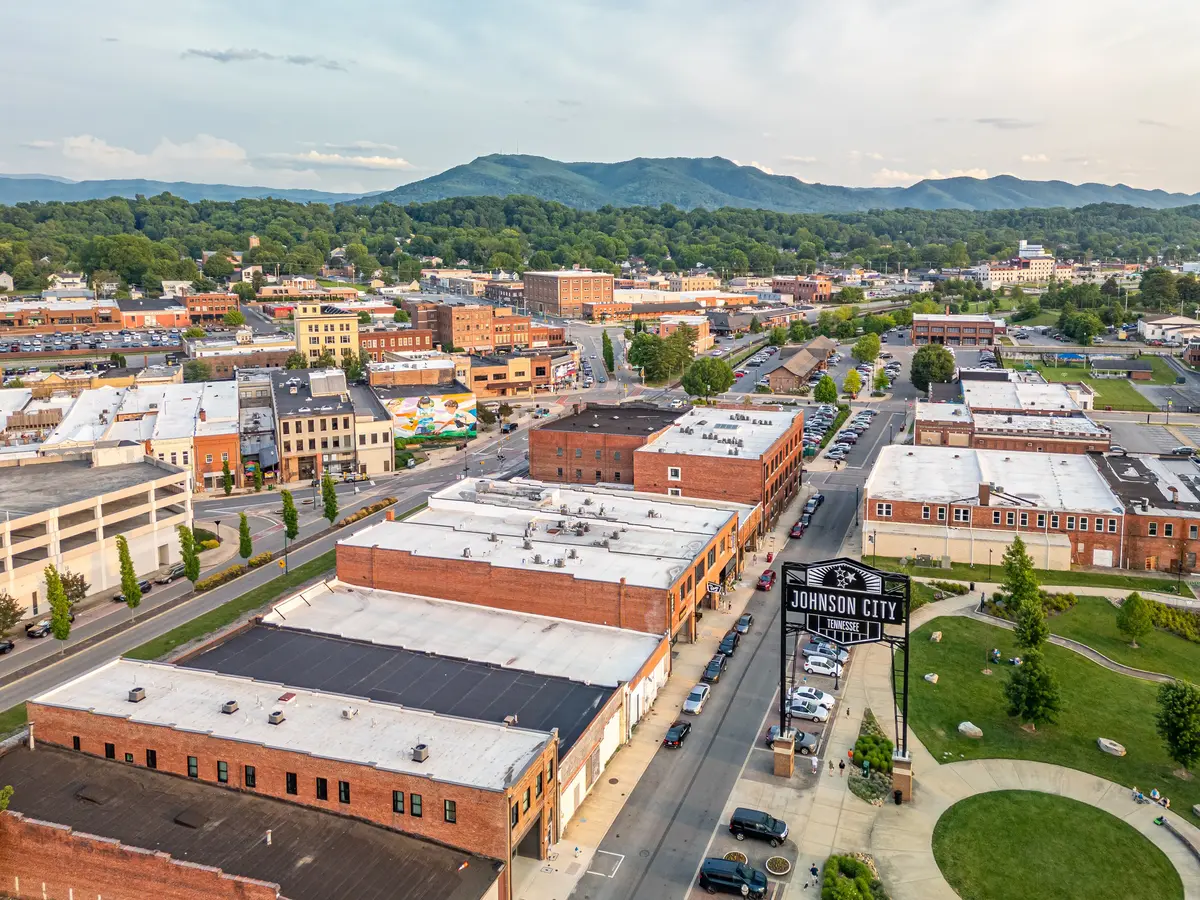
The case for Johnson City in retirement is unusually concrete. A Level I Trauma Center inside city limits. No state income tax on retirement income. A typical home price of $295,339 (August 2026) that leaves room in the budget after the mortgage, rather than consuming it. And a mountain landscape that makes the Tweetsie Trail and Buffalo Mountain Park part of everyday life, not a weekend expedition. These aren't abstractions — they're the reasons people from Charlotte, Northern Virginia, and South Florida keep landing here.
Johnson City fits retirees who want real healthcare access nearby, not a drive to a bigger city. It fits people who want four seasons without the winters of the upper Midwest, a genuine small-city feel with a university's cultural calendar, and a cost structure that stretches a fixed income. East Tennessee State University runs a robust continuing education and arts program that keeps intellectual life active in a way you don't always find in retirement-destination towns of this size.
Who should look elsewhere? Retirees who depend on walking to errands, restaurants, or doctors' offices will find Johnson City frustrating — this is a car-dependent city, and that reality doesn't change much even close to downtown. Anyone seeking a dense 55+ purchase community with HOA-maintained grounds and a clubhouse will need to look at Kingsport or beyond. And retirees who want the prestige and pace of a larger regional city — Knoxville or Asheville — will find Johnson City quieter than they expected. For those buyers, that quiet is either exactly the point or the deal-breaker.
Healthcare & Medical Access in Johnson City
Johnson City Medical Center is, without qualification, the healthcare story here. It's a 445-bed regional tertiary referral center — one of only five Level I Trauma Centers in Tennessee — affiliated with East Tennessee State University's Quillen College of Medicine. The affiliation matters: it means attending physicians are also faculty, specialists run through an academic pipeline, and the level of subspecialty depth is higher than you'd find at a stand-alone community hospital of the same size.
The clinical range is serious for a city this size. A dedicated heart hospital, a cancer center, stroke and neuroendovascular services, neurosurgery, a Joint Replacement Center, vascular care, and a 43-bed intensive care unit. For retirees, the orthopedic and cardiac programs are the most directly relevant — and both are here, in the city, without a transfer to Knoxville or Kingsport. An ongoing emergency department expansion will add 13,000 square feet to the ED, a project that reflects continued investment rather than contraction. Highlands Emergency Air Rescue and Transport (HEART), based at JCMC, operates the region's largest fleet of dedicated emergency medical air ambulances, with bases across Tennessee, Virginia, and Kentucky — a meaningful safety net for serious trauma anywhere in the mountains.
The James H. Quillen VA Medical Center, within the Mountain Home neighborhood, serves veterans across the region. It's a federal campus with its own long history here, and for veterans it functions as a separate, substantial healthcare system within city limits. That makes Johnson City one of the relatively rare mid-sized cities where veteran retirees have both a VA campus and a major civilian hospital in the same zip code.
The honest note: Johnson City Medical Center handles the heavy lifting for the region, but for highly specialized procedures — certain cancer treatments, advanced transplant surgery, specific cardiac interventions — Knoxville's University of Tennessee Medical Center is the next tier up, and that drive is real. For the vast majority of retiree healthcare needs, though, what's in Johnson City itself is genuinely comprehensive.

The Retiree Budget in Johnson City
Tennessee's retirement tax posture is as favorable as any state in the country. There is no state income tax — not on Social Security, not on pension income, not on IRA or 401(k) withdrawals, not on annuity payments. The Hall Income Tax, which once taxed interest and dividends, was fully repealed in 2021. Tennessee also levies no state estate or inheritance tax. For a retiree drawing on a mix of Social Security, a pension, and retirement-account distributions, the state keeps none of it. That is a real and significant number, especially for anyone relocating from a state that taxes retirement income.
The trade-off is the sales tax. Tennessee's combined rate in Johnson City runs 9.5–9.75%, depending on location — among the highest in the nation. Groceries are taxed at a reduced state rate of 4%, which softens the daily impact somewhat, but a retiree who does significant discretionary spending will notice the sales tax in a way they wouldn't in a lower-rate state. The zero income tax and the high sales tax are two sides of the same fiscal coin; how the math nets out depends on how you spend.
Property taxes here are genuinely low. The effective rate is approximately 0.43% — well below the national average — which keeps holding costs modest on a paid-off or partially financed home. Tennessee also runs a Property Tax Relief program for qualifying elderly and disabled homeowners; for the 2026 tax year, households with income at or below $38,470 may qualify for a rebate on their property tax bill, and disabled veterans and surviving spouses face no income limit under a separate track. That program is worth checking directly with the Tennessee Comptroller's office if you're near that income range. For the full tax and cost-of-living breakdown, including utilities and transportation costs, see the cost of living page.
Day-to-day, Johnson City's cost structure is genuinely below average. Overall living costs run roughly 15% below the U.S. average. Groceries, restaurants, and services all tend to come in below what retirees relocating from the Mid-Atlantic, Southeast coast, or the Mountain West are used to paying. Housing is the anchor of that equation — the typical home price is low enough that retirees selling a home from a more expensive market often arrive with equity to spare.
Looking to buy in Johnson City? Estimate your payment.
Enter your numbers to see an estimated monthly mortgage payment.
Estimate only. Excludes HOA fees and mortgage insurance. The interest rate above is a starting point, not a quoted rate — replace it with your own to see real numbers. Insurance is a flat placeholder, not a Johnson City quote.
Beyond the Monthly Mortgage Payment — What to Factor In
- The property tax rate above — The 0.43% used in the estimate is the median effective rate — tax actually paid as a share of market value — published by Ownwell, 2026. Half of local homes pay more and half pay less: your own bill depends on that property's assessed value and any exemptions it qualifies for, which can differ a lot from its market price. Confirm with the Washington County assessor before you budget.
- Total cost of ownership — Your monthly mortgage payment is just the baseline. Depending on the specific city, county, and service district, homeownership costs also include local utility fees, municipal surcharges, and special assessments (such as water, sewer, storm drainage, or local energy taxes) that vary by location.
- Independent due diligence — Because these recurring local costs and municipal fees change depending on the exact property address, buyers must research them independently during their transaction process.
Tax laws, local municipal fees, and utility costs change frequently and individual situations vary. This page is general information, not tax or legal advice — always consult a qualified tax professional, CPA, or local municipal offices for personalized guidance.
Walkability, Community & Staying Active in Johnson City
Johnson City is car-dependent, and there's no softening that for retirees who need to age in place without a car. Daily errands — grocery runs, pharmacy trips, most medical appointments — require driving in almost every part of the city. For retirees who can drive, this is a minor inconvenience. For those planning ahead to a time when they may not be able to, it's the central question about long-term fit here.
What the city does offer is an exceptional trail network for active retirees who want outdoor exercise without hills. The Tweetsie Trail is the longest rails-to-trails conversion in Tennessee — a 9.6-mile flat-grade, compacted-stone path running from Johnson City toward Elizabethton, crossing seven bridges along the former railroad corridor. Flat grade matters here: this is a trail that's genuinely usable for older walkers and cyclists who can't manage the steeper terrain of Buffalo Mountain Park. Winged Deer Park along the Watauga River and the trails at Founders Park round out a network that gives retirees real outdoor options without needing to own a mountain bike or drive to a trailhead that charges a fee.
Social infrastructure for retirees is real. East Tennessee State University's OLLI program — Osher Lifelong Learning Institute — runs courses, lectures, and social programming specifically for adults 50 and older, which gives the city an intellectual social life that smaller nearby towns simply don't have. The Johnson City Farmers' Market runs through the warm months and functions as the kind of weekly gathering point where regulars recognize each other. The Freedom Hall Civic Center hosts concerts, touring performances, and community events that fill the calendar beyond what most retirees expect from a city this size.
One thing that surprises retirees after six months: how quickly the university calendar shapes everyday life. Game days bring traffic and energy downtown. The university's arts and museum programming is genuinely accessible and free or inexpensive. Retirees who want to stay intellectually engaged tend to find more here than the city's size suggests. Those who want a quieter, more purely residential retirement sometimes find it more active than they anticipated.
Right-Sizing: Downsizing in Johnson City
No 55+ communities were found in Johnson City. That's the honest answer, and it matters for retirees expecting to move into an age-restricted purchase community with shared amenities and HOA management. Assisted living, memory care, and independent living campuses operate in the city, but none qualify as age-restricted 55+ communities for purchase. Retirees specifically seeking that product type will need to look at neighboring communities or consider Kingsport, which has a different inventory.
What Johnson City does have is a reasonable supply of ranch-style and single-level homes, which is the more common downsizing path for retirees buying here. The housing stock includes older ranch homes from the 1960s through 1980s, particularly in North Johnson City and parts of the Cherokee and Seminole Woods areas, that suit buyers who want single-story living without the full HOA structure of a purpose-built 55+ community. The Mountain Home neighborhood, which sits below the city-wide median price, also has older single-level stock that appeals to buyers prioritizing low holding costs over newer construction.
Patio homes and smaller footprint properties exist but aren't as abundant here as in some Sun Belt retirement markets. Retirees accustomed to the inventory of larger coastal or Southwest retirement markets will find fewer turnkey, low-maintenance options off the shelf. The construction quality varies significantly across the price range — a home inspection is not optional here, particularly on the older ranch stock. For a full picture of what different neighborhoods offer in terms of housing character and price positioning, the neighborhoods page has the detail.
Condominiums are available, particularly near the university corridor, and they represent the closest thing in Johnson City to a true lock-and-leave retirement option. Some downtown-adjacent condos suit retirees who want to walk to restaurants or events, even if full daily-errand walkability remains limited. The trade-off is that condo inventory is thinner than in larger cities, and buyers may need to wait for the right unit rather than having immediate choices.
Johnson City vs Nearby Retirement Destinations
| City | Cost vs Johnson City | Primary Hospital | Walkability | Senior Living Depth | Overall Retirement Fit |
|---|---|---|---|---|---|
| Johnson City | Anchor | Level I Trauma Center, full tertiary services | Car-dependent; strong trail network | Assisted living options; no 55+ purchase communities found | Strong for active retirees who can drive; excellent healthcare |
| Kingsport | Somewhat lower | Indian Path Community Hospital (Ballad Health) | Car-dependent; more suburban spread | More 55+ purchase options than Johnson City | Better for retirees seeking age-restricted communities; solid but less hospital depth |
| Bristol | Noticeably lower | Bristol Regional Medical Center (Ballad Health) | Car-dependent; walkable downtown district | Limited senior living options | Good value play; appeals to retirees who want a smaller footprint and lower costs |
| Elizabethton | Noticeably lower | Depends on Johnson City Medical Center for tertiary care | Car-dependent; Tweetsie Trail starts here | Very limited senior living inventory | Quiet, affordable, close to nature; not ideal if specialist access is a priority |
| Jonesborough | About the same | Depends on Johnson City Medical Center | Genuinely walkable historic downtown; car needed for errands | Limited; small-town inventory | Excellent lifestyle fit for retirees who value history, arts, and a close community; healthcare means driving to Johnson City |
| Gray | About the same | Shares Johnson City Medical Center corridor | Suburban; fully car-dependent | Some newer senior living campuses nearby | Newer suburban housing stock; convenient to JCMC; lower density feel than Johnson City proper |
Kingsport is the most direct competitor for retirees who want 55+ purchase communities or a slightly lower price point without sacrificing Ballad Health's system coverage — Indian Path Community Hospital is a Ballad facility, so the network connection is real even if the hospital itself is smaller. Bristol wins on price and offers a genuinely walkable historic core, but its hospital is the smallest of the three main Tri-Cities facilities, and serious medical events still route to Johnson City. Elizabethton is the budget-first choice, and the Tweetsie Trail connection is a genuine quality-of-life asset, but retirees should plan on Johnson City for anything beyond primary care. Jonesborough is the surprise in this group — a historic small town with a walkable square, a nationally known storytelling festival, and genuine civic character — but it functions as a bedroom community for Johnson City's hospital system, not a standalone healthcare hub. For retirees who rank specialist access first, Johnson City itself remains the strongest answer in the region.
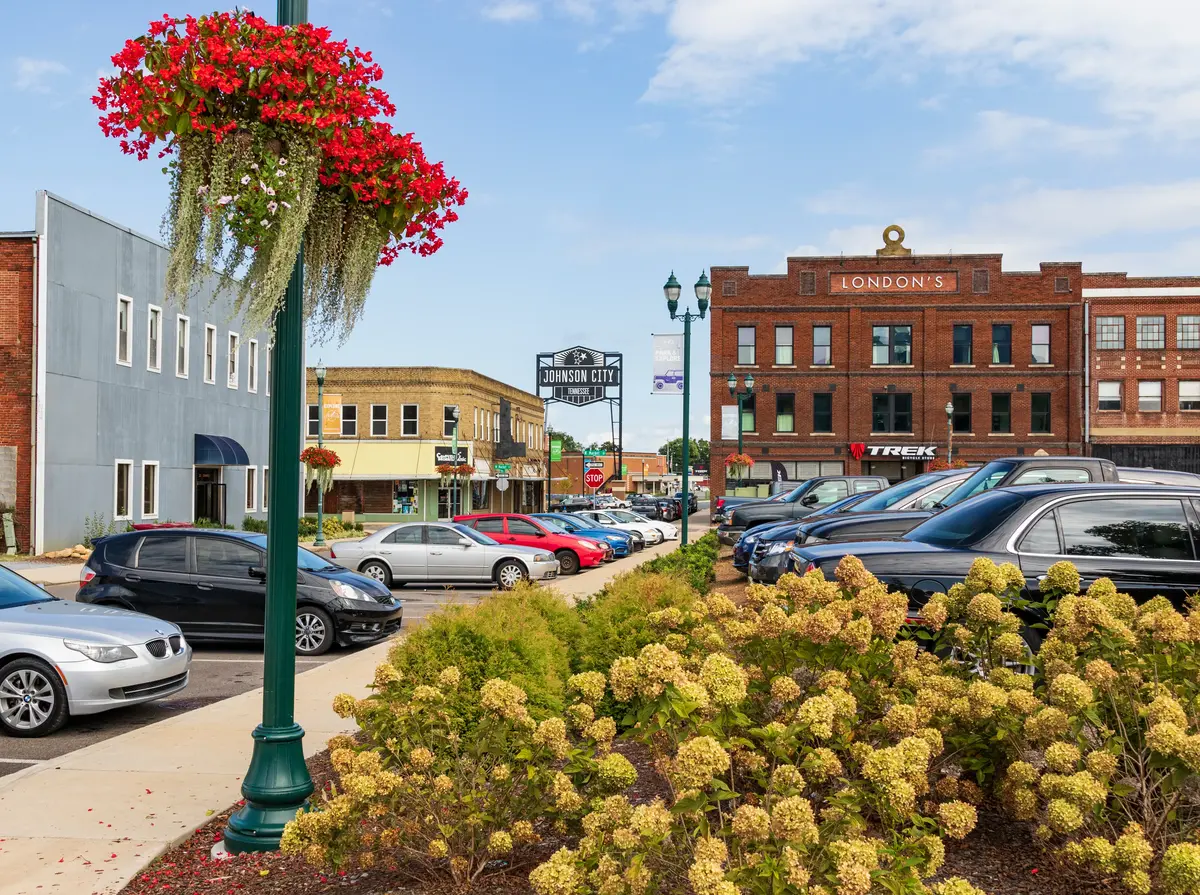
Local Expert Takeaway: Johnson City is a legitimate retirement destination, not a compromise one. The Level I Trauma Center at Johnson City Medical Center, the ETSU affiliation, and Tennessee's zero income tax on retirement income are the three facts that keep serious buyers coming back after they've compared the alternatives. The honest limits are equally clear: you will need a car for daily life, there are no age-restricted 55+ purchase communities within the city, and the sales tax is high enough to notice. Retirees who've done the math on a paid-off ranch home in North Johnson City or the Mountain Home area, a monthly cost structure running well below national averages, and a flat trail that goes 9.6 miles without a hill tend to stop comparing and start scheduling a visit.
Quick Takeaways & FAQs
✅ Johnson City Medical Center is one of only five Level I Trauma Centers in Tennessee, giving retirees access to tertiary-level care — including a dedicated heart hospital and cancer center — without leaving the city.
⚠️ No age-restricted 55+ purchase communities were found within Johnson City, which is a real gap for retirees expecting that product type; nearby Kingsport has more options.
📍 Tennessee's effective property tax rate in Johnson City is approximately 0.43%, and the state exempts all Social Security, pension, and retirement-account income from state income tax — but the combined sales tax of 9.5–9.75% is among the highest in the country.
Is Johnson City a good place to retire?
Does Tennessee tax Social Security or pension income?
What hospital do Johnson City retirees use, and how good is it?
Are there 55+ communities in Johnson City, TN?
How walkable is Johnson City for retirees who want to age in place?
Moving to Tennessee?
Tell us what you need help with and we'll connect you with local resources.
