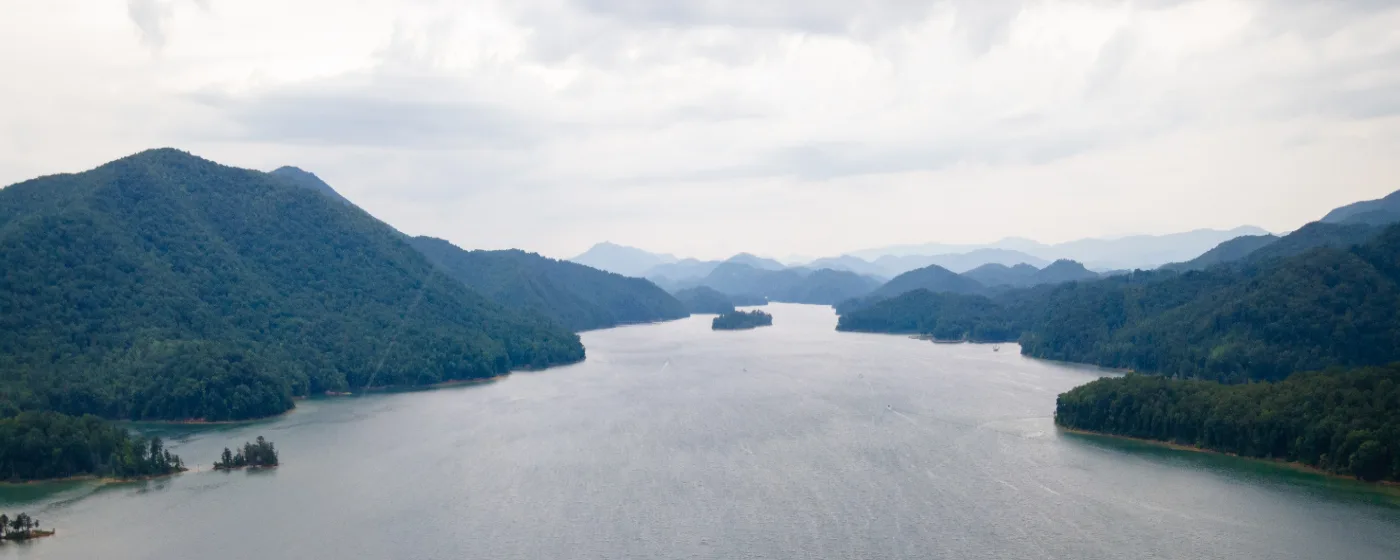
You've done the spreadsheet. Johnson City checks the boxes on paper — home prices a fraction of what you left behind, no state income tax, a university anchoring the local economy, mountains within reach. But the spreadsheet doesn't tell you about the culture shift, the sales tax surprise, the four genuine seasons (two of which involve actual weather events), or why Californians who move here tend to either stay forever or leave within two years. This guide covers what the numbers mean in practice, not just in a column.
Johnson City is a city of 74,943 in Washington County, tucked into the Appalachian foothills of northeast Tennessee — part of the Tri-Cities metro alongside Kingsport and Bristol. East Tennessee State University anchors the city's identity and its economy, drawing research and healthcare employment alongside Ballad Health and the James H. Quillen VA Medical Center. The school district, serving 7,623 students enrolled in 2024-25, holds an A rating, according to Niche — a detail that moves families from California faster than almost anything else in this market. Eastman Chemical Company, headquartered in Kingsport, draws additional professional-class residents who commute about 30 minutes to Kingsport for work.
The overall cost of living runs approximately 5% below the U.S. national average, with housing costs tracking roughly 10% below that same benchmark. The typical home value sits at $295,339 as of August 2026 — a figure that lands somewhere between jarring and disorienting for buyers arriving from Sacramento, let alone the Bay Area or San Diego. The full cost-of-living breakdown shows a city where groceries, utilities, and routine expenses track close to national norms — it is the housing and tax picture that delivers the real shock. Health insurance premiums run noticeably below what most Californians pay, though you will drive farther for specialist care than you did in a large California metro.
Whether you are being priced out, chasing a remote-work lifestyle, or simply done with California's income tax, the sections below break down the home price comparison, the tax picture, what daily life actually looks like here, the outdoor access that keeps Californians from going back, and the honest trade-offs no one puts in the relocation brochure.
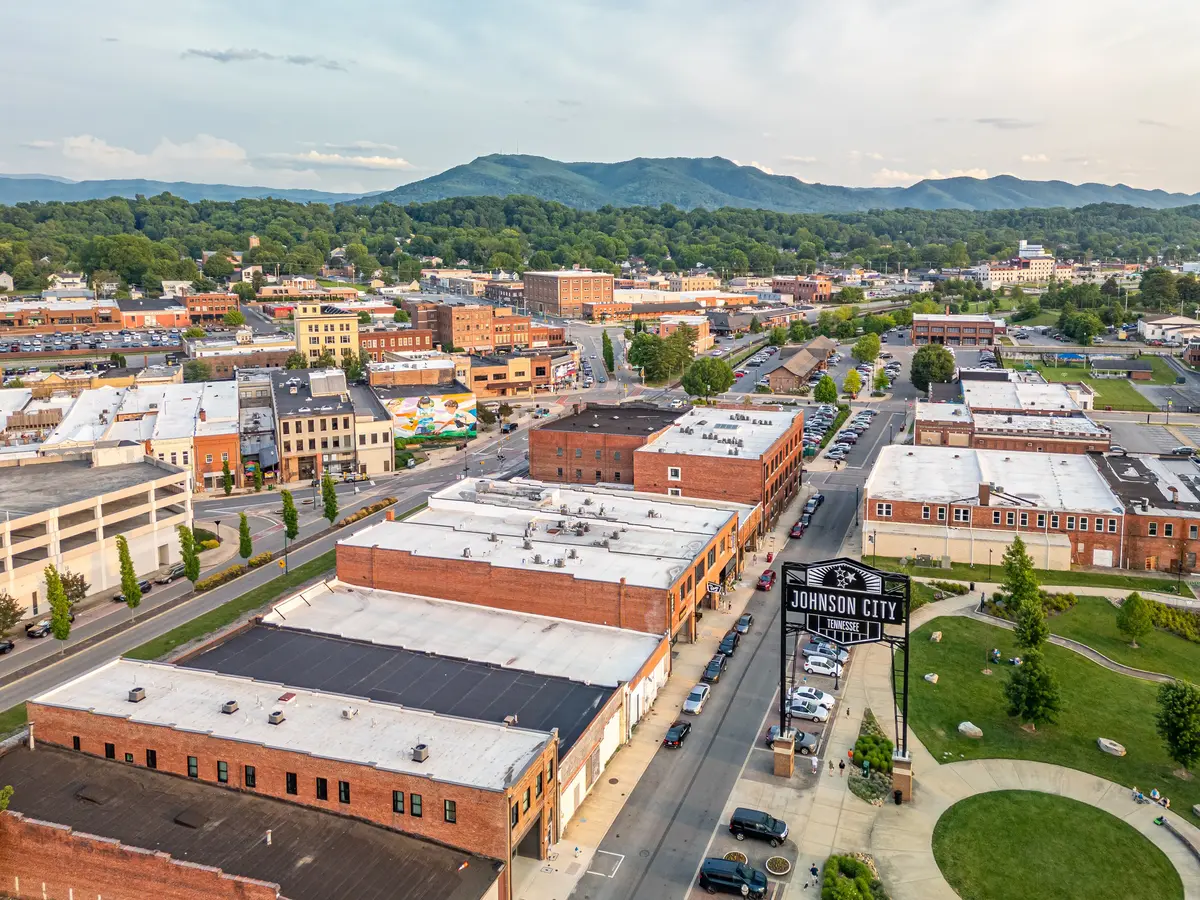
The Home Price Gap: California vs. Johnson City
California's statewide typical home value of $764,158 is the starting point for the comparison — and Johnson City's $295,339 (Zillow ZHVI, August 2026) is what sits on the other side of it. That is not a small gap. For a California buyer arriving with equity from a sold home, it frequently means paying cash or carrying a very modest loan on a house they could not have imagined affording at home.
What that gap actually buys you here is worth understanding. Entry-level options in Johnson City — older ranches in Mountain Home, smaller bungalows near downtown — start well below the city-wide figure. The neighborhoods without a tracked tier, including the Tree Streets, Boones Creek, and Lake Ridge, each carry their own character and price reality; the neighborhoods guide covers the distinctions in full. What you will not find anywhere in Johnson City is the price compression that forces California buyers to choose between square footage and school quality.
The effective property tax rate here is 0.43% — Tennessee levies no state property tax, so the only bill is local. California's effective property tax rate of 0.71% is already well below the national average thanks to Proposition 13, which means the property tax gap between the two states is real but not enormous. For a California buyer used to Prop 13 protection on a long-held home, the difference is modest. For a buyer who recently purchased in California at current values, the annual property tax bill in Johnson City will feel like a rounding error by comparison.
One honest note on affordability: the median household income in Johnson City of $55,429 sits below what is needed to comfortably carry the typical home at current prices. That gap matters if you are arriving without California equity behind you — local buyers feel it. California transplants with proceeds from a sale are in a structurally different position, which is part of why they make up a meaningful share of buyer activity in this market.
| Metric | Johnson City, TN | California (statewide) |
|---|---|---|
| Typical home value | $295,339 (Zillow ZHVI, August 2026) | $764,158 (Zillow ZHVI) |
| Effective property tax rate | 0.43% | 0.71% |
| State income tax | None | Top rate of 13.3% |
| Combined sales tax rate | ~9.5% (state + Washington County) | 7.25% base (many cities exceed 10% with local add-ons) |
| Typical rent (city-wide) | $1,449/mo (Zillow ZORI, August 2026) | Noticeably higher statewide |
| Overall cost of living | ~5% below U.S. average | Well above U.S. average |
* ZHVI = Zillow Home Value Index.
The rent figure is worth noting for Californians who plan to rent first before buying — $1,449 a month for a typical Johnson City rental is a different financial reality than most coastal California renters are used to.
The Tax Picture: What Tennessee Actually Does to Your Paycheck
Tennessee has no state income tax on wages, salaries, retirement distributions, or investment gains. The Hall Tax — which once applied to dividends and interest — was fully phased out as of January 2021. For a California household accustomed to seeing a significant line item on every pay stub, the absence of that tax is immediate and tangible.
California's top state income tax rate of 13.3% applies only to the highest earners, but the bracket structure means most professional-income households in California are paying meaningfully above 9%. Moving to Johnson City eliminates that entirely. For a dual-income household earning $200,000 combined, the difference runs into five figures annually — money that compounds differently when you are also paying a third of what you paid for housing.
The trade-off is sales tax. Johnson City's combined state-and-local rate runs approximately 9.5% — Tennessee's 7% base plus Washington County's add-on. California's statewide base sales tax rate of 7.25% sounds lower, but California's local add-ons push many cities well past 10%, so the actual gap depends heavily on where in California you came from. If you left a city with a 10.25% combined rate, Johnson City's 9.5% is actually a slight improvement. If you left a lower-rate city, you will notice the difference at the register.
Tennessee also taxes groceries at a reduced rate rather than exempting them, which is a genuine difference from California. It is not a budget-breaker, but it surprises people from states that exempt food from sales tax entirely.
What the Tax Shift Means in Practice
Most California transplants come out significantly ahead on taxes in aggregate. The income tax savings alone typically dwarf the sales tax differential, and the property tax bill on a Johnson City home is a fraction of what the same household was paying in California — even accounting for California's Prop 13 protections. The households that feel the sales tax most are retired buyers on fixed incomes who make large purchases regularly; the households that feel the income tax savings most are earners in the upper brackets who were watching California take a substantial share of every dollar above a certain threshold.
For remote workers keeping California salaries while moving to Tennessee, the state income tax disappearance is the single largest financial change. Tennessee has no mechanism equivalent to California's aggressive tax residency enforcement, but if your employer is California-based, understanding how your specific work arrangement is classified matters — that is a conversation for a tax professional, not a relocation guide.
Daily Life: What Changes and What Doesn't
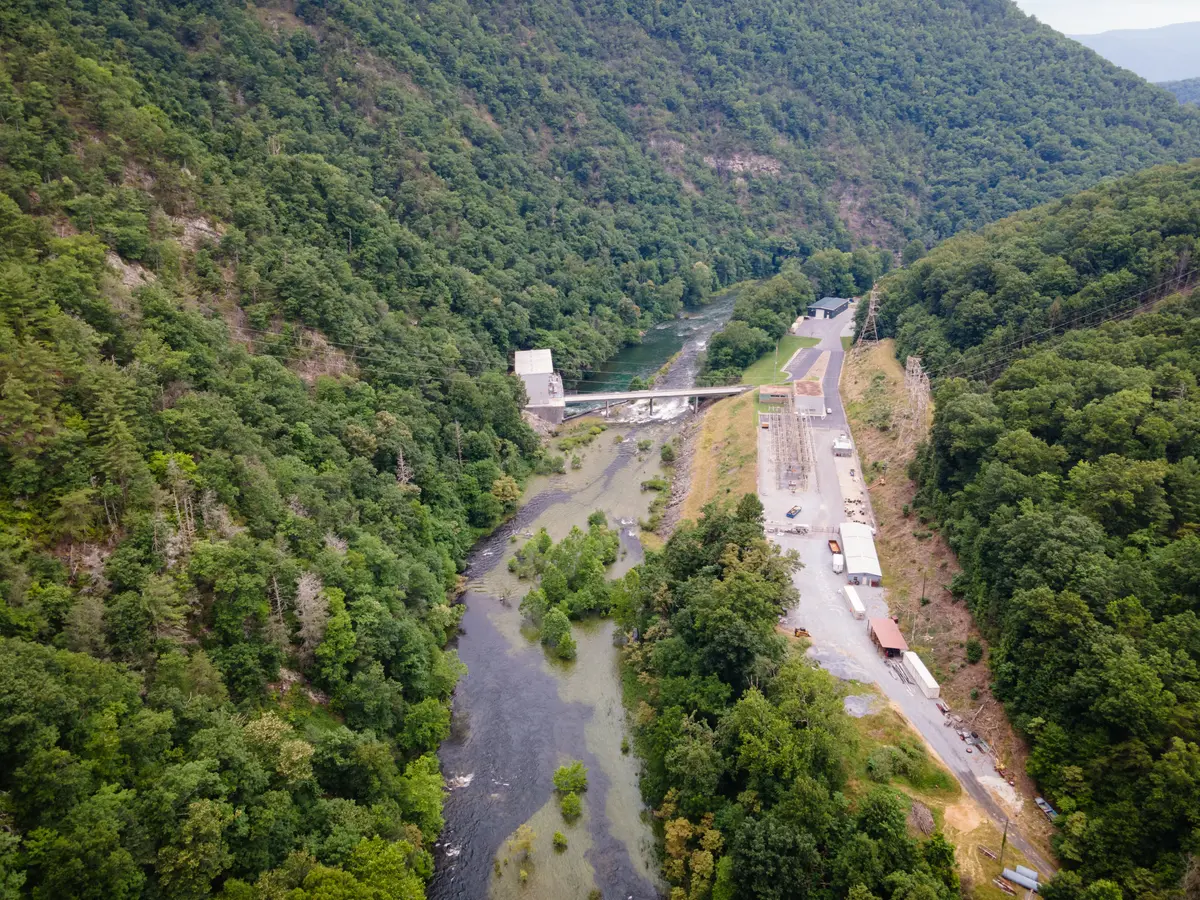
Six months in, most Californians who move to Johnson City say the same thing: they had no idea how much of their California life was spent managing logistics. Traffic, cost, the friction of a large metro. Johnson City removes most of that friction. The city is genuinely navigable — most drives across town take under fifteen minutes on a bad day.
The Tri-Cities Airport (TRI), about 17 miles from the city, handles direct flights to several major hubs. It is not LAX. For Californians used to multiple nonstop options to anywhere, the airport requires adjusting expectations: more connections, fewer direct routes, more planning around travel. This is the most commonly cited practical frustration among California transplants after the first year.
Where Locals Actually Spend Time
The Tweetsie Trail — Tennessee's longest rails-to-trails conversion at 19.6 miles — connects Johnson City to Elizabethton on a flat, paved greenway that draws walkers, runners, and cyclists year-round. Founders Park anchors the downtown edge. Winged Deer Park and Buffalo Mountain Park give the city genuine green space without driving into the mountains. The Johnson City Farmers' Market runs through the warm months and draws a regular crowd that functions as one of the city's informal social centers.
The food and coffee scene is legitimately good for a city of this size. Open Doors Coffeehouse, Dos Gatos Coffee Bar, The Moon Coffee and Tea House, and Auntie Ruth's Doughnuts & Pretzels anchor the independent café scene. For food, Freiberg's, Southern Craft BBQ, Label Restaurant, Tiebreakers, and The Firehouse represent the range — from longtime local institutions to newer spots that reflect the city's growth. Blue's Brews Co. Coffeeshop rounds out the daytime options. None of these are California substitutes; they are Johnson City originals, and that distinction matters after a few months.
The Seasonal Reality
Johnson City gets 201 sunny days a year. That sounds reasonable until January arrives with ice storms that shut down roads Californians would drive through without a second thought. The city sits at elevation, and winter weather is real, recurring, and something locals plan around. Black ice on hilly streets is the thing nobody warned you about. Summers are humid in a way that is different from anything in coastal California — not oppressive by Southeast standards, but genuinely sticky in July and August. The payoff is the best springs and falls in the eastern United States, and most transplants consider that a fair trade.
Looking to buy in Johnson City? Estimate your payment.
Enter your numbers to see an estimated monthly mortgage payment.
Estimate only. Excludes HOA fees and mortgage insurance. The interest rate above is a starting point, not a quoted rate — replace it with your own to see real numbers. Insurance is a flat placeholder, not a Johnson City quote.
Beyond the Monthly Mortgage Payment — What to Factor In
- The property tax rate above — The 0.43% used in the estimate is the median effective rate — tax actually paid as a share of market value — published by Ownwell, 2026. Half of local homes pay more and half pay less: your own bill depends on that property's assessed value and any exemptions it qualifies for, which can differ a lot from its market price. Confirm with the Washington County assessor before you budget.
- Total cost of ownership — Your monthly mortgage payment is just the baseline. Depending on the specific city, county, and service district, homeownership costs also include local utility fees, municipal surcharges, and special assessments (such as water, sewer, storm drainage, or local energy taxes) that vary by location.
- Independent due diligence — Because these recurring local costs and municipal fees change depending on the exact property address, buyers must research them independently during their transaction process.
Tax laws, local municipal fees, and utility costs change frequently and individual situations vary. This page is general information, not tax or legal advice — always consult a qualified tax professional, CPA, or local municipal offices for personalized guidance.
Outdoor Access: The Reason Most Californians Stay
If you moved from Northern California for the outdoors and assumed you were trading down, the Appalachian region will correct that assumption quickly. Johnson City sits within reach of the Appalachian Trail, with multiple access points in the surrounding area. Roan Mountain, a short drive from the city, reaches elevations approaching 6,300 feet — the tallest peak in Tennessee outside Great Smoky Mountains National Park — and includes the highest-elevation shelter on the entire Appalachian Trail.
The city itself is a practical base for rock climbing, whitewater rafting, mountain biking, and caving in the surrounding Appalachian Mountains. Tannery Knobs Mountain Bike Park sits within the city and draws riders who, in California, would have driven an hour to reach comparable terrain. Buffalo Mountain Park offers trail running with genuine elevation gain minutes from residential neighborhoods.
For Californians who oriented their lives around outdoor access — weekends in the Sierra, trails from the doorstep — Johnson City delivers something similar in character if different in specifics. The mountains here are older, rounder, and more forested than the Sierra. The trails are less crowded. The access is cheaper. The honest catch is that coastal access is a very long drive from here, and some California transplants discover around year two that they miss it more than they expected. That is a real reason people move back.
The Outdoor Access the Spreadsheet Doesn't Capture
East Tennessee's outdoor calendar runs year-round in a way that surprises people from coastal California, where seasons are mild but outdoor activity patterns are relatively consistent. Here, spring wildflower season on Roan Mountain draws serious hikers from across the region. Fall color along the ridgelines is something locals plan around. Winter hiking on iced-over waterfalls has its own dedicated audience. The Tweetsie Trail's flatness makes it accessible to families with kids and older residents in a way that steeper California trails often aren't. For a full breakdown of what outdoor access looks like here, the parks and recreation page goes deeper.
Honest Trade-offs: What California Prepared You For and What It Didn't
Most California transplants arrive prepared for the price shock — in the right direction. They are not prepared for the culture adjustment. Johnson City is a mid-sized Appalachian college town with a strong sense of place, a distinct political lean, and social norms that differ from California's coastal metros in ways that go well beyond weather and taxes. That is not a verdict either way; it is a reality check worth sitting with before you sign a contract.
The city's growth has been real and sustained. In-migration has driven a genuine surge in building permits and new business formation, and Johnson City now draws remote workers and equity-rich buyers from coastal markets at a pace that would have been hard to predict a decade ago. That growth brings new amenities, new residents, and new economic energy — and it also brings rising prices in the housing market, even if the current figures still look modest relative to California. The buyers who got here three years ago locked in the best combination of low prices and growing infrastructure. The buyers arriving now are still getting a favorable deal by California standards, but the gap will not stay this wide forever.
What You Would NOT Do If Moving Here
Buy without visiting in January first. Johnson City's summers and falls are easy to love; the winter ice on hilly streets is a different experience entirely. Buyers who visit in May and close in June sometimes discover in February that their particular street or neighborhood has drainage and ice characteristics they did not anticipate. The neighborhoods page covers the geographic distinctions in more detail, but the general principle applies: elevation and topography matter here in winter in ways they simply do not in most of California.
The other thing experienced buyers flag: do not underestimate how much you will rely on a car. Johnson City's overall cost of living advantage is real, and the cost-of-living page breaks it down in full — but transportation is a category where California and Johnson City are more similar than different. This is a car-dependent city. Errands are not walkable the way they might have been in a California neighborhood with good street-level retail. For buyers prioritizing on-foot access, Downtown Johnson City and the Tree Streets offer the most walkable streets in the city, but they are the exception. Most of Johnson City assumes a vehicle for most trips, most of the time.
For Californians weighing Johnson City against Kingsport or Bristol: Kingsport is somewhat lower in typical home prices; Bristol is noticeably lower. Both are a reasonable drive from Johnson City's university amenities and dining. The Tri-Cities metro functions as a shared region more than three competing cities, and buying in any of them gives you access to roughly the same outdoor infrastructure, the same regional employers, and the same general quality of life. The choice between them usually comes down to commute direction and neighborhood preference more than any fundamental lifestyle difference. See the first-time homebuyer page for what the buying process itself looks like in this market.
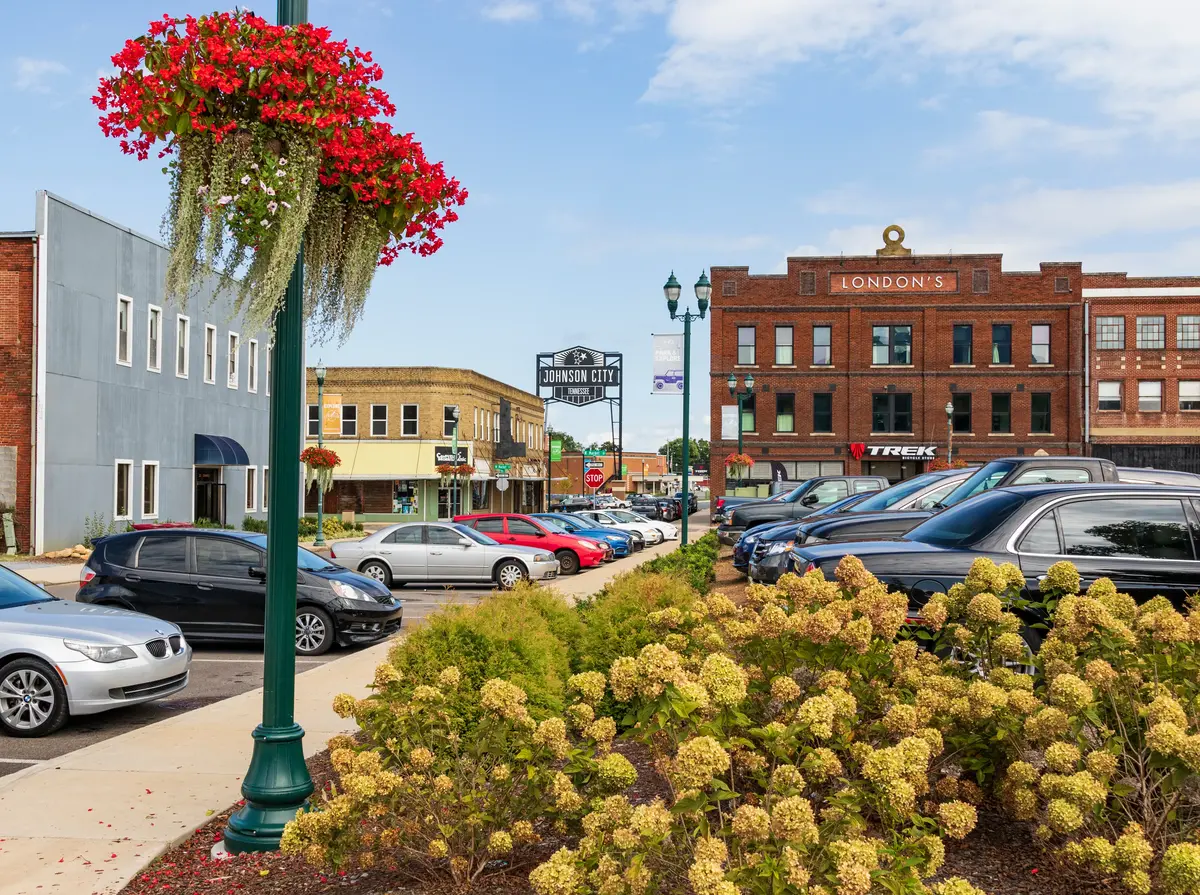
Local Expert Takeaway: California transplants in Johnson City almost universally cite the same turning point: the moment they realize their mortgage payment is less than their old California rent, they're walking Tweetsie Trail on a Tuesday morning with no traffic to fight, and they're keeping every dollar their employer pays them. The tax math is real, the outdoor access is real, and the price gap is real. What catches people off guard is not what they gave up — it's how quickly Johnson City stops feeling like a trade-off and starts feeling like the point.
Quick Takeaways & FAQs
✅ Tennessee has no state income tax, so a California household paying 9–13% in state income tax keeps that money the day they establish Tennessee residency.
⚠️ Johnson City's combined sales tax rate of approximately 9.5% runs higher than California's base rate, and Tennessee taxes groceries — a detail that surprises buyers expecting a clean tax win across the board.
📍 Tannery Knobs Mountain Bike Park and the 19.6-mile Tweetsie Trail sit inside or directly adjacent to the city — outdoor access here is not a weekend drive, it is a Tuesday evening option.
How much cheaper is Johnson City than California for housing?
Does Tennessee have a state income tax?
What is the sales tax in Johnson City, and is it higher than California?
What do Californians miss most after moving to Johnson City?
Is Johnson City a good fit for remote workers from California?
Moving to Tennessee?
Tell us what you need help with and we'll connect you with local resources.
