
What Is Living in Johnson City, Tennessee Like?
If you're choosing between Johnson City and somewhere in the broader Tri-Cities region, the decision usually comes down to one real trade-off: Johnson City has the university energy, the trail infrastructure, and the most walkable downtown of the three — but it carries a higher price tag than Kingsport or Bristol, and wages here run noticeably below the national average. That tension is real, and it shapes nearly every decision a buyer or renter makes here. The city sits in Washington County along I-26, about 100 miles northeast of Knoxville and within easy reach of both the Virginia border and the Blue Ridge highlands. At 74,943 residents, it is the 8th-largest incorporated city in Tennessee and the anchor of a metro area of more than 580,000 people.
The economic backbone here is unmistakably healthcare and higher education. East Tennessee State University draws a large student body to a 366-acre campus inside the city, and its James H. Quillen College of Medicine anchors a medical-education corridor shared with Ballad Health and the James H. Quillen VA Medical Center. Those three institutions are the city's largest employers and define its professional culture. Manufacturing matters too — Eastman Chemical Company, one of the region's dominant industrial employers, is based in Kingsport, and many Johnson City residents commute there. General Shale rounds out the local industrial base. Johnson City Schools, with 7,623 students enrolled in 2024-25, holds an A rating, according to Niche — an unusual distinction for a mid-sized public district and one that consistently draws families with school-age children.
The cost picture is genuinely favorable compared to most mid-sized American cities. Housing costs run roughly 18% below the national average, and the overall cost of living is approximately 10% below the national benchmark. The typical home price sits at $295,339 (Zillow Home Value Index, August 2026), which goes a long way in a region with 201 sunny days a year, world-class mountain biking less than a mile from downtown, and Tennessee's longest rails-to-trails project running from city center to neighboring Elizabethton. The honest counterpoint: the median household income of $55,429 falls short of what it takes to comfortably carry the typical home here — the gap is real and worth planning around. For the full cost breakdown, see the cost of living page.
Whether you're being recruited to ETSU or Ballad Health, priced out of Asheville or Knoxville, or simply want mountain access without paying mountain-town prices, the sections below break down Johnson City's neighborhoods, housing market, employers, commute realities, and what daily life here actually looks and feels like.
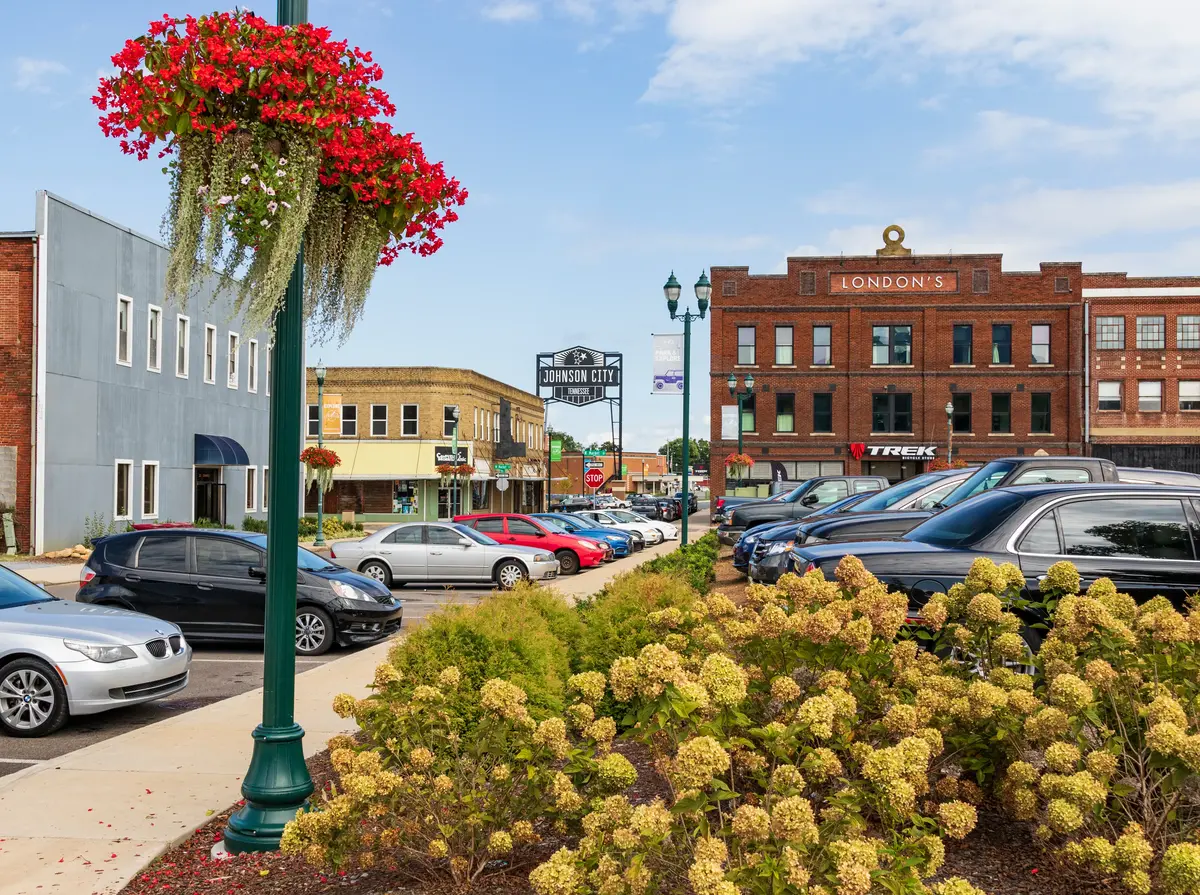
Johnson City at a Glance
Looking to buy in Johnson City? Estimate your payment.
Enter your numbers to see an estimated monthly mortgage payment.
Estimate only. Excludes HOA fees and mortgage insurance. The interest rate above is a starting point, not a quoted rate — replace it with your own to see real numbers. Insurance is a flat placeholder, not a Johnson City quote.
Beyond the Monthly Mortgage Payment — What to Factor In
- The property tax rate above — The 0.43% used in the estimate is the median effective rate — tax actually paid as a share of market value — published by Ownwell, 2026. Half of local homes pay more and half pay less: your own bill depends on that property's assessed value and any exemptions it qualifies for, which can differ a lot from its market price. Confirm with the Washington County assessor before you budget.
- Total cost of ownership — Your monthly mortgage payment is just the baseline. Depending on the specific city, county, and service district, homeownership costs also include local utility fees, municipal surcharges, and special assessments (such as water, sewer, storm drainage, or local energy taxes) that vary by location.
- Independent due diligence — Because these recurring local costs and municipal fees change depending on the exact property address, buyers must research them independently during their transaction process.
Tax laws, local municipal fees, and utility costs change frequently and individual situations vary. This page is general information, not tax or legal advice — always consult a qualified tax professional, CPA, or local municipal offices for personalized guidance.
Why Are People Moving to Johnson City?
The short version: people are arriving from pricier metros — Asheville, Charlotte, Nashville, and increasingly from out of state — because Johnson City offers Appalachian scenery, a functioning downtown, and a medical-education job base, at a fraction of what those places cost. Washington County has seen steady population growth in recent years, and the broader Northeast Tennessee region has been hitting population records — growth driven by in-migration from higher-cost metros and the stability of the healthcare and university job base.
The Job Base That Makes It Work
Healthcare dominates. Ballad Health is the metro's largest health system, ETSU's Quillen College of Medicine trains the next generation of regional physicians, and the James H. Quillen VA Medical Center adds a significant federal employment anchor. Together, health care and social assistance account for the single largest employment sector in the metro area. If you work in medicine, nursing, research, or medical education, Johnson City is one of the most professionally complete small cities in the Southeast.
Manufacturing is the second pillar. Eastman Chemical Company — headquartered in Kingsport — employs a large portion of the regional workforce, and many Johnson City residents make that commute daily. General Shale operates locally in building materials. Retail rounds out the picture, but wages reflect the reality of a smaller market: the average hourly wage in the metro was $26.32 as of May 2025, well below the national average. Management and healthcare practitioners earn significantly more, but mid-level and entry workers feel the gap.
A City That's Grown Its Business Base
One shift that surprises people: Johnson City has seen strong new business formation over the past decade, with Washington County showing an active and growing small-business community. This reflects a real shift in the city's identity — it is no longer purely a healthcare and university town, and the downtown development that followed shows it.
What Draws People Beyond the Paycheck
The university presence keeps the city younger and more culturally active than its size would suggest. ETSU's large and active student body means live music, theatre, a constant rotation of lectures and events, and a food scene that punches above its weight. The outdoor access is genuine — Buffalo Mountain Park rises 1,354 feet within city limits, Tannery Knobs has 40+ acres of mountain bike terrain less than a mile from downtown, and the Tweetsie Trail provides a flat, paved 10-mile route connecting the city to Elizabethton. For the full picture on parks and outdoor recreation, that page goes deep.
For a summary of what the schools look like once you're here, see the schools page.
What Daily Life Feels Like in Johnson City
A University Town That Doesn't Shut Down at Night
Johnson City moves at a pace that most people from larger metros find immediately comfortable. The downtown core along Market and Main has enough independent coffee shops, restaurants, and live-music venues to fill a weekend without driving anywhere. Founders Park functions as the city's civic gathering point — concerts, festivals, and community events anchor the calendar there. The Freedom Hall Civic Center draws regional shows and events that you'd otherwise have to drive to Knoxville to catch.
The ETSU Effect
Living near East Tennessee State University's campus shifts the feel of the surrounding neighborhoods noticeably. Cherokee and Seminole Woods put residents within cycling distance of the university and two of the city's three largest employers. That proximity has a flip side: game-day and event traffic on University Parkway can stack up fast, and parking near campus is genuinely competitive during the academic year.
Seasonal Surprises
Newcomers consistently underestimate the winters here. Johnson City sits at roughly 1,600 feet elevation, and ice events — not heavy snowfall, but freezing rain and black ice on the mountain-adjacent roads — are a recurring feature between December and March. Locals keep a set of good tires and don't plan to take Buffalo Mountain trails in late January. Summers are warm but rarely punishing, and fall color in the surrounding ridges is legitimately spectacular in October.
The Car Question
Most errands require a drive. The downtown core and the ETSU-adjacent neighborhoods are the exceptions — residents there can reach coffee, groceries, and their workplace on foot or by bike. Everywhere else, the car is essential. If your work or daily routine sits away from the central corridor, plan your life around driving. The grocery run, the pediatrician, the hardware store — all are drivable and generally uncrowded, but they are not walkable for most of the city's geography.
For specifics on the crime picture, the safety page covers the data in full. The city records a violent crime rate of 4 per 1,000 residents and a property crime rate of 24 per 1,000 residents — the property figure runs somewhat above state and national averages, something buyers in higher-traffic commercial corridors should factor in.
The Johnson City Housing Market Right Now
The typical home in Johnson City is priced at $295,339 (Zillow Home Value Index, August 2026) — a figure that reads as remarkably accessible to buyers arriving from Asheville, Nashville, or any coastal market. The honest context is that the local median household income of $55,429 falls short of what is needed to carry that purchase comfortably, which means some buyers are stretching. For full cost and tax detail, the cost of living page is the right starting point.
What the Price Buys You
At this price point, Johnson City offers genuine square footage. Bungalows in the Tree Streets neighborhood, newer construction on larger lots in Boones Creek, mid-century ranches near Mountain Home — the variety is real. Mountain Home sits below the city median, making it the most accessible entry point in the city for buyers watching their number closely. No other neighborhood carries a verified price tier, but character and housing stock vary significantly across the eight distinct areas of the city.
Typical city-wide rent runs $1,449 per month (Zillow, August 2026), which reflects the university rental market as much as the owner-occupied one. Demand near ETSU and downtown pushes that figure higher in certain pockets; the best neighborhoods page breaks down what each area actually feels like on the ground.
The Effective Property Tax Rate
Tennessee's effective property tax rate is among the lowest in the country, and Johnson City reflects that: the effective rate here is approximately 0.43%, which is meaningfully below the national average. There is no state income tax in Tennessee, which is a structural advantage that buyers relocating from income-tax states often don't fully account for at first. The cost of living page covers the full tax picture.
Who Is Buying Here
The buyer pool skews toward healthcare and university professionals, remote workers who want mountain access without paying for it, and families drawn specifically by the school district rating. There is also a steady flow of retirees and near-retirees from higher-cost metros who find the combination of outdoor access, a real downtown, and a major health system within city limits genuinely rare at this price. First-time buyers should read the first-time homebuyer page before making an offer — the process here has a few wrinkles worth understanding.
Johnson City Neighborhoods
Johnson City has several distinct areas — each with its own character and appeal. Here’s a breakdown to help you narrow down where to focus your home search.
🏡 Downtown Johnson City
The most walkable part of the city, with independent restaurants, galleries, and Founders Park anchoring the social calendar. Best suited to buyers or renters who want to live close to the action without owning a car for every errand.
🏠 Tree Streets
One of Johnson City's most architecturally distinctive areas, with streets named after trees lining historic bungalows and mid-century homes within close reach of downtown. A strong pick for buyers who value historic character and neighborhood walkability.
🌳 North Johnson City
A more spread-out, car-dependent part of the city with a mix of commercial corridors and residential subdivisions. Practical for buyers prioritizing space and quick access to retail without the downtown premium.
🏘 Boones Creek
The family-oriented eastern area of the city, drawing residents with Winged Deer Park's 340 acres of lake-adjacent recreation and direct I-26 access for the Kingsport commute. Newer construction and larger lots define the housing stock here.
🏔 Mountain Home
The most accessible neighborhood by price in Johnson City, anchored by the James H. Quillen VA Medical Center campus. A practical choice for buyers working in federal healthcare or looking for an entry-level foothold in the market.
🌆 Cherokee / Seminole Woods
Adjacent neighborhoods that put residents within walking or cycling distance of the ETSU campus and two of the city's largest employers. Popular with university staff, graduate students, and young professionals who want to minimize their car dependency.
Pros & Cons of Living in Johnson City
The Pros
- Anchored by a stable, recession-resistant healthcare and higher-ed economy centered on Ballad Health and ETSU
- Extensive outdoor recreation right in town via the Tweetsie Trail, Buffalo Mountain Park, and Tannery Knobs
- A growing, revitalized downtown with public art, breweries, and festivals
- Noticeably lower cost of living and housing costs than the national average
The Cons
- Median household income lags both the state and national averages, leaving less cushion for higher earners moving from bigger metros
- Several crime-rating services flag property crime as elevated relative to national norms
- Limited direct commercial air service compared to larger metros
Getting Around & Commuting in Johnson City
The Highway Frame
I-26 is the primary spine connecting Johnson City to the rest of the region, carrying the bulk of commuter traffic toward Kingsport and toward Asheville and the broader interstate system. US-19W, US-11E, US-23, and US-321 radiate outward and connect the city to Elizabethton, Jonesborough, and the surrounding county. University Parkway is the main corridor through the ETSU side of the city and gets congested during peak academic hours.
The Kingsport Commute
The single most common commute pattern in this market is Johnson City to Kingsport, driven largely by Eastman Chemical's workforce. The drive is about 30 minutes to Kingsport under normal conditions. That commute is predictable most days, but construction along the I-26 corridor and morning backups near the interchange have become a recurring friction point for residents making that run daily. If you're taking that job in Kingsport and planning to live in Johnson City, factor in the commute with honesty — it is not a hardship, but it is not negligible either.
In-City Getting Around
Within Johnson City, most residents drive. The ETSU corridor and downtown are the two pockets where on-foot or on-bike access works genuinely well. The Tweetsie Trail — Tennessee's longest rails-to-trails project at 10 miles — functions as both a recreational path and a practical active-commute route between downtown Johnson City and Elizabethton. Tannery Knobs sits less than a mile from downtown, which means residents in the core neighborhoods can reach mountain bike trails without loading a car.
Regional Access
Tri-Cities Airport (TRI) is approximately 17 miles from downtown Johnson City — close enough that early flights don't require an overnight stay nearby. It handles direct routes to major hubs, which matters for the professional class that commutes to meetings in Charlotte, Atlanta, or Chicago. If you work remotely or drive to work, Johnson City suits you well; most daily life here is organized around the car. The Virginia border and Boone, NC are both within roughly an hour's drive, giving Johnson City residents access to ski terrain, additional healthcare options, and a wider cultural draw without requiring a move to a more expensive market.
Schools in Johnson City
Families relocating to Johnson City have public, private, and higher-education options nearby. Here’s a quick overview.
🎓 School District
Johnson City serves K–12 students across Johnson City and the surrounding area. Rated A (source: Niche.com).
📊 District Stats
- Enrollment 2024-25
- 7,623 students
- 4-year graduation rate
- 98.2%
- Math proficiency 2025-26
- 64.5%
- Reading proficiency 2025-26
- 63.6%
- Science proficiency 2025-26
- 69.3%
Source: Tennessee Department of Education Data Downloads (district profile, graduation rate and TCAP assessment files).
📚 Higher Education
Tennessee’s public universities — the University of Tennessee, Vanderbilt University, and Middle Tennessee State University — offer four-year degrees statewide, with a statewide community and technical college system of 13 community colleges and 24 colleges of applied technology, with tuition-free options for residents through Tennessee Promise and Tennessee Reconnect providing two-year and workforce programs.
🌐 Online Learning
UT Knoxville Online and MTSU Online offer fully accredited online degrees for remote learners across the state.
Safety in Johnson City
A quick look at how Johnson City compares on the numbers that matter most when weighing a neighborhood or a move.
🛡 Violent Crime
Approximately 4 per 1,000 residents.
🔒 Property Crime
Approximately 24 per 1,000 residents.
Compared to the most recent national figures from the Bureau of Justice Statistics (2024), Johnson City’s violent crime is above the national average (about 3.7 per 1,000), and property crime is above the national average (about 18.4 per 1,000).
Against Tennessee as a whole, Johnson City’s violent crime is roughly two-thirds of the state average, and property crime is somewhat above the state average (Bureau of Justice Statistics, Crime Known to Law Enforcement, 2024 (tables 2 and 3)).
Crime rates can vary a lot within a single city, so the citywide numbers above are only a starting point. Some neighborhoods in Johnson City run well below these averages, while others run higher — the kind of block-by-block detail that matters most when you’re actually choosing where to live. The full guide below breaks it down neighborhood by neighborhood.
Working in Johnson City
Johnson City’s largest employers span several industries — here are some of the anchors of the local job market.
🏥 Ballad Health
Healthcare
🎓 East Tennessee State University
Higher education
🏥 James H. Quillen VA Medical Center
Federal healthcare
🏭 Eastman Chemical Company
Chemical manufacturing, located in Kingsport
🏭 General Shale
Building materials manufacturing
Parks & Recreation in Johnson City
Some of the outdoor spaces that shape everyday life in Johnson City.
🌱 Founders Park
🌱 Tweetsie Trail
Johnson City residents don’t have to go far for green space — spots like Founders Park and Tweetsie Trail are part of everyday life here, whether that’s a morning walk, a weekend hike, or just somewhere to unwind outside. The full guide below covers more of what Johnson City has to offer for parks and outdoor recreation.
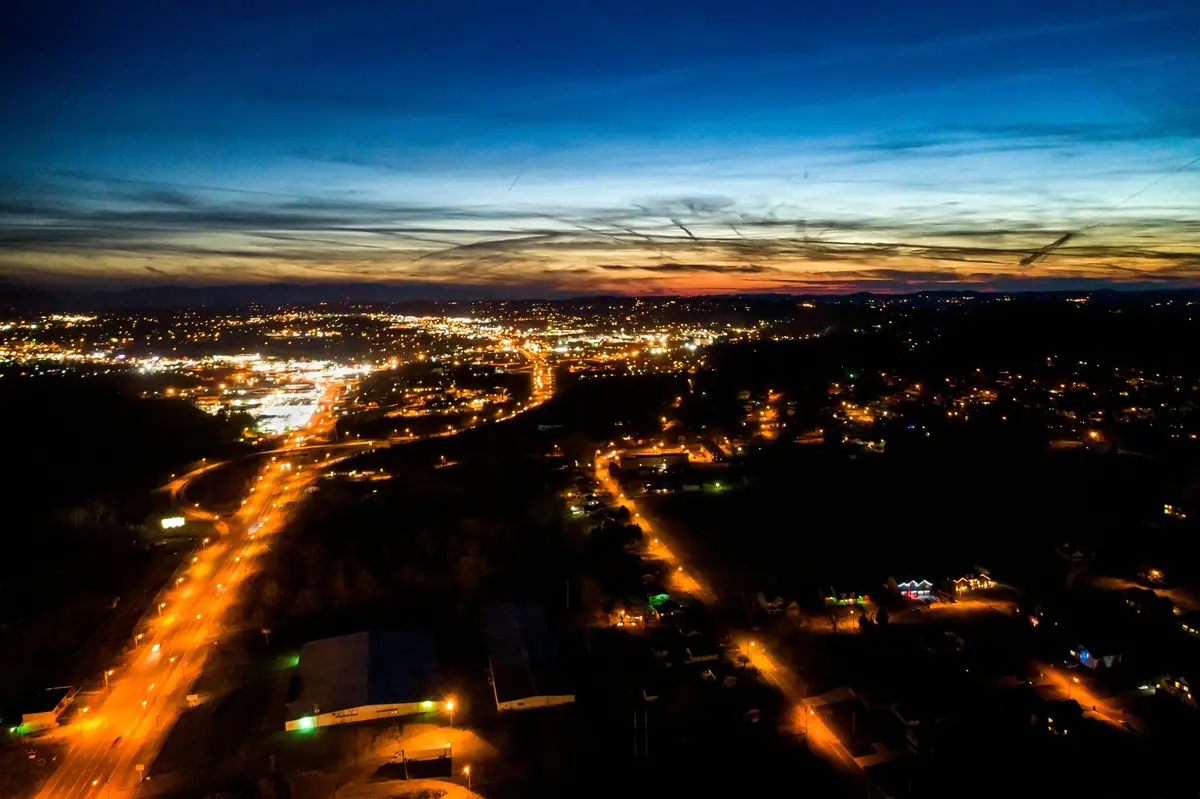
Retiring in Johnson City
Johnson City draws retirees for its balance of amenities, outdoor access, and cost. Here’s what to weigh.
🌤 Climate
Johnson City sits at roughly 1,600 feet elevation, which delivers 201 sunny days a year alongside four genuine seasons. Summers are warm without being punishing. Winters bring cold snaps and periodic ice events on mountain-adjacent roads — something retirees from flatter regions should factor into their daily-life planning.
🍴 Lifestyle
The downtown core offers independent dining, live music, and a farmers' market without requiring a long drive. ETSU's campus hosts lectures, performances, and cultural events year-round, and Founders Park anchors the city's outdoor social calendar. For retirees who want outdoor access, Buffalo Mountain Park, Winged Deer Park, and the Tweetsie Trail cover terrain from gentle paved paths to serious elevation gain.
🏚 55+ Communities
No 55+ communities were found in Johnson City. Retirees here typically purchase single-family homes in established neighborhoods or rent near the city's medical and university corridor. The full picture on healthcare access and retirement living is on the retiring page.
✈ Getting Around
A car is necessary for most daily errands across the city. The downtown core and ETSU-adjacent neighborhoods are the most walkable pockets. Tri-Cities Airport (TRI) is approximately 17 miles away, handling direct routes to major hubs — a practical asset for retirees who travel to see family.
🏛 Tennessee Taxes for Retirees — What to Know
- No state income tax — Tennessee has no personal income tax. Social Security, pensions, 401(k) and IRA withdrawals and annuity payments are all untaxed at the state level, with no state return to file. The Hall tax on interest and dividends — the state’s last income-type tax — was fully phased out and repealed effective 2021.
- Sales tax is the tradeoff — The state sales tax is 7.0%, and local add-ons bring the combined rate in Johnson City to 9.5% (Tennessee Department of Revenue (SUT-13, SUT-53); Streamlined Sales Tax rate boundary file TNR2026Q3, Q3 2026). Groceries are taxed at a reduced state rate of 4% plus the local rate; prescription drugs are exempt. Prepared food, candy, dietary supplements and alcohol pay the full rate.
- Property taxes are low, not the tradeoff — Property tax in Tennessee is set county by county, and rates are low by national standards. Unlike Texas, which funds local government through high property taxes in place of an income tax, Tennessee leans on its sales tax instead — so a retiree is not trading one bill for another. Your county trustee publishes the current rate.
- Tax relief for owners 65 and over — The state reimburses part of the property tax bill for low-income homeowners who are 65 or older, and for disabled homeowners of any age, through the Property Tax Relief program administered by county trustees. It is income-tested and must be applied for each year.
- A tax freeze — but only where the county or city adopted it — Tennessee also allows a Property Tax Freeze that locks a homeowner’s bill at the amount owed in the year they qualify, for owners 65 and over under an income limit. It is a local option: each county and city chooses whether to offer it, and sets its own income threshold, so it is available in some parts of the state and not others. Check with the county trustee.
- No estate, inheritance or gift tax — Tennessee has none of the three. The inheritance tax was repealed for deaths occurring in 2016 and after, and the gift tax was repealed effective January 1, 2012.
- No separate capital gains tax — Because Tennessee has no state income tax, capital gains — including on investments and on the sale of a home — are not taxed at the state level at all, unlike states such as Washington that tax capital gains separately from income.
Source: Tennessee Department of Revenue and Tennessee Comptroller of the Treasury.
Tax laws change frequently and individual situations vary. This is general information, not tax advice — always consult a qualified Tennessee tax professional or CPA for personalized retirement tax planning.
Weekends & Local Favorites in Johnson City
The Outdoor Infrastructure Is the Real Draw
Buffalo Mountain Park's 725 acres rise straight out of the south side of the city, with the White Rock and Buffalo Mountain Loop climbing more than 1,300 feet and drawing serious hikers year-round. Tannery Knobs Mountain Bike Park opened in 2019 as a public-private project with the Southern Off-Road Bicycle Association; its 40-plus acres include a pump track, beginner flow trails, and technical lines on a ridgeline with city views. Winged Deer Park stretches 340 acres along Boone Lake in the Boones Creek area, with a fishing pier, a boat launch, disc golf, and a full calendar of community events. The Tweetsie Trail connects the downtown core to Elizabethton on a flat, paved 10-mile surface that draws walkers, runners, and cyclists of every ability level.
Civic Anchors
Founders Park is the beating heart of downtown events — outdoor concerts, seasonal festivals, and the Johnson City Farmers' Market all happen there or nearby. The George L. Carter Railroad Museum on the ETSU campus draws rail history enthusiasts from across the region. The Tipton-Haynes State Historic Site takes you back to the earliest days of Tennessee statehood and is one of the more underrated half-day stops in the Tri-Cities. Carnegie Hotel is the city's landmark lodging — a beautifully restored property downtown that also anchors a stretch of the dining and nightlife scene.
Where Locals Actually Eat and Drink
The verified local lineup worth knowing: Freiberg's has been a Johnson City institution for decades, the kind of place longtime residents take visiting family. Southern Craft BBQ does serious slow-smoked work. Label Restaurant is the downtown choice when the occasion calls for something more considered. Tiebreakers draws the sports-watching crowd. The Firehouse rounds out a core five that cover most moods without requiring a chain.
For coffee and daytime spots: Open Doors Coffeehouse has a loyal following and a community-centered feel. Auntie Ruth's Doughnuts & Pretzels is a local institution in the morning pastry category. Dos Gatos Coffee Bar and The Moon Coffee and Tea House serve the independent-café crowd, and Blue's Brews Co. Coffeeshop straddles the coffee-and-beer overlap that the university neighborhood gravitates toward.
The Cultural Calendar
ETSU's presence means a near-constant rotation of lectures, performances, and athletics events on campus. The broader arts and music scene leans toward Americana, bluegrass, and indie rock — genres that feel authentic here rather than performed. Freedom Hall Civic Center draws touring acts and regional sporting events that would otherwise require a Knoxville drive. The Appalachian culture in the air is real; this is not a suburb trying to import a city identity, it is a place with its own creative roots.
Local favorites in Johnson City
Restaurants
- Freiberg's
- Southern Craft BBQ
- Label Restaurant
- Tiebreakers
- The Firehouse
Outdoors
- Tweetsie Trail
- Founders Park
- Winged Deer Park
- Buffalo Mountain Park
- Tannery Knobs Mountain Bike Park
Coffee
- Open Doors Coffeehouse
- Auntie Ruth's Doughnuts & Pretzels
- Dos Gatos Coffee Bar
- The Moon Coffee and Tea House
- Blue's Brews Co. Coffeeshop
Farmers Markets
- Johnson City Farmers' Market
Top Things Locals Say About Johnson City
The best intel about a city comes from the people who actually live there. Here’s what Johnson City residents say when newcomers ask the questions everyone’s thinking.
“I knew the outdoors would be good, but I didn't expect Tannery Knobs to be walkable from my front door. That changed how I thought about weekends entirely. What I didn't see coming was how much I'd feel the elevation in winter — the ice on those hillside roads is no joke.”
— Recent Johnson City home buyer
“What's the most surprising thing about living in Johnson City?”
Most people are surprised by how much of a real city it feels like for its size. The ETSU presence means there's always something happening — a lecture, a performance, a game — and the downtown has genuinely independent restaurants and coffee shops. The other surprise is winter: the elevation means ice events that people from flat-state backgrounds genuinely don't expect. The roads near Buffalo Mountain and the hillside streets off University Parkway can be treacherous from December through February.
“What do locals love most about Johnson City?”
The combination of trail access and a functional downtown is hard to find at this price point anywhere in the Southeast. Tannery Knobs and the Tweetsie Trail get used constantly — not just by outdoor enthusiasts, but by regular residents who've built them into their daily routines. The school district's performance is a point of genuine local pride. And the fact that Tennessee has no state income tax is something people who moved from elsewhere bring up repeatedly once they've lived here through a full tax year.
“What should newcomers to Johnson City know?”
Two things people wish they'd been told: first, the Kingsport commute is genuinely common and the I-26 interchange backs up more than the drive time suggests on paper. If you're taking a job at Eastman, build in extra time until you know the pattern. Second, the neighborhood you choose shapes your daily experience more than most places — the ETSU corridor, the Tree Streets area, and Boones Creek feel like different towns. Visit each one before you decide.
“How much do you need a car in Johnson City?”
For most residents, a car is essential. The downtown core and the blocks closest to the ETSU campus are the exceptions — those areas are genuinely manageable on foot or by bike, and the Tweetsie Trail makes the downtown-to-Elizabethton stretch car-free. Everywhere else — Boones Creek, North Johnson City, Mountain Home — the car handles nearly everything. Groceries, the pediatrician, most errands: all drivable, generally quick, but not walkable.
Cities Near Johnson City
Other communities near Johnson City worth a look — each with its own character and price point.
| City | Distance | Best For | Vibe | Median Rent | Median Buy |
|---|---|---|---|---|---|
| Kingsport | 22 mi | Industrial workers, value buyers | Established, working-class, quieter | $1,294 | $257,154 |
| Bristol | 24 mi | Budget buyers, NASCAR fans | Historic, tight-knit, affordable | $1,392 | $237,878 |
| Elizabethton | 12 mi | Outdoor enthusiasts, affordability seekers | Small-town, river access, relaxed | $1,029 | $233,534 |
More Helpful Guides for Johnson City
Going deeper on Johnson City? Our blog series covers everything from first-time buying to retiring here — explore the guides below.
Local Expert Takeaway: Johnson City works best for people who want a real university town with genuine mountain access and a medical-education job base — and who can accept that wages run below national averages and most errands outside the downtown core require a car. The Tweetsie Trail, Tannery Knobs, and Buffalo Mountain are not marketing language; they are the reason residents stay. The school district's A rating from Niche is the piece that reliably surprises people who expect a smaller city to mean a compromise on education.
Quick Takeaways & FAQs
✅ Johnson City Schools holds an A rating, according to Niche — rare for a public district of this size, and a consistent draw for families with school-age children.
⚠️ The median household income falls short of what's needed to comfortably carry the typical home price here, so buyers should stress-test their budget carefully before making an offer.
📍 Tannery Knobs Mountain Bike Park — 40-plus acres of trails and a pump track — sits less than a mile from downtown, which is genuinely unusual for a city of this size.
Is Johnson City, TN a good place to live?
How far is Johnson City from Kingsport?
What is the housing market like in Johnson City, TN?
What are the best neighborhoods in Johnson City, TN?
Is Johnson City, TN growing?
Helpful Links for Moving to Johnson City
Moving to Tennessee?
Tell us what you need help with and we'll connect you with local resources.
