What Is Living in Nashville, Tennessee Like?
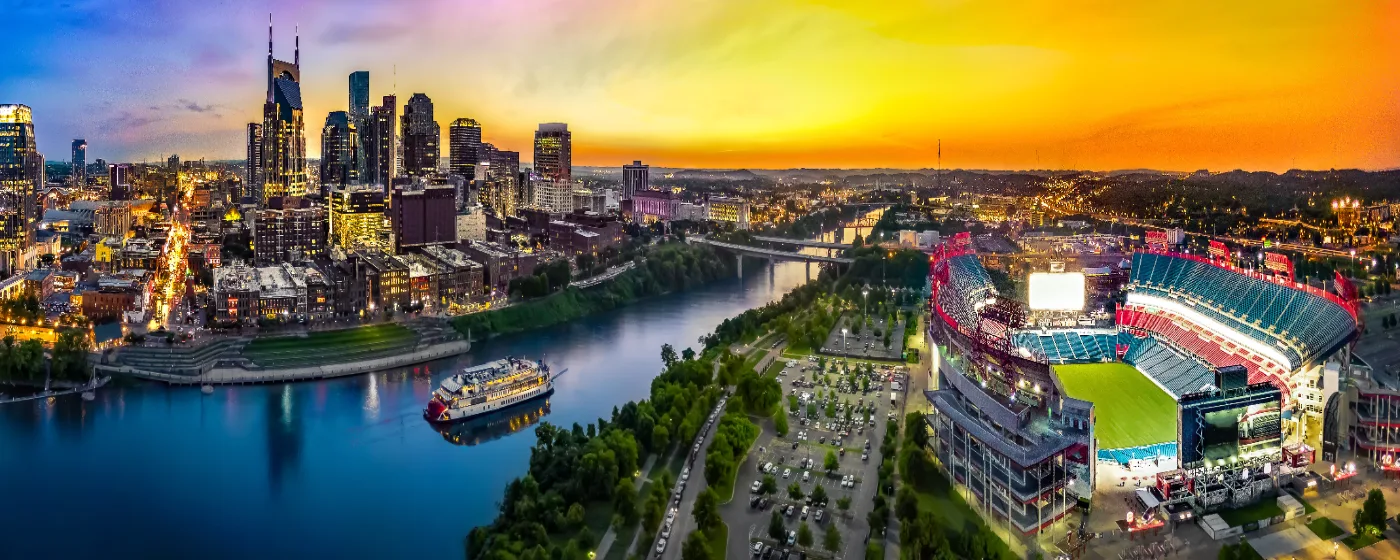
Maybe your company is relocating you here. Maybe you've been priced out of a coastal city and a recruiter mentioned Nashville. Maybe you flew in for a bachelorette weekend, drove through Germantown at dusk, and thought: I could actually live here. Nashville sits on the Cumberland River in Middle Tennessee, ringed by interstates — I-40, I-65, and I-24 converge near downtown — which means virtually every corner of Davidson County is within reach. It is the largest incorporated city in Tennessee and home to 721,074 people, a figure that keeps climbing. Davidson County added nearly 9,300 new residents in 2025 alone, the highest raw total of any of the state's 95 counties. The draw isn't accidental: this is a city that has spent a decade reshaping its skyline, its economy, and its reputation simultaneously.
The economic backbone here is genuinely broad. Vanderbilt University Medical Center anchors the healthcare and education corridor. HCA Healthcare makes Nashville one of the most significant hospital-industry hubs in the country. Bridgestone Americas has its headquarters here. The State of Tennessee employs a substantial share of Davidson County residents. And the tech and professional-services sectors have expanded steadily — the Nashville metro ranked 2nd among the country's 100 largest metros for job growth and income in a recent Checkr analysis covering seven metrics including unemployment rate, labor force growth, and per capita income. The unemployment rate stood at 3.3% as of February 2026. Metro Nashville Public Schools is one of the largest districts in the state and holds a B- rating, according to Niche — a realistic starting point for families who want to understand where to dig deeper into individual school options.
The typical home price in Nashville is $429,741 (Zillow Home Value Index, August 2026), and the typical citywide rent runs $1,834 per month — figures that look manageable until you realize the median household income sits at $75,197, which falls meaningfully short of what it takes to comfortably carry that home price. For a full breakdown of what you actually need to earn to buy here, see the cost of living page. What offsets some of that pressure: Tennessee has no state income tax, an effective property tax rate of approximately 0.81%, and a cost of daily life — groceries, utilities, dining — that remains noticeably below what most coastal transplants are used to. The city logs 205 sunny days a year, winters are mild by Midwest standards, and the outdoor scene along the Cumberland River Greenway and at spots like Radnor Lake State Park and Percy Warner Park gives the city a quality of life that doesn't show up in the income-to-price math.
Whether you're considering a move or just researching the area, the sections below break down Nashville's neighborhoods, housing market, commute patterns, local favorites, and what daily life here actually looks like once the tourist version fades and the real city comes into focus.
Nashville at a Glance
Looking to buy in Nashville? Estimate your payment.
Enter your numbers to see an estimated monthly mortgage payment.
Estimate only. Excludes HOA fees and mortgage insurance. The interest rate above is a starting point, not a quoted rate — replace it with your own to see real numbers. Insurance is a flat placeholder, not a Nashville quote.
Beyond the Monthly Mortgage Payment — What to Factor In
- The property tax rate above — The 0.81% used in the estimate is the median effective rate — tax actually paid as a share of market value — published by Ownwell, 2026. Half of local homes pay more and half pay less: your own bill depends on that property's assessed value and any exemptions it qualifies for, which can differ a lot from its market price. Confirm with the Davidson County assessor before you budget.
- Total cost of ownership — Your monthly mortgage payment is just the baseline. Depending on the specific city, county, and service district, homeownership costs also include local utility fees, municipal surcharges, and special assessments (such as water, sewer, storm drainage, or local energy taxes) that vary by location.
- Independent due diligence — Because these recurring local costs and municipal fees change depending on the exact property address, buyers must research them independently during their transaction process.
Tax laws, local municipal fees, and utility costs change frequently and individual situations vary. This page is general information, not tax or legal advice — always consult a qualified tax professional, CPA, or local municipal offices for personalized guidance.
Why Are People Moving to Nashville?
The honest answer is jobs, taxes, and momentum — in roughly that order. Tennessee levies no state income tax on wages, which is the first thing transplants from California, New York, or Illinois notice when their first paycheck clears. The second thing they notice is that the job market actually delivered on what the recruiter promised.
The Nashville metro's top industries — trade, transportation, and utilities; professional and business services; education and health services; and leisure and hospitality — give the city a diversified base that held up when other Sun Belt markets softened. Vanderbilt University Medical Center and HCA Healthcare together make healthcare one of the city's most durable employment pillars. Bridgestone Americas has maintained its headquarters here for years. And the State of Tennessee provides steady government employment that doesn't track with private-sector cycles.
The East Bank of the Cumberland is where Nashville is placing its biggest bets on the future. The $2.2 billion Titans stadium reached its topping-out milestone in late 2025, with completion targeted for February 2027. Oracle broke ground on a future world headquarters campus in the River North area. A $624 million Tennessee Performing Arts Center riverfront building has been approved. This is not incremental development — it is the most ambitious redevelopment in the city's history.
Nashville Yards opened The Pinnacle music venue in February 2025 and now features retail, a cinema, green space, pickleball courts, and urban farming in what had been underutilized land near downtown. The infrastructure investment is real, not just a rendering.
The Human Friction Moment: Tourism vs. Real Life
What surprises people after six months here is the split between the city they visited and the city they live in. Broadway draws visitors from across the country year-round, and CMA Fest alone fills the city for days at a stretch. Broadway is genuinely electric, but it is also genuinely not where most Nashville residents spend their weekends. The city most people move to exists in Bellevue, East Nashville, Madison, and Donelson — neighborhoods with their own rhythms, hardware stores, and regulars. Newcomers who anchor their expectations to the bachelorette-party version of Broadway tend to feel the gap most acutely in month two.
People move out for real reasons too. The income-to-home-price gap has pushed some buyers to Hendersonville or Mount Juliet, where the commute trade-off starts to feel worth it. Others leave because the city's rapid growth has strained older infrastructure in ways that take time to resolve — roads built for a smaller city, utility corridors under pressure, and construction noise that follows growth wherever it lands.
For families weighing the school picture specifically, the schools page goes deep on Metro Nashville Public Schools and the individual campus options across Davidson County.
What Daily Life Feels Like in Nashville
Nashville is not a city you can summarize in one neighborhood. East Nashville — across the Cumberland from downtown — has the independent coffee shops, the renovated bungalows, and the creative-class energy that newcomers from Austin or Brooklyn recognize immediately. Green Hills has the walkable retail corridor and established tree cover that draws professionals who want the city without the grit. Antioch, in the southeast, is the most culturally diverse part of Davidson County and where the housing goes furthest on a budget.
The geographic divide that matters most to daily life is a simple one: are you east of I-65 or west of it? East Nashville and Donelson sit on one side; Bellevue, Green Hills, and the suburbs toward Franklin sit on the other. Neither is wrong, but they function differently, commute differently, and feel different on a Tuesday morning. For a full neighborhood-by-neighborhood read, the best neighborhoods page breaks it down by lifestyle and fit.
The Seasons Nobody Warns You About
With 205 sunny days a year, Nashville is genuinely pleasant for a good chunk of the calendar. But the shoulder seasons — March and November especially — can swing wildly: tornado watches in spring are routine enough that longtime residents barely discuss them, while newcomers from the West Coast find the severe weather alerts jarring. The city also gets real summer heat and humidity that makes outdoor errands feel different by July than they did in April.
The farmers market scene is a genuine anchor to daily life. The Nashville Farmers' Market near downtown and the Richland Park Farmers Market both draw steady regulars, and they reflect the city's broader food culture: locally sourced, unpretentious, and genuinely community-oriented in a way that coexists with the tourist-facing version of the city.
On the outdoor side, the Cumberland River Greenway and Shelby Bottoms Greenway give the city a recreational spine that runs along the water. Centennial Park — anchored by Nashville's full-scale Parthenon replica — is where midday walkers, weekend families with kids, and morning runners all overlap. Radnor Lake State Park in the southwest gives the city an urban wildlife refuge that most people who don't live near it underestimate.
Safety varies meaningfully by area. The city carries a violent crime rate of 11.5 per 1,000 residents and a property crime rate of 45.9 per 1,000 residents — both above the state rates of 6 per 1,000 and 20.8 per 1,000, and above the national rates of 3.7 per 1,000 violent and 18.4 per 1,000 property. The safety page maps where these numbers concentrate and what they mean for specific neighborhoods.
The Nashville Housing Market Right Now
The typical home in Nashville is priced at $429,741 (Zillow Home Value Index, August 2026). That figure has held relatively firm through the broader market cooling that affected other Sun Belt metros, which tells you something about the underlying demand here: Nashville is not a city people are leaving.
The catch is the income gap. The median household income of $75,197 falls meaningfully short of what most lenders consider comfortable for carrying the typical home price at current rates. That math pushes a meaningful number of buyers into outer Davidson County or across county lines. For the full picture on what ownership actually costs — property taxes at approximately 0.81% effective rate, utilities, and the lifestyle expenses that stack on top — the cost of living page has the breakdown.
What the Market Feels Like Right Now
Well-priced homes in high-demand corridors — East Nashville, Green Hills, Inglewood — attract serious buyer attention quickly. Homes priced above the typical mark or in need of work give buyers more room to negotiate. The market is not the frenzy of 2021, but it is not a buyer's market either.
Some areas of the city cost considerably more than others, and a few sit below the city median — the differences between neighborhoods are real and worth understanding before you start touring. The best neighborhoods page maps that out in detail.
For buyers coming from higher-cost metros, Nashville's prices look accessible. Franklin and Brentwood both run noticeably higher than the city median, and Hendersonville also comes in noticeably higher — so the surrounding suburbs don't automatically solve the affordability equation. First-time buyers navigating the buying process here will find the first-time homebuyer page a useful next stop.
Nashville Neighborhoods
Nashville has several distinct areas — each with its own character and appeal. Here’s a breakdown to help you narrow down where to focus your home search.
🏡 East Nashville
East Nashville is the city's most creatively energized corridor, drawing young professionals and families who want walkable streets, renovated craftsman bungalows, and a neighborhood identity that predates the latest growth wave. Shelby Bottoms Greenway runs along its eastern edge and serves as the neighborhood's backyard trail.
🏠 Antioch
Antioch in the southeast is Nashville's most culturally diverse community and its most accessible entry point price-wise, with a mix of apartment complexes, older ranch homes, and newer townhome developments. It suits buyers who want to be in Davidson County without the premium that East Nashville or Green Hills commands.
🌳 Green Hills
Green Hills is the city's most established retail and dining corridor on the west side, with tree-lined streets, walkable access to shops and restaurants, and a professional-class resident base that has been here long enough to feel settled. It suits buyers who want the city's amenities without the density of downtown.
🏘 Donelson / Hermitage
Donelson and Hermitage sit east of the airport and offer a suburban feel with solid housing stock and proximity to Percy Priest Lake — one of the few parts of Davidson County where you can tie a boat to your property. The pace is slower and the community more rooted than the trendier corridors closer to downtown.
🏔 Bellevue
Bellevue occupies the southwestern corner of Davidson County with established neighborhoods, mature tree cover, and quick access to Percy Warner Park's trail system — making it a consistent choice for buyers who prioritize outdoor access alongside suburban stability.
🌆 Madison
Madison sits north of downtown along the Cumberland River and has drawn increasing interest from buyers priced out of East Nashville, offering older housing stock, a genuine neighborhood feel, and proximity to the river greenway without the premium that comes with a trendier zip code.
Pros & Cons of Living in Nashville
The Pros
- Thriving music, arts, and food scene
- Strong job growth in healthcare and tech
- No state income tax
- Walkable, historic urban neighborhoods
The Cons
- Rising home prices and property tax bills outpacing income growth
- Higher-than-average violent and property crime rates
- Hot, humid summers and heavy year-round rainfall
Getting Around & Commuting in Nashville
Nashville is, at its core, a car city — and I-40, I-65, and I-24 are the arteries that shape when and where traffic stacks. The morning crawl on I-65 toward downtown from the south is the commute most people discover the hard way in their first week. I-440 functions as the inner bypass for cross-city movement, and SR-155 loops the northern and eastern edges of Davidson County.
Voters approved the $3.1 billion "Choose How You Move" transportation program in November 2024. A dedicated transit funding measure took effect in early 2025 to fund an 80% increase in WeGo bus service hours, 24-hour service on key routes, new sidewalks, smart signals at over 100 intersections, and transit center construction. WeGo Public Transit operates dozens of bus routes across Davidson County, carrying substantial daily ridership, and the WeGo Star commuter rail line covers 32 miles between downtown and the western suburbs — a meaningful option for commuters whose workplace falls along the corridor.
Airport Access
Nashville International Airport (BNA) sits approximately 9 miles from downtown — close enough that airport runs rarely require much advance planning and direct flights reach most major U.S. cities without a connection. For remote workers and consultants who fly regularly, this proximity is a genuine quality-of-life factor.
What Locals Actually Know About Commuting Here
The commute that catches newcomers off guard most often is not the downtown one — it's the cross-city trip. Getting from Bellevue to East Nashville without hitting downtown can take 45 minutes in afternoon traffic that looks, on a map, like a 15-minute drive. Knowing which interstates to avoid at which hours, and which surface routes offer relief, is the kind of local knowledge that takes a few months of trial and error to accumulate.
If your job is in Franklin — Nissan North America's operations are based there — that commute runs south on I-65 and can be manageable or miserable depending on which direction you're traveling and what time you leave. Nashville itself is where the jobs concentrate, but the surrounding employment anchors mean a significant share of Davidson County residents commute out rather than in.
Schools in Nashville
Families relocating to Nashville have public, private, and higher-education options nearby. Here’s a quick overview.
🎓 School District
Metro Nashville Public Schools serves K–12 students across Nashville and the surrounding area. Rated B- (source: Niche.com).
📊 District Stats
- Enrollment 2024-25
- 78,040 students
- 4-year graduation rate
- 83.6%
- Math proficiency 2025-26
- 31.6%
- Reading proficiency 2025-26
- 33%
- Science proficiency 2025-26
- 35.7%
Source: Tennessee Department of Education Data Downloads (district profile, graduation rate and TCAP assessment files).
📚 Higher Education
Tennessee’s public universities — the University of Tennessee, Vanderbilt University, and Middle Tennessee State University — offer four-year degrees statewide, with a statewide community and technical college system of 13 community colleges and 24 colleges of applied technology, with tuition-free options for residents through Tennessee Promise and Tennessee Reconnect providing two-year and workforce programs.
🌐 Online Learning
UT Knoxville Online and MTSU Online offer fully accredited online degrees for remote learners across the state.
Safety in Nashville
A quick look at how Nashville compares on the numbers that matter most when weighing a neighborhood or a move.
🛡 Violent Crime
Approximately 11.5 per 1,000 residents.
🔒 Property Crime
Approximately 45.9 per 1,000 residents.
Compared to the most recent national figures from the Bureau of Justice Statistics (2024), Nashville’s violent crime is above the national average (about 3.7 per 1,000), and property crime is above the national average (about 18.4 per 1,000).
Against Tennessee as a whole, Nashville’s violent crime is about double the state average, and property crime is about double the state average (Bureau of Justice Statistics, Crime Known to Law Enforcement, 2024 (tables 2 and 3)).
Crime rates can vary a lot within a single city, so the citywide numbers above are only a starting point. Some neighborhoods in Nashville run well below these averages, while others run higher — the kind of block-by-block detail that matters most when you’re actually choosing where to live. The full guide below breaks it down neighborhood by neighborhood.
Working in Nashville
Nashville’s largest employers span several industries — here are some of the anchors of the local job market.
🏥 Vanderbilt University Medical Center
Healthcare/education
🏥 HCA Healthcare
Healthcare
💼 Nissan North America
Automotive, located in Franklin
🏭 Bridgestone Americas
Manufacturing
🏛 State of Tennessee
Government
Parks & Recreation in Nashville
Some of the outdoor spaces that shape everyday life in Nashville.
🌱 Parthenon replica in Centennial Park
Nashville residents don’t have to go far for green space — spots like Parthenon replica in Centennial Park are part of everyday life here, whether that’s a morning walk, a weekend hike, or just somewhere to unwind outside. The full guide below covers more of what Nashville has to offer for parks and outdoor recreation.
Retiring in Nashville
Nashville draws retirees for its balance of amenities, outdoor access, and cost. Here’s what to weigh.
🌤 Climate
Nashville gets 205 sunny days a year, with mild winters that rarely see prolonged cold snaps — a genuine draw for retirees leaving northern states. Summers run hot and humid from June through August, so outdoor activity shifts to mornings. Spring brings the city's most beautiful weeks and its most severe weather, with tornado season running through April and May.
🍴 Lifestyle
The city offers a range of cultural anchors — Cheekwood Estate & Gardens, the Country Music Hall of Fame and Museum, the Ryman Auditorium, and the Nashville Zoo — alongside quieter daily pleasures at Centennial Park and the farmers market circuit. The restaurant scene has genuine depth across price points. For outdoor-oriented retirees, Percy Warner Park and Radnor Lake State Park provide trail access that rivals what much smaller cities offer.
🏚 55+ Communities
Nashville has several established 55+ communities including The Cloister at St. Henry, Ashley Green, Cedars at Cane Ridge, Parkhaven, and Deer Lake. Options range from maintenance-free townhome living to more amenity-rich settings. Tennessee's lack of a state income tax makes the retirement income math work better here than in most states, which is a consistent draw for retirees weighing their options.
✈ Getting Around
Most daily errands in Nashville require a car, and retirees who drive regularly will find the city's interstate network straightforward outside of weekday peak hours. Nashville International Airport (BNA) sits approximately 9 miles from downtown, making it easy to stay connected to family elsewhere. WeGo bus service covers Davidson County and is expanding, offering a supplemental option for those who want to reduce driving over time.
🏛 Tennessee Taxes for Retirees — What to Know
- No state income tax — Tennessee has no personal income tax. Social Security, pensions, 401(k) and IRA withdrawals and annuity payments are all untaxed at the state level, with no state return to file. The Hall tax on interest and dividends — the state’s last income-type tax — was fully phased out and repealed effective 2021.
- Sales tax is the tradeoff — The state sales tax is 7.0%, and local add-ons bring the combined rate in Nashville to 9.25% (Tennessee Department of Revenue (SUT-13, SUT-53); Streamlined Sales Tax rate boundary file TNR2026Q3, Q3 2026). Groceries are taxed at a reduced state rate of 4% plus the local rate; prescription drugs are exempt. Prepared food, candy, dietary supplements and alcohol pay the full rate.
- Property taxes are low, not the tradeoff — Property tax in Tennessee is set county by county, and rates are low by national standards. Unlike Texas, which funds local government through high property taxes in place of an income tax, Tennessee leans on its sales tax instead — so a retiree is not trading one bill for another. Your county trustee publishes the current rate.
- Tax relief for owners 65 and over — The state reimburses part of the property tax bill for low-income homeowners who are 65 or older, and for disabled homeowners of any age, through the Property Tax Relief program administered by county trustees. It is income-tested and must be applied for each year.
- A tax freeze — but only where the county or city adopted it — Tennessee also allows a Property Tax Freeze that locks a homeowner’s bill at the amount owed in the year they qualify, for owners 65 and over under an income limit. It is a local option: each county and city chooses whether to offer it, and sets its own income threshold, so it is available in some parts of the state and not others. Check with the county trustee.
- No estate, inheritance or gift tax — Tennessee has none of the three. The inheritance tax was repealed for deaths occurring in 2016 and after, and the gift tax was repealed effective January 1, 2012.
- No separate capital gains tax — Because Tennessee has no state income tax, capital gains — including on investments and on the sale of a home — are not taxed at the state level at all, unlike states such as Washington that tax capital gains separately from income.
Source: Tennessee Department of Revenue and Tennessee Comptroller of the Treasury.
Tax laws change frequently and individual situations vary. This is general information, not tax advice — always consult a qualified Tennessee tax professional or CPA for personalized retirement tax planning.
Weekends & Local Favorites in Nashville
Nashville's weekend identity runs deeper than Broadway. The Ryman Auditorium still draws serious music fans to shows that feel nothing like the neon-lit bar crawls two blocks away. The Country Music Hall of Fame and Museum is genuinely absorbing even for people who don't consider themselves country music fans — the archival depth there is remarkable. Bridgestone Arena anchors the downtown sports and concert calendar for bigger productions.
Cheekwood Estate & Gardens on the west side of Davidson County gives the city a proper art-and-gardens destination — rotating exhibitions, significant permanent collections, and grounds worth multiple visits across seasons. The Nashville Zoo draws families consistently and punches above its size for a mid-sized American city.
The restaurant scene reflects the city's growth. Puckett's Restaurant has been a Nashville gathering point long enough that it functions as a cultural institution as much as a dining spot. The Hampton Social draws a lively crowd in a setting that leans into the waterfront. The Stillery occupies a more casual corner of the downtown scene. The Finch and Aba Nashville represent the more intentional end of the dining spectrum — the kind of places where the kitchen is clearly the point.
For coffee, Crema Coffee Roasters is the name longtime residents reach for first — serious coffee, regulars who know their order by heart. Haraz Coffee House brings a different tradition to the cup and has built a loyal following. cafe babu and Elevate Coffee represent the newer wave of independent spots that opened as the city's neighborhoods matured. Bad Ass Coffee of Hawaii offers something different for anyone who wants a bolder, less-precious approach to their morning.
The farmers market circuit — the Nashville Farmers' Market and the Richland Park Farmers Market — gives the weekend a grounded, neighborhood-scale counterpoint to the tourist-facing version of the city. These are where you run into neighbors, not visitors.
On the outdoor side, Percy Warner Park is the west-side escape that locals return to for trail running and weekend hikes. Radnor Lake State Park is quieter and more wildlife-oriented — herons, deer, and stillness that feel genuinely removed from a city of 721,074. The Cumberland River Greenway and Shelby Bottoms Greenway work for casual rides and walks along the water. Centennial Park, with the Parthenon replica at its center, is the city's living room: free, central, and reliably busy on a warm afternoon.
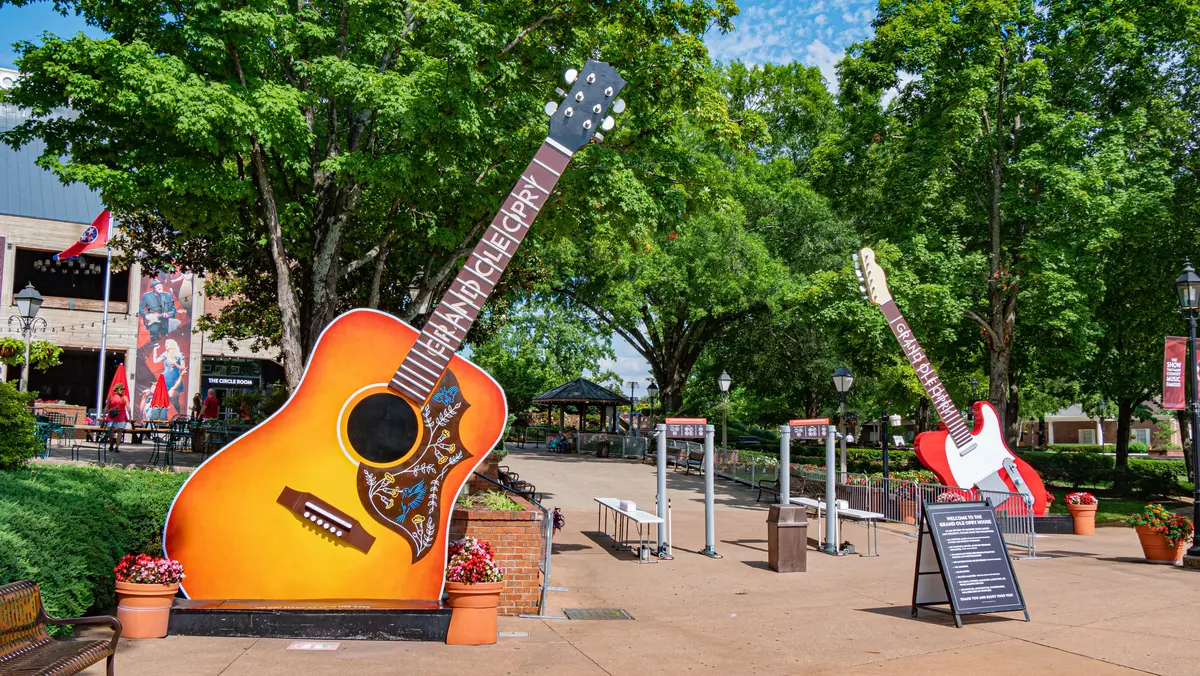
The Grand Ole Opry celebrated its 100th anniversary in 2025, and it remains one of those Nashville experiences that cuts through the hype — a live show there still connects to something the city built long before it became a relocation destination. Nashville Yards, the mixed-use development near downtown, added The Pinnacle music venue in early 2025 alongside a cinema, green space, and a scale of retail that gives the area a genuine neighborhood feel it previously lacked.
For retirees considering Nashville, the retiring page covers the 55+ communities, healthcare access, and lifestyle fit in detail.
Local favorites in Nashville
Restaurants
- The Hampton Social - Nashville
- Puckett's Restaurant
- The Finch
- The Stillery
- Aba Nashville
Outdoors
- Radnor Lake State Park
- Centennial Park
- Percy Warner Park
- Cumberland River Greenway
- Shelby Bottoms Greenway
Coffee
- Crema Coffee Roasters
- Bad Ass Coffee of Hawaii
- Haraz Coffee House
- cafe babu
- Elevate Coffee
Farmers Markets
- Nashville Farmers' Market
- Richland Park Farmers Market
Top Things Locals Say About Nashville
The best intel about a city comes from the people who actually live there. Here’s what Nashville residents say when newcomers ask the questions everyone’s thinking.
“I knew Nashville had traffic, but I didn't understand that getting from one side of the city to the other could take as long as driving to a whole different suburb. Once I figured out which routes to take and when, it got manageable — but those first few months, I was constantly late.”
— Recent Nashville home buyer
“What's the most surprising thing about living in Nashville?”
How little of daily life happens near Broadway. You build your whole routine around your neighborhood — East Nashville has its own coffee spots and parks, Bellevue has its own rhythm, Donelson feels like a completely different city. The tourist version and the resident version barely overlap, and once you settle into your corner of Davidson County, you stop thinking about downtown unless you're going to a show at the Ryman or Bridgestone Arena.
“What do locals love most about Nashville?”
The combination of a serious job market and a genuine outdoor scene in the same city. You can take a real career-track job, and then spend a Saturday morning at Radnor Lake or running the Cumberland River Greenway without fighting for it. The food scene has also grown up — there's real depth now, not just tourist-facing options. And the Grand Ole Opry being here is one of those things that sounds corny until you actually go and realize it's the real thing.
“What should newcomers to Nashville know?”
Give yourself at least a month before you form opinions about traffic. The first few weeks, you'll take the obvious routes and hit the obvious chokepoints. I-65 south in the morning and I-40 west in the afternoon are where everyone learns their lessons. Once you figure out when to use the inner bypass or cut across on surface routes, the city gets a lot more livable. Also: spring weather is genuinely severe — tornado watches are routine, not rare, and you want a reliable weather app before April.
“How much do you need a car in Nashville?”
For most of the city, a car is how you live your life. Grocery runs, errands, getting to work — nearly all of it requires driving unless you happen to live right along a WeGo bus corridor. The downtown core is walkable once you're in it, and the greenway trails work well for recreation. But if you're planning to rely on transit for daily life, research your specific neighborhood and bus route before you commit to an address.
Cities Near Nashville
Other communities near Nashville worth a look — each with its own character and price point.
| City | Distance | Best For | Vibe | Median Rent | Median Buy |
|---|---|---|---|---|---|
| Franklin | 21 mi | Families, top-rated schools, new construction | Polished, walkable historic core, suburban | $2,074 | $925,870 |
| Brentwood | 12 mi | Established families, privacy, top schools | Quiet, upscale, wooded, low-density | $2,031 | $1,404,388 |
| Hendersonville | 18 mi | Families seeking more space, lake access | Relaxed, lakeside, suburban, growing | $1,674 | $518,234 |
More Helpful Guides for Nashville
Going deeper on Nashville? Our blog series covers everything from first-time buying to retiring here — explore the guides below.
Local Expert Takeaway: Nashville rewards people who look past Broadway. The city's best daily life happens in neighborhoods like East Nashville, Bellevue, and Donelson — places with their own coffee shops, parks, and rhythms that have nothing to do with bachelorette weekends. The income-to-home-price gap is real and worth honest planning, but Tennessee's no-income-tax structure and the depth of the job market give buyers more runway than the sticker price suggests. If you're coming from a higher-cost metro, your dollars go further here than almost anywhere with comparable career options — just don't confuse the tourist city with the one you'll actually live in.
Quick Takeaways & FAQs
✅ Nashville's job market is among the strongest of any major metro, with a 3.3% unemployment rate and industry diversity that spans healthcare, tech, government, and manufacturing.
⚠️ The typical home price of $429,741 (August 2026) outpaces the median household income by a meaningful margin — buyers need to plan carefully or look at outer Davidson County options.
📍 The $3.1 billion 'Choose How You Move' transit program passed in November 2024 and is already adding bus routes and frequency — the city is actively investing in alternatives to car commuting.
Is Nashville a good place to live if you don't work in the music industry?
What is the cost of living like in Nashville compared to other major cities?
How are the public schools in Nashville?
Can you get around Nashville without a car?
What neighborhoods in Nashville are best for families?
Helpful Links for Moving to Nashville
Moving to Tennessee?
Tell us what you need help with and we'll connect you with local resources.
