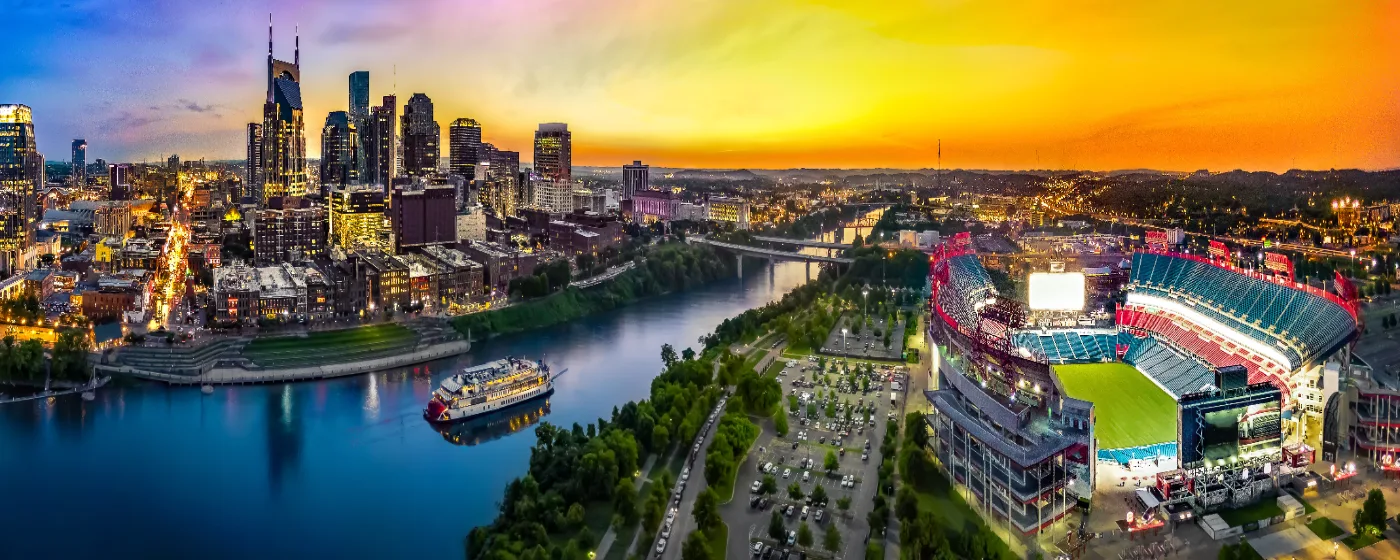
Most people who move to Nashville expecting a music city are surprised to find one of the most park-rich metros in the South waiting for them. Metro Parks oversees 15,134 acres of open space — 178 parks and 99 miles of greenway across Davidson County — and when you add state and federal lands, the total exceeds 24,280 acres. For a city of 721,074 people, that is a serious amount of green space woven directly into neighborhoods, not tucked away at the edge of the county.
What makes the outdoor picture distinctive isn't just the acreage — it's the variety. You can run a paved, ADA-accessible greenway along the Cumberland River with the downtown skyline behind you, then drive twenty minutes and hike old-growth forest inside Radnor Lake State Park. Equestrian trails, mountain bike loops, two public golf courses, a state natural area, and a nature center offering ranger-led canoe floats all exist within the city or its close edge. The infrastructure here genuinely competes with cities twice Nashville's size.
The honest caveat: Nashville's summers are hot and humid, and the stretch from late June through August makes midday trail use unpleasant for most people. The greenways run east-west along river corridors, which keeps them shaded in spots, but a July run at noon in Percy Warner Park is a different experience than the same trail in October. Newcomers from drier climates are usually caught off guard by the first summer. The flip side is that winters rarely shut anything down — 205 sunny days a year means outdoor life has a long season here, and spring wildflower walks at Radnor Lake are genuinely among the better things this city offers.
Whether you're considering a move or just researching Nashville's quality of life, the sections below break down the signature parks and natural areas, the greenway network, seasonal recreation, and the Metro Parks programming calendar that makes this system work for families, seniors, and everyone in between.
Nashville's Signature Parks and Natural Areas
The three parks that define Nashville's outdoor identity each serve a completely different purpose, and knowing which one fits your lifestyle is the first thing any newcomer should figure out.
Radnor Lake State Park
Radnor Lake is Tennessee's first state park to receive a Class II Natural Area designation — the highest level of protection the state offers — and its 1,400-plus acres feel genuinely wild for something this close to a major city. The lake itself covers 85 acres, and 7.75 miles of trail ring it and climb the surrounding ridgelines. The park is free and day-use only.
What draws people back isn't the mileage — it's the density of wildlife. Radnor hosts over 200 bird species, along with river otters, beavers, and white-tailed deer that show up reliably along the lakeside trail most mornings. The Barbara J. Mapp Aviary Education Center houses non-releasable native birds of prey and reptiles, and ranger-led programs run seasonal canoe floats on the lake and wildflower walks in spring. For a city of Nashville's size, having something this intact within the city limits is unusual.
Best for: Nature Quiet
Percy Warner Park and Edwin Warner Park
Together, Percy and Edwin Warner Parks span more than 3,100 acres of forest and field about 9 miles from downtown — making them one of the largest municipally administered parks in Tennessee. Close to a million people visit annually, and the parks are listed on the National Register of Historic Places. That combination of scale and designation is rare for a city park system anywhere in the country.
The recreation menu is wide. Percy Warner alone offers nine hiking trails, mountain bike routes, cross-country running courses used by local schools and clubs, and over 8 miles of equestrian trails served by a dedicated trailhead and trailer parking at the Warner Parks Equestrian Center. Two public golf courses — the 18-hole Harpeth Hills and the 9-hole Percy Warner Golf Course — round out the options. This is not a passive green space; it functions as an active-recreation hub for the entire west side of the city.
The seasonal event worth knowing: the Iroquois Steeplechase, held at Percy Warner each May, is one of the oldest and largest steeplechase races in the country and has drawn Nashville crowds for decades. It's the kind of thing that fills your social calendar before you know you need it filled.
Best for: Families Nature
Centennial Park
Centennial Park sits closer to the urban core and operates differently from Radnor or Warner — it's Nashville's civic lawn, the place you end up on a Sunday afternoon without planning it. The full-scale Parthenon replica anchors the park visually and gives it a character unlike any other public park in the country. The Centennial Sportsplex adjacent to the park includes public pickleball courts.
One thing to know before planning a visit in 2026: the park is undergoing Phase 3 renovations, and the northside is closed for construction through Fall 2026. The core of the park remains accessible, but the footprint is reduced for now. The renovation is worth tracking if you're buying nearby — when it's done, this will be a significantly upgraded civic space.
Best for: Walkable Families
Nashville's Greenway Network: 99 Miles and Growing
Nashville's greenway system is the connective tissue of the city's outdoor life. The network currently runs 99 miles across Davidson County and is planned to eventually form a 23-mile urban loop encircling the city's core — with trails following eight major water corridors including the Cumberland River, Stones River, Mill Creek, Browns Creek, Whites Creek, Richland Creek, and the Harpeth River.
Cumberland River Greenway
The Cumberland River Greenway is the most-used segment in the system — a roughly 9-mile paved, multiuse trail running along the Cumberland through downtown. The downtown segment alone covers about 3.5 miles with unobstructed skyline views, and the trail is built for year-round use: paved, flat, and accessible for biking, running, walking, inline skating, and wheelchair users alike. It's the trail that first convinces people moving from more walkable cities that Nashville has real outdoor infrastructure.
Around 10 additional miles of greenway segments are currently in design or final permitting. A 1-mile Opry Mills connector is planned to link the Cumberland River Pedestrian Bridge to the Cumberland River and Stones River Greenways, and a 4.5-mile Charlotte Corridor Rail-with-Greenway has also been proposed. The network is expanding, which is relevant if you're evaluating neighborhoods with long-term livability in mind — see the best neighborhoods guide for which areas sit closest to existing trail access.
Shelby Bottoms Greenway and Natural Area
Shelby Bottoms is the greenway system's most ecologically significant piece. The 960-acre natural area runs along the Cumberland River in East Nashville and offers more than 5 miles of paved ADA-accessible trail alongside more than 5 miles of primitive paths for hiking, wildlife watching, and birding. Deer, red fox, beavers, mink, and flying squirrels are regularly spotted here — a biodiversity inventory most people don't associate with a neighborhood greenway.
The free Shelby Bottoms Nature Center within the greenway runs environmental education programs, guided nature hikes, and citizen science projects. A pedestrian bridge at the northern end connects directly to the Stones River Greenway, extending the continuous trail experience well beyond the natural area's own boundaries. For families with kids interested in nature programming — or for anyone who wants serious wildlife habitat within biking distance of East Nashville — Shelby Bottoms is the asset that often seals the deal.
| Greenway / Trail | Length | Surface | Best Use |
|---|---|---|---|
| Cumberland River Greenway | ~9 miles | Paved | Running, biking, commuting |
| Shelby Bottoms (paved) | 5+ miles | Paved, ADA-accessible | Family walks, birding |
| Shelby Bottoms (primitive) | 5+ miles | Natural surface | Hiking, wildlife watching |
| Warner Parks trails (hiking) | 9 trails | Natural surface | Hiking, trail running |
| Warner Parks equestrian | 8+ miles | Natural surface | Horseback riding |
| Radnor Lake trails | 7.75 miles | Natural surface | Hiking, photography |
The network's eight water corridors give Nashville's greenways a coherence that random park placements don't — each trail segment connects to a larger system rather than dead-ending at a parking lot.
Seasonal Recreation: What Nashville's Calendar Actually Looks Like
Nashville's outdoor calendar has real texture, and most of it is shaped by the same force: weather. The city logs 205 sunny days a year, which sounds generous until you live through an August here. Smart residents — and smart buyers evaluating neighborhoods — build their outdoor habits around the shoulder seasons.
Spring and Fall: The Dominant Seasons
Spring in Nashville hits fast and hard in a good way. Radnor Lake's wildflower walks in March and April are genuinely worth planning around — the lake trail fills with trillium and mayapple, and birding reaches its peak as migratory species pass through. Percy Warner Park's cross-country courses come alive in fall when the tree canopy turns, and the combination of cool air and hardwood color makes October the month most Nashville residents point to when asked why they stay.
The Iroquois Steeplechase at Percy Warner Park each May is one of those Nashville institutions that surprises people who moved here for other reasons. It's an outdoor social event as much as a race, and it draws a crowd that reflects the city's range — old Nashville families and newcomers sitting on the same hillside.
Summer: The Strategic Season
Summer doesn't shut outdoor recreation down — it reshapes it. The Cumberland River Greenway is the best bet for summer exercise because the river corridor catches whatever breeze exists, and early morning runs before 8 a.m. are genuinely pleasant even in July. Metro Parks runs a Summer Enrichment Program for youth and programming at the Centennial Bandshell during the warmer months. Dog parks, cultural arts classes, ice hockey at the Centennial Sportsplex, and Big Band events round out a calendar that keeps residents engaged even when the heat is serious.
Winter: The Underrated Season
Nashville winters are mild enough that most trails stay usable year-round. Radnor Lake sees some of its least crowded days in January and February, which experienced locals treat as a feature rather than a drawback — the wildlife is easier to spot when the leaf cover drops, and you're not competing for parking. Percy Warner's equestrian trails drain well and rarely close for weather. If you're moving from a city where winter effectively ends outdoor life for four months, Nashville's winter trail access will feel like a genuine upgrade.
One seasonal quirk that catches newcomers: Nashville's spring storm season runs roughly March through May, and flash flooding along the greenway corridors — particularly the Cumberland River trail — can close trail segments for days at a time after heavy rain. Metro Parks posts closures online, and experienced users check before showing up. It's not a reason to avoid the greenways; it's just something you learn quickly after your first soggy walk to a locked gate.
Looking to buy in Nashville? Estimate your payment.
Enter your numbers to see an estimated monthly mortgage payment.
Estimate only. Excludes HOA fees and mortgage insurance. The interest rate above is a starting point, not a quoted rate — replace it with your own to see real numbers. Insurance is a flat placeholder, not a Nashville quote.
Beyond the Monthly Mortgage Payment — What to Factor In
- The property tax rate above — The 0.81% used in the estimate is the median effective rate — tax actually paid as a share of market value — published by Ownwell, 2026. Half of local homes pay more and half pay less: your own bill depends on that property's assessed value and any exemptions it qualifies for, which can differ a lot from its market price. Confirm with the Davidson County assessor before you budget.
- Total cost of ownership — Your monthly mortgage payment is just the baseline. Depending on the specific city, county, and service district, homeownership costs also include local utility fees, municipal surcharges, and special assessments (such as water, sewer, storm drainage, or local energy taxes) that vary by location.
- Independent due diligence — Because these recurring local costs and municipal fees change depending on the exact property address, buyers must research them independently during their transaction process.
Tax laws, local municipal fees, and utility costs change frequently and individual situations vary. This page is general information, not tax or legal advice — always consult a qualified tax professional, CPA, or local municipal offices for personalized guidance.
Metro Parks Programming and What It Means Day-to-Day
The acreage and trail miles matter, but what turns a park system into something residents actually use is programming — and Metro Nashville Parks runs a year-round calendar substantial enough to shape your weekly schedule.
What the Calendar Actually Covers
The programming range is wider than most cities this size. After-school programs and the Summer Enrichment Program serve school-age kids. Senior fitness classes run on a regular schedule. Ice hockey at the Centennial Sportsplex gives Nashville's growing hockey community an accessible on-ramp. Cultural arts classes, dog parks, and Big Band dances at the Centennial Bandshell fill out the warmer months. The Shelby Bottoms Nature Center layers environmental education — school field trips, guided hikes, citizen science projects — on top of the trail access the greenway already provides.
The Barbara J. Mapp Aviary Education Center at Radnor Lake houses non-releasable birds of prey and reptiles and serves as a structured education venue separate from the trail experience. Ranger-led canoe floats on Radnor Lake are among the more distinctive programming offerings in the region — the kind of thing you'd expect from a state park in a rural county, not inside a major city's limits.
What This Means for Families Considering a Move
Families with school-age children should know that Metro Parks programming extends meaningfully into after-school hours and summers — see the Nashville schools guide for how school-year programming and Metro Parks overlap. The nature centers at both Shelby Bottoms and Radnor Lake offer structured environmental education that supplements classroom learning without costing anything beyond transportation.
The honest trade-off: Metro Parks is a large system serving 721,074 people, and the most popular programs fill quickly. The Summer Enrichment Program, in particular, sees registration close fast. If you're moving here with kids and planning to rely on Metro Parks programming as part of your child-care or summer strategy, get on the registration calendar early — this is one of the details that catches first-year residents off guard.
For Buyers Weighing Location Against Park Access
Proximity to the greenway corridors and major parks genuinely varies by neighborhood, and it affects daily life more than most buyers account for. East Nashville sits immediately adjacent to Shelby Bottoms Greenway and Natural Area, a 960-acre preserve along the Cumberland River with paved ADA-accessible trail and a free nature center. Green Hills and Bellevue are the closest residential areas to Percy Warner Park and Radnor Lake State Park. The downtown Cumberland River Greenway is most useful to residents who can reach it without a car. For the full picture on how neighborhoods sit relative to one another, the best neighborhoods guide goes deeper on the geographic trade-offs.
Local Expert Takeaway: Nashville's park system is the thing residents brag about that visitors don't expect. The combination of Radnor Lake State Park — Tennessee's first Class II Natural Area, free and inside the city — with Percy Warner Park's 3,100-plus acres of equestrian and mountain bike terrain, and the Cumberland River Greenway's paved access through downtown, gives Nashville outdoor infrastructure that most Southern cities can't match. The catch is the summer heat, which compresses serious outdoor use into early mornings from June through August. Buyers who put park access on their shortlist should focus on East Nashville for greenway proximity, and Green Hills or Bellevue for the closest access to Warner Parks and Radnor Lake.
Quick Takeaways & FAQs
✅ Nashville's Metro Parks system covers 15,134 acres across 178 parks and 99 miles of greenway — one of the most substantial park networks of any Southern city its size.
⚠️ Summer heat and humidity compress peak trail hours to early morning from late June through August, and spring flooding can temporarily close Cumberland River Greenway segments after heavy rain.
📍 Radnor Lake State Park — Tennessee's first Class II Natural Area — is free, day-use only, and located inside the city limits, with over 200 bird species and ranger-led canoe floats on the lake.
Is Radnor Lake State Park free to visit?
How many miles of greenway does Nashville have?
What neighborhoods in Nashville have the best park access?
Are there equestrian trails in Nashville?
What outdoor recreation is available for kids in Nashville?
Moving to Tennessee?
Tell us what you need help with and we'll connect you with local resources.
