
You've done the California math. Maybe you're a Bay Area homeowner sitting on equity and watching your paycheck get carved down to nothing by state income taxes. Maybe you work remotely and realized the zip code tying you to California no longer has to be yours. Whatever pushed you to start googling Nashville, the numbers land fast: the typical home here was $429,741 as of August 2026, and Tennessee collects zero state income tax on wages or salaries. Those two facts alone explain why the Nashville metro was adding an average of 95 net new residents every single day from 2024 to 2025.
Nashville — population 721,074 — sits in Davidson County at the geographic center of Tennessee, where I-24, I-40, and I-65 converge and make it one of the most connected inland cities in the South. It is the largest incorporated city in Tennessee and the state capital. The economy runs on a mix of healthcare, professional services, government, and a music industry that is larger and more corporate than the honky-tonk image suggests. Vanderbilt University Medical Center and HCA Healthcare anchor the healthcare sector; the State of Tennessee and Bridgestone Americas anchor the government and manufacturing sides. Oracle has committed to a $1.2 billion investment in the Nashville area. This is not a one-industry town waiting for a recession to expose it.
The lifestyle adjustment is real, though. Nashville gets 205 sunny days a year — solid, but not the relentless California sunshine you might be leaving. Humidity in July and August is genuinely different from coastal California, and tornado awareness is a part of life here that nobody prepares you for until spring arrives. Public transit is car-dependent territory; WeGo Public Transit runs the bus network, but most Nashvillians drive everywhere. On the cost side, groceries, utilities, and everyday expenses run noticeably below California levels, though the 9.25% combined sales tax in Davidson County is something to factor in. Routine health insurance premiums also tend to run below what California residents typically pay, though you may drive farther for certain specialist care.
Whether you are close to making an offer or still in the spreadsheet phase, the sections below break down what Californians actually gain and give up in the trade — taxes, home prices, neighborhoods, the job market, and the cultural adjustments that nobody puts on a relocation checklist.

The Home Price Math: What Your California Equity Buys Here
California's statewide typical home value of $764,158 is the number most Californians are calibrated to — and it is almost certainly below what they actually paid if they bought in the Bay Area or Los Angeles in the last decade. Nashville's typical home price of $429,741 as of August 2026 represents a genuinely different entry point.
What that gap means in practice depends on what you are bringing. A California seller arriving with substantial equity can buy a Nashville home outright or with a manageable down payment and carry a far smaller mortgage than they left behind. A California renter making the move for financial reasons should know that Nashville's typical rent runs around $1,834 per month — lower than California coastal markets, but not dramatically so in the urban core. The ownership advantage is where Nashville pulls ahead clearly.
A few things to set expectations on the buy side. Nashville's median household income is below the income needed to buy the typical home here — the gap is roughly $40,000 — which means the market is not cheap relative to local wages, even if it is cheap relative to California prices. Well-priced homes in desirable neighborhoods move without sitting for long. And Nashville's suburban neighbors command even more: Franklin and Brentwood both run noticeably higher than the city-wide figure, and Hendersonville does as well.
Where the Price Gap Shows Up
The neighborhoods that draw the most California buyers span a range of price points. Some of the most sought-after areas — East Nashville, Green Hills, and Inglewood — run above the city median, while Donelson lands roughly at it. Antioch and Madison offer genuine entry points below the city median for buyers who aren't arriving with large California equity. For the full breakdown of what each neighborhood looks and feels like, the best-neighborhoods page covers the character and tradeoffs in detail.
The practical advice: arrive knowing that Nashville's property tax rate of 0.81% — the lowest of the four major Tennessee cities — means your carrying costs stay reasonable once you close. A California home at a comparable price would carry a lower rate (California's effective property tax rate of 0.71% is the figure California buyers know), but the dollar difference narrows quickly because Nashville's purchase prices are lower to begin with.
The Tax Shift: What Californians Actually Save
The income tax story is the one that moves people. Tennessee is one of nine states with no income tax on wages or salaries. California's top state income tax rate of 13.3% applies to the highest earners, but the brackets are graduated from 1% all the way up — so even a household earning $150,000 is paying a meaningful state bite in California that simply does not exist in Tennessee.
A household earning $100,000 can expect to save roughly $5,762 per year in state income tax alone after the move. After accounting for Nashville's higher combined sales tax, the net annual advantage lands in the range of $4,000 to $5,000 at that income level. At higher incomes, the savings scale upward significantly.
The Sales Tax Offset
Nashville's combined sales tax rate is 9.25% — 7% state plus 2.25% Davidson County local rate. California's statewide base sales tax rate of 7.25% is the floor; many California counties push it to 9% or above, so the gap is narrower than the headline numbers suggest. Tennessee does reduce the rate on most grocery store food to 4% statewide, which softens the everyday impact.
For most Californians, the sales tax is a wash or a modest step up, while the income tax savings are structural and compound every year you live here.
Capital Gains and the California Audit Risk
Tennessee does not tax capital gains at the state level. California applies its top marginal income tax rate to capital gains — up to 13.3% — which is directly relevant to anyone selling California real estate or equity compensation before the move. The timing of asset sales matters, and it is worth getting advice on that before you establish Tennessee residency.
One thing Californians consistently underestimate: California aggressively audits former residents who claim to have moved, particularly if they continue to work in California or own property there. Establishing a clean Tennessee domicile — driver's license, voter registration, filing address, business registration if applicable — is not a formality. It is the compliance step that makes the tax savings real. Get your paperwork right in the first calendar year.
| Tax Category | Tennessee / Nashville | California |
|---|---|---|
| State income tax on wages | None | California's top state income tax rate of 13.3% (graduated from 1%) |
| State capital gains tax | None | Up to 13.3% (taxed as ordinary income) |
| Effective property tax rate | 0.81% (Nashville) | California's effective property tax rate of 0.71% |
| Combined sales tax (city) | 9.25% (Davidson County) | California's statewide base sales tax rate of 7.25% (higher in many counties) |
| Grocery food rate | 4% (reduced state rate) | Most groceries exempt from sales tax |
| Net income tax advantage at $100K income | ~$4,000–$5,000/yr after sales tax offset | Baseline |

The Job Market: Why People Are Coming, Not Just Staying
Nashville's unemployment rate sat at 3.3% as of February 2026 — well below the national rate at the same moment. The Nashville metro has drawn consistent attention from economists and site-selection analysts for the breadth of its job growth across sectors simultaneously — not the boom-and-bust pattern of a single-industry market.
The economy is more diversified than Nashville's reputation suggests. Healthcare and professional services carry the most weight — Vanderbilt University Medical Center and HCA Healthcare are the largest private employers, and the sector runs deep enough to support an entire ecosystem of supporting businesses. Bridgestone Americas anchors manufacturing. State of Tennessee government employment is a stabilizing force. Nissan North America is based in Franklin, a short commute south.
What's Coming
Oracle's commitment to the Nashville area — backed by a $1.2 billion investment — is the clearest signal that the tech corridor building here is real, not aspiration. The commitment includes 2,500 jobs by the end of 2027 and 8,500 total by the end of 2031. For Californians coming from tech or adjacent fields, this is a meaningful data point.
The broader picture: the 10-county Nashville region holds more than 60,000 businesses, and 2025 saw employment gains across hospitality, retail, wholesale trade, and healthcare simultaneously. This is not a market running on one sector's momentum.
What California Professionals Should Know
Remote workers moving here from California often find Nashville unexpectedly well-suited to their situation. The time zone shift to Central puts you an hour behind the East Coast but two hours ahead of the Pacific — a more manageable meeting schedule than the California version of supporting Eastern clients. And Nashville International Airport (BNA), about 9 miles from downtown, has added significant nonstop routes in recent years, including multiple California destinations, making it practical to maintain West Coast business relationships without an absurd layover structure.
The catch on employment: if your career is specialized enough that it relies on a single industry cluster — semiconductor design, entertainment law, deep biotech research — Nashville may not have the density yet. The employer and economy picture is strong and growing, but it is not Silicon Valley or Los Angeles, and saying otherwise would misserve anyone making a real career decision.
Looking to buy in Nashville? Estimate your payment.
Enter your numbers to see an estimated monthly mortgage payment.
Estimate only. Excludes HOA fees and mortgage insurance. The interest rate above is a starting point, not a quoted rate — replace it with your own to see real numbers. Insurance is a flat placeholder, not a Nashville quote.
Beyond the Monthly Mortgage Payment — What to Factor In
- The property tax rate above — The 0.81% used in the estimate is the median effective rate — tax actually paid as a share of market value — published by Ownwell, 2026. Half of local homes pay more and half pay less: your own bill depends on that property's assessed value and any exemptions it qualifies for, which can differ a lot from its market price. Confirm with the Davidson County assessor before you budget.
- Total cost of ownership — Your monthly mortgage payment is just the baseline. Depending on the specific city, county, and service district, homeownership costs also include local utility fees, municipal surcharges, and special assessments (such as water, sewer, storm drainage, or local energy taxes) that vary by location.
- Independent due diligence — Because these recurring local costs and municipal fees change depending on the exact property address, buyers must research them independently during their transaction process.
Tax laws, local municipal fees, and utility costs change frequently and individual situations vary. This page is general information, not tax or legal advice — always consult a qualified tax professional, CPA, or local municipal offices for personalized guidance.
Culture Shock: The Adjustments Nobody Puts on the Relocation Checklist
Six months in, most Californians say the same thing: they expected the weather to feel like a southern California trade-down, and they did not expect it to feel like an entirely different climate system. Nashville's summers run humid and hot in a way that is less about temperature and more about the air itself. After a decade of California dry heat, July in Nashville feels like a different season than the calendar says.
Spring brings tornado watches. This is not an abstraction — Davidson County is in a real tornado corridor, and the local culture treats it matter-of-factly in ways that feel serious to newcomers. Installing a weather alert app before you arrive is the most practical thing you can do.
The Car Dependency Is Real
California cities vary widely on this, but if you were in San Francisco, Oakland, or a walkable part of Los Angeles, Nashville will feel car-dependent in a way that takes adjustment. WeGo Public Transit operates the city's bus network, but the routing and frequency do not substitute for a car for most people's daily lives. Nashville is building toward better transit infrastructure, but it is not there yet. Budget for two cars if you are a two-adult household and do not already own them.
The Culture That Draws People
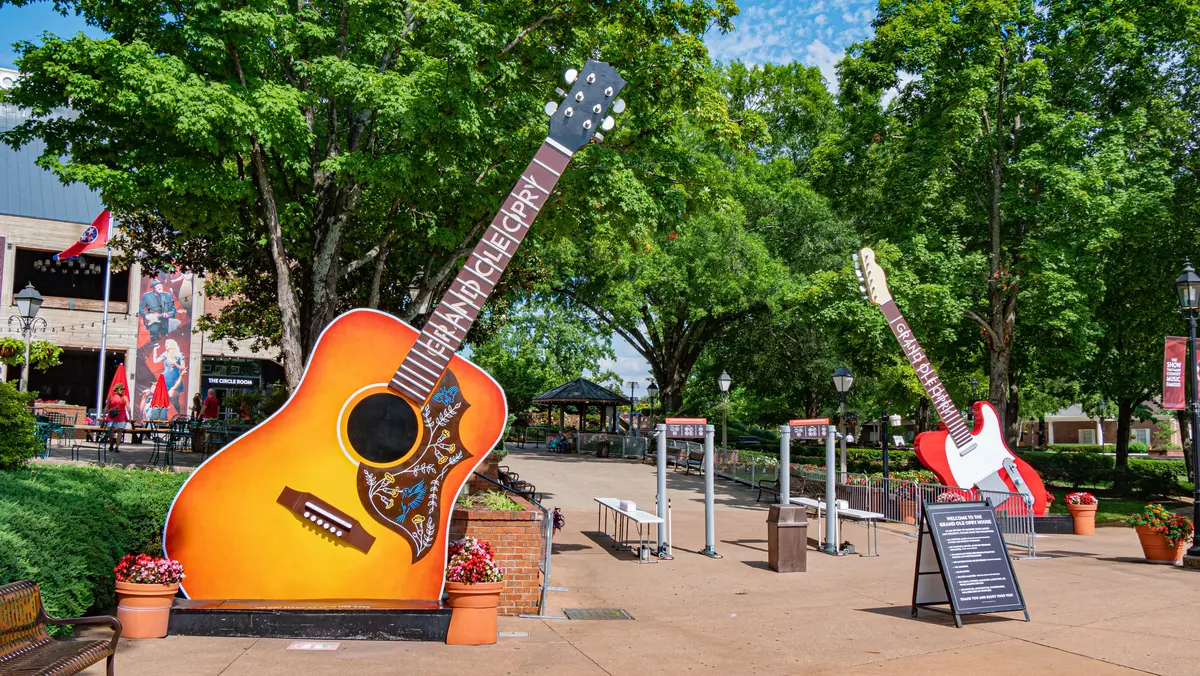
The Ryman Auditorium, the Country Music Hall of Fame and Museum, and Bridgestone Arena are the anchors people know before they arrive. What surprises newcomers is how much non-country music Nashville actually runs on — the session musician culture here is genuinely world-class across genres, and live music on a random Tuesday is a normal night rather than an occasion.
The outdoor life is underrated by people who think of Tennessee as the flat South. Radnor Lake State Park, Percy Warner Park, and the Cumberland River Greenway give Nashville residents real trail access without leaving the city. Cheekwood Estate and Gardens and the Nashville Zoo add a different kind of weekend texture. The Parthenon replica in Centennial Park — a full-scale reproduction of the Athens original — is the kind of thing you show every California visitor who comes to see what you moved to.
The Metro Nashville Public Schools district holds a B- rating, according to Niche, with 78,040 students enrolled in 2024-25. Families with school-age children should look carefully at individual school zones — the district is large enough that school quality varies considerably by neighborhood. The neighborhood you choose and the school zone it sits in are more connected decisions here than in some cities.
Weekends & Local Favorites: Where Nashville Actually Lives
The Nashville that makes people stay is not the bachelorette-party version of Broadway. It is the neighborhood coffee shop, the farmers market on a cool October morning, and the local restaurant that requires a reservation two weeks out because people who live here actually go there.
Crema Coffee Roasters has anchored the serious coffee scene in Nashville long enough that it has become a landmark in its own right. Bad Ass Coffee of Hawaii brings a different energy — franchise roots but well-executed. Haraz Coffee House draws a crowd that takes the craft seriously, and cafe babu and Elevate Coffee round out a scene that rewards the kind of coffee loyalty Californians tend to show up with.
For a meal that requires thought: Puckett's Restaurant is the old-Nashville version of a room that does live music and honest food without the tourist markup. The Finch and Aba Nashville represent the dining evolution happening in the city — the kind of restaurants that would be noticed in any coastal city and are here because Nashville's culinary scene has caught up to its reputation. The Stillery and The Hampton Social - Nashville anchor the more social end of the spectrum, the kind of places where a new Nashville resident actually meets other Nashville residents.
The Nashville Farmers' Market is the weekly institution — a year-round market in a permanent structure near downtown, with a range that goes well beyond produce. The Richland Park Farmers Market serves a different side of the city with a neighborhood-scale feel that regulars swear by.
For the outdoors moments that remind Californians why they moved somewhere with actual seasons: Shelby Bottoms Greenway runs along the Cumberland River and is the kind of trail that rewards a weekday morning run. Percy Warner Park offers elevation and distance that make it feel more substantial than a city park should. These are the places where Nashville reveals itself — not the honky-tonks, not the tourist map, but the Friday afternoon version of a city that has figured out how to live.
Local Expert Takeaway: The Californians who settle into Nashville quickly are the ones who came for the tax structure and stayed for the texture — the live music that's not performative, the trail systems that punch above their weight, the restaurant scene that stopped apologizing for being in the South. The adjustment that trips people up most is not the weather or the culture; it's the realization that the savings on paper require active management. Establish your Tennessee domicile cleanly in year one, know which neighborhood school zone you are buying into, and treat the car dependency as a budget line, not an afterthought. Do those three things and Nashville tends to hold up to the move.
Quick Takeaways & FAQs
✅ Tennessee's zero state income tax on wages is a permanent structural advantage — a household earning $100,000 can net roughly $4,000–$5,000 more per year after accounting for Nashville's higher sales tax.
⚠️ Nashville's 9.25% combined sales tax in Davidson County is higher than California's base rate, and the car-dependent layout means a two-car budget is a real cost most Californians underestimate before they arrive.
📍 The Parthenon replica in Centennial Park — a full-scale reproduction of the original — is the detail that surprises every California visitor and signals how seriously Nashville takes its own civic identity.
Is it actually cheaper to live in Nashville than California?
Do I have to pay California income tax after I move to Nashville?
How does Nashville's property tax compare to California?
What neighborhoods do California transplants typically settle in?
Is Nashville a good fit for California tech workers?
Moving to Tennessee?
Tell us what you need help with and we'll connect you with local resources.
