
What Is Living in Franklin, Tennessee Like?
Maybe you've been priced out of Nashville proper, or your company is relocating you to the corridor south of the city, or you drove through on a weekend and couldn't quite believe a town this polished existed this close to a major metro. Franklin sits about 30 minutes south of Nashville along I-65, a city of 90,226 people that has somehow preserved a genuinely walkable, brick-street downtown while absorbing wave after wave of corporate headquarters and transplant families. The central tension here isn't whether Franklin is desirable — Southern Living named it one of the South's 20 Best Cities in 2025 — it's whether you can afford it, and what you give up if you can.
The economic engine is real and diversified. Nissan North America runs its U.S. automotive headquarters here. Mars Petcare has its North American headquarters in Franklin. Community Health Systems and Jackson National Life Insurance both anchor significant white-collar employment locally. Tractor Supply Company, headquartered in nearby Brentwood, draws additional commuters from across the southern suburbs. The Franklin Special School District — with 3,027 students enrolled in 2024-25 — holds an A rating, according to Niche, and on 2025-26 state assessments, 65.7% of students reached math proficiency and 59.8% reached reading proficiency. For families weighing the suburbs, the school district is often the deciding factor that lands them here rather than somewhere cheaper. Franklin is also the county seat of Williamson County, consistently the wealthiest county in Tennessee — a designation that shapes everything from road maintenance to park investment.
The cost of that quality is not small. The typical home price sits at $925,870 (Zillow Home Value Index, August 2026), and the median household income of $115,000 falls well short of what it takes to buy at that level — a gap that pushes many buyers toward Spring Hill or Nolensville, where prices run noticeably lower. The effective property tax rate of 0.54% is among the lowest for any Tennessee city of this size, and the city's general fund runs on sales tax revenue rather than property taxes in an unusual fiscal model that keeps that rate anchored. Typical rent runs around $2,074 per month, which reflects how tight the rental market has become. The Harpeth River Greenway, Pinkerton Park, The Park at Harlinsdale Farm, and the Franklin Battlefield walking trails give residents genuinely good outdoor access within the city limits — not just highway-exit conveniences.
Whether you're weighing the move seriously or just starting to research the area, the sections below cover Franklin's neighborhoods, daily commute realities, the housing market, what weekends look like, and the honest tradeoffs that don't always show up in the rankings.
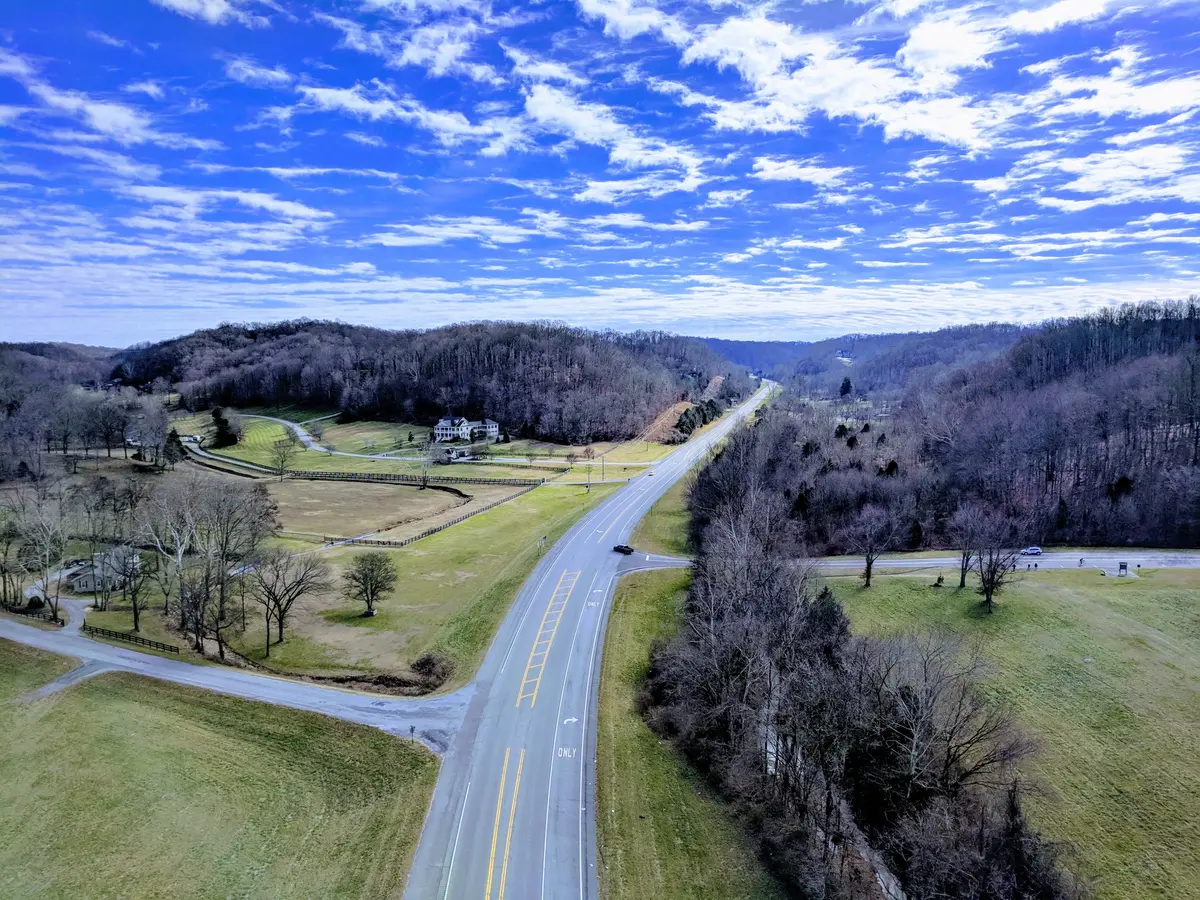
Franklin at a Glance
Looking to buy in Franklin? Estimate your payment.
Enter your numbers to see an estimated monthly mortgage payment.
Estimate only. Excludes HOA fees and mortgage insurance. The interest rate above is a starting point, not a quoted rate — replace it with your own to see real numbers. Insurance is a flat placeholder, not a Franklin quote.
Beyond the Monthly Mortgage Payment — What to Factor In
- The property tax rate above — The 0.54% used in the estimate is the median effective rate — tax actually paid as a share of market value — published by Ownwell, 2026. Half of local homes pay more and half pay less: your own bill depends on that property's assessed value and any exemptions it qualifies for, which can differ a lot from its market price. Confirm with the Williamson County assessor before you budget.
- Total cost of ownership — Your monthly mortgage payment is just the baseline. Depending on the specific city, county, and service district, homeownership costs also include local utility fees, municipal surcharges, and special assessments (such as water, sewer, storm drainage, or local energy taxes) that vary by location.
- Independent due diligence — Because these recurring local costs and municipal fees change depending on the exact property address, buyers must research them independently during their transaction process.
Tax laws, local municipal fees, and utility costs change frequently and individual situations vary. This page is general information, not tax or legal advice — always consult a qualified tax professional, CPA, or local municipal offices for personalized guidance.
Why Are People Moving to Franklin?
Franklin was named the 2026 All-America City by the National Civic League — a civic-engagement award that rewards how communities solve problems together, not just how pretty the downtown is. The recognition landed alongside decades of rankings that have consistently put Franklin in the upper tier of Southern cities for livability, safety, and quality of life. Most people moving here already know the surface story. What they discover after six months is how much of it holds up.
The Corporate Anchor Effect
Franklin's appeal to relocating professionals starts with the job base. Nissan North America operates its U.S. automotive headquarters here, drawing a range of engineering, finance, and executive talent. Mars Petcare's North American headquarters brings a different demographic — consumer goods professionals who could work remotely but choose to anchor here. Community Health Systems and Jackson National Life Insurance round out a white-collar employment mix that is unusually broad for a city of this size. Williamson County job growth has exceeded 12.5% since 2020, outpacing state and national averages, and the greater Nashville metro's unemployment rate sat at 2.4% in April 2025 against a national average of 4.2%.
The Fiscal Discipline That Residents Actually Feel
Franklin finances its general fund in an unusual way: 80.6% of revenue comes from sales taxes, primarily driven by the Cool Springs retail corridor, while only 9.4% comes from property taxes. The result is an effective property tax rate of 0.54% — the lowest of any Tennessee municipality with a population over 50,000 — and a AAA bond rating from both Moody's and S&P. For homeowners, this translates to a city that delivers full-service infrastructure without leaning on residential property owners to do it.
The History That Isn't Just Tourism
Franklin was founded in 1799 and named after Benjamin Franklin himself. The 1864 Battle of Franklin — one of the Civil War's bloodiest single-day engagements — was fought across what is now the city's residential neighborhoods, and the weight of that history is visible at Carnton and The Carter House in a way that isn't performative. Longtime residents will tell you the Civil War sites aren't just for visitors — they're part of how the city understands itself. The 16-block Downtown Franklin Historic District has been a nationally recognized revitalization success for nearly fifty years, and it still anchors the city's identity in a way that no amount of Cool Springs retail can replicate.
For a deeper look at how Franklin's neighborhoods and price points break down by area, the best neighborhoods guide covers the full picture.
What Daily Life Feels Like in Franklin
The version of Franklin you encounter on a Saturday afternoon in the Historic Downtown District — brick streets, the Franklin Theatre marquee, the Franklin Farmers Market in full swing — is real. So is the version where you are stuck on TN-96 (Murfreesboro Road) on a weekday morning behind three school buses and a contractor convoy. Both are Franklin, and understanding both matters before you sign anything.
The Morning Rhythm
For most Franklin residents, the day starts in a car. The city is designed around residential neighborhoods that feed into a handful of arterials, and the school drop-off hours between roughly 7:30 and 8:30 a.m. compress traffic noticeably along US-431 (Hillsboro Road) and TN-96. The upside is that once you are off the main corridors, the residential streets through areas like Westhaven or Fieldstone Farms feel genuinely quiet — more suburb-with-character than edge-city sprawl.
Where Families Actually Gather
The Park at Harlinsdale Farm is where Franklin's outdoor social life concentrates on a warm weekend. Its 230 acres of rolling pastureland, dog park, and walking trails draw families from across the city, and it hosts the annual Main Street Festival — one of the largest outdoor arts events in Tennessee. Pinkerton Park and the Harpeth River Greenway serve the weekday running crowd. Fort Granger gives history-minded walkers a Civil War earthwork with sweeping views over the river valley. These aren't hidden discoveries; they're the places residents actually use, repeatedly.
The Seasonal Surprise
Franklin gets 211 sunny days a year — noticeably fewer than the "it's always sunny in the South" assumption many transplants arrive with. Summers are genuinely hot and humid, the kind of July that makes the Harpeth River Greenway a 6 a.m. route rather than a noon one. Fall is exceptional and the reason longtime residents say you have to experience one October before you fully commit to loving the place. Winter brings occasional ice storms that shut the city down in ways that confuse transplants from snowier climates — Franklin has limited ice-removal infrastructure, and a quarter-inch of freezing rain can mean a day at home.
The Factory and Downtown as Civic Anchors
The Factory at Franklin — a repurposed 1929 manufacturing warehouse — operates as a mixed-use destination with dining, retail, office space, and entertainment. A free lunchtime shuttle connects it to the Historic Downtown, which has made both more accessible for people working in the area. Downtown's 16-block district hosts festivals and parades that draw thousands; it isn't the kind of "revitalized downtown" that empties out by 8 p.m. For daily parks and recreation, the city punches above its weight.
Schools, youth programs, and what the Franklin Special School District offers beyond the ratings are covered in full on the schools page.
The Franklin Housing Market Right Now
Franklin's typical home price of $925,870 (Zillow Home Value Index, August 2026) places it firmly among the most expensive markets in Tennessee — and among the most expensive in the broader Southeast. The median household income of $115,000 falls well short of what it takes to carry a home at that level, which means a meaningful share of buyers here are either earning above the median, bringing equity from a prior sale, or stretching. None of that is unusual for a high-demand suburb of this profile, but it's worth stating plainly before you start touring.
What the Price Reflects
The price is not a mystery. Franklin has low property taxes, strong schools, a walkable historic downtown, major corporate employers within the city, and proximity to Nashville — about 30 minutes to Nashville via I-65. Each of those factors would push prices up independently; together they create a market that draws buyers from across the country, including many relocating from higher-cost metros where Franklin's prices look like a relative bargain. For a full breakdown of the cost of living beyond home prices, including taxes and typical expenses, see the cost of living page.
Entry Points and the Rental Alternative
Buyers looking for entry-level options will find more room in areas farther from the historic core, and some look to neighboring Spring Hill or Nolensville, where prices run noticeably lower. Renters face a typical citywide rent of $2,074 per month, which reflects how competitive the market has become for households not ready to buy at Franklin's ownership price points. Some areas carry prices noticeably above the city-wide figure; others sit closer to it. The best neighborhoods guide breaks down the character and context of each major area.
The Market in Practice
Well-priced homes in Franklin don't sit. The combination of corporate relocation demand, a limited historic core where new construction is essentially impossible, and steady in-migration from higher-cost markets keeps the demand side active. Buyers serious about Franklin should understand the competitive conditions before starting their search — the first-time homebuyer page covers the process mechanics in detail.
Franklin Neighborhoods
Franklin has several distinct areas — each with its own character and appeal. Here’s a breakdown to help you narrow down where to focus your home search.
🏡 Westhaven
A master-planned community with its own town center, farmers market, and an active adult section — popular with families and remote workers who want walkable amenities without leaving the neighborhood. The scale and intentional design make it feel more like a village than a subdivision.
🏠 Fieldstone Farms
An established residential community with mature trees and a neighborhood feel that predates Franklin's recent growth surge — Windsor Park at Fieldstone Farms gives it one of the city's 55+ options as well. It suits buyers who want a settled, non-new-construction environment.
🌳 McKay's Mill
A large, amenity-rich community with a pool, tennis, and a network of walking paths that functions almost as its own self-contained neighborhood — families with school-age children are the dominant buyer type here.
🏘 Cool Springs
Franklin's commercial and corporate spine, anchored by the Cool Springs Galleria and a concentration of office parks that house several of the city's major employers — residents here have the shortest commutes if they work locally, at the cost of a more suburban, less historic feel.
🏔 Berry Farms
One of Franklin's newer planned communities, with a mix of housing types and a commercial village component still developing — buyers here are typically coming from higher-cost markets and willing to trade established character for newer construction and lower entry points within Franklin.
🌆 Historic Downtown Franklin
The 16-block historic core with brick streets, the Franklin Theatre, and the most walkable daily life in the city — housing is limited, older, and reflects the demand for an address this close to Main Street, but buyers who land here rarely leave.
Pros & Cons of Living in Franklin
The Pros
- Top-ranked Williamson County Schools district
- Walkable, historic downtown with shops and restaurants
- Strong job base with major corporate headquarters nearby
- Low violent crime relative to city size
The Cons
- Among the highest home prices in Tennessee
- Traffic congestion along I-65 and in Cool Springs during commute hours
- Rapid growth has increased cost of living
Getting Around & Commuting in Franklin
Franklin's commute story is one of the most important things to understand before you choose a neighborhood here. The city sits at the confluence of several major routes — I-65 running north toward Nashville and south toward Spring Hill, US-31 through the historic core, TN-96 (Murfreesboro Road) heading east, and US-431 (Hillsboro Road) running northwest — and the difference between a manageable commute and a grinding one often comes down to which direction you're headed and what time you leave.
The Nashville Commute
The drive to downtown Nashville is about 30 minutes under normal conditions via I-65. That figure is accurate for off-peak travel and generous for peak-hour travel. The I-65 on-ramps during morning rush — particularly heading north — can add meaningful time depending on where you're coming from within Franklin. Residents who work in Cool Springs or along the US-31 corridor often walk or drive a short distance with no highway exposure at all. The commute math changes significantly by neighborhood, which is one of the most common things relocating buyers underestimate.
The Road Infrastructure Reality
The city's inner bypass road functions as Franklin's most useful alternative to the main arterials, and it matters — knowing how to use it separates residents who navigate Franklin efficiently from those who get stuck on the main corridors every afternoon. The city's Invest Franklin 2.0 program, in partnership with TDOT, will expand both the southeast segment (from Murfreesboro Road toward Columbia) and the northwest segment (from Hillsboro Road to New Highway 96) of that bypass from two to four lanes. That expansion, funded in the FY2026 capital budget, addresses one of the city's most persistent bottlenecks.
The Outer Routes
TN-246 (Carters Creek Pike) and TN-441 (Moores Lane) serve the western and outer residential areas respectively and carry less traffic than the main commercial corridors — a fact that makes those neighborhoods appealing to buyers who work locally or from home. For anyone commuting to the airport, Nashville International Airport (BNA) sits approximately 22 miles from Franklin's city center, a manageable drive that becomes less so when combined with weekday traffic.
What Locals Know About Getting Around
Franklin is a driving city. The vast majority of daily errands require a car, and the household that tries to live here without one will find the experience limiting. The free lunchtime shuttle connecting Downtown Franklin and The Factory at Franklin is a welcome addition for those who work in the downtown core, but it doesn't change the calculus for residents in outlying neighborhoods. The practical question for most buyers isn't whether you'll drive — you will — it's how many of your daily trips can avoid the main arterials during peak hours.
Schools in Franklin
Families relocating to Franklin have public, private, and higher-education options nearby. Here’s a quick overview.
🎓 School District
Franklin SSD serves K–12 students across Franklin and the surrounding area. Rated A (source: Niche.com).
📊 District Stats
- Enrollment 2024-25
- 3,027 students
- 4-year graduation rate
- 97.4%
- Math proficiency 2025-26
- 65.7%
- Reading proficiency 2025-26
- 59.8%
- Science proficiency 2025-26
- 66.8%
Source: Tennessee Department of Education Data Downloads (district profile, graduation rate and TCAP assessment files).
📚 Higher Education
Tennessee’s public universities — the University of Tennessee, Vanderbilt University, and Middle Tennessee State University — offer four-year degrees statewide, with a statewide community and technical college system of 13 community colleges and 24 colleges of applied technology, with tuition-free options for residents through Tennessee Promise and Tennessee Reconnect providing two-year and workforce programs.
🌐 Online Learning
UT Knoxville Online and MTSU Online offer fully accredited online degrees for remote learners across the state.
Safety in Franklin
A quick look at how Franklin compares on the numbers that matter most when weighing a neighborhood or a move.
🛡 Violent Crime
Approximately 1 per 1,000 residents.
🔒 Property Crime
Approximately 10 per 1,000 residents.
Compared to the most recent national figures from the Bureau of Justice Statistics (2024), Franklin’s violent crime is below the national average (about 3.7 per 1,000), and property crime is below the national average (about 18.4 per 1,000).
Against Tennessee as a whole, Franklin’s violent crime is a small fraction of the state average, and property crime is roughly half the state average (Bureau of Justice Statistics, Crime Known to Law Enforcement, 2024 (tables 2 and 3)).
Crime rates can vary a lot within a single city, so the citywide numbers above are only a starting point. Some neighborhoods in Franklin run well below these averages, while others run higher — the kind of block-by-block detail that matters most when you’re actually choosing where to live. The full guide below breaks it down neighborhood by neighborhood.
Working in Franklin
Franklin’s largest employers span several industries — here are some of the anchors of the local job market.
💼 Nissan North America
Automotive HQ
🏥 Community Health Systems
Healthcare
🛒 Mars Petcare
Consumer goods/pet care HQ
🛒 Tractor Supply Company
Retail HQ, located in Brentwood
🏦 Jackson National Life Insurance
Financial services
Parks & Recreation in Franklin
Some of the outdoor spaces that shape everyday life in Franklin.
🌱 Pinkerton Park
🌱 The Park at Harlinsdale Farm
Franklin residents don’t have to go far for green space — spots like Pinkerton Park and The Park at Harlinsdale Farm are part of everyday life here, whether that’s a morning walk, a weekend hike, or just somewhere to unwind outside. The full guide below covers more of what Franklin has to offer for parks and outdoor recreation.
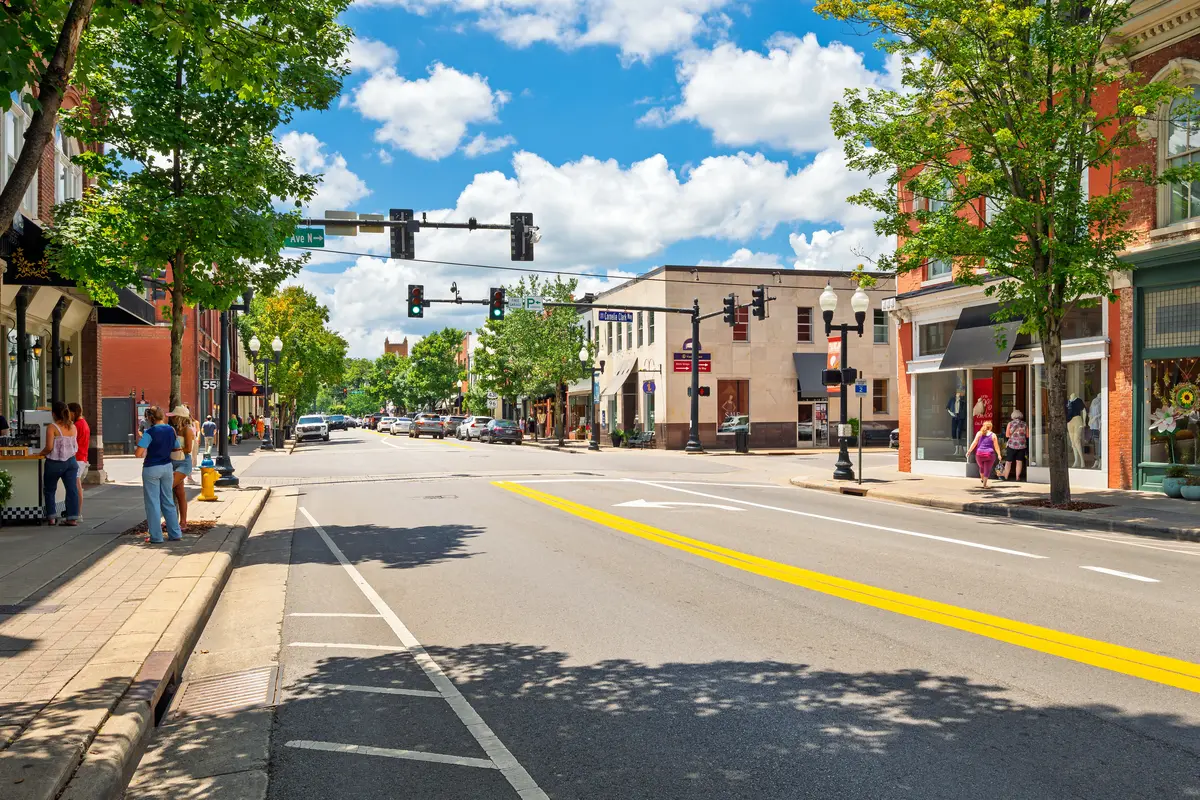
Retiring in Franklin
Franklin draws retirees for its balance of amenities, outdoor access, and cost. Here’s what to weigh.
🌤 Climate
Franklin gets 211 sunny days a year with warm, humid summers and mild winters that occasionally bring ice rather than snow. Fall is spectacular — cool, dry, and long — and the reason many retirees say October is the month that made them commit to staying.
🍴 Lifestyle
The Historic Downtown District, the Franklin Theatre, and year-round farmers markets give retirees a genuinely walkable cultural core a few days a week. The Park at Harlinsdale Farm's 230 acres and the Harpeth River Greenway provide outdoor options that don't require leaving the city.
🏚 55+ Communities
Franklin has several dedicated 55+ options: Westhaven Active Adult within the Westhaven master-planned community, The Villages of Morningside, Reid Hill Commons, and Windsor Park at Fieldstone Farms. Each sits within a larger established neighborhood context rather than isolated on the urban fringe.
✈ Getting Around
A car is essential for most daily errands, but the historic downtown core is genuinely navigable on foot for residents who live nearby. Nashville International Airport is approximately 22 miles from Franklin's city center, a practical distance for retirees with family elsewhere.
🏛 Tennessee Taxes for Retirees — What to Know
- No state income tax — Tennessee has no personal income tax. Social Security, pensions, 401(k) and IRA withdrawals and annuity payments are all untaxed at the state level, with no state return to file. The Hall tax on interest and dividends — the state’s last income-type tax — was fully phased out and repealed effective 2021.
- Sales tax is the tradeoff — The state sales tax is 7.0%, and local add-ons bring the combined rate in Franklin to 9.75% (Tennessee Department of Revenue (SUT-13, SUT-53); Streamlined Sales Tax rate boundary file TNR2026Q3, Q3 2026). Groceries are taxed at a reduced state rate of 4% plus the local rate; prescription drugs are exempt. Prepared food, candy, dietary supplements and alcohol pay the full rate.
- Property taxes are low, not the tradeoff — Property tax in Tennessee is set county by county, and rates are low by national standards. Unlike Texas, which funds local government through high property taxes in place of an income tax, Tennessee leans on its sales tax instead — so a retiree is not trading one bill for another. Your county trustee publishes the current rate.
- Tax relief for owners 65 and over — The state reimburses part of the property tax bill for low-income homeowners who are 65 or older, and for disabled homeowners of any age, through the Property Tax Relief program administered by county trustees. It is income-tested and must be applied for each year.
- A tax freeze — but only where the county or city adopted it — Tennessee also allows a Property Tax Freeze that locks a homeowner’s bill at the amount owed in the year they qualify, for owners 65 and over under an income limit. It is a local option: each county and city chooses whether to offer it, and sets its own income threshold, so it is available in some parts of the state and not others. Check with the county trustee.
- No estate, inheritance or gift tax — Tennessee has none of the three. The inheritance tax was repealed for deaths occurring in 2016 and after, and the gift tax was repealed effective January 1, 2012.
- No separate capital gains tax — Because Tennessee has no state income tax, capital gains — including on investments and on the sale of a home — are not taxed at the state level at all, unlike states such as Washington that tax capital gains separately from income.
Source: Tennessee Department of Revenue and Tennessee Comptroller of the Treasury.
Tax laws change frequently and individual situations vary. This is general information, not tax advice — always consult a qualified Tennessee tax professional or CPA for personalized retirement tax planning.
Weekends & Local Favorites in Franklin
Franklin's weekend scene is anchored by its historic downtown, its outdoor assets, and a food and coffee culture that has grown substantially alongside the city's population. The 16-block Historic Downtown District draws both residents and visitors, but the restaurants and coffee shops here serve a genuinely local crowd on weekday mornings and weekend afternoons in a way that feels like a real town rather than a curated attraction.
Coffee and Mornings
Honest Coffee Roasters at The Factory at Franklin is a Franklin institution — a specialty coffee shop in a converted industrial space that gives you a sense of what the city values aesthetically. Triple Crown Bakery brings a different register: bakery-forward, with pastries that draw a line before 9 a.m. on weekends. The coffee scene here is genuinely independent-forward in a way that surprises people expecting a suburb full of drive-throughs, with several locally owned cafés across the city each drawing their own regulars.
Dining Worth Knowing
Puckett's Restaurant is one of Franklin's most well-known local spots — a combination of Southern cooking and live music that has been a gathering point for residents and visitors alike for years. Jonathan's Grille serves a broad casual menu that makes it a reliable neighborhood staple. J. Alexander's Restaurant anchors the more polished end of the casual dining spectrum. Mi Kitchen brings Mexican cooking to a local crowd that keeps it busy, and Pelato - Franklin rounds out the options with a different flavor profile. This is not a city where you'll exhaust the dining options quickly.
Farmers Markets and Outdoor Gathering
The Franklin Farmers Market is one of the most active in the region, drawing vendors and residents from across Williamson County. The Westhaven Farmers Market serves the western residential neighborhoods with a smaller, community-scale version. Both run through the warm months and give the city a civic-gathering quality that complements the parks. The Park at Harlinsdale Farm, with its 230 acres of open pastureland, is where dogs and families converge on weekend mornings — an asset that residents in places like Brentwood often drive to Franklin to use.
History as Weekend Activity
Carnton and The Carter House make Franklin's Civil War history accessible in a way that isn't just for tourists. The Franklin Battlefield walking trails let residents engage with the history on their own terms, on foot, across the actual landscape where the 1864 battle was fought. Fort Granger — an earthwork fortification above the Harpeth River — offers a short hike with a panoramic view that locals use on weekday evenings as much as weekend mornings. The Franklin Theatre, a restored 1937 movie house in the heart of downtown, hosts films, concerts, and events that give the city an arts anchor beyond the festival calendar.
Local favorites in Franklin
Restaurants
- Puckett's Restaurant
- Jonathan's Grille
- J. Alexander's Restaurant
- Mi Kitchen
- Pelato - Franklin
Outdoors
- Pinkerton Park
- The Park at Harlinsdale Farm
- Harpeth River Greenway
- Fort Granger
- Franklin Battlefield walking trails
Coffee
- Honest Coffee Roasters The Factory at Franklin
- Triple Crown Bakery
- Southerner’s Coffee
- The Fainting Goat Coffee- Franklin
- High Brow Coffee
Farmers Markets
- Franklin Farmers Market
- Westhaven Farmers Market
Top Things Locals Say About Franklin
The best intel about a city comes from the people who actually live there. Here’s what Franklin residents say when newcomers ask the questions everyone’s thinking.
“I knew Franklin was supposed to be nice, but I didn't expect how much the commute direction would matter. We bought on the west side of town and it changed everything — I'm off the main corridors completely for school drop-off, and my drive to Cool Springs takes about eight minutes.”
— Recent Franklin home buyer
“What's the most surprising thing about living in Franklin?”
How much the city actually uses its parks. The Park at Harlinsdale Farm on a Saturday morning looks like the whole city showed up — dogs, strollers, people running the trails. And the downtown isn't just for tourists. Puckett's on a Thursday night is full of people who live here, not people visiting.
“What do locals love most about Franklin?”
The combination of a real historic downtown and a serious job market in the same city. Most suburbs this polished don't have major corporate headquarters — you'd have to commute somewhere else to work. Here, Nissan and Mars Petcare are literally in town. The schools and the low property taxes seal it for most families.
“What should newcomers to Franklin know?”
Learn the city's inner bypass road early — once you figure out how to use it, your daily life gets significantly easier. Also, choose your neighborhood based on your actual commute route, not just how the house looks on a Sunday afternoon. The morning traffic patterns are very different depending on which direction you're headed.
“How much do you need a car in Franklin?”
You need a car for almost everything outside the historic downtown core. Within a few blocks of Main Street you can walk to coffee, lunch, and the farmers market — but grocery runs, school pick-up, and any errand outside the downtown core will put you in a car. The free shuttle between Downtown and The Factory is useful if you work in either area, but most residents plan their day around driving.
Cities Near Franklin
Other communities near Franklin worth a look — each with its own character and price point.
| City | Distance | Best For | Vibe | Median Rent | Median Buy |
|---|---|---|---|---|---|
| Brentwood | 8 mi | Corporate commuters & established luxury | Affluent, quiet, residential | $2,031 | $1,404,388 |
| Spring Hill | 15 mi | Families seeking more space for the price | Fast-growing, newer construction | $2,019 | $520,958 |
| Nolensville | 12 mi | Buyers wanting small-town feel nearby | Rural edge, newer subdivisions | $3,061 | $843,614 |
More Helpful Guides for Franklin
Going deeper on Franklin? Our blog series covers everything from first-time buying to retiring here — explore the guides below.
Local Expert Takeaway: Franklin is the kind of city where the rankings are accurate but incomplete. The schools are strong, the crime rate is low, and the historic downtown is the real thing — but the housing market is serious, the commute on TN-96 or I-65 northbound at 8 a.m. is genuinely slow, and the gap between the median household income and what it takes to buy a typical home here is wider than most people expect. The buyers who thrive here are the ones who choose a neighborhood based on their actual daily route, understand the city's sales-tax fiscal model, and treat The Park at Harlinsdale Farm and the Harpeth River Greenway as infrastructure rather than amenities.
Quick Takeaways & FAQs
✅ Franklin holds the lowest property tax rate of any Tennessee city with a population over 50,000, and its school district holds an A rating, according to Niche — a combination that drives sustained demand from relocating families.
⚠️ The typical home price of $925,870 (August 2026) exceeds what the median household income can support, meaning a significant share of buyers here arrive with equity, above-median earnings, or both.
📍 The commute to Nashville is about 30 minutes on a clear day, but peak-hour traffic on I-65 and TN-96 can add meaningful time — neighborhood choice and departure time matter more here than in most suburbs.
Is Franklin, TN expensive to live in?
How far is Franklin, TN from Nashville?
What are the best neighborhoods in Franklin, TN?
How are the schools in Franklin, TN?
Is Franklin, TN safe?
Helpful Links for Moving to Franklin
Moving to Tennessee?
Tell us what you need help with and we'll connect you with local resources.
