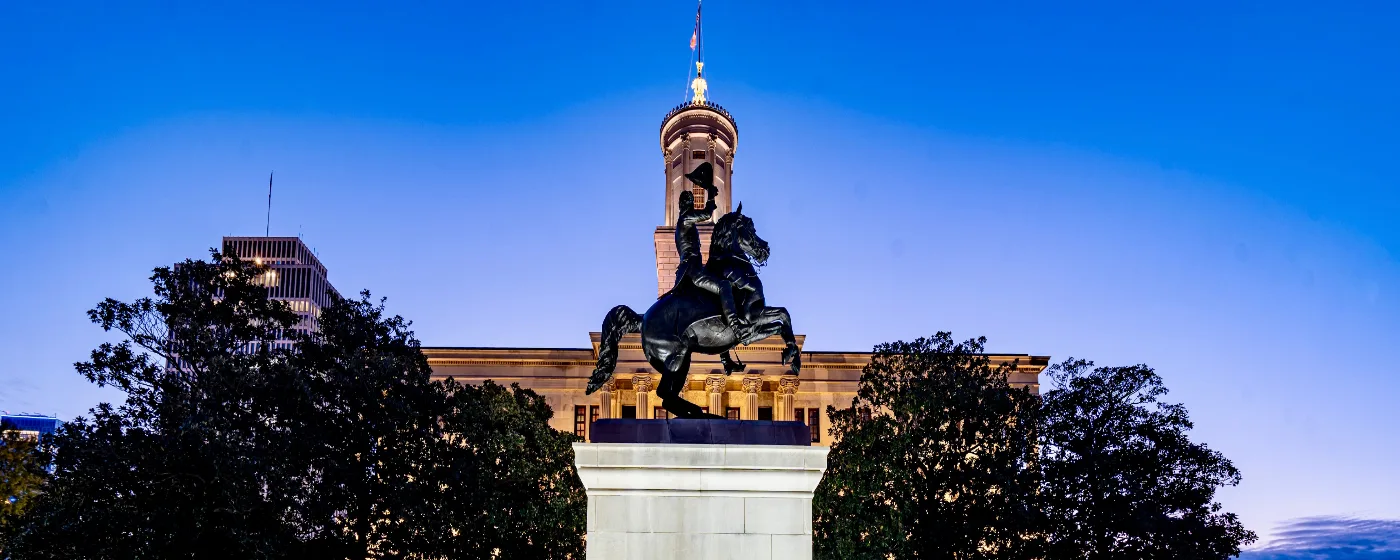
What Is Living in Spring Hill, Tennessee Like?
Maybe your company has a connection to the GM plant corridor. Maybe you've been priced out of Franklin and someone suggested looking a few exits south on I-65. Either way, Spring Hill tends to surprise people — not because it's undiscovered, but because the city they find on the ground is already far larger and more developed than the quiet suburb they expected. At 61,336 residents, Spring Hill is the 12th-largest incorporated city in Tennessee, yet it still feels like it's mid-sentence, with cranes in the air, new interchange ramps just opened, and subdivisions going up faster than the roads that serve them. The city straddles Williamson County to the north and Maury County to the south — a divide that matters more than most newcomers realize, because your school assignment and property tax rate depend on which side of that line your address falls.
The economic backbone here is manufacturing at a scale that shapes the whole region. The GM Spring Hill Assembly Plant builds the Cadillac LYRIQ, XT5, XT6, and Vistiq — one of GM's key North American production sites — and the Ultium Cells facility, a joint venture with LG Energy Solution, brought a $2.3 billion investment in EV battery manufacturing to the city. Williamson County Schools, which serves the northern portion of Spring Hill, holds an A rating, according to Niche, and 40,992 students enrolled in 2024-25 across the district. The median age here is 36.1, and the community it reflects is largely dual-income families with school-age children who chose Spring Hill for its combination of newer housing stock, strong schools in the Williamson County portion, and prices that remain a meaningful step below Franklin.
On the cost-of-living side, Spring Hill's typical home price of $520,958 (August 2026) means the median household income of $106,658 no longer stretches as far as it once did here. New construction spans a wide range, from entry-level builds in the low $400,000s to custom estates on acreage above $1.5 million. The city's park network — Harvey Park, the Spring Hill Recreation Complex, Fischer Ave Sports Park, and greenway segments threading through subdivisions — gives families real outdoor infrastructure. The historic downtown district along Main Street connects Rippavilla Plantation, an 1850s Greek Revival mansion and Civil War landmark, to a corridor of churches and older commercial buildings that predate every HOA in the zip code by more than a century.
Whether you're considering a move or just starting to research the area, the sections below break down Spring Hill's growth story, neighborhoods, commute realities, housing market, local favorites, and what daily life here is really like in a city that's still figuring out what it wants to be when it grows up.
Spring Hill at a Glance
Looking to buy in Spring Hill? Estimate your payment.
Enter your numbers to see an estimated monthly mortgage payment.
Estimate only. Excludes HOA fees and mortgage insurance. The interest rate above is a starting point, not a quoted rate — replace it with your own to see real numbers. Insurance is a flat placeholder, not a Spring Hill quote.
Beyond the Monthly Mortgage Payment — What to Factor In
- The property tax rate above — The 0.54% used in the estimate is the median effective rate — tax actually paid as a share of market value — published by Ownwell, 2026. That is the county-wide median: the source publishes no separate figure for Spring Hill, and rates can vary sharply between tax districts within one county. Half of local homes pay more and half pay less: your own bill depends on that property's assessed value and any exemptions it qualifies for, which can differ a lot from its market price. Confirm with the Williamson County assessor before you budget.
- Total cost of ownership — Your monthly mortgage payment is just the baseline. Depending on the specific city, county, and service district, homeownership costs also include local utility fees, municipal surcharges, and special assessments (such as water, sewer, storm drainage, or local energy taxes) that vary by location.
- Independent due diligence — Because these recurring local costs and municipal fees change depending on the exact property address, buyers must research them independently during their transaction process.
Tax laws, local municipal fees, and utility costs change frequently and individual situations vary. This page is general information, not tax or legal advice — always consult a qualified tax professional, CPA, or local municipal offices for personalized guidance.
Why Are People Moving to Spring Hill?
The short answer: jobs, schools, and price. The longer answer involves a city that has grown at a pace that reshaped it almost unrecognizably in under a decade and shows no signs of stopping.
The Manufacturing Magnet
General Motors has been part of Spring Hill's identity since the Saturn plant opened here decades ago. Today the facility assembles Cadillac vehicles for the North American market, and the adjacent Ultium Cells plant — a $2.3 billion investment in EV battery production — is upgrading its lines to produce lithium iron phosphate cells, with commercial production targeted for late 2027. That level of industrial investment anchors a local economy that also includes a major regional health system and Williamson County Schools as significant employers. For anyone working in automotive manufacturing, logistics, or supply-chain operations, Spring Hill is where the jobs are.
The School District Pull
Families specifically seeking Williamson County Schools — which holds an A rating, according to Niche — often land in the northern portions of Spring Hill because those addresses fall within the district. On 2025-26 state assessments, 73.6% of students reached math proficiency and 71.8% reached reading proficiency across the district. The catch: not every Spring Hill address is in Williamson County. The city straddles the county line, and addresses on the Maury County side feed into Maury County Schools instead. Confirming your parcel's county assignment before you make an offer is one of the most important steps a buyer can take here — see the full picture on the schools page.
The June Lake Effect
A $2.35 billion mixed-use development called June Lake broke ground at a new I-65 interchange, with plans for roughly 2,900 homes, several million square feet of office and retail space, and hotel rooms. When completed, it will change the commercial character of the city's eastern corridor substantially. Buyers who purchase near the project today are betting on a future that looks different from what's there now — which is a real opportunity and a real unknown in equal measure.
Who Moves Here
| Buyer Type | Why Spring Hill Works | Best For |
|---|---|---|
| GM / Ultium employees | On-site or nearby manufacturing jobs, newer housing within minutes of the plant | Commuter |
| Franklin overflow buyers | More square footage per dollar than the Franklin market, same I-65 corridor | Value |
| Williamson County school seekers | A-rated district access in the northern portion of the city | Families School |
| New-construction buyers | Active builder market from entry-level to custom, wide price range | First-Time Families |
| Remote workers from higher-cost markets | Tennessee income tax structure, median home price well below comparable Southern suburbs | Value Quiet |
| Retirees seeking a 55+ community | Del Webb Southern Springs offers a purpose-built active adult option within the city; see the retiring page for more | Quiet |
Spring Hill's safety picture adds to the appeal: a violent crime rate of 2 per 1,000 residents and a property crime rate of 5 per 1,000 residents — both well below Tennessee's state rates and well below national averages. The full safety breakdown is on the safety page.
What Daily Life Feels Like in Spring Hill
Six months after moving here, almost everyone says the same thing: "I didn't expect it to feel this spread out." Spring Hill covers roughly 28.7 square miles, and its neighborhoods are separated by distances that require a car for nearly everything. There is no walkable town center in the traditional sense — the historic Main Street district along US-31 has character and history, but the density of daily services has shifted toward newer commercial corridors that aren't yet finished filling in.
The County-Line Reality
Living on the Williamson County side versus the Maury County side of Spring Hill produces meaningfully different experiences — different schools, different tax rates, and different community contexts. Most buyers focused on Williamson County Schools gravitate toward the northern subdivisions. This isn't a subtle distinction: it's the first question a knowledgeable local will ask when you tell them where you're looking.
Where Families Gather
Harvey Park and the Spring Hill Recreation Complex are the social centers for families with kids — youth sports, greenway access, and open space that fills up on weekend mornings. Fischer Ave Sports Park handles organized athletic programs. The historic downtown along Main Street is where the city's older identity lives, connecting Rippavilla Plantation and Civil War battlefield sites that feel genuinely different from the subdivisions surrounding them. Rippavilla itself — a Greek Revival mansion from the 1850s, listed on the National Register of Historic Places and operated as a historic house museum by the Battle of Franklin Trust — is worth visiting early in your time here. It has a way of reorienting how you think about the ground you're living on.
The Growth Lag
Retail and dining are catching up to population, but they haven't caught up yet. Commercial projects are in active planning — including a new retail center with a Sprouts Farmers Market anchor — but for now, a serious grocery or shopping run often means driving toward Franklin or Columbia. That's the honest trade-off of being in a fast-growing city: the housing arrived before the services did. Most residents have adapted by being intentional about errands, combining trips, and doing a portion of their shopping online.
The effective property tax rate of 0.54% is one of Tennessee's genuine draws, and the state's lack of a personal income tax puts more of each paycheck back in residents' hands. The full tax picture is on the cost-of-living page.
Spring Hill gets 206 sunny days a year — a reasonable four-season climate with hot, humid summers and winters that bring occasional ice storms rather than consistent snowfall. New residents from northern states are often caught off-guard by the ice events; the region tends to shut down more decisively than they expect when temperatures drop.
The Spring Hill Housing Market Right Now
Spring Hill's housing market has matured quickly from its early reputation as a bargain alternative to Franklin. The typical home price of $520,958 (August 2026, Zillow Home Value Index) reflects a city that has absorbed years of intense demand, though it still comes in noticeably lower than Franklin to the north. Columbia, further south, runs noticeably lower than Spring Hill. For context on how those comparisons play out in daily budget terms, the cost-of-living page has the full breakdown.
New Construction vs. Resale
New construction is a defining feature of this market. Entry-level builds start in the low $400,000s, and custom estates on larger parcels push well above $1.5 million. Buyers who purchased resale homes in established neighborhoods like Wyngate Estates or Campbell Station several years ago hold equity that newer buyers are now working to build from a higher starting point.
The Affordability Reality
Here is the uncomfortable math: the median household income in Spring Hill is below the income needed to carry the typical home price. That gap — roughly $19,000 — means many buyers are stretching, leaning on dual incomes, or bringing equity from a previous home sale. First-time buyers in particular should go in with clear-eyed expectations; the first-time homebuyer page covers what that process looks like in this market specifically.
The County Split and Its Price Effect
Addresses in the Williamson County portion of Spring Hill tend to carry a premium because of school district access. This is not a subtle effect — buyers specifically targeting Williamson County Schools factor it into their offers, and sellers on that side of the county line know it. Confirming county assignment before you fall in love with a listing is genuinely important advice here, not a formality.
The typical city-wide rent of $2,019 per month (Zillow, August 2026) reflects the same demand pressure that has pushed ownership prices upward. Some areas of the city run above that figure, others below it — the best-neighborhoods page gets into the character and context of each area in more detail.
Spring Hill Neighborhoods
Spring Hill has several distinct areas — each with its own character and appeal. Here’s a breakdown to help you narrow down where to focus your home search.
🏡 Wyngate Estates
Wyngate Estates is an established subdivision with a settled, residential feel that appeals to families looking for more mature landscaping and a neighborhood that doesn't feel mid-construction. It suits buyers who want Williamson County addresses without the newest-build price premiums.
🏠 Harvest Point
Harvest Point draws families with kids who want access to the greenway network and community amenities built into the subdivision itself. The mix of housing styles and lot sizes gives buyers some flexibility in how much they take on.
🌳 Wades Grove
Wades Grove is a larger planned community with a strong HOA presence and the kind of neighborhood amenities — pool, clubhouse, sidewalks throughout — that appeal to families and remote workers who want their social infrastructure built into where they live.
🏘 Campbell Station
Campbell Station sits in the northern part of Spring Hill and is one of the more sought-after areas for buyers specifically targeting Williamson County Schools, with a mix of newer construction and established homes on reasonably sized lots.
🏔 Autumn Ridge / Arbors at Autumn Ridge
Autumn Ridge and its companion section, Arbors at Autumn Ridge, offer a quieter residential character with green space woven through the neighborhood — a good fit for families who want suburban comfort without the density of the city's newer, larger planned communities.
🌆 Benevento / Benevento East
Benevento and Benevento East attract buyers looking for newer construction with upscale finishes in a neighborhood that hasn't yet lost its new-development energy. The area suits dual-income professional households who want a polished home environment close to the I-65 corridor.
Pros & Cons of Living in Spring Hill
The Pros
- Lower home prices than nearby Franklin/Brentwood while still in the Nashville orbit
- Strong job growth anchored by GM and Ultium Cells
- Access to top-rated Williamson County Schools on the northern side of town
- Small-town, family-friendly feel with fast-growing amenities
The Cons
- Long, car-dependent commute into Nashville
- City split between two counties creates confusing tax/school differences depending on address
- Rapid growth has strained roads and infrastructure
Getting Around & Commuting in Spring Hill
Spring Hill is fundamentally a commuter city, and the commute defines it more than almost anything else about daily life here. I-65 is the spine of everything — it connects Spring Hill to Franklin, Brentwood, and Nashville to the north, and to Columbia and points south. TN-396, known locally as Saturn Parkway, provides an east-west connection that takes pressure off the main corridor during peak hours. US-31 runs through the historic downtown as the original surface-road alternative, though it moves slowly through commercial intersections.
The Nashville Commute
Getting to Nashville means about 40 minutes to Nashville on a clear day via I-65 — but the I-65 corridor northbound during the morning rush is one of the region's more reliably congested stretches. Anyone commuting daily to downtown Nashville or the Brentwood office corridor should drive the route at 7:30 a.m. before they commit to a neighborhood, not after. The farther south your address in Spring Hill, the longer that drive gets.
Getting to Franklin
Franklin is considerably closer — most Spring Hill residents reach it in 15 to 20 minutes outside of peak hours, and it's the destination for many daily errands, medical appointments, and dining. Saturn Parkway (TN-396) is the faster option when I-65 is moving poorly.
Getting Around Locally
Inside Spring Hill, a car is not optional — it is the requirement. The city's sprawl means that walking to services, schools, or parks from most residential neighborhoods is not practical. Neighborhood greenways connect some subdivisions to parks and trailheads, but these are recreational routes, not transportation infrastructure. Families with multiple drivers and multiple cars will find that the layout makes sense; households trying to manage with one vehicle will find the logistics genuinely challenging.
| Destination | Route | Typical Conditions |
|---|---|---|
| Nashville (downtown) | I-65 North | about 40 minutes to Nashville; heavier during morning rush |
| Franklin / Brentwood | I-65 North or TN-396 (Saturn Pkwy) | 15–20 min off-peak; longer during rush hour |
| Columbia | I-65 South or US-31 South | 20–25 min; lighter traffic than northbound corridor |
| Nashville International Airport | I-65 North to BNA | ~40 miles; allow extra time during peak periods |
| Spring Hill GM / Ultium Campus | Local surface roads or TN-247 | Quick from most Spring Hill neighborhoods |
| Downtown Spring Hill / Main Street | US-31 | Accessible but slow through commercial signals |
Nashville International Airport (BNA) sits about 40 miles north — manageable for occasional travel but not for anyone flying frequently on short notice. Mean commute time across the city runs approximately 30 minutes, though that average covers a wide range depending on destination and neighborhood location.
Most daily movement in Spring Hill means getting behind the wheel. Regional transit discussions continue at the metro level, but for now driving is how residents get where they need to go — plan your household's car situation accordingly before you move.
Schools in Spring Hill
Families relocating to Spring Hill have public, private, and higher-education options nearby. Here’s a quick overview.
🎓 School District
Williamson County serves K–12 students across Spring Hill and the surrounding area. Rated A (source: Niche.com).
📊 District Stats
- Enrollment 2024-25
- 40,992 students
- 4-year graduation rate
- 97.4%
- Math proficiency 2025-26
- 73.6%
- Reading proficiency 2025-26
- 71.8%
- Science proficiency 2025-26
- 76%
Source: Tennessee Department of Education Data Downloads (district profile, graduation rate and TCAP assessment files).
📚 Higher Education
Tennessee’s public universities — the University of Tennessee, Vanderbilt University, and Middle Tennessee State University — offer four-year degrees statewide, with a statewide community and technical college system of 13 community colleges and 24 colleges of applied technology, with tuition-free options for residents through Tennessee Promise and Tennessee Reconnect providing two-year and workforce programs.
🌐 Online Learning
UT Knoxville Online and MTSU Online offer fully accredited online degrees for remote learners across the state.
Safety in Spring Hill
A quick look at how Spring Hill compares on the numbers that matter most when weighing a neighborhood or a move.
🛡 Violent Crime
Approximately 2 per 1,000 residents.
🔒 Property Crime
Approximately 5 per 1,000 residents.
Compared to the most recent national figures from the Bureau of Justice Statistics (2024), Spring Hill’s violent crime is below the national average (about 3.7 per 1,000), and property crime is below the national average (about 18.4 per 1,000).
Against Tennessee as a whole, Spring Hill’s violent crime is roughly a third of the state average, and property crime is roughly a quarter of the state average (Bureau of Justice Statistics, Crime Known to Law Enforcement, 2024 (tables 2 and 3)).
Crime rates can vary a lot within a single city, so the citywide numbers above are only a starting point. Some neighborhoods in Spring Hill run well below these averages, while others run higher — the kind of block-by-block detail that matters most when you’re actually choosing where to live. The full guide below breaks it down neighborhood by neighborhood.
Working in Spring Hill
Spring Hill’s largest employers span several industries — here are some of the anchors of the local job market.
🏭 General Motors
Automotive manufacturing
🏭 Ultium Cells
EV battery manufacturing
🏥 Maury Regional Health
Healthcare
🎓 Williamson County Schools
Education

Retiring in Spring Hill
Spring Hill draws retirees for its balance of amenities, outdoor access, and cost. Here’s what to weigh.
🌤 Climate
Spring Hill gets 206 sunny days a year with four distinct seasons — warm, humid summers and mild winters that occasionally bring ice storms capable of shutting the city down. Fall and spring are genuinely pleasant and draw most retirees outdoors. Summers run hot, so shade, air conditioning, and early-morning activity become part of the rhythm.
🍴 Lifestyle
The historic downtown along Main Street, Rippavilla Plantation, and the Battle of Spring Hill battlefield sites give history-minded retirees substantive local culture to engage with. Independent coffee shops and a growing dining scene provide daily social anchors, and the Franklin corridor — a short drive north — adds more restaurants, galleries, and cultural programming when residents want a wider menu.
🏚 55+ Communities
Del Webb Southern Springs is Spring Hill's purpose-built active adult community, offering the amenities and social programming that come with the Del Webb brand. It's the primary option within the city for buyers specifically seeking a 55+ environment. The full picture for retirees — including healthcare access and nearby services — is on the retiring page.
✈ Getting Around
A car is essential in Spring Hill; most daily needs require driving. Nashville International Airport (BNA) sits about 40 miles north via I-65. Franklin's medical and specialty services are 15 to 20 minutes away for most of the city, and a regional medical center is the closest hospital option to the south.
🏛 Tennessee Taxes for Retirees — What to Know
- No state income tax — Tennessee has no personal income tax. Social Security, pensions, 401(k) and IRA withdrawals and annuity payments are all untaxed at the state level, with no state return to file. The Hall tax on interest and dividends — the state’s last income-type tax — was fully phased out and repealed effective 2021.
- Sales tax is the tradeoff — The state sales tax is 7.0%, and local add-ons bring the combined rate in Spring Hill to 9.75% (Tennessee Department of Revenue (SUT-13, SUT-53); Streamlined Sales Tax rate boundary file TNR2026Q3, Q3 2026). Groceries are taxed at a reduced state rate of 4% plus the local rate; prescription drugs are exempt. Prepared food, candy, dietary supplements and alcohol pay the full rate.
- Property taxes are low, not the tradeoff — Property tax in Tennessee is set county by county, and rates are low by national standards. Unlike Texas, which funds local government through high property taxes in place of an income tax, Tennessee leans on its sales tax instead — so a retiree is not trading one bill for another. Your county trustee publishes the current rate.
- Tax relief for owners 65 and over — The state reimburses part of the property tax bill for low-income homeowners who are 65 or older, and for disabled homeowners of any age, through the Property Tax Relief program administered by county trustees. It is income-tested and must be applied for each year.
- A tax freeze — but only where the county or city adopted it — Tennessee also allows a Property Tax Freeze that locks a homeowner’s bill at the amount owed in the year they qualify, for owners 65 and over under an income limit. It is a local option: each county and city chooses whether to offer it, and sets its own income threshold, so it is available in some parts of the state and not others. Check with the county trustee.
- No estate, inheritance or gift tax — Tennessee has none of the three. The inheritance tax was repealed for deaths occurring in 2016 and after, and the gift tax was repealed effective January 1, 2012.
- No separate capital gains tax — Because Tennessee has no state income tax, capital gains — including on investments and on the sale of a home — are not taxed at the state level at all, unlike states such as Washington that tax capital gains separately from income.
Source: Tennessee Department of Revenue and Tennessee Comptroller of the Treasury.
Tax laws change frequently and individual situations vary. This is general information, not tax advice — always consult a qualified Tennessee tax professional or CPA for personalized retirement tax planning.
Weekends & Local Favorites in Spring Hill
Spring Hill's weekend scene is still growing into itself, but there's more happening than the suburban sprawl suggests from the outside. The dining and coffee options that exist are genuinely good; the honest limitation is that the selection is smaller than what a city of 61,336 might eventually support, and residents fill the gaps with trips toward Franklin.
Where to Eat and Drink
Jonathan's Grille is the reliable anchor for sit-down dining with a full bar and a menu that covers most occasions. BoomBozz Craft Pizza & Taphouse brings a solid craft beer selection alongside wood-fired pizza — a genuinely local feel rather than a chain experience. Fozzy's Bar & Grill has a neighborhood-bar quality that draws a loyal regular crowd. For Italian, Nelly's Italian Cafe & Pizza is a go-to for families and date nights alike. The Grecian Family Restaurant and Bakery stands out for its distinctly non-generic menu in a city where Greek food at this level is unexpected and welcome.
Coffee and Morning Spots
The Fainting Goat Coffee has developed a genuine following among Spring Hill residents who want something beyond a drive-through chain. Big Bad Breakfast is a morning staple with a menu built around serious Southern breakfast cooking. Just Love Coffee Cafe brings a community-minded coffee-shop feel. The Southern Baking Co. is where you go when you want something baked properly, and The AWAKEN House rounds out the morning options for residents who want a quieter, more contemplative coffee setting. The presence of this many independent coffee spots in a city this size is one of Spring Hill's underrated qualities.
Farmers Market
The Old Stone Creamery is the local producers' anchor for those seeking farm-direct goods — a fixed point in a retail landscape that's still catching up to the population.
History and Outdoors
Rippavilla Plantation is the city's most distinctive cultural destination — a Civil War-era mansion that served as a Confederate command post the night before the Battle of Franklin, now a historic house museum operated by the Battle of Franklin Trust. The Battle of Spring Hill historic sites add depth for anyone interested in that chapter of Tennessee history. For outdoor time, Harvey Park and the Spring Hill Recreation Complex handle most of the organized activity; Fischer Ave Sports Park takes the overflow from youth athletics. The greenway segments connecting neighborhoods give residents a way to get outside without getting in a car — a genuine quality-of-life asset in a city that otherwise requires driving for nearly everything.
Parks, trails, and the full outdoor recreation picture are covered in more depth on the parks and recreation page.
Local favorites in Spring Hill
Restaurants
- Jonathan's Grille
- BoomBozz Craft Pizza & Taphouse - Spring Hill
- Fozzy's Bar & Grill - Spring Hill
- Nelly's Italian Cafe & Pizza
- Grecian Family Restaurant and Bakery
Outdoors
- Harvey Park
- Spring Hill Recreation Complex
- Fischer Ave Sports Park
Coffee
- The Fainting Goat Coffee - Spring Hill
- Big Bad Breakfast - Spring Hill
- Just Love Coffee Cafe - Spring Hill
- The Southern Baking Co.
- The AWAKEN House
Farmers Markets
- The Old Stone Creamery
Top Things Locals Say About Spring Hill
The best intel about a city comes from the people who actually live there. Here’s what Spring Hill residents say when newcomers ask the questions everyone’s thinking.
“I knew the commute would be there, but I didn't really understand it until I was driving it every morning. The drive itself is fine on paper — it's the consistency of it, every single day, that you have to make peace with. What genuinely surprised me was how much I love the neighborhood once I'm home. I just wish I'd driven that stretch of I-65 northbound at 7:30 a.m. before I picked a neighborhood instead of after.”
— Recent Spring Hill home buyer
“What's the most surprising thing about living in Spring Hill?”
Most people are surprised by the county line. You can be in a neighborhood in Spring Hill and think everything around you is Williamson County, but your specific street or subdivision might fall in Maury County — and that means different schools and different tax situations. Nobody warns you about it until you're already under contract. The other thing that catches newcomers off guard is how quickly the commercial scene is changing; a retail center that wasn't there six months ago is suddenly open, and there's more coming.
“What do locals love most about Spring Hill?”
The combination of newer housing, genuinely good schools in the Williamson County portion, and a crime rate that's hard to argue with. Harvey Park and the Spring Hill Recreation Complex give families somewhere to be on weekends without driving to Franklin. And the GM plant and Ultium campus mean there are real, serious manufacturing jobs here — not everyone is commuting to Nashville. For a lot of families, that combination is hard to find anywhere else at this price point in the region.
“What should newcomers to Spring Hill know?”
Check your county assignment the moment you get serious about a neighborhood — not when you're signing closing papers. The Williamson/Maury split is the defining feature of this city for families with kids, and it affects more than just schools. Also: plan your errands deliberately, because most of what you need requires a drive, and the traffic on US-31 through the commercial corridor is slower than it looks on a map. Lastly, the I-65 northbound ramp during morning rush is not a commute you can mentally minimize — go drive it before you decide.
“How much do you need a car in Spring Hill?”
A car is non-negotiable here. Most errands, school pickups, restaurant trips, and park visits all require driving, and the distances between neighborhoods and services add up quickly across the city's nearly 29 square miles. The greenway segments are wonderful for recreational walking and biking between some subdivisions and parks, but they're not a substitute for a vehicle in daily life. Households managing with one car find the scheduling genuinely demanding — two cars is the practical baseline for most families here.
Cities Near Spring Hill
Other communities near Spring Hill worth a look — each with its own character and price point.
| City | Distance | Best For | Vibe | Median Rent | Median Buy |
|---|---|---|---|---|---|
| Franklin | 15 mi | Walkable downtown, upscale amenities | Polished, historic, higher price point | $2,074 | $925,870 |
| Columbia | 12 mi | Budget-conscious buyers, more space | Laid-back, small-city feel | $1,576 | $371,690 |
| Thompson's Station | 8 mi | Rural feel, acreage, privacy | Quiet, spacious, semi-rural | $2,142 | $740,365 |
More Helpful Guides for Spring Hill
Going deeper on Spring Hill? Our blog series covers everything from first-time buying to retiring here — explore the guides below.
Local Expert Takeaway: Spring Hill is the right move for buyers who are clear-eyed about two things: the commute on I-65 northbound is real and daily, and your county line matters more than your zip code. Families who land on the Williamson County side of the city, within reach of the GM corridor or a Franklin employer, and who don't need everything a larger city provides within walking distance — those buyers tend to thrive here. The ones who struggle are the ones who underestimated the sprawl, overestimated how fast the retail and dining scene would fill in, or didn't confirm their school district before closing. Go drive the I-65 northbound ramp at 7:45 a.m. before you make an offer. Then check your parcel's county assignment. Everything else is much easier to sort out.
Quick Takeaways & FAQs
✅ Williamson County Schools holds an A rating, according to Niche, and Spring Hill addresses on the county's northern side have direct access — a major draw for families relocating from higher-cost markets.
⚠️ The city straddles Williamson and Maury counties, which means school assignment and property tax rates can differ significantly between two houses on the same street — confirm your parcel's county before making an offer.
📍 The June Lake development at a new I-65 interchange is the largest single project shaping Spring Hill's next decade, with plans for thousands of homes, millions of square feet of office and retail space, and a new hotel — buyers near this corridor are betting on a very different landscape within a few years.
Is Spring Hill in Williamson County or Maury County?
How long is the commute from Spring Hill to Nashville?
What is the typical home price in Spring Hill, TN?
Are the schools good in Spring Hill, TN?
Is Spring Hill, TN a safe place to live?
Helpful Links for Moving to Spring Hill
Moving to Tennessee?
Tell us what you need help with and we'll connect you with local resources.
