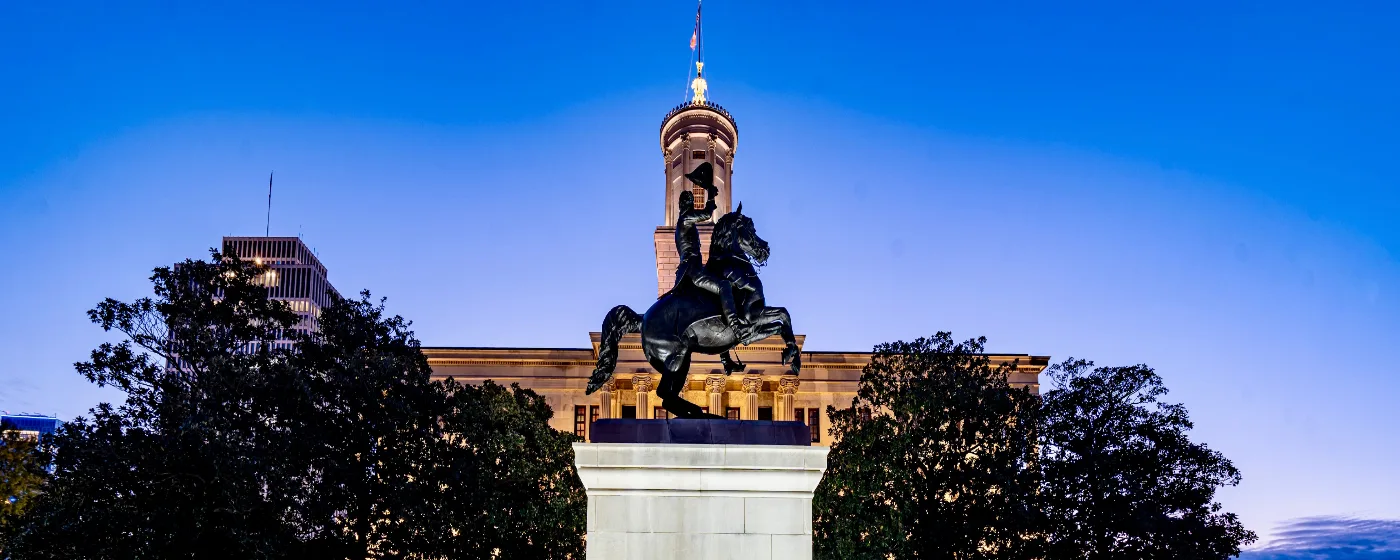
What Is Living in Columbia, Tennessee Like?
If you've been priced out of Williamson County and someone told you to look at Columbia, you've already heard the pitch: small-town feel, genuine history, and a housing market that won't immediately disqualify you. What they may not have told you is that Columbia is growing fast enough that the window on those prices is narrowing. Maury County added 3,675 residents between July 2024 and July 2025 — one of the fastest-accelerating growth rates in Tennessee — and the automotive and advanced manufacturing jobs landing just up I-65 in Spring Hill are pulling demand southward into Columbia every quarter. The city sits about 50 minutes to Nashville on I-65 or US-31, close enough for a daily commute, far enough that the pace of life still slows down once you cross into Maury County.
The economic engine here runs on a handful of substantial employers. A major regional health system anchors the healthcare side of the local job market. General Motors' Spring Hill Manufacturing plant — and the broader wave of automotive suppliers like Magneti Marelli that followed it — gives the county a heavy manufacturing base that most Tennessee cities of this size don't have. Columbia State Community College serves both recent graduates and mid-career workers retraining for advanced manufacturing roles. The school district, Maury County Public Schools, has 12,752 students enrolled in 2024-25 and holds a C rating, according to Niche — something buyers with children should read more about on the schools page before making a decision. The median age here is 36.9, which means the city skews young; the people moving in are mostly working-age families and couples choosing affordability over Franklin's polish.
The typical home price in Columbia is $371,690 (Zillow Home Value Index, August 2026) — noticeably below nearby Spring Hill and Franklin, though the gap has compressed as demand has intensified. Tennessee's lack of a state income tax helps household budgets stretch further than the median income alone might suggest. Day-to-day life runs on a car — most errands require one — but the Duck River, the Columbia Riverwalk, Chickasaw Trace Park, and Maury County Park give outdoor-minded residents genuine reasons to stay local on weekends. The city counts 206 sunny days a year, which is enough to make the Riverwalk a regular habit from spring through fall.
Whether you're considering a move or just starting to research the area, the sections below break down Columbia's neighborhoods, housing market, commute realities, major employers, local favorites, and what daily life here is really like.
Columbia at a Glance
Looking to buy in Columbia? Estimate your payment.
Enter your numbers to see an estimated monthly mortgage payment.
Estimate only. Excludes HOA fees and mortgage insurance. The interest rate above is a starting point, not a quoted rate — replace it with your own to see real numbers. Insurance is a flat placeholder, not a Columbia quote.
Beyond the Monthly Mortgage Payment — What to Factor In
- The property tax rate above — The 0.48% used in the estimate is the median effective rate — tax actually paid as a share of market value — published by Ownwell, 2026. Half of local homes pay more and half pay less: your own bill depends on that property's assessed value and any exemptions it qualifies for, which can differ a lot from its market price. Confirm with the Maury County assessor before you budget.
- Total cost of ownership — Your monthly mortgage payment is just the baseline. Depending on the specific city, county, and service district, homeownership costs also include local utility fees, municipal surcharges, and special assessments (such as water, sewer, storm drainage, or local energy taxes) that vary by location.
- Independent due diligence — Because these recurring local costs and municipal fees change depending on the exact property address, buyers must research them independently during their transaction process.
Tax laws, local municipal fees, and utility costs change frequently and individual situations vary. This page is general information, not tax or legal advice — always consult a qualified tax professional, CPA, or local municipal offices for personalized guidance.
Why Are People Moving to Columbia?
Columbia's growth story starts about fifteen miles north, at the General Motors Spring Hill Manufacturing complex. The $2.5 billion Ultium Cells EV battery joint venture between GM and LG Energy Solutions brought thousands of new jobs to Maury County, and the ripple effect landed squarely on Columbia's housing market. Automotive suppliers, construction workers, and out-of-state transplants needing a base within commuting distance of Spring Hill all chose Columbia for the same reason: it was the affordable alternative to Williamson County that still had actual infrastructure.
That affordability story has a real ceiling. Spring Hill and Franklin are noticeably higher in price than Columbia — enough of a gap that it still drives buyers south. But that gap is narrowing, and the pace of outside investment into the county signals that the market has noticed.
The city also has genuine civic momentum that isn't just a function of spillover demand. Columbia holds one of Tennessee's oldest accredited Main Street designations, and its downtown has been actively rebuilt: new public sculptures on South Garden Street, a streetscape project adding sidewalks and greenspace, a GM on Main Street Grant funding curb extensions and informational kiosks, and The Mulehouse, a restored church converted into a music and event venue that expanded the Arts District footprint. The Maury County Judicial Center opened in October 2024, and the historic courthouse it replaced is being repurposed into a county museum and civic gathering space.
Who Columbia Actually Attracts
The majority of people moving here fall into a few recognizable categories. Automotive and manufacturing workers who need proximity to the Spring Hill industrial corridor without Franklin's price tag. Remote workers and Nashville commuters who run the I-65 or US-31 corridor and want a larger house and a yard for what a Nashville condo costs. Young families who looked at Williamson County, did the math, and crossed the county line. And a smaller but real cohort of people who moved here for the history, the river, and the pace — and happen to work locally or remotely.
| Buyer Type | Why Columbia Works | Best For |
|---|---|---|
| Manufacturing & automotive workers | Close to Spring Hill GM plant and supplier network; housing well below Williamson County | Commuter Value |
| Nashville commuters | I-65 or US-31 access; about 50 minutes to Nashville; noticeably lower home prices | Commuter First-Time |
| Families with school-age children | More house for the money; youth sports infrastructure at Ridley Sports Complex; room to grow | Families Value |
| Remote workers | Small-town quality of life; cost of living well below Nashville metro | Quiet Value |
| First-time buyers | Entry point lower than most of Middle Tennessee; broad inventory across price levels | First-Time Value |
| History and culture seekers | James K. Polk Home, Mule Day festival, Main Street arts scene, Duck River access | Walkable Nature |
What all of these buyers share is an acceptance that Columbia is not Nashville — and an active preference for that difference.
What Daily Life Feels Like in Columbia
Columbia operates on a rhythm that Williamson County gave up sometime around 2015. Weekday mornings are calm enough that you can grab coffee without a fifteen-minute line. The James K. Polk Home & Museum — the only surviving residence of the 11th U.S. President other than the White House — sits one block from the courthouse square and is the kind of landmark that makes visitors stop and look up the history, and residents occasionally forget to be proud of. The Duck River, running through the city, is recognized as the most biodiverse river in North America, supporting more than 150 species of fish and 50 species of freshwater mussels — a fact that surprises almost everyone who learns it.
The Downtown Texture
Downtown Columbia has the bones of a working small-city square and the investment of a place that has decided to act on them. The Arts District on South Garden Street has new public sculpture. First Fridays bring the community to the square on a monthly basis. The Columbia Riverwalk gives the downtown an outdoor edge that connects the historic core to the water. This is not a fully activated urban district — you will not mistake it for Franklin's Main Street — but it is noticeably more alive than it was five years ago, and that trajectory matters for buyers thinking about long-term value.
What Surprises People After Six Months
Mule Day is the one nobody is prepared for. The festival draws crowds from across the region to Maury County Park every April — a tradition dating to 1840, when it began as a livestock show and mule market — and features a parade through downtown, mule-pulling contests, Appalachian music, and line dancing. If you move here in the fall and think you understand Columbia's scale, April will recalibrate that. The town absorbs an event larger than its own population and does it with practiced ease.
The other surprise is how much the community gathers outdoors. Chickasaw Trace Park — roughly 300 acres with mountain bike trails, trail running, and Duck River fishing access — draws a consistent crowd of regulars. Yanahli Park and Maury County Park round out the green space. For a city of 50,072, the outdoor infrastructure punches above its weight.
The honest limitation: most of daily life requires a car. The grocery run, the kids' activities, the hardware store — none of it happens on foot for the majority of residents. If walkable errands are a non-negotiable, the downtown-adjacent neighborhoods come closest, but they are the exception rather than the rule. The parks and recreation page covers the trail and green space network in detail.
The School Reality
Maury County Public Schools serves the city and surrounding county. On 2025-26 state assessments, 33.5% of students reached math proficiency and 35.6% reached reading proficiency. The district holds a C rating, according to Niche. Families with strong academic priorities should read the full breakdown on the schools page — there is meaningful variation across individual campuses, and the district has active TSSAA athletics programs that give student life outside the classroom real structure.
The Columbia Housing Market Right Now
The typical home price in Columbia is $371,690 (Zillow Home Value Index, August 2026). That number is doing a lot of work relative to the broader Middle Tennessee market: it sits noticeably below what you would pay in Spring Hill, and the gap to Franklin is larger still. For buyers coming from either of those markets — or from out of state — Columbia's price point can feel like a windfall. For local buyers earning the median household income of $61,204, it is worth knowing that the typical home here is priced above what the median income can comfortably carry without a substantial down payment.
The typical rent in Columbia runs $1,576 per month (Zillow, August 2026), which gives renters a reasonable base before making a purchase decision — though that figure has moved with the demand surge. The cost of living page breaks down what that income-to-price gap means in practice, alongside taxes and everyday expenses.
What the Market Looks Like on the Ground
Columbia's inventory spans a genuine range. The historic downtown neighborhoods offer older construction with character and varying condition. Newer subdivisions — particularly around the Bear Creek corridor and West End — attract buyers who want recent builds with standard warranties and HOA amenities. Prices across the city vary meaningfully by neighborhood and condition, though the city-wide figure is your best anchor point for the moment.
The effective property tax rate of 0.48% is among the lower rates in Middle Tennessee — meaningful for monthly carrying costs — and Tennessee's absence of a state income tax extends the advantage further. For the full picture on what ownership actually costs here month to month, the first-time homebuyer page covers financing approaches and the buying process in detail.
One honest note for buyers comparing Columbia to nearby cities: the price advantage that drew many current residents is real, but it is compressing as the county grows. Buyers who moved here from Williamson County two or three years ago locked in a gap that is smaller today. That dynamic favors moving sooner rather than treating the affordability advantage as indefinitely durable.
Columbia Neighborhoods
Columbia has several distinct areas — each with its own character and appeal. Here’s a breakdown to help you narrow down where to focus your home search.
🏡 Downtown Columbia / Historic District
The courthouse square and surrounding historic blocks are the most walkable part of the city, putting residents within reach of the Arts District, the James K. Polk Home, and the Riverwalk. It suits buyers who want Columbia's small-city character at its most concentrated.
🏠 Graymere
An established residential area that draws families looking for conventional subdivision layouts with proximity to everyday services. The housing stock skews toward mid-century and later single-family homes with established yards and tree cover.
🌳 Highland Park
Highland Park offers a mix of older homes and a neighborhood feel that appeals to buyers who want a recognizable address inside the city limits without the price pressure of the newest subdivisions. It tends to attract families and long-term residents who value stability over newness.
🏘 Riverside
As the name suggests, proximity to the Duck River corridor is the defining feature here, and residents who prioritize outdoor access and a quieter residential character tend to land in this area. It suits nature-oriented buyers who want a shorter walk to the water.
🏔 Bear Creek (Highlands at Bear Creek / Bear Creek Overlook / Cottages of Bear Creek)
The Bear Creek corridor is Columbia's most active new-construction zone, drawing buyers who want recently built homes with modern finishes and HOA-managed common areas. Families and first-time buyers who want move-in-ready inventory without Williamson County prices look here first.
🌆 West End
West End occupies the quieter residential side of the city, with a mix of housing types and a lower-key neighborhood feel that attracts buyers who want space from the busier corridors. It is a good fit for those who commute early and want a calm home base to return to.
Pros & Cons of Living in Columbia
The Pros
- Small-town, historic charm with a walkable downtown square
- Home prices well below nearby Franklin and Nashville
- Strong sense of local identity anchored by Mule Day and antebellum architecture
- Growing job base tied to Spring Hill's automotive and logistics expansion
The Cons
- Commute to downtown Nashville can stretch to an hour in traffic
- School district ratings lag state averages
- Crime rates in some national rankings run higher than similarly sized Tennessee towns
Getting Around & Commuting in Columbia
Columbia is a car city. That is not a criticism — it is the accurate framing that every new resident eventually arrives at, usually after trying to walk somewhere and discovering the distances involved. Most daily errands, shopping, and school runs require a vehicle, and households without one face real limitations. The trade-off for accepting that dependency is access to a Mid-Tennessee highway network that keeps the broader region within reach.
The Nashville Run
The dominant commute pattern is north on I-65 toward Nashville, Brentwood, or the Spring Hill manufacturing corridor. The drive to Nashville takes about 50 minutes under normal conditions — emphasis on normal. The I-65 corridor between Columbia and Brentwood carries some of the heaviest commuter volume in Tennessee, and the merge points near Spring Hill and the Williamson County line are where that traffic concentrates. Commuters who make this run daily describe the northbound morning push as predictable enough to plan around, but not forgiving of late starts. US-31 runs parallel and is a genuine alternative when the interstate backs up, though it adds time through traffic signals.
Fixed-route commuter transit into Nashville is not a standard option from Columbia. For most households, car ownership or carpooling is the practical default. That reality is worth weighting seriously if one partner works in Nashville and the other is local — you are building a two-car household budget from the start.
Local Getting Around
Within Columbia and Maury County, US-43 carries significant north-south volume through the commercial corridors. US-412 and SR-50 handle east-west movement across the county. SR-99 and SR-246 (Carters Creek Pike) are the routes that connect the rural edges to town, and they are worth knowing if you are looking at property outside the city limits.
Nashville International Airport (BNA) is approximately 49 miles from Columbia. For occasional travelers, that distance is manageable; for frequent flyers, it is a real scheduling consideration that residents consistently underestimate before they move.
The Spring Hill Factor
A large share of Columbia's workforce commutes north to Spring Hill — to the GM plant, the Ultium Cells facility, and the automotive supplier network that has grown around them. That commute is shorter than the Nashville run, generally 15 to 20 minutes on US-31. Residents who work in Spring Hill and live in Columbia get most of the benefit of Maury County affordability without the longer Nashville haul, which is why that employment base has been such a direct driver of housing demand here. See the neighborhoods page for more on which areas of Columbia put commuters in the best position relative to the Spring Hill corridor.
Schools in Columbia
Families relocating to Columbia have public, private, and higher-education options nearby. Here’s a quick overview.
🎓 School District
Maury County serves K–12 students across Columbia and the surrounding area. Rated C (source: Niche.com).
📊 District Stats
- Enrollment 2024-25
- 12,752 students
- 4-year graduation rate
- 90.6%
- Math proficiency 2025-26
- 33.5%
- Reading proficiency 2025-26
- 35.6%
- Science proficiency 2025-26
- 39.6%
Source: Tennessee Department of Education Data Downloads (district profile, graduation rate and TCAP assessment files).
📚 Higher Education
Tennessee’s public universities — the University of Tennessee, Vanderbilt University, and Middle Tennessee State University — offer four-year degrees statewide, with a statewide community and technical college system of 13 community colleges and 24 colleges of applied technology, with tuition-free options for residents through Tennessee Promise and Tennessee Reconnect providing two-year and workforce programs.
🌐 Online Learning
UT Knoxville Online and MTSU Online offer fully accredited online degrees for remote learners across the state.
Safety in Columbia
A quick look at how Columbia compares on the numbers that matter most when weighing a neighborhood or a move.
🛡 Violent Crime
Approximately 5.8 per 1,000 residents.
🔒 Property Crime
Approximately 25 per 1,000 residents.
Compared to the most recent national figures from the Bureau of Justice Statistics (2024), Columbia’s violent crime is above the national average (about 3.7 per 1,000), and property crime is above the national average (about 18.4 per 1,000).
Against Tennessee as a whole, Columbia’s violent crime is about the same as the state average, and property crime is somewhat above the state average (Bureau of Justice Statistics, Crime Known to Law Enforcement, 2024 (tables 2 and 3)).
Crime rates can vary a lot within a single city, so the citywide numbers above are only a starting point. Some neighborhoods in Columbia run well below these averages, while others run higher — the kind of block-by-block detail that matters most when you’re actually choosing where to live. The full guide below breaks it down neighborhood by neighborhood.
Working in Columbia
Columbia’s largest employers span several industries — here are some of the anchors of the local job market.
🏥 Maury Regional Medical Center
Healthcare
💼 General Motors Spring Hill Manufacturing
Automotive
💼 Magneti Marelli
Automotive parts
🎓 Columbia State Community College
Education
Retiring in Columbia
Columbia draws retirees for its balance of amenities, outdoor access, and cost. Here’s what to weigh.
🌤 Climate
Columbia averages 206 sunny days a year, with warm summers and mild winters that occasionally see ice but rarely extended cold snaps. Spring and fall are the seasons most retirees gravitate toward — comfortable enough for river walks and outdoor festivals without the heat of July and August.
🍴 Lifestyle
Downtown Columbia offers independent coffee shops, a growing restaurant scene, the James K. Polk Home & Museum, and a monthly First Fridays event series. The Columbia Riverwalk and Chickasaw Trace Park provide outdoor options within easy reach, and the Columbia Farmers Market runs through the growing season for those who prefer local produce.
🏚 55+ Communities
No 55+ communities were found in Columbia. Retirees considering Columbia typically choose from the broader single-family housing stock, with older and more affordable options in the established neighborhoods near the historic downtown. The retiring page has more detail on what the local healthcare and lifestyle picture looks like for older buyers.
✈ Getting Around
A personal vehicle is essential for daily life in Columbia. Most errands and appointments require driving, and the downtown core is the only area with meaningful on-foot access. Nashville International Airport (BNA) is approximately 49 miles away, the closest major commercial airport serving the region.
🏛 Tennessee Taxes for Retirees — What to Know
- No state income tax — Tennessee has no personal income tax. Social Security, pensions, 401(k) and IRA withdrawals and annuity payments are all untaxed at the state level, with no state return to file. The Hall tax on interest and dividends — the state’s last income-type tax — was fully phased out and repealed effective 2021.
- Sales tax is the tradeoff — The state sales tax is 7.0%, and local add-ons bring the combined rate in Columbia to 9.75% (Tennessee Department of Revenue (SUT-13, SUT-53); Streamlined Sales Tax rate boundary file TNR2026Q3, Q3 2026). Groceries are taxed at a reduced state rate of 4% plus the local rate; prescription drugs are exempt. Prepared food, candy, dietary supplements and alcohol pay the full rate.
- Property taxes are low, not the tradeoff — Property tax in Tennessee is set county by county, and rates are low by national standards. Unlike Texas, which funds local government through high property taxes in place of an income tax, Tennessee leans on its sales tax instead — so a retiree is not trading one bill for another. Your county trustee publishes the current rate.
- Tax relief for owners 65 and over — The state reimburses part of the property tax bill for low-income homeowners who are 65 or older, and for disabled homeowners of any age, through the Property Tax Relief program administered by county trustees. It is income-tested and must be applied for each year.
- A tax freeze — but only where the county or city adopted it — Tennessee also allows a Property Tax Freeze that locks a homeowner’s bill at the amount owed in the year they qualify, for owners 65 and over under an income limit. It is a local option: each county and city chooses whether to offer it, and sets its own income threshold, so it is available in some parts of the state and not others. Check with the county trustee.
- No estate, inheritance or gift tax — Tennessee has none of the three. The inheritance tax was repealed for deaths occurring in 2016 and after, and the gift tax was repealed effective January 1, 2012.
- No separate capital gains tax — Because Tennessee has no state income tax, capital gains — including on investments and on the sale of a home — are not taxed at the state level at all, unlike states such as Washington that tax capital gains separately from income.
Source: Tennessee Department of Revenue and Tennessee Comptroller of the Treasury.
Tax laws change frequently and individual situations vary. This is general information, not tax advice — always consult a qualified Tennessee tax professional or CPA for personalized retirement tax planning.
Weekends & Local Favorites in Columbia
Columbia's weekend identity revolves around the square, the river, and the parks — with a food and coffee scene that has grown meaningfully alongside the city's investment in its downtown core.
Food & Coffee
Puckett's Restaurant brings the honky-tonk-adjacent Tennessee comfort food experience that the city's visitor profile calls for, and it draws a crowd that mixes locals and day-trippers in roughly equal measure. For something quieter, Southern Tré Steakhouse The Original handles the date-night and special-occasion slot, while Embers Tavern & Grille runs the casual end of the dining scene with a dependable crowd on weekends. Mama Mila's and Pasta and Pita round out a dining lineup that is more varied than the city's size might lead you to expect.
The coffee scene has developed real character. Muletown Coffee Roasters is the local roaster that residents tend to mention first, with a following built on beans rather than ambiance. Square Market & Cafe puts you on the courthouse square and earns its place as a downtown gathering point. Legacy Coffee Co., Buckhead Coffeehouse, and Towne Café fill out the independent coffee shop landscape — enough options that you are not dependent on a drive-through chain to start your morning.
Outdoors & Events
The Columbia Riverwalk is the city's most-used outdoor amenity on a warm weekend — kayaking and fishing on a river recognized as the most biodiverse in North America is the kind of thing residents use as a selling point when friends visit. Chickasaw Trace Park, roughly seven miles northwest of downtown, draws mountain bikers and trail runners who want distance from pavement. Yanahli Park and Maury County Park offer more accessible green space for families with younger kids.
The Columbia Farmers Market is a consistent weekend draw through the growing season — local produce, Tennessee honey, and the social function that a farmers market carries in a city of this size.
Mule Day every April is in a category of its own. Crowds fill downtown and Maury County Park for a Saturday parade, mule shows and mule-pulling contests, Appalachian music, and line dancing — all tied to a tradition that dates to 1840. New residents who see it for the first time almost universally describe it as the moment Columbia stopped being a place they lived and started being a place they belonged to.
The Arts District's monthly First Fridays event series gives the downtown a recurring rhythm that doesn't require a special occasion. The James K. Polk Home & Museum — a National Historic Landmark a block from the courthouse square — is the kind of attraction that locals walk past for years and eventually bring every out-of-town visitor to, because the guided tour of the Federal-style home and presidential exhibit hall is genuinely good.
Ridley Sports Complex has put Columbia on the regional map for youth sports tournaments, winning a 2025 Champion of Economic Impact in Sports Tourism award — which means weekend traffic in town occasionally spikes when a regional event is in session. That is worth knowing if you are timing a move and wondering why the town feels different on a particular Saturday.
Local favorites in Columbia
Restaurants
- Puckett's Restaurant
- Southern Tré Steakhouse The Original
- Embers Tavern & Grille
- Mama Mila’s
- Pasta and Pita
Outdoors
- Columbia Riverwalk
- Chickasaw Trace Park
- Yanahli Park
- Maury County Park
Coffee
- Muletown Coffee Roasters
- Square Market & Cafe
- Legacy Coffee Co.
- Buckhead Coffeehouse
- Towne Café
Farmers Markets
- Columbia Farmers Market
Top Things Locals Say About Columbia
The best intel about a city comes from the people who actually live there. Here’s what Columbia residents say when newcomers ask the questions everyone’s thinking.
“I knew about the commute going in, but I didn't really know about it until I did it every day. The mornings are manageable if you leave early enough. What genuinely surprised me was how much the downtown pulled us in on weekends — we barely missed Nashville the first month.”
— Recent Columbia home buyer
“What's the most surprising thing about living in Columbia?”
Mule Day. You hear about it before you move here and assume it's a quirky local thing. Then April comes and downtown looks like a different city — the parade fills the streets, Maury County Park is packed, and you realize this is one of the biggest events in Tennessee. First-timers are consistently caught off guard by the scale of it. After your first one, you start planning your calendar around it.
“What do locals love most about Columbia?”
The Duck River and the Riverwalk are what comes up most. People move here for the price and stay for the river. Kayaking or fishing on a weekday afternoon when the water is low and the herons are out — that's the part of Columbia that doesn't show up in the listing photos. The downtown coffee shops and the square on a quiet morning are a close second. It feels like a city that is figuring itself out in a good way.
“What should newcomers to Columbia know?”
The I-65 merge near Spring Hill is where your commute lives or dies. If you're heading to Nashville, leaving by 7 a.m. makes a real difference. US-31 is your backup when the interstate backs up, but it runs through traffic signals so it adds time in a different way. Also: the Arts District and the First Fridays events are worth putting on your calendar early — they're how you meet people who have been here long enough to actually know the city.
“How much do you need a car in Columbia?”
You need one. If you live close to the courthouse square, you can walk to the coffee shops, a handful of restaurants, and the Riverwalk — but that covers maybe a quarter of what daily life actually requires. Groceries, most shopping, school runs, and anything outside the immediate downtown all mean driving. Plan on two cars if both partners are working, and build that into your budget from the start.
Cities Near Columbia
Other communities near Columbia worth a look — each with its own character and price point.
| City | Distance | Best For | Vibe | Median Rent | Median Buy |
|---|---|---|---|---|---|
| Spring Hill | 15 mi | Automotive workers & new builds | Fast-growing, suburban, busy | $2,019 | $520,958 |
| Franklin | 30 mi | Upscale buyers & polished Main Street | Affluent, walkable, well-established | $2,074 | $925,870 |
| Mount Pleasant | 12 mi | Budget buyers & rural feel | Small, quiet, agricultural | $1,200 | $320,000 |
More Helpful Guides for Columbia
Going deeper on Columbia? Our blog series covers everything from first-time buying to retiring here — explore the guides below.
Local Expert Takeaway: Columbia is the most compelling value play left in Middle Tennessee's commuter belt — but 'value play' undersells what the city actually is. The Duck River, Mule Day, the James K. Polk landmark, Muletown Coffee Roasters, and a downtown Arts District that is actively being built rather than merely maintained all give Columbia a texture that purely suburban alternatives don't have. The catch is real: the commute to Nashville on I-65 is about 50 minutes and that corridor is not forgiving in the morning. The school district holds a C rating, according to Niche, and test scores reflect a district still working through real challenges. And the affordability advantage that attracted most current residents is narrowing as Maury County becomes one of the fastest-growing counties in Tennessee. Buy for the lifestyle and the community — but go in understanding what the commute and the schools actually look like.
Quick Takeaways & FAQs
✅ Columbia's typical home price of $371,690 (August 2026) sits noticeably below Spring Hill and Franklin, making it the most affordable entry point left in the I-65 commuter corridor.
⚠️ The commute on I-65 is about 50 minutes to Nashville under normal conditions — and the merge points near Spring Hill are where that drive earns its reputation on busy mornings.
📍 The Duck River flowing through Columbia is recognized as the most biodiverse river in North America, and the Riverwalk puts kayaking and fishing within minutes of downtown.
Is Columbia, TN a good place to live?
How far is Columbia, TN from Nashville?
What are the best neighborhoods in Columbia, TN?
How are the schools in Columbia, TN?
What is the cost of living in Columbia, TN?
Helpful Links for Moving to Columbia
Moving to Tennessee?
Tell us what you need help with and we'll connect you with local resources.
