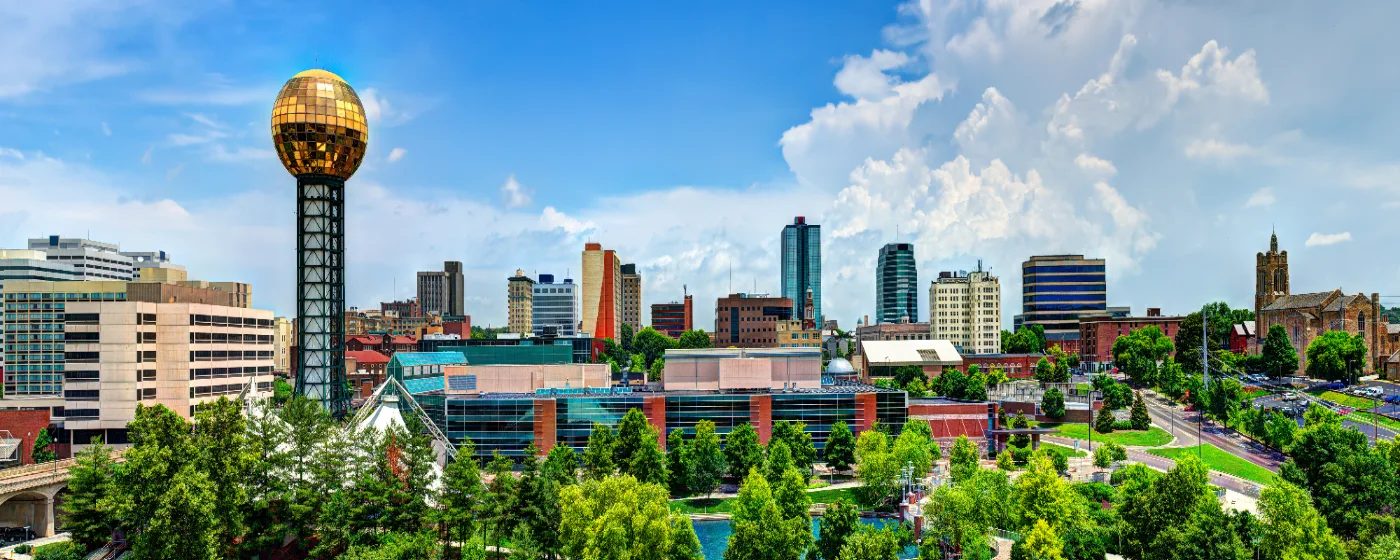
What Is Living in Knoxville, Tennessee Like?
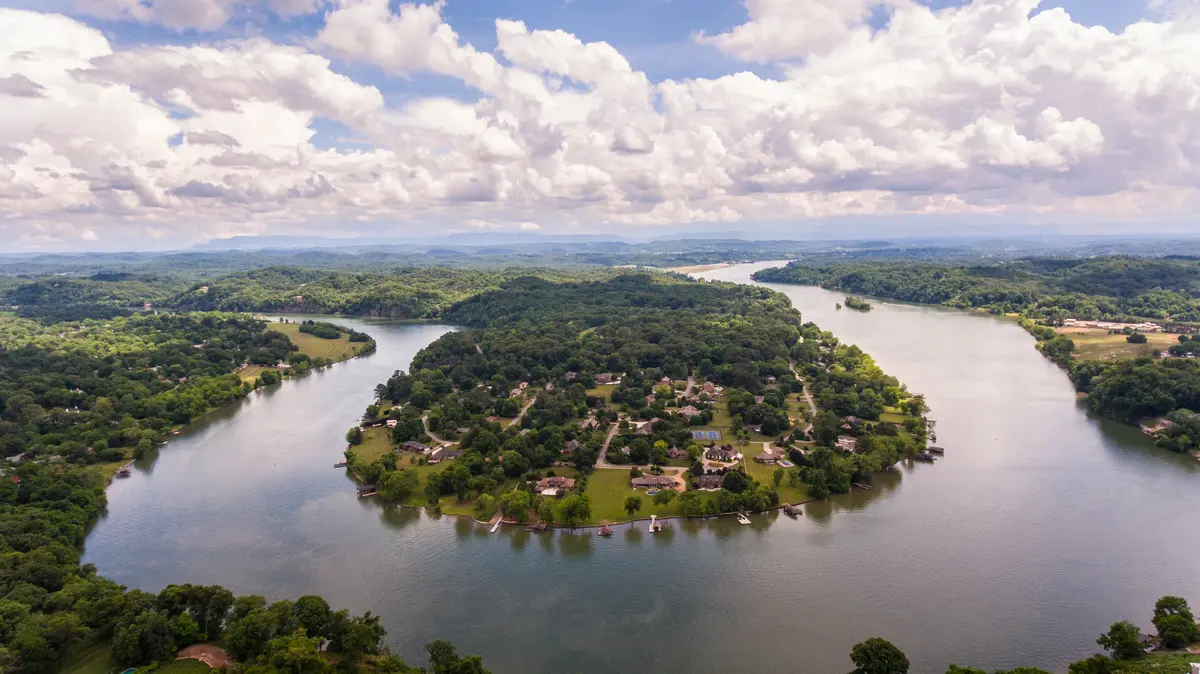
People who move to Knoxville from bigger metros often say the same thing around month three: they expected a sleepy mid-sized Southern city and found something considerably more alive. Knoxville sits at the confluence of I-40 and I-75 in the Tennessee Valley, making it the regional hub for everything from healthcare to research to college football — and that combination of institutional weight and genuine affordability has driven steady population growth to 202,021 residents, making it the 3rd-largest incorporated city in Tennessee. The Tennessee River bends through the heart of it, the Smokies sit just under an hour away, and the University of Tennessee's campus anchors the west side of downtown in a way that shapes the city's entire energy and median age.
The economic backbone here is more diversified than most people expect. Covenant Health anchors the healthcare sector across the region. The University of Tennessee Knoxville is a major employer, research institution, and cultural driver. Oak Ridge National Laboratory, about 25 miles west, pulls a significant share of the region's science and engineering workforce. The Tennessee Valley Authority — one of the country's largest public utilities — has had a presence here for generations. Knox County Schools employs thousands and serves tens of thousands of students across the district. Professional, scientific, and technical services are among the highest-paying sectors in the metro, which matters for a city where the median household income sits at $50,994.
On price, Knoxville is still a genuine relative value by the standards of most cities people move here from. The cost of living page covers this in full, but the short version is that Tennessee's lack of a state income tax softens the sting of everyday expenses, and an effective property tax rate of 0.39% keeps annual carrying costs modest. The city logs 204 sunny days a year, four distinct seasons, and enough trail access — including the Urban Wilderness system within city limits — that outdoor life is part of daily routine rather than a weekend-only event. Great Smoky Mountains National Park is the most visited national park in the country and is less than an hour from downtown.
Whether you're being relocated for work, priced out of a coastal market, or simply choosing between Knoxville and somewhere else in the Southeast, the sections below break down neighborhoods, the housing market, daily commutes, local employers, weekend life, and what the city actually feels like once you live here.
Knoxville at a Glance
Looking to buy in Knoxville? Estimate your payment.
Enter your numbers to see an estimated monthly mortgage payment.
Estimate only. Excludes HOA fees and mortgage insurance. The interest rate above is a starting point, not a quoted rate — replace it with your own to see real numbers. Insurance is a flat placeholder, not a Knoxville quote.
Beyond the Monthly Mortgage Payment — What to Factor In
- The property tax rate above — The 0.39% used in the estimate is the median effective rate — tax actually paid as a share of market value — published by Ownwell, 2026. Half of local homes pay more and half pay less: your own bill depends on that property's assessed value and any exemptions it qualifies for, which can differ a lot from its market price. Confirm with the Knox County assessor before you budget.
- Total cost of ownership — Your monthly mortgage payment is just the baseline. Depending on the specific city, county, and service district, homeownership costs also include local utility fees, municipal surcharges, and special assessments (such as water, sewer, storm drainage, or local energy taxes) that vary by location.
- Independent due diligence — Because these recurring local costs and municipal fees change depending on the exact property address, buyers must research them independently during their transaction process.
Tax laws, local municipal fees, and utility costs change frequently and individual situations vary. This page is general information, not tax or legal advice — always consult a qualified tax professional, CPA, or local municipal offices for personalized guidance.
Why Are People Moving to Knoxville?
The case for Knoxville is easier to make than most people realize before they start looking. Tennessee collects no state income tax on wages, which immediately changes the math for anyone relocating from a high-tax state. That fiscal reality, combined with home prices well below the national average and a regional economy that kept expanding through recent years of broader uncertainty, has pushed Knoxville onto a lot of relocation spreadsheets.
The Knoxville metro's nominal GDP grew 4.4% in 2024 following 7.0% growth in 2023 — a strong, normalizing trajectory for a regional economy, not a boom-and-bust cycle. The employer mix here rewards that steadiness. Covenant Health, the University of Tennessee Knoxville, Oak Ridge National Laboratory, the Tennessee Valley Authority, and Knox County Schools collectively represent tens of thousands of jobs spread across healthcare, higher education, federal research, public utilities, and public education. That diversification is what kept the city's economy relatively stable even when national hiring cooled.
For families weighing a move, Knox County Schools holds a B+ rating, according to Niche — strong enough to draw buyers who might otherwise target the suburbs, and on 2025-26 state assessments, 42.6% of students reached math proficiency and 46.4% reached reading proficiency. See the full picture on the schools page. Competitive athletics programs run across the district, and Friday nights around football season feel distinctly Tennessean.
Knoxville also skews young. The median age is 33.5, driven heavily by UT's enrollment, which keeps the restaurant and entertainment scene more active than a city this size might otherwise support. Covenant Health Park opened in April 2025 in the Old City, bringing Double-A Knoxville Smokies baseball and One Knoxville SC soccer to a 6,355-seat stadium — and immediately energized the surrounding Magnolia Avenue Warehouse District with foot traffic and development. People who moved here for affordability tend to stay for quality of life.
Who Actually Moves Here
Remote workers from coastal markets, often from California or the Mid-Atlantic, arrive for the price point and stay for the terrain. UT faculty and staff settle across West Knoxville and Bearden. Healthcare professionals spread across the metro, clustering closer to the major hospital corridors. And retirees increasingly land in Knoxville proper for the combination of a major health system, mild-ish winters, and easy mountain access. The retiring page covers that angle in detail.
The honest counterpoint: Knoxville's safety picture is worth reading before you choose a specific neighborhood. The city carries a violent crime rate of 7.4 per 1,000 residents and a property crime rate of 27.2 per 1,000 residents — both above the state rates of 6 per 1,000 and 20.8 per 1,000 respectively, and above national figures. Those rates are not evenly distributed, and where you land in the city matters considerably more than the city-wide average.
What Daily Life Feels Like in Knoxville
Knoxville operates on a scale that most mid-sized cities can't quite replicate: large enough to have real cultural infrastructure, small enough that you're not spending two hours in the car on a Saturday afternoon. Market Square is the functional center of downtown social life — the kind of plaza that actually gets used, with a weekly farmers market, concerts, and outdoor dining that fills up on warm evenings. The Tennessee Theatre anchors Gay Street with live performances, and its '612 Expansion' addition was scheduled to open in 2026, adding new programming capacity to an already-active venue.
The University of Tennessee's presence is felt well beyond the campus boundaries. UT men's basketball and football pull the kind of crowds that make game weekends feel like a different city — Neyland Stadium holds over 100,000 people, and the ripple effect on parking, restaurants, and local roads is something newcomers consistently underestimate. Pick your property accordingly if you live close to campus.
Outdoors Is Not a Weekend Add-On
The Urban Wilderness trail system runs through South Knoxville and connects to Ijams Nature Center — several miles of mountain biking and hiking trails accessible from inside city limits, not a destination you have to drive an hour to reach. The Tennessee River provides a visual constant across much of the city, and Melton Hill Lake draws boaters and paddlers west of downtown. House Mountain State Natural Area offers ridge hiking within a reasonable drive.
The practical shape of daily life requires a car for most residents. Knoxville Area Transit's redesigned KAT Reimagined network launched in August 2024 with expanded routes and seven-day-a-week service — genuinely useful transit for downtown workers and UT students, less so for the majority of residents spread across suburban West Knoxville or the outlying neighborhoods. The city's $42.6 million federal transportation grant is funding a 10-mile connectivity project linking East Knoxville to downtown, which signals real investment in improving this over time.
The Seasonal Surprise
Newcomers who arrive in spring and fall are often caught off-guard by summer. Knoxville summers run hot and humid in a way that the mountains in the distance do nothing to moderate — July temperatures regularly push into the 90s with heavy humidity, and the urban heat of downtown is real. The upside: fall color arrives reliably in October, the Smokies turn spectacular, and winters are mild enough that a hard freeze is the exception rather than the rule.
The local food and coffee scene is genuinely worth landing in — independent cafés, a diverse dining corridor, and spots worth making a regular stop. See the Weekends section below for the specifics.
The Knoxville Housing Market Right Now
The typical home price in Knoxville sits at $370,699 (Zillow Home Value Index, August 2026). That figure puts the city in a different conversation than most metros its size along the East Coast or in Texas — and it's the reason so many buyers arrive having done the math elsewhere and found Knoxville the only place where it clears. For a fuller breakdown of how that price stacks up against local incomes and what it costs to own here day-to-day, see the cost-of-living page.
One honest note on affordability: the median household income of $50,994 falls meaningfully short of what's needed to carry the typical home at current prices. That gap affects first-time buyers most acutely, and the first-time homebuyer page covers loan programs and strategies worth knowing about before you start making offers.
What the Neighborhoods Do to the Number
The city-wide figure masks meaningful variation. Downtown Knoxville and Fort Sanders run above the city median — walkable demand and limited inventory keep prices elevated in those corridors. North Knoxville and South Knoxville both sit below the median, offering more accessible entry points for buyers who can tolerate longer commutes to certain employers or are comfortable with older housing stock. West Knoxville, Bearden, Fountain City, and Sequoyah Hills each have their own character without a clean price tier attached — the neighborhoods page gets into the specifics of each.
Nearby, Farragut runs noticeably higher than Knoxville's typical price — it's the suburb that draws buyers who want newer construction and strong school ratings and are willing to pay for both. Oak Ridge comes in somewhat lower than Knoxville, and Maryville somewhat higher. Those comparisons matter most if you're deciding where to anchor rather than committing to the city itself.
The rental market runs at a typical $1,712 per month city-wide (Zillow, August 2026). With a population that skews young and a steady inflow of UT students and early-career professionals, rental demand in and around the university corridor and downtown stays consistent. Some areas carry higher rent than that figure suggests — neighborhood-level detail is on the neighborhoods page.
Knoxville Neighborhoods
Knoxville has several distinct areas — each with its own character and appeal. Here’s a breakdown to help you narrow down where to focus your home search.
🏡 West Knoxville
The suburban heart of the city, where newer subdivisions and chain retail line Kingston Pike — families with school-age children make up the core of the buyer pool here, drawn by Knox County schools and proximity to West Knoxville's commercial corridor. It's the most car-dependent part of the city, but also the most comprehensively amenitized.
🏠 North Knoxville (NoKno)
A neighborhood in active transition, with older bungalows and craftsman homes drawing buyers who want character and relative affordability — Central Avenue is the spine of the emerging local scene, and the walkable-street bones of older North Knoxville are what make it increasingly attractive to buyers priced out of downtown.
🌳 South Knoxville (SoKno)
The outdoor recreation hub of the city, anchored by Ijams Nature Center and the Urban Wilderness trail system — buyers who prioritize trail access and a lower entry price point over suburban polish are the natural fit here, and the Tennessee River views along Chapman Highway add a geographic appeal that's hard to replicate elsewhere in the city.
🏘 Bearden
An established mid-city neighborhood with a walkable stretch of shops and restaurants that functions as a genuine neighborhood center — it sits between the energy of downtown and the sprawl of West Knoxville, which makes it one of the more balanced options for buyers who want proximity to both without committing fully to either.
🏔 Downtown Knoxville
The most walkable part of the city, built around Market Square, Gay Street, and the Tennessee River waterfront — it suits buyers and renters who want to walk to work, dinner, and weekend events, and who are comfortable with the density, noise, and above-median prices that come with genuine urban living.
🌆 Fountain City
A quiet, older neighborhood on the north side with a strong sense of community identity and a housing stock of mid-century homes — it's a good fit for buyers who want an established neighborhood feel at a price point below the downtown corridor, and it's close enough to the interstate to make commuting workable.
Pros & Cons of Living in Knoxville
The Pros
- No state income tax with a relatively low cost of living
- Home to the University of Tennessee and a growing research/tech economy anchored by ORNL
- Quick access to the Great Smoky Mountains and area lakes for outdoor recreation
- Walkable, revitalized downtown with a strong local food and music scene
The Cons
- Median household income trails many peer Southern cities
- Hot, humid summers with high pollen and occasional severe storms
- Public transit is limited, so most residents rely on cars
Getting Around & Commuting in Knoxville
Knoxville is a driving city. That's not a complaint — it's a practical reality that shapes where people choose to live relative to where they work. I-40 and I-75 intersect here, I-275 handles north-south flow into downtown, and I-640 provides a bypass loop that keeps through-traffic from chewing up surface streets. US-11 (Kingston Pike) is the primary commercial spine running east-west through West Knoxville and into the university district. US-129 (Alcoa Highway) carries traffic south toward the airport and Maryville.
Where Traffic Actually Stacks Up
The I-40/I-75 interchange earns its local nickname during morning and evening rush hours. If your commute crosses that interchange between roughly 7 and 8:30 a.m. or 4:30 and 6 p.m., build in extra time consistently, not occasionally. Kingston Pike is the other chronic slow point, particularly from the Bearden area toward downtown during peak hours.
From Farragut, residents commonly cite about 20 minutes to Downtown Knoxville under normal conditions — that figure balloons on game days and during peak commute windows. Oak Ridge sits about 25 miles west of downtown via I-40, with Oak Ridge National Laboratory drawing a meaningful share of Knoxville-area residents into that commute daily.
Transit and Alternatives
KAT's redesigned bus network is more useful than its pre-2024 predecessor. The expanded system now runs seven days a week, and the average rider can reach 18,300 jobs within a 45-minute ride — a 19% improvement over the old network. For UT students and downtown workers, the bus is a legitimate option. For residents in West Knoxville's subdivisions or the outer neighborhoods, it is not yet a practical daily substitute for a car.
McGhee Tyson Airport (TYS) sits approximately 13 miles from downtown, making it one of the more conveniently placed regional airports in the Southeast. Direct service covers a solid list of major hubs, and the 20-to-30-minute drive from most parts of the city keeps air travel genuinely low-friction.
The $42.6 million federal transportation grant the city secured funds a seven-phase, 10-mile connectivity project linking East Knoxville to downtown and South Knoxville — the kind of infrastructure investment that takes years to materialize but signals where the city's transit trajectory is pointed.
Schools in Knoxville
Families relocating to Knoxville have public, private, and higher-education options nearby. Here’s a quick overview.
🎓 School District
Knox County serves K–12 students across Knoxville and the surrounding area. Rated B+ (source: Niche.com).
📊 District Stats
- Enrollment 2024-25
- 58,329 students
- 4-year graduation rate
- 92%
- Math proficiency 2025-26
- 42.6%
- Reading proficiency 2025-26
- 46.4%
- Science proficiency 2025-26
- 51.7%
Source: Tennessee Department of Education Data Downloads (district profile, graduation rate and TCAP assessment files).
📚 Higher Education
Tennessee’s public universities — the University of Tennessee, Vanderbilt University, and Middle Tennessee State University — offer four-year degrees statewide, with a statewide community and technical college system of 13 community colleges and 24 colleges of applied technology, with tuition-free options for residents through Tennessee Promise and Tennessee Reconnect providing two-year and workforce programs.
🌐 Online Learning
UT Knoxville Online and MTSU Online offer fully accredited online degrees for remote learners across the state.
Safety in Knoxville
A quick look at how Knoxville compares on the numbers that matter most when weighing a neighborhood or a move.
🛡 Violent Crime
Approximately 7.4 per 1,000 residents.
🔒 Property Crime
Approximately 27.2 per 1,000 residents.
Compared to the most recent national figures from the Bureau of Justice Statistics (2024), Knoxville’s violent crime is above the national average (about 3.7 per 1,000), and property crime is above the national average (about 18.4 per 1,000).
Against Tennessee as a whole, Knoxville’s violent crime is somewhat above the state average, and property crime is somewhat above the state average (Bureau of Justice Statistics, Crime Known to Law Enforcement, 2024 (tables 2 and 3)).
Crime rates can vary a lot within a single city, so the citywide numbers above are only a starting point. Some neighborhoods in Knoxville run well below these averages, while others run higher — the kind of block-by-block detail that matters most when you’re actually choosing where to live. The full guide below breaks it down neighborhood by neighborhood.
Working in Knoxville
Knoxville’s largest employers span several industries — here are some of the anchors of the local job market.
🏥 Covenant Health
Healthcare
🎓 University of Tennessee Knoxville
Higher education
💼 Oak Ridge National Laboratory
Research/science
💼 Tennessee Valley Authority
Energy/utility
🎓 Knox County Schools
Public education
Parks & Recreation in Knoxville
Some of the outdoor spaces that shape everyday life in Knoxville.
🌱 World's Fair Park & Sunsphere
Knoxville residents don’t have to go far for green space — spots like World's Fair Park & Sunsphere are part of everyday life here, whether that’s a morning walk, a weekend hike, or just somewhere to unwind outside. The full guide below covers more of what Knoxville has to offer for parks and outdoor recreation.
Retiring in Knoxville
Knoxville draws retirees for its balance of amenities, outdoor access, and cost. Here’s what to weigh.
🌤 Climate
Knoxville gets four distinct seasons with mild winters — hard freezes are the exception rather than the rule, and snow rarely sticks for more than a day or two. Summers run hot and humid, with July temperatures regularly in the 90s, which surprises retirees expecting mountain-moderated temperatures. The city logs 204 sunny days a year, and fall color in October is one of the genuine seasonal rewards.
🍴 Lifestyle
Market Square, the Tennessee Theatre, and the Tennessee River corridor provide real cultural anchors for daily life. The Urban Wilderness trail system and quick access to Great Smoky Mountains National Park make outdoor activity a practical part of routine rather than a planned excursion. The restaurant and café scene is more developed than a city this size typically supports, driven by the university's year-round presence.
🏚 55+ Communities
No dedicated 55+ communities within Knoxville city limits were found in research. Retirees who want active-adult living typically look to the broader metro or surrounding communities. The retiring page covers healthcare options and nearby community alternatives in detail.
✈ Getting Around
Knoxville is a driving city, and most retirees will want a car for daily errands and medical appointments. McGhee Tyson Airport (TYS) is approximately 13 miles from downtown, making travel convenient for those who want to visit family or spend winters elsewhere. The downtown core is walkable once you're in it, and the KAT bus system provides paratransit service for residents who need it.
🏛 Tennessee Taxes for Retirees — What to Know
- No state income tax — Tennessee has no personal income tax. Social Security, pensions, 401(k) and IRA withdrawals and annuity payments are all untaxed at the state level, with no state return to file. The Hall tax on interest and dividends — the state’s last income-type tax — was fully phased out and repealed effective 2021.
- Sales tax is the tradeoff — The state sales tax is 7.0%, and local add-ons bring the combined rate in Knoxville to 9.25% (Tennessee Department of Revenue (SUT-13, SUT-53); Streamlined Sales Tax rate boundary file TNR2026Q3, Q3 2026). Groceries are taxed at a reduced state rate of 4% plus the local rate; prescription drugs are exempt. Prepared food, candy, dietary supplements and alcohol pay the full rate.
- Property taxes are low, not the tradeoff — Property tax in Tennessee is set county by county, and rates are low by national standards. Unlike Texas, which funds local government through high property taxes in place of an income tax, Tennessee leans on its sales tax instead — so a retiree is not trading one bill for another. Your county trustee publishes the current rate.
- Tax relief for owners 65 and over — The state reimburses part of the property tax bill for low-income homeowners who are 65 or older, and for disabled homeowners of any age, through the Property Tax Relief program administered by county trustees. It is income-tested and must be applied for each year.
- A tax freeze — but only where the county or city adopted it — Tennessee also allows a Property Tax Freeze that locks a homeowner’s bill at the amount owed in the year they qualify, for owners 65 and over under an income limit. It is a local option: each county and city chooses whether to offer it, and sets its own income threshold, so it is available in some parts of the state and not others. Check with the county trustee.
- No estate, inheritance or gift tax — Tennessee has none of the three. The inheritance tax was repealed for deaths occurring in 2016 and after, and the gift tax was repealed effective January 1, 2012.
- No separate capital gains tax — Because Tennessee has no state income tax, capital gains — including on investments and on the sale of a home — are not taxed at the state level at all, unlike states such as Washington that tax capital gains separately from income.
Source: Tennessee Department of Revenue and Tennessee Comptroller of the Treasury.
Tax laws change frequently and individual situations vary. This is general information, not tax advice — always consult a qualified Tennessee tax professional or CPA for personalized retirement tax planning.
Weekends & Local Favorites in Knoxville
Knoxville's weekend geography organizes itself around a few reliable anchors. Market Square is where the city tends to collect on warm Saturday mornings — the Market Square Farmers Market draws a consistent crowd, with local produce, prepared food, and the kind of foot traffic that turns a quick stop into an hour. The Dixie Lee Farmers Market serves the western part of the city for residents who don't want to drive downtown for their weekly produce run.
For coffee, Remedy Coffee has earned a loyal following for its approach to sourcing and preparation. Wild Love Bakehouse combines serious baked goods with coffee in a way that makes it a genuine destination rather than just a caffeine stop. Old City Java has been part of the downtown fabric long enough to feel like an institution, and Awaken Coffee and Coffee and Chocolate - Downtown both add to a café scene that's more developed than you'd expect for a city this size.
On the dining side, Calhoun's On The River is the kind of Knoxville fixture that draws both longtime residents and first-time visitors — the Tennessee River setting is the context, and the Tennessee-style barbecue and ribs are the draw. Connors Steak & Seafood handles the upscale end of the local restaurant scene with consistency. Stock & Barrel brings a more casual downtown energy, known for its burgers and whiskey selection on Market Square. Lakeside Tavern gives the western neighborhoods a reliable neighborhood-scale option. Tupelo Honey Southern Kitchen & Bar brings a Southern brunch sensibility that tends to fill up on weekends.
Outdoors on a Weekend
Ijams Nature Center and the Urban Wilderness trail system make South Knoxville the city's outdoor recreation hub — mountain biking, hiking, and river access all within the city boundary. World's Fair Park sits in the central part of the city with the Sunsphere as its landmark, and it serves as a venue for outdoor events throughout the year. House Mountain State Natural Area delivers real ridge hiking for those willing to drive a bit further. Melton Hill Lake is the go-to for boating and paddling west of downtown.
The Knoxville Museum of Art anchors the cultural side of World's Fair Park, and the Tennessee Theatre's Gay Street presence means live music and touring productions are a regular part of city life. Covenant Health Park brought professional baseball and soccer to the Old City in 2025, and the stadium-adjacent neighborhood energy has made that corridor a new anchor for weekend evenings. For a deeper look at parks and trails, the parks and recreation page covers what's available in detail.
Local favorites in Knoxville
Restaurants
- Calhoun's On The River
- Connors Steak & Seafood
- Stock & Barrel
- Lakeside Tavern
- Tupelo Honey Southern Kitchen & Bar
Outdoors
- Ijams Nature Center
- Urban Wilderness trail system
- World's Fair Park
- House Mountain State Natural Area
- Melton Hill Lake
Coffee
- Wild Love Bakehouse
- Remedy Coffee
- Coffee and Chocolate - Downtown
- Old City Java
- Awaken Coffee
Farmers Markets
- Market Square Farmers Market
- Dixie Lee Farmers Market
Top Things Locals Say About Knoxville
The best intel about a city comes from the people who actually live there. Here’s what Knoxville residents say when newcomers ask the questions everyone’s thinking.
“I knew Neyland Stadium was big, but I didn't understand what game day actually does to the city until I was stuck on Kingston Pike for 45 minutes going nowhere. Once I rearranged my Saturday schedule around it, everything got easier — and honestly, the energy around the Tennessee River before a home game is something you don't get in many places.”
— Recent Knoxville home buyer
“What's the most surprising thing about living in Knoxville?”
How much the city changes character by neighborhood. People assume it's one thing, but downtown and Fort Sanders feel nothing like West Knoxville's subdivisions, which feel nothing like the older bungalow streets of North Knoxville. South Knoxville surprised me most — it has the Urban Wilderness trails and Ijams right there, and it still gets written off as a secondary option by buyers who've never spent time on that side of the river.
“What do locals love most about Knoxville?”
The Smokies being less than an hour away is the honest answer — you can be on a trail in the national park on a Tuesday morning and be back for a work call at noon. Market Square on a warm Saturday is the second thing. The city has real public gathering spaces that actually get used, and the combination of the farmers market, the Tennessee Theatre, and the stadium energy in the Old City has made downtown feel more alive than it did even five years ago.
“What should newcomers to Knoxville know?”
Learn the I-40/I-75 interchange before your first week of commuting. It is the city's real chokepoint, and if your route crosses it during rush hour, you will lose time every day until you find a way around it. Also: football season changes everything in this city. Neyland Stadium holds over 100,000 people, and on home game days, traffic across the entire west side of town behaves differently. Plan around it rather than fighting it.
“How much do you need a car in Knoxville?”
For almost everything outside of downtown and the UT campus, you will need a car. KAT's redesigned bus network is meaningfully better than it used to be, and it works well for downtown workers and students. But the majority of Knoxville's neighborhoods — West Knoxville, Fountain City, Bearden, the outer areas of North and South Knoxville — are built around driving. Grocery runs, school pickups, and most errands outside the downtown core require a car. McGhee Tyson Airport is about 13 miles out, which in practice means a 20-to-30-minute drive from most neighborhoods, keeping air travel more accessible than in many cities this size.
Cities Near Knoxville
Other communities near Knoxville worth a look — each with its own character and price point.
| City | Distance | Best For | Vibe | Median Rent | Median Buy |
|---|---|---|---|---|---|
| Farragut | 15 mi | Families wanting top-rated schools & new construction | Polished, suburban, high-demand | $1,917 | $691,336 |
| Oak Ridge | 25 mi | Scientists, engineers & value-conscious buyers | Historic, research-town character | $1,679 | $327,243 |
| Maryville | 20 mi | Families & outdoor enthusiasts near the Smokies | Small-city feel, mountain proximity | $1,926 | $394,656 |
More Helpful Guides for Knoxville
Going deeper on Knoxville? Our blog series covers everything from first-time buying to retiring here — explore the guides below.
Local Expert Takeaway: Knoxville rewards buyers who learn the geography before they commit. The I-40/I-75 interchange — the notorious local chokepoint — shapes commute times more than any other single factor in the city, and your relationship to it will define your daily life. Downtown and Fort Sanders are genuinely walkable and increasingly active, but they carry above-median prices. North and South Knoxville offer real value for buyers willing to dig into older housing stock. The Smokies are close enough to be a regular outing, not just a vacation, and that proximity does as much for quality of life here as the price point does for affordability.
Quick Takeaways & FAQs
✅ Tennessee's zero state income tax on wages and a 0.39% property tax rate make Knoxville's cost of ownership notably lower than its price tag alone suggests.
⚠️ The I-40/I-75 interchange creates real commute friction for anyone whose route crosses it during morning or evening rush — factor that into your neighborhood choice before you make an offer.
📍 Great Smoky Mountains National Park — the most visited national park in the country — is less than an hour from downtown Knoxville, which means weekend hiking and fall color are part of ordinary life here, not a special trip.
Is Knoxville, TN a good place to live?
How much does it cost to buy a home in Knoxville?
What are the best neighborhoods in Knoxville for families?
Is Knoxville safe?
How far is Knoxville from the Smoky Mountains?
Helpful Links for Moving to Knoxville
Moving to Tennessee?
Tell us what you need help with and we'll connect you with local resources.
