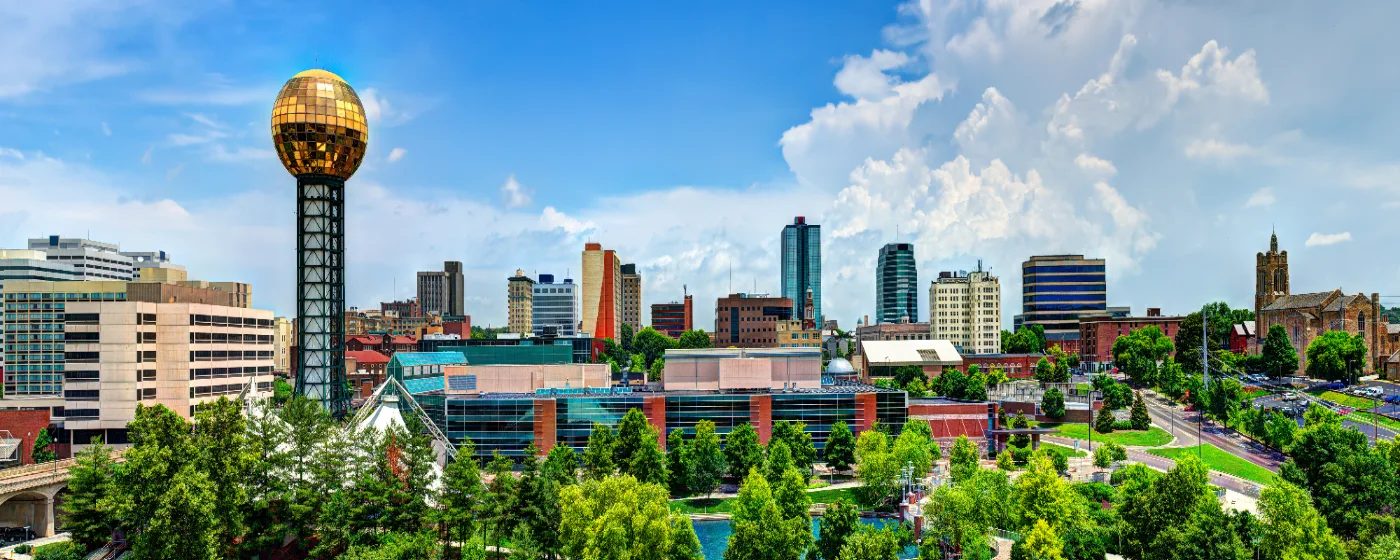
Most people moving to Knoxville expect a straightforward city to read — mid-sized, affordable, Southeast. Then they start looking at neighborhoods and realize the Tennessee River, two major interstates, and a sprawling university campus carve this city into zones that feel almost nothing alike. A house in Fort Sanders and a house in West Knoxville can share a zip code boundary and a school district while offering completely different daily lives. Getting that distinction right before you make an offer is the whole game here.
Knoxville is the 3rd-largest incorporated city in Tennessee with a population of 202,021, and Knox County Schools — with 58,329 students enrolled in 2024-25 — holds a B+ rating, according to Niche. The city's major employers — Covenant Health, the University of Tennessee Knoxville, Oak Ridge National Laboratory, Tennessee Valley Authority, and Knox County Schools — are spread across the metro, which means your commute direction matters almost as much as your neighborhood pick. People move here for UT's presence, for access to the Smokies, and increasingly for home prices that remain well below what comparable cities in the Southeast now demand.
The typical home price in Knoxville sits at $370,699 (Zillow Home Value Index, August 2026) — noticeably below what buyers face in comparable mid-sized markets in the region. The catch is that the median household income of $50,994 runs below the income needed to buy at that level, so financing strategy matters. The city-wide typical rent of $1,712/mo (Zillow ZORI, August 2026) makes renting a real option for anyone still getting their footing. Day-to-day life includes access to the Urban Wilderness trail system, Market Square, and McGhee Tyson Airport (TYS) about 13 miles out — enough infrastructure that you don't feel stranded, not so much that the city has lost its character. For a fuller breakdown of what things cost here, see the cost of living page.
Whether you're relocating for work, following a partner to UT, or looking for a foothold in East Tennessee before prices climb further, the sections below break down Knoxville's eight key neighborhoods — their character, their trade-offs, who they suit, and where to rent if you're not ready to buy.

The Knoxville Reality
The Tennessee River is the first thing to understand. It bisects the city, and South Knoxville residents cross one of three bridges every single day to reach downtown, the university, or most of the city's major employers. That's not a deal-breaker — but it changes the texture of daily life in ways a map doesn't convey. Traffic on those bridges during morning rush is a real variable, not a hypothetical.
The second divide is the Kingston Pike corridor. Running roughly east-west along US-11 and US-70, it's the connective spine of Knoxville's west side — threading through Sequoyah Hills, Bearden, and out into West Knoxville. Buyers on the west side orient their lives around this road the way east-siders orient around Broadway (US-441). Understanding which corridor puts you closest to your office, your kids' school, and your weekly routine is more useful than any ranking list.
The third reality is school boundaries. Knox County operates as a single district — that B+ rating, according to Niche, reflects the whole — but individual schools vary, and boundary lines don't always follow neighborhood logic. A few blocks in Fort Sanders or North Knoxville can put children in very different schools. Buyers with school-age children should verify the specific school assignment for any address before contracting. The schools page has the detail on how to do that.
Neighborhoods at a Glance
| Neighborhood | Best For | Vibe |
|---|---|---|
| West Knoxville | Families Commuters | Suburban and spread out; ranch homes to newer builds; strong retail access along Kingston Pike |
| North Knoxville (NoKno) | First-Time Value | Evolving arts corridor; older homes with character; Happy Holler as the social anchor |
| South Knoxville (SoKno) | Nature Value | Outdoorsy and independent; Ijams and the Urban Wilderness a few minutes from your door |
| Bearden | Walkable Families | West Knoxville's dining hub; Third Creek Greenway; established and active |
| Downtown Knoxville | Walkable Renters | Lofts, condos, Market Square energy; the city at your door |
| Fountain City | Quiet Families | North-side community feel; lake, park, character homes; lower key than the west side |
| Fort Sanders | Walkable Renters | Dense and walkable; UT-adjacent; Victorian homes mixed with apartments |
| Sequoyah Hills | Luxury Views | Knoxville's prestige address; riverside, tree-lined, 1920s-and-earlier homes |
Knoxville typical home price: $370,699 (Zillow ZHVI, August 2026). Typical rent: $1,712/mo (Zillow ZORI, August 2026). Neighborhood tiers on this page are relative to these figures.
Best Neighborhood by Buyer Type
| Buyer Type | Best Neighborhood | Why |
|---|---|---|
| First-Time Buyer | North Knoxville (NoKno) | Prices run below the city median and the neighborhood's trajectory rewards early movers who buy into an improving corridor. |
| Luxury Buyer | Sequoyah Hills | Knoxville's most prestigious in-town address, with riverside lots, homes dating to the early 20th century, and a proximity to downtown that no suburban alternative matches. |
| Walkability Seeker | Downtown Knoxville | Market Square, Gay Street, and the Tennessee Theatre are genuinely on-foot accessible in a way that no other part of the city replicates. |
| Families with Kids | West Knoxville | Mature infrastructure, consistent school options, and suburban lot sizes give families room to settle without the boundary uncertainty of denser neighborhoods. |
| Commuters | Bearden | Sitting roughly 5 miles west of downtown along Kingston Pike with direct access to I-40 and I-75, Bearden balances a short in-town commute with a neighborhood that actually has somewhere to eat after work. |
| Large-Lot Buyers | West Knoxville | The west side's mid-century ranch stock and newer subdivisions offer the largest lots within city limits without pushing buyers into the rural fringe. |
| Renters | Fort Sanders | The densest rental inventory in Knoxville, walkable to UT and World's Fair Park, at prices that reflect the area's above-median position but offer genuine urban access in return. |
Looking to buy in Knoxville? Estimate your payment.
Enter your numbers to see an estimated monthly mortgage payment.
Estimate only. Excludes HOA fees and mortgage insurance. The interest rate above is a starting point, not a quoted rate — replace it with your own to see real numbers. Insurance is a flat placeholder, not a Knoxville quote.
Beyond the Monthly Mortgage Payment — What to Factor In
- The property tax rate above — The 0.39% used in the estimate is the median effective rate — tax actually paid as a share of market value — published by Ownwell, 2026. Half of local homes pay more and half pay less: your own bill depends on that property's assessed value and any exemptions it qualifies for, which can differ a lot from its market price. Confirm with the Knox County assessor before you budget.
- Total cost of ownership — Your monthly mortgage payment is just the baseline. Depending on the specific city, county, and service district, homeownership costs also include local utility fees, municipal surcharges, and special assessments (such as water, sewer, storm drainage, or local energy taxes) that vary by location.
- Independent due diligence — Because these recurring local costs and municipal fees change depending on the exact property address, buyers must research them independently during their transaction process.
Tax laws, local municipal fees, and utility costs change frequently and individual situations vary. This page is general information, not tax or legal advice — always consult a qualified tax professional, CPA, or local municipal offices for personalized guidance.
Most Popular Neighborhoods
West Knoxville
West Knoxville is where most out-of-state buyers end up looking first — and for good reason. The range runs from mid-century ranch-styles on tree-lined streets to newer builds, with retail along Kingston Pike that covers most everyday needs. The trade-off is scale: this is a large, car-dependent zone, and without a clear sub-area in mind, buyers can waste weeks touring properties that feel nothing like one another.
Best for: Families, suburban commuters, buyers who want established infrastructure and room to grow.
North Knoxville (NoKno)
NoKno's 324-acre historic district off Broadway (US-441) is the neighborhood Knoxville locals have been watching for a decade. The Happy Holler corridor along North Central Avenue has shifted from dive bars to a genuine small-business district, and older homes here carry real architectural character. Prices run below the city median, which attracts first-time buyers — though it also means you're buying into an area still mid-transition, and some blocks are further along than others.
Best for: First-time buyers, creative types, buyers who want below-median entry with upside.
South Knoxville (SoKno)
South Knoxville sits south of the Tennessee River, connected to downtown by three bridges, and it has the Urban Wilderness as a genuine backyard — Ijams Nature Center, the Urban Wilderness trail system, and the SoKno Rail Trail & Art Walk (3.8 miles of former rail line being converted into a recreation corridor linking the area to Ijams, with its first public art installation unveiled in early 2026). Prices run below the city median, which makes this Knoxville's most interesting value play right now. The bridge commute is real, though, and buyers who make daily runs to the north side of town should time it before committing.
Best for: Outdoor enthusiasts, buyers seeking below-median entry, people who want urban proximity without the urban density.
Bearden
Bearden functions as the social and dining hub of Knoxville's west side, with a restaurant row along Kingston Pike and the Third Creek Greenway running through the neighborhood connecting parks and the University of Tennessee. Lakeshore Park off TN-332 (Northshore Drive) adds river views within easy reach. The one friction point: Kingston Pike itself is a high-traffic arterial, and homes close to it trade walkable access for road noise.
Best for: Active buyers, couples, families who want suburban roots with immediate access to dining and greenway trails.
Downtown Knoxville
Downtown is lofts, condos, and apartments anchored by Market Square, Gay Street, and the World's Fair Park & Sunsphere — a walkable urban core that no other Knoxville neighborhood fully replicates. Prices sit above the city median, which means buyers are paying for genuine urban convenience rather than square footage. Parking and urban noise are the honest trade-offs; this is not a neighborhood for buyers who need a yard or a two-car garage.
Best for: Urban buyers, renters moving toward ownership, anyone whose daily life revolves around downtown employers and entertainment.
Fountain City
Fountain City is the north side's most cohesive community neighborhood — about 6 miles from downtown, anchored by Fountain City Lake and Park and Adair Park, with character homes that don't show up in the west-side playbook. It's quieter and less trendy than North Knoxville's emerging corridor, which is exactly why its residents tend to stay. The trade-off is that the dining and retail scene here is limited compared to Bearden or downtown, and the commute to Oak Ridge National Laboratory or TVA can add time depending on your route.
Best for: Families, buyers who want a true neighborhood feel without the urban intensity, north-side commuters.
Fort Sanders
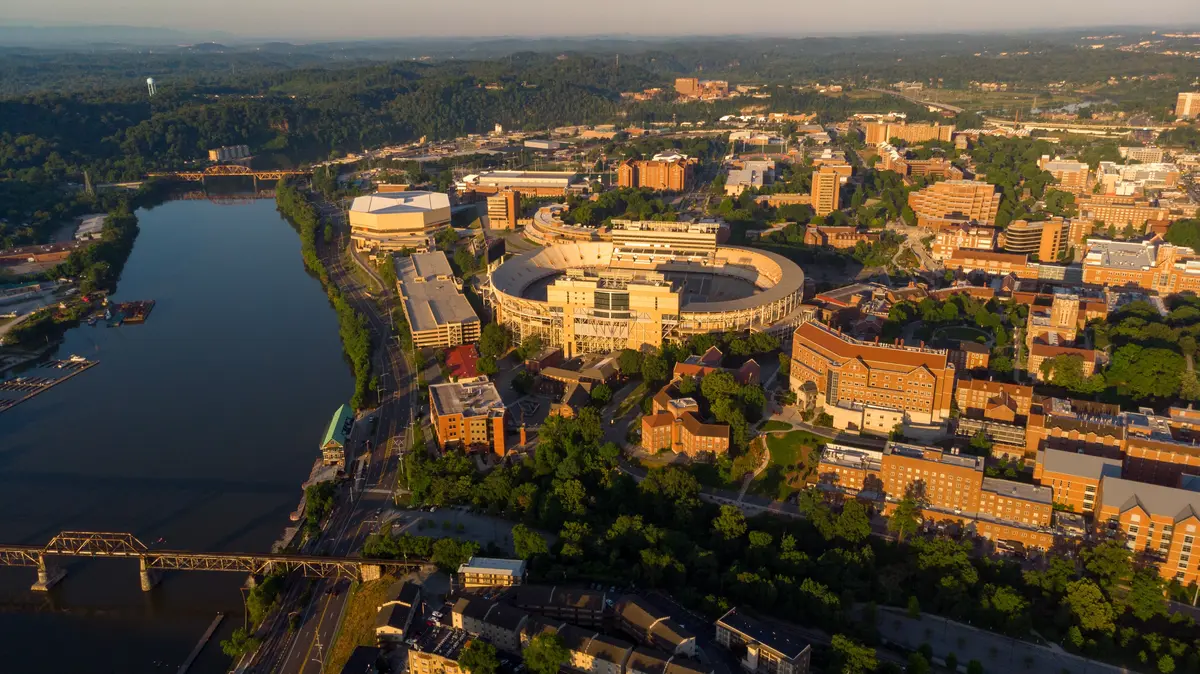
Fort Sanders sits immediately north of the University of Tennessee campus, dense and walkable along Cumberland Avenue, with a housing stock that ranges from Victorian-era homes to modern apartment buildings. Prices run above the city median, reflecting both the walkability premium and the proximity to a regional medical center located within the neighborhood itself. The honest downside: a significant share of the housing stock is rental-oriented and the neighborhood's energy reflects that; owner-occupants are present but not the majority dynamic here.
Best for: UT-affiliated buyers, healthcare workers, renters transitioning to ownership who want walkable urban density.
Sequoyah Hills
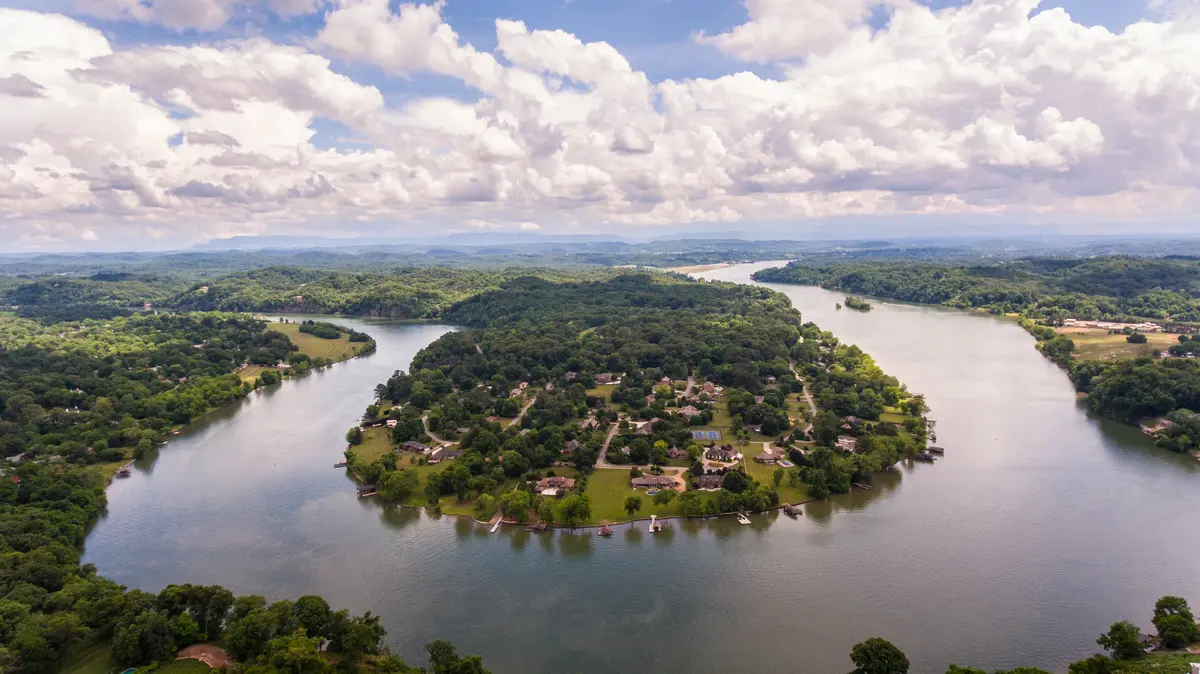
Sequoyah Hills is Knoxville's most prestigious in-town neighborhood — a 1920s riverside suburb along Kingston Pike, named for Cherokee scholar Sequoyah, with some homes dating to the 19th century and a peninsula setting along the Tennessee River that no other Knoxville address matches. Downtown is approximately 5 miles away, and the riverside trails and parks add a quality of life that buyers elsewhere in the city simply don't have. The fact sheet carries no price tier for this neighborhood, but anyone researching Sequoyah Hills quickly learns it occupies its own category — and the inventory is thin enough that waiting for the right listing is part of the process.
Best for: Luxury buyers, established professionals, buyers who want Knoxville's finest in-town address with river access.
Common Mistakes Buyers Make in Knoxville
Treating the west side as a single market. West Knoxville runs far enough along Kingston Pike and I-40 that neighborhoods near the city center (Bearden, West Hills) feel nothing like the outer subdivisions closer to Farragut. Buyers who tour both ends of this corridor without adjusting their expectations often make offers on the wrong type of property. The further west you go, the more suburban the character — and the longer the drive to Oak Ridge National Laboratory or downtown.
Missing the South Knoxville bridge factor. South Knoxville's below-median prices are real and the Urban Wilderness access is genuine. What buyers sometimes miss is that three bridges serve the entire south side, and during morning rush hour those crossings create a bottleneck that a midday test drive won't reveal. Before making an offer south of the river, drive the route at 7:30 a.m. on a weekday.
Chasing square footage in Fort Sanders without checking school assignments. Fort Sanders has above-median prices, Victorian bones, and genuine walkability — but it also sits in a zone where individual school assignments can vary by a block or two. Buyers with school-age children sometimes fall in love with a specific street and contract before confirming which school serves that exact address. The schools page explains how Knox County's boundary system works and how to verify it.
Expecting North Knoxville to be a finished product. The Happy Holler corridor along North Central Avenue has genuinely improved, and below-median prices reflect the opportunity, not just the risk. But this is a neighborhood still mid-transition. Buyers who expect a finished, polished product should look at Bearden or West Knoxville instead. Buyers who understand they're buying into momentum — and can tolerate a block or two of uneven character — will likely feel differently about the trade-off in five years.
Best Areas to Rent in Knoxville
| Area | Ideal For | Trade-off |
|---|---|---|
| Fort Sanders / UT Corridor | Students, young professionals, healthcare workers near the medical center | Above-median rents for the city; dense and noisy; parking is limited |
| Downtown Knoxville | Urban renters who want Market Square and Gay Street on foot | Above-median rents; limited in-unit storage and outdoor space in most buildings |
| Bearden | Renters who want west-side access with walkable dining along Kingston Pike | Competition for units is consistent; road noise closer to Kingston Pike arterial |
| North Knoxville (NoKno) | Budget-conscious renters; creatives drawn to the Happy Holler scene | Below-median rents but an area still mid-transition; block quality varies |
| West Knoxville | Families, commuters who need space and suburban amenities | Almost entirely car-dependent; less walkable than any other zone on this list |
Knoxville's rental market offers more range by neighborhood character than by price tier — the city-wide typical rent shown above is a reasonable anchor, but what you get at that figure varies significantly depending on whether you're in Fort Sanders or West Knoxville. Renters who plan to buy within a few years often start in North Knoxville or South Knoxville to keep costs lower while they build a down payment, then move west once they're ready to own.
Local Expert Takeaway: The buyers who do best in Knoxville are the ones who pick a corridor and commit to understanding it before they go wide. The west side along Kingston Pike — Bearden through West Knoxville — is the most liquid market and the easiest to navigate. South Knoxville is the most interesting value play right now, especially with the Rail Trail project converting former rail line toward Ijams Nature Center, but it rewards buyers who have driven those bridges at rush hour and accepted the trade. Sequoyah Hills is its own category: thin inventory, genuine prestige, and a riverside setting that nothing else in the city replicates. And if walkability is the priority, Downtown and Fort Sanders are the only two neighborhoods where you'll actually leave the car parked for days at a time.
Quick Takeaways & FAQs
✅ Knoxville's typical home price of $370,699 (August 2026) sits noticeably below comparable mid-sized cities in the Southeast, making it one of the more accessible urban markets in Tennessee.
⚠️ South Knoxville's bridge commute is a genuine daily variable — drive the route at rush hour before contracting, because a midday test drive will mislead you.
📍 The SoKno Rail Trail & Art Walk is converting 3.8 miles of former rail line into a trail linking the area to Ijams Nature Center — the single most active neighborhood-shaping project in the city right now.
What is the best neighborhood in Knoxville for families?
Is North Knoxville (NoKno) a good place to buy right now?
Which Knoxville neighborhoods are above the city median price?
What should I know about renting in Knoxville before buying?
How do Knoxville home prices compare to nearby cities like Farragut or Maryville?
Moving to Tennessee?
Tell us what you need help with and we'll connect you with local resources.
