Most cities this size have a few decent parks. Knoxville has something harder to explain: a 1,000-acre wilderness corridor that starts within a few miles of downtown and connects to a lake, a 336-acre nature sanctuary, historic Civil War sites, rock quarries, and more than 60 miles of trail — all without getting in your car. For a city of 202,021 people, that is an unusual thing to be able to say, and it shapes daily life here in ways that don't show up in a cost-of-living spreadsheet.
The outdoor infrastructure here is genuinely layered. The Urban Wilderness trail system handles everything from a twenty-minute trail run before work to a full-day mountain bike loop. World's Fair Park anchors the downtown green space with festival lawns, a lake, and the Sunsphere's free observation deck. House Mountain State Natural Area rises to 2,064 feet — the highest point in Knox County — for anyone who wants real elevation and real solitude, accessible off US-11W (Rutledge Pike) northeast of the city. And ringing the metro, nine TVA-managed East Tennessee lakes put over 500,000 acres of interconnected waterways within roughly an hour of downtown. You are not choosing between city life and outdoor life here. Knoxville has both running in parallel.
The honest caveat: Knoxville gets 204 sunny days a year, which is respectable but not exceptional, and summer humidity is real. Trail conditions during a wet spring can turn technical mountain bike routes into something resembling mud wrestling. The city's parks system is strong, but some amenities and facilities are unevenly distributed across neighborhoods — more on that below. For a full picture of what daily life costs here, see the cost-of-living page.
Whether you're scouting for a weekend hiking base, weighing this city against a quieter suburb, or just figuring out what you'd actually do here on a Tuesday evening, the sections below cover Knoxville's signature parks, trail systems, water recreation, and seasonal outdoor calendar in detail.
The Urban Wilderness: Knoxville's Most Distinctive Asset
The Urban Wilderness trail system is the thing that surprises most newcomers. You can ride a mountain bike from a South Knoxville neighborhood into a stretch of single-track that feels genuinely remote — hawks overhead, quarry walls on one side, a creek below — and be back at a coffee shop within the hour. That compression of wild and urban is what makes the system unusual.
The 1,000-acre Urban Wilderness Corridor links existing parks, the Ijams Nature Center, a Tennessee Wildlife Resources Agency Wildlife Management Area, historic Civil War earthworks, and a network of quarries — all connected by more than 60 miles of varied-surface trail and greenways that parallel the Knoxville waterfront. The partnership that built it — the Legacy Parks Foundation, the City of Knoxville, Knox County, Ijams Nature Center, the TWRA, and the Appalachian Mountain Bike Club — is the reason it exists at scale rather than in fragments.
Trail surfaces range from paved greenway to natural single-track to technical rock sections, so the system serves walkers, joggers, cyclists, and serious mountain bikers on the same connected network. The Civil War sites add a layer that most trail systems don't have: you are often walking through actual earthwork fortifications, not interpretive signage about them.
What Locals Know
The Urban Wilderness is the reason Knoxville punches well above its weight in mountain biking circles nationally. Trail Runner magazine has covered it; so has the adventure cycling press. Locals who move away often cite this network as the thing they miss most — not an abstract appreciation for green space, but a specific daily habit that is hard to replicate in most American cities.
The catch: the trailheads closest to the more technical sections can be genuinely hard to find on a first visit. Build in extra time, download an offline map before you go, and ask at the South Knoxville trailhead rather than relying on a generic mapping app.
Signature Parks: Ijams, World's Fair, and House Mountain
Ijams Nature Center
Ijams Nature Center is the anchor of the Urban Wilderness system and one of the more unusual public amenities in any Tennessee city. The 336-acre nonprofit sanctuary in South Knoxville offers hiking, mountain biking, paddling, and rock climbing — and admission to the grounds is free. The climbing area alone, set into old quarry walls above the Tennessee River, draws people who have no particular interest in nature education and are simply there to get on rock.
The event calendar is worth knowing before you move here. Ijams runs guided Tennessee River paddles, Pickin' on Nature bluegrass concerts, Sunset Socials on the stone patio, Movies Under the Stars, and an annual Hummingbird Festival. The fall Family Nature Festival includes owl prowls and pumpkin carving — the kind of programming that fills up fast and that parents with school-age children quickly build their autumn around.
World's Fair Park
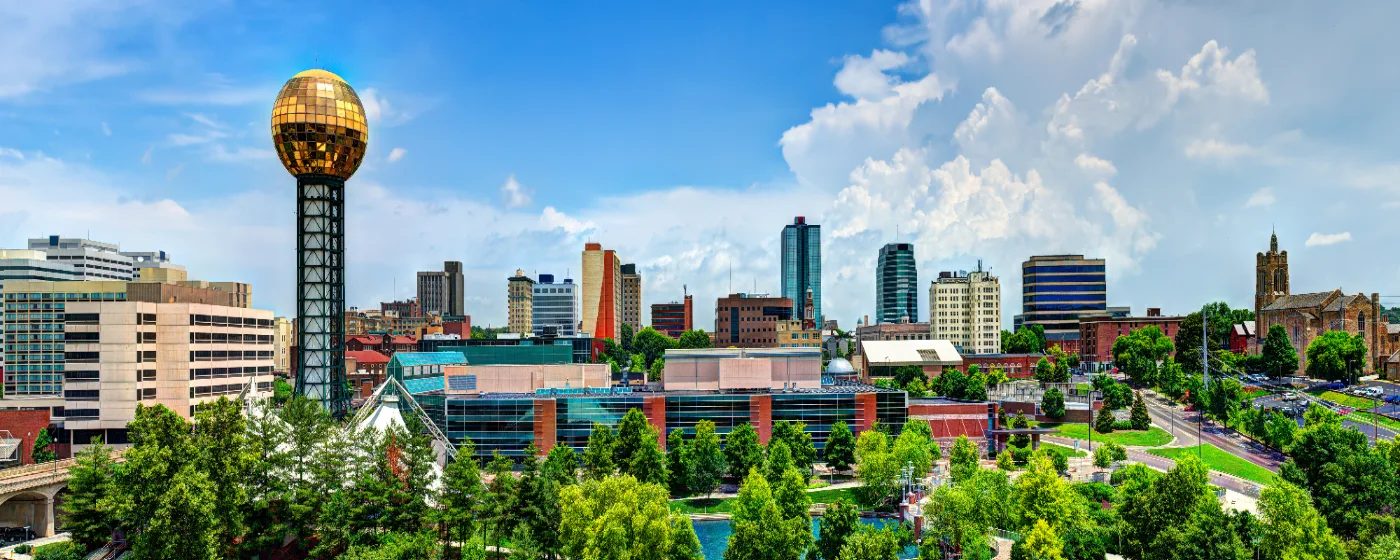
World's Fair Park occupies the former footprint of the 1982 World's Fair, which is why downtown Knoxville has a 266-foot gold geodesic sphere sitting in the middle of a park lawn. The Sunsphere's observation deck is free to access by elevator, and the view — Tennessee River, downtown rooftops, the Smoky Mountains on the horizon — is the quickest orientation tour Knoxville offers to anyone new in town.
The park anchors the city's biggest outdoor events: the Festival on the 4th draws crowds to three live music stages and a Knoxville Symphony Orchestra performance; the Dogwood Arts Festival fills the lawns in spring; and a New Year's Eve ball drop at the Sunsphere has become the city's signature countdown. One important note for anyone planning around concerts: the Tennessee Amphitheater is closed for refurbishment and repair and will remain so until at least Spring 2027.
House Mountain State Natural Area
House Mountain is Knox County's highest point at 2,064 feet, and the roughly 5.8 miles of natural single-track trail there are legitimately demanding in a way that most local parks are not. The 527-acre area is co-managed by the Tennessee Department of Environment and Conservation and Knox County Parks & Recreation, and it sits off US-11W (Rutledge Pike) northeast of the city.
The summit views take in the Great Smoky Mountains, the Cumberland Plateau, and the Tennessee Valley simultaneously. Birdwatchers specifically seek it out for migrating hawks and warblers, pileated woodpeckers, scarlet tanagers, wild turkeys, and more than 100 additional species documented on the site. On a clear October morning, this is one of the better pieces of public land within easy reach of any Tennessee city of this size.
| Park / Area | Size | Best For | Signature Feature |
|---|---|---|---|
| Ijams Nature Center | 336 acres | Nature Families | Rock climbing, paddling, free admission |
| World's Fair Park | Downtown lawn complex | Walkable Families | Sunsphere deck, festival events |
| House Mountain State Natural Area | 527 acres | Nature Views | Knox County's high point, summit panorama |
| Urban Wilderness trail system | 1,000-acre corridor | Nature Active commuters | 60+ miles of connected trail from downtown |
| Melton Hill Park | Clinch River shoreline | Families Nature | Boat ramps, fishing pier, beach swim area |
| Market Square | Downtown plaza | Walkable Downtown life | Weekly farmers market, free summer concerts |
Water Recreation: Lakes, Rivers, and 500,000 Acres of TVA Water
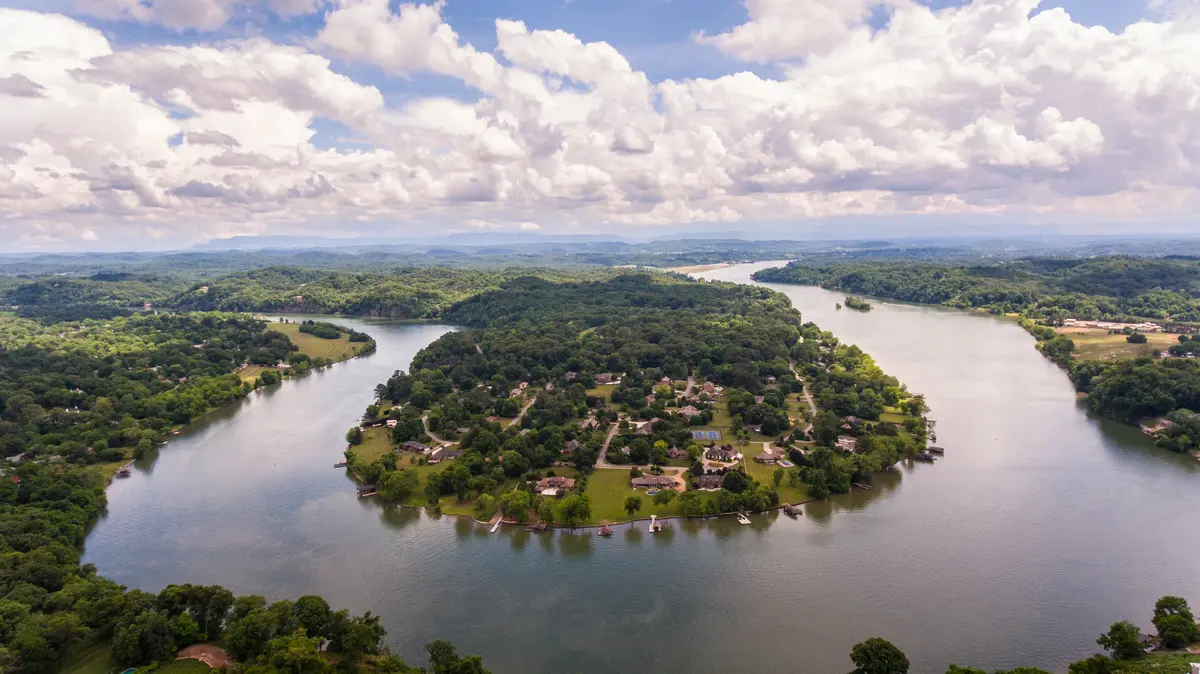
Knoxville sits at the center of nine TVA-managed East Tennessee lakes — Douglas, Cherokee, Norris, Fort Loudoun, Melton Hill, and four others — offering over 500,000 acres of interconnected waterways within roughly an hour of downtown. That number is almost impossible to absorb until you actually live here and realize the weekend possibilities it creates: lake camping on a Friday, back for a soccer game on Sunday.
Melton Hill Lake
Melton Hill Lake is a 5,470-acre TVA reservoir on the Clinch River between Knoxville and Oak Ridge, with nearly 193 miles of shoreline. The lake's straight, calm water draws competitive rowing programs from across the country, and national collegiate and championship regattas are a regular fixture — on a spring weekend you may find yourself watching high-level competition from a park lawn, which is a specific Knoxville experience that doesn't happen in most cities.
The lake carries 28 fish species including muskie, crappie, and bass. The adjacent Melton Hill Park adds two boat ramps, a fishing pier, a sandy beach and swim area, a sand volleyball court, a paved greenway, and more than three miles of natural surface trails through woods and meadows. Wildflower hikes, cycling events, and paddling events are held through the year.
The Tennessee River Waterfront
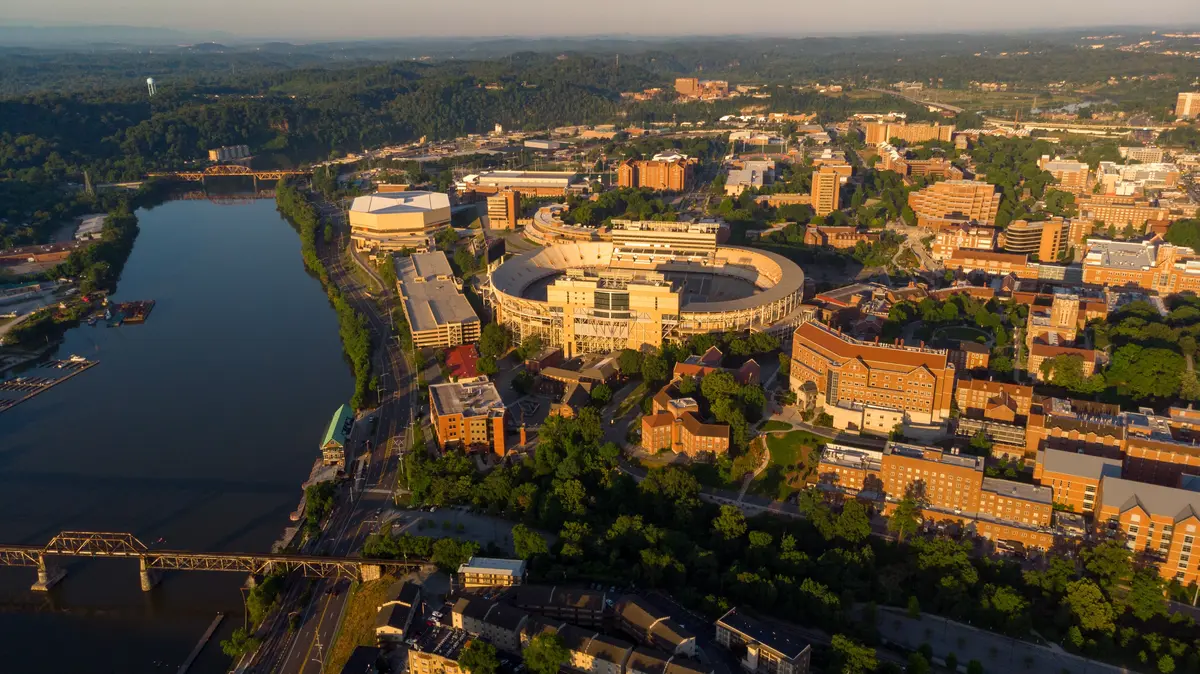
The Tennessee River runs directly through Knoxville, and the waterfront greenway along its south bank connects to the Urban Wilderness system. Ijams Nature Center runs guided paddles on the river itself, which puts flatwater paddling within reach of people who don't own a boat or know the river yet.
For families weighing this city against a landlocked alternative: access to lake water for swimming, fishing, and boating — without a long drive — is one of Knoxville's most underappreciated practical advantages. It comes up constantly in conversations with people who moved here from the Midwest or from cities where a lake day requires a half-day of driving each direction.
Looking to buy in Knoxville? Estimate your payment.
Enter your numbers to see an estimated monthly mortgage payment.
Estimate only. Excludes HOA fees and mortgage insurance. The interest rate above is a starting point, not a quoted rate — replace it with your own to see real numbers. Insurance is a flat placeholder, not a Knoxville quote.
Beyond the Monthly Mortgage Payment — What to Factor In
- The property tax rate above — The 0.39% used in the estimate is the median effective rate — tax actually paid as a share of market value — published by Ownwell, 2026. Half of local homes pay more and half pay less: your own bill depends on that property's assessed value and any exemptions it qualifies for, which can differ a lot from its market price. Confirm with the Knox County assessor before you budget.
- Total cost of ownership — Your monthly mortgage payment is just the baseline. Depending on the specific city, county, and service district, homeownership costs also include local utility fees, municipal surcharges, and special assessments (such as water, sewer, storm drainage, or local energy taxes) that vary by location.
- Independent due diligence — Because these recurring local costs and municipal fees change depending on the exact property address, buyers must research them independently during their transaction process.
Tax laws, local municipal fees, and utility costs change frequently and individual situations vary. This page is general information, not tax or legal advice — always consult a qualified tax professional, CPA, or local municipal offices for personalized guidance.
Seasonal Recreation and What Life Actually Looks Like Week to Week
Knoxville's outdoor calendar runs hard from March through November, then quiets considerably. Spring arrives early enough that trail season starts in February or March, and the Dogwood Arts Festival at World's Fair Park signals that the outdoor months are open. Fall is arguably the best season — lower humidity, peak foliage on the ridge lines around House Mountain, and hawk migration windows that serious birders plan around.
What Fills a Typical Weekend
A Knoxville Saturday in good weather tends to look something like this: morning trail run or mountain bike session in the Urban Wilderness, an afternoon at Melton Hill for fishing or paddling, an evening at Market Square for the farmers market or a free Jazz Tuesday concert during the warm months. That routine is genuinely accessible without special equipment or long drives, which is the point.
Parents with young children build a parallel calendar around Ijams: Pickin' on Nature concerts, the Hummingbird Festival, fall owl prowls, and Movies Under the Stars cycle through the year and rarely repeat the same crowd twice. The events at Ijams are the kind of thing you plan around even if you didn't intend to — you mention the owl prowl to a neighbor, they've already got tickets, and suddenly you have a standing group.
Human Friction: What Surprises People After Six Months
The thing newcomers don't expect is how physically demanding the trail system becomes once you stop treating it as a casual walk. The Urban Wilderness routes that look like a quick loop on the map have real elevation change and technical sections that are humbling on a mountain bike. First-time residents who show up expecting the equivalent of a flat greenway get a rude awakening somewhere around the quarry descent at Ijams.
The second surprise is summer. Knoxville summers are hot and humid — August on an exposed trail at midday is not pleasant — and the 204 sunny days a year come heavily concentrated in a season that many trail users find too brutal for midday activity. The locals adapt by shifting to early-morning sessions and shifting lake time to the afternoon, but it takes a full seasonal cycle to calibrate.
The Downtown Green Space Picture
Market Square is the social center of downtown outdoor life: the weekly Market Square Farmers Market brings locally grown produce and handmade goods, and the free Jazz Tuesday concerts draw the after-work crowd through late spring and into fall. World's Fair Park sits walkable from Market Square and adds the larger festival programming. Together they give downtown Knoxville a green and active public life that is worth factoring into any decision about living or buying there — see the neighborhoods page for how proximity to these spaces varies by area.
Youth sports and organized recreation programming connect to the parks system in ways the schools page covers more fully. And if you're evaluating what outdoor access means for long-term quality of life as you get older, the retiring page addresses that angle directly.
Local Expert Takeaway: Knoxville's outdoor infrastructure is the city's strongest selling point and its least-marketed one. The Urban Wilderness trail system connects 60+ miles of trail from downtown South Knoxville through Ijams Nature Center and into genuine backcountry — all accessible without a car. Add House Mountain for real elevation, Melton Hill Lake for rowing regattas, fishing, and swimming, and nine TVA lakes within an hour of the city, and you have an outdoor palette that most comparably priced metros cannot touch. The catch is summer: heat and humidity compress the most comfortable outdoor window, and the first August will recalibrate your expectations. Locals adapt with early mornings and lake afternoons. The people who move here for the trails almost never leave because of them.
Quick Takeaways & FAQs
✅ Knoxville's Urban Wilderness delivers 60+ miles of connected trail — including mountain biking, rock climbing, and paddling — within a few miles of downtown, an asset that is genuinely rare in a city this size.
⚠️ Summer heat and humidity are real: August midday on an exposed trail is uncomfortable enough that most locals shift outdoor activity to early mornings, which takes a full seasonal cycle to figure out.
📍 House Mountain State Natural Area rises to 2,064 feet off US-11W (Rutledge Pike) and puts panoramic views of the Smoky Mountains, the Cumberland Plateau, and the Tennessee Valley within a short drive of any Knoxville neighborhood — no park fee, no permit, no crowd on a weekday.
How many miles of trails does Knoxville's Urban Wilderness have?
Is Ijams Nature Center free to visit?
What is the best lake near Knoxville for a day on the water?
Is the Tennessee Amphitheater at World's Fair Park open?
What outdoor recreation is available in Knoxville year-round?
Moving to Tennessee?
Tell us what you need help with and we'll connect you with local resources.
