
Most people who retire to Knoxville say the same thing after the first year: they didn't expect a city this size to feel this manageable. At 202,021 residents, Knoxville is the 3rd-largest incorporated city in Tennessee — big enough to support two major hospital systems, a university research medical center, and a transit network that seniors can actually use, but compact enough that you're never far from the Tennessee River, a trailhead, or a genuine neighborhood. The question isn't whether Knoxville is a real city. It is. The question is whether it fits your specific retirement picture.
The economic case starts with Tennessee's tax posture. The state levies no income tax of any kind, which means Social Security, pension income, IRA withdrawals, and 401(k) distributions are all untaxed at the state level. That single fact changes retirement math significantly for people coming from states that tax retirement income. Pair that with a typical home price of $370,699 (August 2026) that sits well below comparable metros in the Southeast, and you have a city that allows a lot of retirees to own outright or carry a modest mortgage. The cost-of-living page goes deeper on how that plays out across daily spending.
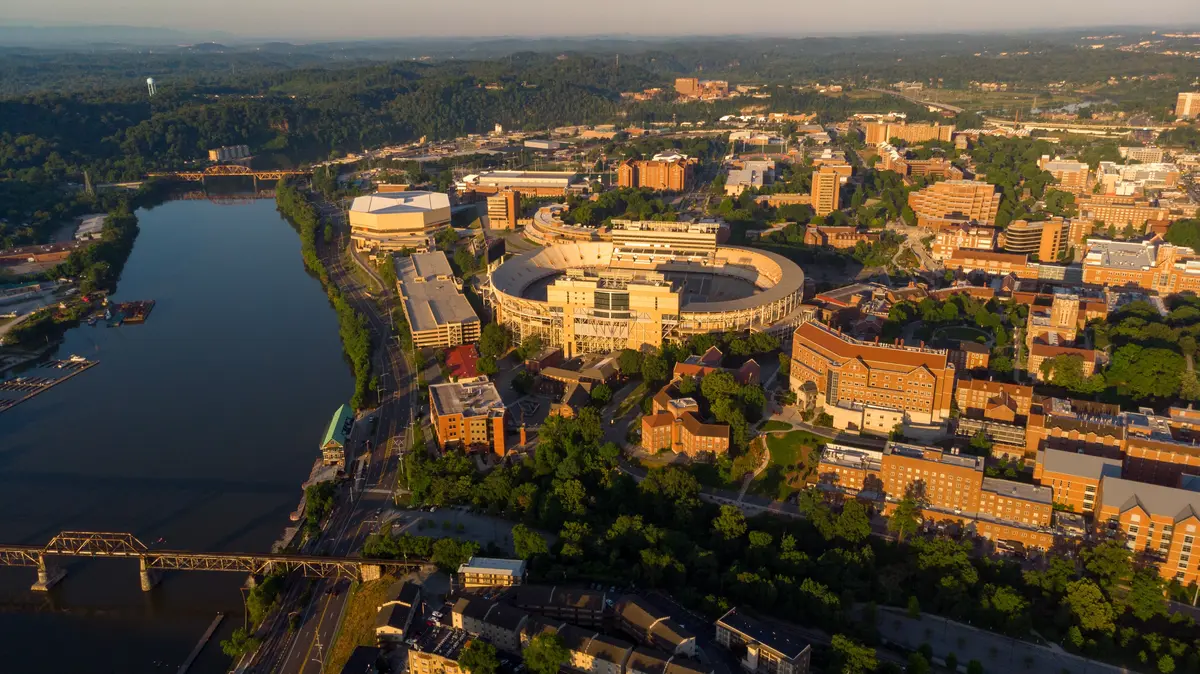
What anchors daily life here is access — to nature, to culture, and to care. Great Smoky Mountains National Park, the most visited national park in the United States, is an easy drive from any part of the city. The Urban Wilderness trail system puts over 60 miles of greenways and Ijams Nature Center within a few miles of downtown. The Knoxville Museum of Art, Tennessee Theatre, and Market Square give the city a cultural density that surprises newcomers who assumed it was purely a college town. For retirees who need healthcare infrastructure rather than just proximity to a clinic, Knoxville delivers in ways that smaller Tennessee cities simply cannot match.
Whether you're comparing Knoxville to Maryville, Oak Ridge, or a Sun Belt alternative entirely, the sections below break down what retirement here actually costs, what healthcare access looks like, where retirees gather, and what the downsizing inventory honestly offers.

Why Retirees Are Choosing Knoxville
Knoxville fits a specific retirement profile well: the person who wants a real city — arts, restaurants, a university atmosphere, major medical — without paying Nashville or Asheville prices for it. The typical home price of $370,699 (August 2026) makes ownership achievable for retirees selling equity from a higher-cost state, and Tennessee's zero state income tax means every dollar of that equity, and every dollar of retirement income drawn from it, stays whole at the state level.
The city also suits active retirees in a way that purely suburban alternatives don't. The Tennessee River runs through the middle of everything. The Urban Wilderness trail network starts practically in town. Great Smoky Mountains National Park is close enough to be a regular outing rather than a special occasion. University of Tennessee's presence keeps the city young in energy and stocked with lectures, performances, and continuing education programs that retired professionals tend to actually use.
Where Knoxville disappoints some retirees: the terrain is hilly, which matters for anyone with mobility concerns or a preference for flat, walkable errands. Beyond the downtown core and the Fort Sanders neighborhood, most of the city is genuinely car-dependent — a car isn't optional, it's assumed. And if your retirement vision involves a golf-cart-friendly 55+ community with a clubhouse and age-restricted neighbors, Knoxville proper doesn't offer that. The lifestyle here rewards independence and curiosity more than structured community living. For retirees seeking the latter, the neighborhoods page covers some of the surrounding area options worth considering.
Healthcare & Medical Access in Knoxville
For retirees, healthcare infrastructure is rarely a nice-to-have. Knoxville's is genuinely strong for a city its size, and that matters most when something goes seriously wrong.
Fort Sanders Regional Medical Center is the closest hospital for most of the city's west and central areas, located inside city limits. The University of Tennessee Medical Center — also in Knoxville — is the region's only Level I Trauma Center in East Tennessee, a designation that reflects its capacity for the most complex emergency and surgical cases: cardiac surgery, orthopedics, neurology, trauma. For retirees, knowing that level of care exists inside the city rather than an hour away is a meaningful distinction.
Covenant Health, headquartered in Knoxville, operates a regional network of hospitals across East Tennessee — giving the area a depth of specialty access that reinforces rather than duplicates what UT Medical Center provides. Knox County retirees have access to a notably competitive Medicare Advantage market compared to smaller Tennessee cities where plan choice narrows considerably.
The honest caveat: advanced subspecialty care for rare conditions or highly complex procedures may still require travel to Nashville or Atlanta. That's true of most mid-sized metros. But for the full range of routine and serious conditions that most retirees encounter — cardiac, orthopedic, pulmonary, oncology — Knoxville's medical infrastructure is among the strongest in the state outside of Nashville.
Getting Around Without Driving
Knoxville Area Transit (KAT) operates a network of fixed bus routes plus on-demand service and a paratransit program called KAT Lift for passengers with disabilities. Adults 65 and older ride at half fare with no pre-approval required — a meaningful detail for retirees on fixed incomes who need regular medical transport. MyRide TN, a state-sponsored volunteer driver program for Tennesseans age 60 and older, covers medical appointments and grocery runs using screened volunteers. Knox County is the only area in the program that also serves riders who use wheelchairs, which is worth knowing if mobility changes over time.
The Retiree Budget in Knoxville
Tennessee's tax structure is the headline for retiring here, and it holds up under scrutiny. The state levies no income tax of any kind — Social Security, pension distributions, IRA and 401(k) withdrawals are all untaxed at the state level. A retiree drawing entirely from retirement accounts owes $0 in Tennessee state income tax, regardless of income level. That's not a partial exemption or an income-capped credit. It's a clean zero.
The trade-off arrives at the cash register. Tennessee's combined state and local sales tax in Knoxville is 9.25% — among the higher rates in the country. Retirees who spend heavily on taxable goods feel this more than those whose spending tilts toward services, housing, or healthcare. It's worth building into your budget model rather than treating the income-tax advantage as pure gain.
Property Taxes and Senior Programs
Knox County's effective property tax rate sits at approximately 0.39% — well below the national average and one of the lower rates among Tennessee's larger counties. On a home at the city's typical price point, that rate translates to a modest annual bill that most retirees can carry comfortably without mortgage support. Tennessee offers two additional programs worth knowing: the Property Tax Relief Program, which reimburses qualifying low-income homeowners age 65 and older on a portion of taxes paid, and the Property Tax Freeze Program, which allows eligible seniors to lock in their tax bill at the level owed in the year they first qualify — protecting them from assessment increases as the market moves. Both programs are available to Knox County homeowners. For the full tax picture, the cost-of-living page covers income, sales, and property tax in more detail.
Daily Cost of Living
Grocery costs, utilities, and everyday services run close to or slightly below the national average in Knoxville — nothing dramatic, but meaningful on a fixed income over a decade or more. The Market Square Farmers Market gives downtown residents a walkable option for fresh local produce. Dining out ranges from genuinely affordable neighborhood spots to mid-tier restaurants along the river corridor. The city doesn't have the urban premium you'd pay in Asheville or Nashville for a comparable experience.
Looking to buy in Knoxville? Estimate your payment.
Enter your numbers to see an estimated monthly mortgage payment.
Estimate only. Excludes HOA fees and mortgage insurance. The interest rate above is a starting point, not a quoted rate — replace it with your own to see real numbers. Insurance is a flat placeholder, not a Knoxville quote.
Beyond the Monthly Mortgage Payment — What to Factor In
- The property tax rate above — The 0.39% used in the estimate is the median effective rate — tax actually paid as a share of market value — published by Ownwell, 2026. Half of local homes pay more and half pay less: your own bill depends on that property's assessed value and any exemptions it qualifies for, which can differ a lot from its market price. Confirm with the Knox County assessor before you budget.
- Total cost of ownership — Your monthly mortgage payment is just the baseline. Depending on the specific city, county, and service district, homeownership costs also include local utility fees, municipal surcharges, and special assessments (such as water, sewer, storm drainage, or local energy taxes) that vary by location.
- Independent due diligence — Because these recurring local costs and municipal fees change depending on the exact property address, buyers must research them independently during their transaction process.
Tax laws, local municipal fees, and utility costs change frequently and individual situations vary. This page is general information, not tax or legal advice — always consult a qualified tax professional, CPA, or local municipal offices for personalized guidance.
Walkability, Community & Staying Active in Knoxville
Knoxville's walkability story has a real asterisk: it depends entirely on where you live. Downtown Knoxville — Market Square, Gay Street, the Old City — is the city's most genuinely walkable area, where coffee, restaurants, the farmers market, and cultural venues are all within reasonable on-foot distance. Fort Sanders, adjacent to the University of Tennessee campus, also ranks among the city's most walkable neighborhoods. Beyond those two areas, the city is hilly and spread out, and most errands require a car. Retirees who want to age in place without driving should factor neighborhood choice carefully — the neighborhoods page breaks down the geographic character of each area.
Senior Centers and Community Life
The O'Connor Senior Citizen Center serves Knox County residents age 55 and older with recreation, education, health services, and support groups. Some transportation is available, and scholarships cover activity fees for those who need them — a detail that matters on a fixed income. It's a genuine civic anchor for retirees looking for regular social connection rather than a scheduled activity on a slow Tuesday.
University of Tennessee's presence creates an unusually rich calendar of public lectures, performances at the Tennessee Theatre, and exhibitions at the Knoxville Museum of Art. Many retirees who moved here from more expensive university towns find the cultural depth comparable at a fraction of the cost. Volunteer opportunities through Covenant Health and other organizations also give professionally-minded retirees a structured way to stay engaged.
Getting Outside
The Urban Wilderness trail system — over 1,500 acres connecting 60-plus miles of trails, Ijams Nature Center, quarries, and five city parks, all within a few miles of downtown — gives active retirees an outdoor resource that most mid-sized American cities simply don't have. The terrain is varied and often steep, which is a genuine consideration for anyone with knee or hip concerns. Melton Hill Lake offers a calmer option for those who prefer flat water to ridge trails. And Great Smoky Mountains National Park, the most visited national park in the country, is the kind of asset that becomes a regular part of life here rather than a once-a-year excursion.
Right-Sizing: Downsizing in Knoxville
No 55+ communities were found in Knoxville. That's the clearest single fact about the downsizing landscape here, and it matters for retirees who've been planning around that model. The age-restricted community with a clubhouse, HOA-maintained lawn, and neighbors in the same life stage doesn't exist within city limits in the traditional sense.
What does exist: Shannondale of Knoxville, a Covenant Living continuing care retirement community (CCRC), offers independent living, assisted living, and skilled nursing under one roof, along with a wellness center and maintenance-free apartment and villa options. It is not an age-restricted community in the conventional 55+ sense — it's a full CCRC, which is a different model that suits retirees who want a defined continuum of care as health needs change over time. It sits in the western part of the city.
The Single-Level Inventory Question
Knoxville's older housing stock skews toward multilevel construction — the hilly terrain practically dictated it. Finding true single-story homes with no-step entries, wider doorways, and main-floor laundry takes more searching here than in a flat Sun Belt market. They exist, particularly among ranch-style homes built in the 1960s and 1970s and in some newer patio-home developments in the western part of the county, but they are not abundant and they move when priced right.
Condos in and around downtown Knoxville offer another path — flat-floor living with reduced maintenance and genuine walkability. The trade-off is that downtown condo prices run above the city-wide typical home price, as noted on the neighborhoods page. For retirees prioritizing low maintenance over square footage, that premium often pencils out. For those willing to look in surrounding communities like Farragut or Maryville, patio home and single-level inventory tends to be somewhat more plentiful, though prices vary — the cost-of-living comparison for those markets is on the cost-of-living page.
The honest summary: Knoxville is a strong retirement city in many dimensions, but it is not a purpose-built retirement market. Retirees who need the infrastructure of a full CCRC, or who want a single-level home without a long search, should budget extra time for the hunt and consider whether the broader tax and healthcare advantages outweigh the thinner downsizing inventory.
Knoxville vs Nearby Retirement Destinations
| City | Cost vs Knoxville | Primary Hospital | Walkability | Senior Living Depth | Overall Retirement Fit |
|---|---|---|---|---|---|
| Knoxville | Benchmark | Fort Sanders Regional + UT Medical Center (Level I Trauma) | Strong in downtown core and Fort Sanders; car-dependent elsewhere | Limited 55+ inventory; one CCRC; strong assisted living market | Excellent for active, independent retirees who want city infrastructure |
| Farragut | Noticeably higher | Draws on Knoxville's hospital network | Suburban; car required for most errands | Some patio home and single-level options; closer to CCRC options | Strong for retirees prioritizing safety and newer housing stock |
| Oak Ridge | Somewhat lower | Draws on Knoxville's hospital network | Modest; car-dependent but flat terrain in parts | Some senior apartment options; limited 55+ communities | Good value play; suits science/research-culture retirees |
| Maryville | Somewhat higher | Regional medical center; Knoxville within reach for specialty care | Small-town walkable core; car needed beyond downtown | Limited; fewer options than Knoxville proper | Suits retirees wanting a quieter small-city feel near the Smokies |
| Alcoa | About the same | Draws on Knoxville and Maryville networks | Primarily car-dependent | Very limited senior living inventory | Best as a cost-efficient base with easy Knoxville access |
| Sevierville | About the same | Regional hospital; Knoxville for complex care | Tourist-oriented; limited everyday walkability | Some resort-adjacent senior options; growing market | Suits retirees drawn to mountain scenery and a tourism economy |
For retirees making a direct cost comparison, Oak Ridge is the clearest value alternative — lower typical home prices with access to Knoxville's hospital network still available for complex care. Farragut consistently attracts retirees who prioritize newer construction and a quieter suburban environment but requires accepting a notably higher price point.
On healthcare depth, no nearby option matches Knoxville itself. Fort Sanders Regional and UT Medical Center together — particularly the latter's Level I Trauma designation — represent a tier of care that Maryville, Sevierville, and Alcoa cannot replicate locally. Retirees with ongoing or complex medical needs should weight this heavily.
On walkability, Knoxville's downtown beats every surrounding community for on-foot access to daily life. But retirees who don't need that urban texture and prefer a quieter, flatter environment may find Maryville or Farragut more livable on a daily basis. The right call depends less on which city wins on paper and more on how you actually spend your days.
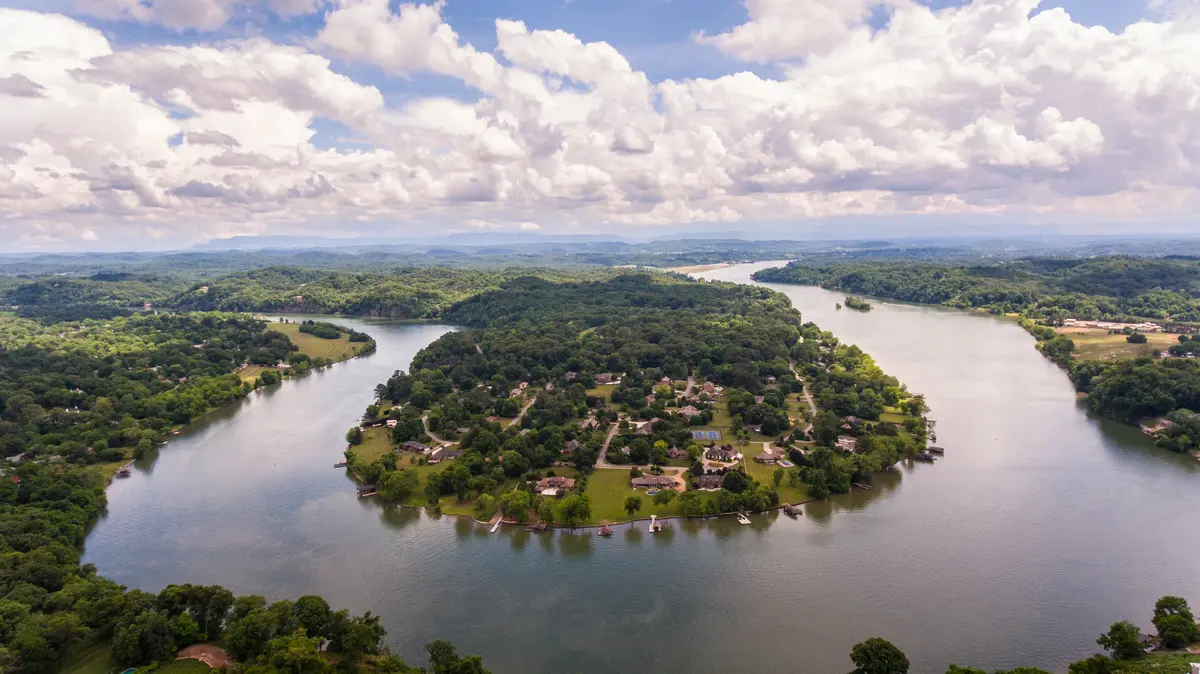
Local Expert Takeaway: Knoxville earns its place on Tennessee retirement shortlists for three reasons that hold up under scrutiny: zero state income tax on retirement income, a genuine Level I Trauma Center inside city limits at UT Medical Center, and a natural environment — the Urban Wilderness, Ijams Nature Center, and Great Smoky Mountains — that keeps active retirees engaged year-round. The O'Connor Senior Citizen Center gives the social infrastructure that matters for long-term quality of life. The honest friction: no 55+ community exists within city limits, single-level housing inventory takes real searching, and the 9.25% combined sales tax erodes some of the income-tax advantage at the register. The downtown core and Fort Sanders work well without a car; most of the rest of the city does not. Go in with that clarity and Knoxville tends to outperform expectations.
Quick Takeaways & FAQs
✅ Tennessee levies no state income tax, so Social Security, pension, and retirement account withdrawals are all untaxed at the state level — a genuine structural advantage for retirees.
⚠️ No 55+ communities exist within Knoxville city limits, and single-level homes with accessibility features require a patient search in a housing stock built for hilly terrain.
📍 UT Medical Center is the only Level I Trauma Center in East Tennessee, and Knox County retirees have access to a notably competitive Medicare Advantage market — medical depth that smaller nearby cities cannot match.
Is Tennessee a tax-friendly state for retirees?
What is the best hospital for retirees in Knoxville?
Are there 55+ communities in Knoxville?
Can you retire in Knoxville without a car?
How does Knoxville compare to Maryville or Oak Ridge for retirement?
Moving to Tennessee?
Tell us what you need help with and we'll connect you with local resources.
