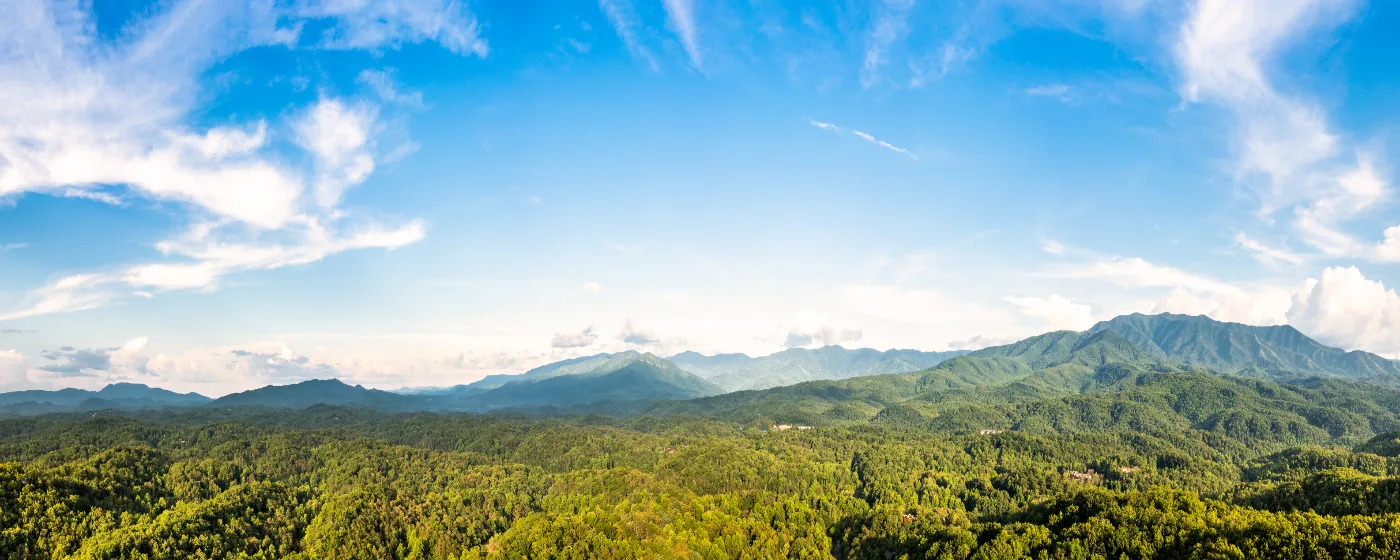
What Is Living in Gatlinburg, Tennessee Like?
Most people come to Gatlinburg for a long weekend and leave wanting to move here. A few thousand people actually did. But the Gatlinburg you visit — 12.2 million national park visitors a year funneling through a town of 3,715 permanent residents, US-441 backed up past traffic light number seven on a Saturday in October — is a genuinely different place from the one you'd wake up in every morning as a local. The same geography that makes this one of the most spectacular places to live in the eastern United States also makes the basic mechanics of daily life more complicated than the scenery suggests. Understanding that tension is the starting point for any honest conversation about whether Gatlinburg is actually the right move for you.
Gatlinburg sits at the entrance to Great Smoky Mountains National Park in Sevier County, connected to the broader region by US-441, US-321, TN-71, and TN-73. The economy here runs almost entirely on tourism: Ripley's Aquarium of the Smokies, Ober Gatlinburg, Anakeesta, and the City of Gatlinburg itself are the primary employers. There is no large industrial base, no corporate campus, and healthcare means driving out of town. The Sevier County school district — with 14,054 students enrolled in 2024-25 — holds a B rating, according to Niche, and serves the whole county, meaning Gatlinburg kids ride to schools in Sevierville. People move here for the mountains, the lifestyle, and increasingly for the short-term rental income potential that comes with owning property in one of the most visited places in the country.
Housing runs at a Zillow Home Value Index typical home price of $406,899 (August 2026), but that figure deserves context: the Gatlinburg market is notably bifurcated between modest in-town homes and high-dollar luxury cabin transactions that can swing monthly headline numbers dramatically. The effective property tax rate of 0.37% is among the lowest you'll find anywhere in Tennessee, and the state has no income tax, which matters when you're running the numbers. The full cost-of-living breakdown is here. Day-to-day amenities are thinner on the ground than the tourist strip implies — a serious grocery run or a visit to a big-box retailer means driving out of town toward Sevierville or Pigeon Forge, which is just part of the rhythm for anyone who plants roots here.
Whether you're considering a permanent move, a part-time cabin lifestyle, or trying to figure out if this town can actually work as a full-time home, the sections below break down Gatlinburg's neighborhoods, housing market, commute realities, schools, local favorites, and what daily life here is really like once the visitors head home Sunday night.
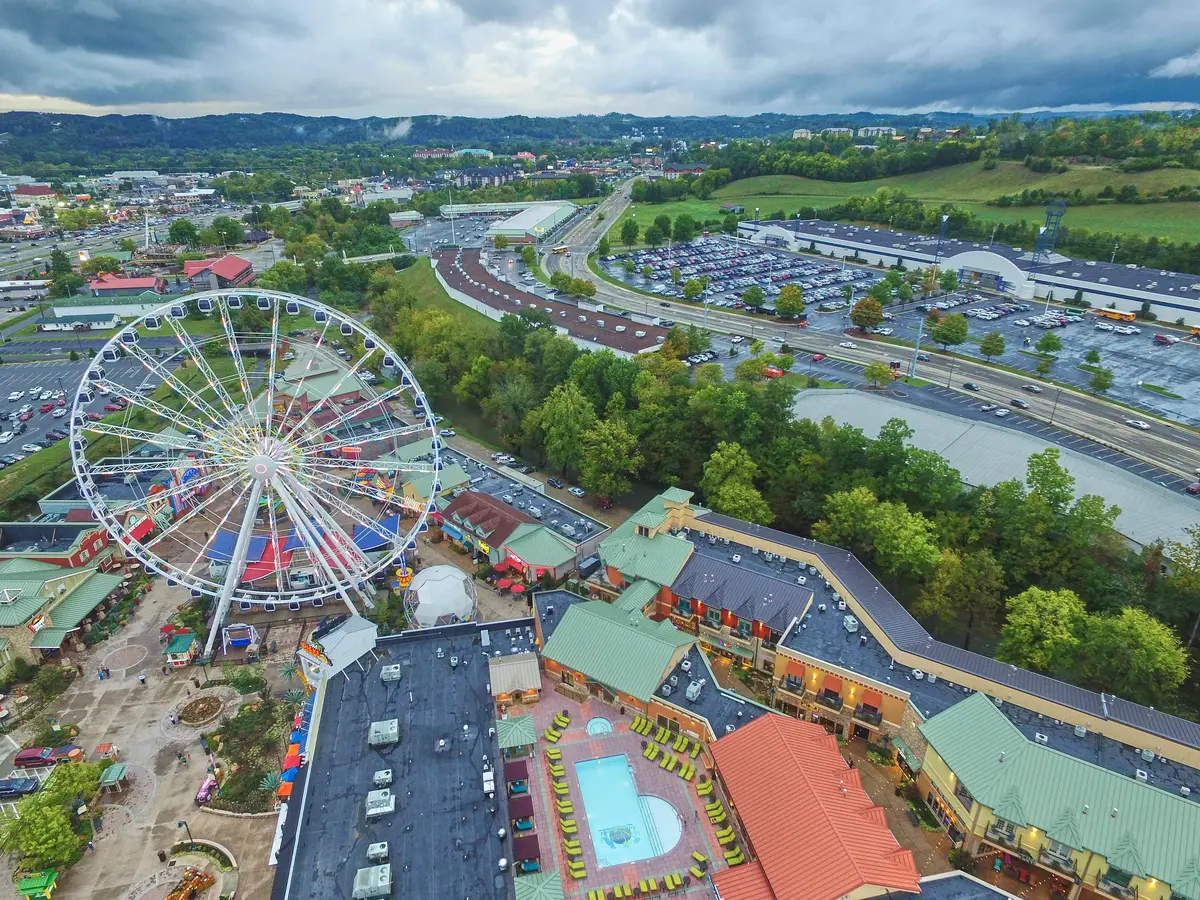
Gatlinburg at a Glance
Looking to buy in Gatlinburg? Estimate your payment.
Enter your numbers to see an estimated monthly mortgage payment.
Estimate only. Excludes HOA fees and mortgage insurance. The interest rate above is a starting point, not a quoted rate — replace it with your own to see real numbers. Insurance is a flat placeholder, not a Gatlinburg quote.
Beyond the Monthly Mortgage Payment — What to Factor In
- The property tax rate above — The 0.37% used in the estimate is the median effective rate — tax actually paid as a share of market value — published by Ownwell, 2026. Half of local homes pay more and half pay less: your own bill depends on that property's assessed value and any exemptions it qualifies for, which can differ a lot from its market price. Confirm with the Sevier County assessor before you budget.
- Total cost of ownership — Your monthly mortgage payment is just the baseline. Depending on the specific city, county, and service district, homeownership costs also include local utility fees, municipal surcharges, and special assessments (such as water, sewer, storm drainage, or local energy taxes) that vary by location.
- Independent due diligence — Because these recurring local costs and municipal fees change depending on the exact property address, buyers must research them independently during their transaction process.
Tax laws, local municipal fees, and utility costs change frequently and individual situations vary. This page is general information, not tax or legal advice — always consult a qualified tax professional, CPA, or local municipal offices for personalized guidance.
Why Are People Moving to Gatlinburg?
The honest answer for most newcomers is some version of: the park. Living five minutes from the entrance to Great Smoky Mountains National Park — 522,427 acres, 150 trails, 848 miles of hiking — is not a weekend perk you drive to; it becomes the texture of your ordinary life. Locals run the Gatlinburg Trail before work. They know which parking pullouts are empty on a Tuesday. That proximity is the single most cited reason people who've visited a dozen times finally make an offer.
The second reason is the short-term rental economy. Gatlinburg's STR market is one of the densest in the country relative to its permanent population, with strong average daily rates and demand that draws buyers specifically to underwrite a cabin purchase against rental income. A 2022 NPS visitor use survey found that approximately 62% of Great Smoky Mountains National Park visitors stopped in Gatlinburg during their trip. October is peak season — fall foliage drives the highest occupancy and rates of the year. The slower winter months mean anyone underwriting a cabin purchase needs to model the full seasonal curve, not just the fall headlines.
A third group moves here specifically to work in hospitality and tourism. The industry is real, the jobs are year-round (if seasonally intense), and the employers — Ripley's Aquarium, Ober Gatlinburg, Anakeesta — are stable anchors in a town that has built its entire identity around welcoming visitors. Sevier County's tourism economy is one of the largest in Tennessee, and the economic engine it creates has kept local hospitality employment steady even in off-seasons.
What people don't expect: how genuinely small the permanent community is. At 3,715 residents, Gatlinburg is a town where you recognize the same faces at the farmers market, where civic life is close-knit in a way that larger Smoky Mountain bedroom communities aren't. That intimacy is a draw for some buyers and a dealbreaker for others — and it's worth sitting with before you sign anything. See the neighborhoods guide for a breakdown of where full-time residents actually tend to land.
What Daily Life Feels Like in Gatlinburg
The Tourist Layer vs. The Local Layer
The most common thing newcomers say after six months in Gatlinburg is some version of: "I had to learn to move around it." The downtown Parkway — US-441, navigated by numbered traffic lights one through ten — operates as a tourism corridor first and a local street second. On peak weekends in October, it is not a road you use for errands. Locals route around it, use the Gatlinburg Bypass when conditions allow, and simply time their movements differently than they would in a conventional small town.
The city trolley system is color-coded, connects into Pigeon Forge and Sevierville, and covers the downtown corridor extensively — it functions as genuine transit for residents who want to skip parking entirely on busy days. For anything outside the trolley network, you're driving.
What "Running Errands" Actually Means Here
A full shopping trip — grocery, pharmacy, hardware — means heading toward Sevierville along US-321 or US-441. Most residents build that into a weekly rhythm rather than treating it as an inconvenience. The flip side is that you're not living next to a parking lot; the town's commercial strip looks like the mountains, not a strip mall.
The Arts & Crafts Community along the loop off US-321 in the Glades area — with dozens of artisan shops and studios whose origins trace back to 1937, recognized as the largest independent artisan organization in the United States — is where many full-time residents spend weekend mornings rather than the Parkway. It feels like a different town from the tourist corridor: slower, local, genuinely oriented around craft and community.
Seasonality Is Real
Summer and October are the two seasons that test a new resident's patience most directly. Traffic on the Parkway during fall foliage is not a minor inconvenience — it's a legitimate planning variable for anyone who needs to be somewhere at a specific time. Longtime residents don't fight it; they've built their schedules around it. The trade-off is that February here is genuinely quiet, the trails are mostly yours, and the mountains look completely different under snow.
The Sevier County Schools district serves Gatlinburg students at campuses outside of town, with active TSSAA athletics programs and the full range of extracurriculars you'd expect from a 14,054-student district. On 2025-26 state assessments, 38.4% of students reached math proficiency and 38.3% reached reading proficiency. Families with school-age children should read the full picture at the schools page.
The Gatlinburg Housing Market Right Now
The typical home price in Gatlinburg sits at $406,899 (Zillow Home Value Index, August 2026). That figure is meaningful, but it requires one important piece of context: this market is bifurcated in a way that few others are. Luxury cabin transactions — high-dollar properties bought primarily as investment vehicles — can swing monthly closed-sale medians dramatically in either direction. The Zillow Home Value Index tracks the broader market more smoothly and is the more useful reference for a buyer trying to understand what a full-time residence actually costs here.
The effective property tax rate of 0.37% is low even by Tennessee standards, which itself has no state income tax. For buyers coming from higher-tax states, the math on total carrying cost often looks better than the sticker price alone suggests. See the cost-of-living page for the full tax and utility picture.
The STR Premium
A meaningful share of Gatlinburg's housing stock is owned by investors operating short-term rentals, and that shapes what the buyer pool looks like. You are frequently competing against buyers who are underwriting a cabin against rental income projections, not just against other primary-residence buyers. That dynamic affects which properties attract bidding interest and which sit longer.
The income-to-price gap here is real. The median household income of $57,760 sits noticeably below what's needed to carry the typical home at current rates. Many full-time residents who own homes here either bought earlier in the cycle, carry STR income, or bought in a more accessible price tier. Buyers working with conventional financing and a primary-residence budget should go in with clear numbers. The first-time homebuyer page covers loan programs and down-payment options in detail.
What the Inventory Looks Like
Gatlinburg is small — 3,715 people — and the housing stock reflects that. In-town residential options are genuinely limited. Most of what comes to market is either a cabin-style property on a ridge lot, a condo in one of the resort complexes, or an older in-town home in neighborhoods like Mynatt Park or along Norton Creek. Buyers looking for a conventional suburban floor plan on a flat lot will find fewer options here than in Pigeon Forge or Sevierville. That's not a flaw — it's the architecture of a mountain town — but it's worth knowing before you start searching.
Gatlinburg Neighborhoods
Gatlinburg has several distinct areas — each with its own character and appeal. Here’s a breakdown to help you narrow down where to focus your home search.
🏡 Chalet Village / Chalet Village North
Perched on the ridge above downtown, Chalet Village is the neighborhood most associated with mountain-cabin living for full-time residents — A-frames, wooded lots, and long-range views that tourists below never see. It suits buyers who want the Gatlinburg address with genuine distance from the Parkway energy.
🏠 Ski Mountain
Ski Mountain Road climbs steeply from the edge of downtown toward Ober Gatlinburg, lined with cabin rentals and a mix of residential properties at various elevations. Buyers here get dramatic elevation and proximity to both the resort and the park entrance, though the road itself is a commitment in winter conditions.
🌳 Cobbly Nob
Cobbly Nob sits in the eastern reaches of the Gatlinburg area along US-321, a gated resort community where the housing stock skews toward larger cabins and resort-style properties. It draws buyers who want seclusion, mountain views, and access to resort amenities while remaining connected to the Gatlinburg corridor.
🏘 Arts & Crafts Community (The Glades)
The Glades area along the loop off US-321 is where Gatlinburg's artisan community lives and works — dozens of studios and shops with origins stretching back to 1937, recognized as the largest independent artisan organization in the United States. Buyers drawn to creative community and a quieter pace find this corner of Gatlinburg feels like a different town from the Parkway entirely.
🏔 Downtown / Parkway
Living within walking distance of the numbered traffic lights on US-441 means maximum access to dining, the trolley system, and Ripley's Aquarium — and maximum exposure to tourist traffic on weekends. It suits buyers who work in hospitality and want a short walk to their job, or those who lean into the energy rather than away from it.
🌆 Roaring Fork
Roaring Fork sits at the edge of the national park boundary, offering some of the closest residential proximity to park land that exists anywhere in Gatlinburg. Properties here tend toward older mountain character on wooded terrain, and the natural setting is immediately evident — this is where the park effectively begins.
Pros & Cons of Living in Gatlinburg
The Pros
- Direct access to Great Smoky Mountains National Park
- No state income tax and low effective property taxes
- Strong tourism-driven economy with year-round visitor traffic
- Scenic mountain setting with abundant outdoor recreation
The Cons
- Extremely limited housing inventory and prices inflated by short-term rental/vacation-cabin demand
- Heavy seasonal tourist congestion and traffic
- Small permanent population means fewer everyday amenities and services close by
Getting Around & Commuting in Gatlinburg
The Road Reality
US-441 is Gatlinburg's main artery, running north-south through downtown and into Great Smoky Mountains National Park to the south. US-321 (East Parkway) carries traffic east toward Cosby and the Arts & Crafts loop. TN-73 and TN-71 round out the highway network. Every road that enters or exits Gatlinburg funnels through mountain terrain, which means there are no quick alternate routes when the primary corridor backs up.
The Gatlinburg Bypass — a 3.6-mile NPS-maintained road connecting US-441 south of downtown to US-321 north of the city — exists specifically to route park-bound traffic around the commercial Parkway. When it's operating, it makes a real difference. When it's closed, congestion concentrates entirely on the downtown corridor. Locals learn quickly which conditions trigger which outcome.
Getting to Knoxville and Beyond
The commute reference for this region is about 45 minutes to Knoxville under normal conditions — a meaningful drive for anyone whose job sits in the metro. In practice, that 45 minutes assumes you clear the Gatlinburg corridor itself, which is not always a given during peak tourism periods. Residents who commute to Knoxville regularly tend to leave early or time their return for after the evening tourist wave clears. McGhee Tyson Airport (TYS) is approximately 41 miles out — a realistic drive for occasional travel, not a daily-use resource.
For retirees and remote workers, the commute equation looks completely different: proximity to the park, the trolley system for in-town movement, and the ability to reach Pigeon Forge or Sevierville in under 20 minutes for most errands makes the geography genuinely workable. See the retiring page for a retiree-specific look at daily logistics and healthcare access.
Within Town
The city trolley is more than a tourist amenity — it covers the downtown corridor extensively and connects into Pigeon Forge and Sevierville, making it genuinely useful for residents who want to skip parking on busy days. For anything outside the trolley network, you're in a car. Gatlinburg is a mountain town with mountain geography, and on-foot access between neighborhoods is limited by topography more than distance.
Schools in Gatlinburg
Families relocating to Gatlinburg have public, private, and higher-education options nearby. Here’s a quick overview.
🎓 School District
Sevier County serves K–12 students across Gatlinburg and the surrounding area. Rated B (source: Niche.com).
📊 District Stats
- Enrollment 2024-25
- 14,054 students
- 4-year graduation rate
- 95.8%
- Math proficiency 2025-26
- 38.4%
- Reading proficiency 2025-26
- 38.3%
- Science proficiency 2025-26
- 42.5%
Source: Tennessee Department of Education Data Downloads (district profile, graduation rate and TCAP assessment files).
📚 Higher Education
Tennessee’s public universities — the University of Tennessee, Vanderbilt University, and Middle Tennessee State University — offer four-year degrees statewide, with a statewide community and technical college system of 13 community colleges and 24 colleges of applied technology, with tuition-free options for residents through Tennessee Promise and Tennessee Reconnect providing two-year and workforce programs.
🌐 Online Learning
UT Knoxville Online and MTSU Online offer fully accredited online degrees for remote learners across the state.
Safety in Gatlinburg
A quick look at how Gatlinburg compares on the numbers that matter most when weighing a neighborhood or a move.
🛡 Violent Crime
Approximately 1.88 per 1,000 residents.
🔒 Property Crime
Approximately 5.69 per 1,000 residents.
Compared to the most recent national figures from the Bureau of Justice Statistics (2024), Gatlinburg’s violent crime is below the national average (about 3.7 per 1,000), and property crime is below the national average (about 18.4 per 1,000).
Against Tennessee as a whole, Gatlinburg’s violent crime is roughly a third of the state average, and property crime is roughly a quarter of the state average (Bureau of Justice Statistics, Crime Known to Law Enforcement, 2024 (tables 2 and 3)).
Crime rates can vary a lot within a single city, so the citywide numbers above are only a starting point. Some neighborhoods in Gatlinburg run well below these averages, while others run higher — the kind of block-by-block detail that matters most when you’re actually choosing where to live. The full guide below breaks it down neighborhood by neighborhood.
Working in Gatlinburg
Gatlinburg’s largest employers span several industries — here are some of the anchors of the local job market.
💼 Ripley's Aquarium of the Smokies
Tourism/entertainment
💼 Ober Gatlinburg
Ski resort/amusement
💼 Anakeesta
Adventure park/tourism
🏛 City of Gatlinburg
Government
Parks & Recreation in Gatlinburg
Some of the outdoor spaces that shape everyday life in Gatlinburg.
🌱 Great Smoky Mountains National Park entrance
🌱 Anakeesta Adventure Park
🌱 Arts & Crafts Trail
Gatlinburg residents don’t have to go far for green space — spots like Great Smoky Mountains National Park entrance and Anakeesta Adventure Park are part of everyday life here, whether that’s a morning walk, a weekend hike, or just somewhere to unwind outside. The full guide below covers more of what Gatlinburg has to offer for parks and outdoor recreation.
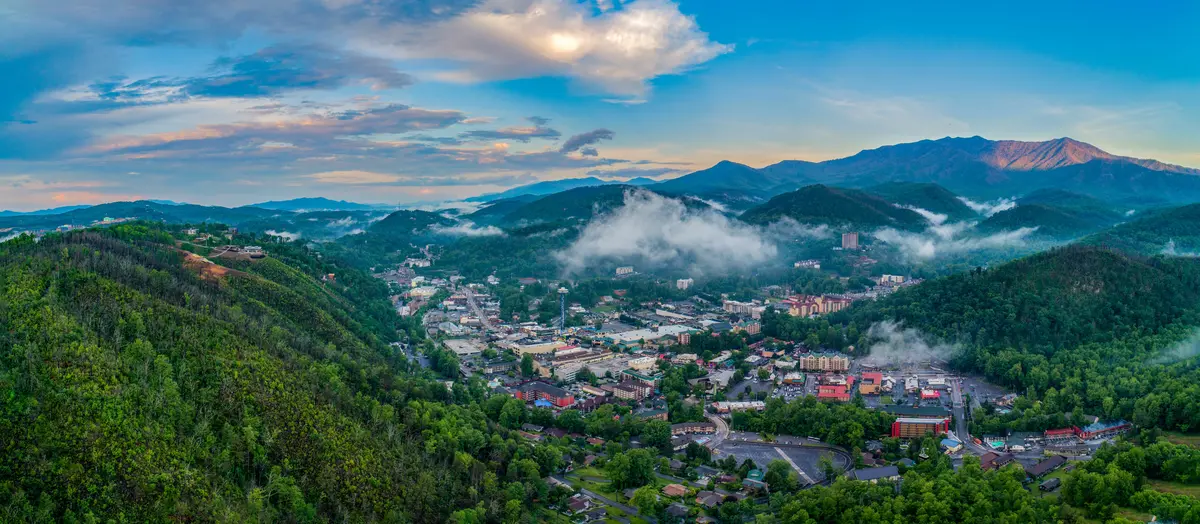
Retiring in Gatlinburg
Gatlinburg draws retirees for its balance of amenities, outdoor access, and cost. Here’s what to weigh.
🌤 Climate
Gatlinburg sits at roughly 1,400 feet elevation in the southern Appalachians, giving it four distinct seasons that are noticeably cooler than the Tennessee flatlands. Summers are mild compared to Knoxville — comfortable hiking weather through most of July and August. The area sees 205 sunny days a year, with snow possible in winter and the mountains frequently fogged in during transition seasons, which many retirees find adds to the drama rather than detracting from it.
🍴 Lifestyle
Daily life for retirees here centers on the park, the arts community in the Glades, and a small but genuine local dining and coffee scene. The Gatlinburg Farmers Market connects residents to local producers through the growing season. The pace is slow by mid-week, the scenery is extraordinary year-round, and the property tax rate of 0.37% — combined with Tennessee's lack of a state income tax — makes the financial side of retirement here more comfortable than many higher-profile mountain destinations.
🏚 55+ Communities
No 55+ communities were found in Gatlinburg. Retirees who buy here are typically purchasing a cabin-style property, a condo, or an in-town home on the open market alongside the general buyer pool. For a full picture of healthcare access and retirement logistics in the area, see the retiring page.
✈ Getting Around
The city trolley handles in-town movement well, and most of what retirees need day-to-day is reachable by car within 20 minutes in Pigeon Forge or Sevierville. A regional medical center is about 14 miles out — the closest hospital to Gatlinburg. McGhee Tyson Airport (TYS) is approximately 41 miles away, a reasonable drive for the travel that retirement often involves.
🏛 Tennessee Taxes for Retirees — What to Know
- No state income tax — Tennessee has no personal income tax. Social Security, pensions, 401(k) and IRA withdrawals and annuity payments are all untaxed at the state level, with no state return to file. The Hall tax on interest and dividends — the state’s last income-type tax — was fully phased out and repealed effective 2021.
- Sales tax is the tradeoff — The state sales tax is 7.0%, and local add-ons bring the combined rate in Gatlinburg to 9.75% (Tennessee Department of Revenue (SUT-13, SUT-53); Streamlined Sales Tax rate boundary file TNR2026Q3, Q3 2026). Groceries are taxed at a reduced state rate of 4% plus the local rate; prescription drugs are exempt. Prepared food, candy, dietary supplements and alcohol pay the full rate.
- Property taxes are low, not the tradeoff — Property tax in Tennessee is set county by county, and rates are low by national standards. Unlike Texas, which funds local government through high property taxes in place of an income tax, Tennessee leans on its sales tax instead — so a retiree is not trading one bill for another. Your county trustee publishes the current rate.
- Tax relief for owners 65 and over — The state reimburses part of the property tax bill for low-income homeowners who are 65 or older, and for disabled homeowners of any age, through the Property Tax Relief program administered by county trustees. It is income-tested and must be applied for each year.
- A tax freeze — but only where the county or city adopted it — Tennessee also allows a Property Tax Freeze that locks a homeowner’s bill at the amount owed in the year they qualify, for owners 65 and over under an income limit. It is a local option: each county and city chooses whether to offer it, and sets its own income threshold, so it is available in some parts of the state and not others. Check with the county trustee.
- No estate, inheritance or gift tax — Tennessee has none of the three. The inheritance tax was repealed for deaths occurring in 2016 and after, and the gift tax was repealed effective January 1, 2012.
- No separate capital gains tax — Because Tennessee has no state income tax, capital gains — including on investments and on the sale of a home — are not taxed at the state level at all, unlike states such as Washington that tax capital gains separately from income.
Source: Tennessee Department of Revenue and Tennessee Comptroller of the Treasury.
Tax laws change frequently and individual situations vary. This is general information, not tax advice — always consult a qualified Tennessee tax professional or CPA for personalized retirement tax planning.
Weekends & Local Favorites in Gatlinburg
The Park, First
When you live here, the Gatlinburg Trail becomes your neighborhood greenway. Laurel Falls is a quick drive rather than a destination trip. The Chimney Tops Trail and Cataract Falls are places you return to in different seasons, in different weather, to see how different they look. That relationship with Great Smoky Mountains National Park — 150 trails, 848 miles of hiking, and the Appalachian Trail running through its core — is the defining feature of life here in a way that no weekend visit fully captures.
Food and Coffee
Gatlinburg's dining scene is built around visitor traffic, but a handful of places have earned genuine local loyalty. Crockett's Breakfast Camp is where residents go on a slow morning — not because it's on the tourist strip, but because it's genuinely good. Howard's Restaurant Gatlinburg's Oldest Restaurant has been feeding locals and visitors for generations and remains a reference point in town. For a proper steakhouse dinner, The Peddler Steakhouse and Alamo Steakhouse both hold up. Ole Red brings a livelier, more music-forward energy to the Parkway corridor.
Coffee in Gatlinburg has gotten serious. Gatlinburg Grind and Painted Bear Coffee Co are where residents land on weekday mornings. Coffee & Company, Cuppa Gatlin Cafe, and Smoky Mountain Coffee & Creamery round out a genuinely strong independent coffee scene for a town this size.
Arts, Craft, and Community
The Great Smoky Arts & Crafts Community in the Glades — the loop off US-321 with dozens of artisan studios and shops whose roots stretch back to 1937, recognized as the largest independent artisan organization in the United States — is where a lot of full-time residents spend a weekend morning when they want something that feels nothing like the Parkway. The Gatlinburg Farmers Market draws locals looking for the same thing: a slower, community-rooted version of the town that exists alongside the tourism economy.
Ober Gatlinburg and Anakeesta both serve a dual function here — they're the places you take visiting family, but they're also genuinely part of the community's identity, and the staff who run them year-round are neighbors. For a town of 3,715, that overlap between the hospitality industry and the permanent community is the defining social texture of Gatlinburg. See the parks and recreation page for a deeper look at trails, outdoor activities, and what the park access means day to day.
Local favorites in Gatlinburg
Restaurants
- Ole Red
- Crockett's Breakfast Camp
- The Peddler Steakhouse
- Alamo Steakhouse
- Howard's Restaurant Gatlinburg's Oldest Restaurant
Outdoors
- Great Smoky Mountains National Park
- Chimney Tops Trail
- Laurel Falls Trail
- Cataract Falls
- Gatlinburg Trail
Coffee
- Coffee & Company
- Painted Bear Coffee Co
- Smoky Mountain Coffee & Creamery
- Cuppa Gatlin Cafe
- Gatlinburg Grind
Farmers Markets
- The Gatlinburg Farmers Market
Top Things Locals Say About Gatlinburg
The best intel about a city comes from the people who actually live there. Here’s what Gatlinburg residents say when newcomers ask the questions everyone’s thinking.
“I knew about the tourist traffic before I moved — I thought I was prepared. What I didn't expect was how quickly I'd stop seeing it at all. By month three, I had my routes, I had my timing, and the park was just... where I went on Tuesday mornings when I needed to think.”
— Recent Gatlinburg home buyer
“What's the most surprising thing about living in Gatlinburg?”
How separate the local layer is from the tourist layer once you know where to look. The Glades area along US-321 feels nothing like the Parkway — it's quieter, it's artisans and studios, and it's where a lot of full-time residents actually spend their weekend mornings. Most visitors never make it out there. That version of Gatlinburg is genuinely special, and it's yours once you live here.
“What do locals love most about Gatlinburg?”
The park access, without question. On a Tuesday morning in November, you can be on a trail in Great Smoky Mountains National Park with almost no one around you. Laurel Falls, the Chimney Tops, Cataract Falls — these stop being destinations and start being the places you just go. That shift in relationship to the land is what most full-time residents say they couldn't give up if they tried.
“What should newcomers to Gatlinburg know?”
Learn the Gatlinburg Bypass early — it routes around the downtown Parkway corridor and makes a real difference on busy days. And don't plan anything time-sensitive for a Saturday in October without leaving an hour of buffer. The fall foliage season is spectacular and the traffic is genuinely heavy. Once you build your schedule around the rhythms of the tourist calendar, life here gets a lot easier.
“How much do you need a car in Gatlinburg?”
Within the downtown corridor, the city trolley covers a lot of ground and is genuinely useful for avoiding parking headaches on busy days. For everything else — groceries, most medical appointments, hardware, anything requiring a larger store — you're driving, typically toward Sevierville or Pigeon Forge. Most residents make one or two dedicated supply runs a week and build the rest of their errands around what's available locally. A car is essential for full-time life here.
Cities Near Gatlinburg
Other communities near Gatlinburg worth a look — each with its own character and price point.
| City | Distance | Best For | Vibe | Median Rent | Median Buy |
|---|---|---|---|---|---|
| Pigeon Forge | 7 mi | Families, entertainers & newer construction | Busier, more commercial, flatter terrain | $1,350 | $430,000 |
| Sevierville | 15 mi | Commuters & everyday conveniences | County seat feel, practical, more suburban | $1,719 | $420,849 |
| Pittman Center | 6 mi | Privacy seekers & nature lovers | Rural, quiet, mountain character | $1,450 | $480,000 |
More Helpful Guides for Gatlinburg
Going deeper on Gatlinburg? Our blog series covers everything from first-time buying to retiring here — explore the guides below.
Local Expert Takeaway: Gatlinburg works best for buyers who come in with a clear answer to one question: is this a primary residence, a vacation property, or a hybrid? The market, the commute math, and the lifestyle all look different depending on your answer. Full-time residents learn to route around the Parkway on peak weekends, drive to Sevierville for groceries, and treasure the moments — a Tuesday morning on Laurel Falls Trail with no one else around — that no visitor ever gets. The effective property tax rate of 0.37% and Tennessee's lack of a state income tax make the ownership math more favorable than the sticker price implies. But the income-to-price gap is real, and buyers relying entirely on a local hospitality salary to carry a mortgage here should run the numbers carefully before falling in love with a cabin on a ridge.
Quick Takeaways & FAQs
✅ Gatlinburg sits at the entrance to Great Smoky Mountains National Park — the most visited national park in the country — giving full-time residents trail access that most people only experience on vacation.
⚠️ The Parkway (US-441) can back up severely during October foliage season and summer peaks, and nearly every road in or out of town funnels through mountain terrain with few true alternates.
📍 Gatlinburg's housing market is shaped heavily by investor buyers underwriting cabin rental income, which affects what you compete against and what's available at each price point.
What is the typical home price in Gatlinburg, TN?
Is Gatlinburg a good place to live full-time, or is it just a vacation destination?
How are the schools in Gatlinburg?
How does short-term rental ownership work in Gatlinburg?
What is the commute like from Gatlinburg to Knoxville?
Helpful Links for Moving to Gatlinburg
Moving to Tennessee?
Tell us what you need help with and we'll connect you with local resources.
