
Most people come to Gatlinburg to visit. A smaller number look at the mountains, the national park entrance a few blocks away, and the median household income of $57,760 — and start running the numbers on actually living here. The first surprise: Gatlinburg's overall expenses run below what most people expect from a mountain resort town packed with tourists every weekend of the year. The reason it lands where it does has everything to do with Tennessee's tax structure, a property tax rate that tourism dollars help subsidize, and the fact that the city's 3,715 permanent residents are sharing infrastructure costs with an enormous commercial tax base.
The economy here runs entirely on the Great Smoky Mountains National Park and the hospitality industry that has built up around it. Ripley's Aquarium of the Smokies, Ober Gatlinburg, Anakeesta, and the City of Gatlinburg itself are the dominant employers. That means the local job market is tourism-driven, seasonal in character, and not particularly high-wage — which creates a real gap between what the typical household earns and what it costs to buy a home here. Remote workers and retirees with income from outside the local economy are the ones who tend to find the math comfortable. People anchored to local wages face a tighter picture.
On the non-housing side, Gatlinburg delivers genuine savings in utilities and transportation costs relative to national benchmarks, and Tennessee's zero state income tax is a meaningful line item for anyone earning a solid salary or living on investment income. The catch is the sales tax — Sevier County's combined rate hits approximately 9.75%, which is among the highest in the country and shows up every time you fill a cart at the grocery store. Residents who have been here a while learn quickly that bulk grocery runs happen in Sevierville or Pigeon Forge, not at the in-town shops priced for visitors.
Whether you are weighing a permanent move, a semi-retirement relocation, or a remote-work reset in the mountains, the sections below break down Gatlinburg's housing costs, everyday expenses, how the city stacks up against its neighbors, and the full tax picture — so you can build a realistic budget before you make any decisions.
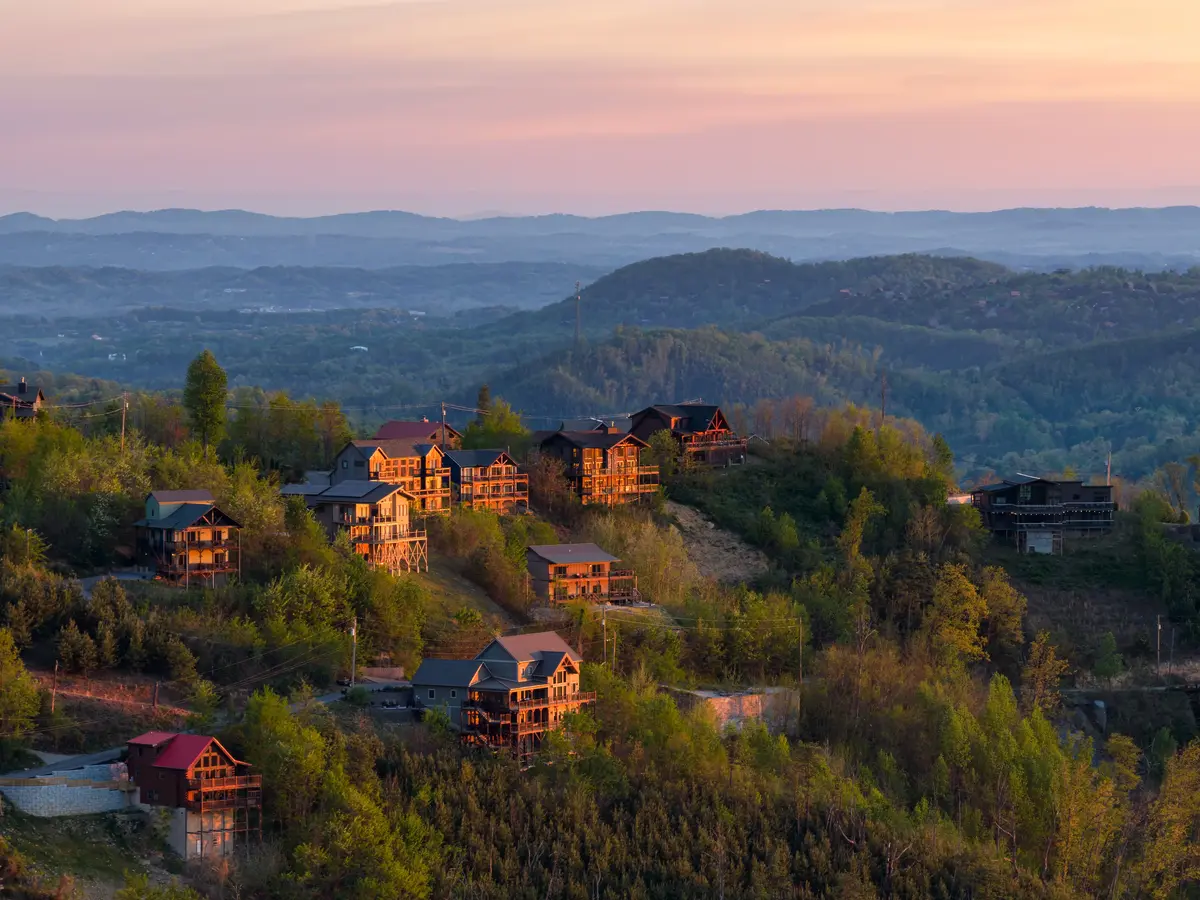
What It Really Costs to Live in Gatlinburg
Gatlinburg's cost of living surprises most people in both directions. Non-housing expenses — utilities, groceries, transportation — tend to run below national benchmarks. Then you look at the housing market and realize the story is more complicated than that single observation.
The Zillow Home Value Index puts the typical home price at $406,899 as of August 2026. That figure sits noticeably above what a household earning the local median can comfortably carry, and it is meaningfully higher than you would pay for a comparable house in most of rural East Tennessee. What is driving it is not the local economy — it is demand from buyers who want a mountain property near the most-visited national park in the country, plus a thick layer of short-term rental investment that has put upward pressure on the entire market.
Against the nearby cities buyers most commonly compare, Gatlinburg falls roughly in line with Sevierville and runs noticeably below Pittman Center. Pigeon Forge lands somewhat above Gatlinburg. Where Gatlinburg pulls ahead of the region is on the tax side: the effective property tax rate and the zero-income-tax environment give residents real relief that partially offsets the housing premium. For a deeper look at how neighborhoods within the city shape what you actually pay, the best neighborhoods guide covers that ground in detail.
Housing: Rent vs Buy in Gatlinburg
Buying in Gatlinburg means entering a market shaped by two very different buyer pools: full-time residents and short-term rental investors. Both are competing for the same mountain cabins and hillside cottages, which keeps prices elevated relative to local incomes. The affordability gap here is real — the median household income falls well short of what is needed to buy the typical home, by a meaningful margin.
Entry-level purchases — older construction, smaller footprint, less dramatic views — do exist, but they are not abundant, and they tend to move. The strongest entry-level inventory clusters away from the most-photographed ridgelines and the heaviest tourist corridors. Anyone buying primarily to live here, not to operate a rental, will want to focus on that segment and work with someone who knows which parts of the market are priced for residents versus priced for vacation-cabin math.
The effective property tax rate of approximately 0.37% is one of Gatlinburg's genuine financial advantages. That rate sits well below Tennessee's state median and dramatically below the national median of roughly 1%. Part of why it stays that low is structural: commercial tourism properties — resorts, cabins operated as businesses, and major attractions — carry a disproportionate share of the Sevier County tax levy, which cushions the residential side. If you are buying a property you plan to operate as a short-term rental rather than your primary residence, note that Tennessee law now assesses those at the commercial 40% rate rather than the residential 25% rate — a meaningful difference in the annual bill.
Renting in Gatlinburg is genuinely tricky to price. The listing pool is flooded with vacation cabins rented by the night, which distorts every aggregator that tries to calculate an average. Conventional long-term apartments are thin on the ground. Estimates from rental platforms ranged from around $1,549 for a one-bedroom to $1,777 for a two-bedroom in early 2026, though figures vary widely depending on the source and what inventory they are pulling from. If you are relocating here before buying, expect to search harder than you would in a typical city of this size — and budget conservatively, because the supply genuinely is constrained. For buyers weighing the financing mechanics, the first-time homebuyer guide covers down payment programs and loan options specific to this market.

Everyday Costs Beyond Housing in Gatlinburg
| Category | Typical Monthly Cost | Notes |
|---|---|---|
| Utilities | $160–$250/mo | Electricity, gas, water, sewer, trash |
| Groceries | $600–$800/mo | Food at home, household of 2–3 |
| Transportation & Gas | $160–$300/mo | Fuel, and transit where it is a real option |
| Phone & Internet | $110–$185/mo | Mobile plan plus home broadband |
| Misc / Discretionary | $200–$420/mo | Dining out, entertainment, subscriptions |
Non-housing figures are estimates for a household of two to three, not a sourced index; housing is the city-wide typical rent. Refreshed with the rest of the city data.
Tennessee utilities run below the national average, and Gatlinburg broadly reflects that — with one important caveat. The mountain elevation and older building stock in many parts of the city mean heating and cooling loads can spike. A modest, well-insulated property will see electric bills in a reasonable range; a larger cabin with high vaulted ceilings and older windows will cost considerably more to condition through January. Properties on steep slopes can also carry additional water and sewer infrastructure charges that flat-land comparisons miss.
Most errands require a car. The drive to Knoxville takes about 45 minutes, which is where residents go for big-box retail, specialty medical appointments, and anything the local shops do not stock. Tennessee's gas tax runs 27.4 cents per gallon, which keeps fuel costs competitive regionally. Grocery spending is the line item most newcomers underestimate: in-town options carry a tourist premium, and residents who do not want to pay resort-area prices make a habit of shopping in Sevierville or Pigeon Forge for the bulk of their household staples.
Looking to buy in Gatlinburg? Estimate your payment.
Enter your numbers to see an estimated monthly mortgage payment.
Estimate only. Excludes HOA fees and mortgage insurance. The interest rate above is a starting point, not a quoted rate — replace it with your own to see real numbers. Insurance is a flat placeholder, not a Gatlinburg quote.
Beyond the Monthly Mortgage Payment — What to Factor In
- The property tax rate above — The 0.37% used in the estimate is the median effective rate — tax actually paid as a share of market value — published by Ownwell, 2026. Half of local homes pay more and half pay less: your own bill depends on that property's assessed value and any exemptions it qualifies for, which can differ a lot from its market price. Confirm with the Sevier County assessor before you budget.
- Total cost of ownership — Your monthly mortgage payment is just the baseline. Depending on the specific city, county, and service district, homeownership costs also include local utility fees, municipal surcharges, and special assessments (such as water, sewer, storm drainage, or local energy taxes) that vary by location.
- Independent due diligence — Because these recurring local costs and municipal fees change depending on the exact property address, buyers must research them independently during their transaction process.
Tax laws, local municipal fees, and utility costs change frequently and individual situations vary. This page is general information, not tax or legal advice — always consult a qualified tax professional, CPA, or local municipal offices for personalized guidance.
Gatlinburg vs Nearby Cities: Cost Comparison
| City | Typical Home Price | Typical Rent | Cost vs Gatlinburg |
|---|---|---|---|
| Gatlinburg (this city) | $406,899 | — | — |
| Pigeon Forge | $430,000 | $1,350/mo | 6% higher |
| Sevierville | $420,849 | $1,719/mo | 3% higher |
| Pittman Center | $480,000 | $1,450/mo | 18% higher |
Source — home prices: Zillow ZHVI, August 2026. Nearby-city figures are the same series, refreshed together.
Here is how Gatlinburg's housing and rental costs compare to the cities most buyers consider alongside it — Pigeon Forge, Sevierville, Pittman Center, Cosby, and Wears Valley.
Taxes & the Bottom Line for Gatlinburg
Tennessee's tax structure is the single biggest financial argument for relocating here from a high-tax state. There is no state income tax on wages, salaries, retirement income, or Social Security benefits. The Hall Tax on investment dividends and interest was fully repealed as of January 1, 2023. There is no estate or inheritance tax at the state level. For a remote worker earning a solid salary, a retiree living on investment income, or anyone relocating from a state with a 5–13% income tax, those savings are immediate and substantial every year.
The other side of that equation is sales tax. Tennessee's state rate is 7%, and Sevier County adds enough on top to bring the combined rate to approximately 9.75% — which lands among the highest combined rates in the country. Grocery staples get a partial break through a reduced 4% state rate, but prepared food and most other purchases hit the full rate. For lower-income households that spend most of what they earn on consumption rather than savings, that trade-off is genuinely painful. The zero income tax benefits people with income to spare; the high sales tax affects everyone equally at the register.
Property taxes at approximately 0.37% effective rate remain low by any national benchmark. The commercial tourism base in Sevier County is a structural subsidy to residential owners that is unlikely to disappear as long as millions of visitors keep flowing through the county each year.
The honest bottom line: Gatlinburg makes financial sense for remote workers with above-local incomes, retirees with pension or investment income, and buyers who can make the housing number work without depending on local wages. The typical home price requires an income well above the local median to carry comfortably, and the local job market alone will not get most households there. Families and individuals earning primarily from Gatlinburg's tourism-sector economy will find the budget tighter than it looks on paper — the sales tax bites daily, the grocery premium is real, and the housing market reflects buyer demand that has little to do with local paychecks. For a full picture of how Gatlinburg fits a retiree's budget specifically, the retiring in Gatlinburg guide goes deeper on that audience's math.

Local Expert Takeaway: Gatlinburg's cost of living is lower than most resort-mountain towns in the Southeast, but the savings are distributed unevenly. The zero income tax and 0.37% property tax rate are genuine advantages — but they favor people with outside income, not those living on local tourism wages. In-town grocery shopping costs more than it should because the stores know who their customers are on any given weekend. Residents who thrive here financially tend to do their big shopping runs in Sevierville, budget seriously for heating in older cabins, and treat the low property tax as the gift it genuinely is.
Quick Takeaways & FAQs
✅ Tennessee's zero state income tax and Gatlinburg's 0.37% effective property tax rate make the annual tax burden genuinely light for anyone earning above the local median.
⚠️ The rental market is unusually hard to read — vacation cabin inventory floods the listing pool and conventional long-term apartments are scarce, so budget conservatively and expect a longer search.
📍 Residents routinely drive to Sevierville or Pigeon Forge for bulk grocery runs because in-town stores carry a tourist premium that adds up fast on a household budget.
Is Gatlinburg expensive to live in compared to the rest of Tennessee?
What is the property tax rate for homeowners in Gatlinburg?
How much does it cost to rent in Gatlinburg?
Does Tennessee have a state income tax, and does that affect living in Gatlinburg?
Can the typical Gatlinburg household afford to buy a home here?
Moving to Tennessee?
Tell us what you need help with and we'll connect you with local resources.
