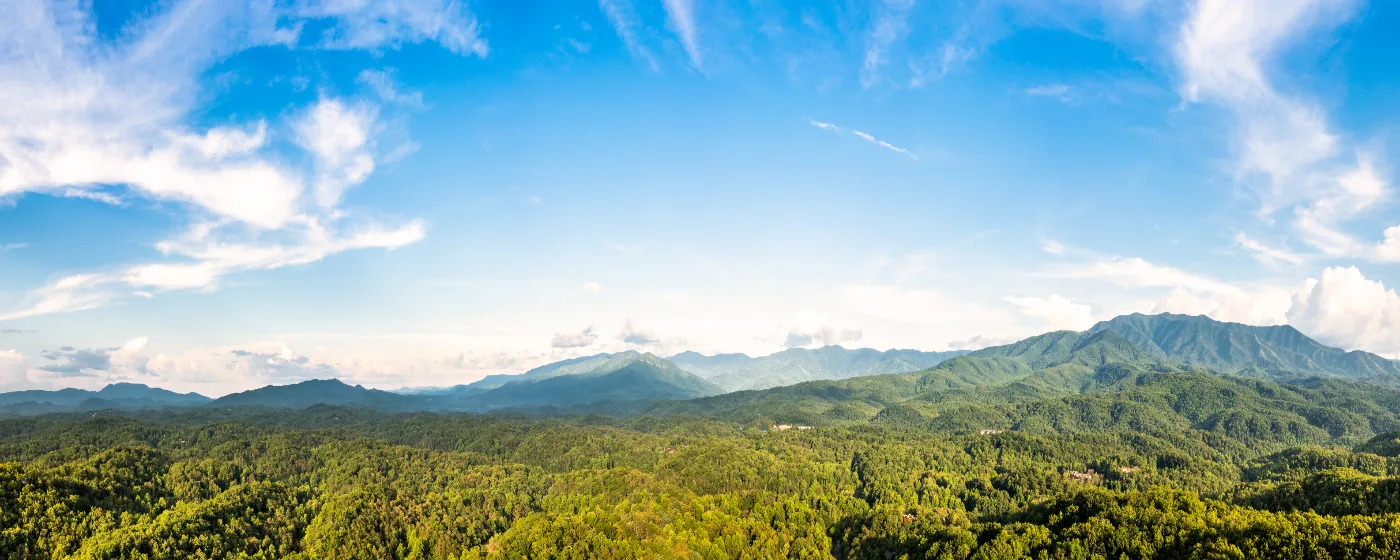
Most people picture Gatlinburg as a place to visit, not a place to land in retirement. Then something shifts — a week in a mountain cabin, a slow morning walk toward the national park entrance, the realization that the Smokies aren't a backdrop but a daily reality — and the idea starts to feel serious. With a population of 3,715, Gatlinburg is one of the smallest incorporated cities in Tennessee, which means retirement here looks nothing like retiring to Nashville or Knoxville. This is a small mountain town built around tourism, hemmed in by Great Smoky Mountains National Park on nearly every side, and that geography defines almost everything about daily life.
The economic engine is hospitality and outdoor recreation. Ripley's Aquarium of the Smokies, Ober Gatlinburg, and Anakeesta are the dominant employers, alongside the city government itself. That matters for retirees for two reasons: the town stays animated year-round in a way that many rural retirement destinations do not, and the tradeoff is that peak tourist seasons turn US-441 through downtown into a slow crawl. Tennessee's income-tax posture is genuinely favorable — no state tax on Social Security, pensions, or retirement-account withdrawals — and the property-tax rate here is among the lowest in the state. But the typical home price of $406,899 (August 2026) sits well above what the local median income can support, which tells you something about who is actually buying: mostly people arriving with equity from somewhere else.
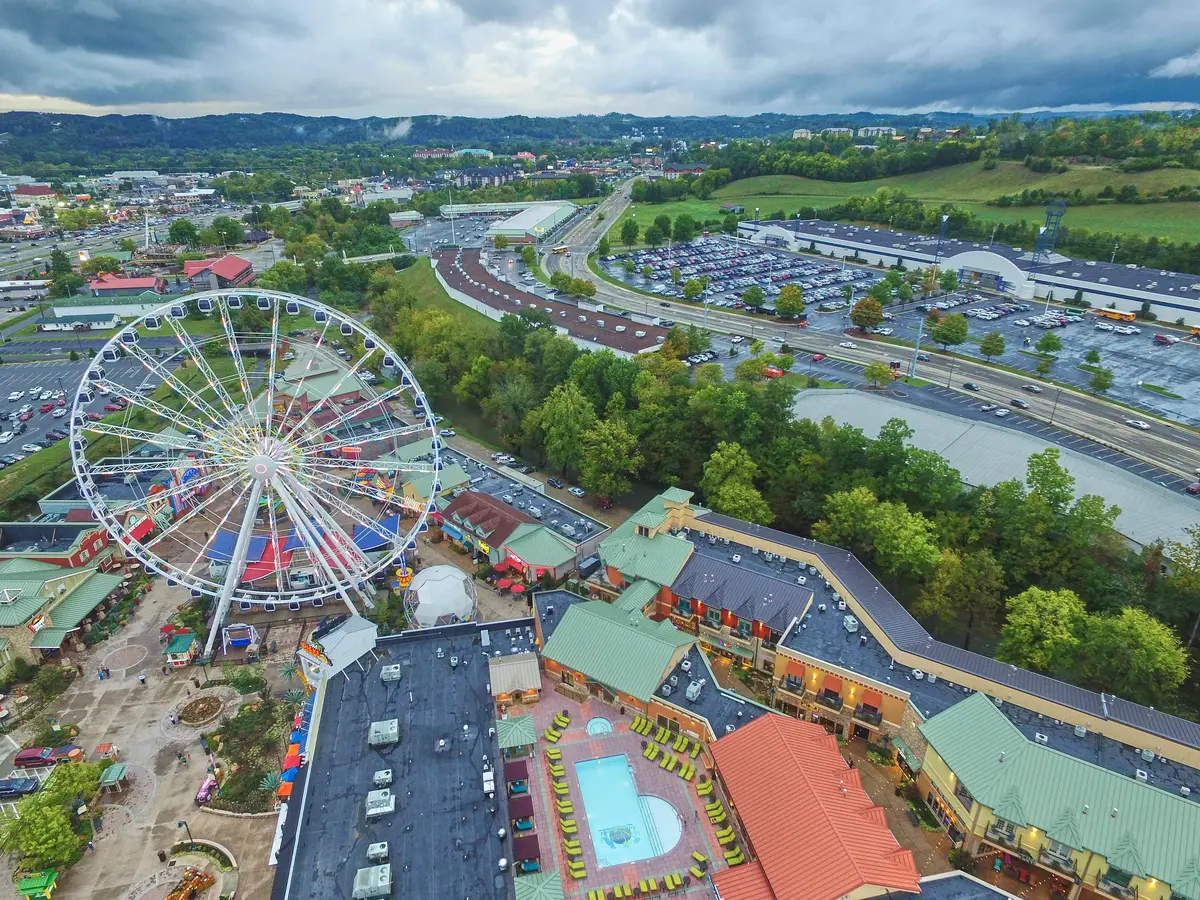
Daily life leans heavily on the car for anything beyond the walkable downtown strip and the park trails that begin at its edge. Groceries, medical appointments, and any serious shopping require a drive. The national park charges no entrance fee and recorded 12,191,834 visits in 2024, which means the scenery is free but the town can feel like it belongs more to visitors than to the 3,715 people who actually live here. That tension is real, and worth sitting with before you make an offer.
Whether you're seriously considering a move or just starting to run the numbers, the sections below cover who Gatlinburg genuinely fits in retirement, what healthcare access looks like, the retiree tax picture, walkability and community, downsizing options, and how Gatlinburg stacks up against nearby alternatives.
Why Retirees Are Choosing Gatlinburg
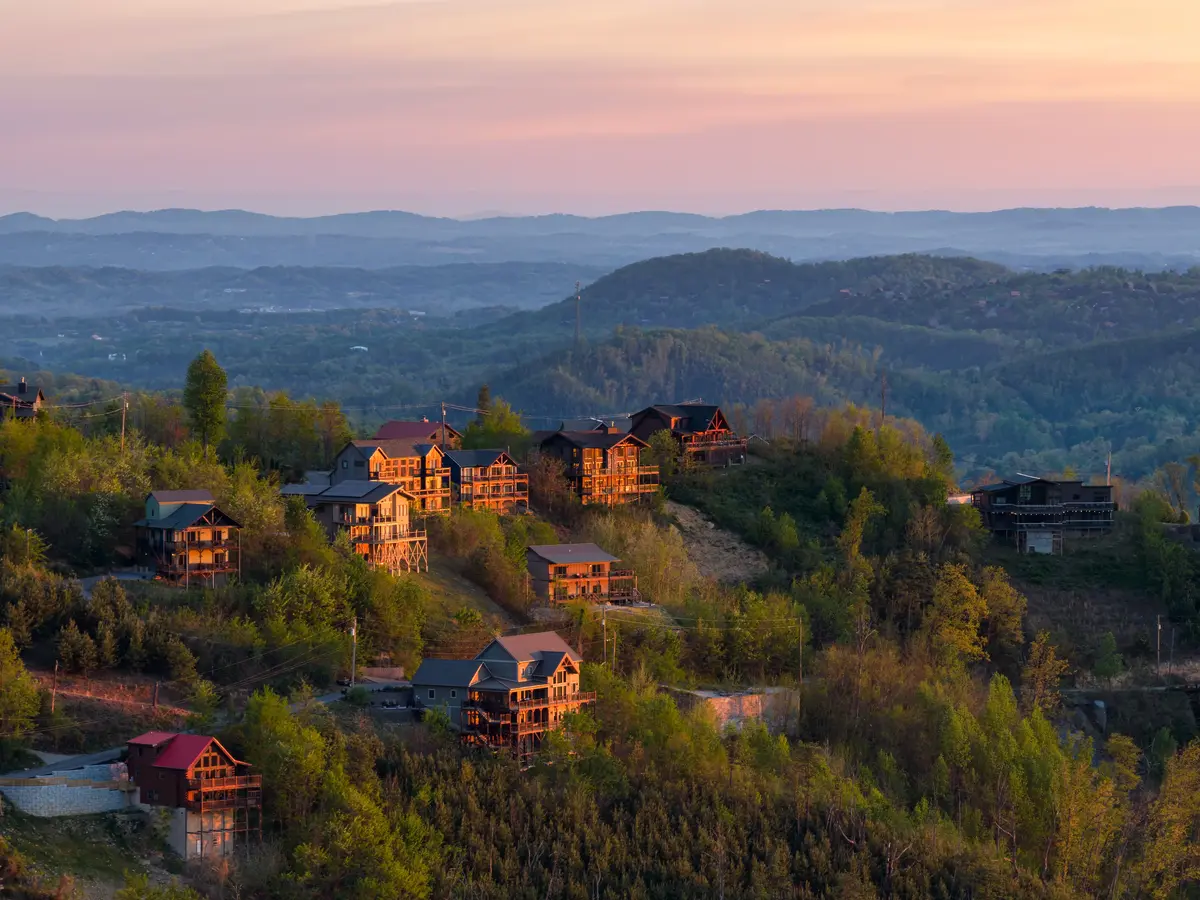
The retirees who thrive here tend to share a specific profile: they want to walk to a trailhead, not a strip mall. They have equity from a prior home sale that makes the typical home price of $406,899 (August 2026) workable without stretching their fixed income — see the full cost-of-living breakdown for context on how that figure compares across daily expenses. They are drawn to four full seasons of outdoor activity: spring wildflower blooms along Laurel Falls Trail, summer trout fishing, fall foliage that rivals anything in New England, and winter skiing at Ober Gatlinburg — Tennessee's only ski resort.
Tennessee's tax treatment of retirement income is a genuine draw, not just a talking point. Social Security, pension checks, IRA withdrawals, and 401(k) distributions face zero state income tax. The Hall Income Tax on dividends and interest was fully repealed in 2021, so investment income is also untaxed at the state level. For retirees arriving from high-income-tax states, the financial shift is immediate and meaningful.
The honest counterpoint: Gatlinburg is not a good fit for retirees who want a robust senior social infrastructure, walkable errands, or easy access to a major medical center. There are no 55+ communities within city limits. The nearest hospital is about 14 miles away in Sevierville. And the town's identity is built around its 12 million annual visitors, which means summer weekends downtown feel less like a neighborhood and more like a theme park. Retirees who want quiet civic life and a low-key community texture tend to look at Sevierville or Pigeon Forge instead.
Healthcare & Medical Access in Gatlinburg
The nearest hospital to Gatlinburg is LeConte Medical Center, a Covenant Health facility located about 14 miles away in Sevierville. For routine care and emergencies, that distance is manageable — but it is real, and retirees with chronic conditions or mobility concerns should plan for it rather than discover it during a health event.
LeConte earned an 'A' hospital safety grade from The Leapfrog Group for Fall 2025, which is a meaningful benchmark for surgical care and infection control. It holds Advanced Primary Stroke Center accreditation, operates 24-hour emergency care, and covers surgical services, cancer treatment, diagnostic imaging, physical therapy, and rehabilitation. It carries a broad specialist bench for a facility serving a community this size, with specialty recognitions in lung cancer screening and breast imaging — a depth of coverage that is unusual for a regional hospital of this scale.
Where LeConte's reach ends, Knoxville picks up. Academic health systems in Knoxville are about 45 minutes away, making high-acuity and subspecialty care accessible, if not exactly convenient. Cardiac surgery, neurology subspecialties, and complex oncology cases will likely mean driving there. That is the honest picture: solid primary and emergency care close by, advanced tertiary care a deliberate drive away. Retirees for whom proximity to a full academic medical center is non-negotiable will find Knoxville itself or Sevierville a better base.
Primary care and specialist practices in the immediate Gatlinburg–Sevierville corridor are growing along with the region's year-round population. Telehealth has also closed some of the gap for follow-up appointments and medication management, which matters more in a mountain town where a winter weather day can complicate a routine drive.

The Retiree Budget in Gatlinburg
Tennessee's income-tax story for retirees is straightforward: the state levies no personal income tax of any kind. Social Security is entirely tax-free at the state level. So are pension distributions, IRA withdrawals, and 401(k) income. The Hall Income Tax, which once reached dividends and interest, was fully repealed in 2021. Federal income taxes still apply normally — Tennessee's zero-income-tax posture does not change your federal bracket — but for retirees arriving from states that tax pension or Social Security income, the savings are immediate.
The property-tax rate in Gatlinburg is approximately 0.37%, which is genuinely low by national standards. Tennessee also offers a Property Tax Relief Program for qualifying seniors aged 65 and older: for the 2026 tax year, the elderly and disabled track requires a household income at or below $38,470 and a maximum home market value of $33,600 for the relief payment. A separate track for disabled veterans and their surviving spouses carries no income limit, with a maximum market value of $175,000. Tennessee also operates a senior property tax freeze program that can lock the bill for eligible homeowners as values rise. Whether you qualify depends on your specific income and home value — the Tennessee Comptroller's office administers both programs directly.
The counterweight in the budget is sales tax. Tennessee's combined state and local rate averages about 9.62%, among the highest in the country. Groceries face a reduced state rate of 4% plus local additions, which softens the hit on everyday food spending but does not eliminate it. For retirees living primarily on fixed income, the absence of an income tax is a clear win, but the sales-tax exposure on daily purchases adds up over a year in a way that the headline income-tax story doesn't fully capture. Running the full numbers — income sources, spending patterns, home price — matters more here than in states where a single rate applies to everything.
The interactive calculator below can help you model a mortgage payment at current rates given a specific down payment and home price. It cannot replace a conversation with a tax advisor, but it gives you a starting point for the housing cost side of the ledger.
Looking to buy in Gatlinburg? Estimate your payment.
Enter your numbers to see an estimated monthly mortgage payment.
Estimate only. Excludes HOA fees and mortgage insurance. The interest rate above is a starting point, not a quoted rate — replace it with your own to see real numbers. Insurance is a flat placeholder, not a Gatlinburg quote.
Beyond the Monthly Mortgage Payment — What to Factor In
- The property tax rate above — The 0.37% used in the estimate is the median effective rate — tax actually paid as a share of market value — published by Ownwell, 2026. Half of local homes pay more and half pay less: your own bill depends on that property's assessed value and any exemptions it qualifies for, which can differ a lot from its market price. Confirm with the Sevier County assessor before you budget.
- Total cost of ownership — Your monthly mortgage payment is just the baseline. Depending on the specific city, county, and service district, homeownership costs also include local utility fees, municipal surcharges, and special assessments (such as water, sewer, storm drainage, or local energy taxes) that vary by location.
- Independent due diligence — Because these recurring local costs and municipal fees change depending on the exact property address, buyers must research them independently during their transaction process.
Tax laws, local municipal fees, and utility costs change frequently and individual situations vary. This page is general information, not tax or legal advice — always consult a qualified tax professional, CPA, or local municipal offices for personalized guidance.
Walkability, Community & Staying Active in Gatlinburg
The downtown Parkway corridor is genuinely walkable in a way that most small Tennessee mountain towns are not. From the center of downtown, you can reach the entrance to Great Smoky Mountains National Park on foot, which means the Gatlinburg Trail — a flat, paved path along the river — is literally a walk from the front door for anyone living or staying close to the Parkway. For active retirees, that is a meaningful asset: no car required to get your morning miles in.
Beyond the downtown strip, walkability drops off sharply. Most of the residential neighborhoods — Chalet Village, Ski Mountain, Cobbly Nob, Roaring Fork, Norton Creek — sit on steep terrain, on switchback roads, or both. Errands like grocery shopping, pharmacy runs, and medical appointments require a car. The SkyBridge connects Anakeesta to the surrounding ridge and is worth experiencing, but it is not utility infrastructure. Day-to-day independence on foot in Gatlinburg is real only within a fairly narrow geographic band.
The outdoor activity calendar makes up for a lot. The national park offers more than 850 miles of hiking trails across every difficulty level, including genuinely gentle options — the Gatlinburg Trail and Cataract Falls are accessible to most fitness levels. Trout fishing, seasonal wildlife viewing, and scenic drives through Cades Cove round out the year without requiring a gym membership or a group fitness class. Eight golf courses serve the broader area for retirees who prefer fairways to ridgelines.
The social infrastructure that many retirees expect — a dedicated senior center, active-adult clubs, organized volunteering networks — is thin within Gatlinburg proper. The Arts & Crafts Community in The Glades draws creative retirees who want to engage with working studios and regional artisans, and it functions as a genuine community gathering point rather than just a tourist attraction. The Gatlinburg Farmers Market connects residents to local growers and neighbors. For structured senior programming, Sevierville is the practical hub. Retirees who want a rich calendar of organized social activities will find they need to drive for most of it.
Right-Sizing: Downsizing in Gatlinburg
No 55+ communities were found in Gatlinburg. That is the blunt reality, confirmed across multiple aggregator searches. Independent and assisted living options that serve the area are located in neighboring Sevierville, not within Gatlinburg city limits. If a planned progression from independent to assisted living matters to your retirement planning, you will need to build that into a location within Sevierville or Knoxville rather than Gatlinburg itself.
What does exist in Gatlinburg is a meaningful supply of condominiums and cabin-style properties, many of them originally built as short-term rentals. Some retirees have converted these into permanent residences, and the single-level or elevator-accessible condo format can work well for buyers who want low-maintenance living without stairs. The catch is that the inventory overlaps heavily with the vacation-rental market, which affects pricing, HOA culture, and the neighbor-turnover rate. A full-time resident purchasing in a building designed around tourist rentals is a different experience than buying in a purpose-built residential community.
Single-level detached homes are available but not dominant in Gatlinburg's housing stock. The terrain drives this: mountain lots favor multi-level construction, and the sloped topography means that even a property marketed as single-story often involves exterior steps or grade changes that matter more as mobility changes. Buyers who prioritize step-free living at every door should work with a local agent specifically on that criterion, rather than assuming a labeled single-story meets the standard. See the neighborhoods page for a breakdown of the residential areas and their terrain profiles.
Patio homes and townhomes exist in small numbers. The Arts & Crafts Community area and the Mynatt Park neighborhood tend to sit on gentler slopes than the higher-elevation areas like Chalet Village or Ski Mountain, which may matter for daily accessibility. For retirees who want to stay in the Smokies corridor but need a more complete senior-living ecosystem, Sevierville offers a wider range of assisted-living and memory-care facilities within a 20-minute drive.
Gatlinburg vs Nearby Retirement Destinations
| City | Cost vs Gatlinburg | Primary Hospital | Walkability | Senior Living Depth | Overall Retirement Fit |
|---|---|---|---|---|---|
| Gatlinburg | — | LeConte Medical Center (~14 mi, Leapfrog 'A') | Strong downtown strip; steep residential areas | Thin — no 55+ communities in city limits | Best for active, outdoors-first retirees with equity |
| Sevierville | About the same | LeConte Medical Center (in-city) | Car-dependent for most errands | Stronger — assisted living and senior facilities present | Better base for retirees who want senior services nearby |
| Pigeon Forge | Somewhat higher | LeConte Medical Center (~10 mi) | Strip-oriented; limited on-foot utility | Moderate — some senior housing options | Good for retirees comfortable with a tourist-town rhythm |
| Pittman Center | Noticeably higher | LeConte Medical Center (~18 mi) | Very limited; rural and mountainous | Very thin — small community, minimal senior infrastructure | Best for retirees seeking maximum privacy and nature |
| Cosby | Noticeably cheaper | LeConte Medical Center (~25 mi) | Very limited; rural setting | Minimal — small community | Appeals to retirees prioritizing quiet and low cost |
| Wears Valley | Noticeably cheaper | LeConte Medical Center (~20 mi) | Car-essential; valley roads | Minimal — unincorporated community | Fits retirees who want rural Smokies living at lower cost |
Sevierville is the practical choice for retirees who want the Smokies within reach but need healthcare and senior services closer to hand — LeConte Medical Center sits within Sevierville itself, and the senior-living infrastructure is meaningfully more developed. Pigeon Forge beats Gatlinburg on hospital proximity but costs more and offers a less natural-oriented daily texture.
Cosby and Wears Valley appeal to retirees willing to trade services for solitude and lower prices — both are noticeably more affordable than Gatlinburg, but they push hospital access further away and leave almost no organized senior community to plug into. Pittman Center sits at the premium end of the local market with very little senior infrastructure to justify it, unless the appeal is pure seclusion and mountain scenery.
Gatlinburg itself makes the most sense for the retiree who is healthy, active, and arriving with equity — someone who genuinely wants to spend time hiking, fishing, and walking a mountain downtown rather than someone who needs a full menu of senior services close by. If that profile shifts even a little — more health complexity, less desire for a tourist-town pulse, a tighter budget — Sevierville or Wears Valley tend to be the better call.
Local Expert Takeaway: Retiring in Gatlinburg rewards a specific kind of retiree: someone who wants Great Smoky Mountains National Park as a backyard amenity, is comfortable driving 14 miles to LeConte Medical Center in Sevierville for routine and emergency care, and is arriving with enough equity that the $406,899 typical home price (August 2026) fits comfortably without stretching a fixed income. Tennessee's zero income tax on Social Security and retirement-account withdrawals is a real financial win, and the approximately 0.37% property-tax rate is low even by Tennessee standards. The honest friction is the absence of any 55+ communities within city limits, a downtown that belongs more to its 12 million annual visitors than to its 3,715 residents, and residential neighborhoods that require a car for nearly everything beyond the Parkway strip. Get clear on which version of Gatlinburg you are buying into — the trailhead life or the tourist-town energy — before you make an offer.
Quick Takeaways & FAQs
✅ Tennessee taxes no retirement income at the state level — Social Security, pensions, IRA and 401(k) withdrawals are all entirely exempt.
⚠️ No 55+ communities exist within Gatlinburg city limits, and assisted-living options are located in neighboring Sevierville — a real gap for retirees planning ahead.
📍 The Gatlinburg Trail and Laurel Falls Trail begin at the edge of downtown, making Great Smoky Mountains National Park a literal walk-to amenity for residents living near the Parkway.
Is Gatlinburg a good place to retire?
Does Tennessee tax Social Security or pension income?
What hospital is closest to Gatlinburg?
Are there any 55+ or active-adult communities in Gatlinburg?
How does Gatlinburg's property tax compare to the rest of Tennessee?
Moving to Tennessee?
Tell us what you need help with and we'll connect you with local resources.
