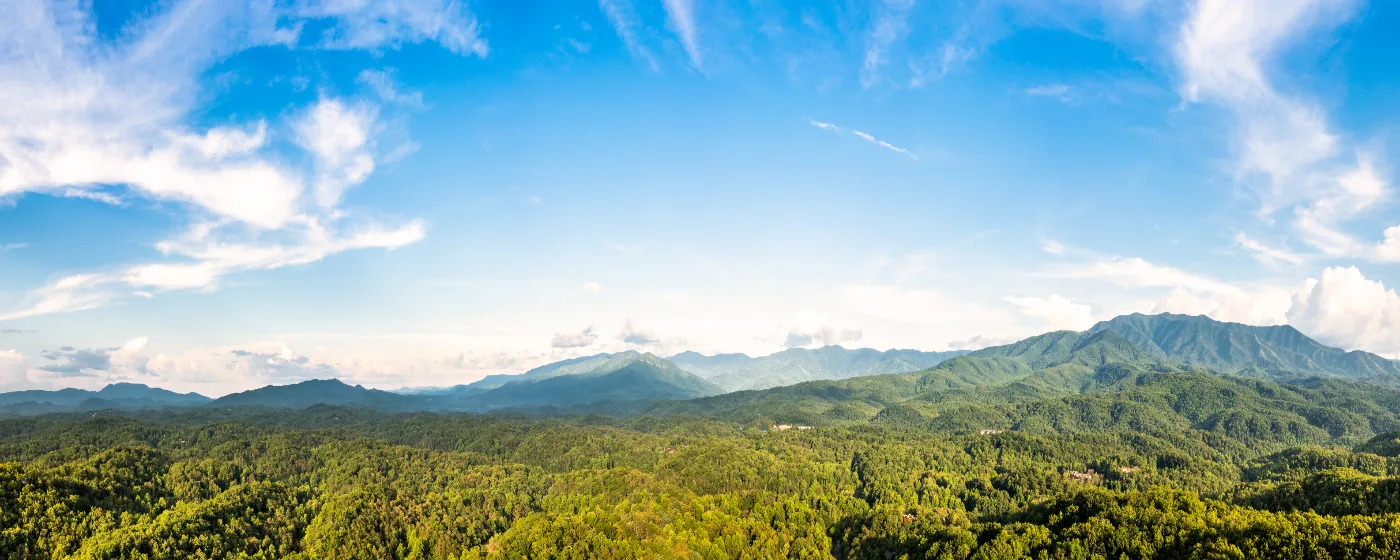
Most families researching a move to Gatlinburg focus first on the mountain setting and the tourism economy — the proximity to Great Smoky Mountains National Park, the Ober Gatlinburg slopes, Anakeesta. The schools tend to come up second. That ordering is worth flipping. Gatlinburg is a city of 3,715 permanent residents, and the school experience here is shaped less by district size than by the specific, tight-knit character of a community where nearly everyone knows the teachers by name. Your children won't be lost in a crowd of 3,000 classmates.
The Sevier County School System is the governing body here, and it spans a region that stretches well beyond Gatlinburg itself — 31 schools, Cognia-accredited, serving everything from the mountain hollows of Cosby to the busier corridors of Sevierville. The district holds a B rating, according to Niche, which puts it in solid mid-tier territory for Tennessee. With 14,054 students enrolled in 2024-25, the district is large enough to offer real program breadth — AP courses, dual enrollment, a full suite of Career and Technical Education pathways — while the Gatlinburg-area campuses themselves stay genuinely small.
On 2025-26 state assessments, 38.4% of students reached math proficiency and 38.3% reached reading proficiency at the district level. Those figures land below state and national averages, and families who prioritize standardized test performance above other factors should weigh that honestly. What the numbers don't capture: classes run small across the Gatlinburg-area campuses, and CTE pathways are built around East Tennessee's actual labor market — hospitality, health science, agriculture, construction — rather than generic electives. For a small mountain city, the academic infrastructure is more developed than most outsiders expect. For the cost of living context that shapes whether families can afford to stay long-term, that page covers the full picture.
Whether you're deciding between Gatlinburg and Pigeon Forge, or weighing private options in Knoxville against the local public schools, the sections below break down the Sevier County district, the three Gatlinburg-area campuses worth knowing by name, the youth sports landscape for kids who want to compete, and an honest accounting of who this district serves well — and who it doesn't.
Sevier County School System: The District at a Glance
The Sevier County School System operates 31 schools across one of Tennessee's most geographically varied counties — mountain communities, resort corridors, and mid-sized towns all feeding the same district. Every general-education school is accredited by Cognia, formerly known as AdvancED and the Southern Association of Colleges and Schools. That accreditation matters for families transferring transcripts or planning for college.
The district holds a B rating, according to Niche, and with 14,054 students enrolled in 2024-25, it has enough scale to offer academic programming that smaller rural districts in Tennessee often can't sustain. Advanced Placement courses, Dual Enrollment, State Dual Credit, and a full Career and Technical Education track are available at the high school level — including Gatlinburg-Pittman High, which serves Gatlinburg's permanent residents.
Classes run small across the Gatlinburg-area campuses. For parents who've moved from larger metro districts where crowded classrooms were standard, the difference becomes apparent quickly — and it tends to be the detail that sticks after families settle in.
| Metric | Sevier County / Gatlinburg |
|---|---|
| District accreditation | Cognia (all general-ed schools) |
| District Niche rating | B (Niche.com) |
| Total enrollment (2024-25) | 14,054 students |
| Math proficiency (2025-26 state assessments) | 38.4% |
| Reading proficiency (2025-26 state assessments) | 38.3% |
| High school programs | AP, Dual Enrollment, State Dual Credit, CTE |
| Number of schools in district | 31 |
on 2025-26 state assessments, 38.4% of students reached math proficiency and 38.3% reached reading proficiency — district-level figures that reflect a wide range of communities and schools. The Gatlinburg-area campuses are a distinct subset of that picture, shaped by the city's own demographics and the close teacher-student relationships that come with a small permanent population.
The Three Gatlinburg-Area Schools Worth Knowing
Pi Beta Phi Elementary School
Pi Beta Phi Elementary is the kind of school that has a story parents actually tell. Founded in 1910 as the Pi Beta Phi Settlement School — one of Appalachia's earliest settlement-school projects — it predates the national park that now defines the city's identity. The current public elementary school building went up in 1950 under Sevier County stewardship, and it serves grades PK through 6.
The school offers a Gifted and Talented program, which is notable for a campus its size. For families with academically accelerated children who'd otherwise assume they'd need to look toward Knoxville for enrichment, that program is worth asking about during any school visit. The campus's history gives it a local character that's hard to manufacture — the name alone carries more than a century of connection to this particular mountain community.
Best for: Families with children in elementary grades who value small-campus community, local history, and access to gifted-track programming within the public school.
Gatlinburg-Pittman Junior High School
This is the middle-grades campus for Gatlinburg students, and it's where the competitive side of school life begins to take shape. Gatlinburg-Pittman Junior High is a TSSAA (Tennessee Secondary School Athletic Association) member, which means organized athletics start here — not at the high school.
Incoming freshmen are assigned to the junior high campus before moving to the high school in grades 10 through 12. That structure gives parents a longer runway on the junior high side and keeps the high school itself genuinely small — which shapes both the classroom experience and the sports culture there.
Best for: Families navigating the middle school years who want a true community-scale campus before the transition to high school.
Gatlinburg-Pittman High School
The Highlanders — blue and gold — are the athletic and academic face of Gatlinburg's public high school. The school serves Gatlinburg, neighboring Pittman Center, and a portion of Cosby. With roughly 400 students across three grade levels, it's one of the smaller public high schools in Tennessee, and classes run lean enough that most students know their teachers well before the end of freshman year.
The academic program punches above its size. AP courses, Dual Enrollment, and State Dual Credit give motivated students a path to college credits before graduation. The CTE pathways are worth a close look: Hospitality and Tourism, Health Science Occupations, Architecture and Construction, Business Management, and Visual Arts are all offered — and they're aligned to the East Tennessee economy in a way that's more than coincidental. A student who completes a Hospitality and Tourism certification in Gatlinburg is walking out into one of the region's dominant industries.
Tennessee Secondary School Athletic Association athletics programs run across football, basketball, baseball, softball, and other sports. Friday night Highlander football is a community fixture — the kind of event where the stands fill with faces from across the city, not just parents of players. In a town this size, that matters more than any win-loss record.
Best for: High schoolers who thrive in a small-school environment, want real relationships with teachers, and are considering career-aligned certification alongside a traditional academic path.

Youth Sports and Kids Activities in Gatlinburg
Here's the honest version of the youth sports picture in Gatlinburg: the city itself, at 3,715 residents, does not run its own municipal recreation department with standalone youth leagues. Families here use county-level programs and neighboring-city leagues — and the infrastructure for that is solid, even if it means driving toward Sevierville or Pigeon Forge for some registration days.
Baseball and Softball
Smoky Mountain Youth Baseball (SMYB) is the rec-league anchor for the region, a county-wide program run jointly by Sevierville Parks and Recreation and Pigeon Forge Parks and Recreation. It's open to ages 3 through 12 and runs both spring and fall seasons. For a Gatlinburg family with a kid who wants to play ball, SMYB is where the first uniform comes from.
Basketball
Sevier County Junior League Basketball runs a county-wide recreational basketball program for school-age youth. Registration and schedules operate through the Exposure Basketball platform. The program covers the full range of elementary and middle school ages, and it draws from across the county — which means Gatlinburg kids are competing alongside children from Sevierville, Pigeon Forge, and the broader valley.
Soccer
Youth soccer in Sevier County operates through club organizations that use City of Sevierville facilities. Families in Gatlinburg looking for club-level soccer connect with those organizations, which serve the county as a whole. It's not a Gatlinburg-based league, but the access is real.
School-Based Athletics at Gatlinburg-Pittman
For children in the middle and high school years, the Gatlinburg-Pittman campuses bring athletics inside the school structure. Both the junior high and the high school are Tennessee Secondary School Athletic Association members, which means competitive middle-school sports begin as soon as students enter junior high. Football, basketball, baseball, and softball are all active programs. The Friday night Highlander football tradition is the community event most families mention first — it's where Gatlinburg gathers regardless of whether you have a child on the field.
The Outdoors as a Youth Activity Layer
This is where Gatlinburg differs from every other small Tennessee city its size. Great Smoky Mountains National Park sits at the edge of town, and trails like the Gatlinburg Trail and Laurel Falls Trail are genuinely accessible for children on foot. Ober Gatlinburg adds a seasonal layer — ski lessons in winter, amusement park programs in warmer months. Anakeesta runs activities geared toward families throughout the year. None of that replaces organized leagues, but families who move here often find that the outdoor activity layer fills a meaningful part of the after-school hours that organized sports cover elsewhere. The mountain setting is not just scenery — it's an active piece of how kids spend their time here.
Looking to buy in Gatlinburg? Estimate your payment.
Enter your numbers to see an estimated monthly mortgage payment.
Estimate only. Excludes HOA fees and mortgage insurance. The interest rate above is a starting point, not a quoted rate — replace it with your own to see real numbers. Insurance is a flat placeholder, not a Gatlinburg quote.
Beyond the Monthly Mortgage Payment — What to Factor In
- The property tax rate above — The 0.37% used in the estimate is the median effective rate — tax actually paid as a share of market value — published by Ownwell, 2026. Half of local homes pay more and half pay less: your own bill depends on that property's assessed value and any exemptions it qualifies for, which can differ a lot from its market price. Confirm with the Sevier County assessor before you budget.
- Total cost of ownership — Your monthly mortgage payment is just the baseline. Depending on the specific city, county, and service district, homeownership costs also include local utility fees, municipal surcharges, and special assessments (such as water, sewer, storm drainage, or local energy taxes) that vary by location.
- Independent due diligence — Because these recurring local costs and municipal fees change depending on the exact property address, buyers must research them independently during their transaction process.
Tax laws, local municipal fees, and utility costs change frequently and individual situations vary. This page is general information, not tax or legal advice — always consult a qualified tax professional, CPA, or local municipal offices for personalized guidance.
Academic Programs and College Readiness
For a high school as small as Gatlinburg-Pittman, the breadth of college-prep programming is worth spelling out. AP courses are available — not a guarantee in every rural Tennessee high school — alongside Dual Enrollment and State Dual Credit options that allow students to accumulate college credits before graduation. That access matters most to families who assume a small-town school means a limited academic ceiling.
The CTE pathways are the more distinctive story. Sevier County has built a Career and Technical Education program aligned to the actual East Tennessee economy, and Gatlinburg-Pittman reflects that directly. Hospitality and Tourism is a natural fit for a city where the major employers are Ripley's Aquarium, Ober Gatlinburg, Anakeesta, and the broader tourism industry. Health Science Occupations, Architecture and Construction, Agriculture Science, Business Management, Law and Public Safety, and Visual Arts round out the offerings — all carrying industry certification options.
A student who graduates with a CTE certification in Hospitality and Tourism from a school inside one of Tennessee's busiest tourism markets is entering the workforce with credentials that are immediately legible to local employers. That's a different kind of college-readiness calculation than AP credits, and for many families it's the more relevant one given where they're actually raising their children.
For families considering the full range of academic options in the broader region, the first-time homebuyer page covers how the school district factors into the purchase calculus for families weighing neighborhoods across Sevier County.
Who This District Is Not the Right Fit For
Honest evaluation means naming the gaps as clearly as the strengths. Sevier County holds a B rating, according to Niche, and on 2025-26 state assessments, 38.4% of students reached math proficiency and 38.3% reached reading proficiency. Those are district-level figures across 31 schools — but they are below both state and national proficiency benchmarks, and families for whom standardized academic performance is the primary filter should engage with that directly rather than assume the small-school feel compensates.
Families Who Prioritize Test-Score-Driven Districts
If your household decision about where to live is anchored to a district that performs at or above state average on proficiency assessments, Sevier County's current figures will give you pause. That's not a reason to dismiss the district — classroom relationships, teacher attention, and career-aligned programming have real value — but the proficiency numbers are what they are and families deserve to hear them plainly.
Families Seeking a Dense Enrichment Infrastructure Within Walking Distance
Gatlinburg itself, at 3,715 residents, does not have a standalone rec center, a dedicated youth sports hub, or club sports organizations based inside the city limits. Youth leagues mean driving to Sevierville or Pigeon Forge. Private enrichment options — tutoring centers, arts studios, competitive club sports — are sparse locally. Families who've come from a suburb where every enrichment layer was a ten-minute drive will feel that absence. It's manageable, but it requires planning and willingness to travel the county.
Families with Advanced Learners Seeking a Deep Gifted Track
Pi Beta Phi Elementary offers a Gifted and Talented program, which is meaningful at the elementary level. Beyond that, the academic enrichment infrastructure thins. Gatlinburg-Pittman High School offers AP courses, but a student who is exceptionally accelerated and looking for a deep gifted program spanning all grade levels may find the options limited compared to larger districts in Knoxville or Knox County. That's not a failing specific to Sevier County — it's the arithmetic of a small-city school system.
Families Expecting a Large High School Experience
With roughly 400 students across three grade levels, Gatlinburg-Pittman High School is among the smaller public high schools in Tennessee. Students who thrive in large-school environments — a broad extracurricular menu, a wide choice of sports, a large peer social pool — will find the scale constraining. The trade-off runs both ways: many families find that same smallness is exactly what their child needed. But it should be a deliberate choice, not a surprise.
Weekends and Local Favorites
Gatlinburg's weekends read differently depending on the season, and families who move here from mid-sized Tennessee cities often take a few months to calibrate to that rhythm. The tourist-facing parts of town — the Parkway, the area around Ripley's Aquarium of the Smokies and the Gatlinburg Space Needle — shift from quiet to crowded in ways that a first-time resident doesn't fully anticipate. Locals learn the difference between the shoulder months and peak season quickly.
The Arts and Crafts Trail and the broader studio community in the area east of town offer a version of Gatlinburg that families with school-age children often prefer — makers, galleries, and an outdoor pace that doesn't require competing with tour buses. The Gatlinburg Farmers Market brings a genuine local-gathering energy that's distinct from the commercial Parkway scene.
For coffee between school drop-off and the park, a handful of independent cafés serve the permanent-resident community rather than the tourist flow. Among the verified options: Coffee and Company, Painted Bear Coffee Co, Smoky Mountain Coffee and Creamery, Cuppa Gatlin Cafe, and Gatlinburg Grind each carry a local following. In a city this size, finding the regular spot happens fast.
Dinner options for families include a mix of longtime Gatlinburg institutions. Howard's Restaurant has been here longer than most — the signage calls it Gatlinburg's oldest restaurant, and the claim holds up. Crockett's Breakfast Camp handles morning meals. Ole Red, The Peddler Steakhouse, and Alamo Steakhouse anchor the dinner end of the dining scene. None of these require a reservation months in advance; they're the places where locals actually eat rather than the tourist-targeted options farther down the strip.
The outdoor layer is where Gatlinburg most distinguishes itself as a place to raise children. Chimney Tops Trail, Laurel Falls Trail, Cataract Falls, and the Gatlinburg Trail are all accessible enough for school-age kids. Ober Gatlinburg adds a ski and amusement dimension. Anakeesta draws families throughout the year. The park entrance sits at the edge of town — not a marketing claim, but a literal geographic fact that shapes how children here spend their afternoons in a way that no comparable Tennessee city can match.

Local Expert Takeaway: Sevier County holds a B rating, according to Niche, and the Gatlinburg-area campuses — Pi Beta Phi Elementary, Gatlinburg-Pittman Junior High, and Gatlinburg-Pittman High — run small enough that your child is genuinely known by their teachers. Classes run lean at the high school level, CTE pathways in Hospitality and Tourism and Health Science are real strengths, and Friday night Highlander football is the community event that binds the city together across grade levels. The honest counterweight: district-level proficiency scores run below state averages, youth leagues mean driving to Sevierville, and families who need a large-district enrichment infrastructure within the city limits won't find it here. Move here knowing both sides of that equation.
Quick Takeaways & FAQs
✅ Pi Beta Phi Elementary offers a Gifted and Talented program on a campus with more than a century of history in Gatlinburg — rare for a school its size.
⚠️ District-level math and reading proficiency on 2025-26 state assessments sits at 38.4% and 38.3%, respectively — below state and national averages, and worth weighing honestly before committing to the move.
📍 Youth sports leagues for Gatlinburg kids — baseball, basketball, and soccer — operate at the county level through Sevierville and Pigeon Forge programs, not through a Gatlinburg rec department, so expect a drive for registration days.
What school district serves Gatlinburg, Tennessee?
How does Sevier County School System rate overall?
How big is Gatlinburg-Pittman High School?
What youth sports are available for kids in Gatlinburg?
Does Gatlinburg-Pittman High School offer AP or college-prep courses?
Moving to Tennessee?
Tell us what you need help with and we'll connect you with local resources.
