
Buying your first home in Gatlinburg means stepping into one of the most unusual real estate markets in Tennessee. This is a city of 3,715 permanent residents sitting at the entrance to Great Smoky Mountains National Park — the most visited national park in the country, with more than 11.5 million recreation visits in 2025. That tourism economy shapes everything: the inventory, the prices, the competition, and the questions you need to ask before you make an offer. If you are coming here to put down roots rather than run a vacation rental, the market looks different than the headline numbers suggest.
Gatlinburg's economy runs on hospitality and recreation. Ripley's Aquarium of the Smokies, Ober Gatlinburg, Anakeesta, and the City of Gatlinburg itself are the major local employers, and the Sevier County school district — which holds a B rating, according to Niche — serves 14,054 students enrolled in 2024-25 across the broader county. Many residents who work outside tourism make the drive toward Knoxville or commute within Sevier County to Pigeon Forge or Sevierville. The buyer profile here is genuinely mixed: full-time residents, remote workers drawn by Tennessee's lack of a state income tax, and investors chasing short-term rental income all shop the same listings at the same time.
The cost of living picture has real advantages and real pressure points. Tennessee's effective property tax rate is well below the national median, and Sevier County's rate — at 0.37% effective — is lower still, which meaningfully reduces the annual carrying cost of a home here compared with most U.S. markets. The catch is that the median household income in Gatlinburg sits well below what it takes to carry the typical home price at current rates, so first-timers need to enter this market clear-eyed about their budget ceiling and realistic about what that ceiling actually buys.
Whether you are considering a move from Knoxville, leaving a rental in Pigeon Forge, or relocating from out of state entirely, the sections below walk through what the Gatlinburg first-time buyer market really looks like, how the process works step by step, how to frame your budget before you tour a single property, and the mistakes that most reliably derail first-timers here.
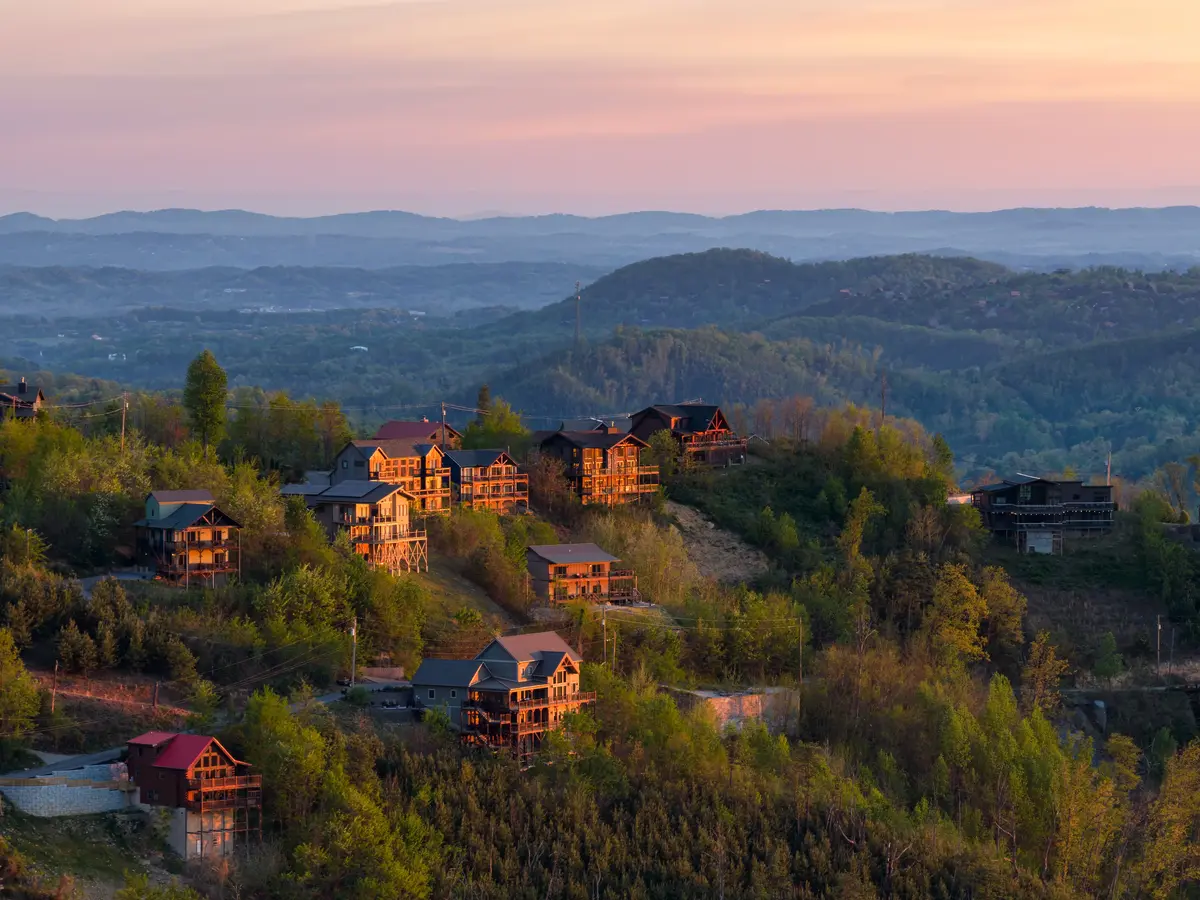
The Gatlinburg First-Time Buyer Reality
The Zillow Home Value Index puts the typical home price in Gatlinburg at $406,899 as of August 2026. That number, though, needs context before it means anything to a primary-residence buyer. Gatlinburg's listings pool is a genuinely mixed inventory: traditional residences compete side by side with high-end vacation cabins and short-term rental properties, and that mix skews the published figures meaningfully upward relative to what a full-time resident is actually purchasing. See the full breakdown on the cost-of-living page.
For a first-timer pursuing a primary residence, the realistic entry point sits below that figure — think older construction, smaller footprints, or properties farther from the Parkway corridor. The neighborhoods around Mynatt Park and Norton Creek tend to attract buyers looking for something that functions as a permanent home rather than a rental asset. Ski Mountain and Chalet Village carry a premium because those areas are where much of the short-term rental demand concentrates, which means investors frequently bid against first-time buyers for the same properties.
The affordability gap here is honest and worth naming directly: the median household income in Gatlinburg falls well short — by roughly $67,000 — of what is needed to carry the typical home at current rates. That does not mean buying is impossible for a first-timer, but it does mean that stretching to the upper end of your pre-approval letter is a different kind of risk here than it would be in a city where incomes and prices track more closely. Buyers who move here from Knoxville or from markets in other states often find the Smoky Mountain lifestyle genuinely worth the budget discipline it requires — but the discipline is real.
The Homebuying Process in Gatlinburg, Step by Step
Step 1: Get Pre-Approved Before You Look at a Single Listing
In Gatlinburg's tourism-driven market, well-priced primary-residence inventory at entry-level price points moves quickly. Sellers who have multiple offers — from investors paying cash alongside financed primary-residence buyers — will not wait for you to start your pre-approval after you fall in love with a cabin. Pre-approval is not a formality here; it is the difference between being a real buyer and an interested visitor.
Step 2: Define Whether You Are Buying a Primary Residence or an Investment
This is the step most first-timers skip, and it creates real problems later. If you plan to use a government-backed loan — FHA or USDA — the home must be your primary residence, and you cannot use those programs to purchase a property you intend to rent short-term from day one. The lender will ask, and the question has a legal answer. Decide your intent before you write an offer, not during underwriting.
Step 3: Work With an Agent Who Knows the STR Overlay
Gatlinburg's short-term rental zoning means that not every property you can buy can be legally operated as a rental — and the distinction matters even if you are buying purely as a primary residence, because it affects your resale market. An agent familiar with the city's zoning map is essential. Verify zoning with the city directly before going under contract, not afterward.
Step 4: Inspection and Appraisal — Don't Cut Corners
Mountain properties in Gatlinburg carry specific inspection considerations: slope stability, foundation performance on grades, roofline condition given snowfall, and the condition of well and septic systems on properties outside city water service. A thorough inspection matters more here than in a flat suburban market, and this is not the step to shortcut in pursuit of a faster close. The appraisal process on a mixed inventory — where cabins and residences are selling in the same neighborhood — can produce lender pushback if comps are weighted toward vacation-property sales. Expect your lender to ask questions about comp selection.
Step 5: Closing Costs Are 2–5% of the Purchase Price
Tennessee closing costs typically run between 2% and 5% of the purchase price. On a $350,000 purchase that is $7,000 to $17,500 in cash needed at the table on top of your down payment. First-timers who budget only for the down payment routinely arrive at closing short. Plan for the full range from the first day of your search.

How Much Home Can You Afford in Gatlinburg
The table below shows estimated cash needed at closing for several realistic Gatlinburg purchase scenarios. Closing costs are estimated at 3% of the purchase price — within the 2–5% range typical for Tennessee — as a planning baseline. The interactive calculator below the table lets you adjust the purchase price, down payment percentage, and other inputs to match your specific situation.
| Scenario | Purchase Price | Down Payment | Est. Closing Costs (3%) | Est. Cash Needed at Table |
|---|---|---|---|---|
| FHA (3.5%) — entry-level primary residence | $275,000 | $9,625 (3.5%) | $8,250 | ~$17,875 |
| Conventional (3%) — entry-level primary residence | $275,000 | $8,250 (3%) | $8,250 | ~$16,500 |
| FHA (3.5%) — near city-wide typical price | $350,000 | $12,250 (3.5%) | $10,500 | ~$22,750 |
| Conventional (3%) — near city-wide typical price | $350,000 | $10,500 (3%) | $10,500 | ~$21,000 |
| Conventional (5%) — mid-range primary residence | $406,899 | $20,345 (5%) | $12,207 | ~$32,552 |
| Conventional (10%) — mid-range, reduced PMI exposure | $406,899 | $40,690 (10%) | $12,207 | ~$52,897 |
All figures are estimates for planning purposes only. Your actual closing costs will vary based on lender fees, title charges, prepaid items, and whether any costs are negotiated into the contract. Use these rows as a floor for your cash reserve, not a ceiling.
Tennessee's 0.37% effective property tax rate is well below the national median, which meaningfully lowers the annual carrying cost compared with most markets buyers relocate from. That advantage is real — but it does not close the gap between the city's median household income and what it takes to carry a home at the typical price point here. Build your budget from your actual pre-approved loan amount, not from the typical home price headline.
Looking to buy in Gatlinburg? Estimate your payment.
Enter your numbers to see an estimated monthly mortgage payment.
Estimate only. Excludes HOA fees and mortgage insurance. The interest rate above is a starting point, not a quoted rate — replace it with your own to see real numbers. Insurance is a flat placeholder, not a Gatlinburg quote.
Beyond the Monthly Mortgage Payment — What to Factor In
- The property tax rate above — The 0.37% used in the estimate is the median effective rate — tax actually paid as a share of market value — published by Ownwell, 2026. Half of local homes pay more and half pay less: your own bill depends on that property's assessed value and any exemptions it qualifies for, which can differ a lot from its market price. Confirm with the Sevier County assessor before you budget.
- Total cost of ownership — Your monthly mortgage payment is just the baseline. Depending on the specific city, county, and service district, homeownership costs also include local utility fees, municipal surcharges, and special assessments (such as water, sewer, storm drainage, or local energy taxes) that vary by location.
- Independent due diligence — Because these recurring local costs and municipal fees change depending on the exact property address, buyers must research them independently during their transaction process.
Tax laws, local municipal fees, and utility costs change frequently and individual situations vary. This page is general information, not tax or legal advice — always consult a qualified tax professional, CPA, or local municipal offices for personalized guidance.
Common First-Time Buyer Mistakes in Gatlinburg
Mistake 1: Treating the Listed Median as Your Target Price
The typical home price of $406,899 (August 2026) is weighted upward by the vacation cabin and short-term rental inventory that fills Gatlinburg's listings. A first-timer buying a primary residence is shopping a subset of that market, and the entry points for that subset are lower. Buyers who anchor to the headline figure often overbid on properties that are priced for investors, not residents. Know which pool you are in before you set a ceiling.
Mistake 2: Waiving the Inspection to Win a Competitive Offer
On steep-grade lots, older cabin-style construction, and properties served by private well and septic systems, an inspection waiver is a genuinely dangerous concession. The topography around Ski Mountain and Chalet Village creates foundation and drainage considerations that a flat-market buyer would never encounter. A failed septic system or an unstable slope is a five-figure problem at minimum. If you are competing against a cash buyer who waives inspection, the answer is not to match them — it is to find a property where you are not in that competition.
Mistake 3: Not Verifying Short-Term Rental Zoning Before the Offer
Even buyers who have no intention of operating a short-term rental need to understand Gatlinburg's zoning map, because it affects resale value. A property in a zone that prohibits short-term rentals has a meaningfully smaller buyer pool when you eventually sell. Confirm the zoning with the city directly — not from the listing agent's description, not from an online zoning map that may not reflect the current ordinance. Short-term rental rules here can vary by zone and are subject to city revision; confirm the current ordinance before you go under contract.
Mistake 4: Underestimating the Cash Needed at Closing
First-timers consistently budget for the down payment and forget the closing costs. In Tennessee, those costs typically run 2–5% of the purchase price — which on a $300,000 home means up to $15,000 in additional cash beyond your down payment. Prepaid items (homeowners insurance, initial escrow deposits) add further. Buyers who arrive at closing with exactly their down payment saved frequently have to delay or renegotiate. Plan for the full 2–5% range as a separate line item from the day you start saving, and do not count on the seller covering all of it unless your contract explicitly says so.
Local Expert Takeaway: Gatlinburg rewards first-time buyers who do their homework before they fall in love with a property. The mixed inventory — vacation cabins, short-term rental investments, and genuine primary residences all in the same search results — means you need a clear definition of what you are buying and why before you tour anything. Get pre-approved first, verify zoning on every property that interests you, and budget for the full 2–5% closing cost range on top of your down payment. Tennessee's 0.37% effective property tax rate is a genuine long-term advantage, and the lack of state income tax stretches take-home pay. But the income-to-price gap here is real, and the buyers who do best are the ones who shop within their pre-approved ceiling rather than against the headline median.
Quick Takeaways & FAQs
✅ Tennessee's 0.37% effective property tax rate and no state income tax make the long-term carrying cost of a Gatlinburg home meaningfully lower than most U.S. markets.
⚠️ The typical home price of $406,899 (August 2026) is weighted upward by vacation cabin and short-term rental inventory — first-timers pursuing a primary residence are often shopping a lower price band within that figure.
📍 Verify short-term rental zoning with the city before making any offer in Gatlinburg — it affects not just your use of the property today but your resale pool years from now.
What credit score do I need to buy a home in Gatlinburg, Tennessee?
Can I buy a home in Gatlinburg as a primary residence and also use it as a short-term rental?
How much should I budget for closing costs when buying in Gatlinburg?
Is Gatlinburg a good place to buy a first home for a primary residence, or is it mostly an investor market?
How does Gatlinburg's home price compare to nearby cities like Pigeon Forge and Sevierville?
Moving to Tennessee?
Tell us what you need help with and we'll connect you with local resources.
