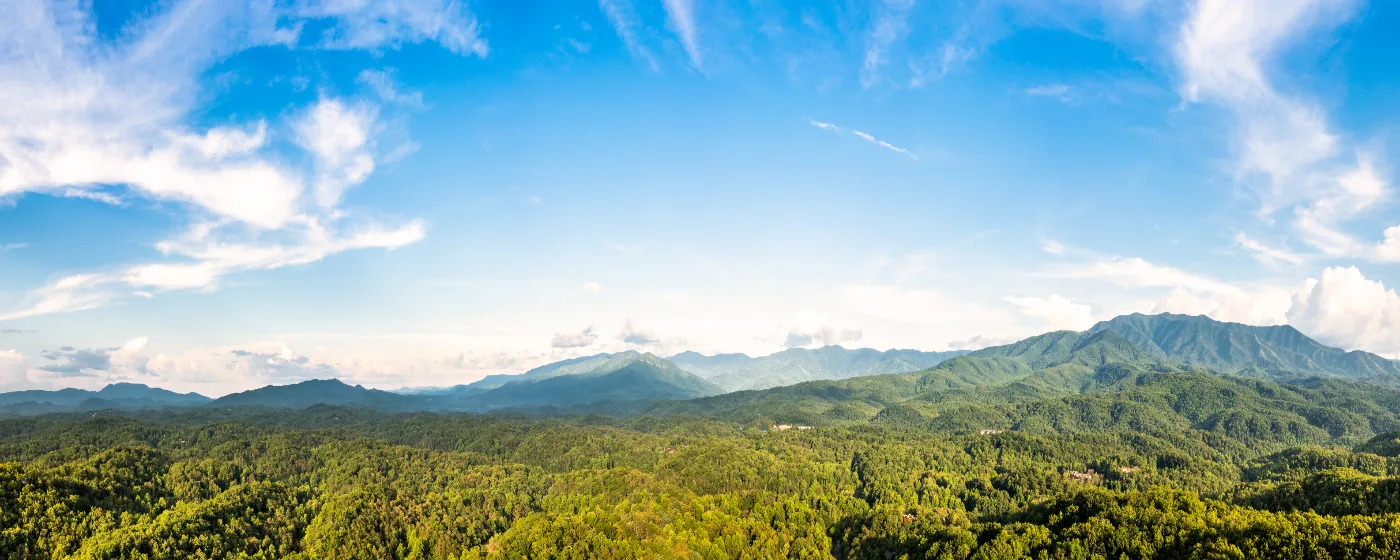
Gatlinburg has a population of 3,715 permanent residents — and on a busy fall weekend, it hosts hundreds of thousands of tourists. That gap is the central reality of buying here. You are not choosing between neighborhoods so much as choosing your relationship to the tourism economy: how close to the Parkway noise you can tolerate, how much elbow room you want from rental cabins, and whether you need a quiet street where school buses run or a mountain perch where you may never see a neighbor. The answers point to very different parts of the same small city.
The economic engine is pure hospitality. Ripley's Aquarium of the Smokies, Ober Gatlinburg, Anakeesta, and the City of Gatlinburg itself are the dominant employers, and nearly every business on the Parkway feeds off the 12 million annual visitors to Great Smoky Mountains National Park. The Sevier County school district — which holds a B rating, according to Niche — serves 14,054 students enrolled in 2024-25 across the county, and that broader district is what Gatlinburg's school-age families plug into. People who buy here full-time tend to fall into two groups: those who work directly in tourism and want a short commute, and remote workers or retirees who want the mountains without paying Blue Ridge or Asheville prices.
The Zillow Home Value Index puts the typical home price at $406,899 as of August 2026 — a figure shaped heavily by vacation-rental demand and the short-term-rental economy rather than traditional residential supply and demand. That matters because a cabin listed for $450,000 may be priced as an income property, not a starter home, and the median household income in Gatlinburg runs well below the income needed to comfortably carry the typical purchase price here. For more on how that gap plays out in your budget, the cost of living page goes deeper. Day-to-day life rewards people who love the outdoors: 205 sunny days a year, hiking from your back door into the national park, and a community that genuinely gathers around the mountains rather than treating them as a backdrop.
Whether you are relocating for work, buying a second home, or making a permanent move after years of visiting, the sections below break down each of Gatlinburg's eight neighborhoods by character, trade-offs, and buyer fit — plus the mistakes that trip up buyers who don't know this market before they make an offer.
The Gatlinburg Reality
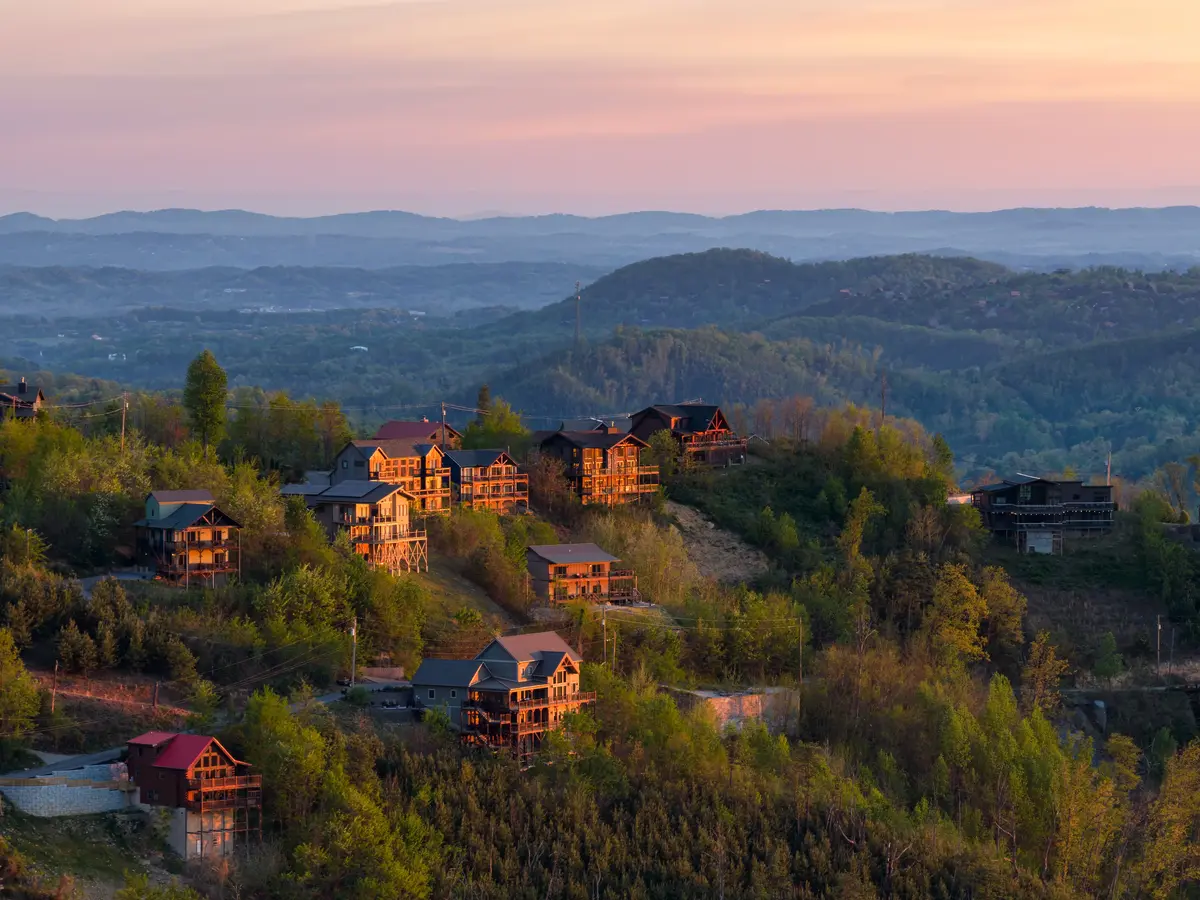
The divide that matters most in Gatlinburg is not east versus west — it is elevation and distance from the Parkway. The Parkway (US-441) is simultaneously the city's main street, its tourist strip, and its biggest noise source. Neighborhoods that sit directly on or within a block of it experience year-round foot traffic, summer gridlock, and the kind of ambient roar that doesn't quit until late October. Neighborhoods that climb into the ridges or push out along US-321 (East Parkway) trade that energy for quiet — but they also trade walkability and, in some cases, road safety, since mountain roads don't forgive distracted driving.
The second divide is between communities built around vacation rental income and those that function as genuine residential neighborhoods. Cobbly Nob, Ski Mountain, and Chalet Village all carry a heavy mix of short-term rental cabins alongside owner-occupied homes. That affects everything from neighbor consistency to HOA culture to how easily a lender reads the purchase. Buyers who want neighbors who actually live there year-round — kids on bikes, someone to call if there's a problem — tend to find that in Mynatt Park, Norton Creek, and parts of the Arts & Crafts Community rather than the ridge-top resort areas.
School boundaries are less of a sorting mechanism here than in most cities of similar size, simply because Gatlinburg is so small that most students feed into the same Sevier County system. What does sort buyers sharply is proximity to the national park entrance: several neighborhoods border Great Smoky Mountains National Park directly, and that border determines whether your morning run starts with pavement or trail. That distinction — resort community versus residential neighborhood versus national park adjacency — is the framework for everything that follows.
Neighborhoods at a Glance
| Neighborhood | Best For | Vibe |
|---|---|---|
| Chalet Village / Chalet Village North | Views Privacy | Historic mountain resort community; large lots, mature trees, HOA pools, national park on three sides |
| Ski Mountain | Nature Luxury | Ridge-top access road to Ober Gatlinburg; dramatic elevation, resort-adjacent, heavily vacation-rental |
| Cobbly Nob | Privacy Quiet | Gated resort community 12–13 miles out along US-321; golf-course adjacent, 24-hour security, secluded |
| Arts & Crafts Community (The Glades) | Walkable Value | 8-mile artisan loop east of downtown; creative atmosphere, Trolley-served, residential pockets amid studios |
| Downtown / Parkway | Walkable Commuter | Maximum urban convenience; tourism energy at your door, national park entrance steps away |
| Roaring Fork | Nature Privacy | Wooded east-side corridor; rhododendron and red oaks, direct national park access, minimal tourist traffic |
| Mynatt Park | Families Quiet | Peaceful creek-side neighborhood; city park with fishing stream and tennis courts, Trolley stop, park-adjacent |
| Norton Creek | Families Value | Friendly, well-maintained residential enclave south of the Parkway; walkable to amenities without the noise |
Gatlinburg typical home price: $406,899 (Zillow ZHVI, August 2026). Neighborhood tiers on this page are relative to these figures.

Best Neighborhood by Buyer Type
| Buyer Type | Best Neighborhood | Why |
|---|---|---|
| First-Time Buyer | Norton Creek | Residential feel, manageable scale, and proximity to the Parkway corridor without the full resort-market premium. |
| Luxury Buyer | Chalet Village / Chalet Village North | Historic resort pedigree, large wooded lots, HOA amenities, and some of the best sustained mountain views in Gatlinburg. |
| Walkability Seeker | Downtown / Parkway | The only neighborhood where you can reach Ripley's Aquarium, the national park entrance, and a coffee shop without a car. |
| Families with Kids | Mynatt Park | A dedicated city park with a children's fishing stream, tennis courts, and a Trolley stop, all within walking distance of school-day routines. |
| Commuters | Arts & Crafts Community (The Glades) | East of downtown along US-321, it keeps you out of the worst Parkway congestion while staying Trolley-accessible for errands. |
| Large-Lot Buyers | Cobbly Nob | Gated, golf-course-adjacent, 12–13 miles from the tourist core — the most physical separation from Parkway life you can get while still being in Gatlinburg. |
| Renters | Downtown / Parkway | The highest density of rental supply in the city; short-term and longer-term units compete for tenants in the same corridor. |
Looking to buy in Gatlinburg? Estimate your payment.
Enter your numbers to see an estimated monthly mortgage payment.
Estimate only. Excludes HOA fees and mortgage insurance. The interest rate above is a starting point, not a quoted rate — replace it with your own to see real numbers. Insurance is a flat placeholder, not a Gatlinburg quote.
Beyond the Monthly Mortgage Payment — What to Factor In
- The property tax rate above — The 0.37% used in the estimate is the median effective rate — tax actually paid as a share of market value — published by Ownwell, 2026. Half of local homes pay more and half pay less: your own bill depends on that property's assessed value and any exemptions it qualifies for, which can differ a lot from its market price. Confirm with the Sevier County assessor before you budget.
- Total cost of ownership — Your monthly mortgage payment is just the baseline. Depending on the specific city, county, and service district, homeownership costs also include local utility fees, municipal surcharges, and special assessments (such as water, sewer, storm drainage, or local energy taxes) that vary by location.
- Independent due diligence — Because these recurring local costs and municipal fees change depending on the exact property address, buyers must research them independently during their transaction process.
Tax laws, local municipal fees, and utility costs change frequently and individual situations vary. This page is general information, not tax or legal advice — always consult a qualified tax professional, CPA, or local municipal offices for personalized guidance.
Most Popular Neighborhoods
Chalet Village / Chalet Village North
One of Gatlinburg's oldest resort communities, with original cabins dating to the 1950s, Chalet Village sits with Great Smoky Mountains National Park pressing in on three sides — which means the views are exceptional and the surrounding land won't be developed, but it also means wildlife visits are routine and wildfire risk is a real insurance consideration. The HOA provides access to two clubhouses and swimming pools, which sets it apart from most Gatlinburg communities, and the lots are unusually large for a mountain resort area. The catch: many of the homes here serve double duty as short-term rentals, so full-time ownership can feel like living inside a hotel's parking lot during peak season.
Best for: Buyers who want established mountain character, HOA structure, and national park adjacency without going fully off-grid.
Ski Mountain
Ski Mountain runs along Ski Mountain Road toward Ober Gatlinburg — Tennessee's only ski area — and the elevation gives buyers dramatic views and genuine distance from the Parkway noise. The Gatlinburg Aerial Tramway connects the resort to downtown, which sounds convenient until you realize the tramway serves tourists first and residents incidentally. The road up is steep, the vacation-rental density is high, and any full-time buyer here is choosing mountain drama over neighborhood normalcy.
Best for: Second-home buyers or short-term-rental investors who want resort proximity and don't need a community of year-round neighbors.
Cobbly Nob
Cobbly Nob is gated, 24-hour secured, and adjacent to Bent Creek Golf Course — about 12 to 13 miles from downtown Gatlinburg along US-321 (East Parkway). Three outdoor swimming pools, a clubhouse, and pickleball courts give it genuine amenity depth, and the location near the Greenbrier and Cosby entrances to Great Smoky Mountains National Park means far fewer people on those trails. The distance from the Parkway is a real trade-off for anyone without reliable remote-work flexibility or a local employer: that drive adds up fast on a daily basis, and road conditions on the mountain approaches change quickly in winter.
Best for: Buyers who want gated security, a golf-and-pool lifestyle, and the quieter side of the national park without downtown's noise.
Arts & Crafts Community (The Glades)
The Glades stretches along an 8-mile loop about 3 miles east of the main Parkway via US-321 (East Parkway), Glades Road, and Buckhorn Road — home to over 100 studios where potters, weavers, and woodworkers have been selling directly from their workshops since 1937, many of them multi-generation craftspeople. The Gatlinburg Trolley serves the loop, which gives car-free access to downtown when traffic backs up. Residential pockets here offer a genuinely different atmosphere from the resort corridors, but buyers should know this is still tourist territory: weekend foot traffic on the loop is steady, and the creative calm of a Tuesday evaporates on a Saturday in October.
Best for: Buyers drawn to creative community texture who want east-of-downtown positioning without the isolation of the upper ridges.
Downtown / Parkway
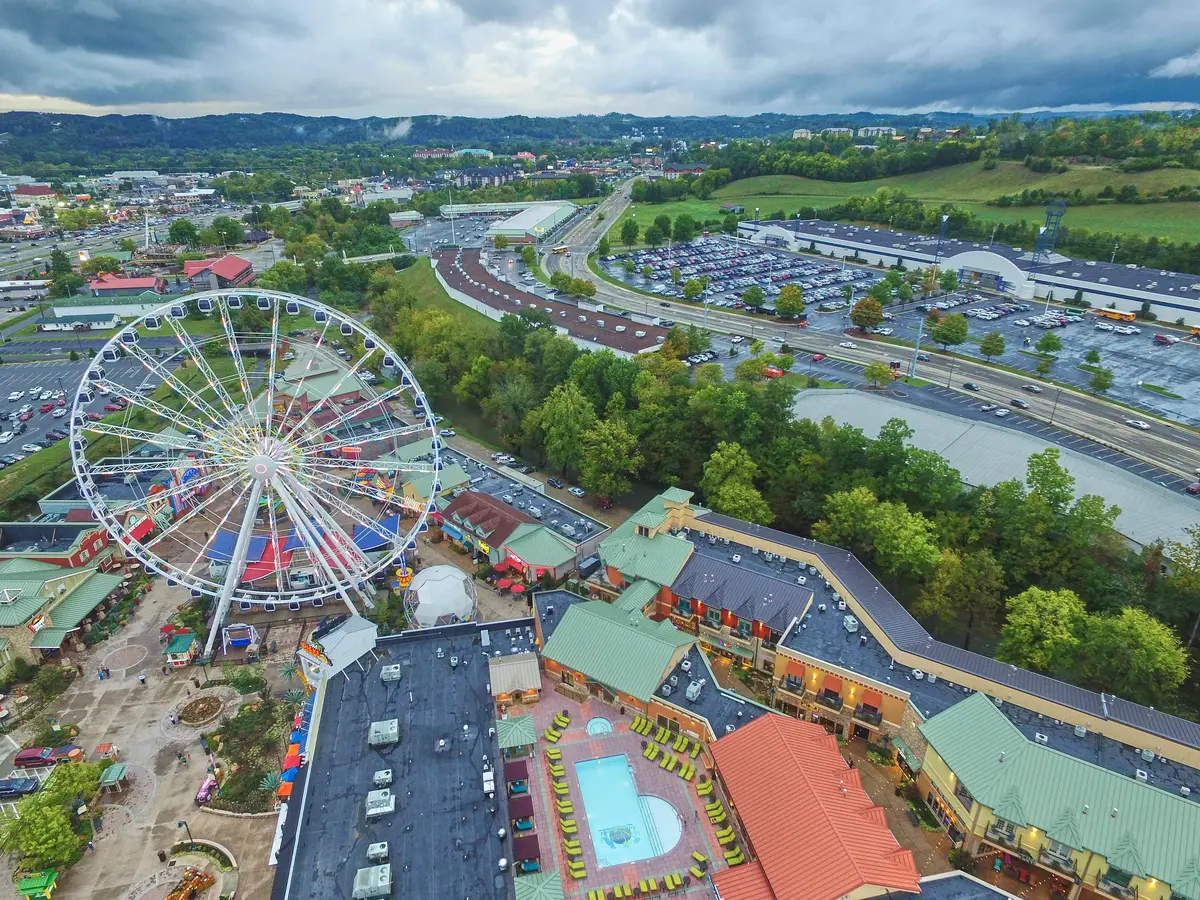
Living downtown puts you within walking distance of Ripley's Aquarium of the Smokies, Anakeesta, the Gatlinburg Space Needle, and the Great Smoky Mountains National Park entrance — a level of on-foot access that nowhere else in the city offers. The honest cost of that position is noise: summer weekends on the Parkway are relentless, and the tourist economy doesn't wind down until late evening. Residential supply here is thin and tends to be priced as investment property rather than primary residence, which shapes both what's available and what lenders see when they evaluate the purchase. For more on what the city-wide typical home price means in this context, see the cost of living breakdown.
Best for: Buyers who want maximum walkability and proximity to attractions, and have the temperament for year-round tourist energy at their doorstep.
Roaring Fork
Roaring Fork is Gatlinburg's quietest residential corridor — a wooded east-side pocket where the Roaring Fork Motor Nature Trail enters Great Smoky Mountains National Park just beyond the neighborhood edge. Rhododendron and red oaks replace souvenir shops, and the contrast with the Parkway is immediate. The limitation is the same thing that makes it appealing: the road in is a mountain road, the one-way nature trail through the park limits routing options, and buyers without a strong tolerance for genuinely rural living sometimes discover they miss the conveniences they gave up.
Best for: Nature-first buyers who want to live inside the forest atmosphere of the national park rather than near it.
Mynatt Park
Mynatt Park neighborhood sits along LeConte Creek, minutes from downtown, and the city park it's named for earns its local reputation: ADA-accessible paths, a children's fishing stream, the Don Watson Tennis Center, basketball and pickleball courts, and the 2016 Wildfires Memorial and Tribute Plaza all share the grounds. The Gatlinburg Trolley stops here, and the Twin Creeks Trail system puts national park hiking within genuine walking distance. For families with school-age children, this is the most conventionally livable neighborhood in the city — though "livable" in Gatlinburg still means summer tourist traffic spills into nearby streets during peak weeks.
Best for: Families with kids who want park-adjacent living, Trolley access, and a genuine neighborhood feel rather than a resort-community dynamic.
Norton Creek
Norton Creek sits south of the Parkway in one of the quieter residential pockets Gatlinburg offers, and residents consistently describe it as friendly, well-maintained, and more grounded than the resort corridors up the mountain. Proximity to both the commercial Parkway and natural areas gives it a middle-ground position that appeals to full-time residents who don't want to fight tourist gridlock to get to the grocery store. It's not immune to seasonal spillover — no Gatlinburg neighborhood is — but the residential character is more consistent here than in the vacation-rental-heavy ridge communities.
Best for: Full-time residents, remote workers, and buyers who want a real neighborhood rather than a resort community converted to year-round living.
Common Mistakes Buyers Make in Gatlinburg
Assuming the Whole City Feels Like the Parkway
First-time buyers who visit during peak season often assume Gatlinburg is uniformly loud, congested, and tourist-saturated. That reading is wrong, and it costs buyers options. Roaring Fork, Mynatt Park, and Norton Creek run at a fundamentally different pace from the Parkway corridor — quieter streets, lower tourist density, and residents who live there rather than check out. Buyers who write off the city after one walk down the main strip miss the neighborhoods that actually function as homes.
Underestimating the Cobbly Nob Commute
Cobbly Nob's gated amenities and lower ambient noise make it genuinely attractive, but its 12-to-13-mile distance from downtown Gatlinburg via US-321 (East Parkway) is not a neutral fact. When tourist traffic backs up on the Parkway and US-321 in summer and fall — which it does, reliably — that commute stretches considerably. Buyers who need to commute to Pigeon Forge, Sevierville, or Knoxville (about 45 minutes to Knoxville under normal conditions) should map the daily reality before falling for the gated-community appeal.
Pricing a Cabin as a Home Rather Than an Investment
Much of Gatlinburg's housing stock is priced with short-term rental income baked into the ask. A three-bedroom cabin on Ski Mountain Road that lists at a premium often carries that number because a prior owner ran it as a vacation rental, not because it reflects what a full-time buyer would bid for the same square footage in a residential market. Buyers who compare square-footage prices here against Sevierville or the residential parts of Pigeon Forge without adjusting for the income-property premium routinely overpay. The first-time homebuyer page covers the financing nuances this creates.
Ignoring the Wildfire and Weather Layer
The 2016 Chimney Tops wildfires destroyed or damaged over 2,400 structures in Gatlinburg and the surrounding area, and the national park adjacency that makes neighborhoods like Chalet Village and Roaring Fork appealing is also what makes them more exposed. Insurance costs and availability in these corridors vary more than buyers from flat-terrain markets expect, and the mountain road access that feels scenic on a summer afternoon becomes a genuine consideration during winter ice events or active fire conditions. Ask specifically about insurance history on any property that borders the national park before making an offer.
Best Areas to Rent in Gatlinburg
| Area | Ideal For | Trade-off |
|---|---|---|
| Downtown / Parkway | Tourism-industry workers, people who want walkable access to everything | Constant seasonal noise; rental units often cycle between short-term and long-term use, making availability unpredictable |
| Mynatt Park | Families, remote workers who want a quieter base near the park | Limited rental inventory; what's available gets leased quickly to longer-term tenants |
| Norton Creek | Full-time residents who want a residential feel without a mountain commute | Smaller rental pool than the resort corridors; fewer units purpose-built for long-term tenancy |
| Arts & Crafts Community (The Glades) | Renters who want east-of-downtown positioning and creative surroundings | Most of the housing stock here is owner-occupied or short-term-rental cabins; true long-term leases are scarce |
| Chalet Village / Ski Mountain | Seasonal workers, short-term-rental tenants, or those open to furnished cabin leases | The overwhelming majority of available units target vacationers; month-to-month or annual leases are exceptions rather than the norm |
Renting in Gatlinburg is genuinely harder than buying, not easier — the short-term-rental economy has absorbed most of the housing stock that would otherwise serve long-term tenants, and traditional apartment supply in a city of 3,715 residents is thin by definition. Renters with flexible timing and a willingness to take a cabin lease originally marketed to vacationers will find more options than those searching for a conventional apartment lease.
Local Expert Takeaway: The buyers who navigate Gatlinburg's market well are the ones who visit in November, not July — when the leaf-peeper crowds thin out, the Parkway noise drops to something livable, and the actual residential character of Mynatt Park, Norton Creek, and the Arts & Crafts Community becomes readable. If you're weighing a full-time purchase here, spend a weeknight in the neighborhood you're considering, not a Saturday in peak season. The city's size (3,715 residents) means community is close, the Sevier County school district gives families a B-rated system to work with, and the national park at your back door is not a marketing slogan — it is literally where the road ends and the trail begins.
Quick Takeaways & FAQs
✅ Gatlinburg's national park adjacency is real and immediate — several neighborhoods border Great Smoky Mountains National Park directly, making trail access a genuine daily amenity rather than a weekend drive.
⚠️ Most of the housing stock here is priced with vacation-rental income in mind, not full-time residency — buyers who don't account for that premium routinely pay more than the residential market would otherwise support.
📍 The Mynatt Park neighborhood is the most conventionally livable corner of the city for families, with a city park featuring a children's fishing stream, tennis and pickleball courts, and a Gatlinburg Trolley stop all within walking distance.
What is the best neighborhood in Gatlinburg for full-time residents?
Is Chalet Village a good place to buy in Gatlinburg?
How far is Cobbly Nob from downtown Gatlinburg?
Can you walk to things from a Gatlinburg neighborhood?
What should I know about wildfire risk when buying in Gatlinburg?
Moving to Tennessee?
Tell us what you need help with and we'll connect you with local resources.
