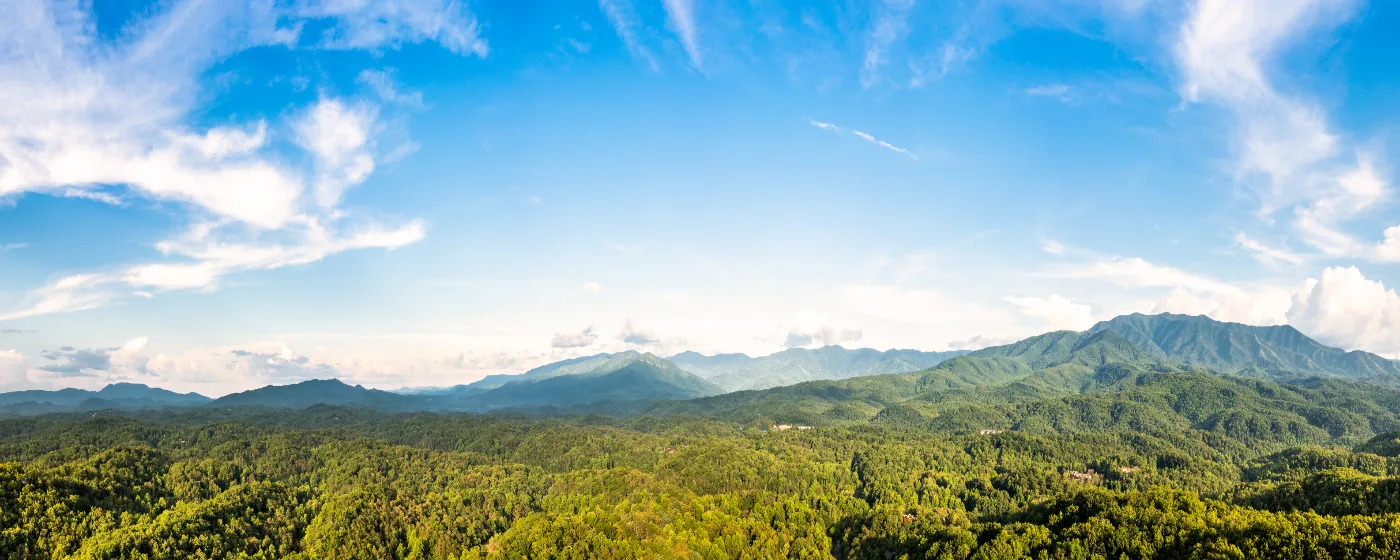
Every safety search on Gatlinburg eventually hits the same wall: numbers that look alarming until you understand how they are calculated. Gatlinburg has a permanent population of 3,715 — smaller than many subdivisions — but it absorbs millions of tourists every year through the gateway to Great Smoky Mountains National Park. When a city that size is the denominator and millions of visitor-days are the numerator, per-capita crime rates inflate in ways that can genuinely mislead someone trying to decide whether to buy a home here. Reading those numbers without that context is one of the most common mistakes prospective residents make when researching this city.
The authoritative figures tell a more grounded story: Gatlinburg carries a violent crime rate of 1.88 per 1,000 residents and a property crime rate of 5.69 per 1,000 residents. For comparison, Tennessee's state violent crime rate sits at 6 per 1,000 and the national violent crime rate at 3.7 per 1,000; the state property crime rate is 20.8 per 1,000 and the national figure 18.4 per 1,000. On both metrics, Gatlinburg comes in well below state averages and below or near the national figures — a picture that looks very different from the heat maps some aggregator sites put out. For a full look at what daily costs and cost of living look like in this city, that page breaks it down in detail.
Safety in Gatlinburg, though, is not only a crime question. Mountain terrain, wildfire exposure, creek flooding, and black bear activity all shape the experience of living here in ways that a standard crime index will never capture. The 2016 Chimney Tops wildfire — which killed 14 people and destroyed more than 2,400 structures — is part of the city's lived memory, not a distant abstraction. Understanding Gatlinburg's real risk profile means accounting for all of it.
Whether you are weighing a permanent move, a second home, or just trying to separate tourist-website optimism from reality, the sections below break down Gatlinburg's crime data, neighborhood safety differences, policing infrastructure, and the natural hazards that matter as much as any crime statistic.
Reading the Numbers: Why Gatlinburg's Crime Rates Look Different Online
| Measure | Gatlinburg | Tennessee | National | vs. national |
|---|---|---|---|---|
| Violent crime (per 1,000) | 1.88 | 6 | 3.7 | 49% lower |
| Property crime (per 1,000) | 5.69 | 20.8 | 18.4 | 69% lower |
State and national figures — Bureau of Justice Statistics, Crime Known to Law Enforcement, 2024 (tables 2 and 3). City figures — DoorProfit crime statistics (FBI-based estimate), 2026. City rates come from a different reporting series than the state and national benchmarks, so read the comparison as a direction, not a precise multiple.
No other factor distorts Gatlinburg's safety picture more than the tourist-population denominator problem. The city's 3,715 permanent residents are the base against which all crime incidents are measured — but the people present on any given summer weekend outnumber that figure many times over. When incidents happen in tourist-heavy zones, the per-capita rate spikes in a way that has little to do with the risk a resident faces in day-to-day life.
The official figures tell the clearest story available: a violent crime rate of 1.88 per 1,000 residents and a property crime rate of 5.69 per 1,000 residents. Both sit well below Tennessee's state rates and compare favorably against national benchmarks.
Third-party aggregators — NeighborhoodScout, CrimeGrade, AreaVibes, and others — sometimes report figures that look dramatically higher. The reason is methodological: different services use different denominators, different weighting systems, and different definitions of which incidents to count. None of those figures replace the official crime-reporting series data above, and comparing them directly produces gaps that look meaningful but are really just arithmetic artifacts. This page shows a comparison table immediately below this section using the authoritative figures; that is the number set to use. Checking a specific address on one of those aggregator sites is still a useful step — just read their methodology before treating a letter grade as a verdict.
One data point worth holding onto: the most recent annual data recorded zero murders in Gatlinburg. Larceny and theft — the category most concentrated in tourist retail zones — is the most common property crime sub-type, and vehicle theft is among the rarest. That profile is consistent with what you'd expect from a small city managing large visitor flows, not a city with a crime problem rooted in its residential fabric.
Neighborhood-by-Neighborhood Safety Picture
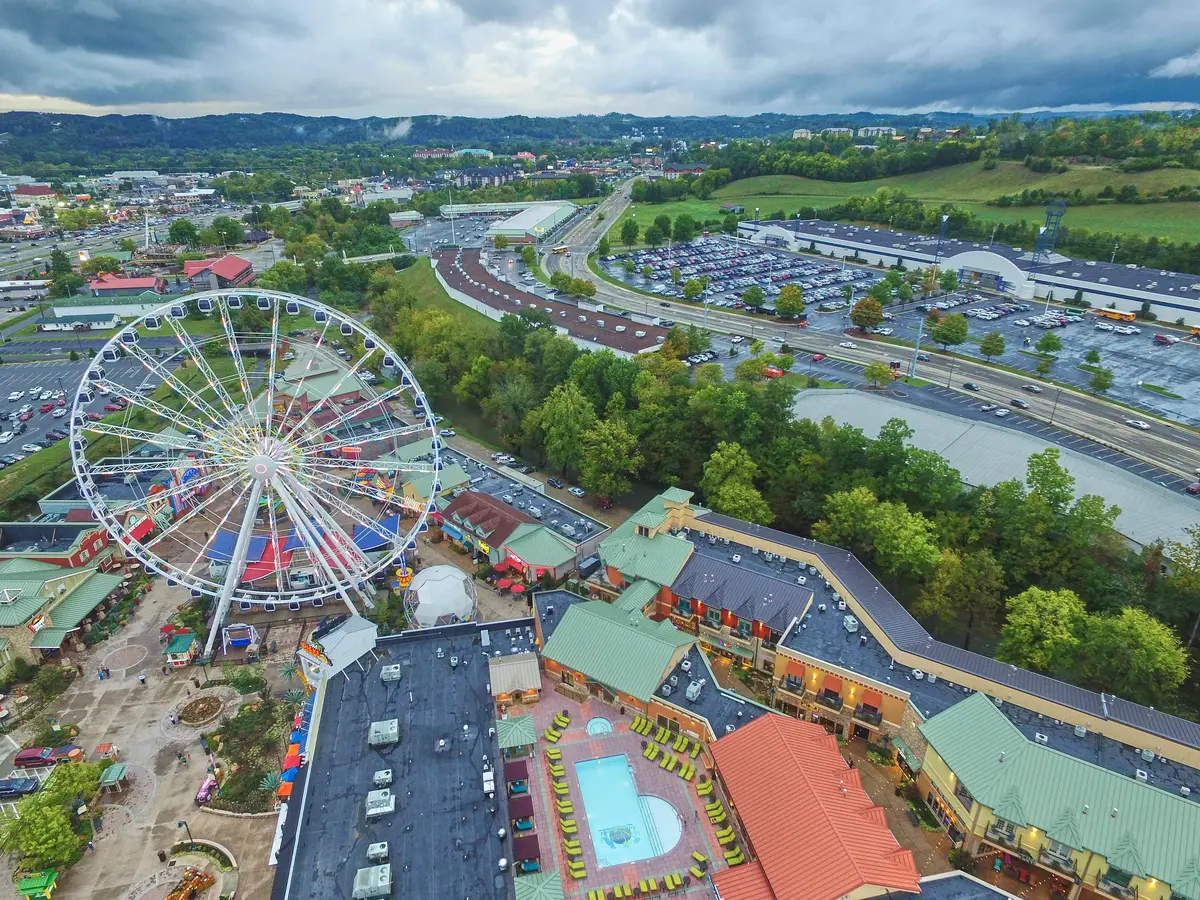
Where in Gatlinburg you live matters more than the city-wide average suggests. The commercial spine running along the Parkway through downtown accounts for the highest reported incident counts — not because residents there face elevated personal risk, but because that corridor is where the density of people, retail, and tourist activity is greatest. Crime maps that show that zone in red are reflecting footfall, not neighborhood character.
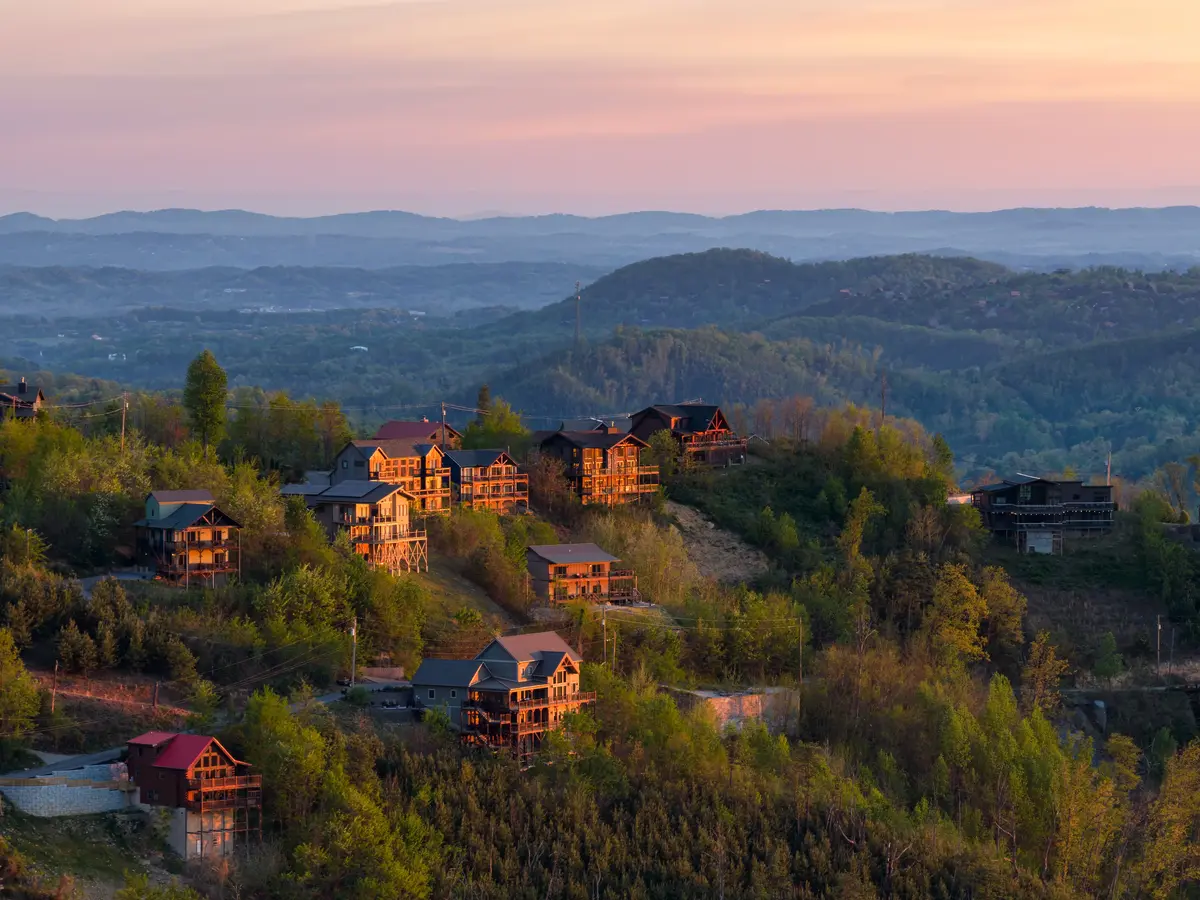
The northwest part of the city is generally considered the safest area by residents. The hillside and forested neighborhoods above the commercial corridor show the lowest incident rates, while the southernmost, most commercialized sections of the city see the most activity. That geographic split is the single most useful piece of information for someone choosing between neighborhoods.
How the Key Areas Stack Up
| Neighborhood / Area | Character | Safety Notes | Best For |
|---|---|---|---|
| Chalet Village / Chalet Village North | Hillside cabins and residential chalets above the tourist core | Quieter, lower incident density; elevation separates it from the commercial corridor | Quiet Views |
| Ski Mountain | Forested slopes near Ober Gatlinburg; mix of cabins and permanent homes | Low foot traffic; incident rates reflect a residential rather than tourist area | Nature Privacy |
| Cobbly Nob | Gated resort community on the eastern edge of the city | Controlled-access setting keeps incident counts low; a quieter corridor overall | Quiet Luxury |
| Arts & Crafts Community (The Glades) | Studio corridor winding through the eastern hills along US-321 | Low-density; incidents here tend to be rare and scattered | Nature Quiet |
| Mynatt Park / Norton Creek | Residential pockets on the northern edge, near the national park boundary | Among the lower-incident parts of the city; further from the commercial zone | Families Nature |
| Roaring Fork | Creek-corridor access route bordering the national park | Low residential density; natural hazards (creek flooding, bear activity) more relevant than crime | Nature Privacy |
| Downtown / Parkway | The tourist and commercial heart of the city along US-441 | Highest incident counts in the city; most reflect visitor-zone larceny, not resident risk | Walkable Renters |
For a deeper look at what each of these areas is like to live in day-to-day, see the best neighborhoods page.
The practical takeaway: if personal safety is the priority, the hillside and forested neighborhoods above the commercial corridor consistently show the lowest incident rates. The downtown Parkway zone will always read noisier in crime data simply because more people are there — but that same zone is also where the most eyes are on the street at any given hour.

Policing and Community Safety Infrastructure
For a city of 3,715 permanent residents, Gatlinburg runs a notably substantial police department calibrated to manage both the year-round residential population and the seasonal surges that can bring tens of thousands of visitors through on a single weekend. Patrol presence is visible downtown throughout the day and evening, and the department maintains around-the-clock coverage across the city.
The Gatlinburg Police Department offers specialized services including extra patrols for homes and businesses — which matters for second-home owners and short-term rental operators who are not always on-site. The department also runs community safety programming covering crime prevention fundamentals and neighborhood-watch participation, and a registered charitable organization, Gatlinburg Community Police Programs, supports those community policing efforts independently of the city budget.
What this means practically: the department is not understaffed relative to what it manages. Response infrastructure is built for surge conditions, not just residential quiet. That is a real operational difference from similarly-sized towns that do not have Gatlinburg's tourism load.
One thing to know before choosing a neighborhood: extra patrols for unoccupied homes and vacation rentals are an available service, not an automatic one. If you are buying a property you will not occupy full-time, registering with the department's extra-patrol program is worth doing early — it is the kind of quiet, free resource that locals know about and newcomers often miss until their second year.
Looking to buy in Gatlinburg? Estimate your payment.
Enter your numbers to see an estimated monthly mortgage payment.
Estimate only. Excludes HOA fees and mortgage insurance. The interest rate above is a starting point, not a quoted rate — replace it with your own to see real numbers. Insurance is a flat placeholder, not a Gatlinburg quote.
Beyond the Monthly Mortgage Payment — What to Factor In
- The property tax rate above — The 0.37% used in the estimate is the median effective rate — tax actually paid as a share of market value — published by Ownwell, 2026. Half of local homes pay more and half pay less: your own bill depends on that property's assessed value and any exemptions it qualifies for, which can differ a lot from its market price. Confirm with the Sevier County assessor before you budget.
- Total cost of ownership — Your monthly mortgage payment is just the baseline. Depending on the specific city, county, and service district, homeownership costs also include local utility fees, municipal surcharges, and special assessments (such as water, sewer, storm drainage, or local energy taxes) that vary by location.
- Independent due diligence — Because these recurring local costs and municipal fees change depending on the exact property address, buyers must research them independently during their transaction process.
Tax laws, local municipal fees, and utility costs change frequently and individual situations vary. This page is general information, not tax or legal advice — always consult a qualified tax professional, CPA, or local municipal offices for personalized guidance.
Natural Hazards: The Safety Picture Beyond Crime Statistics
Anyone moving to Gatlinburg from a flatland city will need to recalibrate their definition of safety. Crime statistics are only one axis here. Mountain terrain, wildfire exposure, creek flooding, and wildlife contact all belong in the same conversation — and in some years, they carry more consequence than the crime figures do.
Wildfire Risk
Gatlinburg sits at the doorstep of Great Smoky Mountains National Park, and that proximity is beautiful and hazardous in equal measure. The city carries a moderate wildfire risk, with Tennessee's two annual fire seasons running roughly February through May and October through December. The 2016 Chimney Tops wildfire — which burned through neighborhoods that had existed for generations and killed 14 people — is not a distant cautionary tale here. It is in the institutional memory of the city, and it shaped how residents think about ember storms, evacuation routes, and the way fire moves through a mountain holler. Residents in areas like Chalet Village and Ski Mountain, where homes sit on forested slopes, carry a materially different wildfire exposure than those closer to the developed Parkway corridor.
Flood Risk
Lower-elevation stream corridors near downtown carry genuine flood-hazard exposure. The City of Gatlinburg has adopted comprehensive Flood Plain Management Regulations, maintains Flood Insurance Rate Maps, and keeps a Flood Preparedness Plan with evacuation procedures — all of which reflect real risk rather than bureaucratic caution. If you are looking at a property along a creek corridor, checking its flood-map designation before deciding on a neighborhood is a step that experienced local buyers do not skip.
Terrain and Wildlife
Steep and winding mountain roads — many of them the only route in or out of a neighborhood — create driving hazards that are genuinely underestimated by people who visit in dry summer weather and then move here for winter. Black bear activity in residential areas is routine, not rare: bears move through neighborhoods in Chalet Village, Mynatt Park, and areas near the national park boundary on a regular basis. Power outages during storms can isolate a hillside property for days. None of this is a reason not to live here — locals manage it as a matter of course — but it belongs in a complete safety picture that online crime indexes will never give you.
What Residents Actually Experience: Six Months In
People who move to Gatlinburg from larger cities almost always say the same thing once they are settled: the crime anxiety fades quickly, and the natural-hazard awareness grows. The headline crime statistics that worried them during the research phase feel disconnected from the actual texture of life in the residential neighborhoods above the tourist corridor.
What surprises most newcomers is not crime — it is the degree to which the city functionally divides into two separate experiences depending on where you live. A resident in Chalet Village or Mynatt Park lives a genuinely quiet mountain-town life. A renter in the downtown Parkway corridor is surrounded by the same crowd that fills the major attractions and amusement parks on a Saturday afternoon. Both are Gatlinburg, and the crime picture reads differently in each.
The wildfire question tends to arrive in year one for hillside residents, usually after the first dry October wind event. Residents who move from places without wildfire seasons sometimes underestimate how quickly conditions change in the mountains and how little warning a wind-driven fire can give. The city's community safety programs address this, but the learning curve is real.
Why people move out, when they do: the combination of tourist-season congestion on US-441, the isolation of hillside living during bad weather, and the absence of the everyday retail infrastructure that flat-city residents take for granted sends some newcomers looking toward Sevierville or Pigeon Forge after two or three years. It is not safety that drives most of those decisions — it is the friction of daily logistics in a mountain tourism town. That is an honest distinction worth making before you choose a neighborhood.
For the full picture of who Gatlinburg suits and how daily life plays out across the city, the main city guide covers the terrain, commute patterns, and community character in depth.
Local Expert Takeaway: Gatlinburg's crime numbers look alarming on aggregator sites until you understand the denominator: a permanent population of 3,715 divided into incident counts that include millions of tourist-days inflates every per-capita figure. The official figures — a violent crime rate of 1.88 per 1,000 residents and a property crime rate of 5.69 per 1,000 residents — both sit well below Tennessee state averages. The real safety calculus for a prospective resident is geographic: the hillside neighborhoods above the Parkway corridor, from Chalet Village to Mynatt Park, consistently show the lowest incident rates and the greatest separation from tourist-zone larceny. What those same areas do carry is wildfire and terrain exposure that flatland transplants consistently underestimate. Check the flood map for any creek-corridor property, take the wildfire fire seasons seriously if you are on a forested slope, and know that the Gatlinburg Police Department's extra-patrol program for unoccupied homes is a free resource worth using from day one.
Quick Takeaways & FAQs
✅ Gatlinburg carries a violent crime rate of 1.88 per 1,000 residents — well below both the Tennessee state average and the national benchmark — though the numbers look worse on aggregator sites because the permanent population is only 3,715.
⚠️ The tourist-zone Parkway corridor carries the city's highest incident counts, and natural hazards — wildfire exposure, creek flooding, and steep mountain roads — are as relevant to daily safety as any crime statistic.
📍 Hillside residential neighborhoods like Chalet Village and Mynatt Park show dramatically lower incident rates than the commercial south end; the geographic split between the safest and most commercial zones is the single most important factor when choosing where to buy.
Is Gatlinburg, TN a safe place to live?
Which part of Gatlinburg has the lowest crime?
How does Gatlinburg's crime rate compare to the rest of Tennessee?
Is wildfire a real risk in Gatlinburg?
Does Gatlinburg's tourism affect crime statistics for residents?
Moving to Tennessee?
Tell us what you need help with and we'll connect you with local resources.
