
Maybe you've done the research on Tennessee's tax advantages and Franklin's name keeps surfacing. Maybe you've visited, walked the downtown square, and wondered whether the pace here actually holds up year-round — not just on a fall weekend when everything looks perfect. The honest answer is that Franklin is genuinely one of the stronger retirement destinations in the Southeast, but it comes with a cost of entry that rules out a meaningful share of buyers. The typical home price sits at $925,870 (August 2026), and the city's overall cost of living runs roughly 40% above the national average, driven almost entirely by housing. If you arrive with equity from a higher-cost market, that gap closes fast. If you're relying on a fixed income without significant assets behind it, Franklin will stretch you.
What Franklin offers retirees in return is substantial: a full-service hospital inside city limits that recently completed a major expansion, a walkable historic downtown that genuinely delivers on daily errands without a car, and a social scene rooted in Civil War history, live music, farm-to-table dining, and a farmers market culture that runs through the warm months. The city of 90,226 sits in Williamson County, one of the wealthiest counties in the state, and that wealth shows in the infrastructure, the green space, and the quality of local institutions. Major employers like Nissan North America and Community Health Systems anchor a stable local economy, which matters to retirees who want a city that isn't going anywhere.
Tennessee's tax posture for retirees is among the most favorable in the country — no state income tax, no tax on Social Security, pensions, or investment distributions, and a property tax rate that runs well below what most retirees pay in the states they're leaving. The catch is the sales tax: Franklin's combined rate is 9.75%, and on a fixed income that adds up at the grocery store and the hardware store alike. The tradeoff is real, but for retirees coming from states with both income tax and high property taxes, the net position usually improves.
Whether you're narrowing a short list or already in contract talks, the sections below cover healthcare access, the retiree budget, walkability and community life, downsizing options including the four 55+ communities operating here, and an honest comparison of Franklin against nearby alternatives.
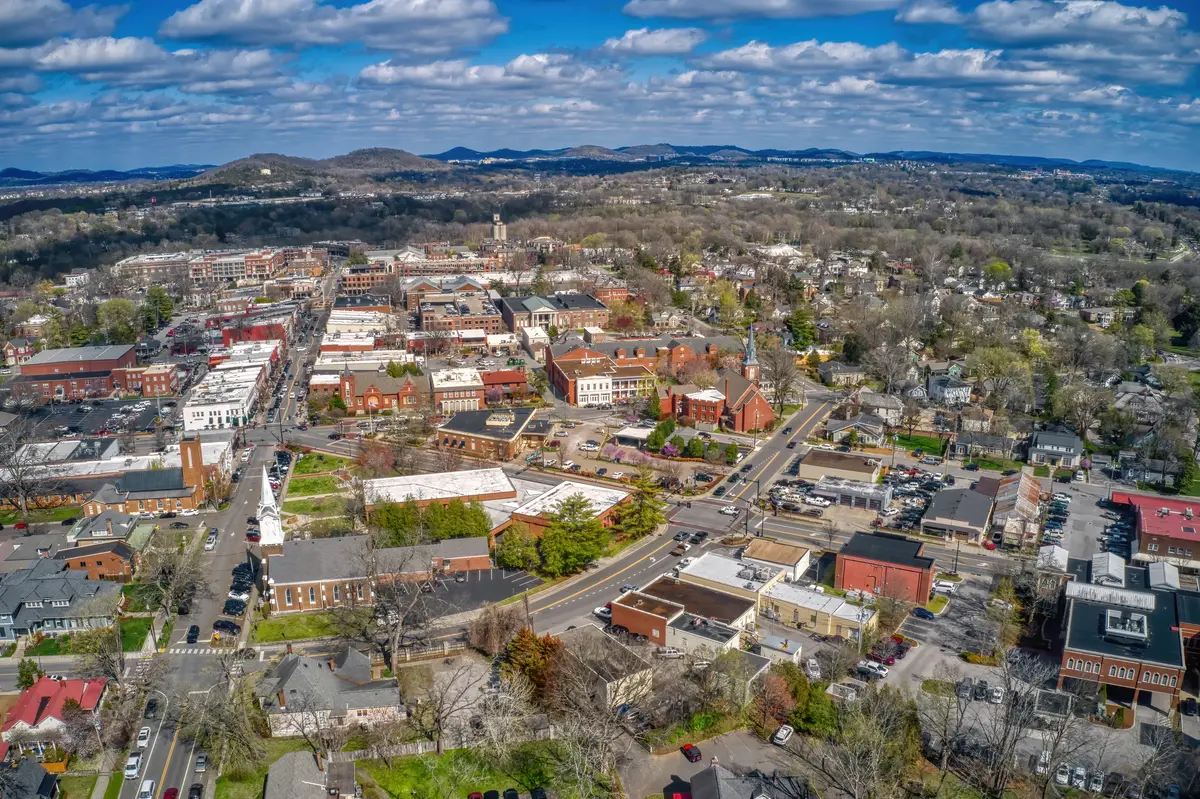
Why Retirees Are Choosing Franklin
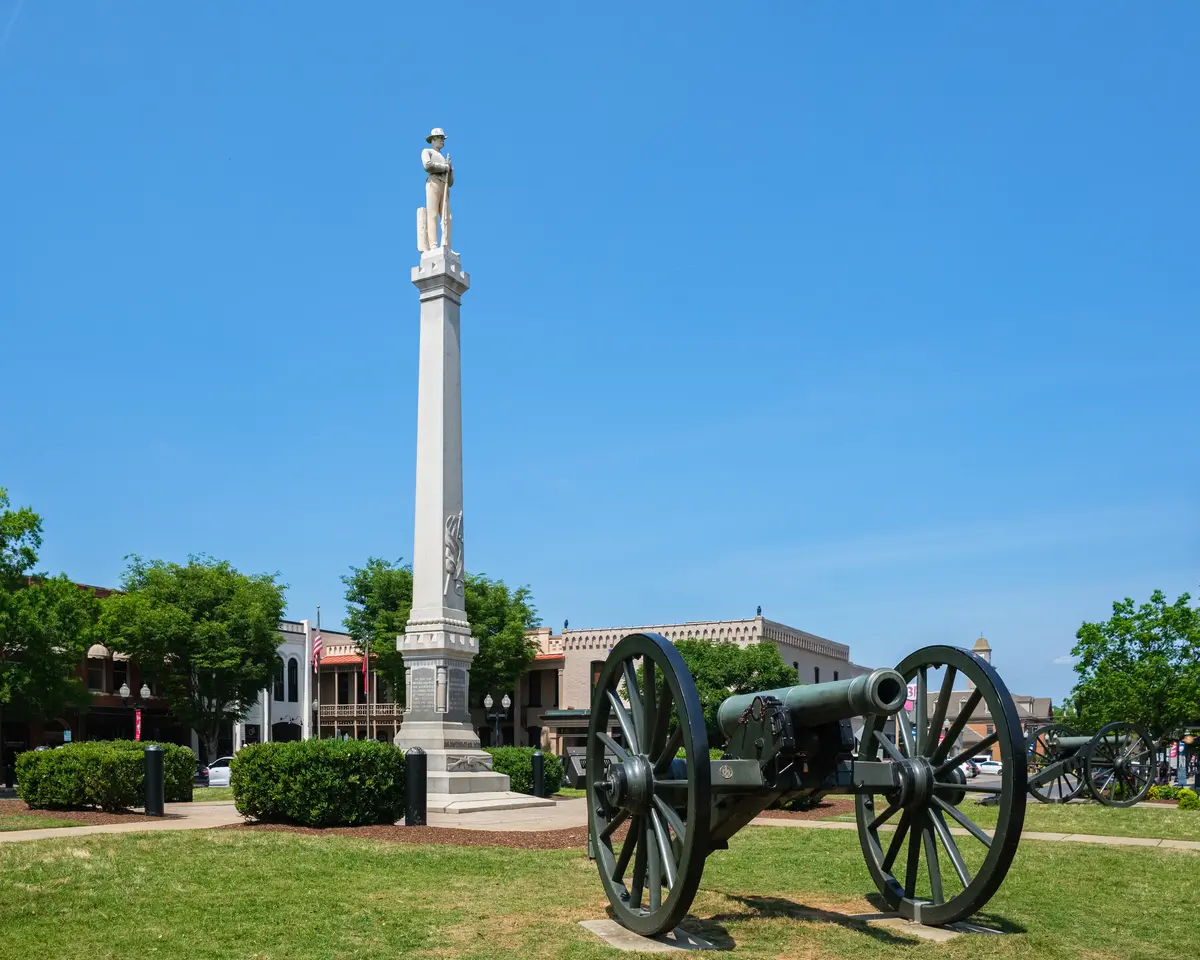
Franklin fits a specific retirement profile particularly well: someone who has sold a home in a high-cost market — California, the Mid-Atlantic, the Chicago suburbs — and wants to land somewhere with genuine character, strong healthcare, and a tax environment that doesn't claw back a third of their retirement income. The historic downtown, the Civil War landmarks like Carnton and The Carter House, the Franklin Theatre, and The Factory at Franklin give daily life a sense of place that most Sun Belt retirement destinations never develop.
The city is also increasingly popular with younger retirees in their late fifties who want activity, not just amenity. The Harpeth River Greenway, the Franklin Battlefield walking trails, and the 200-plus acres at The Park at Harlinsdale Farm attract people who plan to stay physically active well into their sixties and seventies. Franklin is not a golf-cart-and-pool retirement town. It's a walkable, historically rich city that happens to have excellent healthcare and zero state income tax.
Who should look elsewhere? Retirees on a tight fixed income without substantial home equity will find the math difficult. The typical home price of $925,870 (August 2026) means entry-level single-family living starts well above what many retirees can absorb, and the condo and patio-home alternatives — while they exist — aren't dramatically cheaper. Brentwood immediately to the north runs even higher. Spring Hill and Nolensville to the south offer noticeably lower and somewhat lower price points respectively, and for retirees who don't need the downtown walkability, those are worth comparing seriously. More on that in the final section.
Healthcare & Medical Access in Franklin
Williamson Medical Center is the nearest hospital — and importantly, it sits inside city limits, not across a county line or a 25-minute drive away. That proximity matters in a medical emergency, and it's a detail Franklin gets right that many comparably sized Southern cities do not.
The hospital's recent growth makes it more than a community facility. The Boyer-Bryan West Tower expansion, completed in 2024, grew the building from three floors to six and added a six-story north wing with 72 private medical/surgical inpatient beds, a 22-bed observation unit, and a 35-bed intensive care unit. The full campus renovation was scheduled to finish by end of 2025. For retirees, those ICU and observation beds matter more than any amenity score.
Beyond the beds, the Williamson Health system brings a broad specialist bench for a city this size — covering primary care, cardiology, orthopedics, outpatient diagnostics, and physical therapy across multiple locations in the county. The campus also houses the Bone and Joint Institute of Tennessee, directly relevant for retirees managing orthopedic issues, and Monroe Carell Jr. Children's Hospital Vanderbilt at Williamson Medical Center. Joint Commission accreditation means the hospital meets national standards for quality and safety, and the 24-hour emergency department handles the volume of a city Franklin's size without sending patients elsewhere for routine emergencies.
For the most complex oncology, cardiac surgery, or neurological care, Vanderbilt University Medical Center in Nashville is the referral destination many Franklin physicians use. That's a meaningful drive in a health crisis, but the reality is that most of what retirees need day to day is available inside Williamson County without that trip. Franklin is meaningfully better positioned on healthcare than Spring Hill, Thompson's Station, or rural Williamson County alternatives.
The Retiree Budget in Franklin
Tennessee's tax posture for retirees is the strongest single financial argument for choosing Franklin over a comparable city in most other states. Social Security benefits are entirely untaxed at the state level. Pension income, IRA withdrawals, 401(k) distributions, and annuity payments are all treated the same way — zero Tennessee state income tax on any of them. The Hall Income Tax on interest and dividends was fully repealed in 2021, meaning investment income from taxable brokerage accounts is also untaxed by the state. For a retiree drawing from multiple income streams, that's a meaningful number that compounds over a long retirement.
Property taxes in Franklin run at an effective rate of approximately 0.54% — well below the national average and a fraction of what retirees typically pay in the Northeast, Midwest, or California. Tennessee also offers a Property Tax Relief program for qualifying homeowners aged 65 and older and a separate Property Tax Freeze program that can stabilize the bill for eligible seniors. Income thresholds for both programs adjust annually, so verify current eligibility directly with the Tennessee Comptroller's office before counting on either. The programs exist and are real; the fine print changes.
The offset that every retiree budget in Franklin has to account for is the combined sales tax rate of 9.75% — a 7% Tennessee state base plus a 2.75% Williamson County local rate. That applies to most goods, and on a fixed income it accumulates meaningfully over a year of regular spending. Groceries carry a reduced rate at the state level, which softens the impact slightly at the supermarket, but discretionary spending — home goods, clothing, restaurants, appliances — hits the full rate.
The broader picture: Franklin's cost of living runs roughly 40% above the national average, and housing is the dominant driver. The no-income-tax environment genuinely helps retirees living on investment and retirement income, but it doesn't close a 40-point gap on its own. Retirees coming from high-tax, high-cost states often find the net position favorable; retirees moving from lower-cost Southern or Midwestern cities sometimes find Franklin's cost of living a harder adjustment than they expected. For a full breakdown of what daily costs look like against income, see the cost-of-living page.
Looking to buy in Franklin? Estimate your payment.
Enter your numbers to see an estimated monthly mortgage payment.
Estimate only. Excludes HOA fees and mortgage insurance. The interest rate above is a starting point, not a quoted rate — replace it with your own to see real numbers. Insurance is a flat placeholder, not a Franklin quote.
Beyond the Monthly Mortgage Payment — What to Factor In
- The property tax rate above — The 0.54% used in the estimate is the median effective rate — tax actually paid as a share of market value — published by Ownwell, 2026. Half of local homes pay more and half pay less: your own bill depends on that property's assessed value and any exemptions it qualifies for, which can differ a lot from its market price. Confirm with the Williamson County assessor before you budget.
- Total cost of ownership — Your monthly mortgage payment is just the baseline. Depending on the specific city, county, and service district, homeownership costs also include local utility fees, municipal surcharges, and special assessments (such as water, sewer, storm drainage, or local energy taxes) that vary by location.
- Independent due diligence — Because these recurring local costs and municipal fees change depending on the exact property address, buyers must research them independently during their transaction process.
Tax laws, local municipal fees, and utility costs change frequently and individual situations vary. This page is general information, not tax or legal advice — always consult a qualified tax professional, CPA, or local municipal offices for personalized guidance.
Walkability, Community & Staying Active in Franklin
The honest walkability answer in Franklin is: it depends entirely on where you live. The Historic Downtown Franklin district is genuinely walkable — the kind of walkable where you leave the car parked on a Saturday morning and cover restaurants, coffee, the Franklin Farmers Market, and a stop at the Franklin Theatre without needing to drive. For retirees who prioritize on-foot access to food, culture, and daily errands, the downtown core delivers.
Outside the historic core, Franklin is a car-dependent city. The Cool Springs and Berry Farms areas, the Sullivan Farms neighborhood, and most of the suburban residential zones require a vehicle for routine errands. That's not unusual for a Southern city of this size, but retirees who assume the walkability reputation applies city-wide are often surprised after six months here.
The trail and park infrastructure has improved meaningfully. The Park at Harlinsdale Farm's more than 200 acres of former horse-farm land offer walking trails that see heavy use from the retiree population. Pinkerton Park connects to the Harpeth River Greenway, and a pedestrian bridge completed in 2024 linking Harlinsdale Farm to the Chestnut Bend multi-use trail network stitched together previously disconnected outdoor spaces. For retirees who walk or jog daily, the system is genuinely useful and continues to grow.
On the community side, Franklin runs a robust calendar of events — the Franklin Farmers Market and Westhaven Farmers Market draw regular crowds through the warm months, the Franklin Battlefield walking trails host organized historical tours, and the Franklin Theatre anchors a live-arts community that punches well above the city's population. Volunteering opportunities connect to the Civil War preservation organizations around Carnton and Fort Granger. For retirees who want social anchors beyond a neighborhood pool, Franklin's downtown and its historical institutions provide them.
Right-Sizing: Downsizing in Franklin
Single-level living is the practical priority for most retirees downsizing into Franklin, and the city offers it — but not always where you'd expect, and not always at a price point that feels like downsizing. Many of Franklin's established neighborhoods were built with two-story homes as the standard, so finding a true single-level in a walkable or community-oriented setting requires more deliberate searching than in cities with more retirement-oriented construction.
The four 55+ active adult communities operating within Franklin give retirees purpose-built options. Westhaven Active Adult sits within the larger Westhaven master-planned community — one of Franklin's most complete neighborhoods, with its own farmers market and walkable village center. The Villages of Morningside offers a more established community feel. Reid Hill Commons features condo-style, relatively new construction with community-oriented programming — the right fit for retirees who want low-maintenance living without giving up social infrastructure. Windsor Park at Fieldstone Farms is situated within the Fieldstone Farms neighborhood, one of Franklin's larger suburban communities with its own amenities.
Beyond the 55+ communities, the condo and patio-home market in Franklin provides additional downsizing paths. The Cool Springs corridor and portions of the McKay's Mill neighborhood have condominium inventory that suits retirees who want less exterior maintenance and proximity to the highway for medical appointments or travel. The trade-off in nearly every downsizing scenario here is price: Franklin's overall market means that even a smaller unit or a lower-maintenance property rarely represents a dramatic reduction from a typical home price. Retirees unlocking equity from a higher-cost market often absorb this well; those moving within Tennessee sometimes find the math tighter than expected.
One thing worth knowing before you search: single-level inventory in the most walkable areas of Franklin moves quickly when it surfaces, and well-priced patio homes in the 55+ communities rarely sit. If single-level access is non-negotiable, build that into your search criteria early and work with someone who tracks the active adult segment specifically. For neighborhood-level context on where inventory concentrates, the neighborhoods page breaks down each area's housing character.
Franklin vs Nearby Retirement Destinations
| City | Cost vs Franklin | Hospital Access | Walkability | Senior Living Depth | Overall Retirement Fit |
|---|---|---|---|---|---|
| Franklin | Anchor | Full-service hospital inside city limits with ICU and 24-hour ER | Strong in downtown core; car-dependent elsewhere | Four 55+ communities; active condo and patio-home market | Excellent for equity-rich retirees; tight for fixed-income buyers |
| Brentwood | Noticeably higher | Same Williamson Health system; primarily suburban access | Primarily suburban and car-dependent | Thinner 55+ community inventory; luxury single-level market present | Strong for affluent retirees who prioritize prestige and quiet; less walkable than Franklin's downtown |
| Spring Hill | Noticeably lower | Regional hospital in Columbia; longer drive for complex care | Primarily suburban; limited on-foot access | Growing but less established senior-living options | Better value for budget-conscious retirees; trades healthcare proximity and walkability |
| Nolensville | Somewhat lower | Uses Williamson Medical Center via Franklin; no in-city hospital | Small-town feel; limited walkable infrastructure | Limited dedicated 55+ inventory | Appeals to retirees wanting quiet and small-town character at a more accessible price point |
| Thompson's Station | Somewhat lower | Williamson Medical Center via Franklin; meaningful drive | Minimal; rural suburban | Very limited; primarily standard residential | Best for retirees who want land, quiet, and lower cost — not healthcare proximity or walkability |
| Nashville | Comparable overall; varies sharply by neighborhood | Multiple major systems including Vanderbilt University Medical Center | Highly variable; some neighborhoods genuinely walkable | Wide range of senior living options across all price points | Better for retirees who want urban amenities, arts access, and direct specialist care; noisier and more congested |
Spring Hill is the most compelling alternative for retirees who find Franklin's price of entry out of reach but want to stay in Williamson County's orbit. The catch is healthcare proximity: for retirees managing chronic conditions or mobility concerns, the longer drive to a major facility matters more than the monthly savings.
Nashville offers the deepest specialist care in the region — Vanderbilt University Medical Center is the referral anchor for serious diagnoses across middle Tennessee — but the trade-off is urban congestion, a cost landscape that varies wildly by neighborhood, and a pace that genuinely doesn't suit every retiree. For retirees who want the best of both, many people land in Franklin specifically because it puts Vanderbilt's specialists roughly 30 minutes away while keeping daily life calmer and more manageable. For most retirees doing this comparison honestly, Franklin holds up as the strongest overall package in the immediate region — with Spring Hill as the value alternative and Nashville as the choice for retirees who genuinely need urban depth.
Local Expert Takeaway: Franklin's retirement case is strongest if you're bringing equity from a high-cost state and want a city that delivers on healthcare, history, and daily walkability without the chaos of Nashville. Williamson Medical Center is inside city limits and recently completed a major ICU and inpatient expansion — that matters when you stop treating healthcare as an afterthought. The downtown core around the Franklin Farmers Market, the Franklin Theatre, and the Harpeth River Greenway gives daily life genuine texture. The four 55+ communities — Westhaven Active Adult, The Villages of Morningside, Reid Hill Commons, and Windsor Park at Fieldstone Farms — cover a range of styles and social cultures. Tennessee's zero state income tax on Social Security and retirement income is the real financial story. Just go in with clear eyes on the sales tax and the cost of housing, because those two things will shape your monthly budget more than anything else.
Quick Takeaways & FAQs
✅ Tennessee levies no state income tax on Social Security, pensions, or retirement account withdrawals — one of the most retiree-friendly tax environments in the country.
⚠️ Franklin's cost of living runs roughly 40% above the national average and the typical home price sits at $925,870 (August 2026), making it a difficult fit for retirees without significant home equity or assets.
📍 Williamson Medical Center sits inside city limits, recently completed a major ICU and inpatient expansion, and brings a broad specialist bench and 24-hour emergency care unusually well-suited for a city this size.
Is Franklin, TN a good place to retire on a fixed income?
What hospital serves retirees in Franklin, TN?
Does Tennessee tax Social Security or pension income?
What 55+ communities are in Franklin, TN?
How does Franklin compare to Brentwood or Spring Hill for retirement?
Moving to Tennessee?
Tell us what you need help with and we'll connect you with local resources.
