
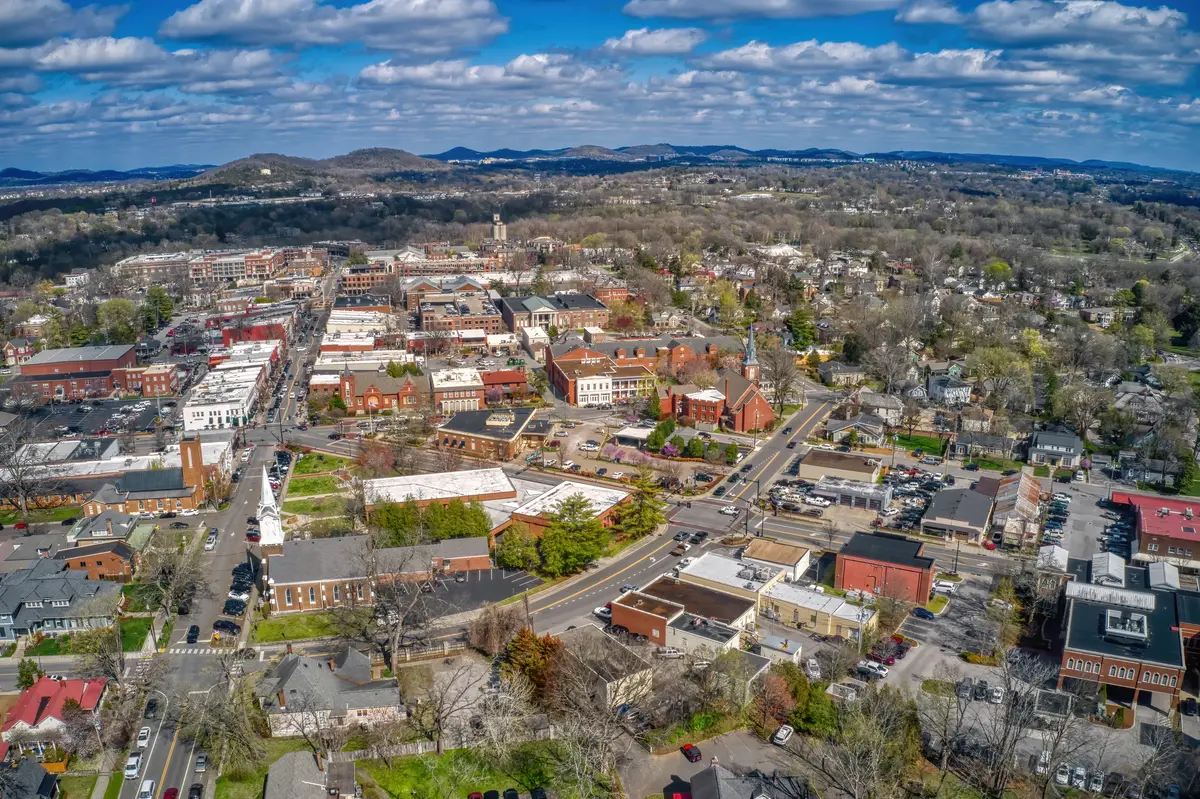
Most Californians who land in Franklin say the same thing around month three: they hadn't realized how much of their paycheck was going to Sacramento until it stopped. The income tax shock runs in reverse here — Tennessee levies no state income tax on wages or salaries, which rewires your monthly budget faster than any spreadsheet predicted. Franklin sits about 30 minutes south of Nashville along I-65, a position that gives it genuine city access without the downtown density. The city is built around a historic core — brick storefronts, Civil War sites, a genuine walkable square — layered with suburban growth that has been relentless for fifteen years.
Franklin is now home to 90,226 residents, and the growth is not accidental. Nissan North America runs its automotive headquarters here. Mars Petcare built its North American headquarters in the city. Jackson National Life Insurance and a major healthcare employer anchor the white-collar employment base. The Franklin Special School District holds an A rating, according to Niche, which draws families with school-age children the way good districts always do. The people moving here are not retired — they are executives, remote workers, and dual-income households who looked at California's costs and decided the math no longer worked in their favor.
On price, Franklin is not cheap. The typical home value sits at $925,870 (Zillow Home Value Index, August 2026), which is noticeably above the full cost-of-living picture detailed on this page. What changes the equation is the tax structure: no state income tax, an effective property tax rate of 0.54%, and no estate or inheritance tax. For a household that owned appreciated California real estate, the capital gains treatment alone can be significant — California taxes capital gains at the same rate as ordinary income, up to the state's top rate. The trade-off is that Franklin's sales tax runs high, and the social scene here is distinctly Southern and suburban rather than coastal and urban.
Whether you are being relocated by a company, cashing out of a Bay Area home, or simply running the numbers on a fresh start, the sections below break down the tax comparison, what your housing dollar actually buys, the cultural adjustment, the schools, and the honest friction points that California transplants talk about after the honeymoon wears off.
The Tax Reversal: What Californians Actually Keep
The income tax gap is the first thing to understand, because it restructures everything else. Tennessee levies zero state income tax on wages or salaries — the Hall Tax on investment income was phased to zero effective January 2021. The income-tax savings favor high earners most directly; the benefit is real across most income levels, but the size of the gain depends on your specific filing situation. Your actual liability depends on filing status and deductions, so the directional reality is clear even if the precise dollar varies — consult a tax professional to model your household's numbers before you move.
For high-equity households, the capital gains treatment is the larger story. California taxes capital gains at the same rate as ordinary income, up to the state top rate. Tennessee has no state capital gains tax at all. If you are moving with appreciated stock compensation, a business sale, or a California home with a large embedded gain, the difference in treatment between the two states is worth a conversation with a CPA before you close either transaction.
The property tax comparison is less straightforward than it looks. Franklin's effective property tax rate is 0.54%. California's effective property tax rate of 0.71% is the statewide figure, but California's Proposition 13 means longtime owners pay on a locked assessment that can be far below market value — while a buyer entering the California market today pays on purchase price. In Franklin, you pay 0.54% on current market value with no such lock, which for a home at the typical price still lands well below what a new California buyer would owe on a comparable purchase in most coastal markets.
The honest counter-weight is sales tax. California's statewide base sales tax rate of 7.25%, once local additions are layered in, averages around 8.82% statewide. Tennessee's combined rate averages approximately 9.61% (Tax Foundation) — modestly higher than California's combined average. For wage earners, the income-tax elimination almost always outweighs the sales-tax increase. For retirees living on savings rather than wages, the sales tax gap matters more and the income-tax benefit matters less. Tennessee also has no estate tax and no inheritance tax, which matters to households doing multi-generational planning.
| Tax Category | Franklin, TN | California (statewide) |
|---|---|---|
| State income tax (wages) | 0% | Up to 13.3% (graduated) |
| Effective property tax rate | 0.54% (Franklin) | 0.71% (statewide; Prop 13 locks longtime owners below this) |
| Combined sales tax (avg.) | ~9.61% (Tax Foundation) | ~8.82% combined (7.25% base + local) |
| Capital gains tax (state) | None | Same rate as ordinary income, up to 13.3% |
| Estate / inheritance tax | None | None (state level) |
What Your Housing Dollar Buys — and What It Doesn't
Franklin is not the affordable escape some Californians imagine. The typical home value is $925,870 (Zillow Home Value Index, August 2026) — real money by any national standard, and the median household income here sits noticeably below what a buyer would need to carry that purchase comfortably at current rates. The cost-of-living page covers the full affordability picture.
What that price buys, compared with coastal California, is a genuinely different product. Detached single-family homes with garages, yards, and finished basements are the standard offering at this price point — not the exception. Neighborhoods like Westhaven and Ladd Park deliver master-planned amenities: walking trails, pools, community greens, and architectural consistency. McKay's Mill and Fieldstone Farms offer established tree cover and somewhat calmer price ranges than the newer builds on the city's edges. Cool Springs is the commercial and office corridor, surrounded by townhomes and condos that attract buyers who want less lawn maintenance. Berry Farms and Sullivan Farms represent the newer growth on the southern end, where builders are still active and the streetscapes are younger. The neighborhoods page goes deeper on each.
The contrast with California's statewide typical home value of $764,158 is real but requires context. That California figure is statewide and includes inland markets where prices are lower; the coastal metros most Californians are actually leaving run considerably higher. A Franklin home at the typical price delivers square footage, lot size, and suburban infrastructure that the same dollar in the Bay Area or coastal Southern California simply cannot. The trade-off is that Franklin is not a walkable city in the urban sense — most of daily life requires a car, and the commercial character is suburban rather than urban-core.
One friction point Californians hit around the six-month mark: Franklin is expensive enough that the neighbors who grew up in Middle Tennessee often cannot afford to live here anymore. The income mix has shifted heavily toward transplants, which shapes the social texture in ways that take time to process. You will find your community, but it may not look like what you pictured when you drove through the historic square.
For Californians considering nearby options, Brentwood runs noticeably higher than Franklin in typical home values. Spring Hill and Nolensville both come in noticeably and somewhat lower, respectively, and each offers a longer drive to Nashville in exchange for a different price point. Franklin sits in the middle of the southern-suburbs range — premium by regional standards, but the premium comes with the school district and the corporate job base.
The Cultural Adjustment: Southern Suburbs vs. the Coast
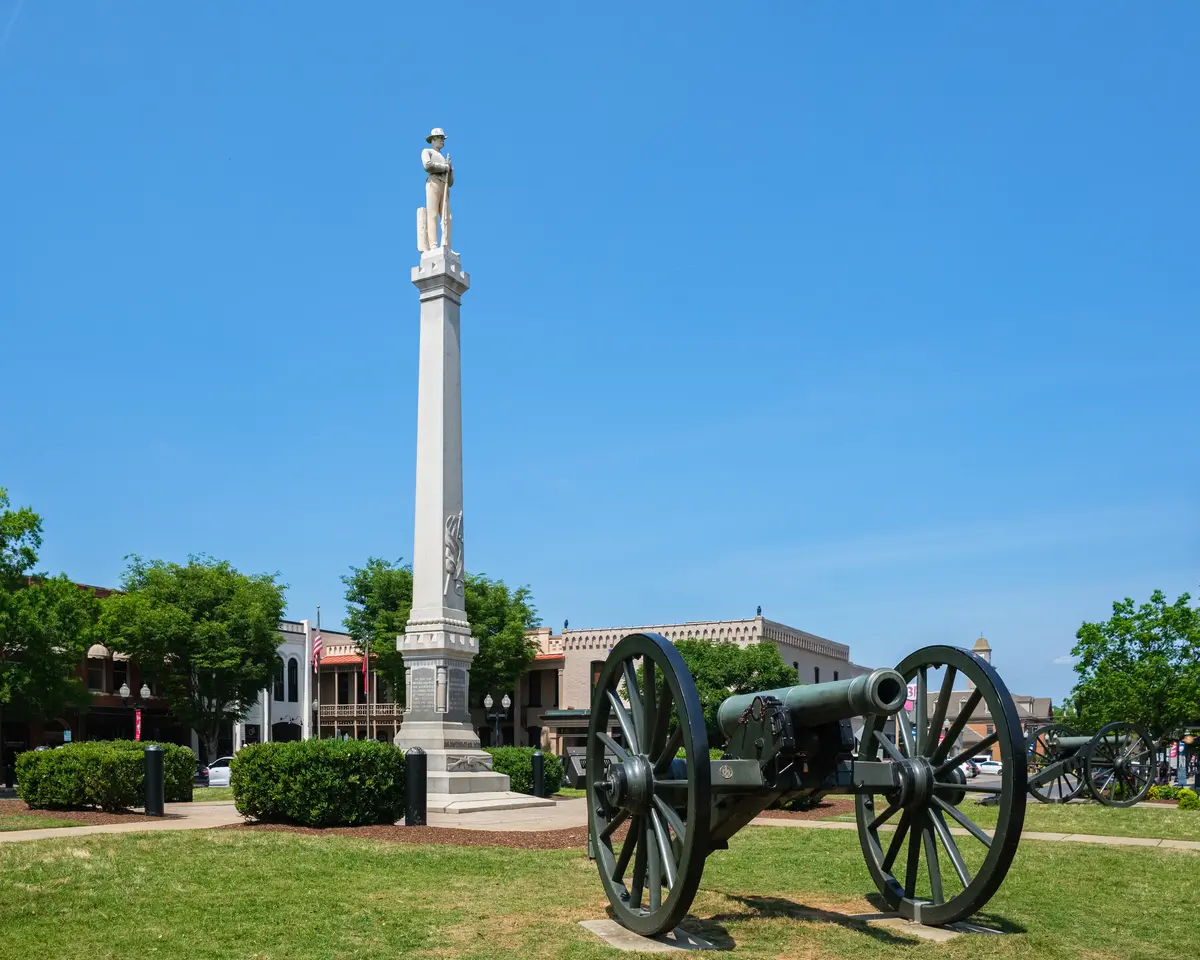
Nobody moves from the Bay Area to Franklin and finds the same culture wearing different weather. That is not a criticism of either place — it is just the thing to name plainly before you pack the truck. Franklin is Southern, politically conservative, religiously active, and deeply community-oriented in a way that is organized around neighborhoods, churches, and Friday night football rather than farmers markets and art openings. The farmers markets are actually excellent — the Franklin Farmers Market and the Westhaven Farmers Market both draw serious local producers — but they exist alongside a cultural fabric that is fundamentally different from what coastal Californians are accustomed to.
The upside that surprises most transplants: the quality of the public gathering spaces. The Park at Harlinsdale Farm is a genuine civic treasure — rolling fields, event space, and a setting that the city has kept from being developed into something ordinary. Pinkerton Park anchors the west side of downtown in a way that makes the historic district feel like a real town rather than a theme park. The Harpeth River Greenway gives the city a trail corridor that connects neighborhoods to each other and to the water. Fort Granger and the Franklin Battlefield walking trails sit in the middle of the city and make the Civil War history tactile rather than museum-bound.
The dining and coffee scene is smaller than what most Californians are used to, but it is not thin. Independent coffee shops and a solid restaurant corridor give the city more character than its suburban scale suggests. The Factory at Franklin — a converted stove factory — anchors a creative corridor that includes independent retailers and event venues. The Franklin Theatre on the square books genuine touring acts in an intimate restored venue. It is not the Mission District, but it is not nothing either.
The weather is the other adjustment. Franklin gets 211 sunny days a year — meaningfully fewer than most of coastal California — and summer humidity is a real feature of daily life from June through September. Winters are mild by Midwest standards but include occasional ice storms that shut the city down in ways that catch California transplants off guard. The infrastructure here is not built for frozen roads, and a half-inch of ice means a very different morning than you are used to.
Looking to buy in Franklin? Estimate your payment.
Enter your numbers to see an estimated monthly mortgage payment.
Estimate only. Excludes HOA fees and mortgage insurance. The interest rate above is a starting point, not a quoted rate — replace it with your own to see real numbers. Insurance is a flat placeholder, not a Franklin quote.
Beyond the Monthly Mortgage Payment — What to Factor In
- The property tax rate above — The 0.54% used in the estimate is the median effective rate — tax actually paid as a share of market value — published by Ownwell, 2026. Half of local homes pay more and half pay less: your own bill depends on that property's assessed value and any exemptions it qualifies for, which can differ a lot from its market price. Confirm with the Williamson County assessor before you budget.
- Total cost of ownership — Your monthly mortgage payment is just the baseline. Depending on the specific city, county, and service district, homeownership costs also include local utility fees, municipal surcharges, and special assessments (such as water, sewer, storm drainage, or local energy taxes) that vary by location.
- Independent due diligence — Because these recurring local costs and municipal fees change depending on the exact property address, buyers must research them independently during their transaction process.
Tax laws, local municipal fees, and utility costs change frequently and individual situations vary. This page is general information, not tax or legal advice — always consult a qualified tax professional, CPA, or local municipal offices for personalized guidance.
Schools, Safety, and the Institutional Quality of Life
For families moving from California's better suburban districts, Franklin holds up well. The Franklin Special School District holds an A rating, according to Niche, and serves 3,027 students enrolled in 2024-25. On 2025-26 state assessments, 65.7% of students reached math proficiency and 59.8% reached reading proficiency. The district's enrollment is small by design — Franklin SSD is a city district, not the county district, which means the schools are genuinely local rather than sprawling county-wide institutions. School sports programs are well-supported, and the community shows up for them.
Williamson County Schools, the separate county district surrounding Franklin SSD, is also well-regarded and serves most of the residential neighborhoods on the city's edges. If a specific neighborhood or subdivision matters to your school-boundary decision, that line is worth verifying directly with the district before you make an offer — the boundary between the two systems runs through the city in ways that are not always intuitive. The schools page maps that out in more detail.
Safety in Franklin reads differently from most California cities of comparable size. The city posts a violent crime rate of 1 per 1,000 residents and a property crime rate of 10 per 1,000 residents. Both figures sit well below the Tennessee state rates of 6 per 1,000 violent and 20.8 per 1,000 property, and well below national rates of 3.7 per 1,000 violent and 18.4 per 1,000 property. The safety page covers the geographic distribution in more detail.
On routine healthcare costs, premiums and out-of-pocket expenses for comparable coverage tend to run noticeably below California levels — one of the quieter financial benefits of the move. The honest trade-off is that specialist care and advanced treatment may require a drive to Nashville, and the concentration of specialized providers in the immediate Franklin area is smaller than what a major California metro offers. Routine care and primary care are well-served locally.
What Californians Get Right — and What They Get Wrong — About Franklin
The people who thrive here fastest are the ones who come in without a fixed idea of what Franklin is supposed to be. They find a city that is genuinely well-run, safe, and anchored by a corporate employment base — Nissan North America, Mars Petcare, Jackson National Life Insurance — that keeps the local economy insulated from the volatility that hits single-industry towns. Williamson County leads the Middle Tennessee region in per capita income growth, and over half of the largest publicly traded companies in the area have a presence here. That concentration of headquarters-level employment means the professional networking density is real.
What Californians get wrong, consistently, is assuming that the lower taxes translate to a lower cost of living across the board. They do not. Housing at $925,870 typical (August 2026) in a city where the median household income sits well below the purchase threshold means that homeownership here is not a default — it is a stretch, even for dual-income professional households. Renting at around $2,074 per month for a typical unit gives buyers time to understand the market before committing, but the rental stock in Franklin is tighter than most transplants expect. Many renters end up in neighboring Spring Hill or Thompson's Station and commute in.
The other thing California transplants frequently underestimate is the pace of growth and its consequences. Franklin's population has grown significantly over the past decade and a half, and that growth has been a net positive for the tax base and the school district. It has also meant construction corridors, traffic on US-31 and TN-96 during peak periods, and an ongoing tension between the historic character of downtown and the suburban expansion pressing against it from every direction. The residents who loved Franklin a decade ago and the residents arriving from California right now are sometimes having a quiet argument about what the city is allowed to become.
The move makes the most financial sense for households with meaningful wage income — where the elimination of state income tax has the largest immediate impact — or for those carrying appreciated California assets who want to reset their tax geography before a liquidity event. It makes less straightforward sense for retirees living entirely on investment income, where the sales tax burden is more visible and the income-tax benefit is smaller. Either way, run the full numbers with a tax professional who knows both states before you close on a California exit.
The sections above cover the tax comparison, housing market, cultural adjustment, and school quality. For a broader orientation to daily life, the Franklin overview is the right starting point, and the cost-of-living page has the complete breakdown of what a monthly budget actually looks like here.
Local Expert Takeaway: Franklin rewards Californians who do the full math before they move. The income-tax elimination is real and immediate — a $0 state income tax bill versus thousands owed to Sacramento changes the monthly budget in ways that compound quickly. But the typical home price of $925,870 (August 2026) means you are not escaping high housing costs, just trading coastal California prices for Southern suburban ones. The people who make the adjustment best are the ones who lean into what Franklin actually is: a well-run, historically grounded city with a serious school district, a corporate employment base anchored by Nissan North America and Mars Petcare, and a community that gathers around Pinkerton Park, the downtown square, and the Franklin Farmers Market — not the things they left behind.
Quick Takeaways & FAQs
✅ Tennessee's zero state income tax immediately eliminates a bill that California residents at nearly every income level are paying — one of the most direct financial benefits of the move.
⚠️ Franklin's typical home price of $925,870 (August 2026) means housing costs remain high; this is not a budget relocation, and the median local income sits well below what's needed to buy at that price.
📍 The boundary between Franklin Special School District and Williamson County Schools runs through the city in ways that are not always obvious — verify which district serves any specific address before making an offer.
Do I really pay zero income tax if I move from California to Franklin, Tennessee?
How does the Franklin home price compare to what I'd pay in California?
Is Franklin safe compared to California cities?
How are the schools in Franklin for families moving from California?
What's the biggest thing California transplants get wrong about moving to Franklin?
Moving to Tennessee?
Tell us what you need help with and we'll connect you with local resources.
