
If you've done any early research on Johnson City, you've probably seen the crime statistics and felt a flicker of uncertainty. Property crime in particular reads high on a first pass. But the raw number hides a geographic and structural story that matters a great deal if you're trying to figure out where to live — and the picture changes significantly depending on which part of the city you're looking at.
Johnson City is a city of 74,943 people anchored by East Tennessee State University, Ballad Health, and the James H. Quillen VA Medical Center. That combination — a university, a major health system, and a federal medical campus — shapes the city in ways that directly affect how crime is distributed. University traffic, retail corridors, and medical district foot traffic all concentrate activity in specific corridors, and concentrated activity is where property crime tends to cluster. The residential neighborhoods surrounding those corridors often tell a different story.
The broader context matters too. Johnson City has a violent crime rate of 4 per 1,000 residents — above the national figure of 3.7 per 1,000 but meaningfully below Tennessee's state rate of 6 per 1,000. On the property crime side, the gap versus the state is narrower. That nuance — slightly above national, noticeably safer than Tennessee as a whole for violent crime — rarely shows up in a simple city ranking, but it's the relevant comparison for anyone considering Northeast Tennessee. The sections below break down where those numbers come from, how they vary by neighborhood, what the police department looks like, and what residents actually say about day-to-day safety.
Johnson City Crime Rates in Context
The city's headline figures are a violent crime rate of 4 per 1,000 residents and a property crime rate of 24 per 1,000 residents. This page shows a full comparison table here, so rather than duplicate those numbers, it's worth explaining what they mean in practice.
On violent crime, Johnson City comes in above the national rate of 3.7 per 1,000 but below Tennessee's state rate of 6 per 1,000 (Bureau of Justice Statistics, Crime Known to Law Enforcement, 2024). That positions the city closer to the national norm than to the state average — not a selling point most Tennessee tourism boards would highlight, but a meaningful distinction for someone comparing Johnson City to other mid-sized Tennessee cities.
Property crime is the more prominent concern. With a property crime rate of 24 per 1,000 residents, Johnson City runs above both the national figure of 18.4 per 1,000 and the state rate of 20.8 per 1,000. Theft, vehicle break-ins, and shoplifting account for the large majority of those reported incidents — a pattern consistent with mid-sized Tennessee cities that host significant retail activity. The distinction between a city where people are getting robbed and a city where cars are getting broken into near shopping centers is real and relevant to your daily sense of security.
One structural factor inflates the city-wide property crime rate: high-traffic commercial corridors and the areas surrounding parks and transit hubs generate disproportionate incident counts. Those figures get averaged across all 74,943 residents, including people in quieter residential neighborhoods who never see any of it. Knowing that makes the headline number more navigable, not dismissible — but it does mean a city-wide rate tells you far less than a neighborhood-level look.
Where Crime Concentrates — and Where It Doesn't
The geographic pattern in Johnson City is consistent with what crime analysts see in most mid-sized university cities: risk is not spread evenly, and the difference between the highest- and lowest-crime parts of town is substantial.
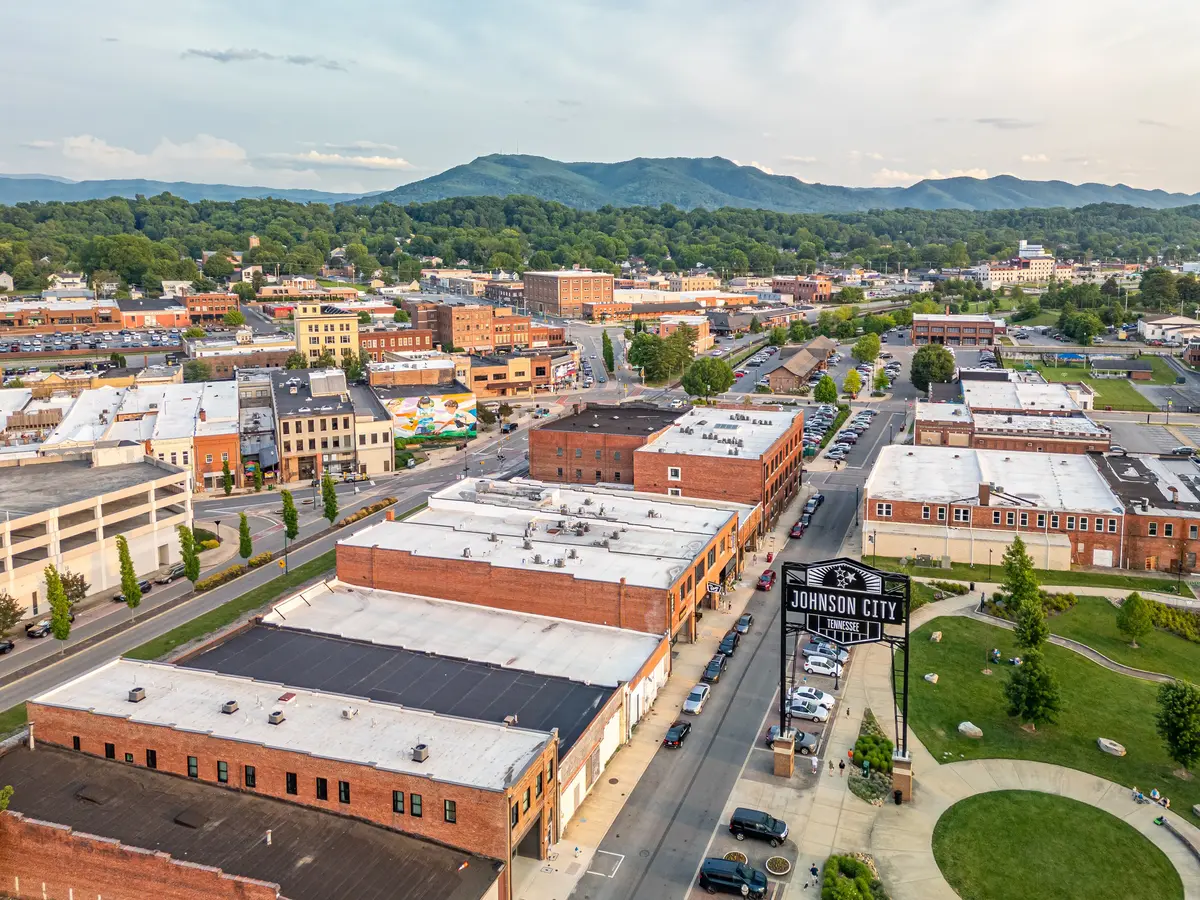
The commercial and retail core accounts for a disproportionate share of total incident counts. The central corridors see far more reported crime than the quieter residential areas to the northeast and northwest — the gap is large enough that city-wide averages are close to meaningless for someone picking a specific neighborhood.
Residents generally identify the northwest and northeast portions of the city as the safest areas. Those parts of town log relatively few incidents compared to the central core. Neither end of that range is alarming by national standards, but the difference is significant enough to matter when you're deciding between neighborhoods.
Neighborhoods Worth Knowing
Boones Creek, on the eastern side of the city, comes up consistently in family safety conversations. Newer residential development, active community involvement, and lower crime density make it one of the more straightforward choices for families with school-age children. The full neighborhood breakdown covers Boones Creek alongside the city's other residential areas.
Lake Ridge also draws families looking for lower-crime density and access to quality schools. Both areas benefit from being away from the commercial corridors where property crime concentrates.
Mountain Home sits below the city-wide typical home price — the full cost picture is here — and is anchored by the VA Medical Center campus, which brings a stable institutional presence to the neighborhood.
Downtown Johnson City and the Tree Streets neighborhood are urban environments with the activity levels you'd expect near a university and the city center. They're not dangerous in an absolute sense, but property crime awareness is simply more relevant there than in Boones Creek or Lake Ridge.
Cherokee, Seminole Woods, Gump Addition, and North Johnson City represent a range of residential character across the city. None carry a price tier in the current data, which reflects that conditions vary within each area rather than falling neatly into a single category.
How to Read a Crime Map for Johnson City
Crime maps are genuinely useful, but they reward careful reading — and Johnson City's geography produces a few specific distortions worth understanding before you use one to narrow your search.
Commercial Corridors Pull Up the Numbers
The high-density retail areas along major corridors produce elevated property crime figures that have more to do with shoplifting and vehicle break-ins near stores than with residential risk. If a heat map is showing elevated crime in an area you're considering, the first question to ask is whether you're looking at a residential block or a commercial strip. Those are genuinely different situations.
Parks and Gathering Spaces Do the Same Thing
Johnson City has a well-developed parks system — Winged Deer Park, Buffalo Mountain Park, Founders Park, and the Tweetsie Trail draw consistent use from across the city. Parks and recreational areas generate the same per-resident inflation effect as retail corridors: more people moving through means more opportunity for opportunistic property crime, and that shows up on heat maps even when the surrounding residential streets are quiet.
The University Factor
East Tennessee State University sits near the center of the city and generates the foot traffic, transient population, and late-night activity that correlate with elevated property crime in university cities nationwide. That's not a criticism of the university; it's structural. Neighborhoods farther from the campus tend to track lower on property crime in ways that are consistent and durable rather than statistical noise.
What this means practically: when you're researching a specific address or block, pull the crime data for a half-mile radius around that address rather than relying on the city-wide figure. Tools like CrimeGrade can help you look up a specific address. The variation within Johnson City is large enough that city-level averages don't tell you much about a specific street.
Looking to buy in Johnson City? Estimate your payment.
Enter your numbers to see an estimated monthly mortgage payment.
Estimate only. Excludes HOA fees and mortgage insurance. The interest rate above is a starting point, not a quoted rate — replace it with your own to see real numbers. Insurance is a flat placeholder, not a Johnson City quote.
Beyond the Monthly Mortgage Payment — What to Factor In
- The property tax rate above — The 0.43% used in the estimate is the median effective rate — tax actually paid as a share of market value — published by Ownwell, 2026. Half of local homes pay more and half pay less: your own bill depends on that property's assessed value and any exemptions it qualifies for, which can differ a lot from its market price. Confirm with the Washington County assessor before you budget.
- Total cost of ownership — Your monthly mortgage payment is just the baseline. Depending on the specific city, county, and service district, homeownership costs also include local utility fees, municipal surcharges, and special assessments (such as water, sewer, storm drainage, or local energy taxes) that vary by location.
- Independent due diligence — Because these recurring local costs and municipal fees change depending on the exact property address, buyers must research them independently during their transaction process.
Tax laws, local municipal fees, and utility costs change frequently and individual situations vary. This page is general information, not tax or legal advice — always consult a qualified tax professional, CPA, or local municipal offices for personalized guidance.
What Residents Say — and What the Police Department Looks Like
Residents who have settled in the quieter eastern and northeastern parts of the city consistently describe their neighborhoods as calm and low-drama. Those who live closer to the commercial core acknowledge the need for basic property crime habits — locked cars, nothing visible in back seats — but don't tend to describe the city as unsafe. The crime data backs up both assessments: the geography of risk here is real, and so is the relative quiet in the residential areas away from it.
The Johnson City Police Department
The Johnson City Police Department has held national accreditation through the Commission on Accreditation for Law Enforcement Agencies (CALEA) since 1993 — a continuous run of more than three decades of external review that most departments don't seek. It also holds state accreditation through the Tennessee Law Enforcement Accreditation Program. Both are meaningful markers of operational standards and departmental consistency.
The department maintains visible patrol presence across the city and runs active community engagement programs. The Junior Police Academy is a multi-day program for teens ages 14 through 18 covering patrol, K-9 operations, investigations, and crisis negotiation. Shop With a Cop runs annually in coordination with Johnson City Schools. These aren't headline safety statistics, but they're indicators of a department invested in community relationships — which tends to matter for the long-term safety picture in residential neighborhoods.
A Genuine Friction Point
One thing people don't always anticipate after moving to Johnson City: the city's property crime rate, while contextually explainable, is real enough to warrant habits you might not have developed in a smaller town. Leaving valuables visible in a parked car near commercial areas is an actual risk, not a theoretical one. Residents who develop that awareness quickly tend to find it a minor inconvenience. Those who don't sometimes have a frustrating early experience that shapes their perception of the whole city.
Safety by Neighborhood — Practical Guidance for Families
The research paints a clear enough picture that some directional guidance is possible, even without neighborhood-level crime rates attached to every address.
| Neighborhood | Safety Profile | Best For | Notes |
|---|---|---|---|
| Boones Creek | Lower crime density, frequently cited as family-friendly | Families Quiet | Newer residential development; active community; eastern part of city |
| Lake Ridge | Lower crime density; popular with families | Families Schools | Consistent with areas away from commercial corridors |
| Mountain Home | Stable, institutional anchor (VA Medical Center campus) | Value Quiet | Below city-wide typical home price; institutional neighborhood character |
| Tree Streets | Urban; walkable streets; closer to university activity | Walkable First-Timers | Property crime awareness more relevant here than in eastern neighborhoods |
| Downtown Johnson City | Commercial core; elevated property crime near retail | Walkable Renters | Highest traffic area; central location trades convenience for quieter streets |
| North Johnson City | Mixed residential; no single crime profile across the area | Commuters Families | Character varies within the neighborhood; research specific blocks |
| Cherokee / Seminole Woods | Residential; away from main commercial corridors | Families Nature | No price-tier data; conditions vary within the area |
| Gump Addition | Established residential neighborhood | Value First-Timers | Research specific streets; no single safety profile for the whole area |
Before deciding on a neighborhood, pull block-level crime data for specific addresses rather than relying on neighborhood-wide generalizations — the variation within some of these areas is meaningful.
What Families Actually Prioritize
Families settling in Johnson City tend to gravitate toward Boones Creek and Lake Ridge for the safety profile, then layer in school proximity and commute considerations from there. The schools page covers the district in detail — Johnson City Schools holds an A rating, according to Niche, and serves 7,623 students enrolled in 2024-25, which is a relevant input alongside safety when families are narrowing down neighborhoods.
Tweetsie Trail, Winged Deer Park, and Buffalo Mountain Park are where a lot of resident life happens on weekends — they're well-used, well-regarded, and in neighborhoods where the activity around the parks feels different from the commercial-corridor risk described above. The parks and recreation page covers those in more depth.
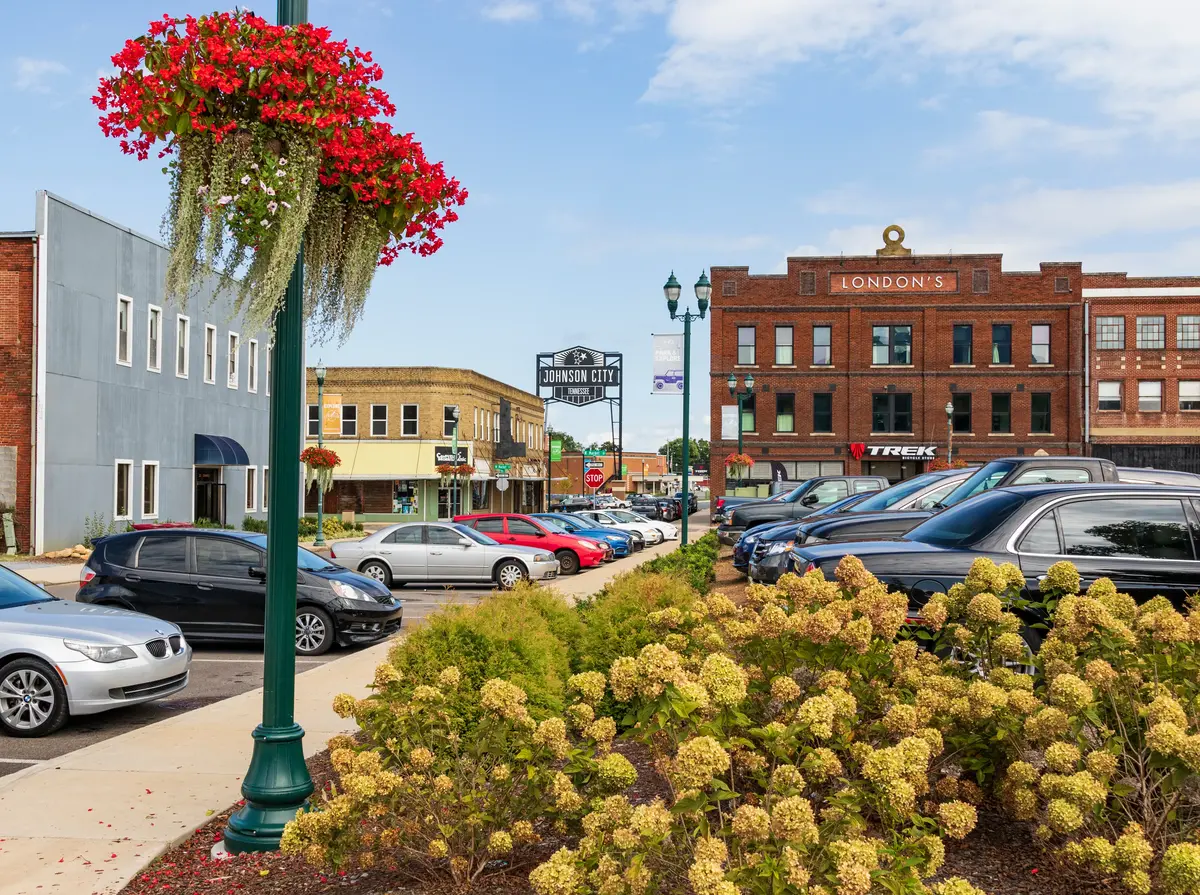
Local Expert Takeaway: Johnson City is not the property crime outlier its headline number suggests once you account for where that crime actually happens — commercial corridors, retail strips, and high-traffic areas near the university and city center. Families consistently land in Boones Creek and Lake Ridge for a reason: those neighborhoods track closer to a small-town safety feel than the city-wide figures would imply. The city carries a violent crime rate of 4 per 1,000 residents, which sits meaningfully below Tennessee's state average — and that matters more for daily peace of mind than the national comparison. Develop basic vehicle security habits near commercial areas, research specific blocks before settling on a neighborhood, and the picture becomes considerably more manageable than a first-pass number suggests.
Quick Takeaways & FAQs
✅ Johnson City has a violent crime rate of 4 per 1,000 residents, sitting below Tennessee's state rate of 6 per 1,000 — meaningfully safer than the state average on the measure that matters most to daily security.
⚠️ The city carries a property crime rate of 24 per 1,000 residents, concentrated in commercial corridors and near the university — a real pattern that requires awareness, not just reassurance.
📍 Boones Creek and Lake Ridge consistently earn the strongest family-safety reputation in the city; the commercial core sees the most incidents while the residential northeast sees far fewer — research specific neighborhoods, not just city-wide figures.
Is Johnson City, TN a safe place to live?
Which neighborhoods in Johnson City are safest for families?
How does Johnson City's crime rate compare to the rest of Tennessee?
Why does Johnson City's property crime rate look high on crime maps?
What is the Johnson City Police Department like?
Moving to Tennessee?
Tell us what you need help with and we'll connect you with local resources.
