About Gary
What the Numbers Say — and What They Don't
The typical home price in North Bend sits at $362,945 as of July 2026 (Zillow Home Value Index). For anyone relocating from Portland, the Bay Area, or even Eugene, that number tends to stop the conversation — in the best way. But a price point is only useful if you understand what it buys and where.
North Bend has a violent crime rate of 1.7 per 1,000 residents and a property crime rate of 32 per 1,000 residents. The violent crime figure sits meaningfully below both the Oregon state rate of 3.3 per 1,000 and the national rate of 3.7 per 1,000. The property crime figure runs above the state rate of 24.5 per 1,000 and the national rate of 18.4 per 1,000 — and I tell every buyer that plainly rather than burying it. Property crime along the coast tends to track with tourism cycles, and North Bend is no exception. That said, the neighborhoods I work in most — Simpson Heights, Cooston, Pony Creek Estates — are genuinely quiet residential areas where most residents don't think about it much.
The median household income here is $83,484, which does not fully close the gap to the typical purchase price without a meaningful down payment. That is an honest constraint for first-generation buyers in this market, and I'd rather say it directly than let anyone discover it after they've already fallen for a house.
The effective property tax rate is approximately 0.71%, which is low by Oregon standards and makes the carrying costs here genuinely manageable once you're in. For buyers moving from higher-tax states, that number often comes as a pleasant surprise.
North Bend Neighborhoods — Where You Actually Land Matters
Glasgow
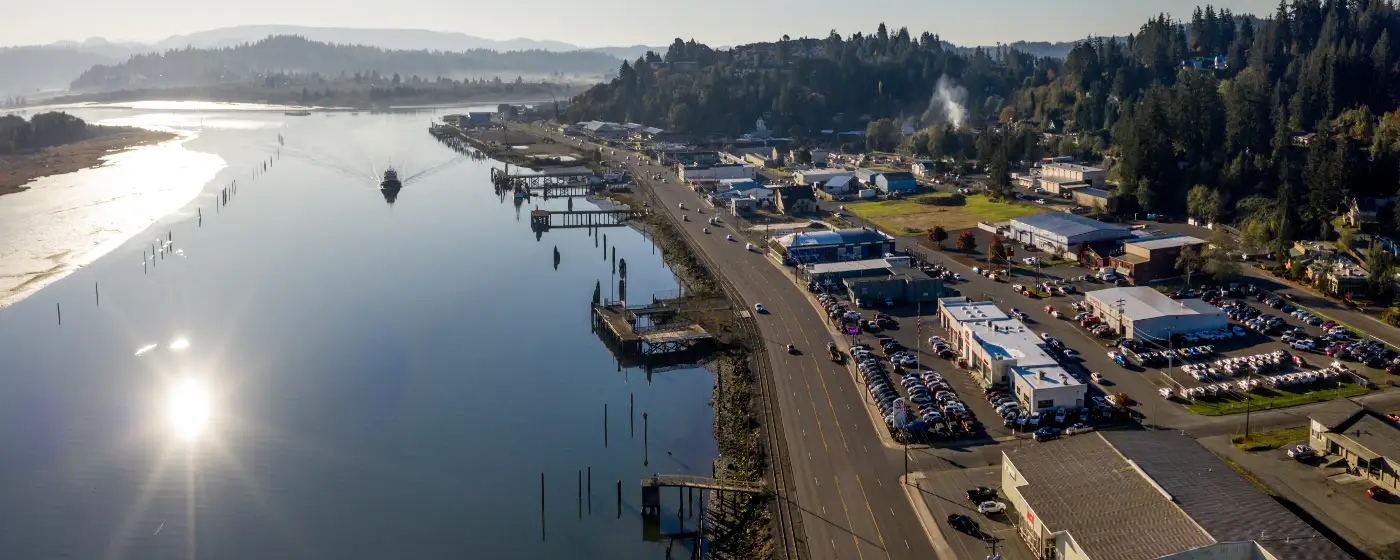
Glasgow sits closest to the bay, and that orientation shapes everything about it — the views, the access to fishing and boating, the feel of the streets. It draws a mix of families and retirees, and it tends to run at the higher end of the North Bend market because of that waterfront character. If the bay is what brought you here, Glasgow is where that pull is strongest.
Simpson Heights
Simpson Heights is one of the neighborhoods I point buyers toward most consistently. It's an established, walkable area with scenic views and a close-knit community feel that takes a little longer to find elsewhere in the city. Families with school-age children and retirees both land here and tend to stay. The streets are quieter than you'd expect for an area this well-positioned.
Cooston and Pony Creek Estates
Cooston offers solid residential stability — the kind of neighborhood where people buy and stop moving. Pony Creek Estates sits on the quieter, more secluded end of the spectrum and appeals to buyers who want space and privacy without feeling disconnected from the city. Both tend to attract buyers focused on long-term value rather than the premium of a bay address.
Airport Heights and Mariner Heights
These neighborhoods sit near the Southwest Oregon Regional Airport, and for some buyers that proximity is a feature rather than a concern. The airport is small — Southwest Oregon Regional Airport (OTH) is about a mile from the city center — and its flight schedule is limited enough that noise is rarely what buyers here talk about. These areas tend to offer more accessible price points within the city.
East Bay and Hillcrest
East Bay gives buyers another angle on the water without the full premium of Glasgow. Hillcrest, as the name suggests, offers elevation and views. Neither neighborhood is dramatically different from the city's overall profile, but each draws buyers with a clear preference for one or the other.
My honest read: the neighborhood choice in North Bend matters more than the citywide averages suggest. The gap between a bayside address in Glasgow and a quieter inland block in Cooston is not just geographic — it's a different daily experience. Get that decision right before you go under contract.

North Bend vs Nearby Cities
| City | Typical Home Price | Typical Rent | Cost vs North Bend |
|---|---|---|---|
| North Bend (this city) | $362,945 | $1,533/mo | — |
| Coos Bay | $330,015 | $1,603/mo | 9% lower |
| Charleston | $400,000 | $1,500/mo | 10% higher |
| Coquille | $329,773 | $1,300/mo | 9% lower |
Source — home prices: Zillow ZHVI, July 2026; rent: Zillow ZORI, July 2026. Nearby-city figures are the same series, refreshed together.
I get this comparison constantly, and the honest version is more nuanced than the price tables make it look.
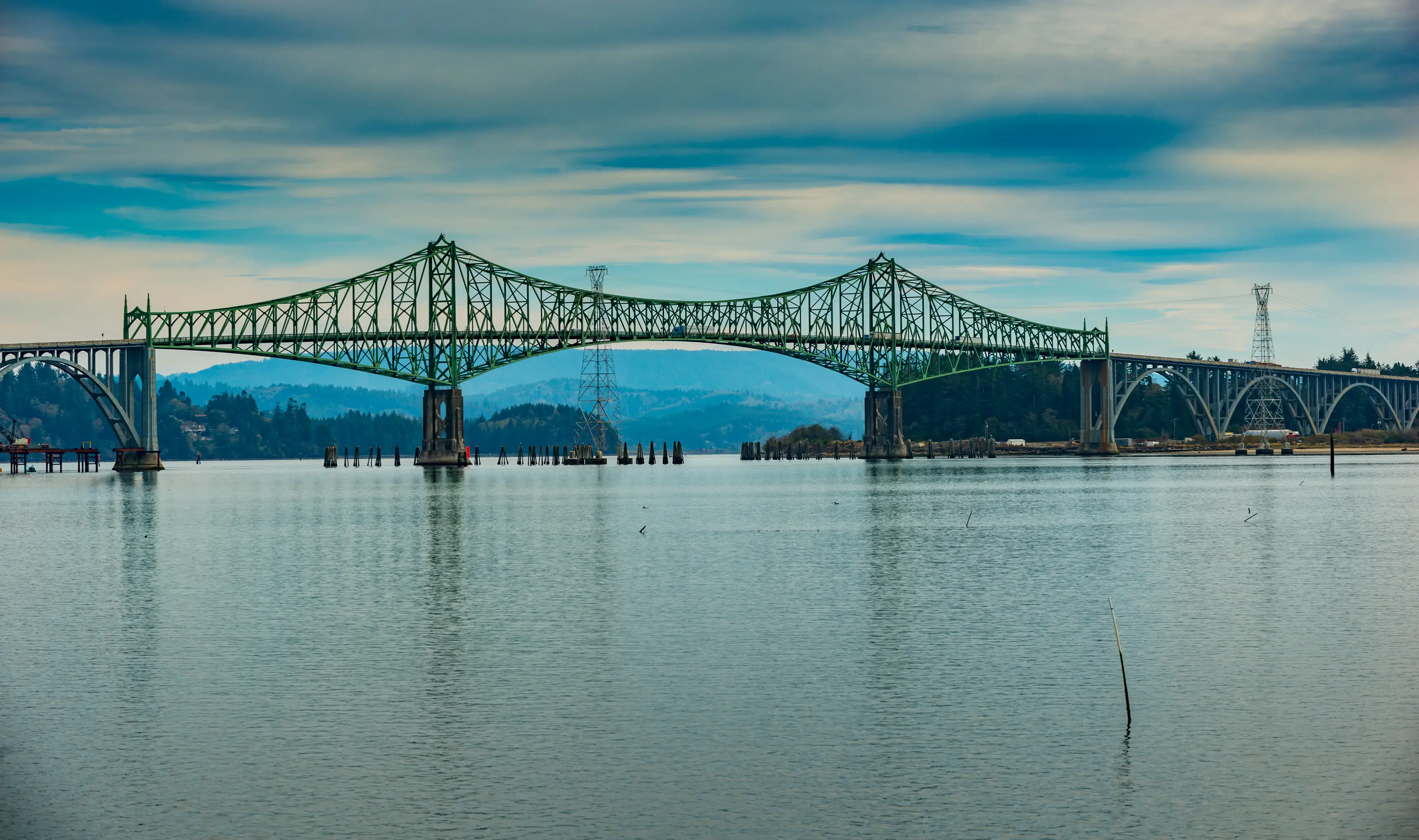
Coos Bay is the city most buyers weigh against North Bend first, because they're effectively one continuous community separated by the Conde B. McCullough Memorial Bridge and the Coos Bay estuary. Coos Bay's typical home price runs somewhat lower than North Bend's. The trade is not just dollars — Coos Bay carries more commercial density, more services, and a slightly grittier urban core. North Bend tends to feel quieter and more residential. Most of my buyers who work in Coos Bay choose to live in North Bend; the commute is about 10 minutes to Coos Bay, which is genuinely nothing.
Charleston is a fishing community a short drive via OR-540 (Cape Arago Highway), and its typical home price runs somewhat higher than North Bend's, reflecting the appeal of its marina setting and the more limited inventory of a very small unincorporated community. Buyers who choose Charleston over North Bend are usually making a lifestyle choice first and a financial one second.
Coquille sits inland — about 20 minutes east — and runs somewhat lower in price than North Bend. For buyers who need more house for the money and can tolerate losing the immediate coast, Coquille is worth a look. What you give up is the bay, the dunes, and the walkability that North Bend's boardwalk and waterfront trail provide.
Lakeside and Bandon both have their advocates. Lakeside is a smaller community north of the dunes with a lake-centered lifestyle. Bandon, south of North Bend, appeals to buyers drawn to its cranberry bogs, the golf destination that has put it on the national map, and a distinctive arts-and-crafts town character. Neither competes directly with North Bend on services or school infrastructure.
The engine renders comparison figures in the table below — but the numbers don't tell you which community fits your life. That's the conversation I have with every buyer before we ever look at a listing.
Looking to buy in North Bend? Estimate your payment.
Enter your numbers to see an estimated monthly mortgage payment.
Estimate only. Excludes HOA fees and mortgage insurance. The interest rate above is a starting point, not a quoted rate — replace it with your own to see real numbers. Insurance is a flat placeholder, not a North Bend quote.
Schools in North Bend
North Bend School District 13 serves the city, with 2,698 students enrolled in 2025-26, according to figures the Oregon Department of Education publishes. It's a district I know well from working with families who are choosing between this area and others on the coast.
On 2024-25 state assessments, 36.3% of students reached math proficiency and 45.9% reached reading proficiency, as the Oregon Department of Education publishes. Those figures sit below Oregon's statewide averages, and I don't paper over that for families with school-age children. Context matters: this is a small coastal district with a 10,049-person city behind it, not a suburban district with the resource base of a larger metro community.
What I can tell you from working with families here is that the district has active OSAA athletics programs, a mascot that fills the Friday night stands, and teachers who tend to know their students by name in a way that larger districts simply don't. That relational quality matters to a lot of parents, and it doesn't show up in proficiency percentages.
Anyone seriously considering a move to North Bend should do their own due diligence on the schools — confirm the assigned school for a specific address directly with the district, and review the data the Oregon Department of Education publishes themselves. Boundary lines matter, and the right address for a family's school preference is not always the address with the best backyard.
What the Oregon Coast Life Actually Looks Like Day-to-Day
The thing I watch buyers discover in the first six months is that coast living has a different pace than they planned for. North Bend gets 186 sunny days a year — which is not the cloudless summers people imagine when they say "the Oregon Coast," and not the relentless gray people fear either. It is somewhere in the middle, leaning toward overcast from late fall through spring, with genuine warmth and clarity in July and August that reminds you exactly why you came.
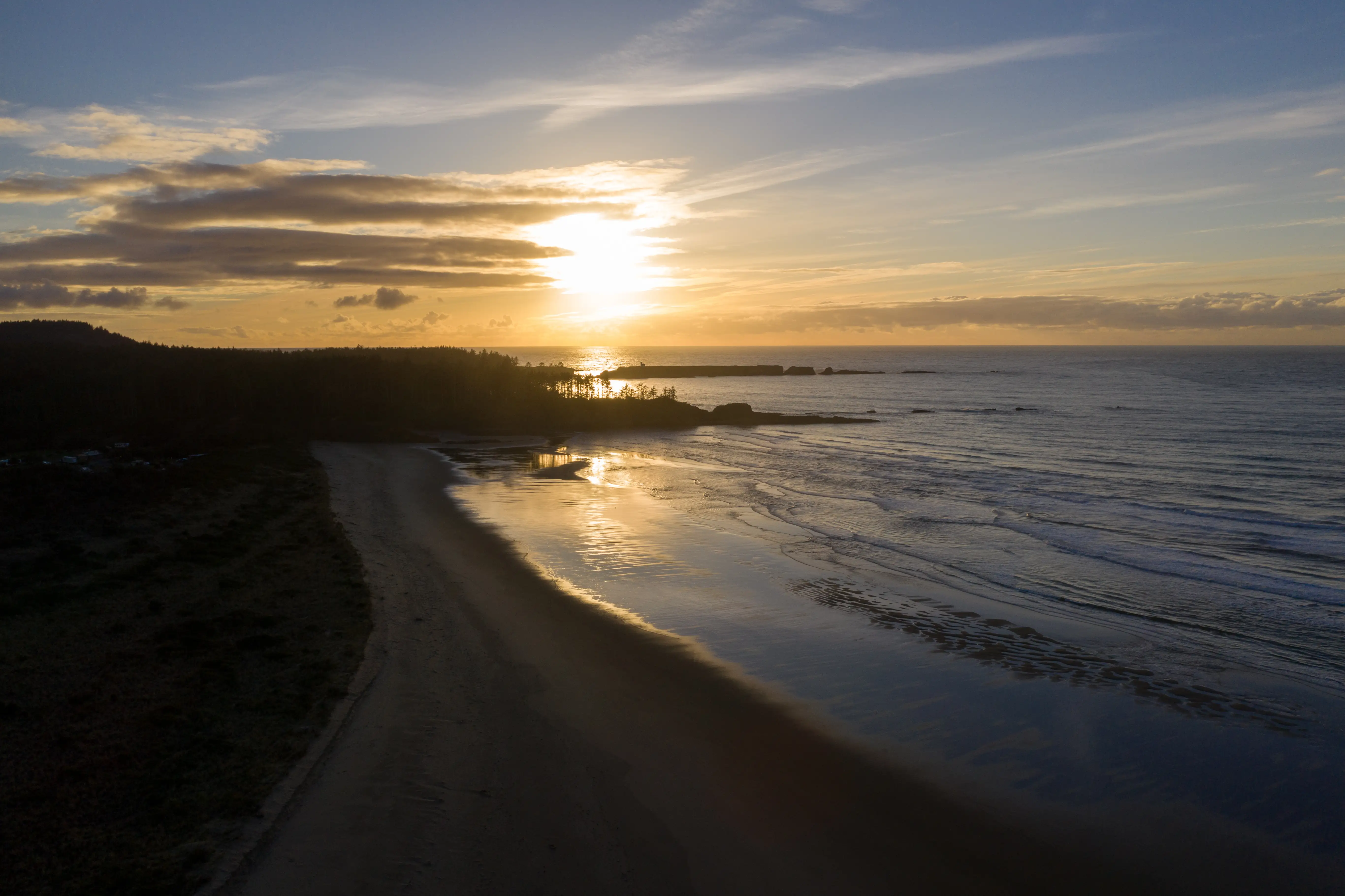
Daily life here is anchored by what's at hand. The North Bend Boardwalk and the McCullough Bridge waterfront trail give residents pedestrian access to the bay and estuary without getting in a car. Horsfall Beach, within the Oregon Dunes National Recreation Area, is the kind of place that locals treat as a backyard — miles of open sand, the largest coastal sand dune system in North America, ATV and off-highway vehicle access through the Horsfall Road area, and no crowds by any coastal standard I've seen elsewhere.
Southwest Oregon Regional Airport sits about 1 mile from the city center. United Airlines, operated by SkyWest, offers nonstop service to San Francisco International Airport and seasonal nonstop service to Denver International Airport. For a city of 10,049, that direct connection is genuinely valuable — I've had clients for whom it was the deciding factor.
The trade-off is real: this is not a city with every chain retailer, every restaurant category, or every medical specialist within walking distance. A serious shopping trip or a specialty appointment means planning. Buyers who thrive here are the ones who make peace with that trade before they arrive — not after.
The Conde B. McCullough Memorial Bridge is the kind of civic landmark that starts showing up in how people describe where they live. Completed in 1936 and spanning 5,305 feet across Coos Bay, it's listed on the National Register of Historic Places. When buyers ask me what makes North Bend feel like a place rather than just a location, the bridge is usually part of the answer.
Weekends and Local Favorites
One of the first questions I get from buyers relocating here is what people actually do on weekends. The honest answer is that most of it happens outdoors — and the infrastructure for it is genuinely exceptional for a city this size.
Oregon Dunes National Recreation Area draws the region every weekend. The dunes tower up to 500 feet above sea level and extend inland up to 2.5 miles. Sandboarding, OHV riding, hiking, and horseback riding all happen here, and the variety means the dunes don't get old the way a single-use recreation area does.
Simpson Park anchors the city's green space on the residential side. The North Bend Boardwalk is where the community gathers on mild evenings — families walking the bay, locals unwinding at the end of the day, visitors who showed up for the bridge and stayed for the estuary views.
For food and coffee, the local scene punches above its weight for a city of this size. Vinny's Smokin' Good Burgers & Sandwiches has a local following that extends well beyond North Bend. Captain's Choice Fish House is exactly the kind of place the coast warrants — straightforward, fresh, and genuinely good. Yeong's Place Sandwiches & Exotic Burgers has earned its reputation for being unlike anything else in the region. La Herradura draws the community for Mexican food, and Hilltop House Restaurant & Lounge carries the classic coastal dinner-house character that buyers from the city sometimes don't expect to find this well-executed.
On the coffee side, Coast Cruiser Coffee, Black Anchor Coffee House, and Coastal Coffee handle the casual daily need. Ezekiel's Tin Rooster Bakery Coffee Shop Bookstore & Roastery and 350 Degrees Corporation offer something more layered — the kind of places where people sit longer than they planned. For a city of 10,049, having this range of independent coffee and food options is not a given. It's one of the things I point out to buyers who are weighing quality of daily life.
Final Advice From Gary
Quick Takeaways & FAQs
✅ North Bend's typical home price of $362,945 (July 2026) puts genuine coastal Oregon ownership within reach for buyers priced out of larger markets.
⚠️ A property crime rate of 32 per 1,000 residents runs above the state average — worth understanding by neighborhood before you decide where to buy.
📍 Southwest Oregon Regional Airport sits about 1 mile from the city center and offers nonstop service to San Francisco, which matters more in a remote coastal city than buyers initially expect.
What is the commute from North Bend to Coos Bay like for daily work?
What do the North Bend schools look like, and how should I evaluate them?
Which North Bend neighborhood is the best fit for families?
What does $362,945 actually buy in North Bend right now?
How does North Bend compare to Coos Bay for a buyer who could go either way?
What surprises people most after they've lived in North Bend for six months?
How fast do homes move in North Bend, and what does the buying process look like?
Is North Bend a good fit for retirees, and what should they know going in?
Moving to Oregon?
Tell us what you need help with and we'll connect you with local resources.
