What Is Living in Estacada, Oregon Like?
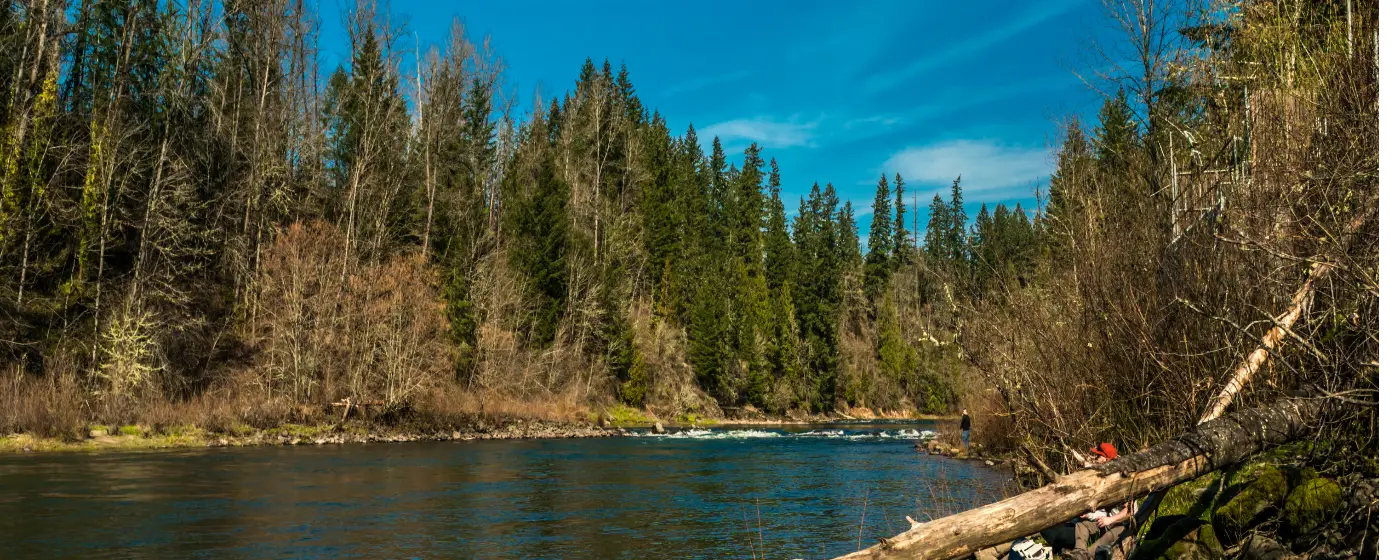
Maybe your price point keeps getting pushed further from Portland and someone mentioned Estacada. Maybe you drove OR-224 on a summer weekend — windows down, the Clackamas River flashing through the Douglas firs — and started wondering what it would cost to actually live here. The central tension of any Estacada decision is the same one it has always been: you are trading proximity for space, and the drive is the price. At about 35 miles southeast of Portland, this is a city of 5,421 people where the river is not a backdrop but a genuine organizing force — people fish it, float it, and build their weekends around it, and the Faraday and River Mill hydroelectric dams that gave the town its original reason to exist still stand along its banks.
The economic backbone here is leaner than in closer-in suburbs. Estacada School District, the City of Estacada, Portland General Electric, and the US Forest Service are the anchors. Remote work has quietly become the undeclared fifth employer — a meaningful share of residents commute digitally rather than physically, which is part of what makes a small timber-town feel sustainable at a household income of $94,435. The school district, with 3,354 students enrolled in 2025-26, holds a B rating, according to Niche, and the Rangers bring the kind of Friday night energy that makes high school football feel like a civic event rather than just a game. People moving here tend to fall into two camps: outdoor-first buyers who wanted acreage and Cascade access, and Portland-adjacent buyers who needed the mortgage math to work.
Home prices here sit noticeably below the closer-in Portland suburbs, and the effective property tax rate of 0.96% is reasonable by Oregon standards. The trade-off is a more deliberate lifestyle — most errands require a drive, a serious shopping run means leaving town, and the outdoor amenities that make Estacada worth it (Milo McIver State Park's nearly 14 miles of trails, the Clackamas River itself, Eagle Fern Park) require you to genuinely use them. The city averages 142 sunny days a year, which is honest rather than aspirational — winters are green and wet, and residents who love the forest in rain tend to stay. For a fuller breakdown of what those numbers mean for your budget, see the cost of living page.
Whether you're weighing a move or just doing early research, the sections below break down Estacada's neighborhoods, housing market, daily life, commute realities, and the local spots that give this small city its character.
Estacada at a Glance
Looking to buy in Estacada? Estimate your payment.
Enter your numbers to see an estimated monthly mortgage payment.
Estimate only. Excludes HOA fees and mortgage insurance. The interest rate above is a starting point, not a quoted rate — replace it with your own to see real numbers. Insurance is a flat placeholder, not a Estacada quote.
Why Are People Moving to Estacada?
The case for Estacada is cleaner than people expect when they first look at the map. You get a single-family home with a real yard, a genuine outdoor lifestyle anchored to the Clackamas River and Mt. Hood National Forest, and a community small enough that neighbors actually know each other — all at a price point that would buy you a fraction of that in Lake Oswego or West Linn.
The Outdoor Access Is the Main Event
Milo McIver State Park sits along the river within the city's orbit: 950 acres, nearly 14 miles of trails, a 27-hole disc golf course, a boat ramp on the Clackamas, an ADA fishing dock on Estacada Lake, and a fish hatchery with self-guided tours. Steelhead and Chinook runs draw anglers who would otherwise pay far more to live near comparable water. Promontory Park and Eagle Fern Park extend the options. OR-224 heads southeast directly into Mt. Hood National Forest, so trailheads that would be a destination from Portland are a Tuesday-evening option from here.
The Community Texture Is Real
Downtown murals painted during the Artback Artists Cooperative Summer Celebration depict Native American history, the pioneer era, and the city's timber-town past — they make the main street feel like a place with a memory rather than a commercial strip. The Estacada Farmers Market and seasonal arts walks give residents regular reasons to gather on foot. Friday night Rangers football fills the stands in a way that only happens in cities where the school is still the center of civic life.
Who Actually Moves Here
| Buyer Type | What Draws Them | Best Fit |
|---|---|---|
| Remote workers | Space, quiet, Cascade access without Portland rents | Nature Value |
| Outdoor-first families | River, trails, and a school community that shows up | Families Nature |
| Price-conscious buyers | Noticeably lower home prices than closer-in Clackamas suburbs | First-Time Value |
| Retirees seeking quiet | Rural pace, river scenery, single-level homes in the general market | Quiet Nature |
| PGE / Forest Service employees | Local employer ties; no long commute needed | Commuter |
| Privacy seekers | Acreage options, distance from metro density | Privacy Views |
What people don't always anticipate: after six months, the river stops being a novelty and becomes part of your routine. That's the version of Estacada that keeps people from leaving.
Why People Leave
The honest reason residents move away is the commute — not just the distance, but the fact that OR-224 is a two-lane highway with no real alternative when it backs up. Buyers who underestimate how much that daily drive costs in time and energy tend to leave within two or three years. The other common reason is the service gap: if you have specialized medical needs, school-age children in specific extracurricular programs, or a household that needs reliable same-day retail, living 45 minutes from Portland by car creates friction that compounds over time. Neither of these is a reason not to move here; they are the reasons to go in with clear eyes.
What Daily Life Feels Like in Estacada
Daily life in Estacada runs at a pace that takes most people from the Portland metro a few months to genuinely appreciate. The town is small enough that you will recognize faces at the Estacada Farmers Market within a season of living here. It is not a bedroom community in the disconnected sense — people are invested in the place.
The Morning Rhythm
A weekday morning in Estacada tends to involve a stop at one of the independent coffee spots before a commute or a walk toward the river. For remote workers, the pace is gentler: the river trail is uncrowded before 8 a.m. in a way that a Forest Park trail in Portland simply isn't. The absence of a metro-style rush hour is one of those things residents mention most often when asked what they didn't expect.
Errands and Services
This is where the lifestyle requires an honest adjustment. Most routine grocery shopping and pharmacy needs can be handled in town, but a serious errand run — home improvement supplies, specialty groceries, bigger-box retail — means driving out. Residents who plan a weekly or biweekly supply run adapt quickly; those who need constant access to a full retail environment find the friction real. The city's downtown has independent shops and a handful of service businesses, but it is not a substitute for a suburban commercial corridor.
The Seasonal Pattern
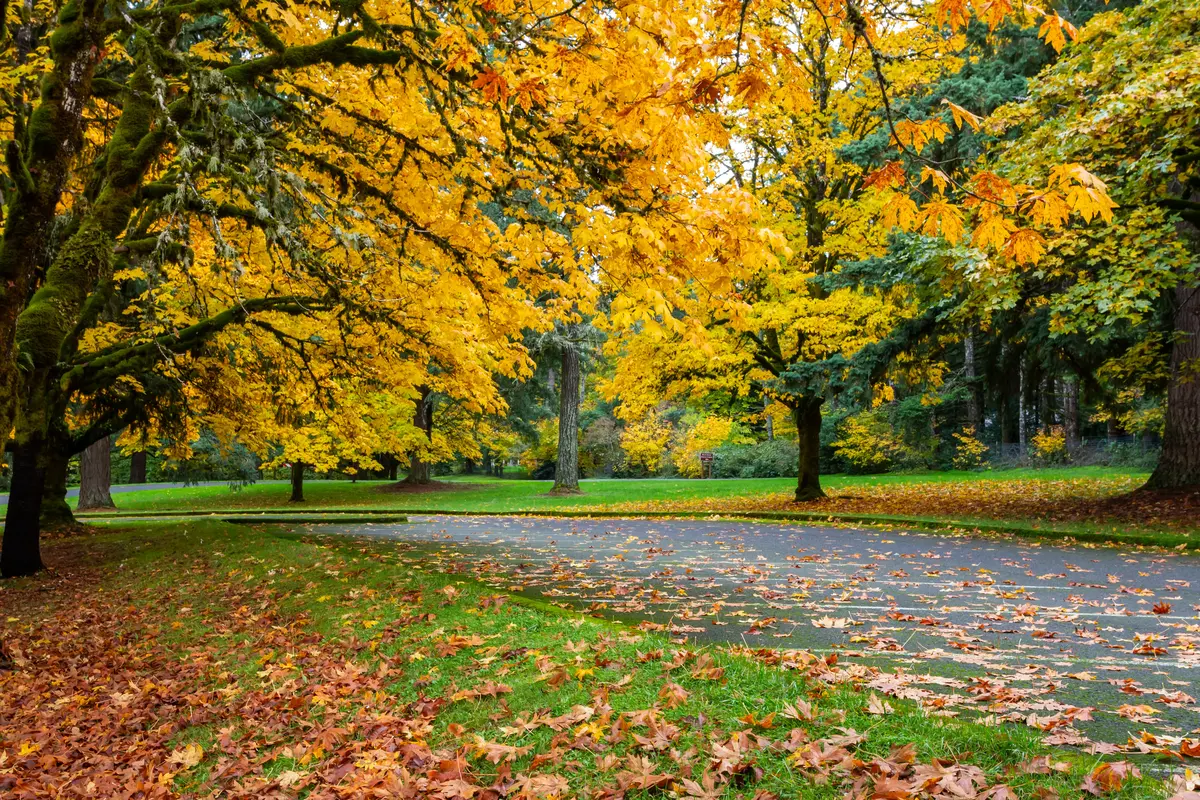
With 142 sunny days a year, Estacada winters are genuinely wet and overcast. New arrivals from sunnier climates — or even from Portland's west side, which sees marginally more breaks — sometimes underestimate how deeply green and grey the Clackamas valley gets from November through March. The flip side is that summer here, with the river at low flow and the forest at full canopy, is extraordinary. The town fills up slightly on summer weekends as Portland residents drive OR-224 toward Milo McIver and the national forest, which surprises residents who chose Estacada partly for its quiet.
Schools and Kids' Daily Life
With 3,354 students enrolled in 2025-26, the Estacada School District is the connective tissue of the community in a way that larger district towns rarely are. Families with school-age children find that the small-district feel means teachers know kids by name across grades, and the Rangers athletic program — football, in particular — is a community gathering point, not just a sports event. For more on district performance and individual schools, see the schools page.
The safety picture supports the lifestyle claim: Estacada has a violent crime rate of 2.2 per 1,000 residents and a property crime rate of 9.3 per 1,000 residents — both well below Oregon state averages of 3.3 and 24.5 per 1,000 respectively. The full breakdown is on the safety page.
The Estacada Housing Market Right Now
The Estacada market is one of the more buyer-friendly spots in the greater Portland orbit. The typical home price sits at $544,421 (Zillow Home Value Index, July 2026), which is noticeably below what comparable single-family square footage runs in Oregon City or Sandy. The inventory here skews heavily toward detached single-family homes — condos and townhomes are a negligible share of what comes to market.
What the Pace Actually Means for Buyers
Homes here sit on the market for extended periods relative to closer-in suburbs, and competing-offer situations are uncommon. That gives buyers meaningful room to negotiate on price and conditions — a real departure from the compressed timelines that defined the inner Portland suburbs for years. Well-priced, move-in-ready homes still move, but this is not a market where you need to waive contingencies to compete.
The Housing Stock
The dominant product type is the Pacific Northwest ranch and split-level from the 1970s through the 1990s, with newer construction scattered through subdivisions like Cascadia Ridge and Faraday Hills. Acreage parcels exist on the edges of town and are part of why the privacy-seeking buyer profile is so common here. Some areas sit closer to the mill and industrial land along OR-224, which affects both the setting and the price — not every street in Estacada offers the same forested quiet.
The city's 90-acre Mill Mixed Use Area along OR-224 was designated for long-range redevelopment, with multimodal access goals supported through a federal Thriving Communities Program grant awarded to the city — a signal that the riverfront corridor may look different in a decade than it does today. For the full picture on city-wide pricing, rent figures, and what the effective tax rate means for your budget, the cost of living page goes deeper. To understand how neighborhoods break down by character and feel, see the neighborhoods page.
Buyer Types This Market Suits
First-time buyers who have been squeezed out of Oregon City or Milwaukie find that their down payment goes meaningfully further here. Remote workers who only need to make the Portland drive occasionally find the math compelling. The catch is that you are making a lifestyle bet as much as a financial one — and the buyers who are happiest here are the ones who did both calculations before signing.
Estacada Neighborhoods
Estacada has several distinct areas — each with its own character and appeal. Here’s a breakdown to help you narrow down where to focus your home search.
🏡 Cascadia Ridge
Cascadia Ridge sits on the higher ground northeast of downtown with newer construction and a suburban subdivision feel that contrasts with Estacada's older core. It appeals to families and buyers who want a more recent housing stock in a setting that still backs up to forested terrain.
🏠 Currin Creek Estates
Currin Creek Estates offers a quieter residential character with the creek corridor lending a natural buffer between properties. Buyers here tend to prioritize space and a semi-rural setting within reach of the town center.
🌳 Dugan Estates
Dugan Estates is a residential pocket with a mix of established homes on generous lots, attracting buyers who want more yard than the compact downtown neighborhoods offer without moving fully to the edge of the city.
🏘 Faraday Hills
Faraday Hills takes its name from the hydroelectric history along the river and sits with some of the elevated terrain views that draw buyers who want scenery built into the daily setting. The area has a mix of housing ages and tends to suit buyers who prioritize landscape over walkability.
🏔 Campanella Estates
Campanella Estates is a residential area with a neighborhood-subdivision character that suits families with school-age children who want a conventional suburban layout within Estacada's small-city context.
🌆 Downtown Estacada
Downtown Estacada is the most walkable part of the city — the mural district, the Farmers Market, the independent coffee shops, and the casual dining scene are all within a compact core that rewards residents who want to leave the car at home for at least some daily errands.
Pros & Cons of Living in Estacada
The Pros
- Home values remain more attainable than closer-in Portland suburbs
- Direct access to the Clackamas River, Milo McIver State Park, and Mt. Hood National Forest for hiking, rafting, and camping
- Small-town, community-oriented atmosphere with a walkable historic downtown
- Growing local job base tied to a new mass-timber and light-industrial park
The Cons
- Long commute into Portland-area jobs along a winding two-lane highway
- Crime rate runs somewhat higher than the Oregon average
- Local school district posts below-average state test scores and district ratings
Getting Around & Commuting in Estacada
OR-224 (Clackamas Highway) is the artery that connects Estacada to everything else. It is the only route in and out toward Portland, running northwest through the Clackamas corridor before reaching Milwaukie and the metro. OR-211 (Woodburn-Estacada Highway) intersects OR-224 in town, providing a link southwest toward Molalla and northwest toward Sandy and US-26. These two routes are the complete highway picture for daily life here.
The Commute to Portland
The drive to Portland is about 45 minutes under normal conditions. That figure is the honest average — not the best-case 35-minute run at off-peak hours, and not the 70-minute grind when rain and a fender-bender stack up on the two-lane stretch. OR-224 has no bypass and no parallel route. Buyers who work in Portland five days a week and are planning around the best-case number are the ones who move away.
Driving Is Central to Daily Life
For the overwhelming majority of residents, a car is the only realistic way to manage daily life. Most errands within town can be reached by foot or bike once you're in the right part of town, but the town is small enough that the on-foot radius covers a limited set of needs. Longer supply runs — home improvement, specialty groceries, bigger-box retail — mean leaving Estacada entirely, typically toward Oregon City.
Local Employers and Short Commutes
For the segment of residents who work for Estacada School District, the City of Estacada, Portland General Electric, PGE Faraday, or the US Forest Service locally, the commute equation flips entirely. These employers keep a portion of the workforce within the city limits, and the daily drive to work means minutes rather than an hour. OR-224 also forms the northern terminus of the West Cascades Scenic Byway, which means the route south toward Ripplebrook and the national forest is the same road many residents drive for recreation — the commute and the outdoor access share the same pavement.
Portland International Airport
Portland International Airport (PDX) is approximately 35 miles from Estacada — plan for close to an hour by car, and account for the fact that OR-224 does not always cooperate on an early departure morning. Regular travelers should build buffer time into airport runs in a way that closer-in suburb residents generally don't have to.
| Destination | Drive Time (typical) | Route | Notes |
|---|---|---|---|
| Downtown Portland | About 45 minutes | OR-224 northwest | No bypass; weather and incidents add time |
| Oregon City | ~25 minutes | OR-224 northwest | Nearest mid-size retail hub |
| Sandy | ~20 minutes | OR-211 northwest | US-26 access point |
| PDX Airport | ~55–60 minutes | OR-224 to metro | Build buffer for early flights |
| Ripplebrook / Mt. Hood NF | ~30–40 minutes | OR-224 southeast | National forest trailheads; no services |
| Molalla | ~25 minutes | OR-211 southwest | Rural; limited commercial services |
The commute table above captures the real geography of living here. Everything worthwhile to the west is served by OR-224; everything recreational to the east is served by the same road.
Schools in Estacada
Families relocating to Estacada have public, private, and higher-education options nearby. Here’s a quick overview.
🎓 School District
Estacada School District 108 serves K–12 students across Estacada and the surrounding area. Rated B (source: Niche.com).
🏆 Graduation Rate
The 4-year high-school graduation rate here is approximately 92.2%.
📚 Higher Education
Oregon’s public universities — the University of Oregon, Oregon State University, and Portland State University — offer four-year degrees statewide, with a network of 17 community colleges providing two-year and workforce programs.
🌐 Online Learning
Oregon State University Ecampus and Portland State University Online offer fully accredited online degrees for remote learners across the state.
Safety in Estacada
A quick look at how Estacada compares on the numbers that matter most when weighing a neighborhood or a move.
🛡 Violent Crime
Approximately 2.2 per 1,000 residents.
🔒 Property Crime
Approximately 9.3 per 1,000 residents.
Compared to the most recent national figures from the Bureau of Justice Statistics (2024), Estacada’s violent crime is below the national average (about 3.7 per 1,000), and property crime is below the national average (about 18.4 per 1,000).
Against Oregon as a whole, Estacada’s violent crime is roughly two-thirds of the state average, and property crime is roughly a third of the state average (Bureau of Justice Statistics, Crime Known to Law Enforcement, 2024 (tables 2 and 3)).
Crime rates can vary a lot within a single city, so the citywide numbers above are only a starting point. Some neighborhoods in Estacada run well below these averages, while others run higher — the kind of block-by-block detail that matters most when you’re actually choosing where to live. The full guide below breaks it down neighborhood by neighborhood.
Working in Estacada
Estacada’s largest employers span several industries — here are some of the anchors of the local job market.
🎓 Estacada School District
Education
🏛 City of Estacada
Municipal government
💼 Portland General Electric
Utilities
💼 PGE Faraday
Utilities
🏛 US Forest Service
Government
Parks & Recreation in Estacada
Some of the outdoor spaces that shape everyday life in Estacada.
🌱 Milo McIver State Park
🌱 Estacada Timber Park
🌱 Faraday and River Mill hydroelectric dams
Estacada residents don’t have to go far for green space — spots like Milo McIver State Park and Estacada Timber Park are part of everyday life here, whether that’s a morning walk, a weekend hike, or just somewhere to unwind outside. The full guide below covers more of what Estacada has to offer for parks and outdoor recreation.
Retiring in Estacada
Estacada draws retirees for its balance of amenities, outdoor access, and cost. Here’s what to weigh.
🌤 Climate
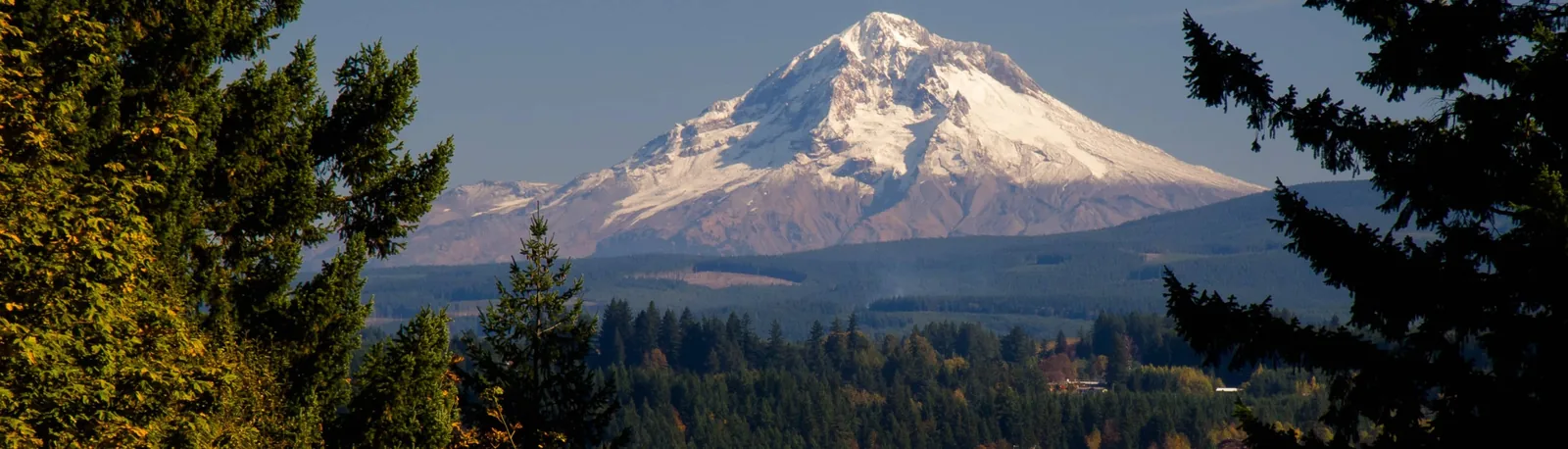
Estacada sits in the Clackamas River valley at the edge of the Cascades, which means wetter, greener winters than the Portland metro average and 142 sunny days a year. Summers are genuinely warm and clear. Retirees who love the Pacific Northwest forest aesthetic and don't mind rain from November through March tend to settle in well; those who need more sun typically find the valley's cloud cover harder to accept over time.
🍴 Lifestyle
Daily life here centers on the outdoors — the Clackamas River, Milo McIver State Park, Eagle Fern Park, and the national forest trails that begin just east of town. Downtown has independent coffee shops, casual dining, and a farmers market that serves as a community anchor. The pace is deliberate and low-pressure, which suits retirees who moved away from metro density intentionally.
🏚 55+ Communities
Dedicated 55+ or active-adult communities are not part of Estacada's housing market. Retirees who want to live here purchase in the general residential market, with single-level ranch and split-level homes being the natural fit for buyers planning to age in place. For details on senior living options in the broader region, see the retiring in Estacada page.
✈ Getting Around
A car is essential. OR-224 connects Estacada to the Portland metro and all major services, and most daily needs — medical appointments, specialty shopping, entertainment — require driving toward Oregon City or Portland. Portland International Airport (PDX) is approximately 35 miles away; plan for close to an hour by car depending on conditions.
🏛 Oregon Taxes for Retirees — What to Know
- Social Security is not taxed — Oregon does not tax Social Security or Railroad Retirement benefits. Any amount included in your federal adjusted gross income is subtracted back out on the Oregon return.
- But other retirement income IS taxed — This is the trade-off that surprises people moving from Washington or Texas. Pension distributions and 401(k)/IRA withdrawals are taxed as ordinary income at Oregon’s regular rates — there is no blanket retirement-income exclusion.
- Graduated income tax — Oregon has four brackets — 4.75%, 6.75%, 8.75% and 9.9%. The 4.75% rate covers the first $10,000 of taxable income for a single filer ($20,000 filing jointly); the 8.75% rate starts at $125,000 ($250,000 jointly); and the top 9.9% rate applies above $250,000 ($500,000 jointly).
- No sales tax — Oregon levies no general sales tax.
- Property taxes, with senior deferral — Oregon’s Senior and Disabled Property Tax Deferral lets qualifying homeowners have the state pay their county property taxes, with a lien recorded against the home. The 2026 household income limit is $70,000, and deferred balances accrue 6% simple interest — it defers the bill rather than forgiving it.
- Estate tax — the one to plan for — Oregon has its own estate tax with a $1 million filing threshold — far below the federal exemption, and NOT indexed for inflation, so it reaches more estates every year in real terms. Retirement accounts and a long-held home count toward the taxable estate, so estates that feel modest can cross the line without the owner expecting it.
- No inheritance tax — Oregon has no separate inheritance tax and no gift tax.
Tax laws change frequently and individual situations vary. This is general information, not tax advice — always consult a qualified Oregon tax professional or CPA for personalized retirement tax planning.
Weekends & Local Favorites in Estacada
Estacada weekends organize themselves around the river and the forest, with the downtown providing a walkable gathering point that punches above its size. The town's public art — murals depicting timber-era history, Native American heritage, and pioneer life along the main street — make a stroll through the core feel like reading an illustrated local history.
The Outdoor Circuit
Milo McIver State Park is where residents spend a disproportionate share of their leisure hours. The 950-acre park along the Clackamas offers nearly 14 miles of hiking trails, a 27-hole disc golf course, a Clackamas River boat ramp, an ADA fishing dock on Estacada Lake, Steelhead and Chinook fishing runs, and a fish hatchery with self-guided tours. Paddle-sports rentals through Clackamas River Outfitters make the river accessible without gear ownership. Promontory Park and Eagle Fern Park extend the weekend options in different directions. Timber Park and Estacada Lake sit closer to town and function as the neighborhood-scale alternative when you want proximity over acreage. The West Cascades Scenic Byway begins on OR-224 just past town, which means a 220-mile national scenic route south through the Cascades starts, effectively, in your backyard.
Food, Coffee, and Gathering
The dining scene is small but genuine. The Cazadero Steakhouse is the anchor for a sit-down meal — the kind of place where a booth on a Friday counts as a real night out. The Old Mill Saloon carries the timber-town history into its atmosphere. Bent Shovel Brewing runs a pub and beer garden that draws people who want something local and unhurried. For a faster meal, Granny's Drive-Thru and Lew's Drive-In are the quick-stop institutions that every small Oregon town needs and Estacada actually has.
Coffee runs through The Grind Coffee House, Planet Cup of Joe, and Haven Coffee Co. — three independent spots in a town of 5,421 is a better ratio than most places this size manage. The Estacada Farmers Market brings local produce, crafts, and the reliable social function of running into people you know. Seasonal arts walks through the mural district make the downtown worth more than a quick errand stop.
The Veterans Memorial Downtown
The Veterans Memorial downtown is a quiet anchor of civic pride — the kind of public space that tells you something about a community's relationship to its own history. It draws residents for commemorative gatherings in a way that reflects the town's genuine, non-performative connection to its military families.
What surprises most newcomers after a full year: the weekends never feel thin. The outdoor options are deep enough that residents who came for a single selling point — the river, the disc golf, the fishing — find themselves using the full menu. The town is small. The landscape is not.
Local favorites in Estacada
Restaurants
- The Cazadero Steakhouse
- Granny's Drive-Thru
- The Old Mill Saloon
- Bent Shovel Brewing - Pub & Beer Garden
- Lew's Drive-In
Outdoors
- Milo McIver State Park
- Clackamas River
- Timber Park / Estacada Lake
- Promontory Park
- Eagle Fern Park
Coffee
- The Grind Coffee House
- Planet Cup of Joe
- Haven coffee co.
Farmers Markets
- Estacada Farmers Market
Top Things Locals Say About Estacada
The best intel about a city comes from the people who actually live there. Here’s what Estacada residents say when newcomers ask the questions everyone’s thinking.
“I knew the commute would be real, but I kept thinking about the best-case drive. What I didn't expect was how fast the river stops being something you visit and starts being something you just live next to — we're out at Milo McIver on a Tuesday evening more than most people go anywhere on a weekend.”
— Recent Estacada home buyer
“What's the most surprising thing about living in Estacada?”
How social it actually is. You expect a small town to be quiet and a little insular, and it is quiet — but the Farmers Market, the Rangers games, the murals walk, the Bent Shovel beer garden on a warm evening — there are more regular gathering points than people expect for a city this size. After a few months you stop being a newcomer pretty fast.
“What do locals love most about Estacada?”
The river and the forest being right there, genuinely — not as a brochure claim but as a Tuesday thing. Milo McIver is five minutes away. The national forest starts just past town on OR-224. People who moved here for that reason tend to use it constantly, and that's what keeps them from leaving when the commute gets old.
“What should newcomers to Estacada know?”
Plan your weekly errands intentionally — one larger trip toward Oregon City covers what the local shops don't, and once you build that habit the service gap stops feeling like a problem. Also: OR-224 in the dark and rain is a different road than OR-224 on a sunny afternoon. Drive it in both conditions before you decide the commute is manageable.
“How much do you need a car in Estacada?”
A car is essential for most residents. The downtown core and a handful of nearby trails are reachable on foot from the right address, but grocery runs, school pickups, and anything outside town all require driving. Most errands mean a drive, and the longer supply runs mean leaving Estacada entirely.
Cities Near Estacada
Other communities near Estacada worth a look — each with its own character and price point.
| City | Distance | Best For | Vibe | Median Rent | Median Buy |
|---|---|---|---|---|---|
| Sandy | 12 mi | Families, US-26 access, transit link | Small-town feel, more services | $2,184 | $526,368 |
| Molalla | 18 mi | Rural buyers, privacy, value | Agricultural, quiet, spread out | $1,945 | $499,534 |
| Oregon City | 20 mi | Commuters, established neighborhoods | Historic, walkable core, more retail | $1,955 | $605,330 |
More Helpful Guides for Estacada
Going deeper on Estacada? Our blog series covers everything from first-time buying to retiring here — explore the guides below.
Local Expert Takeaway: Estacada is a genuinely good fit for buyers who are willing to make OR-224 part of their life and honest with themselves about what that means. The river access at Milo McIver State Park, the single-family housing stock at prices well below the closer-in Clackamas suburbs, and the school district's tight-knit community make it compelling on paper — and those things all hold up in practice. What doesn't hold up is the assumption that the commute will feel manageable five days a week without a plan. Remote workers and people employed locally by PGE, the Forest Service, or the school district thrive here. Daily Portland commuters should drive the route on a wet February morning before signing anything.
Quick Takeaways & FAQs
✅ Milo McIver State Park's nearly 14 miles of trails, Clackamas River boat ramp, and disc golf course are accessible within minutes of almost any address in town — outdoor access here is not aspirational.
⚠️ OR-224 is the only route to Portland and has no bypass — wet-weather or incident delays can push a nominally 45-minute commute well past an hour, and the driving commitment is real for anyone working in the city five days a week.
📍 Estacada's downtown murals, painted through the Artback Artists Cooperative Summer Celebration, depict the city's timber and hydroelectric history in detail that makes the main street worth a slow walk.
How far is Estacada from Portland, and what is the commute like?
What is the typical home price in Estacada?
How are the schools in Estacada?
Is Estacada safe?
Are there age-restricted or 55+ communities in Estacada?
Helpful Links for Moving to Estacada
Moving to Oregon?
Tell us what you need help with and we'll connect you with local resources.
