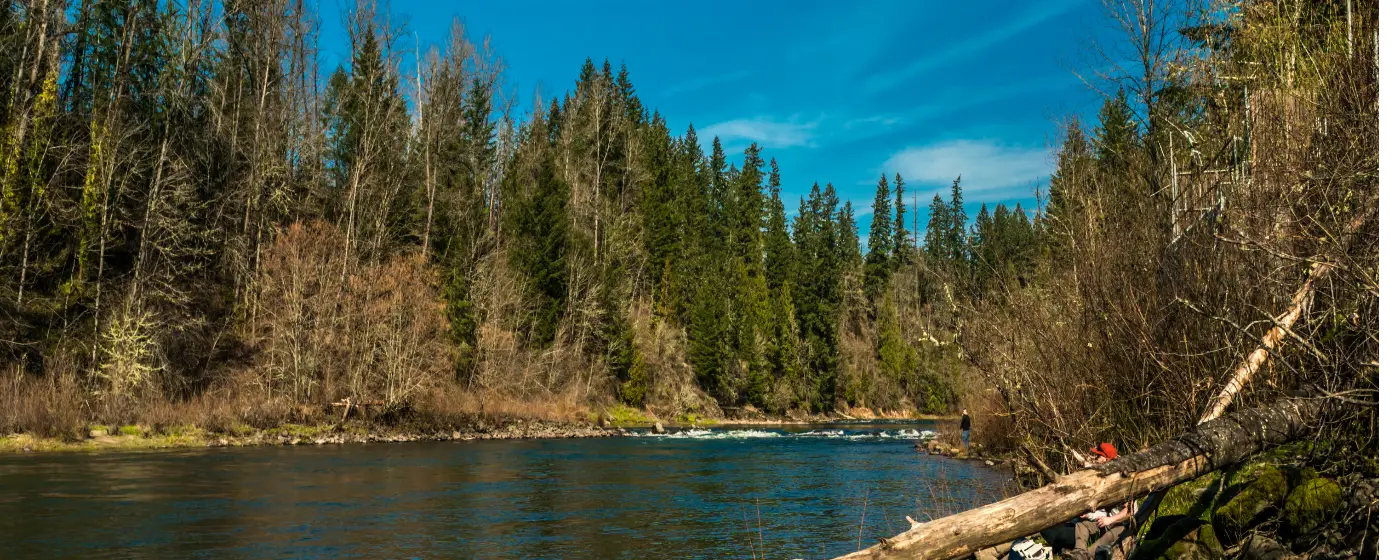
Most people who research Estacada think of it as one thing: a small logging town at the end of OR-224 where housing is cheaper than anywhere else inside an hour of Portland. That's half the picture. What they don't see until they start driving the subdivisions is that Estacada has quietly built out an entirely new residential layer — ridge-top planned communities with mountain views, HOAs, and modern floor plans — sitting just above the older in-town character that drew people here in the first place. Which version of Estacada you buy into matters more than the street you pick.
The city of 5,421 residents sits at the gateway to Mt. Hood National Forest, with the Clackamas River threading through the area and the Faraday and River Mill hydroelectric dams marking its industrial heritage. Estacada School District 108 — with 3,354 students enrolled in 2025-26 — holds a B rating, according to Niche, serving a community where the school district itself is one of the city's anchor employers alongside the City of Estacada, Portland General Electric, and the U.S. Forest Service. Families relocating here typically come from the Portland metro looking for acreage, lower prices, and a pace of life that a city of 77,000 can't offer.
The typical home price in Estacada stands at $544,421 (July 2026), putting it noticeably below Oregon City and roughly in line with Sandy — which makes the math tempting for buyers priced out of the inner suburbs. The catch is the commute: OR-224 is the only route in and out toward Portland, and the drive runs about 45 minutes to Portland under normal conditions, with no meaningful alternative. That single corridor shapes every neighborhood decision in town. For a fuller look at what housing costs here across all categories, see the Estacada cost of living page.
Whether you're weighing a new-construction lot on the ridgeline against a walkable block near the Estacada Farmers Market, or trying to figure out which subdivision keeps your options open on the morning drive, the sections below break down each of Estacada's eight neighborhoods, map them to buyer types, flag the mistakes people make, and give honest rental context.

The Estacada Reality
The Geographic Divide That Decides Everything
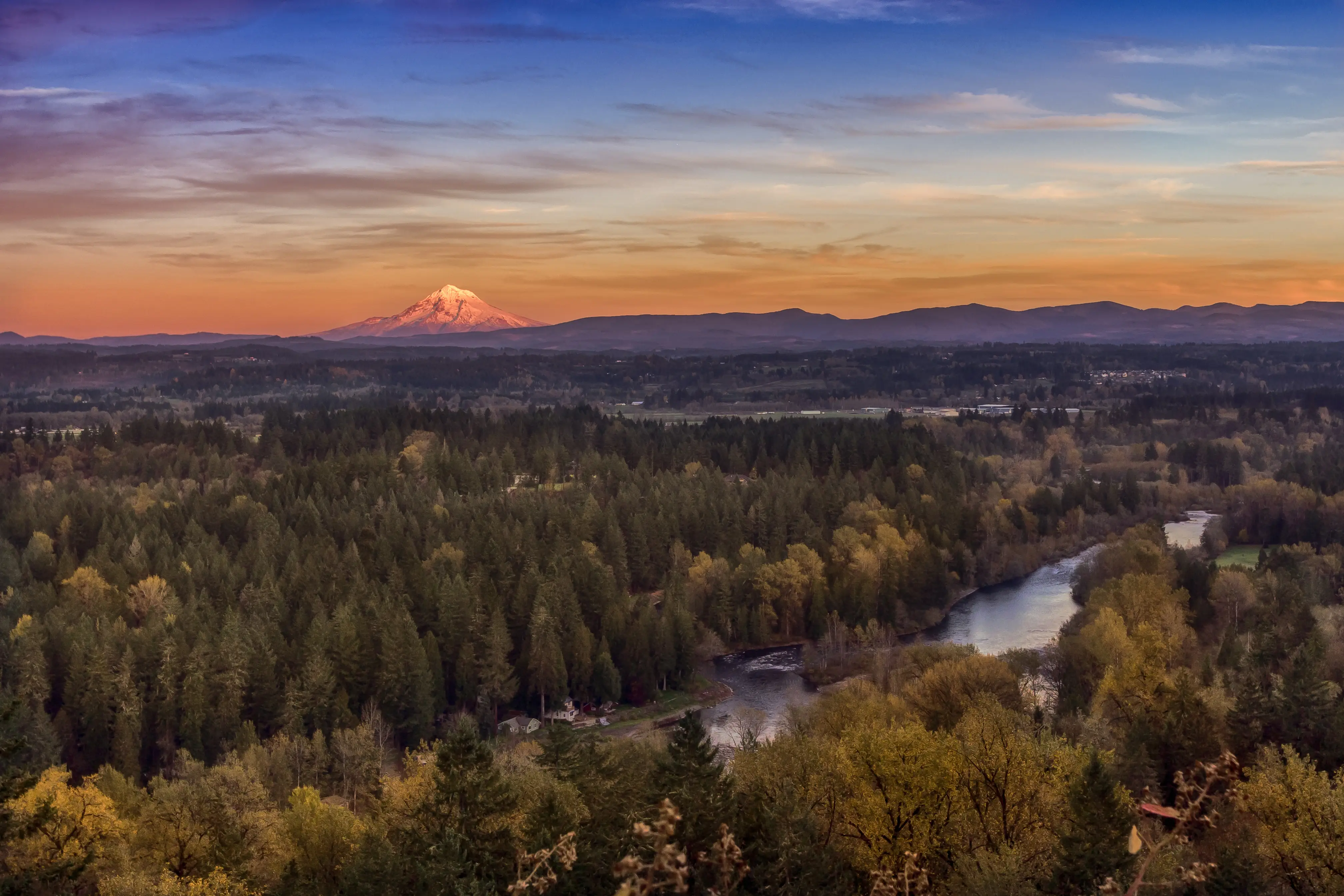
Estacada's neighborhood story runs along one clear axis: ridgeline new construction versus established in-town living. The newer subdivisions — Cascadia Ridge, Currin Creek Estates, Dugan Estates, Faraday Hills, and Coyote Ridge — climb above the valley floor and offer larger lots, no deferred maintenance, and views that older neighborhoods can't match. The trade-off is distance: the further up the ridge, the further from the coffee shop, the farmers market, and the school.
Downtown Estacada and Campanella Estates occupy the other end of that spectrum. They put you within walking distance of the Estacada Farmers Market and the city's small commercial core, but the housing stock is older and lot sizes shrink considerably. Regan Hill Acres sits somewhere in between — an established Cedar Ridge Homes subdivision that feels more settled than the newest phases but less isolated than the outer fringe.
The OR-224 Constraint
Every neighborhood in Estacada shares one practical reality: OR-224 is the only route connecting this city to the metro. OR-211 reaches Woodburn to the south, but it's not a commuter route to Portland. That means every buyer, regardless of which subdivision they choose, is committing to the same corridor every morning. The difference between neighborhoods isn't which one gets you out faster — it's which one minimizes the local driving once you're already in town.
Neighborhoods at a Glance
| Neighborhood | Best For | Vibe |
|---|---|---|
| Cascadia Ridge | Families Luxury | Wooded, HOA-managed new construction with mountain views near Milo McIver State Park |
| Currin Creek Estates | Privacy Nature | Forested, no-HOA lots on the quiet outer edge of town — the most rural feel in the lineup |
| Dugan Estates | Families Value | Greenbelt-backed new construction that stays connected to downtown — the sweet spot for convenience |
| Faraday Hills | Families Nature | Large planned community with nature trails and quick access to Timber Park and Milo McIver |
| Campanella Estates | Families School | Mature modern subdivision with a dedicated city park — the most established of the newer builds |
| Downtown Estacada | Walkable Renters | Small-town commercial core with murals, local coffee, and the farmers market at your doorstep |
| Regan Hill Acres | First-Time Quiet | Established Cedar Ridge subdivision — settled feel without the outer-fringe isolation |
| Coyote Ridge | Families Value | One of Estacada's newest and largest expansions — outer fringe with multifamily component |
Estacada typical home price: $544,421 (Zillow ZHVI, July 2026). Neighborhood tiers on this page are relative to these figures.
Best Neighborhood by Buyer Type
| Buyer Type | Best Neighborhood | Why |
|---|---|---|
| First-Time Buyer | Regan Hill Acres | An established subdivision without the HOA overhead or the outer-fringe distance of the newest builds. |
| Luxury Buyer | Cascadia Ridge | Premium positioning in Estacada's new-construction market, HOA maintenance standards, and mountain views that other subdivisions lack. |
| Walkability Seeker | Downtown Estacada | The only neighborhood where the farmers market, independent coffee shops, and local restaurants are genuinely on foot. |
| Families with Kids | Campanella Estates | The Fred Campanella Memorial City Park is right in the neighborhood, and the subdivision's maturity means established neighbors and settled streets. |
| Commuters | Dugan Estates | Close enough to the OR-224 corridor that the morning drive doesn't add extra local mileage before the real commute starts. |
| Large-Lot Buyers | Currin Creek Estates | No HOA, larger lots, and a forested setting that delivers the most acreage feel of any neighborhood in the city. |
| Renters | Downtown Estacada | Rental supply concentrates near the commercial core, where walkable access to services makes car-free or car-light living most realistic. |
Looking to buy in Estacada? Estimate your payment.
Enter your numbers to see an estimated monthly mortgage payment.
Estimate only. Excludes HOA fees and mortgage insurance. The interest rate above is a starting point, not a quoted rate — replace it with your own to see real numbers. Insurance is a flat placeholder, not a Estacada quote.
Most Popular Neighborhoods
1. Cascadia Ridge
Cascadia Ridge is the address people mention when they want Estacada's best version of new construction. Developed by Richmond American Homes and Cedar Ridge Homes near Milo McIver State Park, the neighborhood is described by residents as wooded, quiet, and genuinely family-oriented, with mountain views that hold up across seasons. The HOA is the honest trade-off: it maintains standards and keeps the streetscape consistent, but it adds a monthly cost that buyers coming from rural Clackamas County sometimes don't budget for. The further position from downtown means even a coffee run involves a drive.
Best for: Families and buyers prioritizing mountain views, HOA-maintained standards, and proximity to Milo McIver State Park.2. Currin Creek Estates
Currin Creek Estates is the most rural-feeling neighborhood in the city's planned-subdivision lineup. Cedar Ridge Homes built it with no HOA and larger lots, surrounded by forest — Phases 3 and 4 were both approved in 2024, so construction activity is ongoing and the neighborhood isn't finished yet. That growth is also the trade-off: buyers moving in now are doing so alongside active development, and Currin Creek sits furthest from downtown among Estacada's newer subdivisions, which means the morning routine involves the most local driving before you even reach OR-224.
Best for: Buyers who want maximum lot size and forest setting without HOA restrictions, and who are comfortable with a longer in-town drive.3. Dugan Estates
Dugan Estates threads the needle that most of Estacada's ridgeline subdivisions miss: it's large enough — 246 approved single-family lots across seven phases — to feel like a real neighborhood, and close enough to downtown that running an errand doesn't require planning the trip. Many lots back directly to a natural greenbelt with views, which is rare to find this close to a town center. The phased build-out means some sections are still active construction, so buyers in earlier phases may find themselves living next to a job site longer than anticipated.
Best for: Families and commuters who want new construction and greenbelt views without sacrificing everyday convenience.4. Faraday Hills
Faraday Hills is the largest approved subdivision in Estacada's modern growth cycle, with 408 single-family lots developed by Holt Homes, an open space tract, and confirmed nature trails threading through the community. It sits roughly a six-minute drive from downtown and is minutes from both Timber Park and Milo McIver State Park — which means residents who prioritize outdoor access over walkable errands are well served. The scale of the development is the catch: at 408 lots, Faraday Hills will feel like a substantial suburban community inside a small town, and the pace of build-out means the neighborhood's final character is still being established.
Best for: Outdoor-focused families who want a large, master-planned community with easy access to trails, disc golf, fishing, and Milo McIver.5. Campanella Estates
Campanella Estates was built by Pahlisch Homes on the site of the former Campanella family farm, and it remains Estacada's most mature large modern subdivision — 316 lots approved in 2016, which gives it settled streets and established neighbors that the newer phases haven't reached yet. The Fred Campanella Memorial City Park opened in 2018 with playgrounds, covered picnic areas, and open space, making it one of the few Estacada neighborhoods where kids can reach a park without a car. The compromise is that the housing stock, while modern, is now approaching a decade old in the earliest sections — still well-maintained, but no longer fresh off the builder's schedule.
Best for: Families with young children who want walkable green space, established neighbors, and a neighborhood that's already grown into itself.6. Downtown Estacada
Downtown Estacada is the only part of the city where on-foot access to daily life is genuinely realistic. The Estacada Farmers Market, the downtown murals, and the city's independent coffee and dining scene all concentrate here — and the University of Oregon's Sustainable Cities Institute describes it as a small-town core with a real creative community underneath it. The trade-off is housing: inventory near the commercial core skews older, lots are smaller, and buyers looking for new construction won't find it here. This is where you land if the lifestyle matters more than the floor plan.
Best for: Walkability seekers, renters, and buyers who want to be at the center of Estacada's community life without needing a car for every errand.7. Regan Hill Acres
Regan Hill Acres is an established Cedar Ridge Homes subdivision that occupies a comfortable middle ground — more settled than the newest phases of Dugan or Currin Creek, without the outer-fringe isolation of Coyote Ridge. A third phase (Regan Hill Acres #3) is listed as an active land-use project with the City of Estacada, confirming that the neighborhood is still growing rather than fully built out. Character detail is thinner here than in the larger, better-documented subdivisions; buyers should walk the streets and talk to current residents before committing, since the builder marketing tells only part of the story.
Best for: First-time buyers and quieter-lifestyle seekers who want an established subdivision without the premium positioning of Cascadia Ridge.8. Coyote Ridge
Coyote Ridge is one of Estacada's most significant recent residential expansions, approved in 2022 with 222 single-family lots and two 1.8-acre multifamily parcels — the multifamily component makes it distinct from every other subdivision in the lineup and signals that the city is planning for a range of household types here. It sits on the outer fringe of the city, which is the honest downside: buyers who prioritize proximity to downtown or short in-town drives should weigh that carefully. As a recently approved project, the neighborhood's full build-out is still ahead of it, and the community feel that comes with established neighbors is a few years away.
Best for: Buyers comfortable with a frontier feel — newer construction, outer-fringe location, and a neighborhood that's still finding its identity.Common Mistakes Buyers Make in Estacada
Treating OR-224 as a Given
Every neighborhood in Estacada feeds onto OR-224 for the commute to Portland. Buyers sometimes compare neighborhoods as if Coyote Ridge and Dugan Estates have meaningfully different commutes — they don't, not once you're on the highway. What they do have is different local driving before you reach the corridor. Choosing a ridgeline subdivision without accounting for the daily in-town mileage before the actual commute starts is the most common planning error here.
Chasing Square Footage Over Proximity to School
The newest and largest lots — Coyote Ridge, Currin Creek Estates in its outer phases — also tend to sit furthest from the schools. Estacada School District 108 serves the whole city, so the district boundary isn't the issue. The issue is that elementary-age kids in outer subdivisions depend entirely on bus service, and parents who want to be involved in daily school life find the distance adds up fast. Campanella Estates and Dugan Estates stay close enough to town that the school run feels manageable rather than logistical.
Underestimating HOA Costs in Cascadia Ridge
Cascadia Ridge is the premium address in Estacada, and it comes with HOA fees that buyers relocating from rural Clackamas County sometimes don't factor into their monthly math. The typical home price in Estacada sits at $544,421 (July 2026), and the median household income of $94,435 already leaves a gap between what most buyers earn and what it costs to buy here — adding HOA fees on top narrows that margin further. Run the full monthly number before you fall in love with the mountain views.
Assuming Downtown Has Inventory
Buyers who want walkable access to the farmers market, independent coffee shops, and local restaurants often set their sights on Downtown Estacada — then discover that inventory near the commercial core is thin, skews older, and turns over slowly. This isn't a neighborhood where you browse listings and pick a house; it's one where you watch the market for months and move quickly when something appears. Buyers who need to close on a schedule will find the ridgeline subdivisions far more predictable.
Best Areas to Rent in Estacada
| Area | Ideal For | Trade-off |
|---|---|---|
| Downtown Estacada | Walkability seekers, renters new to town | Thin inventory and older stock; turnover is slow and competition can be real when something opens |
| Campanella Estates area | Families wanting park access | Rentals here are single-family homes, not apartments — monthly costs reflect it |
| Dugan Estates / Faraday Hills corridor | Commuters, families | Newer construction means higher rents; the area is still building out, so options are limited |
| Regan Hill Acres area | Quiet lifestyle seekers | Limited rental supply; mostly owner-occupied, so vacancies are infrequent |
| Outer subdivisions (Coyote Ridge, Currin Creek) | Privacy seekers, outdoor-focused renters | Furthest from services; a car is essential for everything, and supply is the thinnest in the city |
Estacada's rental market is small by design — this is a city of 5,421 residents, and the vast majority of the housing stock is owner-occupied single-family homes. Renters who need apartments or multi-unit buildings will find options concentrated near the downtown core; everyone else is competing for a limited pool of single-family rentals scattered across the subdivisions, where landlords are individual owners rather than property management companies. For city-wide rent figures, see the Estacada cost of living page.
Local Expert Takeaway: If you're choosing a neighborhood in Estacada, the practical decision comes down to one question: how much do you value walkable access to the Estacada Farmers Market, The Grind Coffee House, and the downtown arts scene versus the larger floor plans and territorial views you get on the ridgelines? Dugan Estates is the rare neighborhood that genuinely splits the difference — close enough to downtown to feel connected, new enough to avoid deferred maintenance, and backed by greenbelts that justify the drive. Campanella Estates is the call for families with young kids who want an established neighborhood with a real park in it. And if the commute to Portland is your primary variable, pick the subdivision closest to OR-224 and stop there — every neighborhood in Estacada adds the same 45 minutes once you're on the highway.
Quick Takeaways & FAQs
✅ Estacada's newest subdivisions — Faraday Hills, Dugan Estates, and Cascadia Ridge — offer modern floor plans, greenbelt lots, and mountain views that most Portland-area suburbs at this price point simply can't match.
⚠️ OR-224 is the only commute route to Portland, and there is no workaround — every neighborhood in the city shares that constraint, so buyers who need to be in the metro daily should run the commute math honestly before committing.
📍 Campanella Estates is the only modern Estacada subdivision with a dedicated city park (Fred Campanella Memorial City Park) already built and walkable from homes — a detail that matters more once you have school-age kids.
What is the best neighborhood in Estacada for families with young children?
Which Estacada neighborhoods are closest to Portland for commuters?
Are there any neighborhoods in Estacada without an HOA?
What is the typical home price in Estacada?
Is downtown Estacada a good place to live, or is it mostly commercial?
Moving to Oregon?
Tell us what you need help with and we'll connect you with local resources.
