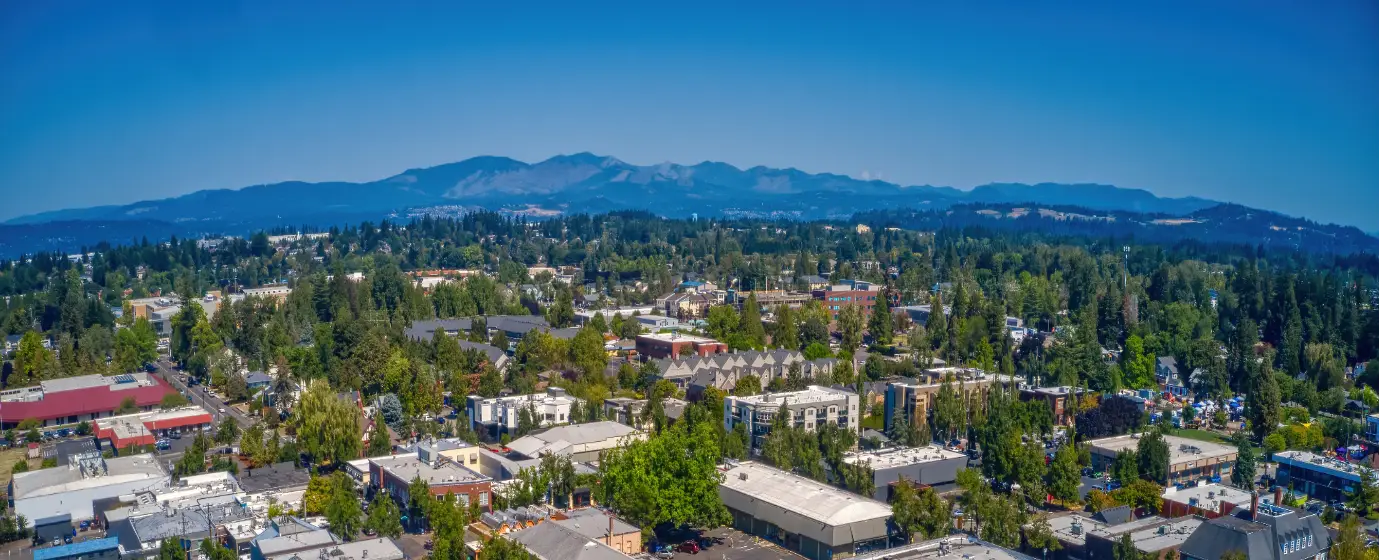
Most people researching retirement in Oregon focus on Bend, Ashland, or the coast. Gresham rarely makes the shortlist — and that might be exactly why it deserves a closer look. Oregon's 4th-largest incorporated city sits at the eastern edge of the Portland Metro, where I-84 and US-26 funnel commuters toward the city, but where retirees can plant themselves and let the MAX Blue Line do the driving. The tension worth understanding before you commit: Gresham is genuinely affordable for Oregon, but it is not a tidy retirement village. It is a working, diverse city of 112,378 people where the retirement infrastructure is real but spread out, and the experience varies considerably by neighborhood.
The economic backbone here is public employment — the school districts, the city itself, Microchip Technology's semiconductor campus — but what matters more to a retiree is what the city has built around its residents. Legacy Mount Hood Medical Center sits inside city limits, providing full acute-care coverage without a drive to Portland. The MAX Blue Line's eastern terminus is here, meaning major medical centers, cultural institutions, and Portland International Airport (PDX), roughly 13 miles away, are all reachable without a car. That combination of on-the-ground healthcare and car-free regional access is genuinely uncommon at this price point in the Pacific Northwest.
The typical home price in Gresham is $470,730 (Zillow Home Value Index, July 2026) — noticeably below Portland and well below what similar access to light rail costs in closer-in suburbs. Oregon's lack of a sales tax softens the fixed-income math further, though the state's income tax structure and Multnomah County's local levies deserve careful attention before you finalize the budget. For a fuller breakdown of day-to-day costs, see the cost-of-living page. The outdoor life runs from the Gresham Farmers Market and Main City Park in the heart of downtown to the forested trails of Gresham Butte and Powell Butte Nature Park on the eastern edge.
Whether you are downsizing from a larger home, relocating from out of state, or simply weighing Gresham against nearby alternatives, the sections below cover healthcare access, the retiree tax picture, walkability and community, downsizing options, and how Gresham stacks up against the retirement destinations people most often consider alongside it.
Why Retirees Are Choosing Gresham
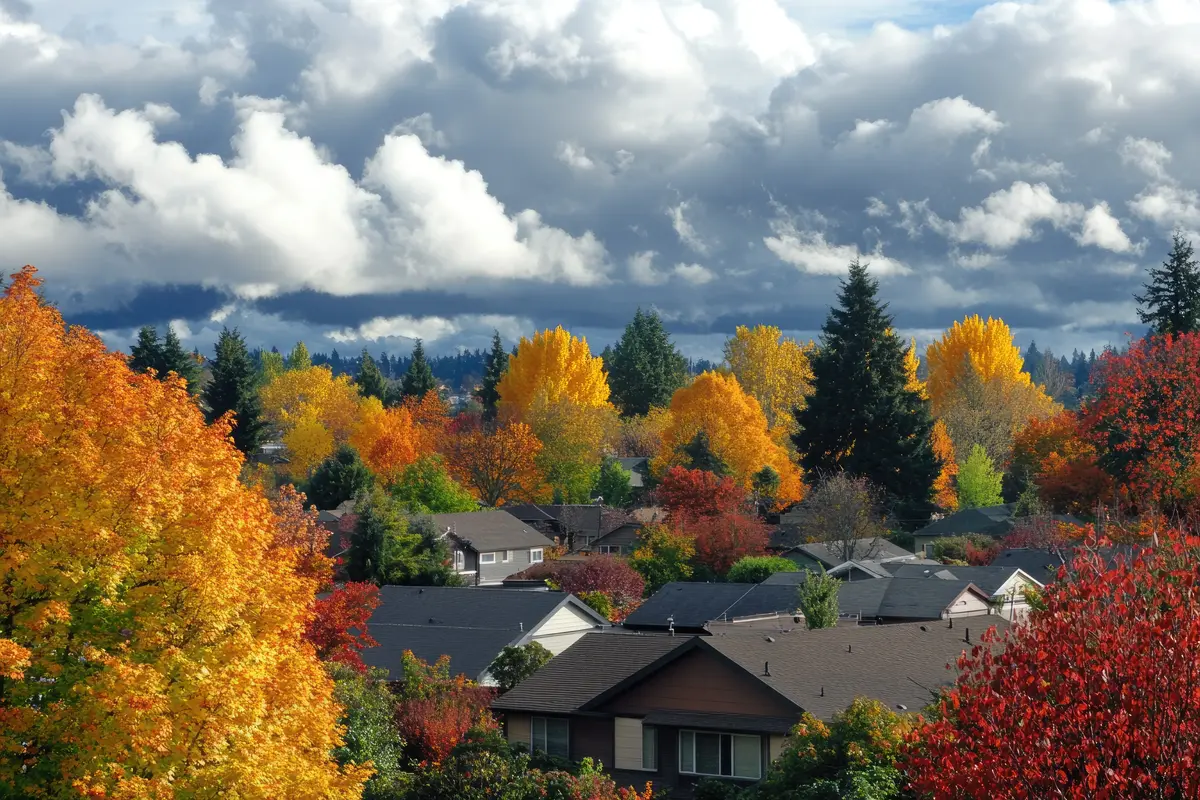
The retirees who thrive in Gresham tend to share a profile: they want genuine city infrastructure — a real hospital, real transit, real dining and cultural options — without paying Portland prices for it. The typical home price of $470,730 (July 2026) is a meaningful entry point in a metro where comparable access closer to the urban core costs considerably more. For buyers who spent decades in a larger Pacific Northwest city and are ready to stop spending so much on housing, Gresham makes a case that is hard to dismiss on pure numbers.
Transit-dependent retirees are especially well served. The MAX Blue Line terminates here, which means a retiree who gives up driving can still reach Portland's concert halls, specialty medical clinics, and airport without relying on family for rides. Sidewalk coverage across Gresham is among the most complete of any Oregon city its size, a practical detail that matters more at 70 than it did at 40. The Gresham Farmers Market, the Gresham Historical Museum, and the Art Walk give the downtown a cultural pulse that smaller bedroom communities simply do not have.
Who should look elsewhere: retirees who want a walkable, café-lined downtown village will find Gresham's core still developing compared to Lake Oswego or downtown Portland. Those who prioritize warm, dry weather should know Gresham averages 144 sunny days a year — the gray Oregon winters are real and long. And buyers seeking a purpose-built 55+ community with deed-restricted age requirements will not find one here; no such communities were identified in Gresham. If that structure matters to you, Sandy and the broader Mount Hood corridor offer different options worth considering.
Healthcare & Medical Access in Gresham
The anchor of Gresham's healthcare picture is Legacy Mount Hood Medical Center, a 115-bed nonprofit community hospital inside city limits. It covers the full range of acute needs a retiree encounters most often: 24/7 emergency care, cardiology and cardiac rehabilitation, robotic-assisted surgery, orthopedics, cancer treatment, and gastrointestinal care. For East Multnomah County, it is the primary acute-care facility — meaning that for most emergencies and routine hospital needs, Gresham residents do not leave the city.
Where the picture gets more nuanced is at the subspecialty level. Legacy Mount Hood is a community hospital, not a major academic medical center. For complex oncology, advanced cardiac intervention, transplant services, or highly specialized surgical care, patients are typically referred to Legacy Emanuel Medical Center or OHSU in Portland — both accessible via I-84, and both reachable by MAX Blue Line for follow-up appointments that do not require same-day transport. That drive is manageable, but it is part of the honest picture for retirees with complex or chronic conditions who want everything on-site.
Publicly filed hospital planning documents have identified behavioral health access and chronic-condition management — particularly diabetes and hypertension — as priority gaps for East Multnomah County. For retirees managing either condition, it is worth asking a prospective primary care physician specifically about specialist referral wait times and care coordination. The hospital's reach is genuine; the depth at the subspecialty tier is where you may feel the distance from Portland's larger systems.
What Locals Know
Gresham has a solid base of primary care and family medicine practices affiliated with the Legacy network, which makes establishing care here straightforward for most new residents. The practical advice from people who have done this move: get connected with a primary care physician quickly after arrival, before you need one, because new-patient availability at the more established practices fills up faster than most relocating retirees expect.
The Retiree Budget in Gresham
Oregon's most retiree-friendly tax feature is the one most often cited: the state does not tax Social Security benefits at all, regardless of income level, subtracting the full amount from Oregon taxable income. That is a real and meaningful distinction from states like Minnesota or Colorado, which tax Social Security on a sliding scale.
The rest of the Oregon retirement tax picture is less generous. Pension income, 401(k) distributions, and IRA withdrawals are all taxed at Oregon's graduated state rates, which run from 4.75% to 9.9%. Retirees with substantial investment or pension income will feel those brackets. What makes Gresham specifically more expensive than the Oregon baseline: Multnomah County and the Metro district both levy separate local income taxes on top of state income tax, applying to pension and investment income above basic thresholds. Many retiree tax guides stop at the state level and miss this layer entirely — it is worth a conversation with a tax advisor before choosing Gresham over a city in Washington County or Clackamas County, where those local levies do not apply.
Oregon has no statewide or local sales tax, which does ease the daily cost of living on a fixed income in ways that compound across groceries, clothing, and household purchases year after year. The effective property tax rate in Gresham is approximately 0.98% — close to the Oregon state average and meaningfully lower than the national norm. Oregon also offers a senior property tax deferral program for homeowners aged 62 or older with household income at or below $60,000: the state pays the property taxes directly and places a lien on the home, with interest accruing until the property is sold. For retirees who own their home outright or nearly so, that program can free up meaningful monthly cash flow. For the full cost-of-living breakdown — utilities, groceries, and transportation — see the cost-of-living page.
The Multnomah County Wrinkle
The local income tax layer is the detail that surprises relocating retirees most often, typically around the first Oregon tax filing. It does not offset the Social Security exemption, but it does narrow the gap between Gresham and suburban alternatives in counties that do not levy it. Run the numbers for your specific income composition before deciding this is the right county.
Looking to buy in Gresham? Estimate your payment.
Enter your numbers to see an estimated monthly mortgage payment.
Estimate only. Excludes HOA fees and mortgage insurance. The interest rate above is a starting point, not a quoted rate — replace it with your own to see real numbers. Insurance is a flat placeholder, not a Gresham quote.
Walkability, Community & Staying Active in Gresham
Gresham's sidewalk infrastructure is one of its understated advantages. Among Oregon cities, it ranks among those with the most complete sidewalk coverage citywide — which translates, in practical terms, to a retiree being able to walk to a pharmacy, a café, or a transit stop without stepping into a street. That is not a given in Oregon suburbs, and it changes the daily texture of life for anyone who is not driving every trip.
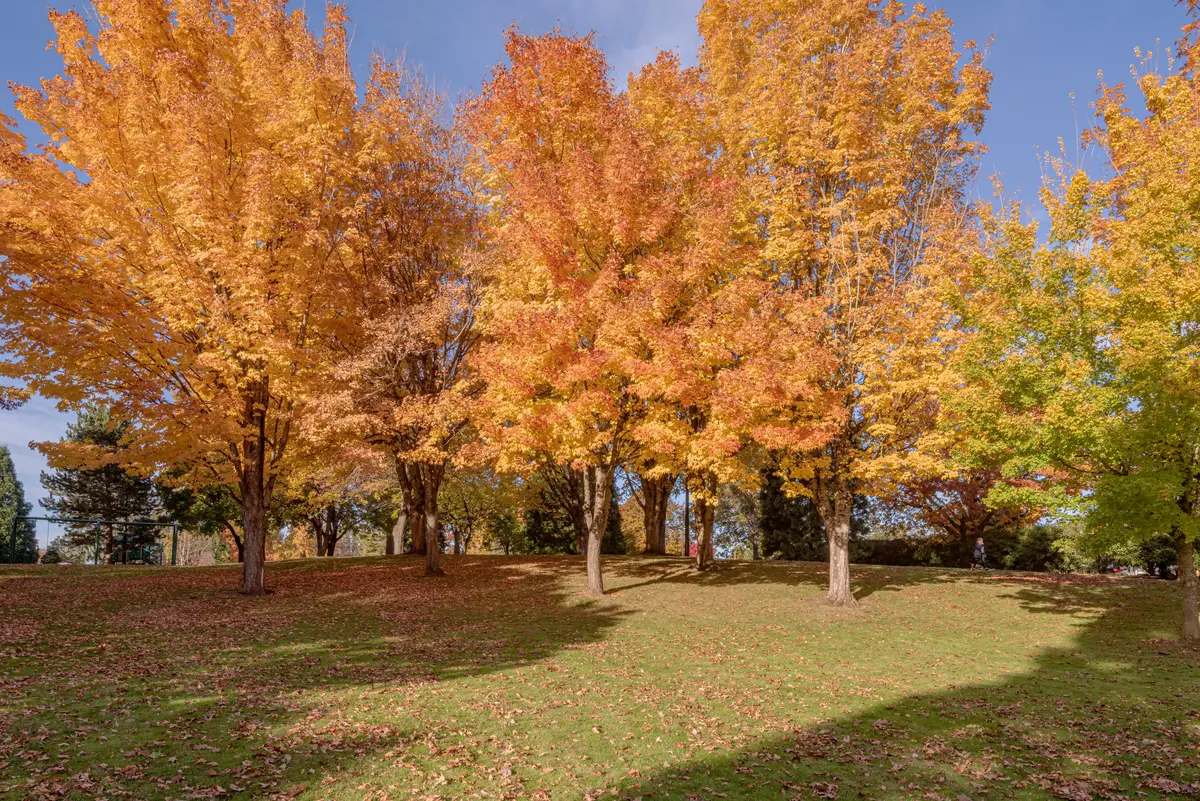
The downtown core around Main City Park is the most walkable pocket of the city. The park itself anchors community events through the warmer months, including the Gresham Farmers Market and the Gresham Art Walk, both of which draw regular crowds of older adults. The Gresham Historical Museum is a short walk from the transit center. Independent coffee shops and cafés concentrated in the downtown give the morning routine a genuinely on-foot character in the right neighborhood.
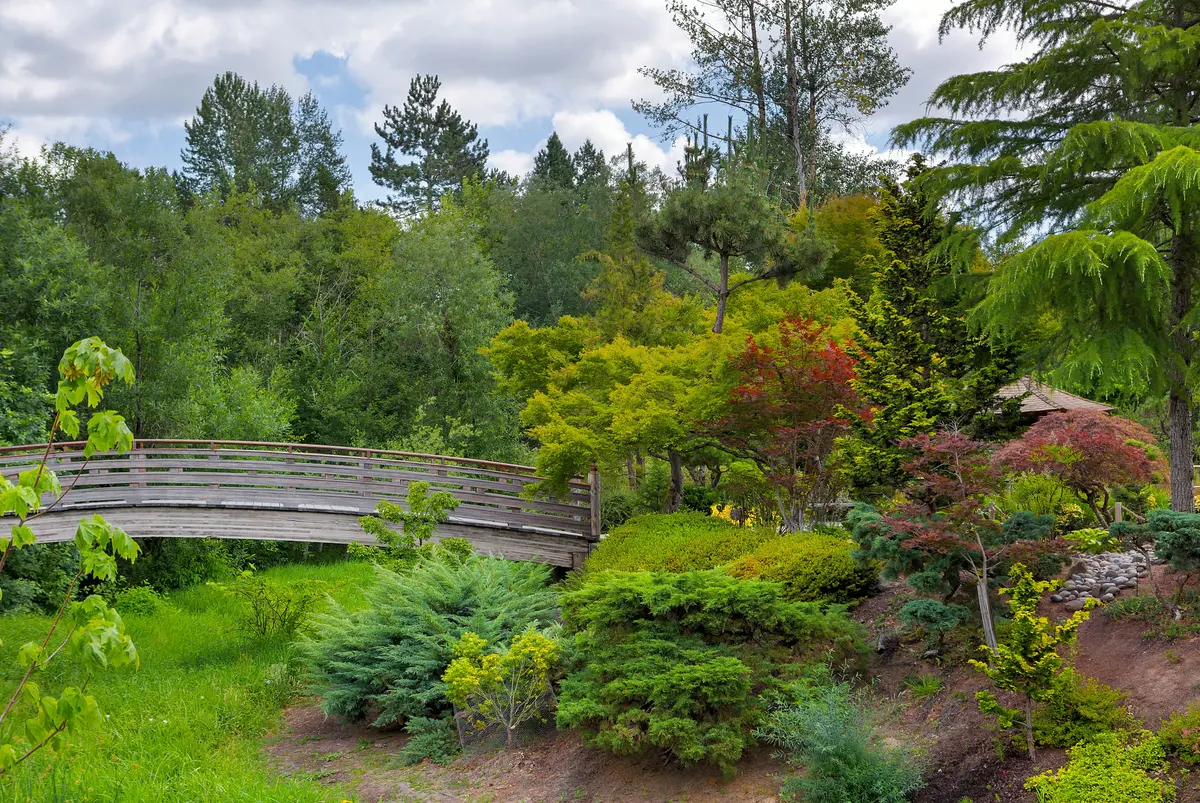
For active adults who want more than errands and coffee, Gresham Butte's trail network and Powell Butte Nature Park provide serious walking terrain with Mt. Hood views on clear days. Mt. Hood Community College's campus trails add another option close to the center of the city. None of these require a car to reach from the surrounding neighborhoods, which matters more as the years pass.
Senior Centers and Social Life
Gresham's senior community infrastructure exists but is not as dense as what you find in cities that have built specifically around retirement demographics. Social connection here tends to happen through community programming at Mt. Hood Community College — which runs continuing education and lifelong learning programs aimed at older adults — and through civic organizations, faith communities, and volunteer networks rather than a single dominant senior center. The Gresham Art Walk and farmers market are where you will reliably see the community gather across generations. For retirees who need a ready-made social structure from day one, building that network takes some deliberate effort here; for those who prefer organic community life, the city has the raw ingredients.
Right-Sizing: Downsizing in Gresham
No 55+ communities were found in Gresham. That is the clearest thing to say upfront, and it shapes how the downsizing search works here. Retirees looking for a deed-restricted age-qualified community with a homeowners association, shared amenities, and neighbors all in the same life stage will need to look beyond Gresham's borders — Sandy, Troutdale, and communities farther along the Mount Hood Highway have different options worth investigating.
What Gresham does have is a meaningful stock of single-story and smaller-footprint homes scattered across neighborhoods like Powell Valley, Northwest Gresham, and Centennial — the kind of older ranch-style construction that often suits downsizers better than new builds, because the lots are manageable, the layouts are single-level, and the prices sit below the city median. Finding the right one takes patience and a focused search, because these homes are mixed throughout the general housing stock rather than clustered in dedicated communities.
For retirees who prefer not to own, the independent-living and assisted-living tier in Gresham is more developed than most people expect for a city this size. Solista Gresham by Cogir operates as an active independent-living community with resort-style amenities, and importantly, accepts VA Aid and Attendance benefits — a meaningful option for veterans and surviving spouses who qualify. Bonaventure of Gresham covers a broader care continuum, including assisted living and memory care. Neither is a 55+ ownership community, but both fill a gap that pure homeownership cannot.
What the Inventory Reality Looks Like
Single-level condos and patio homes exist in Gresham but are not abundant. When they appear in the Powell Valley and Northwest Gresham areas — neighborhoods that sit at or near the city median — they tend to move without much time on market, because the pool of buyers looking for exactly this product is larger than the supply. If single-level living is a firm requirement rather than a preference, broaden the search to Troutdale and Fairview early rather than waiting to see what Gresham produces.
Gresham vs Nearby Retirement Destinations
| City | Cost vs Gresham | Primary Hospital | Walkability | Senior Living Depth | Overall Retirement Fit |
|---|---|---|---|---|---|
| Gresham | Anchor | Legacy Mount Hood Medical Center (in city) | Strong sidewalk grid; MAX transit | Independent & assisted living; no 55+ communities | Transit Value |
| Portland | Somewhat higher | Multiple major systems (OHSU, Legacy Emanuel, Providence) | Excellent in inner neighborhoods; varies widely | Full spectrum; many 55+ communities in inner suburbs | Walkable Amenity-rich |
| Troutdale | About the same | Relies on Legacy Mount Hood (Gresham) | Limited; car-dependent for most errands | Thin; fewer senior-specific options | Quiet Nature access |
| Fairview | About the same | Relies on Legacy Mount Hood (Gresham) | Moderate; some walkable pockets near the lake | Limited | Small-town feel Value |
| Sandy | Noticeably cheaper | No hospital in city; significant drive for acute care | Walkable small downtown; otherwise car-dependent | Emerging; some active-adult options | Mt. Hood access Rural pace |
| Damascus | Noticeably cheaper | No hospital in city; relies on Gresham or Portland | Very limited; rural character | Minimal | Privacy Land & space |
Sandy wins on sticker price and on proximity to the mountain, but it trades away the one thing Gresham does best: having a hospital inside the city limits. For retirees who are managing a chronic condition or simply want the peace of mind that emergency care is close, that gap matters in a way it does not at 35.
Portland beats Gresham on healthcare depth — there is no honest comparison between a 115-bed community hospital and the full academic-medical complex that OHSU and the Providence system represent — but Portland's costs run noticeably higher and the retirement experience in the city proper is more fragmented, with quality varying enormously by neighborhood.
Troutdale and Fairview sit at roughly the same price point as Gresham and share the Legacy Mount Hood catchment area, but neither has Gresham's transit access or sidewalk infrastructure. For retirees who will still drive, the difference is minor. For those who want or need car-free options, Gresham is the clear choice in this comparison.
Damascus is the rural outlier — genuinely affordable and genuinely private, but it asks retirees to plan every medical appointment, every serious shopping trip, and every cultural outing as a committed drive. For the right buyer who wants land and quiet above everything else, that trade is worth making. For most retirees weighing this corridor, Gresham offers the best balance of access, affordability, and daily infrastructure.
Local Expert Takeaway: Gresham is the rare Portland-area city where a retiree can own a home at a reasonable price, walk to the MAX, and have a full community hospital inside the city limits — all at once. The tax picture rewards Social Security recipients but demands a careful look at Multnomah County's local income levies if your income includes pensions or investment draws. The missing piece most retirees notice after six months: there is no dedicated 55+ ownership community, so building social structure takes more intentionality than it would in a purpose-built retirement market. The payoff is access — to Portland, to Mt. Hood, and to a genuine city that does not require a car for the basics.
Quick Takeaways & FAQs
✅ Legacy Mount Hood Medical Center sits inside Gresham city limits, giving retirees emergency and acute care without driving to Portland.
⚠️ No 55+ ownership communities exist in Gresham — retirees seeking that structure will need to look toward Sandy or suburban Portland communities.
📍 The MAX Blue Line terminates in Gresham, making car-free access to downtown Portland and Portland International Airport (PDX) a genuine daily option, not just a theoretical one.
Does Oregon tax Social Security benefits for retirees living in Gresham?
What hospital serves retirees in Gresham?
Are there any 55+ communities in Gresham?
Is Gresham walkable for retirees who want to reduce driving?
How does Oregon's property tax deferral program work for Gresham retirees?
Moving to Oregon?
Tell us what you need help with and we'll connect you with local resources.
