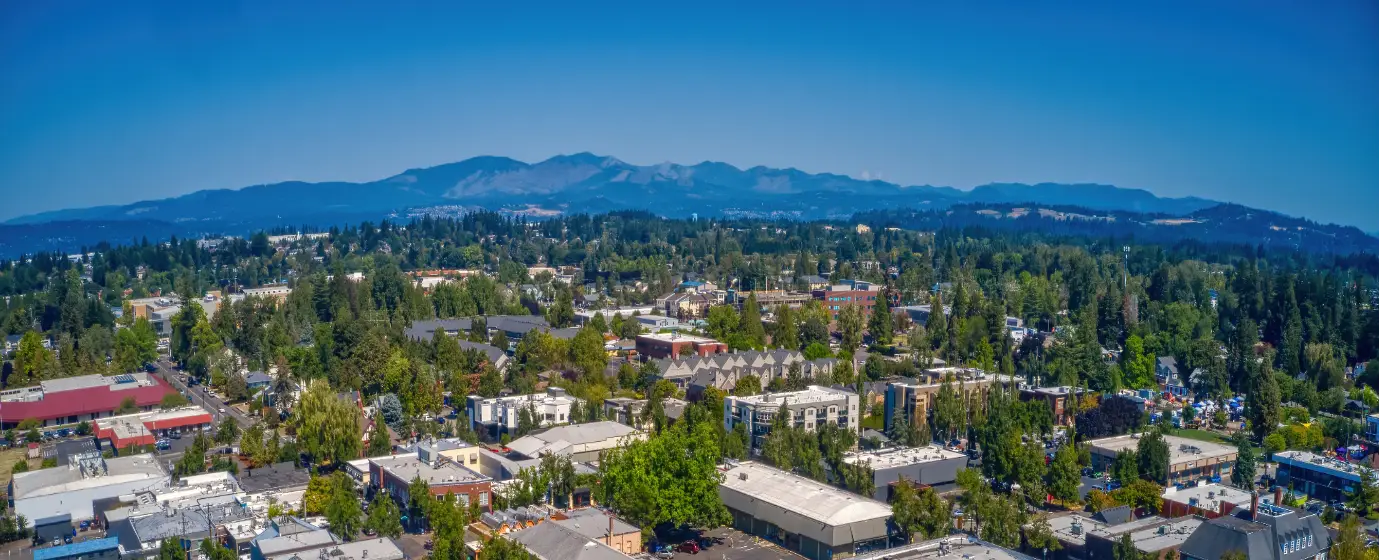
You've done the research and Gresham keeps coming up — Portland's fourth-largest incorporated city, sitting about 25 minutes to Portland with prices well below the inner metro. What the spreadsheet doesn't tell you is that Gresham is not one place. It's a city of 112,378 people that spans volcanic buttes, wetland corridors, agricultural pockets, and urban renewal zones — and which of those zones you land in shapes your daily life dramatically. The I-84 corridor running east-west is the city's main artery and its defining divide, with neighborhoods north of the highway leaning more urban and transit-connected, while neighborhoods south trend quieter, greener, and more car-dependent.
The economic engine here is anchored by the school districts — Reynolds, Centennial, and Gresham-Barlow — plus the City of Gresham itself and Microchip Technology's semiconductor manufacturing operations. Mt. Hood Community College draws students and staff to the northeast part of the city. This is a working-and-middle-class city with a median household income of $77,795, and the honest reality is that the typical home price of $470,730 (Zillow Home Value Index, July 2026) has outpaced what that income comfortably carries. Many buyers here are coming from Portland's inner eastside or the close-in suburbs, trading commute minutes for significantly more square footage.
Day-to-day life in Gresham runs on trails, parks, and the Springwater Corridor — a multi-use path that stitches several neighborhoods together. The MAX Blue Line gives the northwest and central neighborhoods genuine transit access to Portland. For everything else, you're driving. The effective property tax rate sits at approximately 0.98%, and for outdoor-minded households, the Gresham Butte trail system and proximity to the Sandy River and Mt. Hood are legitimate selling points that don't show up on any comp sheet. For a deeper look at costs, see the cost of living in Gresham page.
Whether you're narrowing down neighborhoods or just starting to understand the city's geography, the sections below break down Gresham's eight neighborhoods, who each one suits, the honest trade-offs in each, and where renters and first-timers have the most realistic entry points.
The Gresham Reality
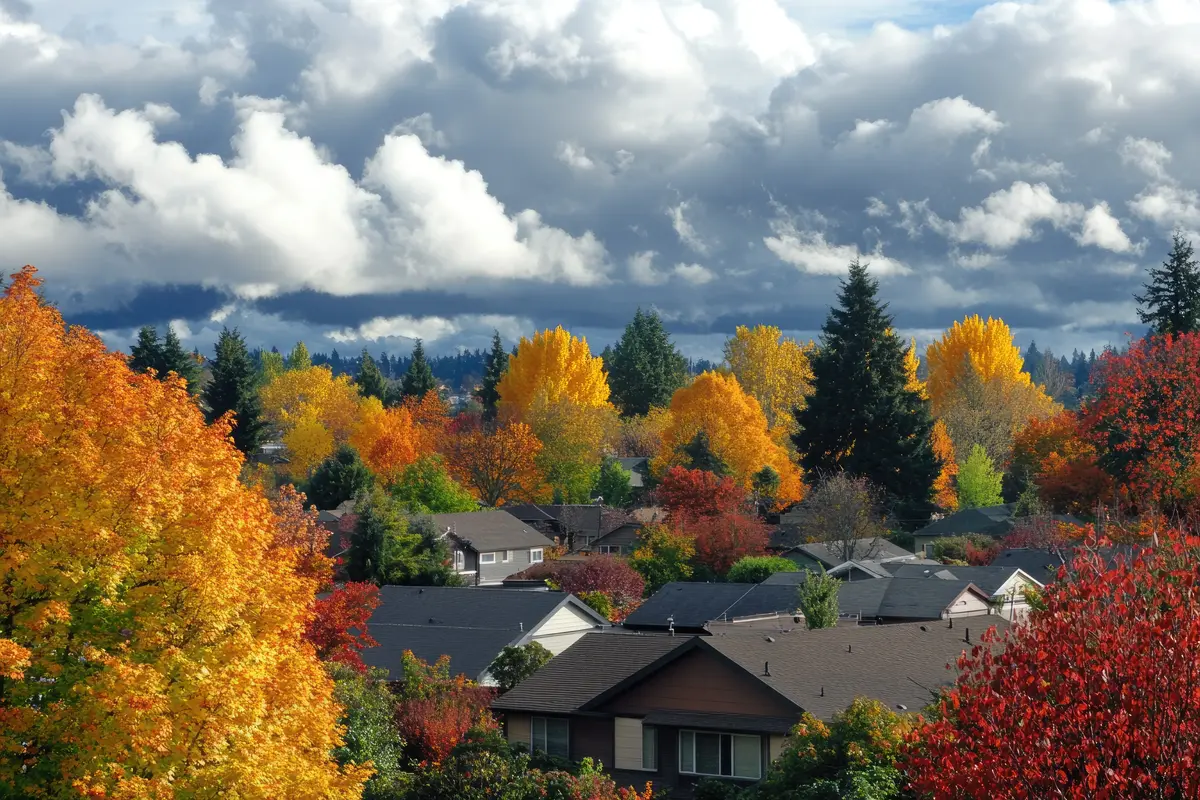
The single most important thing to understand before buying in Gresham is that the city contains three distinct Greshams: the transit-connected, actively redeveloping urban core along the MAX Blue Line; the established residential neighborhoods south of the core with larger lots and a quieter tempo; and the outermost edges — Powell Valley, Pleasant Valley — where the city blurs into rural land and the nearest coffee shop is a real drive. Buying without that mental map is the most common mistake relocating buyers make here.
School boundaries add a second layer of complexity. The city sits across three school districts — Gresham-Barlow, Centennial, and Reynolds — and your address determines which one your children attend. The district lines do not follow neighborhood association boundaries, so two houses on the same street can feed into different systems. If schools are a factor in your search, the schools page breaks down performance and boundaries in detail.
The MAX Blue Line is the city's geographic spine, running east-west along the I-84 corridor. Neighborhoods within reasonable walking distance of a station — Rockwood, Centennial, Northwest Gresham — trade on that access. Everything south of downtown Gresham is car-dependent by design, and the farther south you go, the more rural the feel. That's not a criticism; it's the trade-off you're making, and knowing it in advance means you make it deliberately.
Neighborhoods at a Glance
| Neighborhood | Best For | Vibe |
|---|---|---|
| Rockwood | Transit First-Time | Urban renewal energy, MAX access, multicultural dining scene |
| Centennial | Value Commuter | Wetland edges, below-median pricing, I-84 close by |
| Kelly Creek | Families Quiet | Historic farmhouses, agricultural character, established feel |
| Gresham Butte | Nature Views | Trail access from your backyard, volcanic geology, above-median homes |
| Powell Valley | Privacy Nature | Urban-rural mix, Mt. Hood views, hobby-farm potential |
| Northwest Gresham | Walkable Families | Main City Park, Gresham Station retail, civic center proximity |
| Pleasant Valley | Families Luxury | Planned community, newest construction, above-median pricing |
| Hollybrook | Commuter Renter | Springwater Trail access, close to downtown Gresham, mid-century stock |
Gresham typical home price: $470,730 (Zillow ZHVI, July 2026). Typical rent: $1,611/mo (Zillow ZORI, July 2026). Neighborhood tiers on this page are relative to these figures.
Best Neighborhood by Buyer Type
| Buyer Type | Best Neighborhood | Why |
|---|---|---|
| First-Time Buyer | Centennial | Below-median pricing gives the most realistic entry point in the city without sacrificing I-84 or MAX access. |
| Luxury Buyer | Pleasant Valley | Newest construction, a planned community framework, and above-median prices make it the city's premium destination. |
| Walkability Seeker | Northwest Gresham | Gresham Station retail, Main City Park, and the Springwater Trail make this the closest thing to on-foot living in the city. |
| Families with Kids | Kelly Creek | Established character, above-median homes with older architecture, and a quieter residential feel away from the urban corridor. |
| Commuters | Rockwood | MAX Blue Line walking distance means a car-free commute to Portland is genuinely achievable from this neighborhood. |
| Large-Lot Buyers | Powell Valley | The urban-rural edge gives the most realistic shot at acreage and agricultural character within Gresham's city limits. |
| Renters | Northwest Gresham | The mix of apartment complexes, townhomes, and walkable retail makes it the city's most practical rental base. |
Looking to buy in Gresham? Estimate your payment.
Enter your numbers to see an estimated monthly mortgage payment.
Estimate only. Excludes HOA fees and mortgage insurance. The interest rate above is a starting point, not a quoted rate — replace it with your own to see real numbers. Insurance is a flat placeholder, not a Gresham quote.
Most Popular Neighborhoods
1. Rockwood
Rockwood is the neighborhood with the most momentum in Gresham right now. The Downtown Rockwood redevelopment — completed in 2024 — delivered the Rockwood Market Hall, a multicultural dining and micro-retail hub, alongside a community plaza, new housing at the AVIVA Apartments, and job training services, drawing $179.2 million in private investment into the urban renewal area. The catch is that Rockwood's urban energy is real and still uneven — the streets immediately around the MAX station feel transformed, while pockets further in still carry the rough edges of a neighborhood mid-transition. Rockwood Central Park, a 9.4-acre park with playgrounds, a basketball court, and a disc golf area, gives the neighborhood a genuine civic anchor.
Best for: Commuters, transit-reliant households, buyers who want in on a neighborhood still moving upward.2. Centennial
Centennial sits at the northwest edge of the city, bordering the Fairview Creek natural area, and is home to nearly 10,000 residents — making it one of Gresham's more densely populated neighborhoods. Homes here run below the city median, which makes it the most accessible price point in the city for buyers stretching to get in. The compromise is that Centennial has less neighborhood polish than areas to the south; the Fairview Creek wetland is a genuine natural asset, but the surrounding streetscape is more utilitarian than charming.
Best for: First-time buyers, commuters, value-focused households who prioritize I-84 and MAX access over neighborhood aesthetics.3. Kelly Creek
Kelly Creek carries an agricultural past that you can still read in the built environment — century-old Craftsman farmhouses and four-square homes coexist with Ranch-style and split-level construction from the 1960s through the 1990s, and the creek itself, a Johnson Creek tributary, still runs through the area. Homes here run above the city median, which reflects both the established character and the relative quiet. The tradeoff is distance: Kelly Creek sits about three miles from historic downtown Gresham, with US-26 (Mount Hood Highway) forming the western boundary, and most errands require a car.
Best for: Families wanting older architectural character, buyers who prefer residential quiet over transit access.4. Gresham Butte
No other neighborhood in Gresham puts trail access this close to the front door. Hogan Butte Nature Park anchors the area, and the Gresham Butte Saddle Trail — a 2.8-mile roundtrip with 685 feet of elevation gain — climbs two of the nine extinct volcanic lava domes within city limits and delivers panoramic views over the city and toward Mt. Hood. Homes run above the city median, which is largely what you're paying for: the natural setting and the relative seclusion. The downside is that Gresham Butte is not a commuter neighborhood — there's no rail access, and getting to Portland means driving.
Best for: Outdoor-focused buyers, nature seekers, households where one partner works remotely and the other can tolerate a highway commute.5. Powell Valley
Powell Valley is the neighborhood that earns the description "urban-rural edge" most honestly — the housing stock runs from apartment complexes to properties with genuine hobby-farm character, and Mt. Hood sits on the horizon in a way that feels earned rather than decorative. Midcentury Ranch-style homes and split-levels dominate, and homes land at the city median. The active neighborhood association runs Neighborhood Watch and graffiti removal efforts, which tells you something about where the neighborhood is in its arc — improving, engaged, and still a work in progress.
Best for: Buyers who want acreage or agricultural character, households comfortable with a car-dependent lifestyle and a longer commute horizon.6. Northwest Gresham
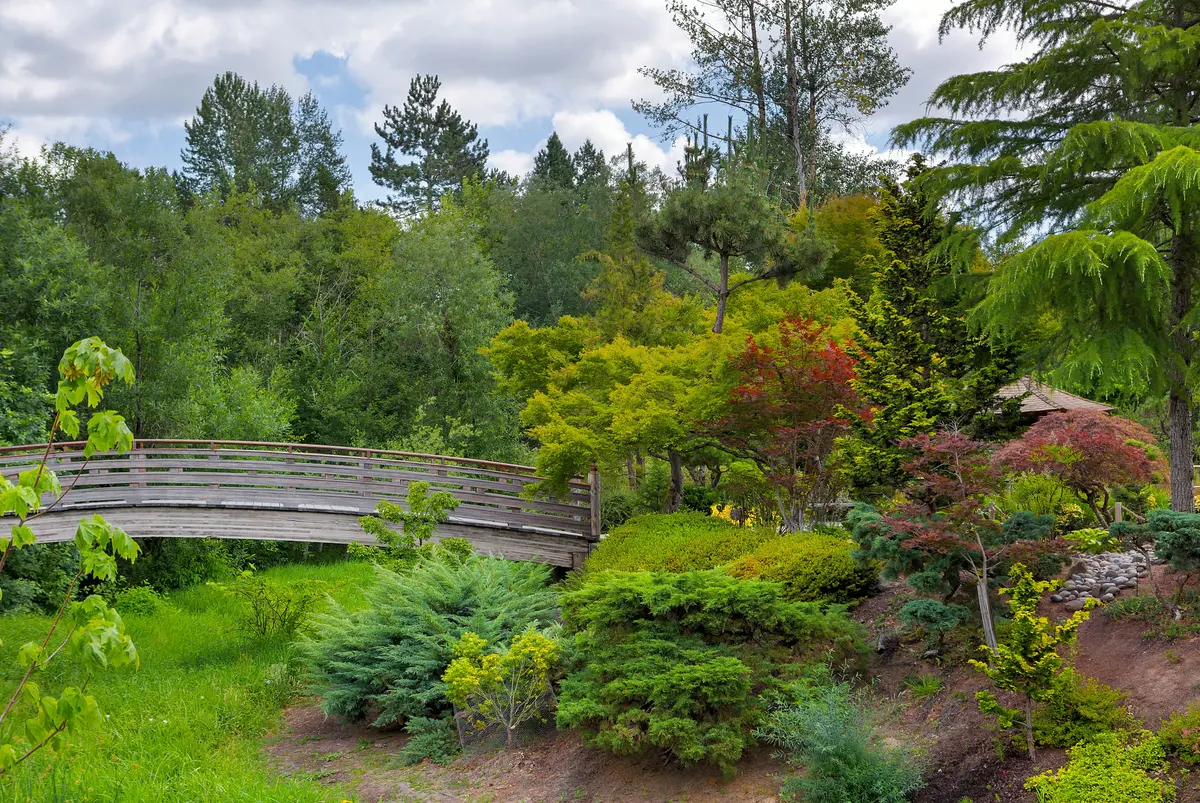
Northwest Gresham is the most practical neighborhood in the city for buyers who want retail, parks, and civic amenities within reach. Gresham Station — an open-air retail center with department stores, furniture stores, and a Natural Grocers — anchors the commercial side, while Main City Park, a 21-acre park with walking trails, athletic fields, playgrounds, a skatepark, and a Japanese garden, borders the neighborhood's southeast corner and connects to the Springwater Trail. Homes here are priced at the city median, and the housing mix of single-family homes, apartment complexes, and townhomes gives buyers and renters a range of entry points. The catch is that "walkable by Gresham standards" is not the same as walkable by Portland's inner-eastside standards.
Best for: Families, on-foot commuters, renters, buyers who want civic amenities within a short drive or bike ride.7. Pleasant Valley
Pleasant Valley is Gresham's most deliberately designed neighborhood — a 1,532-acre planned district south of the city core built around a complete-community model with mixed land uses, natural resource preservation, and a walkable town-center framework. Most of what's been built over the past two decades is new single-detached housing, and updated plan codes took effect in April 2025, signaling continued investment in the area's long-term shape. Homes run above the city median, reflecting the newer construction and the planned-community premium. The honest tradeoff is that the vision is still being built out — the town-center feel is aspirational in parts, and the southern location means driving is unavoidable for most daily needs.
Best for: Families, move-up buyers, households who want newer construction and a neighborhood with a long-term development plan behind it.8. Hollybrook
Hollybrook punches above its profile — a mid-century neighborhood of Ranch-style homes and bi-levels from the 1970s through the 1990s, bounded by Powell Boulevard on the north and the Springwater Corridor Trail on the south, putting trail access within steps of most front doors. Homes sit at the city median, and the neighborhood's proximity to downtown Gresham's restaurants and shops adds genuine daily convenience. The trade-off is the housing stock itself: these are older homes that often need updating, and buyers shopping for move-in-ready finishes will have to pay a premium or look harder.
Best for: Trail-focused buyers, commuters who value downtown Gresham proximity, buyers willing to take on an older home for the location.Common Mistakes Buyers Make in Gresham
Treating the City as Uniform
Gresham's geography spans active urban renewal zones, wetland corridors, volcanic butte trails, and rural-edge acreage — all within the same city limits. Buyers who search only by price and square footage often end up in a neighborhood whose character doesn't match their lifestyle. A Rockwood condo and a Powell Valley split-level can be priced within range of each other and feel like different cities to live in.
Ignoring the School District Boundary Before Writing an Offer
Gresham sits across three school district lines — Gresham-Barlow, Centennial, and Reynolds — and the boundary doesn't follow neighborhood names or association maps. Families have signed contracts assuming one district's assignment and discovered at closing they were in another. Verify the district assignment at the address level before you make an offer, not after. The schools page has the context you need.
Chasing Square Footage in the Outer Neighborhoods Without Pricing the Commute
Powell Valley and Pleasant Valley will give you more home for the same money than Northwest Gresham or Hollybrook. What buyers sometimes don't account for is that the southern neighborhoods add meaningful daily drive time — both to downtown Gresham and to Portland. The city's commute reference is about 25 minutes to Portland from central Gresham; from the southern edge, that number climbs. If two people in a household are commuting, the math shifts.
Underestimating Rockwood's Transition Timeline
The 2024 completion of the Downtown Rockwood redevelopment brought real investment and real amenities, and the energy around the Rockwood Market Hall and community plaza is genuine. But buyers banking on rapid appreciation from a neighborhood mid-transformation are making a bet, not a certainty. The blocks immediately around the redevelopment core feel different from those further out, and that gap doesn't close overnight. Buy here because the neighborhood fits your life now — not only because of where you think it's heading.
Best Areas to Rent in Gresham
| Area | Ideal For | Trade-off |
|---|---|---|
| Northwest Gresham | Renters who want retail, park access, and MAX proximity in one place | More traffic and commercial noise than the quieter southern neighborhoods |
| Rockwood | Transit-dependent renters, those priced out of Portland's inner eastside | Neighborhood is still mid-transition; quality varies block by block |
| Centennial | Budget-conscious renters who commute via I-84 or MAX | Less neighborhood polish; wetland proximity is a plus but streetscape is utilitarian |
| Hollybrook | Renters who want Springwater Trail access and downtown Gresham walkability | Older rental stock; move-in-ready units carry a premium |
| Powell Valley | Renters seeking more space, quieter surroundings, or a semi-rural feel | Car-dependent for nearly everything; limited walkable retail or transit |
The city-wide typical rent of $1,611 per month (Zillow ZORI, July 2026) covers a wide range of product — from older Ranch-style rentals in Hollybrook to newer apartment complexes in Northwest Gresham. Renters comparing Gresham to Portland will find prices noticeably lower, though the gap narrows for newer construction or units close to the MAX line. For a broader look at rental costs and how they compare across the metro, see the cost of living page.
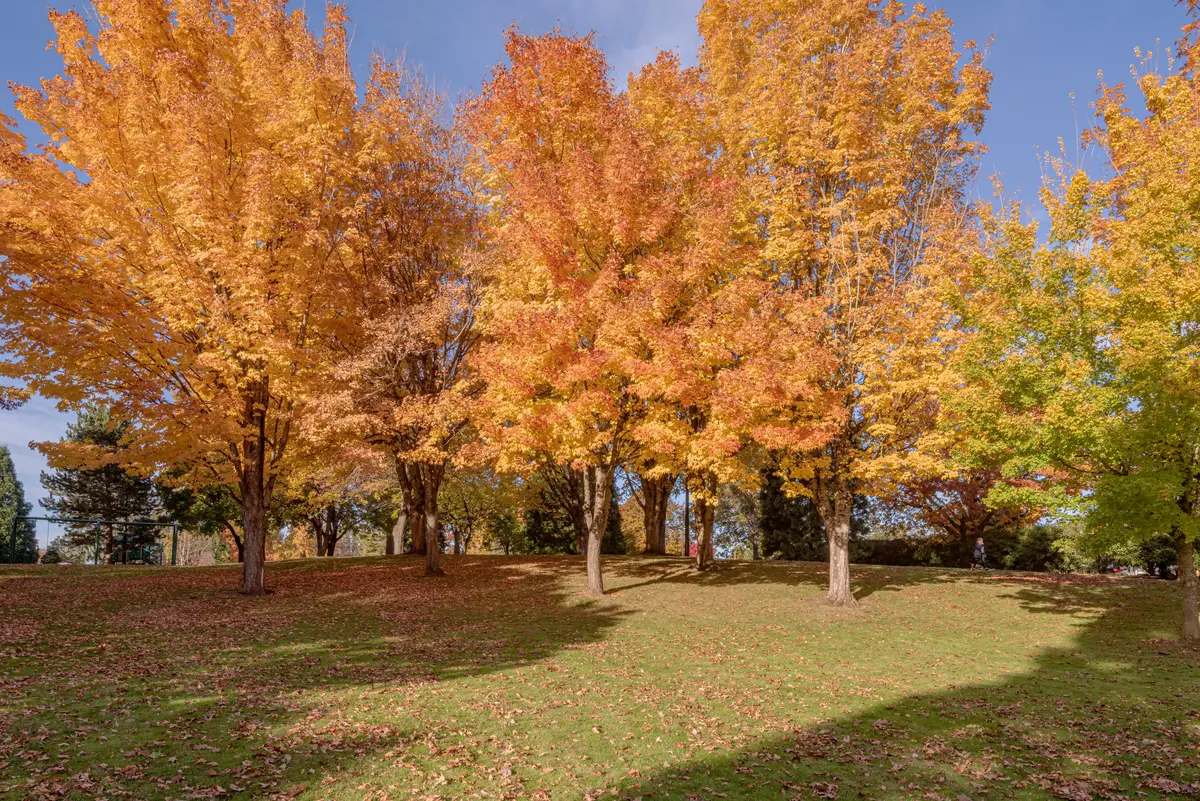
Local Expert Takeaway: The buyers who do best in Gresham are the ones who treat its neighborhoods as genuinely distinct rather than interchangeable ZIP codes. Rockwood's MAX Blue Line access and the Rockwood Market Hall make it the most transit-forward option in the city, while Gresham Butte's trail system — two extinct volcanic buttes and panoramic views — is something you won't find in any Portland suburb at this price point. Pleasant Valley is the city's most forward-looking investment, with updated plan codes effective April 2025 and the newest construction stock. For buyers who want downtown Gresham proximity and trail access in the same package, Hollybrook's Springwater Corridor boundary is genuinely hard to beat. Know your commute tolerance, verify your school district assignment before you make an offer, and don't conflate the neighborhood's direction with its current-day livability.
Quick Takeaways & FAQs
✅ Gresham's Rockwood neighborhood completed a major urban renewal project in 2024 — the Rockwood Market Hall and community plaza represent $179.2 million in private investment, making it the city's most actively transformed area.
⚠️ The city spans three school district lines, and your address — not the neighborhood name — determines which district your children attend; verify this before writing an offer.
📍 Gresham Butte sits atop two of nine extinct volcanic lava domes within city limits, and the Saddle Trail delivers panoramic views over the city — trail access like this at Gresham's price point is rare in the Portland metro.
What is the most affordable neighborhood in Gresham?
Which Gresham neighborhoods have MAX Blue Line access?
What neighborhood in Gresham is best for families?
Are there new construction homes in Gresham?
Which Gresham neighborhoods are best for outdoor access?
Moving to Oregon?
Tell us what you need help with and we'll connect you with local resources.
