
Gresham often gets pitched as the affordable alternative to Portland — and compared to Portland's urban core, that framing holds up. But "affordable" is relative, and the fuller picture is more complicated. Housing costs here track well above national norms, driven by Gresham's position in the Portland Metro. Groceries and energy costs land closer to or below national averages, but the moment you look at what it costs to own or rent here, Gresham reads like what it is: a Portland suburb, priced like one.
What actually drives daily costs in Gresham, Oregon's 4th-largest incorporated city with a population of 112,378, is its position in the Portland Metro. Residents have real transit access — the MAX Blue Line runs directly to Portland City Center — which opens up the job market considerably and lets some households manage on one car or none. Major employers within the city include the school districts, the City of Gresham itself, and a semiconductor manufacturing campus. But many residents commute out, and the income picture is worth understanding: the median household income of $77,795 sits below what a buyer would need to comfortably carry the typical home price here, which creates real pressure on first-time and entry-level buyers.
Beyond housing, the cost picture is genuinely mixed. Oregon's zero-percent sales tax means the sticker price on your groceries, clothing, and household goods is what you actually pay — a meaningful difference if you are relocating from California or Washington. Water and wastewater bills run above the Oregon city average, but energy costs benefit from the relatively mild Willamette Valley climate. Gresham sees around 144 sunny days a year, with cool, wet winters that keep heating costs modest compared to mountain or high-desert Oregon communities. Transit access is a genuine cost lever for households willing to use it.
Whether you are trying to figure out if Gresham fits your budget, comparing it to Portland, or just want a ground-level read on what life actually costs here, the sections below break down housing, everyday expenses, how Gresham stacks up against nearby cities, and the full tax picture.
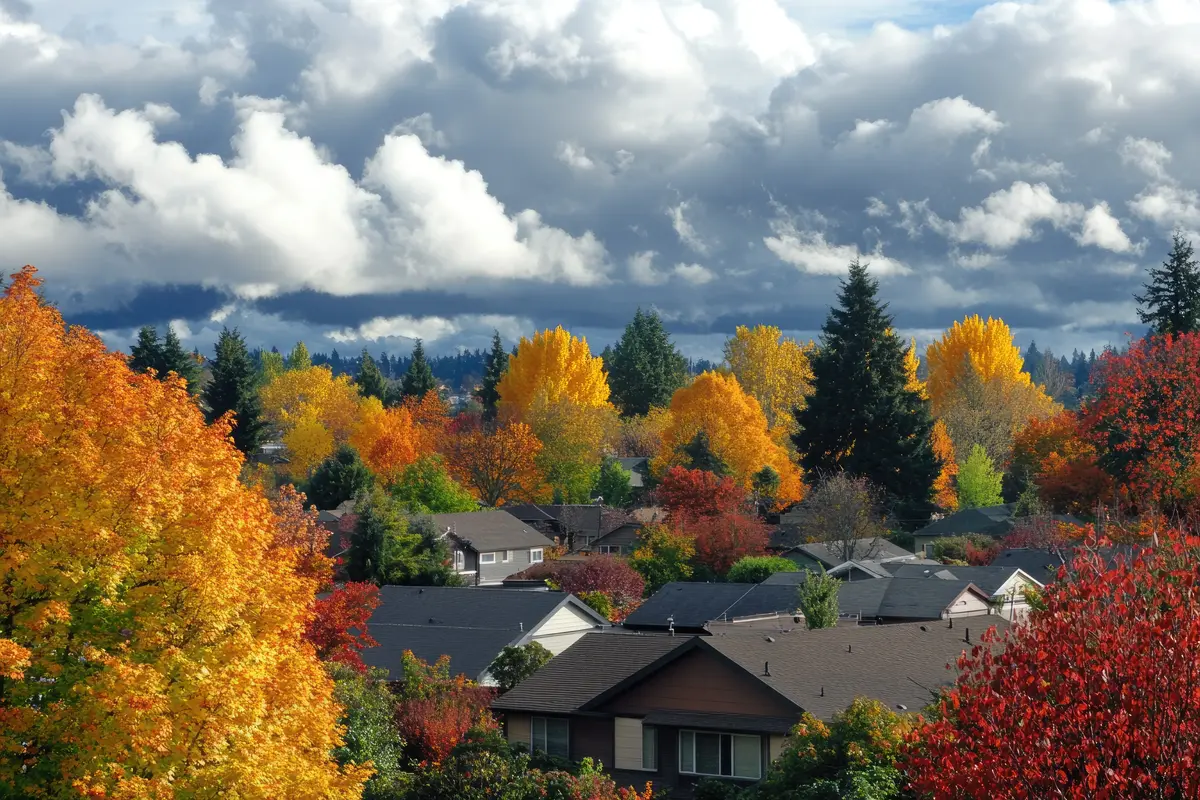
What It Really Costs to Live in Gresham
Gresham is cheaper than central Portland, but it is not cheap. The single biggest cost driver is real estate — housing costs here track well above national norms, and the gap between what the median household earns and what it costs to buy the typical home is real. The median household income of $77,795 falls meaningfully short of what most lenders would want to see to comfortably carry the typical home price at current rates.
The non-housing cost lines are more forgiving. Groceries, electricity, and natural gas all land near or slightly below national averages. Oregon's no-sales-tax environment shaves meaningful dollars off everyday purchases. For households that can commute by transit rather than car, or that are moving from a higher-cost market, Gresham's overall number can feel reasonable — especially compared to Seattle, the Bay Area, or even Portland's close-in westside neighborhoods.
The honest posture: Gresham is a mid-tier Portland suburb on price, but an entry-level one relative to the broader metro. Portland runs somewhat higher on typical home prices; Troutdale and Fairview come in at roughly the same level. If your comparison city is somewhere in California, Gresham will likely feel like relief. If your comparison is rural Oregon, it will feel like a premium. See the Best Neighborhoods guide for how costs vary across specific parts of the city.
Housing: Rent vs Buy in Gresham
The typical home price in Gresham is $470,730 (Zillow Home Value Index, July 2026). Entry-level homes — older construction, smaller lots, parts of the city with less demand pressure — can be found below that figure, though they require patience and often need work. The city's neighborhood guide breaks down where prices run above, at, or below that city-wide figure, but no price is attached to a specific area here.
The effective property tax rate in Gresham is approximately 0.98%, applied to assessed value. Because Oregon's Measure 5 and Measure 50 cap assessment growth, assessed value often runs below market value — especially for long-held properties — which means the effective rate on what you actually paid can be lower than the published rate suggests in practice. The interactive calculator below this section will give you a payment estimate at current rates; no monthly figure is reproduced here.
Renting vs. Buying: The Real Question
The typical 2-bedroom rent in Gresham runs $1,480–$1,800 per month, with a city-wide typical rent of $1,611 per month (Zillow, July 2026). Renting makes the most sense for buyers who are not yet certain about the area, who need 12–24 months to build a down payment, or who are weighing neighborhoods and want to live somewhere before committing to it. Given that the income-to-purchase gap here is real, renting while saving is a reasonable strategy rather than a fallback one.
Buying makes more sense for households whose income is well above the median, who plan to stay at least five to seven years, and who can absorb the Multnomah County property tax environment. For more on financing options and how the buying process works in this market, see the first-time homebuyer guide.

Everyday Costs Beyond Housing in Gresham
| Category | Typical Monthly Cost | Notes |
|---|---|---|
| Housing (typical rent) | $1,611/mo | City-wide typical rent. Buying? Use the calculator above for a mortgage estimate. |
| Utilities | $190–$270/mo | Electricity, gas, water, sewer, trash |
| Groceries | $600–$800/mo | Food at home, household of 2–3 |
| Transportation & Gas | $200–$350/mo | Fuel, and transit where it is a real option |
| Phone & Internet | $110–$180/mo | Mobile plan plus home broadband |
| Misc / Discretionary | $250–$480/mo | Dining out, entertainment, subscriptions |
Non-housing figures are estimates for a household of two to three, not a sourced index; housing is the city-wide typical rent (Zillow ZORI, July 2026). Refreshed with the rest of the city data.
Gresham's climate keeps the energy bill reasonable. The damp, mild winters mean heating loads rarely spike the way they do in Central Oregon or the high desert, and air conditioning is rarely needed more than a few weeks a year. Electricity in the Portland Metro runs below the national average, a benefit of the region's hydropower mix. Natural gas rates are similarly modest. The total monthly utility bundle — electricity, water, wastewater, and trash — runs roughly $327, with local water and sewer costs sitting above the Oregon city average and nudging the total higher than you might expect coming from a drier part of the state.
Groceries in the Portland metro area run modestly above the national baseline — benchmark items like a half-gallon of milk land around $4.96 and a pound of ground beef around $7.98. The more meaningful grocery story in Gresham is format: the city has competitive options, and most households are within a reasonable drive of multiple store types. Oregon's zero sales tax means those grocery bills carry no hidden add-on at the register, which is a recurring saving that adds up over a year.
Transit is a genuine cost lever. The MAX Blue Line connects Gresham's downtown transit center to Portland City Center with frequent service, and the FX2–Division rapid bus line adds another high-frequency connection. For households that can reduce car dependence, the savings on gas, insurance, and maintenance are real. The city has more than 400 miles of sidewalks, paths, and trails — walking and cycling are practical complements to transit in a way they are not in many suburbs of comparable size.
Looking to buy in Gresham? Estimate your payment.
Enter your numbers to see an estimated monthly mortgage payment.
Estimate only. Excludes HOA fees and mortgage insurance. The interest rate above is a starting point, not a quoted rate — replace it with your own to see real numbers. Insurance is a flat placeholder, not a Gresham quote.
Gresham vs Nearby Cities: How the Costs Compare
| City | Typical Home Price | Typical Rent | Cost vs Gresham |
|---|---|---|---|
| Gresham (this city) | $470,730 | $1,611/mo | — |
| Portland | $534,270 | $1,723/mo | 13% higher |
| Troutdale | $490,768 | $2,008/mo | 4% higher |
| Fairview | $478,412 | $1,730/mo | About the same |
Source — home prices: Zillow ZHVI, July 2026; rent: Zillow ZORI, July 2026. Nearby-city figures are the same series, refreshed together.
Portland runs somewhat higher on typical home prices than Gresham — the gap is real, even if it has narrowed in recent years. Troutdale and Fairview come in at roughly the same level as Gresham, making those comparisons more about lifestyle and commute than price. Hillsboro and Beaverton, both in Washington County, typically run noticeably above Gresham on home prices while benefiting from the absence of Multnomah County's local income tax layer — a trade-off that reshapes the comparison for higher-earning households.
The county line is the cost variable most buyers miss. Gresham and Portland share the same Multnomah County local income tax environment; Hillsboro and Beaverton do not. For higher earners, that difference can be meaningful enough to reshape the entire comparison — a home that looks more expensive in Washington County may actually pencil out cheaper once the full tax picture is factored in. The engine-rendered comparison table just below this section shows the side-by-side figures across the nearby cities.
Oregon's zero sales tax applies everywhere in the state, so that benefit is constant regardless of which Portland Metro suburb you land in. The variables that actually differentiate Gresham from its neighbors are the home price level, the county income tax layer, and transit access — and Gresham comes out ahead on the first two of those three for buyers who can use the MAX Blue Line.
Taxes & the Bottom Line for Gresham
Oregon State Income Tax
Oregon's state income tax is graduated from 4.75% to 9.90%. The top rate of 9.90% applies to taxable income above $125,000 for single filers and $250,000 for joint filers. For most middle-income households, the effective state income tax rate lands in the 7%–8% range — higher than most western states, and noticeably higher than states with no income tax at all.
The Multnomah County Layer
Gresham sits in Multnomah County, which adds two local income taxes that most Oregon cities do not carry. Higher-earning residents are subject to both the Metro Supportive Housing Services (SHS) tax and the Multnomah County Preschool for All (PFA) tax. These are meaningful additions for households earning above the relevant thresholds, and they represent a real cost difference compared to living in Washington County or Clackamas County suburbs at similar price points. If you are comparing Gresham to a suburb just across the county line, the tax picture is part of the conversation.
Property Tax
The effective property tax rate is approximately 0.98% of assessed value. Multnomah County as a whole carries Oregon's highest median property tax bill — a function of higher assessed values and a denser overlay of local levies. Long-term homeowners benefit from Oregon's assessment-growth caps, but buyers purchasing at current market prices should plan for the full impact.
Sales Tax
Oregon has no statewide or local sales tax. The price on the tag is what you pay at the register — for groceries, clothing, electronics, and most goods. For households moving from California or Washington, this is a genuine and recurring saving that partially offsets the income tax load.
Who Gresham's Budget Fits
Gresham fits buyers and renters whose income is comfortably above the city median, who value transit access and proximity to Portland without paying Portland prices, and who have accepted that the Multnomah County tax environment comes with the territory. It tends to feel like a stretch for single-income households near or below the median, for buyers who need to stay in strict monthly payment limits, or for anyone who moved here expecting small-town pricing. The home-price figure in the housing section tells the core story: this is a real city with real Portland Metro prices, not a rural escape valve.

Local Expert Takeaway: Gresham's cost of living is best understood as Portland-adjacent pricing with one meaningful break: the home prices run below the city of Portland, and the zero-percent sales tax environment makes everyday spending more predictable than in most comparable markets. The genuine traps are the Multnomah County local income tax layer — which catches higher-earning households who assumed county-line living would shield them from Portland-area taxes — and the water and wastewater bills, which run above the Oregon city average and surprise people coming from outside the metro. The MAX Blue Line is the real affordability lever: households that can genuinely reduce to one car or none save enough to meaningfully offset the income-tax premium. If that lifestyle fits you, Gresham makes financial sense. If it does not, run the full numbers carefully before committing.
Quick Takeaways & FAQs
✅ Gresham's typical home price of $470,730 (July 2026) runs below Portland while still offering MAX Blue Line access directly to Portland City Center — a real value for commuters who can use it.
⚠️ Multnomah County adds both the Metro SHS and the Preschool for All local income taxes on top of Oregon's already high state income tax rate — higher-earning households moving from a low-tax state should budget for this carefully.
📍 Oregon has no sales tax, which means every grocery run, clothing purchase, and household goods trip costs exactly what the price tag says — a recurring saving that adds up over a year, especially for families.
Is Gresham, Oregon cheaper than Portland?
What is the typical rent in Gresham, OR?
What are the property taxes like in Gresham?
Does Oregon's lack of sales tax actually save money in Gresham?
What local income taxes apply to Gresham residents specifically?
Moving to Oregon?
Tell us what you need help with and we'll connect you with local resources.
