About Elizabeth
What Gresham Is — and Isn't
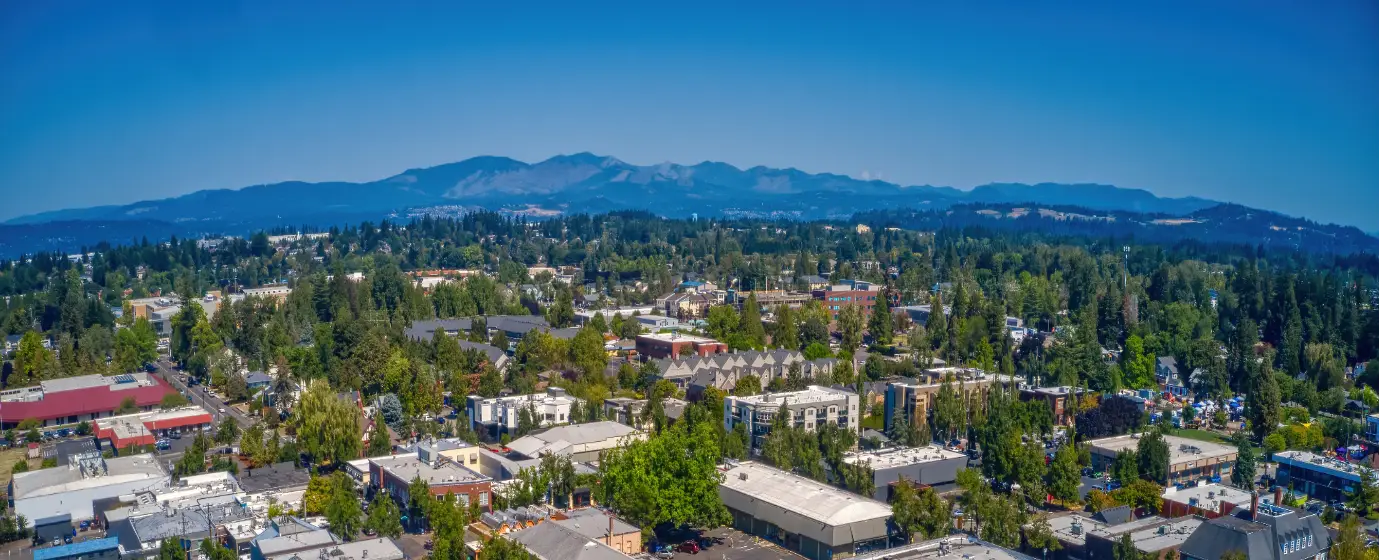
Gresham gets filed under "Portland suburb" and left there, which undersells and misrepresents it in equal measure. With a population of 112,378, this is a fully functioning city — it has its own downtown, its own employers, its own identity — and it sits about 25 minutes to Portland via I-84, close enough for a daily commute but far enough that the pace of life feels genuinely different.
The single most important thing I tell buyers before we start touring: treat Gresham as several distinct markets layered inside one city boundary. The Springwater Corridor area around Hollybrook feels nothing like the farmhouse-and-wetlands character of Kelly Creek. Rockwood and Centennial are working-class neighborhoods with real affordability. Pleasant Valley and Gresham Butte sit on the hillier eastern edge and draw a different buyer entirely. Understanding which city you're actually buying into matters here more than it does in a lot of Portland suburbs.
The downtown investment story is also worth understanding early. In September 2025, the Gresham City Council unanimously adopted a $381 million, 30-year urban renewal plan covering roughly 900 acres of downtown and civic areas. The plan uses tax increment financing — it does not increase property taxes — and its scope includes Main City Park, the Gresham Arts Plaza, a new library that was under construction at the time, and major shopping areas. The earlier Rockwood–West Gresham urban renewal area, established in 2003 and extended by voters in 2022, gives you a sense of how the city executes on these plans over time.
That kind of long-horizon public investment is exactly the signal I look for when advising buyers who are thinking about a five-to-ten-year hold. It doesn't make Gresham a sure bet, but it does mean city leadership has a documented track record of following through.
Gresham Neighborhoods: What Each One Actually Delivers
Rockwood
Rockwood is the most affordable entry point in the city and the most ethnically diverse neighborhood Gresham has. It has real grit — property crime is a genuine concern here, and buyers who aren't prepared for that tend to have second thoughts within the first year. But for buyers who understand what they're getting, it offers single-family homes at a price point that has otherwise largely vanished from the Portland Metro.
Best for: First-Time Buyers Value
Centennial
Centennial sits below the city-wide median and covers a wide geographic area that straddles the Gresham city boundary and unincorporated Multnomah County. That boundary creates a school-assignment wrinkle I flag with every buyer here: two houses on the same street can feed into different elementary schools depending on the exact address. Always confirm the assigned school with the district before making an offer. The housing stock is mostly post-war and 1960s–70s ranches, and the neighborhood has strong working-family roots.
Best for: Value Families
Kelly Creek
Kelly Creek runs above the city median and tends to hold its value quietly. The neighborhood is built around its namesake creek corridor, with a mix of older farmhouses and newer construction, parks, and wetlands. Turnover is low — owners tend to stay — and walkable retail is essentially nonexistent, so daily errands default to a car. Buyers who prioritize greenery and stability over convenience tend to find it satisfying in ways that take them by surprise.
Best for: Nature Quiet Families
Gresham Butte
Gresham Butte sits above the city median and earns it. The elevation gives you views, the trails on the butte itself give you a trailhead essentially in the neighborhood, and the housing stock skews toward larger lots with more separation between homes. It's the neighborhood I show buyers who've been looking in Lake Oswego or West Linn and need to recalibrate their price expectations downward without giving up the feeling of space.
Best for: Views Nature Privacy
Powell Valley
Powell Valley sits at roughly the city median and offers a solid middle ground — established streets, a mix of single-family home eras, and proximity to Powell Butte Nature Park on the western edge. It's a neighborhood that doesn't generate much buzz, which I've come to read as a compliment. Buyers who pick it tend to stay.
Best for: Families Value
Northwest Gresham
Northwest Gresham sits at the city median and benefits from the most direct access to the MAX Blue Line. If transit access matters to your daily life — or if you want the option to commute car-free — this is the part of the city to focus on. Main City Park anchors the area, and the downtown investment zone runs directly through it.
Best for: Transit Walkable Commuters
Pleasant Valley
Pleasant Valley sits above the city median and is one of the more rural-feeling neighborhoods still technically inside city limits. Large lots, newer construction mixed with older farmhouses, and views toward Mt. Hood define it. It's the neighborhood that draws buyers who want acreage and still want to be within a commutable distance of Portland.
Best for: Privacy Nature Views
Hollybrook
Hollybrook sits at the city median and is strongly defined by the Springwater Corridor Trail, which runs through the neighborhood and connects to a regional trail network. The housing stock is primarily ranch-style homes and bi-levels from the 1970s through the 1990s — honest, well-built suburban construction that still pencils out for buyers who want a detached single-family home and a lower price than Kelly Creek or Pleasant Valley.
Best for: Nature First-Time Buyers Commuters
Gresham vs Nearby Cities
| City | Typical Home Price | Typical Rent | Cost vs Gresham |
|---|---|---|---|
| Gresham (this city) | $470,730 | $1,611/mo | — |
| Portland | $534,270 | $1,723/mo | 13% higher |
| Troutdale | $490,768 | $2,008/mo | 4% higher |
| Fairview | $478,412 | $1,730/mo | About the same |
Source — home prices: Zillow ZHVI, July 2026; rent: Zillow ZORI, July 2026. Nearby-city figures are the same series, refreshed together.
The comparison I get asked about most is Gresham versus Portland. The honest answer is that Portland offers more of almost everything urban — density, dining, walkability, cultural amenities — and you pay noticeably more for it. Buyers who make the switch to Gresham typically get more square footage, a garage, and a larger lot for the same budget, and they trade that against being east of the action. Whether that's a fair trade depends entirely on what your daily life actually looks like.
Troutdale and Fairview come in at about the same price as Gresham, which surprises people. Both are smaller and quieter, and neither has Gresham's transit infrastructure or the downtown investment arc that's now underway here. If MAX access matters to your commute, Gresham wins that comparison without much debate. If you want a smaller-town feeling and don't need rail transit, Troutdale in particular has a character that some buyers genuinely prefer.
Damascus and Sandy sit further east and start to feel rural in ways that Gresham doesn't. The commute to Portland lengthens meaningfully and the trade-off is land and lower prices. I work with buyers who are drawn to that, but I always want them to drive the commute in both directions on a weekday before they commit — it's a different life, not just a different distance.
The smallest immediate neighbors function more as commercial corridors than residential destinations. I rarely have buyers choosing between those smaller adjacent communities and Gresham specifically — they tend to come up as geographic anchors rather than destinations in their own right.
Looking to buy in Gresham? Estimate your payment.
Enter your numbers to see an estimated monthly mortgage payment.
Estimate only. Excludes HOA fees and mortgage insurance. The interest rate above is a starting point, not a quoted rate — replace it with your own to see real numbers. Insurance is a flat placeholder, not a Gresham quote.
Schools in Gresham
Gresham is served by three school districts depending on which part of the city you're in: Gresham-Barlow School District 10J is the primary one, but portions of the city also fall within Reynolds School District and Centennial School District. That's not a typo — three separate districts serve this single city, and the boundaries don't track neatly onto neighborhood names.
Gresham-Barlow School District 10J has 11,357 students enrolled in 2025-26, according to figures the Oregon Department of Education publishes. On 2024-25 state assessments, 18.3% of students reached math proficiency and 31.3% reached reading proficiency, according to figures the Oregon Department of Education publishes. Those numbers are below state averages, and I think it's important to say that plainly rather than bury it. What those figures don't tell you is how a specific school within the district performs, which school your address actually feeds into, or how the district's approach to curriculum and support services fits your child's specific needs.
The district's high schools field competitive athletics programs across multiple sports, and community participation in school events — Friday night football, in particular — remains a real part of neighborhood life in the areas around the older established schools.
My honest advice to anyone seriously considering a move to Gresham: do your own due diligence on the schools. Confirm the assigned school for the specific address you're considering directly with the district, and review the data the Oregon Department of Education publishes yourself rather than relying on any summary, including mine. The Centennial area in particular carries a school-boundary complexity I mentioned in the neighborhoods section — two homes on the same street can feed into different elementary schools depending on which side of the city-county boundary they fall on. This is not theoretical. I have seen buyers learn this after they were already in escrow.
Commute and Getting Around
The practical commute story for Gresham is better than most Portland-area suburbs at this price level, and transit is the reason. The MAX Blue Line runs directly from Gresham Central Transit Center through East Portland to Portland City Center, with frequent service throughout the day. Portland International Airport, at approximately 13 miles from the city center, is reachable by that same light rail line without a car change. For buyers who commute to downtown Portland or to the airport corridor, that's a genuinely useful combination.
The drive option is about 25 minutes to Portland under normal conditions via I-84, with US-26 (Mount Hood Highway) and US-30 providing additional connections depending on where you're headed. I always tell buyers: measure that commute at 7:45 a.m. on a Tuesday, not at noon on a Saturday. The answer will be different.
Microchip Technology's Fab 4 semiconductor manufacturing facility in Gresham means a portion of the city's workforce doesn't need to commute to Portland at all. The school districts — Gresham-Barlow, Reynolds, and Centennial — are also significant local employers, as is the City of Gresham itself. Not everyone here is running west on I-84 every morning, which is worth keeping in mind when you're thinking about traffic patterns and neighborhood positioning.
Within the city, most daily errands still require a car outside of the Northwest Gresham core. The neighborhoods further east — Kelly Creek, Pleasant Valley, Gresham Butte — are definitively car-dependent for grocery runs and day-to-day tasks. Buyers coming from walkable Portland neighborhoods sometimes underestimate how much that changes daily life, especially in the first year.
Weekends and Local Favorites
The Gresham Farmers' Market is the social center of summer weekends in a way that's hard to overstate for a city this size — it's genuinely well-attended, locally rooted, and a good early litmus test for whether the community feel here is going to work for you. The Gresham Art Walk runs through the downtown corridor and reflects the city's longstanding investment in public art and the arts community more broadly.
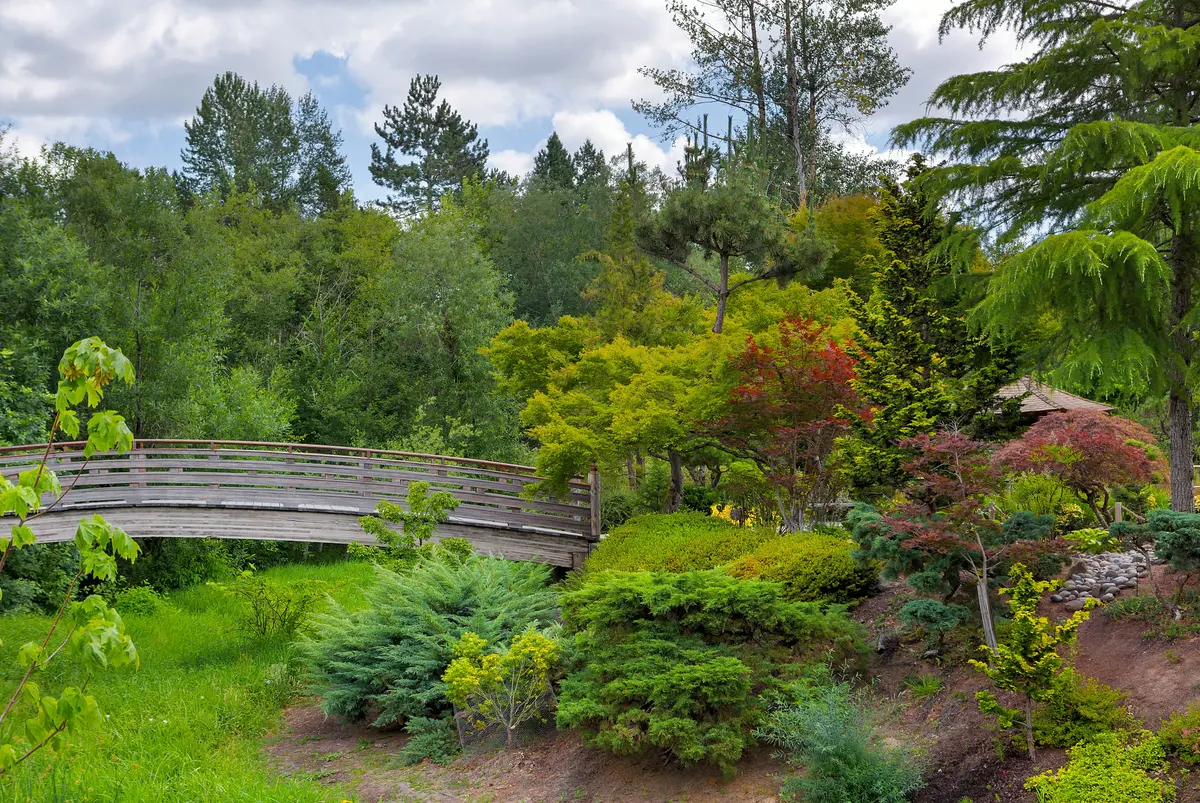
Main City Park anchors the downtown area and sits directly inside the urban renewal zone, which means the physical improvements happening around it are ongoing. Gresham Butte trails give the eastern neighborhoods a real hiking option close to home. Powell Butte Nature Park sits at the western edge of the city and connects into the broader regional trail system. The Springwater Corridor Trail runs through Hollybrook and is one of the more underused regional assets in the Portland Metro — on a weekday morning it genuinely belongs to the people who know about it.
Mt. Hood Community College adds a layer of cultural programming and community events that a city this size doesn't always have, and the Gresham Historical Museum in the downtown core is the kind of local institution that tells you a lot about how a community thinks about itself.
For food and coffee, I can speak to the places I've verified firsthand. Heidi's Of Gresham has been a local anchor for years. Nicholas Restaurant brings Lebanese and Mediterranean cuisine to a dining scene that is more varied than the city's reputation suggests. The Local Cow is exactly what the name implies — a neighborhood burger spot with real local loyalty. Sweet Betty's Bistro and Boccelli's Ristorante round out a dining picture that, while not dense, has genuine quality at its best. For coffee, Legacy Coffee & Books combines a good cup with an independent bookshop in a way that's rare. Silk Espresso at Dodge Park, Stomping Grounds Coffee House, Our Coffee House, and Pause Coffee Lab each have their own following and their own character. None of them feel like a placeholder for the Portland coffee shop you left behind — they feel like Gresham.
Final Advice From Elizabeth
Quick Takeaways & FAQs
✅ The MAX Blue Line connects Gresham Central Transit Center directly to Portland City Center, giving commuters a genuine car-free option that most Portland Metro suburbs at this price level cannot match.
⚠️ Three separate school districts serve different parts of Gresham, and the boundaries don't track neatly onto neighborhood names — confirm the assigned school for any specific address before making an offer.
📍 The Gresham City Council adopted a $381 million, 30-year urban renewal plan in September 2025, covering roughly 900 acres of downtown and civic areas including Main City Park and a new library.
What is the commute from Gresham to Portland actually like?
How do Gresham's schools compare to other Portland Metro districts?
Which Gresham neighborhood is right for someone who commutes to Portland?
What does the typical home price in Gresham actually buy?
What surprises people most after they move to Gresham?
How quickly do homes sell in Gresham?
How does Gresham compare to Portland for a buyer deciding between the two?
Are there 55+ communities in Gresham for buyers who are retiring here?
Moving to Oregon?
Tell us what you need help with and we'll connect you with local resources.
