
Maybe you've been priced out of the Eugene market and someone suggested heading south on I-5. Maybe you drove through Cottage Grove on the way to the coast and noticed the covered bridges, the murals on Main Street, the unhurried pace of a real small town. Either way, the appeal is immediate: a population of 10,698, a walkable downtown that has been genuinely revitalized, a hospital inside city limits, and a typical home price of $405,035 (Zillow Home Value Index, July 2026) that sits well below what you'd pay in Eugene. For retirees, those four facts together are worth taking seriously.
The economy here is anchored by the South Lane School District, Weyerhaeuser's forestry operations, and local government — employers that have roots in this community rather than plans to relocate. Cottage Grove Community Hospital has been part of the city's fabric for decades, which matters to anyone weighing whether they want a medical facility accessible without a long drive. The community draws retirees who want the Willamette Valley's mild climate — 159 sunny days a year — without paying Eugene prices for it, and who would rather walk to a farmers market than sit in Portland traffic.
Daily life here is shaped by the Row River Trail, the South Valley Farmers Market, and a downtown that has real independent businesses rather than vacant storefronts. The cost of living runs meaningfully lower than Eugene or the Portland metro, which gives fixed-income households more breathing room. Oregon's tax treatment of Social Security and retirement income is favorable. The trade-off is real too: this is a small city, specialty medical care means a drive north, and the 55+ ownership community market is essentially nonexistent.
The sections below cover healthcare access, the retiree budget, walkability and community life, downsizing options, and how Cottage Grove stacks up against nearby retirement destinations — everything you need to make an honest assessment of whether this city fits your next chapter.

Why Retirees Are Choosing Cottage Grove
Cottage Grove fits a specific kind of retiree well: someone who wants genuine small-town community without sacrificing a hospital in town, who is comfortable with a car for errands but wants a walkable core for daily life, and who has decided that Eugene's price premium isn't worth it. The typical home here was $405,035 as of July 2026 — real money, but a level that allows many retirees who've sold a home elsewhere to buy in outright or close to it, leaving monthly costs manageable on a fixed income.
The city rewards people who lean into its character. Bohemia Mining Days, the annual summer festival celebrating the area's gold-rush heritage, fills the streets. The covered bridges draw visitors from across the state, but residents get to live among them year-round. The downtown revitalization is real — art galleries, a museum, independent coffee, a bookstore — and the Row River Trail means you don't have to drive to get meaningful daily movement. Retirees who want to be part of a community rather than retreating behind a gate find Cottage Grove genuinely receptive.
Who should look elsewhere? Retirees who need frequent access to specialists — oncology, cardiology, neurology — without a drive north will find Cottage Grove's medical infrastructure too thin. Anyone counting on a 55+ ownership community with amenities, a clubhouse, and age-restricted neighbors won't find that here. And retirees who want the cultural density of a university city — the arts calendar, the restaurants, the lecture circuit — will feel the pull toward Eugene constantly. Cottage Grove is best for people who want a quieter version of the Willamette Valley life, not a scaled-down version of Eugene.
Healthcare & Medical Access in Cottage Grove
The closest hospital is PeaceHealth Cottage Grove Community Medical Center, inside city limits. That fact alone changes the retirement calculus for many buyers: you are not driving 25 miles to the nearest ER in an emergency. PeaceHealth Cottage Grove is a 14-bed critical access hospital serving southern Lane County and northern Douglas County, with 179 caregivers handling over 43,000 outpatient visits and 13,600 emergency department visits annually.
Day-to-day medical access is solid. The facility includes an emergency department, inpatient services, Priority Care walk-in services for urgent but non-life-threatening needs, and an on-site family medicine clinic that covers all life stages. For the routine health management that occupies most retirees — primary care visits, lab work, minor acute care — PeaceHealth Cottage Grove handles it without requiring a trip north.
Where the Limits Are
Critical access status means the hospital is not a regional trauma or specialty center. For major trauma, complex cardiac events, or procedures requiring subspecialty surgical teams, patients are transported to a regional trauma center in the Eugene-Springfield area, roughly 25 miles north.
Specialist availability in Cottage Grove is limited. Cardiology, oncology, orthopedic surgery, and neurology typically require appointments in Eugene or Springfield. If you are managing an active complex condition that requires frequent specialist visits, the drive becomes a real logistical factor — not a dealbreaker for everyone, but an honest one. Retirees who have resolved their major health issues and are in a maintenance phase will find the local infrastructure adequate. Those who expect intensive specialist engagement in the near term should weight that drive into their decision.
For dental, vision, and routine specialist care, Eugene is the practical destination. I-5 makes the trip straightforward, and the drive of about 25 minutes to Eugene keeps it from being genuinely burdensome for most visits.
The Retiree Budget in Cottage Grove
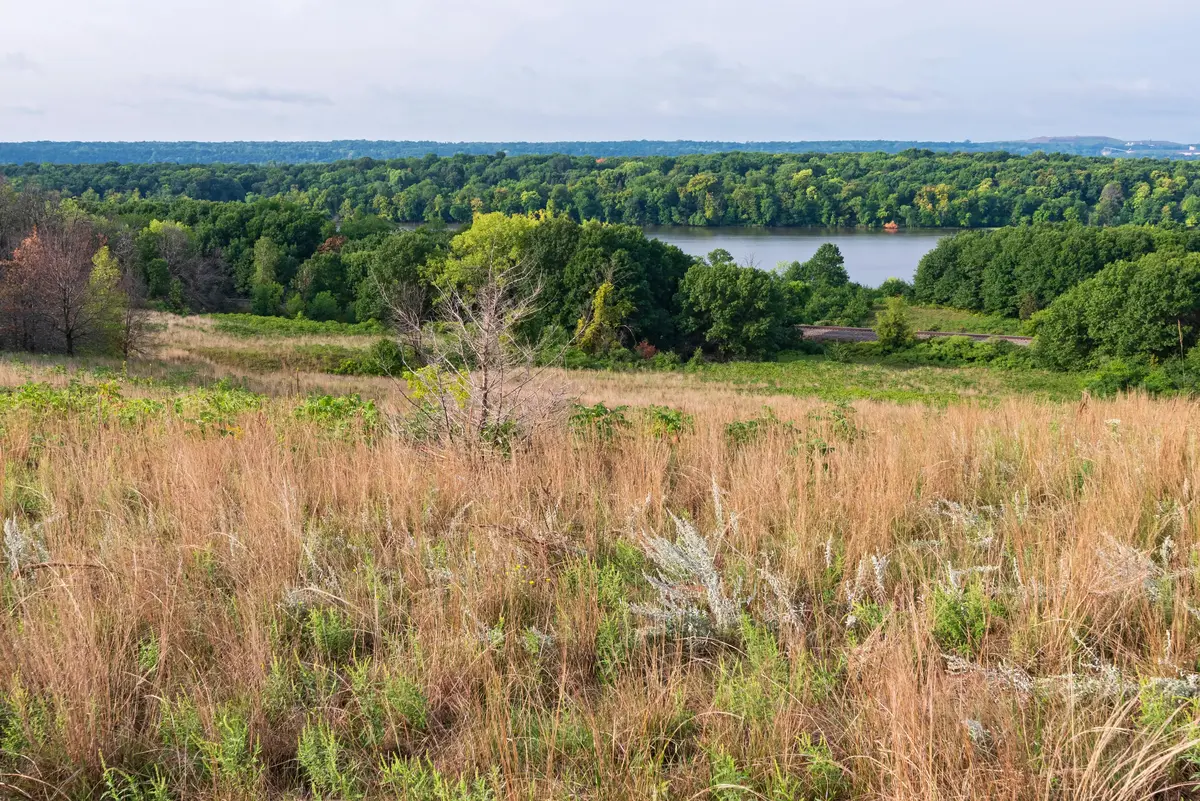
Oregon's tax posture toward retirees is more favorable than many relocating buyers expect. Social Security retirement benefits are not taxed at the state level, regardless of your total income — a genuine advantage for retirees who depend on Social Security as their primary or supplemental income source. Oregon also offers a retirement income credit for residents age 62 or older who receive taxable retirement income, which can partially offset the state's otherwise significant income tax rates on pension and IRA distributions.
The income tax picture has a less favorable side: Oregon's top rates are among the highest in the country, and pension income and IRA withdrawals are taxed as ordinary income. The no-Social-Security-tax benefit matters most for retirees whose income is heavily weighted toward Social Security; those drawing primarily from IRAs, pensions, or investment accounts will feel the state income tax more acutely. For a full breakdown of how Oregon's income, property, and sales tax picture affects your specific situation, the cost of living page has the detail.
Property Tax Reality
The effective property tax rate in Cottage Grove is approximately 0.77% — below the national average, and meaningfully below what retirees coming from higher-tax states are accustomed to. On the typical home price, that rate is modest enough that property taxes alone rarely strain a retirement budget.
Oregon offers a Senior and Disabled Property Tax Deferral Program for homeowners age 62 or older, which allows qualifying seniors to defer property taxes until the home is sold. The program is income-qualified, and Cottage Grove's median household income of $80,875 sits above the threshold, so many residents — particularly those with pension income or strong Social Security benefits — will not qualify. If your household income in retirement will fall under the program's limit, the deferral program is worth researching with Oregon DOR before you close on a home.
Daily Cost of Living
Groceries, dining, and everyday services run noticeably lower than Eugene, and dramatically lower than the Portland metro or any California market. Independent coffee shops, a handful of casual restaurants along Main Street, and the South Valley Farmers Market keep daily spending manageable without requiring a drive to a larger city for basics. Oregon has no statewide sales tax, which quietly adds up across a year of purchases on a fixed income. The practical reality is that a retirement budget that feels tight in Eugene often breathes more easily in Cottage Grove.
Looking to buy in Cottage Grove? Estimate your payment.
Enter your numbers to see an estimated monthly mortgage payment.
Estimate only. Excludes HOA fees and mortgage insurance. The interest rate above is a starting point, not a quoted rate — replace it with your own to see real numbers. Insurance is a flat placeholder, not a Cottage Grove quote.
Walkability, Community & Staying Active in Cottage Grove
Cottage Grove is more walkable than its size suggests — with an important caveat about where you live within it. The downtown core, which has been genuinely revitalized through the Main Street Approach, is compact and flat enough to navigate on foot. Bohemia Park, a 14-acre green space that anchors the downtown, is the gathering spot: farmers market visits, morning walks, community events, and the kind of run-into-neighbors experience that small-town life is supposed to offer.
The neighborhoods surrounding downtown are a different story. Parts of Cottage Heights and View Heights involve real elevation, and anyone with mobility limitations should walk the terrain of a neighborhood before committing to it. The more level streets of the Northwest Neighborhood and Gateway area are better suited for daily on-foot errands. Grocery shopping and most medical appointments still require a car for most residents — this is not a city where you ditch the vehicle entirely.
The Row River Trail
The Row River National Recreation Trail is the single strongest active-lifestyle amenity in Cottage Grove for retirees. The paved, multi-use rail trail runs roughly 15–16 miles from downtown east to Dorena Lake and Culp Creek, largely flat along its full length, and open year-round. It passes several of the area's historic covered bridges, including the Mosby Creek Covered Bridge built in 1920. The trail is genuinely accessible at most fitness levels — walking, cycling, and e-biking are all common — and it connects downtown to the natural landscape in a way that makes daily movement feel effortless rather than purposeful.
Community Texture
Cottage Grove has the kind of recurring community calendar that active retirees look for. Bohemia Mining Days in summer is the signature event — a multi-day festival rooted in the area's gold-rush past that draws the whole city out. The Christmas tree lighting and downtown events give the year a rhythm. The Cottage Grove Museum and the historic downtown murals offer an ongoing point of connection to the city's history that goes deeper than most towns of this size.
For volunteers and joiners, a city of 10,698 tends to be well-organized around its institutions: the museum, the parks, the chamber of commerce, and the faith community all represent real avenues for social connection. The South Valley Farmers Market is the kind of weekly anchor that functions as community as much as commerce — the place where you start recognizing faces within a few weeks of moving in. Retirees coming from larger cities sometimes find the scale of social life here smaller than they expected, but those who lean into what Cottage Grove actually offers rather than what they wish it were tend to find genuine roots.
Right-Sizing: Downsizing in Cottage Grove
No 55+ communities were found in Cottage Grove. That is the most important single fact for retirees planning a downsizing move here, and it shapes everything else about the housing search. There is no age-restricted neighborhood with a clubhouse, maintained landscaping, and a built-in social network of peers — that product simply does not exist in this market.
What does exist is a general housing stock with meaningful single-level options, particularly among the ranch-style homes built in the Gateway and Sunrise Estates areas. Retirees who are willing to buy in the general market — competing alongside families and first-time buyers — can find single-story homes. The challenge is that single-level inventory is limited relative to demand, and Cottage Grove does not have the condo or patio-home supply that larger retirement markets offer. When a well-maintained single-level home comes on market here, it tends not to sit.
What the Assisted Living Market Looks Like
For those who need or anticipate needing daily support, Middlefield Oaks is an assisted living and memory care facility within the city. Adult foster care homes and other assisted living options serve residents who need help with daily tasks. These are care settings, not ownership communities — the distinction matters for buyers who are planning a lifestyle move versus a care transition. If your timeline to needing care support is near, Cottage Grove has options. If you're 65 and healthy and looking for a peer community with amenities, you'll need to look at the general market and build your own social connections rather than relying on a community structure.
For a fuller picture of neighborhood character and which areas have the most single-level housing stock, the neighborhoods page breaks down each district in detail. The practical advice for downsizers: start the search with a clear single-level requirement, be patient with inventory, and don't count on the kind of 55+ community infrastructure you might find in a larger Oregon market.
Cottage Grove vs Nearby Retirement Destinations
| City | Cost vs Cottage Grove | Primary Hospital | Walkability | Senior Living Depth | Overall Retirement Fit |
|---|---|---|---|---|---|
| Cottage Grove | Anchor | PeaceHealth Cottage Grove Community Medical Center (in city) | Moderate — flat downtown core, some hilly neighborhoods | Thin — no 55+ communities; assisted living available | Strong for small-town retirees on a budget; limited for specialty-care needs |
| Eugene | Noticeably higher | Major regional hospital and trauma center in the metro | Strong — university city with transit, bike lanes, walkable districts | Good — multiple 55+ communities and continuing-care options | Best for retirees who want cultural density and specialist access nearby |
| Springfield | About the same | Major regional hospital in city | Moderate — car-dependent but improving | Moderate — some senior housing options | Good value with better hospital access than Cottage Grove; less small-town character |
| Creswell | Noticeably higher | Dependent on Eugene-Springfield for hospital care | Limited — small town, very car-dependent | Very thin — minimal senior living infrastructure | Rural lifestyle appeal; not suited for retirees needing regular medical access |
| Roseburg | Roughly comparable | Full-service regional hospital in city | Moderate — walkable downtown, car needed for most errands | Good — established senior living market with more options than Cottage Grove | Strong alternative for retirees who want a hospital with more depth and a similar small-city feel |
| Sutherlin | Somewhat cheaper | Dependent on Roseburg for hospital care | Low — small town, limited on-foot access | Very thin | Best for retirees prioritizing affordability and rural quiet over amenities and access |
Eugene wins on every dimension except cost: better hospital access, deeper specialist networks, more 55+ community options, and a walkable urban environment that requires less car dependence. Retirees who can stretch their budget to Eugene's price level — noticeably higher than Cottage Grove — gain meaningfully on healthcare and lifestyle infrastructure.
Springfield offers an interesting middle ground: costs roughly comparable to Cottage Grove with better hospital proximity, since a major regional medical center sits within that city. The trade-off is a more industrial character and less of the small-town aesthetic that draws people to Cottage Grove in the first place.
Roseburg, about 50 miles south on I-5, is the most underrated alternative for retirees who want Cottage Grove's small-city feel but need a hospital with more capacity. A full-service regional hospital in Roseburg handles a broader scope of care than a critical access facility, and Roseburg's senior living market has more depth. For retirees whose primary concern is medical access in a small city, Roseburg deserves a serious look alongside Cottage Grove. Creswell and Sutherlin suit retirees prioritizing rural quiet and lower price points, but neither should be chosen by anyone who expects regular medical engagement without significant driving.
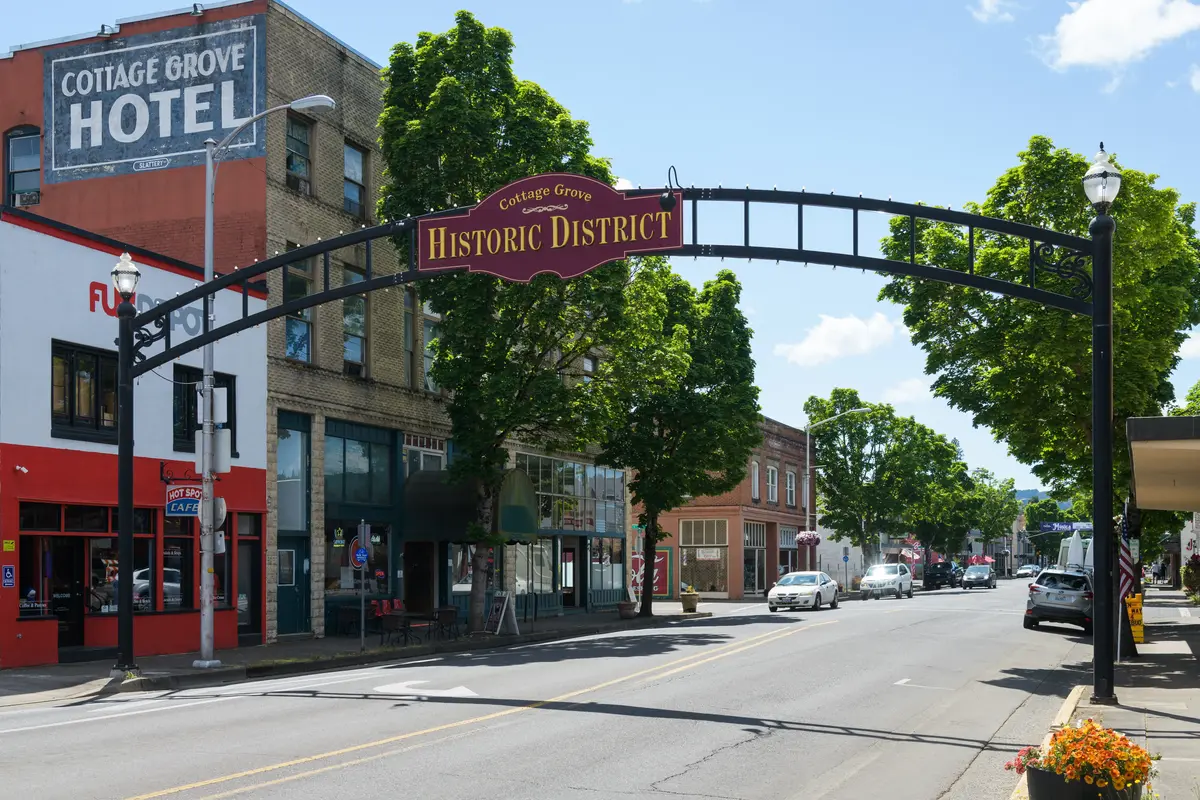
Local Expert Takeaway: Cottage Grove works best for retirees who arrive with realistic expectations: a small city of 10,698 with a hospital in town, a flat rail trail you can walk or bike year-round, a genuinely revitalized downtown with independent coffee and a weekly farmers market at Bohemia Park, and home prices that leave room to breathe on a fixed income. What it doesn't have is a 55+ community, deep specialist coverage without driving north, or the cultural calendar of Eugene. Retirees who've made peace with that trade-off — and who want to be part of a real community rather than an amenity package — consistently find Cottage Grove more rewarding than they expected.
Quick Takeaways & FAQs
✅ PeaceHealth Cottage Grove Community Medical Center is inside city limits, giving retirees in-town emergency and primary care without a drive north.
⚠️ No 55+ communities were found in Cottage Grove, so retirees expecting an age-restricted neighborhood with a clubhouse will need to look elsewhere or buy in the general housing market.
📍 Oregon does not tax Social Security benefits at the state level, and an income-qualified property tax deferral program is available for qualifying homeowners age 62 or older.
Does Cottage Grove have a hospital for retirees?
Is Oregon a good state for retirees from a tax perspective?
Are there 55+ communities or active adult communities in Cottage Grove?
Can you get around Cottage Grove without a car as a retiree?
How does Cottage Grove compare to Eugene for retirement?
Moving to Oregon?
Tell us what you need help with and we'll connect you with local resources.
