
Maybe you've been priced out of Eugene and someone mentioned Cottage Grove as the more affordable option down I-5. Maybe you're remote-working from the Bay Area and looking for a real town with covered bridges and a Main Street that still functions. Either way, the numbers are real and the path to ownership here is genuinely achievable — but it's not automatic. The typical home price in Cottage Grove is $405,035 (July 2026), and the median household income of $80,875 falls short of what's needed to carry that purchase comfortably at current rates. That gap is the central math problem every first-time buyer here has to solve before they start touring homes.
Cottage Grove has a population of 10,698 and sits at the southern end of the Willamette Valley, connected to Eugene by I-5 and OR-99. The economy runs on the South Lane School District, the City of Cottage Grove, Weyerhaeuser's forestry operations, and a regional health presence. Remote workers have joined that mix — approximately 8% of the workforce works from home, a share well above national norms, which partly explains why buyers from Los Angeles, Seattle, and San Francisco have been arriving in numbers. That in-migration pressure means the entry-level inventory that first-timers compete for gets absorbed quickly.
The good news is that Cottage Grove remains noticeably more affordable than Eugene and noticeably more affordable than Creswell, even as Springfield runs at roughly the same price point. The Lane County FHA loan limit sits well above the city's typical home price, so most buyers here have real financing options without the complexity of larger loan amounts. Oregon's effective property tax rate runs low, and Measure 50 caps annual assessed-value increases at 3%, meaning once you're in, your tax bill grows slowly even when the market appreciates around you.
Whether you're trying to figure out what your budget actually buys here, how the local buying process unfolds, or which mistakes derail first-timers most often, the sections below walk through each stage of purchasing your first home in Cottage Grove with the specifics this market actually requires.

The Cottage Grove First-Time Buyer Reality
The typical home in Cottage Grove is priced at $405,035 (July 2026, Zillow Home Value Index). That figure puts ownership within reach for buyers who can clear a 3% to 3.5% down payment — roughly $12,000 to $14,200 — plus closing costs. The catch is that the cost of living math is tighter than the headline number suggests: the median household income here falls short of the income needed to qualify for a purchase at that price by about $27,000, which means many buyers need either a co-borrower, a stronger individual income, or a deliberate strategy for keeping their total housing payment inside lender debt-to-income limits.
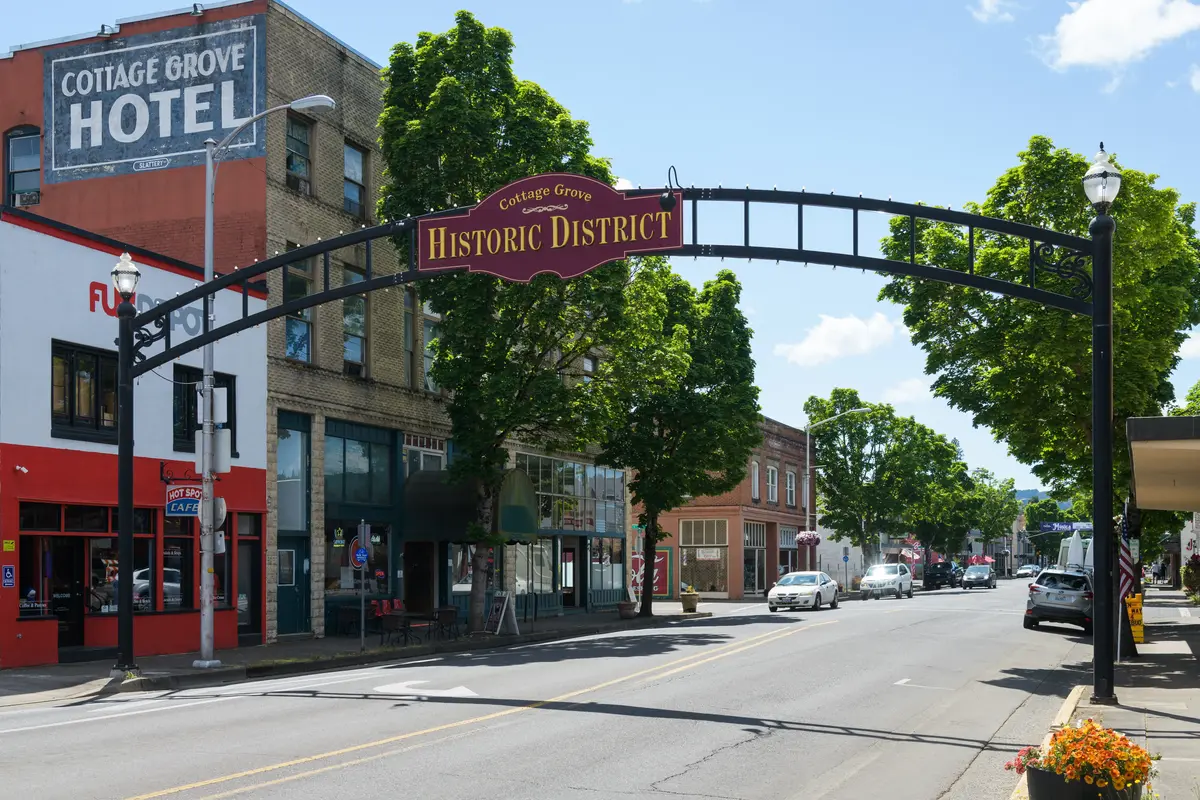
Entry-level inventory in Cottage Grove tends to concentrate in the Gateway area and pockets of the Northwest Neighborhood — older ranch-style homes and smaller bungalows that give first-timers their most realistic foothold. The Downtown and Historic District, View Heights, Sunrise Estates, and Cottage Heights each have their own character and housing stock worth understanding before you start touring. Knowing which areas align with your actual approved loan amount saves significant frustration.
First-timers arriving from higher-cost metros often feel like Cottage Grove is affordable — and relative to Eugene, it is noticeably cheaper. But «affordable compared to California» and «affordable on a Lane County income» are two different statements. The competition for homes at the accessible end of the market is real, and well-priced entries move without sitting long. Going in with financing already lined up, a clear sense of your ceiling, and a local agent who knows which pockets of the city have active listings is the practical edge most first-timers underestimate.
The Homebuying Process in Cottage Grove, Step by Step
Step 1: Get Your Finances in Order
Before you look at a single listing, pull your credit reports, total your debts, and get a realistic picture of your monthly income. Lenders use your debt-to-income ratio — not just your income in isolation — to determine how much house you can carry. First-timers often discover at this stage that a car payment or student loan is quietly shrinking their approved loan amount by $40,000 to $60,000.
Step 2: Get Pre-Approved — Before You Tour
Pre-approval is not the same as pre-qualification. A pre-approval letter means a lender has verified your income (recent pay stubs and W-2s), reviewed two years of tax returns, checked your assets and debts, and confirmed what they'll actually lend. The letter is typically valid for 30 to 90 days. In a market where entry-level homes in Cottage Grove draw multiple buyers, showing up to make an offer without one is a reliable way to lose to someone who has it in hand.
The most common first-timer mistake in this step is getting pre-approved for the maximum the lender will give and then shopping at that ceiling. Your maximum approved amount and your comfortable monthly payment are not the same number. Use the mortgage calculator on this page to stress-test different purchase prices before you commit to a shopping range.
Step 3: Find a Local Agent and Start Shopping
A buyer's agent costs you nothing directly in Oregon — the seller's side covers agent compensation in the traditional structure, though post-2024 practice agreements mean you'll sign a buyer-broker agreement spelling out how your agent is paid. Choose someone who works the Cottage Grove and southern Lane County market regularly, not someone based in Eugene who treats Cottage Grove as a secondary territory. The nuances of which streets flood seasonally near the Coast Fork Willamette River, which neighborhoods are inside specific school attendance boundaries, and which listings are genuinely priced to move matter here.
Step 4: Make an Offer
When you find the right home, your agent will help you structure an offer with a purchase price, earnest money deposit, and contingencies. In Cottage Grove, the inspection contingency and financing contingency are both worth keeping — more on what happens when buyers waive them in the mistakes section below. Earnest money in this market typically runs 1% to 2% of the purchase price.
Step 5: Inspections and Appraisal
Once your offer is accepted, you'll schedule a general home inspection and — if your lender requires it — a separate appraisal. Older homes in the Downtown and Historic District and the Northwest Neighborhood can surface issues with aging systems, foundations, or drainage that a buyer in a newer pocket of the city might not encounter. Budget time and mental energy for this phase. If the inspection reveals material problems, you have the right to renegotiate or walk away — if you kept your contingency.
Step 6: Closing
Oregon closes through escrow, with a title company or escrow agent managing the paperwork and fund transfers. You'll do a final walkthrough of the home, sign the loan documents, and wire your closing funds. Keys come when the deed records — usually the same day or the next business day. Budget your closing cash conservatively, because the costs land all at once.

How Much Home Can You Afford in Cottage Grove
Closing costs in Oregon typically run 2% to 5% of the purchase price, covering lender fees, appraisal, title insurance, recording fees, and prepaid items like homeowner's insurance and initial escrow deposits. The table below shows the cash you'd need to bring to the closing table at several realistic price points — down payment plus estimated closing costs combined. These are estimates and will vary by lender, loan type, and negotiated seller concessions.
| Scenario | Purchase Price | Down Payment | Est. Closing Costs (2–5%) | Est. Cash Needed at Table |
|---|---|---|---|---|
| FHA (3.5% down) — entry level | $340,000 | $11,900 | $6,800–$17,000 | ~$19,000–$29,000 |
| FHA (3.5% down) — city median | $405,000 | $14,175 | $8,100–$20,250 | ~$22,000–$34,000 |
| Conventional (3% down) — entry level | $340,000 | $10,200 | $6,800–$17,000 | ~$17,000–$27,000 |
| Conventional (3% down) — city median | $405,000 | $12,150 | $8,100–$20,250 | ~$20,000–$32,000 |
| Conventional (10% down) — city median | $405,000 | $40,500 | $8,100–$20,250 | ~$49,000–$61,000 |
| Conventional (20% down) — city median | $405,000 | $81,000 | $8,100–$20,250 | ~$89,000–$101,000 |
FHA loans require a credit score of at least 580 for the 3.5% down payment option; scores between 500 and 579 may qualify with 10% down. The Lane County FHA loan limit sits comfortably above the city's typical home price, so most buyers in Cottage Grove won't hit the FHA cap as a constraint.
One long-term affordability factor worth understanding before you close: Oregon's Measure 50 caps annual increases in your home's assessed value at 3%, regardless of how much the market moves. For a first-time buyer, that means your property tax obligation grows predictably and slowly over time, even if Cottage Grove home values appreciate faster than that. See the full cost-of-living breakdown for the effective property tax rate and how it compares to other Oregon cities.
Beyond the closing table, build a monthly budget that accounts for property taxes, homeowner's insurance, and a maintenance reserve — older homes in particular generate repair costs that first-timers consistently underestimate. The interactive mortgage calculator below lets you model purchase price, down payment, and loan term to see estimated monthly payment ranges.
Looking to buy in Cottage Grove? Estimate your payment.
Enter your numbers to see an estimated monthly mortgage payment.
Estimate only. Excludes HOA fees and mortgage insurance. The interest rate above is a starting point, not a quoted rate — replace it with your own to see real numbers. Insurance is a flat placeholder, not a Cottage Grove quote.
Common First-Time Buyer Mistakes in Cottage Grove
Shopping Before Getting Pre-Approved
Walking through homes or driving neighborhoods looking for yard signs before you have a pre-approval letter is how first-timers fall in love with a house they can't move on. Sellers and their agents in Cottage Grove take pre-approval seriously as a signal of readiness, and in a market where the better entry-level listings draw quick attention, an unfinanced offer is a losing one. Get the letter first — then shop.
Waiving the Inspection Contingency to Win a Bidding Situation
Some buyers in competitive situations waive the inspection contingency to look more attractive to sellers. In a city with housing stock that includes homes built in the early and mid-20th century — particularly in the Downtown and Historic District and older blocks of the Northwest Neighborhood — this is a significant gamble. Foundation drainage issues near the Coast Fork Willamette River corridor, aging electrical panels, and deferred roof maintenance are real findings in this market. Losing a home to another offer is painful. Buying a home with a $25,000 problem you didn't know about is worse. Keep the inspection contingency.
Ignoring School Attendance Boundaries Before Making an Offer
South Lane School District serves Cottage Grove, but specific school assignments within the district depend on which side of certain streets or neighborhood boundaries a home sits on. First-timers with school-age children sometimes assume that two homes a block apart feed the same school — and discover after closing that they don't. Before you make an offer on any home, verify the attendance boundary with the district directly. The schools page has more on the district overall; boundary confirmation takes a five-minute phone call and is worth making before you're under contract.
Underbudgeting the Cash Needed at Closing
The down payment is the number first-timers focus on, but it's only part of what arrives at the closing table. Closing costs in Oregon range from 2% to 5% of the purchase price — on a $405,000 home that's $8,100 to $20,250 on top of the down payment, depending on your lender, loan type, and whether the seller agrees to cover any portion. First-timers who budget for the down payment alone and treat closing costs as something they'll figure out later often find themselves short at a moment when there's no time to scramble. Know your full cash-to-close number before you write an offer, and keep a cushion beyond it for the first round of ownership surprises.
Local Expert Takeaway: Cottage Grove is a genuine entry point into Willamette Valley homeownership, but first-timers who succeed here share one thing: they show up with their financing already done. The gap between the median household income and what it takes to carry the typical home is real, and the homes priced to close that gap move without waiting. Get pre-approved before you tour a single listing, keep your inspection contingency in any offer on older stock, and confirm school attendance boundaries in writing before you go under contract — those three habits cover most of what goes wrong for first-time buyers in this market.
Quick Takeaways & FAQs
✅ The Lane County FHA loan limit sits well above Cottage Grove's typical home price of $405,035 (July 2026), so most first-time buyers here have real FHA financing options without hitting the cap.
⚠️ The median household income in Cottage Grove falls short of what's needed to comfortably carry the typical home purchase by about $27,000, making co-borrowers or a deliberate debt-reduction strategy important planning steps for many first-timers.
📍 Oregon's Measure 50 caps annual assessed-value increases at 3%, which means your property tax bill grows slowly even if Cottage Grove home values appreciate faster — a meaningful long-term affordability advantage for buyers who plan to stay.
What is the typical home price in Cottage Grove for first-time buyers?
Can I use an FHA loan to buy in Cottage Grove?
How much cash do I actually need to buy a home in Cottage Grove?
How long does it take to buy a home in Cottage Grove?
Is it worth buying in Cottage Grove versus renting and waiting?
Moving to Oregon?
Tell us what you need help with and we'll connect you with local resources.
