
Maybe you've been priced out of Eugene and someone told you Cottage Grove is worth a look. Maybe your company is moving you to the southern Willamette Valley and you've been staring at a map trying to figure out where to actually live. Here's what the map doesn't tell you: Cottage Grove is a city of 10,698 people that sits along both I-5 and OR-99, about 25 minutes to Eugene, and it divides much more clearly by lifestyle than by price. The older core along the historic main street feels nothing like the new-construction hillside lots above town, and buying without understanding that divide is the most common mistake relocating buyers make here.
The economic backbone is a mix of public-sector stability and industrial legacy — South Lane School District, the City of Cottage Grove, Weyerhaeuser's forestry operations, and a regional medical center anchor most of the local jobs. The South Lane School District carries a B- rating from both SchoolDigger and Niche.com, with 2,636 students enrolled in 2025-26. Families move here for the slower pace, the covered bridges, and the Row River Trail — a 15.6-mile paved rails-to-trails path that connects downtown to Dorena Lake — not because the school numbers are exceptional, but because the community around those schools is unusually tight-knit for a town this size.
The typical home price is $405,035 (Zillow Home Value Index, July 2026), which puts Cottage Grove noticeably below Eugene and roughly on par with Springfield — meaningful relief if you're arriving from either of those markets. The effective property tax rate sits at approximately 0.77%. Day-to-day life runs on a mix of independent shops, a weekly farmers market, and the kind of outdoor access — Cottage Grove Lake, Dorena Reservoir, the covered bridge loop — that most Willamette Valley cities twice this size can't match.
Whether you're narrowing down a short list or writing your first offer, the sections below break down Cottage Grove's seven neighborhoods by character, buyer type, and the specific trade-offs that don't show up in a Zillow search.

The Cottage Grove Reality
The single divide that shapes every buying decision in Cottage Grove is elevation — specifically, whether you're on the flat valley floor near downtown and OR-99 or climbing toward the hillside neighborhoods on the city's southern and western edges. It's not just a visual distinction. It changes your commute pattern, your proximity to the Row River Trail trailhead, your flood-zone exposure, and whether you're buying into older character-rich housing stock or newer suburban construction.
Downtown and the Northwest Neighborhood sit in the valley, close to the historic core, the South Valley Farmers Market, and the trail system. Gateway is the flattest and most I-5-adjacent part of the city — convenient, but the trade-off is more traffic noise and a less residential feel. The hillside neighborhoods — View Heights, Cottage Heights, Sunrise Estates — offer quiet streets and mountain views, but they're a deliberate drive from everything, and that daily friction surprises people who move here expecting walkable access to match the scenery.
School boundaries matter here more than many buyers expect. The South Lane School District serves the entire city, so boundary lines aren't the high-stakes sorting mechanism they are in larger districts — but specific school assignments do shift by neighborhood, and parents with school-age children should confirm their address against current district maps before making an offer, not after. On school performance context, see the Cottage Grove schools page.
Neighborhoods at a Glance
| Neighborhood | Best For | Vibe |
|---|---|---|
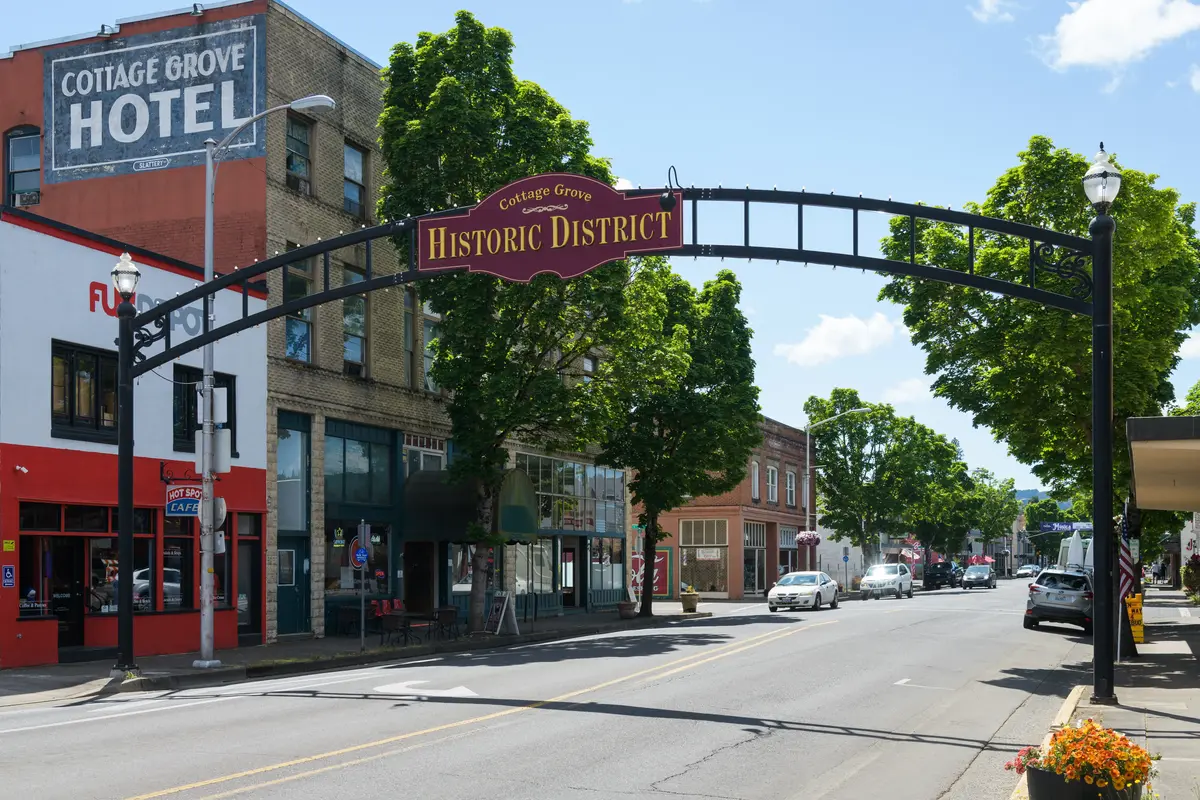
| Downtown / Historic District | Walkable First-Time | Early 20th-century storefronts, film history, on-foot access to dining and the trail system |
| Northwest Neighborhood | Families Value | Mixed older and newer housing, Mt. David views, quiet residential streets close to the core |
| View Heights | Views Families | New construction lots available, elevated setting, peaceful access to schools and recreation |
| Cottage Heights | Quiet Families | Well-kept homes, close-knit feel, consistently cited by residents as safe and dog-friendly |
| Gateway | Commuter Renter | I-5 adjacent, near the medical center, practical rather than picturesque |
| Sunrise Estates | Views Privacy | Newer hillside development in the South Hills, panoramic city and mountain views |
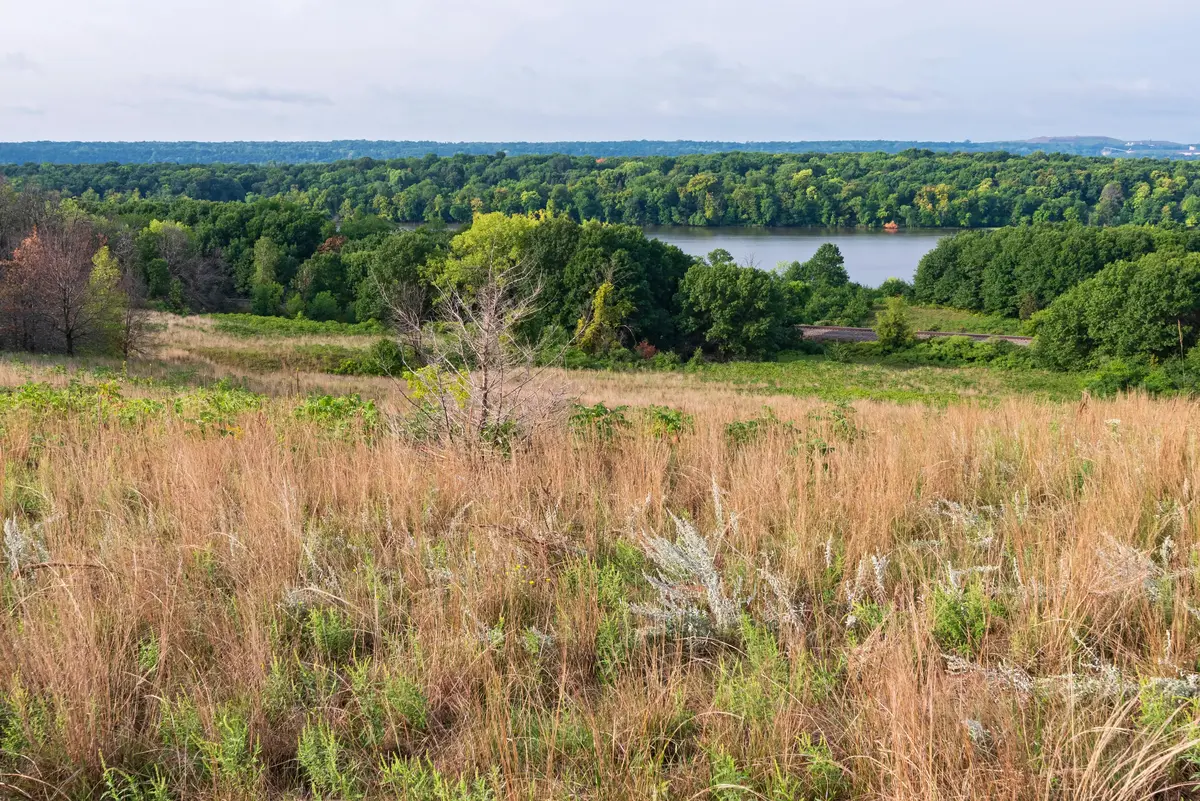
| Saginaw | Nature Privacy | Rural community on Cottage Grove's edge, vineyard and trail access, genuinely small-town character |
Cottage Grove typical home price: $405,035 (Zillow ZHVI, July 2026). Neighborhood tiers on this page are relative to these figures.
Best Neighborhood by Buyer Type
| Buyer Type | Best Neighborhood | Why |
|---|---|---|
| First-Time Buyer | Downtown / Historic District | Contributing historic properties may qualify for a 10-year state property tax freeze and city renovation grants, lowering the true cost of entry into older homes. |
| Luxury Buyer | Sunrise Estates | Newer hillside construction with mountain views represents the top of the Cottage Grove market in terms of finishes and setting. |
| Walkability Seeker | Downtown / Historic District | The only neighborhood where errands, dining, and the Row River Trail trailhead are genuinely reachable on foot. |
| Families with Kids | Cottage Heights | Quiet streets, well-maintained homes, and a close-knit community make it the neighborhood most consistently praised by parents on Nextdoor. |
| Commuters | Gateway | Proximity to I-5 makes the roughly 25-minute drive to Eugene as friction-free as possible from inside city limits. |
| Large-Lot Buyers | Saginaw | Rural parcels on the city's edge offer the kind of land and separation that no in-city neighborhood can match. |
| Renters | Gateway | The most apartment-dense part of the city, with the practical amenities — medical center proximity, freeway access — that renters prioritize. |
Looking to buy in Cottage Grove? Estimate your payment.
Enter your numbers to see an estimated monthly mortgage payment.
Estimate only. Excludes HOA fees and mortgage insurance. The interest rate above is a starting point, not a quoted rate — replace it with your own to see real numbers. Insurance is a flat placeholder, not a Cottage Grove quote.
Most Popular Neighborhoods
Downtown / Historic District
Cottage Grove's downtown was added to the National Register of Historic Places in 1992, and is recognized locally as the most intact collection of early 20th-century commercial architecture in Lane County — much of it designed by architect John Hunzicker. The trade-off is that older buildings require ongoing investment: renovation grants and the state's 10-year property tax freeze for contributing properties exist precisely because upkeep is real work. The film legacy here is genuine — a mural of Buster Keaton anchors the district, and the city holds an annual Buster Keaton Days event in his honor.
Best for: Buyers who want on-foot access to the Row River Trail, the South Valley Farmers Market, and Cottage Grove's dining scene, and who are comfortable with older housing stock.
Northwest Neighborhood
The Northwest Neighborhood is one of the city's established residential areas, with a mix of character homes — some with the high ceilings and period details typical of early Cottage Grove construction — and more recently built infill. Mt. David's profile is visible from the neighborhood, giving it a sense of geographic grounding that flat valley neighborhoods lack. It's close enough to the core that daily errands don't require a car, but residential enough that you're not hearing OR-99 from your back yard.
Best for: Buyers who want older-home character and proximity to downtown without paying the premium that the historic district commands.
View Heights
View Heights sits at an elevation that earns its name — listings here consistently describe a peaceful setting with easy access to schools and outdoor recreation, and available lots suggest it's still growing. The catch is the same one that comes with every Cottage Grove hillside neighborhood: you'll drive to everything, and the elevation that gives you the views also adds minutes to every errand. New construction is active here, which means buyers have options but should verify that builder timelines match their own.
Best for: Families and buyers who prioritize a quiet setting and are open to new construction over character-home inventory.
Cottage Heights
Cottage Heights has the clearest neighborhood identity in Cottage Grove — Nextdoor residents describe it as dog-friendly, safe, welcoming, and notably well-maintained, which is the kind of consensus that takes years to build and reflects genuinely consistent upkeep. The streets are quiet, the community is tight-knit, and the housing stock reflects the kind of care that makes resale straightforward. The honest limitation is the same as any established hillside neighborhood: you're not walking to anything, and the selection of homes that actually turn over here is limited.
Best for: Parents with school-age children and buyers who want a neighborhood with an active, involved community.
Gateway
Gateway is the most practically oriented neighborhood in Cottage Grove — it sits close to I-5 and within a short drive of PeaceHealth Cottage Grove Community Medical Center, which makes it the obvious choice for commuters and healthcare workers. The trade-off is atmosphere: this is a functional, mixed-use corridor rather than a residential enclave, and the freeway proximity that makes it convenient also means it's the least quiet part of the city. Rental inventory is the most accessible here of any neighborhood in town.
Best for: Commuters, renters, and buyers whose priority is I-5 access over neighborhood character.
Sunrise Estates
Sunrise Estates sits in the South Hills above the city and represents the newer, upper end of Cottage Grove's housing spectrum — homes here overlook the valley and capture mountain views that are genuinely striking on a clear Willamette Valley morning. Because it's actively developing, buyers may find lots and new builds alongside recently completed homes. The isolation is real: you are deliberately outside the fabric of the city, and the drive to even a coffee run is a decision rather than an afterthought.
Best for: Buyers at the higher end of the local market who want views, newer construction, and a separation from the city's daily activity.
Saginaw
Saginaw functions less as a conventional neighborhood and more as a rural community on the outer edge of Cottage Grove's orbit — think agricultural land, vineyard access via Saginaw Vineyard, and a pace that is several degrees quieter than anything inside the city limits. The Row River Trail and the historic downtown are accessible from here, but daily life without a car is not a realistic option, and city services are thinner the further out you go. Buyers drawn to Saginaw are typically choosing land and privacy over convenience, and that trade-off is absolute.
Best for: Buyers who want rural parcels, acreage, or the kind of separation from town that no in-city lot can provide.
Common Mistakes Buyers Make in Cottage Grove
Treating the City as One Uniform Market
Cottage Grove is small enough that buyers sometimes assume the whole city is roughly equivalent. It isn't. The hillside neighborhoods above the valley floor — Cottage Heights, View Heights, Sunrise Estates — have a fundamentally different daily rhythm than downtown or Gateway, and the gap in lifestyle is larger than the gap in price. A buyer who moves to Sunrise Estates expecting the walkable access that downtown delivers will be disappointed within a month.
Underestimating the Commute Pattern by Neighborhood
OR-99 and I-5 both serve the city, but not equally from every neighborhood. Gateway buyers get a nearly direct shot onto the freeway; hillside buyers add meaningful minutes through residential streets before they're on anything that moves quickly. If your life runs on the drive to Eugene — about 25 minutes to Eugene from a well-positioned part of the city — pick your neighborhood with that starting point in mind, not just the home itself. For a full commute breakdown, see the living in Cottage Grove page.
Skipping the Historic District's Financial Incentives
Buyers who see an older downtown property and immediately discount it for the renovation work are often leaving real money on the table. Contributing properties in the historic district may qualify for a 10-year state property tax freeze and annual Historic Renovation Grants from the city — incentives that can materially change the economics of buying and restoring an older home. Buyers who don't ask about historic designation status before making an offer often find out about these programs after the paperwork is signed.
Assuming Saginaw Is a Subdivision
Saginaw appears on neighborhood lists alongside places like Cottage Heights and View Heights, but it's a different category entirely — a rural community at the edge of the city's orbit, not a subdivision with HOA meetings and a neighborhood park. Buyers who tour a Saginaw property expecting city-adjacent convenience and find instead that a grocery run is a genuine excursion often regret not asking harder questions about what daily life looks like from that specific address.
Best Areas to Rent in Cottage Grove
| Area | Ideal For | Trade-off |
|---|---|---|
| Gateway | Commuters, healthcare workers, renters who need I-5 access | Least residential feel in the city; more traffic noise than any other area |
| Downtown / Historic District | Renters who want on-foot access to dining, the trail system, and the farmers market | Older building stock means fewer modern unit amenities; parking can be tight |
| Northwest Neighborhood | Renters who want a residential feel without driving to everything | Rental inventory is limited; units turn over infrequently |
| Cottage Heights | Families and renters who prioritize quiet streets and a stable neighborhood feel | A car is essential; no walkable commercial corridor within the neighborhood |
| Saginaw | Renters seeking rural setting, space, or proximity to vineyard and trail access | Most remote option; every errand requires a drive and city services are thinner here |
Cottage Grove's rental market skews heavily toward single-family homes and smaller multi-unit buildings rather than purpose-built apartment complexes — Gateway is the exception, with the city's densest rental inventory. For city-wide rent figures and a cost-of-living breakdown, see the cost of living in Cottage Grove page.
Local Expert Takeaway: Cottage Grove's neighborhood decision almost always comes down to one question: do you want to be inside the life of a historic small town, or above it looking down? Downtown and the Northwest Neighborhood put you within walking distance of the Row River Trail trailhead, the South Valley Farmers Market, and spots like Jack Sprats Restaurant and The Axe and Fiddle. The hillside neighborhoods — Cottage Heights, View Heights, Sunrise Estates — trade that access for quiet, views, and newer housing stock. Neither is wrong, but buyers who don't make this choice consciously are the ones who call their agent six months later wondering why the move didn't feel the way they expected.
Quick Takeaways & FAQs
✅ Downtown Cottage Grove is the most intact collection of early 20th-century commercial architecture in Lane County, and historic properties may qualify for a 10-year state property tax freeze — a genuine financial advantage that many buyers overlook.
⚠️ The hillside neighborhoods (View Heights, Cottage Heights, Sunrise Estates) require a car for every errand — the elevation that earns the views also creates real daily friction that surprises people moving from more walkable cities.
📍 Saginaw appears alongside city neighborhoods on most lists but is a rural community at the edge of the city's orbit — buyers should confirm what 'daily life from this address' actually looks like before assuming it functions like a conventional subdivision.
What is the most walkable neighborhood in Cottage Grove?
Which Cottage Grove neighborhood is best for families with young kids?
Does it matter which Cottage Grove neighborhood I buy in for school assignments?
Is Saginaw actually part of Cottage Grove?
Are there any financial incentives for buying in Cottage Grove's historic district?
Moving to Oregon?
Tell us what you need help with and we'll connect you with local resources.
