
Maybe you've been priced out of Boise or the Treasure Valley and someone mentioned eastern Idaho. Maybe you've fished Henry's Fork before and quietly wondered what it would be like to live next to it year-round. St. Anthony sits at the northern tip of Fremont County along the Henry's Fork of the Snake River, about 17 minutes from Rexburg, and it offers something increasingly hard to find in the Mountain West: a small-city pace, genuine affordability, and enough outdoor access to fill a retirement calendar without ever getting in the car. The compromise is real, though — this is a town of roughly 4,000 people, the medical specialist network is thin locally, and winters along the Snake River Plain are serious.
St. Anthony functions as the Fremont County seat, which gives it a modest but stable institutional backbone — county offices, a local court system, and the infrastructure that comes with being a regional hub. Grand Peaks Healthcare anchors primary care locally, and Broulim's Fresh Foods gives residents a full-service grocery anchor without a 30-mile drive. The town draws a mix of lifelong eastern Idaho families, outdoor-focused transplants from larger Idaho cities, and retirees who prioritize low overhead over urban amenity. People who move here from Boise or Idaho Falls often describe the adjustment as deliberately slower — that's the draw, not the downside.
The cost picture is genuinely compelling for fixed-income households. The full cost-of-living breakdown covers the specifics, but St. Anthony's daily expenses run noticeably below the national average across housing, groceries, and healthcare. Idaho's retirement tax posture adds another layer of appeal: Social Security is fully exempt from state income tax, property taxes are among the lowest-rated in the region, and the state has no estate tax. For retirees downsizing from higher-cost states, the math can look dramatic on a spreadsheet — the lived reality is more nuanced, which is what this guide covers.
Whether you're seriously weighing a move or just running the numbers, the sections below cover St. Anthony's healthcare access, retiree budget, walkability, downsizing options, and how the town stacks up against nearby retirement destinations across eastern Idaho.
Why Retirees Are Choosing St. Anthony
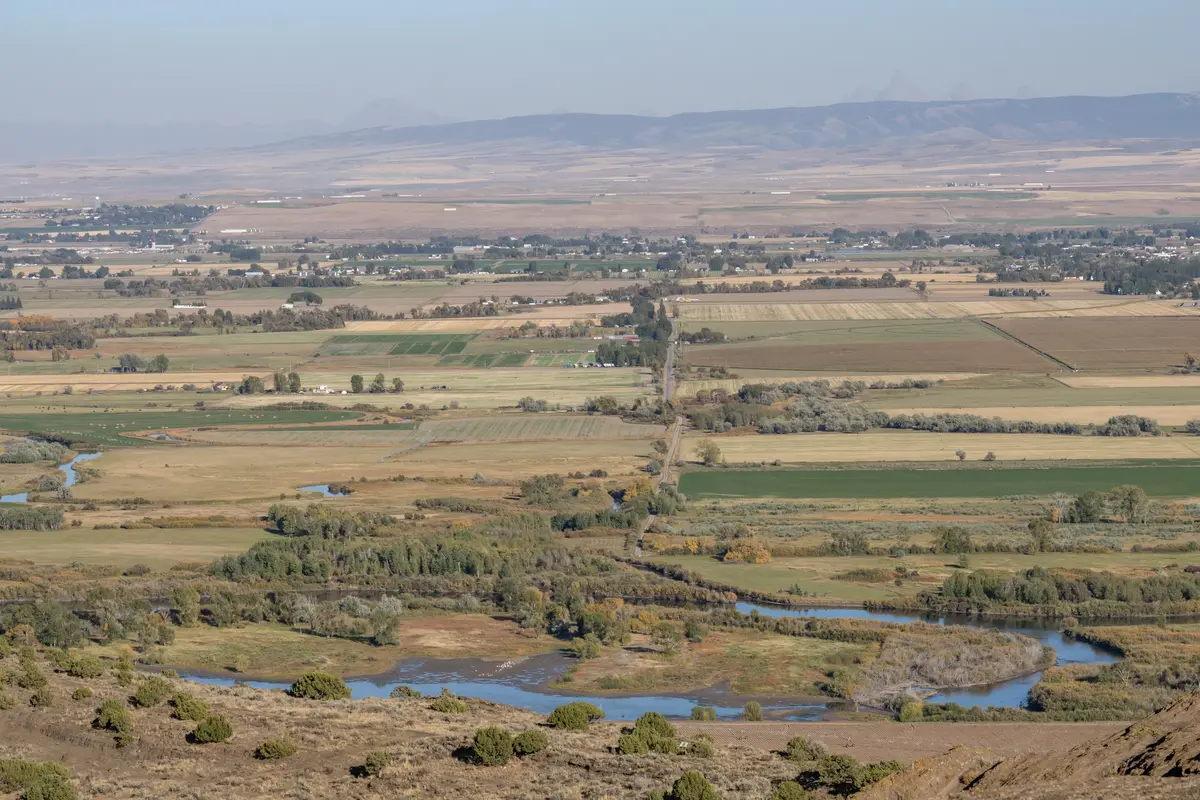
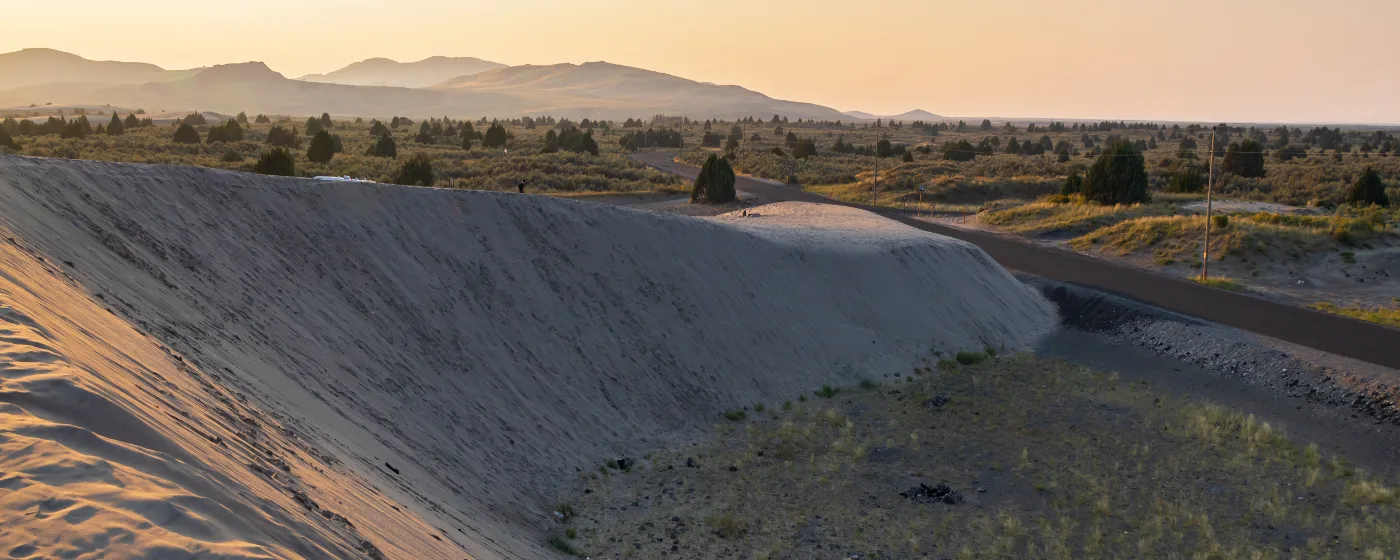
The retirees who land here and stay tend to share a profile: outdoor-oriented, low-overhead-minded, and done with traffic. St. Anthony fits that list well. The Henry's Fork Greenway runs right through town, the St. Anthony Sand Dunes are minutes out, and you're close enough to Yellowstone country that an overnight trip feels casual rather than a major expedition. The typical home price of $290,325 (Zillow Home Value Index, May 2026) means a retiree selling a home in a pricier Idaho market can often buy here outright or close to it — a meaningful shift for anyone managing a fixed income.
The honest case against it is shorter but worth reading. If you need regular specialist care — cardiology, oncology, orthopedic surgery — you will drive. Rexburg is 17 minutes and offers a broader service base, but for serious procedures the answer is Idaho Falls or beyond. That drive is manageable at 65; it becomes a harder conversation at 80. Retirees who want urban dining variety, a robust arts scene, or walkable shopping blocks will find St. Anthony's downtown functional but limited.
This town fits the retiree who wants to own a piece of eastern Idaho's landscape without paying Driggs or Teton Valley prices, who values quiet over convenience, and who has a car and is willing to use it for specialty needs. It's a harder sell for anyone who plans to age in place without driving — the infrastructure for car-free living in deep retirement isn't there yet.
Healthcare & Medical Access in St. Anthony
What's Here in Town
Grand Peaks Healthcare at 335 E Main St is the primary care anchor in St. Anthony, and it punches well above its small-town weight. As a Federally Qualified Health Center, it delivers medical, dental, behavioral health, urgent care, and a full on-site pharmacy under one roof — a combination that many cities five times St. Anthony's size can't offer. Grand Peaks holds Level 3 Patient-Centered Medical Home recognition from the National Committee for Quality Assurance, and earned the 2024 HRSA Access Enhancer Badge, meaning it's held to documented quality standards rather than simply self-described as comprehensive.
For retirees on a tight budget or in a Medicare gap, the sliding-scale fee structure matters: Grand Peaks accepts self-pay patients and adjusts fees based on household income and size. If your retirement income is modest, your out-of-pocket cost for a primary care visit can be significantly reduced — not a common benefit in rural Idaho.
The Honest Distance-to-Advanced-Care Reality
Cardiology consults, orthopedic surgery, cancer treatment, and neurology will require a drive. Rexburg, roughly 17 minutes south, adds specialist offices and a broader pharmacy network. Idaho Falls — about 45 minutes — is where most retirees go for hospital-level specialty care. That's the realistic picture: Grand Peaks handles your day-to-day health maintenance exceptionally well, but St. Anthony is not a place to choose if you have a complex chronic condition that requires frequent specialist visits.
Emergency transport is the other factor to weigh honestly. If you experience a cardiac event or stroke, the nearest comprehensive emergency department is a drive away. Retirees with significant cardiovascular or neurological risk factors should have a direct conversation with their physician before committing to this location as their primary residence. That's not a dealbreaker for many — it's just the information you need before you sign.
The Retiree Budget in St. Anthony
Idaho's Retirement Tax Posture
Idaho treats Social Security well: benefits are fully exempt from state income tax, which immediately separates it from states that tax all retirement income equally. Withdrawals from 401(k) accounts, IRAs, and pensions are subject to Idaho's flat 5.3% income tax rate. There is no state estate tax and no inheritance tax — two line items that often surprise retirees researching Mountain West relocation.
Homeowners 65 and older with qualifying income can access Idaho's Property Tax Reduction (Circuit Breaker) program, which reduces primary-residence property taxes by $250–$1,500 for households with 2024 income at or below $37,810. Separately, homeowners 65 or older with income below $60,000 may defer property taxes entirely — a meaningful cash-flow tool for retirees whose net worth is home equity but whose monthly income is fixed.
Property Taxes and Daily Costs
St. Anthony's effective property tax rate is approximately 0.43% — noticeably below both Idaho's statewide average and the national average, and one of the lower rates in eastern Idaho. The full breakdown of what that means for specific price points lives on the cost-of-living page.
Day-to-day costs reinforce the affordability case. St. Anthony runs approximately 8% below the national average overall, with housing, food, and healthcare all coming in under U.S. norms. Broulim's Fresh Foods serves as the primary grocery anchor — a full-service store, not a convenience stop. Prescription drugs are exempt from Idaho's 6% sales tax, which adds up meaningfully for retirees managing multiple medications.
The realistic monthly budget for a retired couple owning their home outright in St. Anthony is considerably more forgiving than comparable eastern Idaho towns closer to recreational hotspots. The catch: if you're driving to Rexburg or Idaho Falls for specialty care or retail, factor in fuel and time. Those trips are real costs that don't show up in cost-of-living indexes.
Looking to buy in St. Anthony? Estimate your payment.
Enter your numbers to see an estimated monthly mortgage payment.
Estimate only. Excludes HOA fees and mortgage insurance. The interest rate above is a starting point, not a quoted rate — replace it with your own to see real numbers. Insurance is a flat placeholder, not a St. Anthony quote.
Walkability, Community & Staying Active in St. Anthony
The On-Foot Reality
St. Anthony is flat — genuinely flat, which matters for retirees who plan to walk regularly. The Historic Downtown core and surrounding blocks are crossable on foot, and Broulim's is reachable from several central locations without a car. That said, this is a small Idaho city, not a pedestrian grid: sidewalk coverage is inconsistent on the residential edges, and most errands beyond downtown will have you in a vehicle. Think of it as walkable for recreation and occasional errands, not walkable in the urban sense.
The Henry's Fork Greenway is the standout amenity for active retirees. Two paved out-and-back segments — roughly 2.0 miles on the north side and 2.4 miles on the south — run along the river and are accessible, no-cost, and genuinely beautiful. The trail is flat enough for a daily walk well into your seventies, and the river corridor draws birdwatchers through all four seasons. Veterans Memorial Park and Keefer Park add green space within the city for those who prefer a bench and open lawn over a trail pace.
Senior Community Infrastructure
South Fremont Senior Citizens Inc. at 420 N Bridge St is the social anchor for local retirees. The organization hosts shared meals Monday through Thursday, provides transportation assistance, and runs community events that give older residents a reason to get out of the house mid-week. For a city of 4,000, that's a real program — not a flier on a bulletin board.
Beyond organized programs, the social fabric here tends to form around outdoor pursuits. Rainbow and brown trout fishing on Henry's Fork draws a consistent community of older anglers. The Sand Dunes area attracts an outdoor-recreation crowd year-round. If you're the type who makes friends on a trail or at a river access point rather than at a wine bar, the community here will surprise you in the best way by month six.
Right-Sizing: Downsizing in St. Anthony
What the Inventory Looks Like
St. Anthony's housing stock skews older and single-family. The bulk of available homes are 1950s–1980s ranch-style construction — which actually works in favor of downsizers looking for single-level living without the premium that new construction commands. Inventory turns slowly in a town this size, and the right home may take patience to find, but the single-level ranch style is common enough that you're not hunting for a unicorn.
Dedicated 55+ communities and purpose-built active-adult developments are not part of St. Anthony's current landscape. This is a meaningful gap for retirees who want HOA-managed, age-restricted, maintenance-free living — the kind of community where the lawn is someone else's problem. If that model is important to you, Rexburg is the nearest market with more options, and Idaho Falls expands the choice set considerably.
The Practical Downsizing Decision
For retirees coming from a larger home in a higher-cost market, St. Anthony offers the chance to buy a single-level home outright or with minimal financing, bank the equity difference, and reduce monthly overhead significantly. The entry point here runs noticeably below comparable inventory in Rexburg, and the property tax load at 0.43% stays manageable even on homes at the upper end of local pricing.
The downside: if your health changes and you need assisted living or memory care, St. Anthony's local options are limited. Most retirees who reach that stage either transition to Rexburg or Idaho Falls, or move closer to family. Planning for that eventual transition — rather than assuming the local market will expand to meet demand — is the honest advice here. Buy for the decade you're in, and keep the next chapter in the plan.
St. Anthony vs. Nearby Retirement Destinations
| City | Cost vs St. Anthony | Primary Hospital | Walkability | Senior Living Depth | Overall Retirement Fit |
|---|---|---|---|---|---|
| St. Anthony | Anchor | Grand Peaks Healthcare (FQHC, primary/urgent care); specialists in Rexburg/Idaho Falls | Flat; walkable for recreation, limited for full-time errands | Thin — no 55+ communities; South Fremont Senior Citizens provides social programming | Strong for outdoor-focused, low-overhead retirees with a car |
| Rexburg | Noticeably pricier | Madison Memorial Hospital — full-service community hospital with ER and several specialty clinics | More retail walkability; BYU-Idaho adds cultural programming | Moderate — more senior housing options than St. Anthony; college-town energy skews young | Better for retirees needing more on-the-ground medical access and retail variety |
| Sugar City | About the same | Relies on Rexburg/Madison Memorial (~5 min) | Very limited — small residential town with minimal commercial core | Minimal dedicated senior infrastructure | Works for retirees who want rural quiet with quick Rexburg access |
| Parker | Slightly cheaper | No local facility; Rexburg is nearest (~20 min) | Minimal — unincorporated rural community | Essentially none | Best for retirees who want true rural living and maximum cost reduction |
| Teton | About the same | No local facility; Rexburg and Driggs both reachable | Very limited | Minimal | Scenic but isolated; works for retirees who prioritize landscape over services |
| Ashton | Slightly cheaper | No hospital; closest is St. Anthony or Rexburg | Minimal commercial walkability; flat terrain | Very limited senior programming | Appeals to retirees focused on Yellowstone-area access and maximum quiet |
Rexburg beats St. Anthony on medical access and retail depth — if regular specialist visits or walkable shopping are non-negotiable, the premium there is likely worth it. St. Anthony wins on cost, on the Henry's Fork Greenway as a daily-use amenity, and on the feeling of being a genuine small town rather than a fast-growing college city. Ashton and Parker cost less but give up the county-seat infrastructure and the Grand Peaks clinic that make St. Anthony workable for retirees on a tight budget. For most retirees choosing between these options, the decision comes down to a single honest question: how much does proximity to a hospital matter to you in the next ten years?
Local Expert Takeaway: St. Anthony is one of the few places in eastern Idaho where a retiree on Social Security plus modest IRA income can own a single-level ranch home, walk to Grand Peaks Healthcare on E Main for primary care, and have the Henry's Fork Greenway out the door for a daily river walk — without the price tags that have redefined 'affordable' in Driggs or even Rexburg. The tradeoff is real: specialist care means a drive, 55+ communities don't exist here yet, and winters are serious. But for the right buyer, that math pencils out clearly.
Quick Takeaways & FAQs
✅ Grand Peaks Healthcare at 335 E Main St offers primary care, dental, behavioral health, urgent care, and an on-site pharmacy under one roof — rare for a city of 4,000 and a genuine advantage for retirees managing multiple health needs.
⚠️ There are no dedicated 55+ or active-adult communities in St. Anthony itself — retirees who need age-restricted, HOA-managed housing will need to look toward Rexburg or Idaho Falls.
📍 Idaho's Circuit Breaker program can reduce property taxes by up to $1,500 annually for homeowners 65+ with qualifying income — file through the Fremont County Assessor's office to claim it.
Is Social Security taxed in Idaho for retirees living in St. Anthony?
What hospital is closest to St. Anthony, Idaho?
Are there any 55+ or active-adult communities in St. Anthony?
What does the Idaho Circuit Breaker program offer retirees in St. Anthony?
What do retirees do socially in St. Anthony?
Moving to Idaho?
Tell us what you need help with and we'll connect you with local resources.
