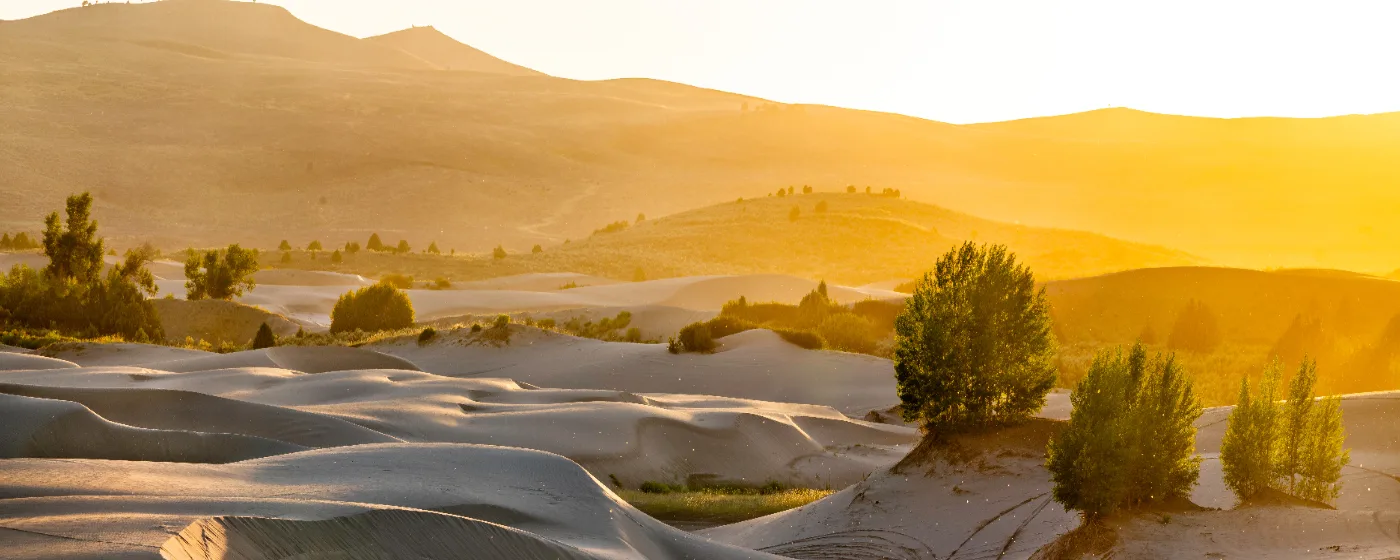
Most small cities of 4,000 people have a softball diamond and a few picnic tables. St. Anthony has a 10,600-acre desert of white quartz sand eight miles from downtown, one of the most productive wild brown trout reaches in the Yellowstone ecosystem running directly through the city, and a paved river greenway that doubles as a cross-country ski trail in January. The outdoor resume here is wildly out of proportion to the city's size, and that mismatch is the first thing new residents notice — usually on the weekend after they move in, when the truck from the dunes pulls past their house on Highway 20.
What drives people to St. Anthony is often a job in Rexburg or Idaho Falls — roughly 17 minutes down the road — but what keeps them is the access. The Henry's Fork runs right through town, Keefer Park sits on an island in that same river reachable by footbridge off East Main Street, and the Sand Dunes are close enough that a morning ride and an afternoon of river fishing on the same day is a perfectly normal Saturday. The city maintains twelve distinct park facilities, from the St. Anthony Sand Bar to Skater's Haven to the Baseball Diamonds, which is a lot of maintained green space for a community this size.
Seasonality shapes everything here. The dunes close to off-road vehicles from January 1 through April 1 to protect one of the largest wintering elk herds in the country. The Henry's Fork near St. Anthony hosts the earliest large stonefly hatch in the entire Yellowstone ecosystem — it kicks off in May and draws fly anglers from across the region. Summerfest takes over Bridge Street each August. And when the snow arrives, the Henry's Fork Greenway becomes a cross-country skiing corridor. There is no dead month on the outdoor calendar.
Whether you are already under contract on a house here or still weighing the move, the sections below break down St. Anthony's signature outdoor assets — the Sand Dunes, the Henry's Fork, the city's park network, and how the seasons stack up — so you know exactly what you are getting into.
The St. Anthony Sand Dunes: Idaho's Most Surprising Backyard
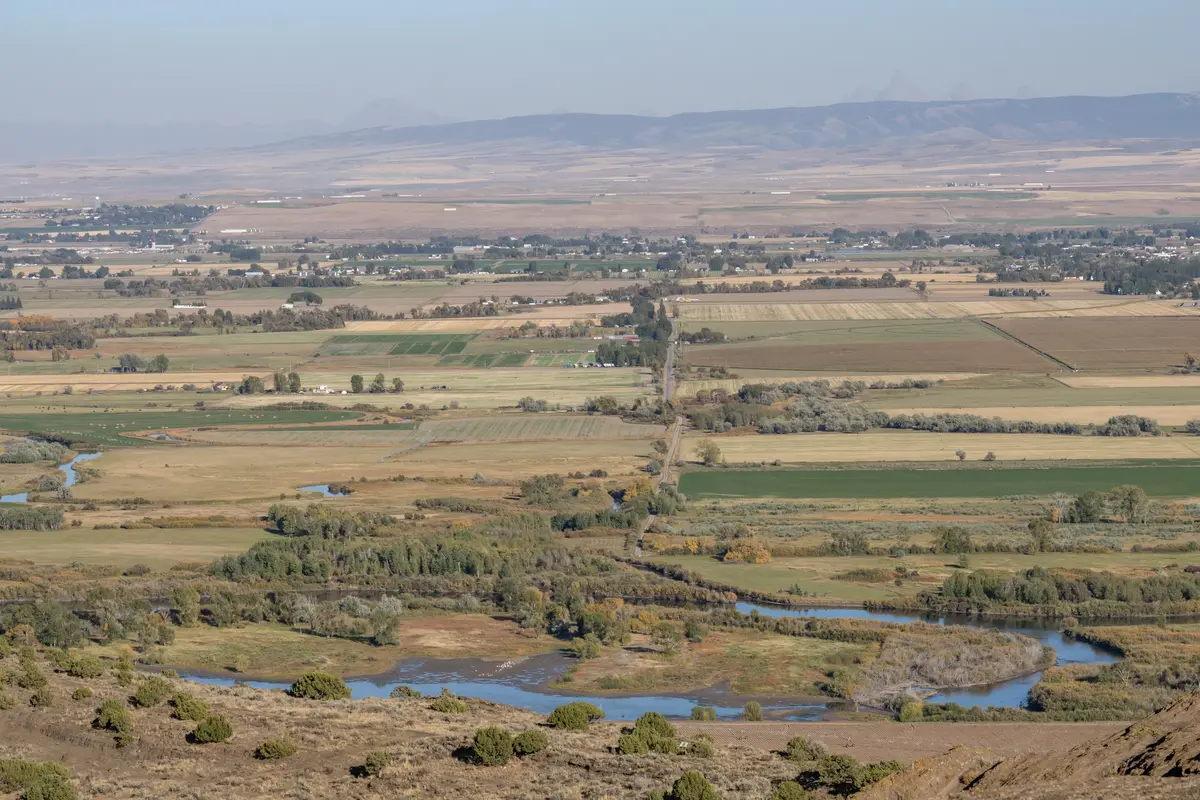
Eight miles west of downtown on a flat eastern Idaho plateau, 10,600 acres of pure white quartz sand rise as high as 400 feet — taller than a 35-story building. The St. Anthony Sand Dunes are managed by the Bureau of Land Management, sit at roughly 5,000 feet of elevation, and migrate approximately eight feet per year as the wind pushes them steadily northeast. Nothing about the landscape of eastern Idaho prepares you for them the first time you crest the access road.
The ORV Scene
The dunes are a destination for off-road vehicle riders from across the West, and the area around Egin Lakes Campground functions as the main staging ground. If you live in St. Anthony, you will hear quads and side-by-sides on weekend mornings from spring through fall — that is not a complaint from locals, it is simply the texture of life here. The riding season runs roughly April through December, with the core ORV area west of Egin Lakes closed January 1 through sunrise on April 1 to protect wildlife.
The Wilderness Study Area and Wildlife
Not all 10,600 acres are open to motors. The BLM designates a portion as a Wilderness Study Area, and that quieter section supports one of the largest wintering elk herds in the United States. In late winter, before the April reopening, you can hike the perimeter and watch hundreds of elk moving across the sand — a scene that looks more like Montana than Idaho's agricultural flatlands.
Camping at the Dunes
| Facility | Sites | Reservable? | Season | Notes |
|---|---|---|---|---|
| Egin Lakes Campground | 48 total | 26 via Recreation.gov; 22 first-come | Spring–Fall | Primary base camp for ORV riders |
| Idaho Dunes RV Park (Desert Oasis Access) | 69 RV sites | Yes (RV park reservations) | Mid-April through last weekend in September | 50-amp power; seasonal only |
If you are hosting out-of-town guests who want to ride, reserving an Egin Lakes site on Recreation.gov at least two to three weeks out on spring weekends is not optional — it will be full.
What Locals Know
The dunes are not just a weekend destination for residents — they are a reason people buy here specifically. Families with ATV-riding kids consistently name the proximity as the deciding factor when choosing St. Anthony over Sugar City or Parker. If off-road riding is not your thing, the dunes still reward a sunrise hike before the machines arrive: the light on the white sand at 7 a.m. in June is genuinely extraordinary.
Henry's Fork of the Snake River: Fishing, Floating, and the Greenway Trail
The Henry's Fork does not just flow near St. Anthony — it runs through it, curves under the Highway 20 overpass, and shapes the entire east side of the city. For anyone who fishes, this fact alone is worth the ZIP code.
Wild Trout Fishing
Idaho Fish and Game manages this reach of the Henry's Fork as a wild trout fishery, and the numbers back up the reputation. In a 2020 survey, brown trout made up 96% of the trout population in the St. Anthony reach, with individual fish recorded up to 25 inches. That is a serious brown trout river running through a city of 4,000 people, not a stocked put-and-take pond.
May is when things get dramatic. The Henry's Fork near St. Anthony kicks off the earliest large stonefly hatch in the entire Yellowstone ecosystem — a two-to-three-week window when enormous stoneflies blanket the water and large browns feed aggressively on the surface. Fly anglers who know this place guard the timing carefully. Living here means you can be on the water for the hatch's first morning without a three-hour drive.
Floating and Paddling
The BLM manages the Henry's Fork from St. Anthony downstream to its confluence with the South Fork of the Snake River, and that stretch includes genuine float trip options. A full canoe or kayak run from St. Anthony to Menan covers approximately 30 miles, though shorter segments work well for a half-day paddle. A $5 facility fee applies at BLM river access points from May through October — one of the better deals in outdoor recreation anywhere in the region.
The Henry's Fork Greenway
The city maintains two paved trail segments along the river that together cover 4.4 miles of flat, accessible path. The South segment runs 2.4 miles with its trailhead near the north side of the Highway 20 overpass; the North segment covers 2.0 miles starting near River View Cemetery. Both are open to hiking, running, and biking, and both provide direct river access for fishing or simply watching the water.
| Segment | Length | Trailhead | Surface | Winter Use | River Access |
|---|---|---|---|---|---|
| South Greenway | 2.4 miles (out-and-back) | Near Hwy 20 overpass, north side | Paved, flat | Cross-country skiing | Yes |
| North Greenway | 2.0 miles (out-and-back) | Near River View Cemetery | Paved, flat | Cross-country skiing | Yes |
In winter, when the dunes are closed and the river slows, the Greenway is the go-to for anyone who needs to move their legs without driving anywhere. The flat surface handles light snow better than most trails in eastern Idaho, and cross-country skis work on both segments when conditions cooperate.
The Honest Catch
The Henry's Fork at St. Anthony fishes differently than the famous sections upstream — it is a meandering lowland river, not a tailwater, and irrigation withdrawals can affect summer flows. Spring and early summer are the prime window; late August can be slower. That said, for a resident angler who can walk to the water on a Tuesday evening after work, the math still works overwhelmingly in your favor.
City Parks: Keefer Island, Veterans Memorial, and the Full Inventory
St. Anthony's park system is more extensive than most people expect from a city this size. The official inventory includes twelve distinct facilities — from the Baseball Diamonds off the main corridors to the small neighborhood green at Cedar View — and the two signature parks both sit in or adjacent to the historic core.
Keefer Park: The Island in the River
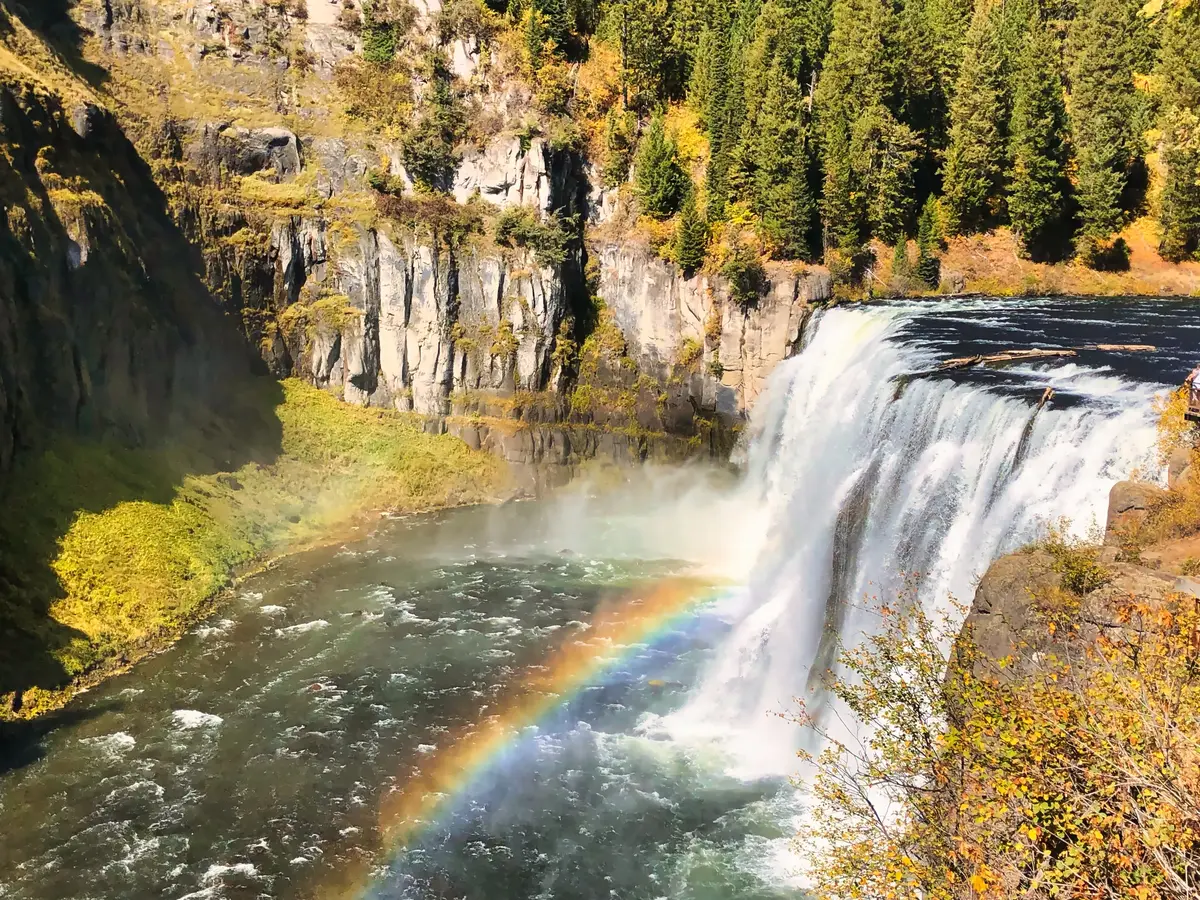
Clyde Keefer Memorial Park occupies a 2.0-acre island in the Henry's Fork, reached by a footbridge at approximately 120 East Main Street. The location is genuinely unusual — a park that you walk onto across water, surrounded by the river on all sides, in the middle of a small Idaho city. It has been a community anchor for generations.
Every May since the 1950s, Keefer Park has hosted the Fisherman's Breakfast: a free meal of pancakes, sausage, and potatoes served at the start of fishing season. It is the kind of tradition that does not exist in cities that grew up fast. The park also holds a WWI Doughboy statue unveiled Memorial Day 1923 and rededicated by VFW Post 9425 in 2004 — one of the older public monuments in Fremont County.
If you want to understand where families actually gather in St. Anthony on a warm Saturday morning, Keefer Park is a reliable answer. The footbridge, the river sound, and the island setting make it feel more like a destination than a city park.
Veterans Memorial Park
Veterans Memorial Park is a separate facility from Keefer, with picnic infrastructure and a family-friendly layout suited to organized gatherings and casual afternoons. The city maintains it as a distinct destination rather than an overflow facility, which matters when youth sports groups or community events need reserved space alongside the river corridor.
The Full Parks Inventory
| Park / Facility | Type | Notable Feature |
|---|---|---|
| Keefer (Clyde Keefer Memorial) | Island park | Footbridge access, WWI monument, Fisherman's Breakfast |
| Veterans Memorial Park | Community park | Picnic facilities, family gatherings |
| Henry's Fork Greenway | Trail / linear park | 4.4 miles paved, river access, winter skiing |
| Jaycees Park | Neighborhood park | City-maintained green space |
| Ralph Litton Park | Neighborhood park | City-maintained green space |
| Harry Worrell Park | Neighborhood park | City-maintained green space |
| Skater's Haven | Skate facility | Dedicated skating area |
| South Park | Community park | Open recreation space |
| Boy's Town Park | Neighborhood park | City-maintained green space |
| Cedar View Park | Neighborhood park | Residential corridor access |
| St. Anthony Baseball Diamonds | Athletic facility | Organized youth and adult baseball |
| St. Anthony Sand Bar | River recreation area | Henry's Fork river bar access |
Skater's Haven is worth calling out specifically: a dedicated skate facility in a city of 4,000 people is not a given, and for families with teenagers who skate, its existence removes a common friction point. For youth sports beyond parks, see the full breakdown on the schools page.
The August Anchor: Summerfest
Each August, Bridge Street in Historic Downtown closes for Summerfest — a block party format with food vendors, live music, and local art, with shops along the corridor running sales during the event. It is the social peak of the outdoor season, a week or two after the dunes riding crowds thin out and before the fall hunting season pulls attention east toward Yellowstone country. New residents who show up for it in their first summer usually say the same thing afterward: it felt bigger than they expected for a town this size.
Looking to buy in St. Anthony? Estimate your payment.
Enter your numbers to see an estimated monthly mortgage payment.
Estimate only. Excludes HOA fees and mortgage insurance.
Seasonal Recreation Calendar: What to Do and When
Living in St. Anthony means learning to read the outdoor calendar the way locals do — not by month, but by what opens, closes, hatches, or migrates. The rhythm is specific enough that getting it wrong in your first year means missing the best windows.
Spring (April–May): The Best Two Months
April 1 is the date everyone watches. At sunrise, the dunes reopen to off-road vehicles after the winter closure, and the parking areas at Egin Lakes fill within hours on that first weekend. Simultaneously, the Henry's Fork is building toward its large stonefly hatch — the earliest such hatch in the Yellowstone ecosystem, typically peaking in May. Serious fly anglers plan their entire spring around this two-to-three-week window. The Fisherman's Breakfast at Keefer Park, a free community meal dating to the 1950s, marks the ceremonial start of fishing season.
Summer (June–August): Full Capacity
This is peak everything. The dunes are running seven days a week, the Henry's Fork Greenway is in daily use for morning runs and evening bike rides, and the St. Anthony Sand Bar becomes a local swimming and tubing destination on hot afternoons. The BLM's $5 river access fee kicks in at May and runs through October, which is a small price for maintained put-in points along a 30-mile floatable corridor. Summerfest on Bridge Street each August closes out the summer with the city's largest street event.
The one thing to know about summer: the dunes on a July Fourth weekend draw visitors from a wide radius, and Highway 20 west of town becomes a parade of trailers. If you are a resident trying to reach the dunes on a holiday weekend, leaving before 8 a.m. is the difference between a great day and a frustrating one.
Fall (September–November): The Overlooked Season
September and October are arguably the best months to use the dunes as a resident rather than a visitor. Crowds thin, temperatures drop into the 50s and 60s, and the light across the white sand in October is something the summer photos never quite capture. Elk hunting season pulls many locals east toward Island Park and Yellowstone country, but the river fishing remains productive through October for brown trout staging toward their fall spawn.
Winter (December–March): Quieter but Not Empty
The dunes close to ORVs on January 1, and that closure — combined with eastern Idaho's real winter temperatures — genuinely quiets the city. The Henry's Fork Greenway earns its year-round designation in this season: when snow covers the pavement lightly, both the South and North segments become cross-country ski routes. It is not groomed Nordic terrain, but for a flat-surface ski with river views on a clear February morning, it works.
| Season | Primary Activity | Key Dates / Notes | Best For |
|---|---|---|---|
| Early Spring (April) | ORV riding at Sand Dunes | Dunes reopen April 1 at sunrise | Nature Families |
| Late Spring (May) | Fly fishing — large stonefly hatch | Earliest hatch in Yellowstone ecosystem; Fisherman's Breakfast at Keefer Park | Nature Quiet |
| Summer (June–Aug) | Dunes, river floating, Greenway, Sand Bar | $5 BLM fee at river access points May–Oct; Summerfest in August | Families |
| Fall (Sept–Oct) | Dunes (uncrowded), brown trout fishing | Best resident window at dunes; elk rut fishing overlap | Nature Privacy |
| Winter (Nov–March) | Greenway skiing, wildlife viewing at dunes | ORV area closed Jan 1–April 1; elk herd visible at Wilderness Study Area | Quiet Nature |
The seasonal closure at the dunes catches newcomers off guard every single year — someone from out of state plans a January trip, drives the eight miles out, and finds a locked gate. Put April 1 and January 1 on your calendar the week you move in.
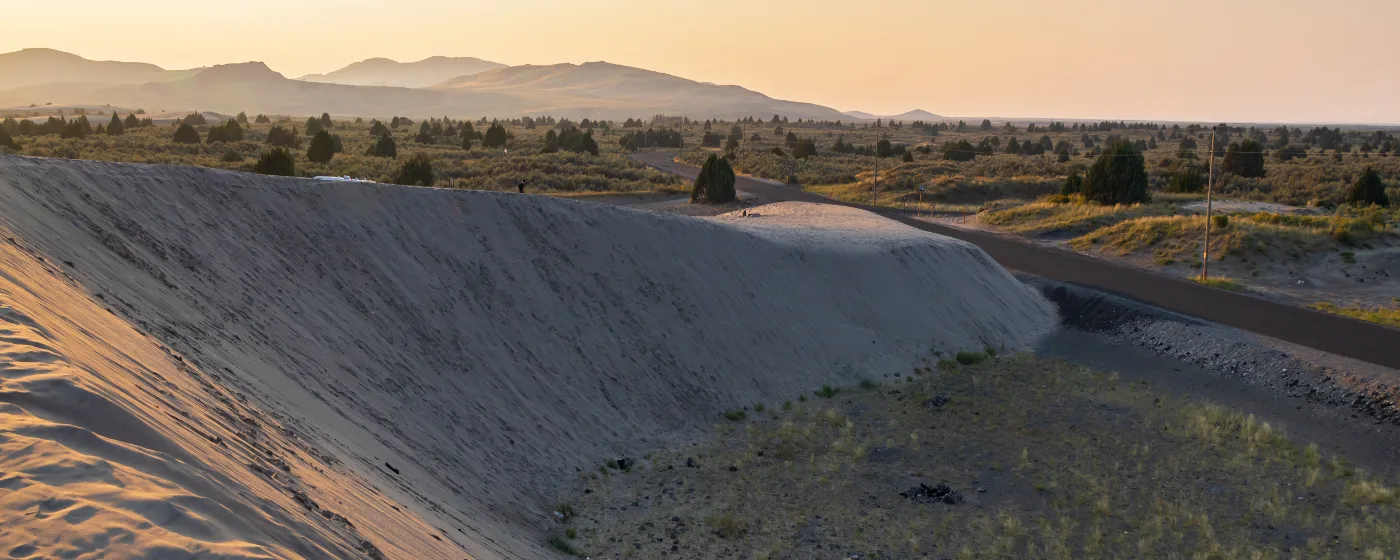
Local Expert Takeaway: St. Anthony's outdoor inventory is genuinely hard to believe until you live it. The Sand Dunes are eight miles from Main Street and 400 feet tall. The Henry's Fork running through downtown holds brown trout up to 25 inches and fires the Yellowstone ecosystem's first large stonefly hatch every May. Keefer Park — a 2-acre island you walk to on a footbridge — has been hosting a free Fisherman's Breakfast since the 1950s. And the city maintains twelve park facilities for a population of 4,000. If outdoor access is a primary driver of your housing decision, few small Idaho cities can match this combination at this price point. The catch is seasonality: learn the April 1 dunes reopening and January 1 closure dates before your first winter, or you will find out the hard way.
Quick Takeaways & FAQs
✅ The St. Anthony Sand Dunes cover 10,600 acres of white quartz sand rising up to 400 feet — one of the most extraordinary recreational assets within eight miles of any small Idaho city.
⚠️ The dunes close to all off-road vehicles from January 1 through April 1 each year, and the ORV traffic on Highway 20 during peak summer weekends is real — plan your access timing accordingly.
📍 The Henry's Fork Greenway gives residents 4.4 miles of paved, flat river trail usable for running, biking, fishing access, and even cross-country skiing in winter — all within the city limits.
Are the St. Anthony Sand Dunes open year-round?
How good is fishing on the Henry's Fork near St. Anthony?
What is the Henry's Fork Greenway, and can beginners use it?
What is the Fisherman's Breakfast at Keefer Park?
Can you float the Henry's Fork near St. Anthony by kayak or canoe?
Moving to Idaho?
Tell us what you need help with and we'll connect you with local resources.
