What Is Living in Sugar City, Idaho Like?
Maybe you've been priced out of the Boise Treasure Valley and someone mentioned eastern Idaho. Maybe BYU-Idaho pulled your family toward Rexburg and you started looking at the smaller towns nearby. Whatever brought you to Sugar City, the first thing to understand is this: a city of roughly 2,100 people sitting at 4,845 feet on the Snake River Plain, just three miles north of Rexburg, operates on its own logic. You live here for the quiet, the space, the farming-country pace — and you commute south for almost everything else. That relationship with Rexburg is not a bug in Sugar City's design; it is the design.
The community is younger than you might expect for a small rural town. The median age hovers around 29, with about 74% of households being family households — a profile shaped partly by BYU-Idaho's presence in neighboring Rexburg and partly by the steady stream of young families who find Sugar City's prices more accessible than comparable communities farther west. The Sugar-Salem Joint School District, which holds a B- rating, according to Niche, serves the area through Sugar-Salem High School on the east side of town. Agricultural operations remain a backbone employer, supplemented by school district jobs and the broader economic pull of Rexburg's retail and services corridor. The city rebuilt entirely from scratch after the catastrophic 1976 Teton Dam failure — the Teton Dam Flood Memorial stands as a permanent reminder of both what was lost and how completely this community reconstituted itself.
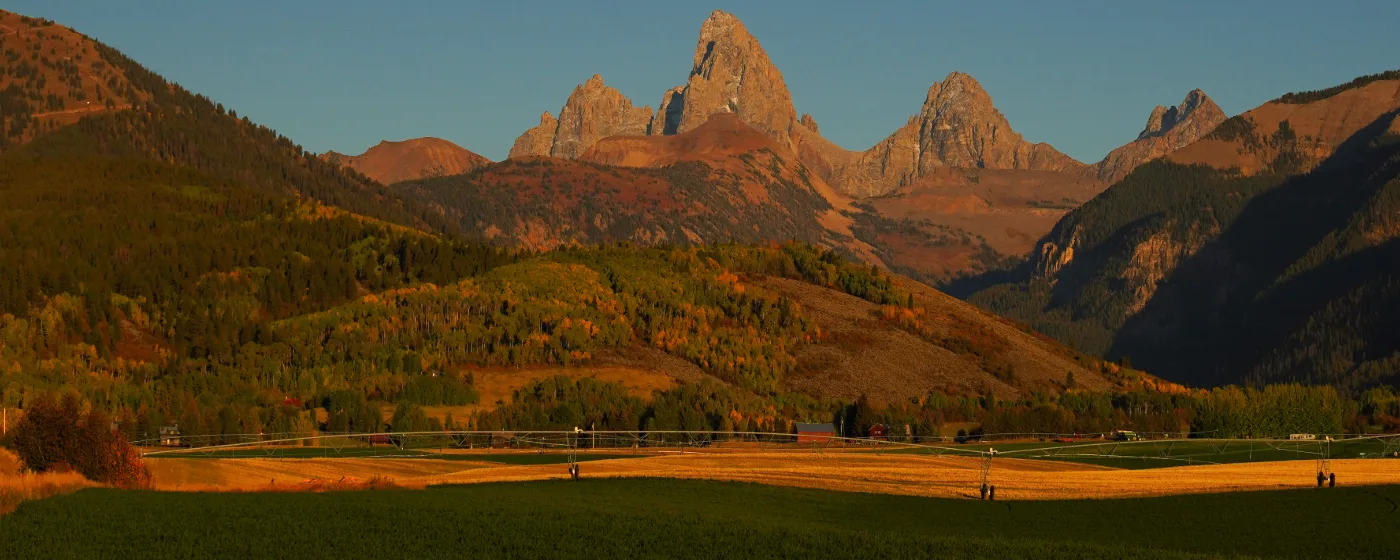
Housing runs noticeably below what buyers encounter in the Treasure Valley or along the Wasatch Front, though prices have climbed steadily in recent years. The city's effective property tax rate of 0.66% sits among the lowest in the state. Daily amenities are modest within Sugar City proper — Ole's Diner on N Austin Ave is one of the few confirmed local spots for a quick meal — but Rexburg's full retail corridor is ten minutes away, and Idaho Falls, with big-box stores and a regional airport, is roughly 45 minutes south on US-20. Outdoor access is real and close: the Teton Range is visible from most neighborhoods, and a regional sand dunes recreation area near St. Anthony draws residents year-round.
Whether you're weighing Sugar City against Rexburg or simply trying to understand what daily life here looks and feels like, the sections below cover the housing market, commute reality, schools, local character, and what the people already living here would tell you first.

Sugar City at a Glance
Looking to buy in Sugar City? Estimate your payment.
Enter your numbers to see an estimated monthly mortgage payment.
Estimate only. Excludes HOA fees and mortgage insurance. The interest rate above is a starting point, not a quoted rate — replace it with your own to see real numbers. Insurance is a flat placeholder, not a Sugar City quote.
Why Are People Moving to Sugar City?
The short version: Sugar City offers the breathing room that the Treasure Valley no longer does, at a price point that still — barely — makes sense for families on a single income or a modest dual income.
The draw is not amenities. There's no downtown to speak of, no walkable commercial strip, no coffee-shop scene within city limits. What Sugar City offers is ownership. Most residents here own their homes, and that ownership is within reach for households earning around the median $66,953 — something that has become genuinely difficult in most of the Mountain West.
Who Is Actually Moving Here
The largest group arriving in recent years is young families connected in some way to BYU-Idaho in Rexburg — faculty, staff, graduate students who've started families, and graduates who decided eastern Idaho suited them long-term. The second group is remote workers who can live anywhere and are choosing the quietest, most affordable part of a state that's already cheaper than California, Oregon, or Washington. A third, smaller group is agricultural: multigenerational farm families whose roots here predate the 1976 flood.
What surprises many newcomers after six months is how rooted the social life is to the LDS faith community. The congregation structure in Sugar City creates a ready-made neighborhood network — block activities, shared childcare, informal mutual aid — that people from outside that tradition either find genuinely welcoming or quietly peripheral to their own experience. Neither outcome is wrong, but it's worth knowing before you arrive.
The Flood That Built the Modern City
Sugar City's history is unlike any other small town in Idaho. The 1976 Teton Dam collapse sent walls of water 10 to 30 feet high through the town, and Sugar City was essentially erased. The rebuild happened fast, largely through community and federal effort, which is why so much of the residential stock here dates to the late 1970s and early 1980s.
The Teton Dam Flood Memorial in the city is not a tourist attraction — it's a neighborhood landmark that locals walk past regularly. Understanding that history explains a lot about the resilience and the tight social fabric that newcomers often notice without being able to name.
What Brings Buyers, and What Keeps Them
| Buyer Type | What Draws Them | What to Watch |
|---|---|---|
| Families | Ownership rates, quiet streets, school district access | Limited youth activities within city limits; see schools page |
| First-Time Buyers | Entry-level prices noticeably below Rexburg and the Treasure Valley | Rising appreciation is narrowing the affordability window; see buying guide |
| Rexburg Commuters | More space per dollar, 10-minute drive to work | Car-dependent; no transit option between cities |
| Outdoor Enthusiasts | Teton Range access, regional sand dunes nearby, open landscape | Harsh winters limit year-round use of some recreation areas |
| Remote Workers | Low overhead, rural pace, strong community fabric | Internet infrastructure varies by street — verify before buying |
| Value Seekers | 0.66% effective property tax rate, ownership culture | Appreciation trend means the window for max value is narrowing |
The city's sustained growth — roughly 7% annually since 2019 — suggests that more people are arriving than leaving, but it's not a frictionless story.
What Daily Life Feels Like in Sugar City
Sugar City covers 1.71 square miles. You can drive end-to-end in under four minutes. That scale shapes everything about how daily life works here — or doesn't work, depending on what you're used to.
The Practical Reality of a Small Town
Grocery runs, hardware stores, dentist appointments, youth sports registration, a sit-down dinner out — all of that happens in Rexburg. Sugar City's commercial footprint within its own limits is thin: Ole's Diner on N Austin Ave handles burgers and diner food, and a handful of small service businesses dot the main roads. For everything else, residents point south.
That's not a complaint from most longtime residents — it's just the understood operating mode. You accept the ten-minute drive as the price of the quiet. What you get in return is a neighborhood where people know each other's names, where Heritage Park and Smith Park actually get used on weekday evenings, and where the background noise of the average evening is wind and crickets rather than traffic.
The Seasonal Reality No One Warns You About
Eastern Idaho winters are serious. Sugar City sits at nearly 4,900 feet in elevation, and the open Snake River Plain does nothing to slow the arctic air masses that push in from the north between November and March. Wind chill readings well below zero are common. Newcomers from milder climates — especially those relocating from the Pacific Northwest — routinely underestimate what that means for daily errands, school pickups, and road conditions on the US-20 corridor into Rexburg.
The flip side is an eastern Idaho summer that is genuinely beautiful. The Teton Range rises directly to the east of Sugar City, visible on clear days from almost anywhere in town. Summer evenings in late June and July are the social peak of the year — Heritage Park fills with families, and a regional sand dunes recreation area north of the city draws weekend crowds from across the region.
The Social Texture
About 74% of households in Sugar City are family households. The community skews young — median age around 29 — with a rhythm of life oriented around school calendars, agricultural seasons, and congregational schedules. Sugar-Salem High School's IHSAA sports calendar anchors the fall and winter social life for families with teenagers in ways that are visible on Friday nights throughout the school year.
What daily life is NOT here: a craft beer scene, a gallery row, a food truck weekend, a farmers market. If those experiences are important to you, Rexburg offers some of them, and Idaho Falls offers more. Sugar City itself is quieter than that, on purpose.
The Sugar City Housing Market Right Now
The median list price in Sugar City reached $434,000 as of March 2026, with more recent Movoto data pointing toward $470,000 by August 2026 — a meaningful climb in a short window that signals genuine demand pressure despite a relatively slow market pace.
That market pace is the counterintuitive part. Homes here are spending a median of 121 days on market, which is considerably longer than the frenzied conditions seen in Boise or Meridian. The combination of rising prices and longer days on market reflects a small, supply-constrained town where buyers are patient and sellers are holding firm on price — not a market where houses fly off in weekend bidding wars.
What the Numbers Mean in Practice
The city-wide median is the most reliable figure available for Sugar City given its small size. Some areas command more than that figure and some come in below it, but the spread across the city's six neighborhoods is narrower than you'd see in a larger market. For a full breakdown of neighborhood character and what differentiates one area from another, the best neighborhoods page goes deeper.
The effective property tax rate of 0.66% is worth taking seriously as a cost-of-ownership factor. On a home at the current median price level, that rate keeps ongoing carrying costs meaningfully lower than in many comparable western small cities — see the full tax and cost picture at the cost of living page.
Affordability Pressure Is Real and Growing
The median household income of $66,953 against a median list price approaching $470,000 creates a ratio that was significantly more comfortable five years ago than it is today. Idaho statewide home prices have continued to appreciate, and Sugar City has moved with that trend. This is not a market where prices are declining or where sellers are desperate.
The practical effect: first-time buyers who might have stretched into ownership here in 2020 or 2021 face a tighter path now. That doesn't mean it's closed — entry-level inventory in older construction does exist below the median — but the window that made Sugar City feel like an obvious affordability play is narrowing. Anyone relocating from a higher-cost market will still find the comparison favorable, but buyers coming from within the region should do the current math carefully rather than relying on prices they heard about two years ago.
Sugar City Neighborhoods
Sugar City has several distinct areas — each with its own character and appeal. Here’s a breakdown to help you narrow down where to focus your home search.
🏡 Teton Island Estates
Teton Island Estates sits on the eastern edge of Sugar City with some of the most direct sightlines toward the Teton Range, suiting buyers who want larger lots and a quieter residential atmosphere. The housing stock here tends toward newer single-family construction, making it appealing for families looking for move-in-ready homes.
🏠 Central Sugar City
Central Sugar City is the heart of the community — closest to Heritage Park and the small commercial nodes along the main road, with a mix of post-1976 rebuild homes and more recent infill. It suits families who want to be in the middle of the town's social life, such as it is, without being far from either school or the US-20 corridor south.
🌳 Railroad Avenue District
The Railroad Avenue District carries some of the oldest surviving character in Sugar City, with a mix of modest older homes along streets that reflect the town's agricultural company-town origins. It appeals to buyers looking for the lowest entry points in the city, with the understanding that some properties here require more attention than newer construction.
🏘 North Sugar City
North Sugar City offers a quieter residential feel at the farthest point from the Rexburg commute corridor, with single-family homes and open views toward the surrounding farmland. Families with young children who value low traffic and space tend to find this end of town a comfortable fit.
🏔 South Sugar City
South Sugar City sits closest to the US-20 corridor connecting to Rexburg, making it the most commuter-convenient part of town for residents who make that daily drive. The housing here reflects the post-flood rebuild era, with modest ranch-style homes on standard lots.
🌆 West Center Street Area
The West Center Street Area is a mid-town residential pocket with a mix of home sizes and lot depths, suited to first-time buyers and smaller households who want to be centrally located without paying a premium for the newer construction on the east side. Smith Park is accessible on foot from this part of the city.
Pros & Cons of Living in Sugar City
The Pros
- Affordable housing compared to many Idaho markets
- Close-knit small-town community with strong agricultural roots
- Short 5-minute commute to Rexburg and BYU-Idaho
- Low crime rates especially for violent crime
- Strong school athletics and community pride
The Cons
- Very limited local shopping
- dining
- and entertainment options
- Cold snowy winters with temperatures dropping to teens
- Small population means fewer services and amenities within city limits
Getting Around & Commuting in Sugar City
This page owns the commute story, so here it is plainly: Sugar City is a car town, full stop. There is no local transit, no bike infrastructure connecting it to Rexburg, and no practical on-foot option for reaching anything beyond the immediate neighborhood.
The Rexburg Run
The dominant commute pattern is the three-mile, roughly ten-minute drive south on US-20 into Rexburg. BYU-Idaho, a major regional health system and significant employer in the area, the school district administrative offices, and the bulk of retail are all there. For most Sugar City residents, this drive happens at least once daily.
The US-20 corridor is efficient in good weather. In winter, it is a different road. Ice and blowing snow on that stretch between Sugar City and Rexburg can turn a ten-minute commute into a thirty-minute one with no warning. Residents who've been here more than one winter have a standard kit: traction tires, an emergency bag in the car, and a weather app set to Rexburg rather than a national average.
Reaching Idaho Falls
Idaho Falls is the regional hub for anything Rexburg doesn't carry — specialty medical, major retail, the Idaho Falls Regional Airport for air travel. The drive south on US-20 runs approximately 45 minutes in normal conditions. Many Sugar City residents make this trip once or twice a month rather than weekly, treating Idaho Falls as a destination rather than a regular commute.
Where Residents Work
| Employer / Sector | Location | Typical Drive from Sugar City |
|---|---|---|
| Sugar-Salem School District | Sugar City / Rexburg area | 5–10 min |
| BYU-Idaho | Rexburg | ~10 min |
| Local agricultural operations | Sugar City / surrounding county | Varies; some zero-commute |
| Retail and services corridor | Rexburg | ~10 min |
| Regional health system | Rexburg | ~10 min |
| State and county government | Rexburg / Rigby | 10–25 min |
Remote workers are the one group in Sugar City for whom the commute question is largely theoretical — and that cohort has grown noticeably since 2020.
What Locals Learn After Year One
The thing that surprises most newcomers is not the Rexburg commute itself — that's obvious from a map — but rather how completely it structures the day. You don't pop out for a quick errand. You batch. Grocery run, school pickup, appointment, and fuel all happen on one Rexburg trip. Residents who don't build that habit in the first few months find themselves driving the US-20 stretch more than they planned.
Schools in Sugar City
Families relocating to Sugar City have public, private, and higher-education options nearby. Here’s a quick overview.
🎓 School District
Sugar-Salem Joint School District serves K–12 students across Sugar City and the surrounding area. Rated B- (source: Niche.com).
🏆 Graduation Rate
The 4-year high-school graduation rate here is approximately 87.3%.
📚 Higher Education
Idaho’s public universities — Boise State, the University of Idaho, and Idaho State — offer four-year degrees statewide, with community colleges (CWI, CSI, NIC) providing two-year and workforce programs.
🌐 Online Learning
Boise State Online and University of Idaho Online offer fully accredited online degrees for remote learners across the state.
Safety in Sugar City
A quick look at how Sugar City compares on the numbers that matter most when weighing a neighborhood or a move.
🛡 Violent Crime
Approximately 3.4 per 1,000 residents.
🔒 Property Crime
Approximately 25.3 per 1,000 residents.
Compared to the FBI’s most recent national data (2024), Sugar City’s violent crime is below the national average (about 3.6 per 1,000), and property crime is above the national average (about 17.6 per 1,000).
Against Idaho as a whole, Sugar City’s violent crime is about one and a half times the state average, and property crime is about three times the state average (Bureau of Justice Statistics, Crime Known to Law Enforcement, 2024 (tables 2 and 3)).
Crime rates can vary a lot within a single city, so the citywide numbers above are only a starting point. Some neighborhoods in Sugar City run well below these averages, while others run higher — the kind of block-by-block detail that matters most when you’re actually choosing where to live. The full guide below breaks it down neighborhood by neighborhood.
Working in Sugar City
Sugar City’s largest employers span several industries — here are some of the anchors of the local job market.
🎓 Sugar-Salem School District
Education
💼 Local agriculture operations
Farming
🎓 BYU-Idaho nearby
Education
🏥 Madison Memorial Hospital nearby
Healthcare
💼 Retail and services in Rexburg
Parks & Recreation in Sugar City
Some of the outdoor spaces that shape everyday life in Sugar City.
🌱 Heritage Park
🌱 Smith Park
Sugar City residents don’t have to go far for green space — spots like Heritage Park and Smith Park are part of everyday life here, whether that’s a morning walk, a weekend hike, or just somewhere to unwind outside. The full guide below covers more of what Sugar City has to offer for parks and outdoor recreation.
Retiring in Sugar City
Sugar City draws retirees for its balance of amenities, outdoor access, and cost. Here’s what to weigh.
🌤 Climate
Sugar City sits at nearly 4,900 feet in elevation on the Snake River Plain, which means cold, wind-driven winters from November through March and genuinely beautiful summers. Retirees who handle cold well tend to love the dramatic seasonal contrast and the clarity of summer days with the Tetons visible on the horizon. Those sensitive to cold should plan visits in January before committing.
🍴 Lifestyle
Daily life here is quiet and community-oriented, with Heritage Park and Smith Park serving as neighborhood gathering anchors. Ole's Diner on N Austin Ave covers casual meals locally, and Rexburg's broader dining and cultural calendar — including events connected to BYU-Idaho — is ten minutes south. The pace is genuinely unhurried.
🏚 55+ Communities
Sugar City itself is a small residential city without dedicated active-adult developments within its limits. Retirees looking for 55+ communities or continuing-care options will find more choices in Rexburg and Idaho Falls; see the <a href="/idaho/sugar-city/retiring">retiring in Sugar City page</a> for a full breakdown of senior-living options in the broader area.
✈ Getting Around
A personal vehicle is essential here — there is no local transit and the commercial core is in Rexburg, ten minutes south on US-20. Idaho Falls Regional Airport is approximately 45 minutes away for air travel. Retirees who are comfortable driving in winter conditions and don't need walkable amenities will find the arrangement manageable.
🏛 Idaho Taxes for Retirees — What to Know
- Social Security is not taxed — Idaho does not tax Social Security benefits at the state level, regardless of income.
- Flat state income tax — Idaho has a flat income tax (5.3% for 2026). Other retirement income — pension distributions and 401(k)/IRA withdrawals — is taxed as ordinary income at that rate.
- Narrow retirement deduction — Idaho’s Retirement Benefits Deduction is limited: it reaches only certain government pensions (federal CSRS, Idaho firefighter/police, and military retirement) for those 65+ (or 62+ if disabled), and is reduced by Social Security received.
- Sales tax is the tradeoff — The state sales tax is 6.0%, and Sugar City adds no local sales tax on general retail, so the combined rate is 6.0% (Idaho State Tax Commission, 2026). Groceries are taxed, but a grocery tax credit offsets part of it; prescription drugs are exempt. A small number of resort cities add a local option tax, usually on lodging, alcohol, and prepared food rather than general retail.
- Low property taxes, with senior relief — Idaho property taxes are relatively low. Homeowners 65+ who own and occupy their home may qualify for the “circuit breaker” Property Tax Reduction based on income.
- No estate or inheritance tax — Idaho has no estate, inheritance, or gift tax.
- Capital gains — Capital gains are taxed as ordinary income, though Idaho allows a deduction of up to 60% of the net gain on qualifying Idaho property.
Tax laws change frequently and individual situations vary. This is general information, not tax advice — always consult a qualified Idaho tax professional or CPA for personalized retirement tax planning.
Weekends & Local Favorites in Sugar City
Sugar City is not the kind of town where your weekend social life stays inside city limits. But the surrounding region offers more than the small-town footprint suggests.
Within Walking or a Quick Drive
Heritage Park and Smith Park are the gathering anchors for families within Sugar City proper — casual evening use, kids' sports, the kind of unstructured outdoor time that defines small-town weekends. Ole's Diner on N Austin Ave is the local shortcut for breakfast or a burger without driving to Rexburg. The Teton Dam Flood Memorial is a quiet, contemplative stop that longtime residents visit far more than the tourism framing implies; it's genuinely part of neighborhood identity.
The Teton Range Is Right There
The single biggest weekend asset for Sugar City residents is what's visible from their front porches. The Teton Range, just to the east, puts world-class terrain within an hour's drive. The west-slope Teton towns of Driggs and Victor are roughly 50 to 60 minutes away and serve as base camps for hiking, skiing, and the broader Teton recreation ecosystem. For outdoor-oriented families, this proximity is a legitimate quality-of-life argument for Sugar City that no spreadsheet fully captures.
The Henry's Fork and Regional Recreation
A regional sand dunes recreation area north of the city — fewer than 15 miles away — draws ATVs, sandboarders, and families with young kids looking for something genuinely unusual on weekends from spring through fall. The Henry's Fork of the Snake River, renowned among fly fishing communities, runs through the region and draws anglers from well outside Idaho.
For families with school-age children, the parks and recreation page covers outdoor programming and recreation options in more depth.
Rexburg's Cultural Pull
BYU-Idaho's presence in Rexburg means that concerts, theatrical performances, lectures, and sporting events show up on a college-town calendar that a city of Rexburg's size wouldn't otherwise support. Sugar City residents benefit from that without being in the middle of it. It's a quiet advantage — cultural programming within ten minutes, none of the campus traffic outside your front door.
What You Give Up
The honest answer is: diversity of food and nightlife. The dining scene within Sugar City is thin, and Rexburg's is family-oriented rather than adventurous. If a rotating roster of ethnic cuisines, craft cocktail bars, or late-night options matters to your weekend, this corner of eastern Idaho will feel limiting. Idaho Falls broadens those options considerably, but it's a deliberate trip, not an impulse one.
Top Things Locals Say About Sugar City
The best intel about a city comes from the people who actually live there. Here’s what Sugar City residents say when newcomers ask the questions everyone’s thinking.
“I knew it was small, but I didn't realize how completely I'd restructure my entire week around one Rexburg trip. Once I stopped fighting it and just batched everything — groceries, appointments, the works — the drive stopped feeling like a burden and started feeling like the reason the evenings here are so quiet.”
— Recent Sugar City home buyer
“What's the most surprising thing about living in Sugar City?”
How young the town is. You'd expect a small agricultural community in eastern Idaho to skew older, but the median age is around 29 and the streets near Central Sugar City on weekend evenings are full of families with young kids. The connection to BYU-Idaho in Rexburg pulls a lot of young households into the area, and many of them end up staying even after the university connection fades.
“What do locals love most about Sugar City?”
The Teton Range on a clear morning — it's visible from most of the neighborhoods here and never really gets old. Beyond that, it's the pace. Nobody's honking, nobody's in a rush, and Heritage Park on a summer evening feels like what people imagine small-town Idaho to be. Ole's Diner is a genuine local institution for a reason.
“What should newcomers to Sugar City know?”
Winter on US-20 between here and Rexburg is not the same road as summer on US-20. Get real winter tires before November — not all-season, actual winter tires — and keep an emergency kit in the car. The other thing: batch your Rexburg errands. Driving down there for one thing at a time will exhaust you inside of a month. Longtime residents run one comprehensive trip and are done.
“Can you live in Sugar City without a car?”
No. There's no way to soften that. The town is walkable within its own 1.71 square miles, but everything you actually need day-to-day — groceries, a doctor, most restaurants, most jobs — is in Rexburg or beyond. A reliable vehicle is not optional here; it's foundational to being a functional resident.
Cities Near Sugar City
Other communities near Sugar City worth a look — each with its own character and price point.
| City | Distance | Best For | Vibe | Median Rent | Median Buy |
|---|---|---|---|---|---|
| Rexburg | 5 mi | Jobs, retail & college-town amenities | Young, growing, BYU-Idaho energy | $1,500 | $355,000 |
| St. Anthony | 7 mi | Outdoor families & regional recreation | Small, agricultural, river town | $1,100 | $310,000 |
| Idaho Falls | 25 mi | Regional hub, airport & full services | Urban anchor, diverse amenities | $1,350 | $380,000 |
More Helpful Guides for Sugar City
Going deeper on Sugar City? Our blog series covers everything from first-time buying to retiring here — explore the guides below.
Local Expert Takeaway: Sugar City works best as a home base, not a destination. The residents who thrive here have made their peace with the ten-minute Rexburg run and treat the Teton Range access, Heritage Park evenings, and Ole's Diner breakfast as the real quality-of-life wins — not as consolation prizes. If you need downtown energy walkable from your front door, this is the wrong town. If you want ownership, quiet, and mountains visible from your kitchen window, it's a serious contender at a price point that the rest of the Mountain West has largely left behind.
Quick Takeaways & FAQs
✅ Sugar City's effective property tax rate of 0.66% is among the lowest in Idaho — a genuine long-term ownership advantage in a state that already ranks favorably nationally.
⚠️ The affordability window is narrowing: median list prices have risen from $434,000 in March 2026 toward $470,000 by August 2026, outpacing income growth in the region.
📍 The Teton Range is visible from most neighborhoods in Sugar City, and world-class ski terrain is under an hour east — that proximity is priced into the lifestyle, not yet fully into the housing.
Is Sugar City, Idaho a good place to raise a family?
How far is Sugar City from Rexburg and what is the commute like?
What is the typical home price in Sugar City, Idaho?
What is the Teton Dam Flood Memorial in Sugar City?
Can you live in Sugar City without a car?
Helpful Links for Moving to Sugar City
Moving to Idaho?
Tell us what you need help with and we'll connect you with local resources.
