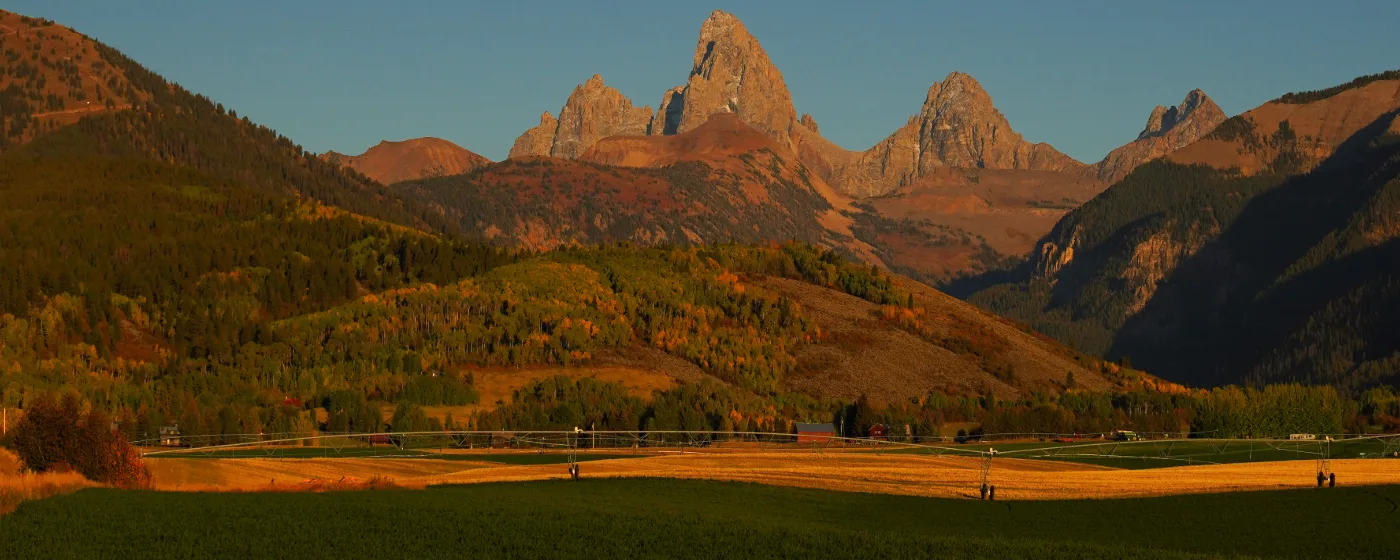
Sugar City runs about a mile wide and sits on flat Eastern Idaho farmland where the horizon stretches unbroken to the Teton Range. From almost any street in town you can see those peaks — and on a clear October afternoon, when the aspens on the foothills have gone gold, the view is genuinely arresting. That backdrop shapes the whole recreational character of this place. Residents here don't use parks because there's nothing else to do; they use them because the community is small enough that a 9-acre park actually feels like shared territory, and because Rexburg's larger amenities are only about ten minutes up the road.
The city maintains two municipal parks off 42 Park Avenue — Smith Park and Heritage Park — and that modest inventory is supplemented by the North Fork of the Teton River running nearby, open agricultural land that doubles as informal trail country, and a regional disc golf and kayaking scene that has quietly grown around the area's water features. What Sugar City lacks in quantity of parks, it compensates for in community density: when only 2,115 people share two parks, the odds that you'll run into your neighbors at the basketball court or the sledding hill on a Saturday morning are genuinely high.
Residents' self-reported top recreational activities — camping, hiking, walking, gardening, and outdoor grilling — tell you something real about daily life here. This is not a city where people debate which rooftop bar to try on Friday night. The recreational calendar revolves around seasons: river levels in late spring, the annual Sugar Days festival in summer, disc golf tournaments in June, and sledding at Smith Park's "Sugar Hill" as soon as there's enough snow. For families relocating from larger cities, the adjustment is real — but for buyers who want outdoor access without the crowds, Sugar City consistently delivers.
Whether you're weighing a move or just trying to understand what weekends look like here, the sections below break down Sugar City's signature parks, Teton River recreation, the annual events that define community life, and the practical seasonal realities of outdoor living in Eastern Idaho.
Smith Park: Sugar City's Everyday Outdoor Hub
At 9.2 acres, Smith Park at 42 Park Avenue punches above its weight for a city this size. The amenities are straightforward but well-matched to the community: walking and running trails suited to all fitness levels, a playground, swing sets, a basketball court, and a skatepark. None of it is fancy — but the park stays well-used precisely because it isn't trying to be anything other than a neighborhood outdoor space.
The Sledding Hill Everyone Knows
The feature that locals reference most often is the sledding hill known as Sugar Hill, tucked inside the park. It's a beginner hill — genuinely manageable for young kids — which makes it the default Saturday destination for families with school-age children the moment the first real snowfall hits. Don't come expecting a serious tubing run; do come expecting a crowd of your future neighbors.
The skatepark sees consistent use from middle and high school-aged kids, particularly on afternoons after the local high school lets out. The basketball court draws pickup games through the summer and into early fall. What surprises many newcomers after their first full year in Sugar City is how much social anchoring a single park can do in a small community — Smith Park is where you'll actually meet people.
Trail Access and the Fitness Reality
The park's walking and running trails are flat, as you'd expect given Eastern Idaho's terrain. They work well for daily walkers and casual runners. Serious trail runners or mountain bikers looking for technical singletrack will need to drive toward the Tetons or head north toward the regional sand dunes for more varied terrain — that's just the honest geographic reality of this part of the valley.
| Amenity | Details | Best Season |
|---|---|---|
| Walking / Running Trails | Flat, all-fitness-level loops within 9.2-acre park | Spring–Fall |
| Playground & Swing Sets | Standard municipal equipment, maintained by city | Year-round |
| Basketball Court | Full-size outdoor court | Spring–Fall |
| Skatepark | Smaller local-scale park; popular with middle/high schoolers | Spring–Fall |
| Sugar Hill Sledding | Beginner slope, well-suited for young children | Winter (after snowfall) |
| Open Green Space | Informal BBQ / lawn gathering area | Summer–Fall |
The city's parks page at sugarcityidaho.gov is the authoritative source for any seasonal closures or updates to park hours.
Heritage Park, Sugar Days, and Community Gathering Traditions
Heritage Park is smaller in footprint than Smith Park but carries more of Sugar City's civic identity. The park's central feature is a gazebo — strung with Christmas lights each December, which turns it into the de facto community gathering point during the holiday season. Come a cold Friday evening in late November and you'll understand why residents talk about it: in a town without a downtown restaurant row, these kinds of shared spaces carry real weight.
Sugar Days: The Annual Festival
The biggest single recreational event on Sugar City's calendar is Sugar Days, the annual summer festival held at Heritage Park. The format has been consistent across multiple years: a community breakfast, kids' games, vendor booths, and a historical celebration that nods to the city's beet-farming roots and its remarkable recovery from the 1976 Teton Dam flood. It's genuinely local — not a regional draw designed to pull visitors from Rexburg or Idaho Falls, but a neighborhood event where the turnout is impressive precisely because nearly everyone in town actually shows up.
If you move here and wonder where families with kids actually gather in summer, Heritage Park on Sugar Days weekend is the honest answer. It's also a useful social benchmark: if the festival feels right to you, Sugar City probably will too.
The Historical Society Initiative
The Sugar Area Historical Society has been working on a planned historical-display initiative that would incorporate Heritage Park's gazebo and surrounding space. The long-term vision is to add interpretive displays throughout the area — a project that would deepen the park's role as a place where the community's story is actually told in situ, rather than only in a museum. That's still developing as of mid-2026, but it's worth watching for buyers who care about a community that takes its own history seriously.
One honest note: Heritage Park is a community park, not a recreation complex. There are no sports fields, no fitness equipment, no formal trail system here. Its value is almost entirely civic and social — the kind of place that matters more after you've lived somewhere for two years than it does on a first-visit walk-through.
The Teton River, Marshall's Wave, and the Teton Dam Flood Memorial
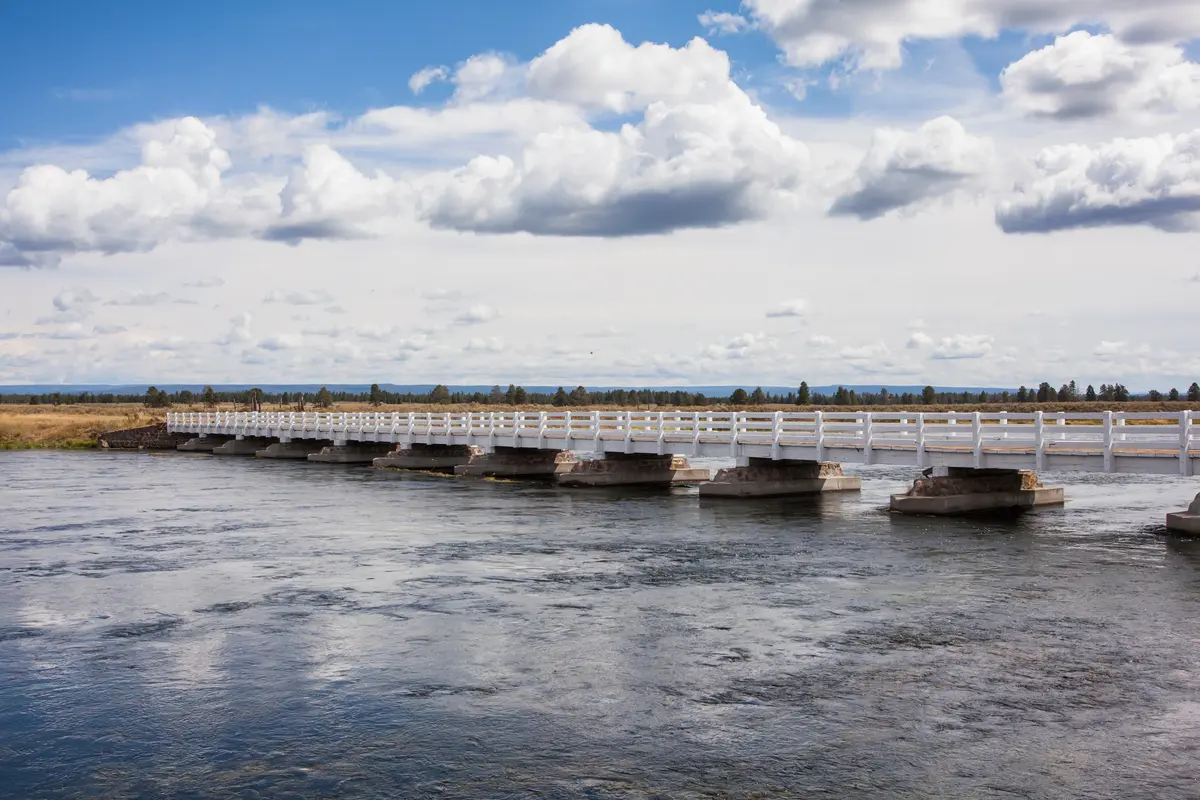
The North Fork of the Teton River runs near Sugar City and provides the area's most distinctive outdoor recreation feature: Marshall's Wave, a kayak play wave formed by a headgate on the river. Experienced at flows above 600 cfs, it's considered beginner-friendly for paddlers, which makes it accessible to residents who are newer to whitewater kayaking. Eastern Idaho doesn't have many in-town play waves, and this one is close enough to Sugar City to be genuinely usable on a weekday evening in late spring when snowmelt pushes river levels up.
Know the River's History — and Its Closed Spots
One thing any newcomer should understand immediately: a formerly popular swimming hole on the Teton River northeast of Sugar City called Monkey Rock is permanently closed to the public. The privately owned site has been posted with No Trespassing signs, and the Fremont County Sheriff's Office actively enforces the closure following multiple drowning deaths at the location. Do not let any online listing or word-of-mouth reference from someone who moved here years ago convince you otherwise — it is not a current recreation option, full stop.
The river itself demands respect regardless of where you access it. Flows can change quickly with irrigation season and upstream snowmelt. If you're relocating from a part of the country without significant whitewater, treating Marshall's Wave as an entry-level introduction is exactly right — but check conditions before you go.
The Teton Dam Flood Memorial
The Teton Dam Flood Memorial is not a recreation site in the traditional sense — it's a commemoration of the June 5, 1976 dam failure in which approximately 80 billion gallons of water inundated the region, killing 11 people and causing over $1 billion in damage. Sugar City was among the communities most directly devastated. The memorial was the focus of significant ceremonies in June 2026 marking the 50th anniversary of the disaster, with families of the eleven victims specifically honored.
The memorial grounds have also lent their name to an annual Professional Disc Golf Association-sanctioned tournament hosted by City of Rexburg Parks & Recreation. The 2026 Teton Dam Flood Memorial disc golf tournament was scheduled for June 13, 2026 — an event that draws players from across Eastern Idaho and represents one of the more unusual intersections of historical commemoration and active recreation you'll find in any Idaho city.
| Water / Outdoor Feature | Type | Status | Best For |
|---|---|---|---|
| Marshall's Wave (N. Fork Teton River) | Kayak play wave (headgate) | Open; best above 600 cfs | Nature Beginner kayakers |
| Teton Dam Flood Memorial | Historical memorial / event venue | Open year-round | Quiet History, disc golf events |
| Monkey Rock (Teton River NE) | Former swimming hole | Closed — No Trespassing | N/A — do not visit |
| North Fork Teton River corridor | Flatwater / light whitewater access | Seasonal; check flows | Nature Fishing, paddling |
Looking to buy in Sugar City? Estimate your payment.
Enter your numbers to see an estimated monthly mortgage payment.
Estimate only. Excludes HOA fees and mortgage insurance. The interest rate above is a starting point, not a quoted rate — replace it with your own to see real numbers. Insurance is a flat placeholder, not a Sugar City quote.
Seasonal Recreation and What to Expect Year-Round
Sugar City sits at roughly 4,900 feet elevation in a high desert basin, which means four genuinely distinct seasons and a recreational calendar that shifts hard with each one. Newcomers from the Pacific Northwest or California often underestimate how long and cold the winters run — and how dramatically that changes outdoor life from November through March.
Spring and Summer: When the Valley Opens Up
Late May through early July is when Eastern Idaho outdoor recreation peaks. River flows on the North Fork climb with snowmelt, making Marshall's Wave most reliable. Heritage Park's Sugar Days festival typically lands in July, pulling the community together at the height of summer. Camping, hiking, and trail access in the surrounding region — including the Teton foothills to the east and the dune recreation area north of St. Anthony — are all within reasonable driving distance for a weekend day trip.
The Teton Dam Flood Memorial disc golf tournament in June has become a fixture of the early summer calendar. It's a PDGA-sanctioned event, meaning it draws competitive players from outside Sugar City, and it functions as one of the few annual events that brings non-residents into town specifically for recreation.
Fall: The Shortest and Best-Kept Secret
September and October are genuinely excellent in this part of Idaho. The Teton Range is visible in sharp relief without summer haze, daytime temperatures stay comfortable for walking and trail use, and the agricultural harvest season gives the whole valley a distinct rhythm. Gardening — one of Sugar City residents' top self-reported recreational interests — runs deep into October here, and the community's connection to the growing season is real in a way that's hard to describe to someone who hasn't lived in an agricultural town.
Winter: Sugar Hill and Indoor Anchors
Once snow arrives, Smith Park's Sugar Hill becomes the community's informal gathering point for families with young children. It's a low-stakes sledding experience — the right scale for a five-year-old's first hill. More serious winter recreation — snowshoeing, cross-country skiing, or snowmobiling — requires a drive toward the Teton foothills or up into the Island Park area north of Ashton, neither of which is far by Idaho standards.
Youth athletic programs serve as a key recreational anchor through the winter months — see the schools page for details on what the district offers. For adults, the honest answer is that Sugar City's winter recreation scene is quiet, and that's either a feature or a drawback depending entirely on what you're looking for.
| Season | Top Local Activity | Where | Notes |
|---|---|---|---|
| Spring (Apr–May) | Walking trails, gardening prep | Smith Park, residential yards | River flows rising; kayak season starts |
| Early Summer (Jun–Jul) | Disc golf tournament, Sugar Days festival | Teton Dam Memorial, Heritage Park | PDGA event in June; Sugar Days in July |
| Summer (Jul–Aug) | Camping, hiking, BBQ | Regional (Teton foothills, Island Park) | Day trips from Sugar City; no major in-city trails |
| Fall (Sep–Oct) | Trail walking, gardening, Teton views | Smith Park, surrounding farmland | Best weather window of the year |
| Winter (Nov–Mar) | Sledding (Sugar Hill), youth athletics | Smith Park, local schools | Long season; serious winter recreation requires a drive |
One thing that surprises people after their first full year in Sugar City: how much of their recreational life ends up being self-organized — backyard gatherings, informal walks on farm roads, camping trips staged from the house — rather than park-dependent. The infrastructure is modest; the space and the community are not.

Local Expert Takeaway: Sugar City's parks are two in number and honest in scale — Smith Park's 9.2 acres on 42 Park Avenue covers the daily-use bases with trails, a basketball court, a skatepark, and the sledding hill locals call Sugar Hill, while Heritage Park anchors the community calendar with Sugar Days every July and Christmas lights on the gazebo in December. The real outdoor story here is the surrounding region: Marshall's Wave on the North Fork of the Teton River for spring kayaking, the Teton Dam Flood Memorial disc golf tournament in June, and straightforward access to the Teton foothills and the Island Park area within a reasonable drive. If you need a packed urban park system in your backyard, Sugar City will disappoint you. If you want a small community where you'll actually know the people at the park — and where the mountains on the horizon are real — it delivers.
Quick Takeaways & FAQs
✅ Smith Park's Sugar Hill sledding area and Heritage Park's annual Sugar Days festival make outdoor community life genuinely accessible for families with young children.
⚠️ Sugar City has only two municipal parks, and serious trail running, mountain biking, or winter alpine recreation require driving toward the Teton foothills or Island Park.
📍 Marshall's Wave on the North Fork of the Teton River is a beginner-friendly kayak play wave best accessed in late spring when flows exceed 600 cfs — one of the more distinctive close-to-home outdoor features in Eastern Idaho.
What parks are in Sugar City, Idaho?
Is there good kayaking near Sugar City?
What is the Teton Dam Flood Memorial in Sugar City?
When is Sugar Days in Sugar City?
What outdoor recreation is available near Sugar City beyond the city parks?
Moving to Idaho?
Tell us what you need help with and we'll connect you with local resources.
