What Is Living in St. Anthony, Idaho Like?
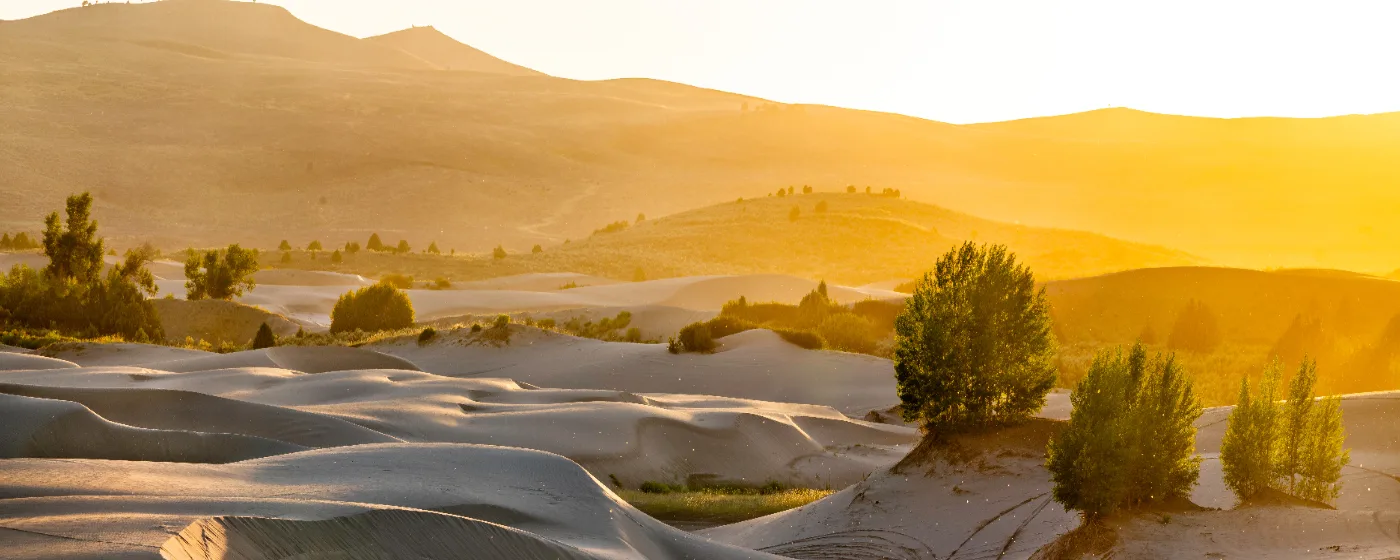
Maybe you've been priced out of Driggs or Island Park and someone mentioned St. Anthony as the answer. Maybe you're relocating for a job in Rexburg and want more land for less money. Either way, the first thing that surprises people is the setting: a compact county seat of just 1.55 square miles, sitting right on U.S. Route 20 where the Henry's Fork of the Snake River cuts through town and 10,600 acres of white quartz sand dunes rise just eight miles to the west. St. Anthony is the kind of place that looks modest on a map and feels genuinely livable once you're in it — but it helps to understand the trade-offs before you make an offer.
The city is the county seat of Fremont County, which means local government, the school district, and corrections facilities are among its larger institutional employers. Fremont County Joint School District 215, which holds a B rating according to Niche, anchors the community alongside employers like Broulim's Fresh Foods, Grand Peaks Healthcare, and the City of St. Anthony itself. The median age here is 32.4 years, and the population grew roughly 11% between 2019 and 2024 — a pace that reflects both regional growth and the arrival of younger families and working adults who want Eastern Idaho's outdoor lifestyle without the price tags now attached to resort-adjacent markets.
Housing costs here sit well below what you'd pay in Rexburg, Driggs, or Island Park, and the owner-occupancy rate runs close to 79% — this is a town of people who plant themselves. The Henry's Fork runs right through the city limits, Keefer Park and Veterans Memorial Park give families immediate outdoor access, and Rexburg and Idaho Falls are both within about a 17-minute to 50-minute drive for larger grocery runs, entertainment, and employer options. For a deeper look at prices and taxes, see the cost of living page.
Whether you're considering a move or just researching the area, the sections below break down St. Anthony's job market and economy, daily life, the housing market, commuting realities, and what weekends here actually look like.
St. Anthony at a Glance
Looking to buy in St. Anthony? Estimate your payment.
Enter your numbers to see an estimated monthly mortgage payment.
Estimate only. Excludes HOA fees and mortgage insurance. The interest rate above is a starting point, not a quoted rate — replace it with your own to see real numbers. Insurance is a flat placeholder, not a St. Anthony quote.
Why Are People Moving to St. Anthony?
The short answer: more for less, in a place that still has real civic identity. St. Anthony isn't a bedroom suburb that grew up around a freeway interchange — it's been the county seat of Fremont County for well over a century, with a working courthouse, the historic Yellowstone Tabernacle, and the kind of Main Street architecture that tells you a town has roots.
The Economic Backbone
The largest employer in the city is Fremont County Joint School District 215, which draws teachers, administrators, and support staff from throughout the region. The St. Anthony Work Camp, a state corrections facility, provides stable government employment that doesn't fluctuate with commodity prices or tech cycles. Broulim's Fresh Foods serves as both an employer and the city's primary full-service grocery anchor. Grand Peaks Healthcare fills the community healthcare role. The City of St. Anthony itself rounds out the institutional employer mix — municipal government, utilities, and public works.
None of these are glamour employers, and that's exactly the point. This is a stable, institutionally-anchored economy that doesn't boom or crash with a single industry. For workers in education, public service, healthcare support, or retail management, St. Anthony offers something that higher-profile Idaho markets can't: a paycheck that actually stretches to cover housing.
Who Actually Moves Here
Three groups show up repeatedly. First: young families priced out of Rexburg who want a starter home with a yard and a short commute north. Second: remote workers and self-employed people who want Eastern Idaho's outdoor access — the dunes, the Henry's Fork, the proximity to Yellowstone — without the Island Park or Teton Valley premium. Third: longtime Eastern Idaho residents who want to own rather than rent and find that St. Anthony's owner-occupancy rate and price point make that possible in a way nearby markets no longer do.
The median household income of $53,152 and a typical home price of $290,325 (Zillow Home Value Index, May 2026) put homeownership within reach for dual-income households here in a way that has become genuinely rare in Idaho's more visible markets. For context on how the school district serves these families, see the schools page.
What You Give Up
St. Anthony has around 4,000 residents. There is no movie theater, no major retail corridor, and limited dining variety within city limits. Newcomers who want weekend restaurants and coffee shops within walking distance of their front door tend to struggle here. If your lifestyle requires urban amenity density, Rexburg — about 17 minutes south — fills that gap, but you'll drive it constantly.
What Daily Life Feels Like in St. Anthony
Living here in month one feels like a trade. You give up the suburban commercial strip and you get the Henry's Fork running through town, dunes visible from the highway, and a pace that doesn't feel manufactured. By month six, most people have either made peace with the drive to Rexburg or decided it's the dealbreaker they didn't account for.
The Compact Reality
St. Anthony covers just 1.55 square miles, which means most errands within the city are genuinely walkable or a two-minute drive. Bridge Street is the functional spine — it runs north-south through downtown, connecting the historic courthouse district to South Fremont High School at 855 N. Bridge St. Broulim's handles most grocery needs without leaving the city. Downtown has a classic soda fountain counter at one of the longtime drugstore fixtures on N. Bridge St. — the kind of place you take out-of-town guests who've never seen a working soda counter.
That compactness is a genuine strength for families with young children and for anyone who values knowing their neighbors. It's a real limitation if you grew up with a Target, a gym, and three coffee shop options within a mile.
Seasons Here Are Not Subtle
Eastern Idaho winters are serious. Snow comes early and stays, and the stretch of U.S. 20 between St. Anthony and Rexburg can get slick enough that newcomers from milder climates routinely underestimate the first winter commute. Locals drive trucks and SUVs overwhelmingly — this is not a coincidence. On the other side: summer weekends transform the area when the sand dunes open fully and the Henry's Fork fills with fly fishers and floaters. The city's population effectively swells with OHV riders and anglers from late spring through early fall, and parking near the river access points gets competitive in July and August.
Where Families Actually Gather
Keefer Park and Veterans Memorial Park are the reliable social hubs — youth baseball, summer evenings, the kind of unplanned neighbor conversations that define small-town life. Parents with school-age children tend to organize around South Fremont High School sports, with IHSAA Class 3A Cougar games drawing the community together in a way that larger cities' programs rarely do. The dunes at Crapo Hill and Deadhorse Bowl become a default Saturday for many households from April through September. For a full picture of parks and outdoor options, see the parks and recreation page.
The St. Anthony Housing Market Right Now
The Zillow Home Value Index for St. Anthony stands at $290,325 as of May 2026, up 4.6% over the prior year. That appreciation pace is meaningful but not the double-digit surge that characterized 2021–2022 in most of Idaho — the market here has moved steadily rather than explosively.
Owner-occupancy runs close to 79% of the roughly 2,300 households in the city. That high ownership rate shapes the market: inventory tends to be tight not because of investor activity but because people who bought here tend to stay. When a home does come to market, it often moves quickly, particularly anything priced at or below the city-wide figure.
Some areas of the city attract different buyer profiles — the historic downtown core draws buyers who want character and on-foot access, while newer construction on the outskirts suits those prioritizing square footage. For neighborhood-level character and a breakdown of what different parts of town feel like to live in day to day, the best neighborhoods page covers that in full.
One thing to calibrate: a $290,325 price point sounds accessible in absolute terms, and it is — but the local median household income of $53,152 means this market still asks buyers to stretch. The effective property tax rate of approximately 0.43% is among the lower rates in Idaho, which helps with monthly carrying costs. Renters will find options, though the rental inventory is limited by that high ownership rate; city-wide rent figures are covered on the cost of living page.
The market does move. Buyers who assume a small town means slow offers and low competition occasionally miss the first home they want. That said, this isn't a bidding-war market in the way Boise or Rexburg proper can be — measured preparation rather than panic is the right posture.
St. Anthony Neighborhoods
St. Anthony has several distinct areas — each with its own character and appeal. Here’s a breakdown to help you narrow down where to focus your home search.
🏡 Historic Downtown
The civic and commercial core of St. Anthony, anchored by the Fremont County Courthouse and the Yellowstone Tabernacle, with older housing stock on tree-lined streets within walking distance of Bridge Street's shops and a handful of longtime downtown businesses. It suits buyers who want on-foot access and neighborhood character over square footage.
🏠 South Side
A residential area south of the downtown core that draws families with school-age children for its proximity to South Fremont High School on N. Bridge St., with established single-family homes on modest lots.
🌳 North Bench
Sitting on higher ground north of the city center, North Bench offers a more open feel and slightly larger lots, appealing to buyers who want a bit more space and privacy while staying within easy reach of downtown and the Henry's Fork.
🏘 East Bridge
Positioned on the east side of Bridge Street near the river corridor, East Bridge attracts buyers drawn to proximity to the Henry's Fork and its walking access to the river bottom — a natural gathering point for anglers and wildlife watchers.
🏔 West Main
Straddling the western stretch of Main Street, this area mixes residential streets with commercial adjacency, suiting buyers who want quick access to everyday errands at Broulim's and the city's service businesses without being in the dense downtown core.
🌆 Riverside
As the name suggests, Riverside puts the Henry's Fork within close reach, making it a consistent draw for fly fishers and anyone whose weekend plans revolve around the river; the BLM-managed Red Road Bridge Boat Access is one of the nearest public launch points to this part of the city.
Pros & Cons of Living in St. Anthony
The Pros
- Extremely low crime and safe community
- Gateway to 10
- 000 acres of famous sand dunes for OHV recreation
- Proximity to world-class fly fishing on Henry's Fork
- Very affordable cost of living and housing
- Close-knit small-town atmosphere
The Cons
- Limited employment opportunities beyond agriculture and schools
- Cold
- snowy winters with continental climate
- Few dining and entertainment options
- Distance from major metro amenities
Getting Around & Commuting in St. Anthony
St. Anthony is a car-dependent city. There is no local bus system, no bike-share, and no rideshare coverage to speak of. If you don't drive, your options within the city are walkable, but reaching Rexburg, Idaho Falls, or anything beyond the city limits requires a vehicle.
The Rexburg and Idaho Falls Commute
The dominant commute pattern runs south on U.S. 20 toward Rexburg — approximately 17 minutes under normal conditions. This is the route most St. Anthony residents travel daily, whether for work at BYU-Idaho, employment in Rexburg's growing commercial sector, or access to the larger shopping and services that Rexburg offers. Idaho Falls sits roughly 45–50 minutes south, making it a realistic employment destination for workers willing to drive, particularly for positions at larger employers or institutions in Madison and Bonneville counties.
What the Drive Is Actually Like
U.S. 20 south of St. Anthony is a two-lane highway through open farmland. In dry summer conditions, the drive is easy and the scenery — farmland transitioning to river bottomland — is genuinely pleasant. In winter, that same stretch can accumulate black ice before dawn, and the window between "roads are fine" and "roads are dangerous" closes fast. Newcomers from California, Utah, or the Pacific Northwest who haven't driven Idaho winters consistently underestimate this. A reliable four-wheel-drive or all-wheel-drive vehicle isn't optional here — it's the cost of winter commuting.
The nearest commercial airport is Idaho Falls Regional Airport (IDA), roughly 50 miles south. Travelers flying more than a couple times a year typically account for the drive to IDA in their relocation calculations — there is no commercial air service closer to St. Anthony.
Within the City
Inside St. Anthony's 1.55 square miles, most destinations are under a five-minute drive from any residential address. Bridge Street's north-south orientation and Main Street's east-west cross make navigation intuitive. Parking is free and abundant everywhere in the city — this is not a place where you'll circle a block looking for a spot.
| Destination | Distance from St. Anthony | Typical Drive Time | Route |
|---|---|---|---|
| Rexburg | ~15 miles | ~17 minutes | U.S. 20 South |
| Sugar City | ~10 miles | ~13 minutes | U.S. 20 South |
| Idaho Falls | ~47 miles | ~45–50 minutes | U.S. 20 South |
| Ashton | ~18 miles | ~20 minutes | U.S. 20 North |
| St. Anthony Sand Dunes | ~8 miles | ~12 minutes | West on Sand Dunes Rd |
| Idaho Falls Regional Airport (IDA) | ~50 miles | ~50 minutes | U.S. 20 South |
For buyers considering this city specifically because of the Rexburg commute, the daily drive on U.S. 20 is the central variable to road-test before committing.
Schools in St. Anthony
Families relocating to St. Anthony have public, private, and higher-education options nearby. Here’s a quick overview.
🎓 School District
Fremont County Joint School District 215 serves K–12 students across St. Anthony and the surrounding area. Rated B (source: Niche.com).
🏆 Graduation Rate
The 4-year high-school graduation rate here is approximately 95.9%.
📚 Higher Education
Idaho’s public universities — Boise State, the University of Idaho, and Idaho State — offer four-year degrees statewide, with community colleges (CWI, CSI, NIC) providing two-year and workforce programs.
🌐 Online Learning
Boise State Online and University of Idaho Online offer fully accredited online degrees for remote learners across the state.
Safety in St. Anthony
A quick look at how St. Anthony compares on the numbers that matter most when weighing a neighborhood or a move.
🛡 Violent Crime
Approximately 1.31 per 1,000 residents.
🔒 Property Crime
Approximately 3.15 per 1,000 residents.
Compared to the FBI’s most recent national data (2024), St. Anthony’s violent crime is below the national average (about 3.6 per 1,000), and property crime is below the national average (about 17.6 per 1,000).
Against Idaho as a whole, St. Anthony’s violent crime is roughly half the state average, and property crime is roughly a third of the state average (Bureau of Justice Statistics, Crime Known to Law Enforcement, 2024 (tables 2 and 3)).
Crime rates can vary a lot within a single city, so the citywide numbers above are only a starting point. Some neighborhoods in St. Anthony run well below these averages, while others run higher — the kind of block-by-block detail that matters most when you’re actually choosing where to live. The full guide below breaks it down neighborhood by neighborhood.
Working in St. Anthony
St. Anthony’s largest employers span several industries — here are some of the anchors of the local job market.
🎓 Fremont County Joint School District
Education
💼 St. Anthony Work Camp
Corrections
🛒 Broulim's Fresh Foods
Retail
🏥 Grand Peaks Healthcare
Healthcare
💼 City of St. Anthony
Municipal
Parks & Recreation in St. Anthony
Some of the outdoor spaces that shape everyday life in St. Anthony.
🌱 Henry's Fork of the Snake River
🌱 Keefer Park
🌱 Veterans Memorial Park
St. Anthony residents don’t have to go far for green space — spots like Henry's Fork of the Snake River and Keefer Park are part of everyday life here, whether that’s a morning walk, a weekend hike, or just somewhere to unwind outside. The full guide below covers more of what St. Anthony has to offer for parks and outdoor recreation.
Retiring in St. Anthony
St. Anthony draws retirees for its balance of amenities, outdoor access, and cost. Here’s what to weigh.
🌤 Climate
St. Anthony experiences full Eastern Idaho seasons: warm, dry summers with low humidity and long daylight hours, and cold winters with regular snowfall and temperatures that can drop well below freezing. Spring and fall are short but pleasant. Retirees who love distinct seasons and outdoor recreation year-round tend to settle in well; those who need mild winters typically look further south.
🍴 Lifestyle
Daily life centers on the outdoors — the Henry's Fork for fishing and floating, the sand dunes for recreation, and community gathering at Keefer Park and Veterans Memorial Park. Dining within the city is limited, but the historic downtown along Bridge Street has the character of a genuine county seat. Rexburg's broader amenities are a short drive south for those who want more variety.
🏚 55+ Communities
St. Anthony does not have a dedicated active-adult or 55+ community within its boundaries. Most retirees who choose the area buy single-family homes in established neighborhoods close to the river or downtown. Those seeking age-restricted communities or assisted-living options will find more choices in Rexburg or Idaho Falls, both within an easy drive. For a fuller retirement picture, see the <a href="/idaho/st-anthony/retiring-in-st-anthony">retiring in St. Anthony page</a>.
✈ Getting Around
A personal vehicle is essential. Within the city, most destinations are walkable or a very short drive. The nearest commercial airport is Idaho Falls Regional Airport, roughly 50 miles south. Rexburg sits about 17 minutes away for medical appointments, specialty shopping, and dining. Winter driving on U.S. 20 requires a capable vehicle and some patience with seasonal road conditions.
🏛 Idaho Taxes for Retirees — What to Know
- Social Security is not taxed — Idaho does not tax Social Security benefits at the state level, regardless of income.
- Flat state income tax — Idaho has a flat income tax (5.3% for 2026). Other retirement income — pension distributions and 401(k)/IRA withdrawals — is taxed as ordinary income at that rate.
- Narrow retirement deduction — Idaho’s Retirement Benefits Deduction is limited: it reaches only certain government pensions (federal CSRS, Idaho firefighter/police, and military retirement) for those 65+ (or 62+ if disabled), and is reduced by Social Security received.
- Sales tax is the tradeoff — The state sales tax is 6.0%, and St. Anthony adds no local sales tax on general retail, so the combined rate is 6.0% (Idaho State Tax Commission, 2026). Groceries are taxed, but a grocery tax credit offsets part of it; prescription drugs are exempt. A small number of resort cities add a local option tax, usually on lodging, alcohol, and prepared food rather than general retail.
- Low property taxes, with senior relief — Idaho property taxes are relatively low. Homeowners 65+ who own and occupy their home may qualify for the “circuit breaker” Property Tax Reduction based on income.
- No estate or inheritance tax — Idaho has no estate, inheritance, or gift tax.
- Capital gains — Capital gains are taxed as ordinary income, though Idaho allows a deduction of up to 60% of the net gain on qualifying Idaho property.
Tax laws change frequently and individual situations vary. This is general information, not tax advice — always consult a qualified Idaho tax professional or CPA for personalized retirement tax planning.
Weekends & Local Favorites in St. Anthony
The outdoors are the primary weekend draw here, and they are legitimately exceptional. St. Anthony has two anchor experiences that residents can access from their driveway on any given Saturday that most people in Idaho can't match: the sand dunes and the Henry's Fork.
The Sand Dunes
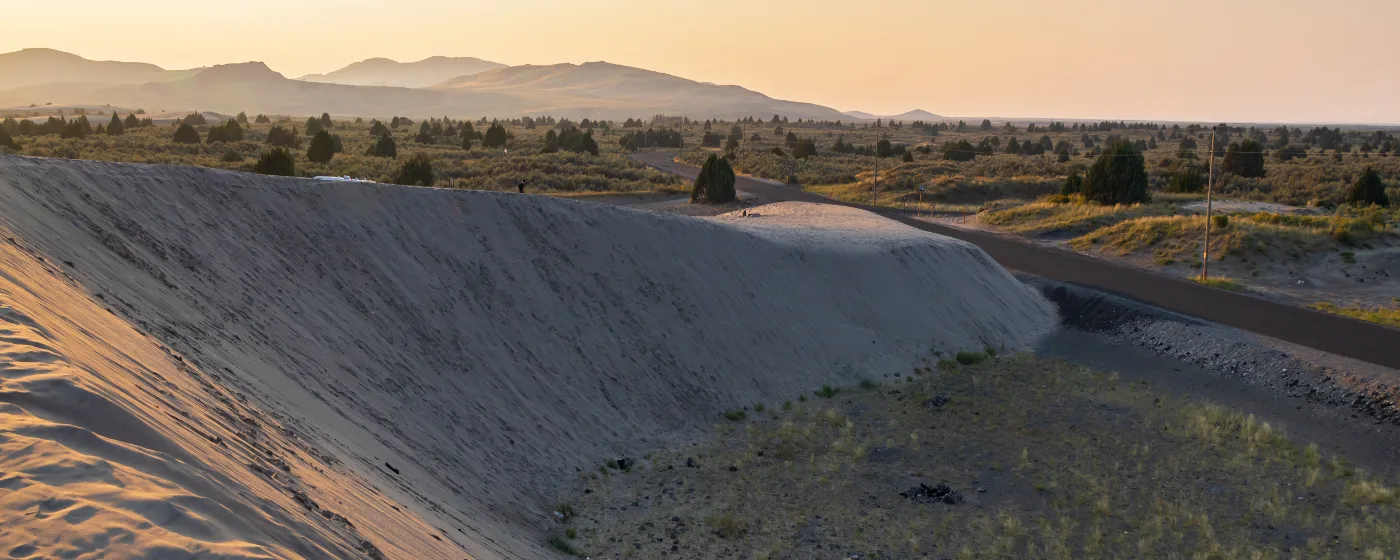
The St. Anthony Sand Dunes are 10,600 acres of white quartz managed by the Bureau of Land Management, with dunes reaching up to 400 feet — one of the largest OHV riding areas in the American West. The most popular spots — Crapo Hill (also called Thunder Mountain), Deadhorse Bowl, Devil's Dune, and Choke Cherry Hill — draw riders from across Idaho and surrounding states from spring through fall. Sandboarding, horseback riding, and stargazing are all legitimate pursuits out here, not just marketing copy. The Idaho Dunes RV Park operates seasonally from mid-April through the last weekend in September with 69 RV sites, which gives you a sense of the visitor volume this area absorbs on peak weekends.
Living eight miles from this kind of recreation is genuinely part of what people are buying when they buy in St. Anthony. The flipside: peak summer weekends bring significant visitor traffic through the city, and Sand Dunes Road can back up on holiday weekends in ways that locals learn to route around.
The Henry's Fork
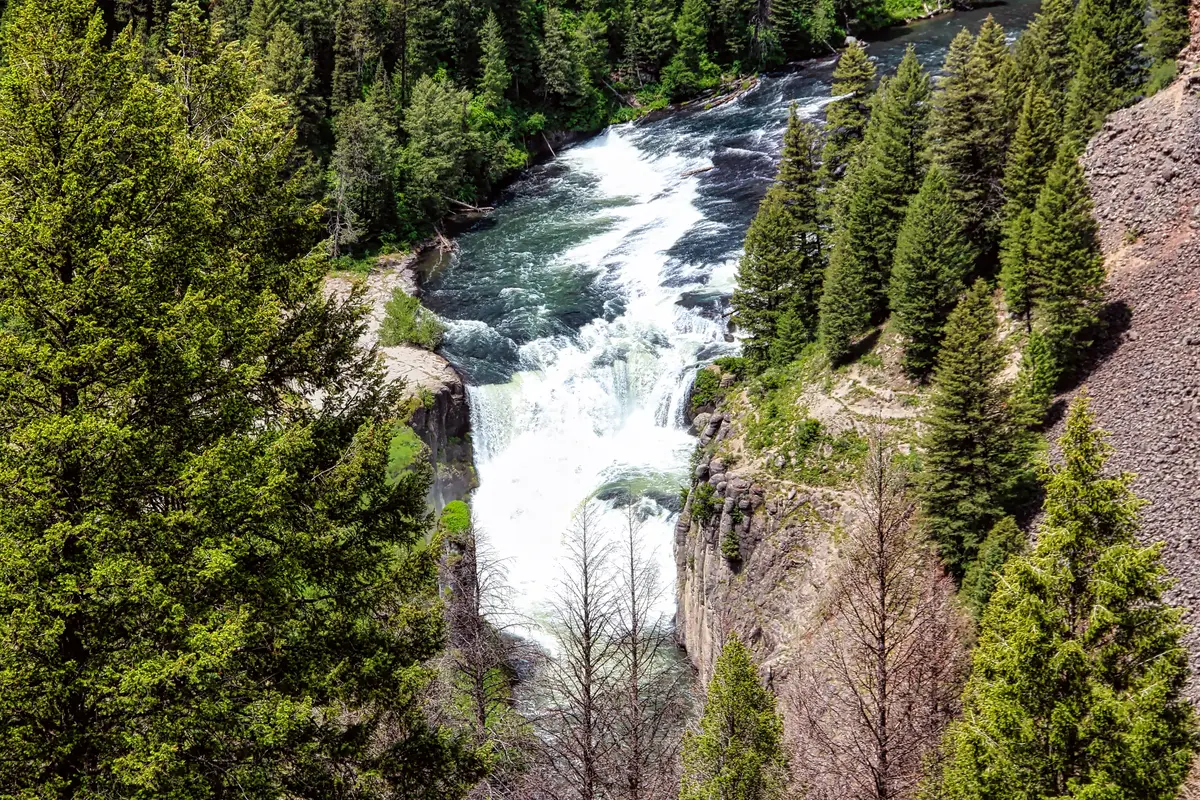
The Henry's Fork runs directly through town, and it is not a decorative river. This stretch supports world-renowned fly fishing for rainbow and brown trout, and trumpeter swans winter here in numbers that stop residents mid-errand. The BLM manages river access at the Red Road Bridge Boat Access, and the roughly 30-mile float from St. Anthony to Menan is a legitimate half-day or full-day trip for those who run the section regularly. Fly fishing guide services work out of this area throughout the season.
Downtown and Community Life
The historic downtown along Bridge Street and Main Street has the bones of a classic county-seat commercial district — the Fremont County Courthouse anchors the civic core, and the Yellowstone Tabernacle is an architectural landmark worth understanding if you're moving here. A handful of longtime small businesses and a classic soda fountain counter operate along N. Bridge St., the kind of downtown institutions that larger cities have largely lost.
Dining variety within the city is limited. Most residents develop a comfortable rotation between what's in St. Anthony and the broader restaurant options available in Rexburg on evenings they want more choice. That's not a complaint you'll hear from people who knew what they were signing up for — but it consistently surprises buyers who didn't fully account for it during their research phase.
Top Things Locals Say About St. Anthony
The best intel about a city comes from the people who actually live there. Here’s what St. Anthony residents say when newcomers ask the questions everyone’s thinking.
“I knew the drive to Rexburg would be part of the deal — I just didn't realize how much I'd stop noticing it by March. What actually surprised me was how fast I started bumping into the same people everywhere: at the park, at the river, downtown. In a city this size, you become a local faster than you expect.”
— Recent St. Anthony home buyer
“What's the most surprising thing about living in St. Anthony?”
The river. People research the sand dunes before they move here, but the Henry's Fork running right through downtown is what gets them once they're actually living on Bridge Street. Trumpeter swans show up in winter and it genuinely stops traffic — not metaphorically, literally. Nobody warned me about that.
“What do locals love most about St. Anthony?”
The pace and the access together. You can be at Deadhorse Bowl on the dunes or launching a float on the Henry's Fork in under 15 minutes from almost anywhere in the city. And when you come home, parking is free, traffic doesn't exist, and your neighbor actually waves. That combination is harder to find in Idaho than it used to be.
“What should newcomers to St. Anthony know?”
Get a four-wheel-drive vehicle before your first winter, not after. U.S. 20 south toward Rexburg can ice over fast, and the stretch between town and the highway's four-lane section near Rexburg is where newcomers get into trouble. Also: peak summer weekends bring a lot of OHV traffic through the city heading to the dunes — Sand Dunes Road backs up, and locals learn alternate routes quickly.
“Can you live in St. Anthony without a car?”
Within the city itself — technically, yes. St. Anthony is only 1.55 square miles, and you can walk from a residential neighborhood to Broulim's, downtown, and both major parks without much effort. But there is no local transit system and no rideshare coverage to speak of, and getting to Rexburg or Idaho Falls requires a vehicle. Car-free living here is only realistic if your job, groceries, and social life are all within walking distance of your address.
Cities Near St. Anthony
Other communities near St. Anthony worth a look — each with its own character and price point.
| City | Distance | Best For | Vibe | Median Rent | Median Buy |
|---|---|---|---|---|---|
| Rexburg | 14 mi | Students, families, job seekers | College-town energy, growing fast | $1,400 | $350,000 |
| Sugar City | 8 mi | Quiet residential living | Small, peaceful, agricultural | $1,300 | $320,000 |
| Idaho Falls | 41 mi | Urban amenities, larger employers | Regional hub, more services | $1,300 | $380,000 |
More Helpful Guides for St. Anthony
Going deeper on St. Anthony? Our blog series covers everything from first-time buying to retiring here — explore the guides below.
Local Expert Takeaway: St. Anthony works best for people who've honestly assessed the trade-off: you get the Henry's Fork in your backyard, 10,600 acres of sand dunes eight miles west, a compact downtown with genuine county-seat character, and a home price that still makes ownership achievable at a median household income — in exchange for limited dining and retail variety in town, serious winter driving on U.S. 20, and a lifestyle that requires you to actually want the outdoors, not just be adjacent to them.
Quick Takeaways & FAQs
✅ The St. Anthony Sand Dunes — 10,600 BLM-managed acres with dunes up to 400 feet — sit just eight miles from downtown, giving residents OHV, sandboarding, and stargazing access that most Idaho markets can't touch.
⚠️ Dining and retail variety inside city limits is genuinely sparse; most residents make regular runs to Rexburg (~17 minutes south on U.S. 20) for restaurants, larger shopping, and services they can't find locally.
📍 The Henry's Fork runs directly through the city and supports world-renowned fly fishing for rainbow and brown trout — trumpeter swans winter here in numbers that will genuinely stop you the first time you see them.
What is the typical home price in St. Anthony, Idaho?
Is St. Anthony, Idaho a good place to raise a family?
How far is St. Anthony from Rexburg and Idaho Falls?
What are the main outdoor activities near St. Anthony?
What is it like to live in St. Anthony in winter?
Helpful Links for Moving to St. Anthony
Moving to Idaho?
Tell us what you need help with and we'll connect you with local resources.
