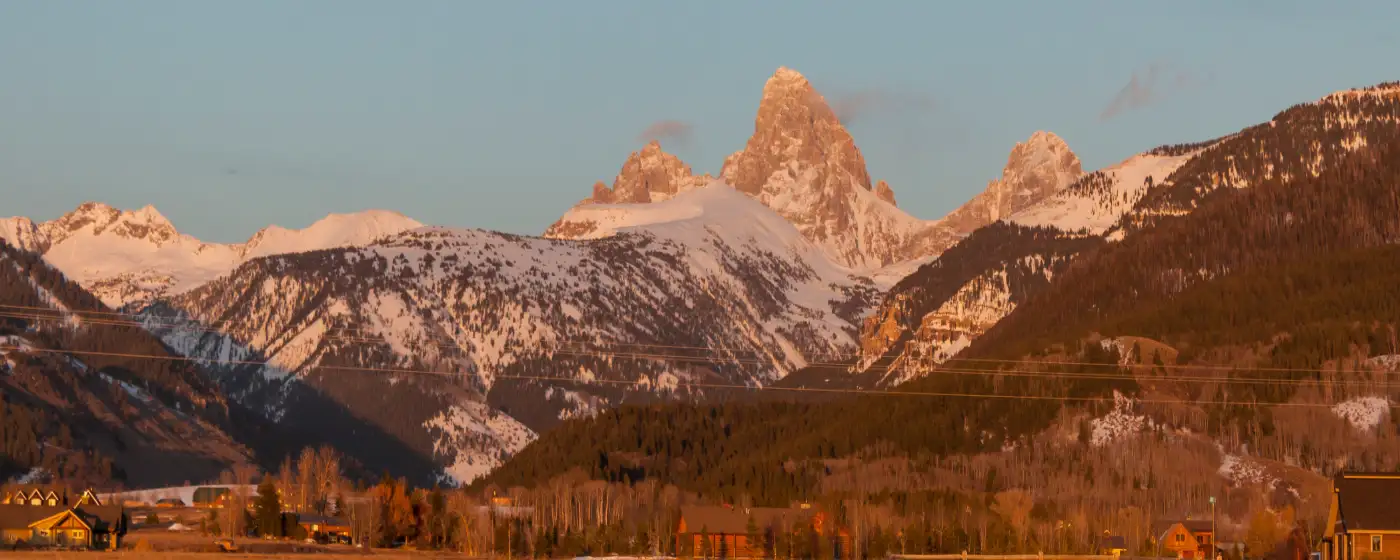
What Is Living in Driggs, Idaho Like?
Maybe you drove through Teton Valley on your way to Jackson and pulled over at the base of the Tetons thinking: why does everyone pay twice as much to live on the other side of the pass? That moment is why Driggs exists as a relocation option. The city sits at 6,145 feet in Teton Valley — the quieter, Idaho side of the range — with Grand Targhee Resort roughly 20 minutes up the mountain and Jackson, Wyoming about 45 minutes east over Teton Pass. It's a genuinely small place, 2.92 square miles and around 2,481 residents, which means the draw is entirely about landscape, lifestyle, and access to something larger than itself. What you give up is urban infrastructure. What you get is one of the most dramatic mountain settings in the lower 48, at a price point noticeably below Jackson's.
The economic backbone here is a mix of public-sector stability and tourism-driven seasonality. Teton County government is the largest employer, followed closely by Grand Targhee Resort and Teton School District #401. The local hospitality and retail sector swells every winter and draws down by late spring. Median household income sits at $95,392 — reflecting both the professional households who commute to Wyoming and the range of seasonal and service workers who keep the valley running. The Teton County School District holds a C+ rating, according to Niche, which is a real consideration for families, and the fuller picture is available on the Driggs schools page. People moving here tend to fall into two groups: outdoor-first households who are done with city life, and remote workers who discovered that high-speed internet and Targhee powder are a reasonable combination.
Driggs has grown roughly 22% since the 2020 census, which says something about the momentum here. The city-wide Zillow Home Value Index reached $781,920 in 2026 — far below Jackson's market but firmly in mountain-town territory, with an effective property tax rate of approximately 0.35% that makes Idaho's tax structure one of the quieter advantages of choosing this side of the state line. Rents, outdoor recreation, and a fuller cost-of-living breakdown are on the Driggs cost-of-living page. Day-to-day life centers on Main Street, the trail network, and a genuinely small-town rhythm — Wydaho Roasters on Main Street for coffee, Forage Bistro & Lounge on Warbird Lane for dinner, and the kind of calendar that fills up with ski days and summer farmers markets rather than traffic and evening commutes.
Whether you're seriously considering a move or just starting to research the valley, the sections below break down Driggs's neighborhoods, housing market, employers, commute realities, and what daily life here actually looks and feels like across the seasons.
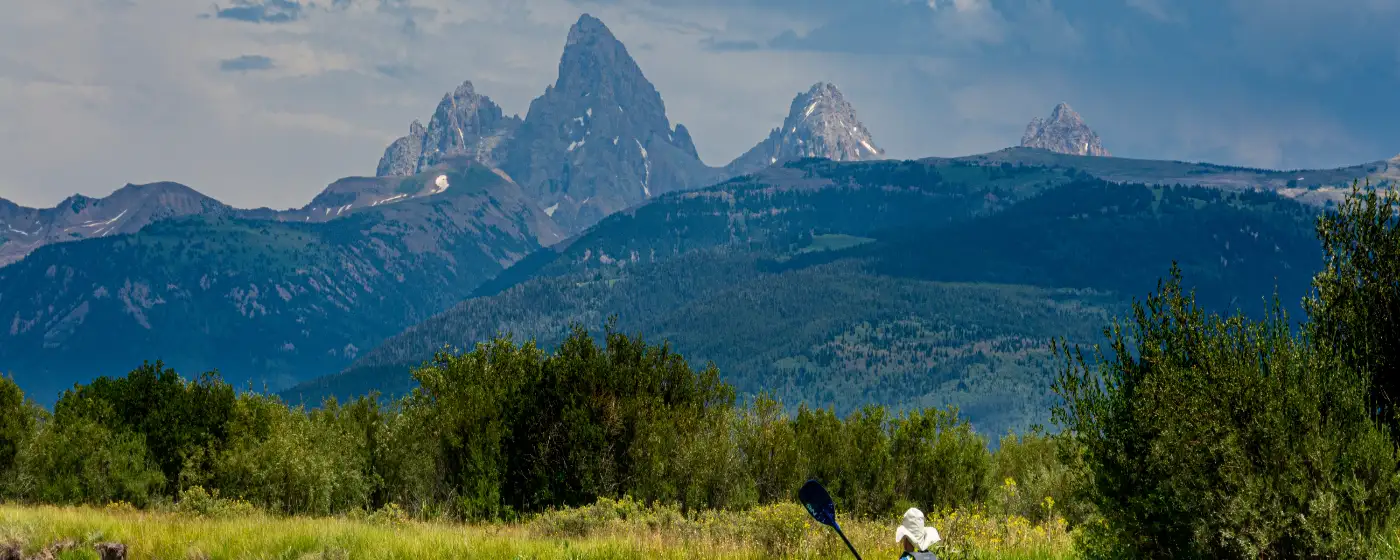
Driggs at a Glance
Looking to buy in Driggs? Estimate your payment.
Enter your numbers to see an estimated monthly mortgage payment.
Estimate only. Excludes HOA fees and mortgage insurance. The interest rate above is a starting point, not a quoted rate — replace it with your own to see real numbers. Insurance is a flat placeholder, not a Driggs quote.
Why Are People Moving to Driggs?
The short answer: Jackson's prices pushed them here, and then Driggs kept them. The longer answer involves a specific kind of person who wants serious mountain access without the resort-town markup — and who is willing to trade boutique infrastructure for a 20-minute drive to 2,602 acres of skiable terrain at Grand Targhee.
The Jackson Pressure Valve
Teton Valley has functioned as a pressure valve for the Jackson, Wyoming market for over a decade. Buyers priced out of Jackson — or simply unwilling to pay the premium — cross Teton Pass and find a fundamentally different cost structure on the Idaho side. That trade-off is real and worth naming: you gain affordability (relative to Jackson), but you lose Jackson's walkable town square, its airport with commercial service, and its concentration of high-end amenities. What you keep is the Tetons.
Remote workers have accelerated this pattern considerably since 2020. A household that can work from anywhere looks at Driggs and sees a 6,145-foot valley, a ski mountain 20 minutes out, and a median age of 38.2 — which is to say, a community already populated by people who made a similar calculation. The city's 3.41% annual growth rate since the last census reflects that momentum.
Who the City Suits Best
| Buyer Type | Why Driggs Works | The Catch | Best For |
|---|---|---|---|
| Remote workers / laptop professionals | Mountain lifestyle, Idaho tax structure, below-Jackson prices | Limited local professional networking; slow-build social scene | Nature Value |
| Jackson commuters | Housing affordability; Idaho income and property taxes apply | Teton Pass is a genuine mountain road — closed or treacherous several times per winter | Commuter Value |
| Outdoor-first households | Grand Targhee 20 min away; trail and river access from town | Summer tourist pressure; limited dining and retail variety | Nature Privacy |
| Families with kids | Small-town feel, safe community, Idaho school system | District holds a C+ rating on Niche; limited extracurricular depth vs. larger districts | Families Quiet |
| Retirees / semi-retired | Low property taxes, clean air, walkable downtown core | Winters are long and cold — temperatures can drop well below zero | Quiet Views |
| First-time buyers (Idaho-local) | Entry point noticeably below resort-town alternatives in the region | Market still requires significant equity or savings; see first-time buyer page for financing guidance | First-Time Value |
| Second-home / vacation buyers | Targhee access, rental income potential in ski season | Short-term rental regulations are evolving; verify current city rules before purchasing | Luxury Nature |
The city's growth is bringing new commercial infrastructure — a conditionally approved 69-room hotel and the Altitude Business Park south of downtown are both working through city approvals as of 2026. That's a signal about trajectory, not a promise of arrival.
What Employers Actually Drive the Economy
Teton County government anchors the employment base with stable, year-round positions centered at the county seat here in Driggs. Grand Targhee Resort — physically in Alta, Wyoming, but the valley's largest private employer — drives seasonal hospitality hiring from roughly November through April. Teton School District #401 adds another layer of public-sector stability. A major regional health system rounds out the institutional employer picture, and a growing cluster of local hospitality and retail businesses tracks directly with tourism volume.
There is no tech campus here, no distribution hub, no manufacturing anchor. If you need a local employer in a professional or technical field, the realistic answer is that your employer is probably remote, or it's in Jackson. The Driggs economy rewards people who either work in the outdoor-tourism ecosystem or bring their income with them.
What Daily Life Feels Like in Driggs
Driggs is genuinely small. At 2.92 square miles and around 2,481 residents, it functions more like a mountain town with civic infrastructure than a suburban community with urban amenities. That distinction shapes almost everything about daily life here.
The Rhythm of the Year
Winter is not a season to endure here — it's the reason many people moved. Grand Targhee's season ran from late November through mid-April in 2025–26, and with approximately 500 inches of average annual snowfall, it's one of the snowiest resorts in the country. The flip side: temperatures in Driggs can fall well below zero in January, the roads demand genuine winter driving competence, and Teton Pass — your link to Jackson — closes or restricts travel several times each season.
Newcomers frequently underestimate just how cold and long the winter is at 6,145 feet. By March, people who moved from the Pacific Northwest or the Mountain West's lower elevations have usually recalibrated their expectations. The cold is not a dealbreaker for the right person — it's a filter.
Summer Changes Everything
From June through September, the valley fills with hikers, cyclists, and visitors targeting the Wyoming Tetons from the quieter Idaho entrance. The Teton River draws fly fishers. The trail network expands. Tourist volume on Main Street climbs noticeably, and the dining scene — anchored by spots like Forage Bistro & Lounge on Warbird Lane and Tatanka Tavern on North Main — gets genuinely busy on weekends. Locals learn to run errands mid-week and eat dinner early in July and August.
A Small Town With a Real Downtown
Driggs City Center and the Main Street corridor give the town a walkable core that punches above its population size. Wydaho Roasters on Main Street is where you'll find the morning regulars. Pizzeria Alpino on North Main handles the Friday-night crowd. The Teton Geotourism Center and the Warbird Museum near Driggs-Reed Memorial Airport add a layer of civic identity that most towns this size don't have.
The Teton County Courthouse and city government offices are here, which means Driggs has the functional infrastructure of a county seat — permits, public services, local government engagement — within walking distance of downtown. That matters more than it sounds when you're used to driving 30 minutes for a building permit.
What Six Months In Actually Feels Like
People who moved from mid-size western cities often say the same thing around month five: the social scene is smaller than they anticipated. Making real connections in a town of 2,481 takes deliberate effort — joining the trail association, showing up to city planning meetings, getting a regular table at a local spot. The community is warm and genuinely tight-knit, but it doesn't absorb newcomers automatically the way a larger city's existing infrastructure does. That's not a criticism — it's a thing worth knowing before your moving truck arrives.
The Driggs Housing Market Right Now
The Driggs market in 2026 is calmer than it was during the pandemic surge — but it has not reset to pre-2020 pricing. The Zillow Home Value Index for Driggs sits at $781,920, up a modest 0.6% over the past year, which reflects stabilization rather than the rapid appreciation that characterized 2021 and 2022.
Homes are sitting longer than they did at peak. As of June 2026, the median days on market for single-family homes was 88 days — unchanged from the same period in 2025. That's a meaningful shift from the frenzied pace of a few years ago, and it gives buyers more negotiating room than the valley has seen in some time. Some areas command a premium over the city-wide figure; others offer entry points below it — the best neighborhoods page breaks down what each area of Driggs actually looks and feels like on the ground.
The effective property tax rate of approximately 0.35% is one of the most buyer-friendly aspects of the Idaho side of the valley. A home at the current index value carries a substantially lower annual tax burden than an equivalent property across the pass in Wyoming — a structural advantage that compounds over time for long-term owners.
Inventory has expanded compared to the pandemic years, but Driggs is not a market with abundant choices. The total housing stock is constrained by the city's small footprint and by Teton County's geography. New development is coming — the Altitude Business Park and a conditionally approved hotel signal that city hall is managing growth actively — but residential supply is still tight relative to the demand profile of buyers attracted to this market. Moving quickly on a property you want remains practical advice, even in a slower-paced environment.
Driggs Neighborhoods
Driggs has several distinct areas — each with its own character and appeal. Here’s a breakdown to help you narrow down where to focus your home search.
🏡 Ski Hill Road
Ski Hill Road runs toward the Targhee turnoff and draws buyers who want the shortest possible drive to the mountain — housing here tends to be a mix of established homes and newer builds on larger lots with Teton views. It suits outdoor-first households who want proximity to the slopes as their primary address criterion.
🏠 Stoneridge
Stoneridge is one of Driggs's more established planned subdivisions, with single-family homes on consistent lot sizes and a neighborhood feel that appeals to families and longer-term residents. The area sits within easy reach of downtown Driggs and has the settled character of a neighborhood that's been here long enough to have mature landscaping.
🌳 Powder Valley
Powder Valley offers a quieter, more spread-out feel toward the northern edge of town, appealing to buyers who want elbow room without leaving the Driggs city limits. The area's name captures the draw for many residents — proximity to the valley's legendary snowfall and the lifestyle that comes with it.
🏘 Aspen Pointe
Aspen Pointe is a newer subdivision that has attracted buyers looking for more recently constructed homes in a valley where older inventory dominates the market. It suits households who prioritize updated finishes and a cohesive neighborhood layout over the character of Driggs's older residential streets.
🏔 Targhee Ranch
Targhee Ranch is a larger-lot area that draws buyers who want genuine space between properties — the kind of setting where you can see the Tetons from your back porch without a neighbor's roofline in the frame. It suits privacy-oriented households and those who keep horses or want room for outbuildings.
🌆 Redtail
Redtail is a residential area that appeals to buyers who want a neighborhood with some of Driggs's most direct views and a setting that feels close to the valley's natural edges rather than its commercial center. Homes here tend to suit buyers who want quiet surroundings with reasonable access to Main Street.
Pros & Cons of Living in Driggs
The Pros
- Spectacular Teton Range views from the 'quiet side' of the mountains
- Significantly lower cost of living than Jackson Hole across Teton Pass
- Direct access to Grand Targhee Resort's legendary powder skiing
- Vibrant arts and culture scene with farmers markets and festivals
The Cons
- Limited high-wage employment locally—many commute over Teton Pass to Jackson
- Higher home prices driven by second-home and vacation-rental demand
- Sparse amenities and services compared to larger Idaho towns
Getting Around & Commuting in Driggs
A car is not optional in Driggs. It is the singular transportation reality of life in Teton Valley, and understanding the specific geography of the commute patterns here is essential before you choose where to live and where to work.
The Teton Pass Reality
The dominant commute for valley residents who work in Jackson, Wyoming runs east on Idaho State Highway 33 and then up and over Teton Pass on Wyoming Highway 22 — roughly 45 minutes in normal conditions. That number is accurate on a clear Tuesday in October. It is not the full picture. Teton Pass crests at 8,431 feet, closes periodically for avalanche control and winter storms, and can turn a 45-minute drive into a two-hour ordeal or a full day's delay during significant weather events. People who commute to Jackson regularly build buffer time into their schedules as a matter of habit, not caution.
The pass closure issue is the single thing most Jackson commuters wish someone had emphasized before they moved. It's not frequent enough to make the commute unworkable — tens of thousands of people do it year-round — but it is real enough that it affects how you schedule medical appointments, school pickups, and early morning work commitments.
Local and Regional Movement
Within Teton Valley, movement between Driggs, Victor (about 10 miles south), Tetonia (about 8 miles north), and Felt is entirely by car on Highway 33. The road is flat, fast, and well-maintained in summer. In winter it demands respect. There is no public transit connecting Teton Valley communities, and no regional bus service to speak of.
For air travel, Driggs-Reed Memorial Airport (FAA ID: DIJ) serves general aviation with a 7,300-foot asphalt runway at 6,229 feet elevation. It accommodates private and charter aircraft but not commercial flights. Residents who fly commercially drive to Idaho Falls Regional Airport (about 90 minutes northwest) or Jackson Hole Airport in Wyoming (about 45 minutes east). Jackson Hole Airport has seasonal commercial service; Idaho Falls has year-round connections to major hubs. Most people in the valley treat one of those two airports as their home terminal and plan accordingly.
Getting Around Town
| Destination | Mode | Typical Time | Notes |
|---|---|---|---|
| Downtown Driggs (Main St) | Walking / biking | 5–15 min from most in-town neighborhoods | Flat terrain; bike-friendly in summer |
| Grand Targhee Resort | Car (required) | ~20 min | Mountain road; road conditions variable Nov–Apr |
| Jackson, WY | Car (required) | ~45 min (clear conditions) | Teton Pass closures possible; plan for variability |
| Victor, ID | Car | ~10–12 min | Flat Highway 33; straightforward year-round |
| Tetonia, ID | Car | ~10 min north on Highway 33 | Very small town; limited services |
| Idaho Falls (shopping, airport) | Car | ~85–95 min | Primary regional hub for big-box retail, commercial flights |
| Idaho Falls Regional Airport | Car | ~90 min | Year-round commercial service; most common airport for valley residents |
| Jackson Hole Airport | Car | ~45–50 min | Seasonal commercial service; convenient but pass-dependent |
The Driggs-Reed Memorial Airport's 7,300-foot runway is one of the longest general aviation strips in the region at altitude, which makes it genuinely useful for charter and private aircraft — a real amenity for the segment of buyers who arrive and depart that way.
The Practical Bottom Line
If you work remotely and your commute is to a coffee shop or a home office, Driggs's geography is a non-issue. If you commute to Jackson daily, you are signing up for Teton Pass — one of the more demanding commuter roads in the American Mountain West — as a routine part of your life. Most people who do it find a rhythm. A few don't. Knowing which type you are before you move is worth more than most relocation research you'll do.
Schools in Driggs
Families relocating to Driggs have public, private, and higher-education options nearby. Here’s a quick overview.
🎓 School District
Teton County School District #401 serves K–12 students across Driggs and the surrounding area. Rated C+ (source: Niche.com).
🏆 Graduation Rate
The 4-year high-school graduation rate here is approximately 90.2%.
📚 Higher Education
Idaho’s public universities — Boise State, the University of Idaho, and Idaho State — offer four-year degrees statewide, with community colleges (CWI, CSI, NIC) providing two-year and workforce programs.
🌐 Online Learning
Boise State Online and University of Idaho Online offer fully accredited online degrees for remote learners across the state.
Safety in Driggs
A quick look at how Driggs compares on the numbers that matter most when weighing a neighborhood or a move.
🛡 Violent Crime
Approximately 1.1 per 1,000 residents.
🔒 Property Crime
Approximately 4.9 per 1,000 residents.
Compared to the FBI’s most recent national data (2024), Driggs’s violent crime is below the national average (about 3.6 per 1,000), and property crime is below the national average (about 17.6 per 1,000).
Against Idaho as a whole, Driggs’s violent crime is roughly half the state average, and property crime is roughly two-thirds of the state average (Bureau of Justice Statistics, Crime Known to Law Enforcement, 2024 (tables 2 and 3)).
Crime rates can vary a lot within a single city, so the citywide numbers above are only a starting point. Some neighborhoods in Driggs run well below these averages, while others run higher — the kind of block-by-block detail that matters most when you’re actually choosing where to live. The full guide below breaks it down neighborhood by neighborhood.
Working in Driggs
Driggs’s largest employers span several industries — here are some of the anchors of the local job market.
🏛 Teton County
Government
🏥 Grand Targhee Resort
Hospitality
🎓 Teton School District #401
Education
🏥 Teton Valley Hospital
Healthcare
💼 local hospitality & retail
Tourism
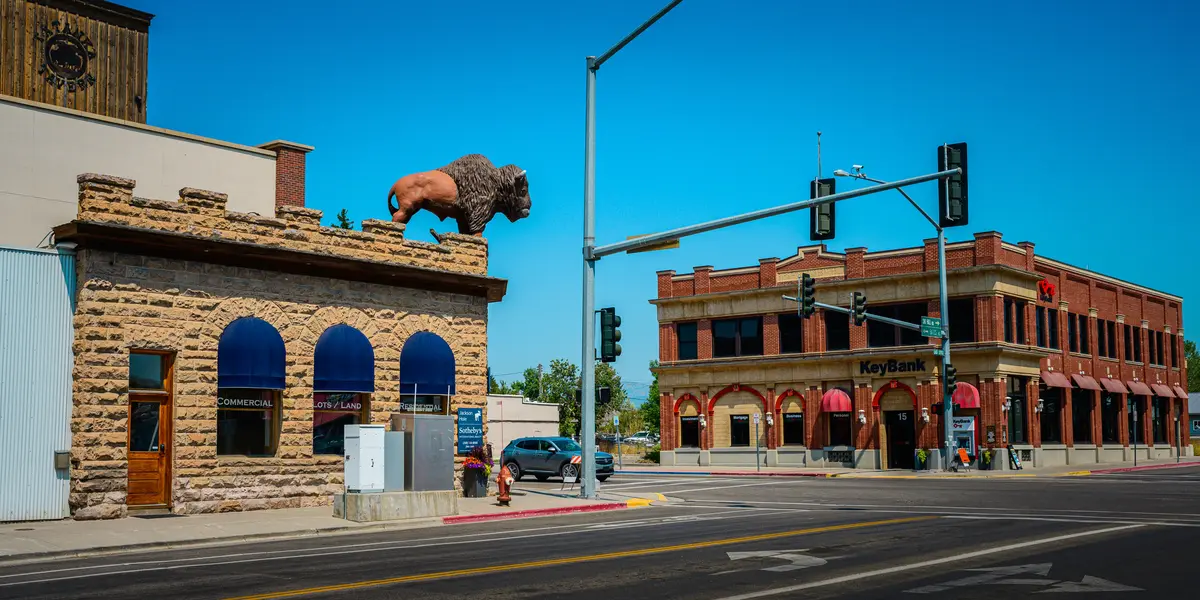
Retiring in Driggs
Driggs draws retirees for its balance of amenities, outdoor access, and cost. Here’s what to weigh.
🌤 Climate
Driggs sits at 6,145 feet in Teton Valley with a humid continental climate — summers are mild and short, with highs around 82°F in peak season, while winters are long and genuinely cold, with temperatures that can fall well below zero in January and February. Snowfall is substantial, which is a draw for active retirees who ski or snowshoe, but the cold and altitude require preparation and realistic health planning.
🍴 Lifestyle
Retirement in Driggs revolves around the outdoors — hiking, fly fishing on the Teton River, Nordic skiing, and summer farmers markets — with a small but solid downtown food scene anchored by spots like Forage Bistro & Lounge and the Grand Teton Distillery tasting room. The pace is genuinely slow, the community is tight-knit, and the Warbird Museum and Teton Geotourism Center add a layer of local cultural interest that rewards curiosity.
🏚 55+ Communities
Driggs does not have purpose-built 55+ or active-adult communities in the traditional sense. Retirees here typically purchase single-family homes or smaller residences in established neighborhoods near downtown or along the valley corridor. The full picture on senior living options and healthcare access in the area is on the <a href="/idaho/driggs/retiring">Driggs retiring page</a>.
✈ Getting Around
A car is essential at every stage of life in Driggs — there is no transit, and the distances to Idaho Falls (about 90 minutes) and Jackson (about 45 minutes) mean regular driving is unavoidable. Driggs-Reed Memorial Airport supports general aviation and charter access for those who fly privately. The downtown core is walkable for daily errands, but winter driving competence is a genuine prerequisite for year-round life in the valley.
🏛 Idaho Taxes for Retirees — What to Know
- Social Security is not taxed — Idaho does not tax Social Security benefits at the state level, regardless of income.
- Flat state income tax — Idaho has a flat income tax (5.3% for 2026). Other retirement income — pension distributions and 401(k)/IRA withdrawals — is taxed as ordinary income at that rate.
- Narrow retirement deduction — Idaho’s Retirement Benefits Deduction is limited: it reaches only certain government pensions (federal CSRS, Idaho firefighter/police, and military retirement) for those 65+ (or 62+ if disabled), and is reduced by Social Security received.
- Sales tax is the tradeoff — The state sales tax is 6.0%, and Driggs adds no local sales tax on general retail, so the combined rate is 6.0% (Idaho State Tax Commission, 2026). Groceries are taxed, but a grocery tax credit offsets part of it; prescription drugs are exempt. A small number of resort cities add a local option tax, usually on lodging, alcohol, and prepared food rather than general retail.
- Low property taxes, with senior relief — Idaho property taxes are relatively low. Homeowners 65+ who own and occupy their home may qualify for the “circuit breaker” Property Tax Reduction based on income.
- No estate or inheritance tax — Idaho has no estate, inheritance, or gift tax.
- Capital gains — Capital gains are taxed as ordinary income, though Idaho allows a deduction of up to 60% of the net gain on qualifying Idaho property.
Tax laws change frequently and individual situations vary. This is general information, not tax advice — always consult a qualified Idaho tax professional or CPA for personalized retirement tax planning.
Weekends & Local Favorites in Driggs
Driggs does not have a packed entertainment calendar in the way a larger mountain town might. What it has is access — immediate, uncrowded, and often spectacular — to some of the best outdoor terrain in the lower 48, plus a genuinely likable small-town food and community scene that rewards regulars.
On the Mountain and in the Backcountry
Grand Targhee Resort is the weekend centerpiece from November through April. At 2,602 skiable acres with a summit of 9,920 feet and an average of approximately 500 inches of annual snowfall, it draws serious skiers precisely because it lacks the crowds and lift-line culture of better-known resorts. The 20-minute drive from downtown Driggs means locals are on first tracks before most tourists have finished breakfast.
Summer weekends shift to hiking, mountain biking, and fly fishing on the Teton River. The Jedediah Smith Wilderness and the Caribou-Targhee National Forest are accessible from the valley floor. The trail system above town connects to terrain that would anchor a destination park in a more commercially developed region — here it's just the local after-work option.
In Town
The Main Street corridor is small but anchored by spots that have earned their regulars. Wydaho Roasters on Main is the morning gathering point — a proper coffee roaster with the kind of community-hub energy that forms naturally in a town where the same 200 people show up every Saturday. For evenings, Forage Bistro & Lounge on Warbird Lane handles the sit-down dinner crowd with a menu that reflects the valley's culinary ambitions. Tatanka Tavern on North Main does wood-fired pizza in a setting that feels like it belongs here. Pizzeria Alpino, also on North Main, rounds out a North Main Street dining corridor that's the closest thing Driggs has to a restaurant row.
The Warbird Museum near Driggs-Reed Memorial Airport is a genuine local institution — one of the better collections of flyable vintage military aircraft in the Mountain West, and a regular stop for visitors who didn't know it existed until someone local mentioned it. The Teton Geotourism Center offers context for the landscape that's actually useful if you're new to the valley and want to understand what you're looking at.
The Grand Distillery and Evening Culture
Grand Teton Distillery is the valley's anchor for spirits and after-dinner visits, with a tasting room that draws both locals and day-trippers. The overall evening scene is quiet by the standards of a college town or a larger resort community — this is a place where people tend to gather at one another's homes, at the trailhead parking lot on a Friday afternoon, or at a community event rather than cycling through a bar district.
The farmers market and local community events in summer give the downtown a pulse that's genuinely pleasant and easy to access when you live here. The trade-off is that there's no symphony, no arthouse cinema, no late-night food hall. If those things matter to your weekend life, Driggs will ask you to recalibrate — or to plan a quarterly trip to Boise or Salt Lake City for the fix.
Top Things Locals Say About Driggs
The best intel about a city comes from the people who actually live there. Here’s what Driggs residents say when newcomers ask the questions everyone’s thinking.
“I knew the winters would be cold, but I didn't understand what 'cold' meant at 6,145 feet until February. And I had no idea Teton Pass would actually close — I thought that was a once-a-decade thing. It's not. You build your whole schedule around it from December on. Once you do, it becomes second nature, and the trade-off for being 20 minutes from Targhee every weekend makes it completely worth it.”
— Recent Driggs home buyer
“What's the most surprising thing about living in Driggs?”
How genuinely isolated it feels in January. You're in a county seat with real civic infrastructure, but when Teton Pass closes and a storm sits over the valley for two days, you realize you're in a small mountain town at high elevation in a way that's hard to fully grasp from a weekend visit. Most people adjust and come to love it — but it's a real recalibration from anything below 5,000 feet.
“What do locals love most about Driggs?”
The combination of actual small-town community and world-class outdoor access. You can be on Targhee's slopes in 20 minutes on a powder day, and then run into the same people at Wydaho Roasters on Main Street the next morning. The valley hasn't lost the sense that people know each other — which becomes one of the things you'd miss most if you left.
“What should newcomers to Driggs know?”
Highway 33 through the valley is the spine of everything — knowing whether you're living closer to the Targhee turnoff or closer to Victor matters for your daily routine. And summer tourist season on North Main Street is busier than most people expect for a town this size. Run errands mid-week in July and August. The locals who try to do everything on Saturday mornings in peak summer learn that lesson once.
“Can you live in Driggs without a car?”
No. Downtown Driggs itself is walkable — you can get from the courthouse to Pizzeria Alpino on foot — but there is no transit, no rideshare availability to speak of, and no realistic way to reach Targhee, Idaho Falls, or Jackson without a car. Winter capability matters as much as having a car at all. Most households run at least one vehicle specifically suited to mountain road conditions from October through April.
Cities Near Driggs
Other communities near Driggs worth a look — each with its own character and price point.
| City | Distance | Best For | Vibe | Median Rent | Median Buy |
|---|---|---|---|---|---|
| Victor | 8 mi | Families, entry-level buyers | Small-town, slightly more affordable | $2,300 | $797,530 |
| Tetonia | 9 mi | Privacy seekers, rural lifestyle | Very small, agricultural, quiet | $2,400 | $797,270 |
| Jackson, WY | 32 mi | Amenity-driven buyers, luxury market | Resort town, walkable, premium-priced | $2,700 | $1,898,880 |
More Helpful Guides for Driggs
Going deeper on Driggs? Our blog series covers everything from first-time buying to retiring here — explore the guides below.
Local Expert Takeaway: Driggs rewards a specific kind of buyer: someone who genuinely wants a mountain life rather than a mountain address, who has income that isn't tethered to a local job market, and who understands that Teton Pass is a real commute variable — not a scenic footnote. The market has cooled from its pandemic peak, median days on market are in the high 80s, and an effective property tax rate of approximately 0.35% makes the ongoing cost of ownership lighter than many comparable mountain towns. Morning coffee at Wydaho Roasters, a weekend at Grand Targhee, and a valley that still feels like 2,481 people actually know each other — that's the Driggs pitch. It's an honest one.
Quick Takeaways & FAQs
✅ Grand Targhee Resort is 20 minutes from downtown Driggs and averages approximately 500 inches of snowfall annually — the most immediate ski access of any county seat in Idaho.
⚠️ Teton Pass, your link to Jackson and its commercial airport, closes periodically in winter; daily commuters to Wyoming build buffer time into their schedules as a matter of routine, not exception.
📍 Driggs-Reed Memorial Airport has a 7,300-foot runway and supports general aviation and charter flights — residents flying commercially typically drive to Idaho Falls Regional Airport (~90 minutes) or Jackson Hole Airport (~45 minutes).
What is the median home price in Driggs, Idaho in 2026?
How far is Driggs from Jackson, Wyoming, and is the commute realistic?
What are the biggest employers in Driggs and Teton Valley?
How are the schools in Driggs?
Do I need a car to live in Driggs?
Helpful Links for Moving to Driggs
Moving to Idaho?
Tell us what you need help with and we'll connect you with local resources.
