
You've probably run the numbers on Rexburg or Idaho Falls and felt the sticker shock creeping in. St. Anthony, sitting just 17 miles north along US-20, is where a lot of people land when they want eastern Idaho's lifestyle without the price premium that a university town or regional hub commands. The Zillow Home Value Index put the typical home value here at $290,325 as of May 2026 — and the overall cost of living runs approximately 8% below the national average and noticeably below the Idaho statewide norm. That gap is real, not a statistical quirk.
What drives the affordability is straightforward: St. Anthony's economy is anchored by local institutions — Grand Peaks Healthcare, Broulim's Fresh Foods, and the city itself — rather than a wave of tech-sector or university-driven growth. The median household income sits at $53,152, which is modest, and the community has built its housing stock around that reality. About 79% of households here are owner-occupied, a figure that tells you this is a place people plant roots rather than cycle through.
Beyond housing, the numbers stay in your favor. Rocky Mountain Power delivers electricity at roughly 35% below the national average rate, and natural gas prices have held relatively stable. Idaho's 6% sales tax includes a $155-per-person grocery tax credit that actually shows up on your return. The trade-off is a smaller commercial footprint: Broulim's is the primary full-service grocery option in town, and most specialty retail or dining variety requires a drive toward Rexburg or Idaho Falls.
Whether you're weighing a first purchase, a relocation from a pricier metro, or simply trying to build a realistic monthly budget, the sections below break down St. Anthony's housing market, everyday costs, how it stacks up against nearby cities, and exactly where the Idaho tax picture works for — and against — you.
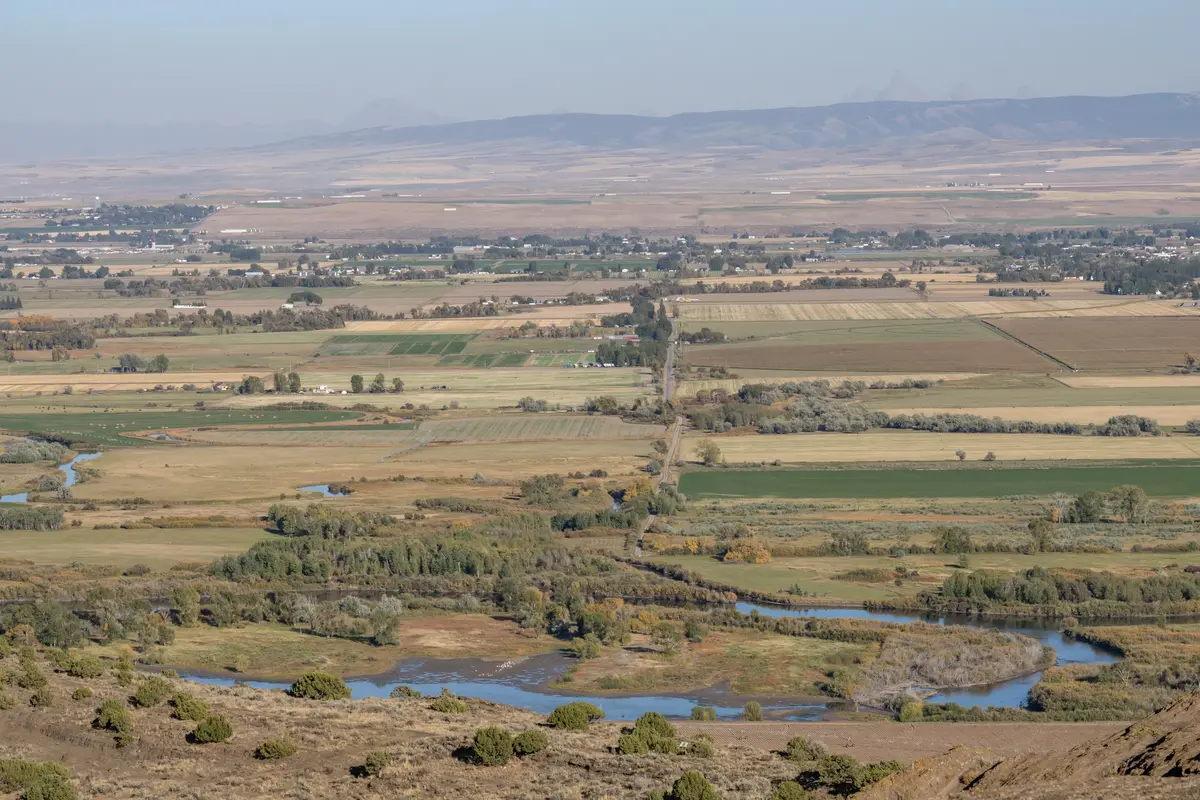
What It Really Costs to Live in St. Anthony
St. Anthony is genuinely affordable — not in the hedged, relative sense, but in absolute terms. The Zillow Home Value Index pegged the typical home value at $290,325 as of May 2026, a figure that puts eastern Idaho's lifestyle — clean air, Henry's Fork access, proximity to Yellowstone country — within reach without the financial compression that defines so much of the Mountain West right now.
The honest posture on cost, though, is this: St. Anthony is cheaper because it is a working small town, not a resort community or a university hub. Wages track accordingly, and the income-to-housing ratio is healthier than in many Idaho cities, but it is not a stretch market where buyers are competing for limited luxury inventory. What you're getting is a stable, owner-occupied community where prices reflect local economic reality rather than speculative pressure.
The overall cost of living — accounting for groceries, utilities, healthcare, and transportation — runs about 6% below the average Idaho city and roughly 8% below the U.S. norm. That edge is consistent across most categories, not just housing. It adds up meaningfully over 12 months for a household watching a budget.
Housing: Rent vs Buy in St. Anthony
Buying makes sense here in a way it simply doesn't in many Idaho markets right now. With a city-wide typical value around $290,325 (Zillow Home Value Index, May 2026), entry-level homes — older ranch-style construction and smaller bungalows — can be found well below that figure, with more updated or larger properties pushing the ceiling modestly higher. This is not a market where you need to stretch into a high down payment or compete in bidding wars on a routine basis.
The effective property tax rate in Fremont County is approximately 0.43% — among the lower rates in Idaho, and roughly half the national median effective rate. That low rate is one of the more underappreciated advantages of buying here. Use the mortgage calculator below this section to run a full ownership cost estimate.
Renting is a real option, but the numbers push most long-term residents toward ownership. Median gross rent runs approximately $778 per month — an honest reflection of a rental market that has not been inflated by a university or a tech campus. The catch is selection: the rental inventory in a city of 4,000 people is limited, and turnover is low. If you're arriving without a purchase ready to close, expect to compete for a small pool of units.
The practical guidance: If you can qualify and plan to stay two or more years, buying almost always pencils better here than renting. The low property tax rate, the relative price stability, and the high ownership culture (79% of households own) all point in the same direction.

Everyday Costs Beyond Housing in St. Anthony
Utilities are a genuine bright spot. Rocky Mountain Power serves St. Anthony, and Idaho's average residential electricity rate is approximately 12.35¢ per kWh — well below what most households relocating from California, the Pacific Northwest, or the Northeast are accustomed to paying. A net rate increase of about 7.4% took effect in early 2025, so bills aren't static, but they still land far below national norms. Natural gas averaged $7.18 per thousand cubic feet locally as of February 2026, up modestly from the prior year but still manageable for eastern Idaho winters.
Groceries are where the trade-off sharpens. Broulim's Fresh Foods is the city's primary full-service grocery anchor — there's no competing full-size chain in town, which means pricing has limited competitive pressure. Idaho's 6% sales tax applies to most purchases, but the state's $155-per-person annual grocery tax credit offsets a meaningful portion of what families pay at the register. For specialty items, health food, or a wider selection, Rexburg is a short drive north and offers additional options. Transportation costs track below the national average, partly because St. Anthony's scale means shorter in-town distances, though most households maintain at least one vehicle for regional errands.
| Category | Typical Monthly Cost | Notes |
|---|---|---|
| Housing (2BR Rent) | $750–$850 | Based on median gross rent ~$778/mo; owners: use the mortgage calculator above for a purchase estimate |
| Electricity | $80–$120 | Rocky Mountain Power; Idaho avg ~12.35¢/kWh — well below national average |
| Natural Gas | $40–$90 | Seasonal variation; averaged $7.18/Mcf locally (Feb 2026); higher in winter months |
| Groceries | $350–$500 | Broulim's is the primary in-town option; Idaho's $155/person annual food tax credit helps offset sales tax |
| Transportation & Gas | $150–$250 | Most residents drive; Rexburg and Idaho Falls runs for specialty needs adds mileage; no local transit system |
| Healthcare | $150–$300 | Grand Peaks Healthcare provides local primary care; specialist services may require travel to Idaho Falls |
| Phone & Internet | $80–$150 | Typical bundled plan; rural broadband options vary by address — confirm availability before committing |
| Misc / Discretionary | $100–$250 | Dining out, entertainment; limited in-town options mean some spending shifts to Rexburg or Idaho Falls |
These are realistic estimates for a renter household in St. Anthony; individual costs vary based on household size and lifestyle.
Looking to buy in St. Anthony? Estimate your payment.
Enter your numbers to see an estimated monthly mortgage payment.
Estimate only. Excludes HOA fees and mortgage insurance. The interest rate above is a starting point, not a quoted rate — replace it with your own to see real numbers. Insurance is a flat placeholder, not a St. Anthony quote.
St. Anthony vs Nearby Cities: Cost Comparison
| City | Median Home Price | Typical 2BR Rent | Cost vs St. Anthony |
|---|---|---|---|
| St. Anthony | $290,325 | ~$778/mo | — (baseline) |
| Rexburg | ~$380,000 | $900–$1,100/mo | Noticeably higher — university demand drives both purchase and rental prices up |
| Sugar City | ~$310,000–$340,000 | $800–$950/mo | Slightly higher — benefits from Rexburg proximity; smaller inventory |
| Parker | ~$260,000–$290,000 | $700–$800/mo | About the same or marginally cheaper; very limited inventory and fewer services |
| Ashton | ~$250,000–$280,000 | $650–$750/mo | Somewhat cheaper on purchase price; smaller economy and longer service drives |
| Teton | ~$260,000–$295,000 | $700–$800/mo | Roughly comparable; unincorporated feel with fewer local amenities |
Rexburg is the city most buyers compare to St. Anthony, and the price gap is real — purchasing in St. Anthony rather than Rexburg typically means meaningfully lower acquisition costs. The catch is that Rexburg's commercial density — restaurants, retail, medical — is considerably higher, so you trade convenience for savings.
Taxes & the Bottom Line for St. Anthony
Idaho's income tax picture simplified significantly on January 1, 2025: the state moved to a flat 5.3% individual income tax rate, down from 5.695%. There is no local income tax layered on top, so what you see is what you pay. For a household at the city's median income of $53,152, the math is relatively predictable — no bracket surprises, no city surcharge.
Sales tax is 6% statewide, with essentially no local add-on (the combined average is 6.03%). Idaho applies sales tax to groceries, which stings at the register, but the state partially compensates with a $155-per-person annual grocery tax credit — a meaningful offset for larger households filing Idaho returns. Idaho also does not tax Social Security benefits, which matters to anyone considering St. Anthony for retirement or pre-retirement downsizing.
The property tax rate — approximately 0.43% effective in Fremont County — is one of the most buyer-friendly figures in this entire cost picture. Applied to the home values discussed earlier in this guide, it produces an annual tax obligation that most households coming from coastal or Mountain West markets will find almost startling in its modesty. Idaho's overall tax system ranked 9th on the Tax Foundation's 2026 State Tax Competitiveness Index, which is consistent with what residents actually experience.
Who this works for: St. Anthony's cost structure fits households with stable local or regional employment who want genuine ownership affordability without moving into a truly rural, service-poor environment. Remote workers earning out-of-state salaries against St. Anthony's local price level have a particularly strong financial case. The profile that tends to find it a stretch is the household that needs frequent access to specialist healthcare, a broad dining and retail scene, or consistent airport connectivity — those are real costs in time and fuel that don't show up in a rent-vs-buy spreadsheet but accumulate fast over a year.

Local Expert Takeaway: The number that shapes every financial decision in St. Anthony is the gap between what housing costs here and what it costs in Rexburg — meaningfully lower on the purchase side, with a property tax rate of approximately 0.43% that compounds the advantage every year you own. Pair that with Rocky Mountain Power's below-national electricity rates, a flat 5.3% state income tax, and no local income tax, and the monthly budget math is hard to beat in eastern Idaho. The honest limitation is commercial: Broulim's carries the grocery load for the whole city, specialty retail means a drive to Rexburg, and anything requiring a wider dining scene or specialist services adds real fuel and time costs. Budget for that Rexburg run — it happens more often than most new residents expect.
Quick Takeaways & FAQs
✅ At $290,325 (Zillow Home Value Index, May 2026) and a property tax rate of approximately 0.43%, St. Anthony offers some of the most accessible homeownership in eastern Idaho.
⚠️ Commercial options in town are limited — Broulim's is the sole full-service grocery anchor, and most specialty shopping or dining requires a drive to Rexburg or Idaho Falls.
📍 Idaho's flat 5.3% income tax, no local income tax, and a $155-per-person annual grocery tax credit make the state tax picture unusually straightforward for households budgeting a move here.
What is the typical home price in St. Anthony, Idaho?
What is the average rent in St. Anthony, ID?
How do property taxes in St. Anthony compare to the rest of Idaho?
What is Idaho's income tax rate, and is there a local tax in St. Anthony?
Is St. Anthony cheaper to live in than Rexburg?
Moving to Idaho?
Tell us what you need help with and we'll connect you with local resources.
