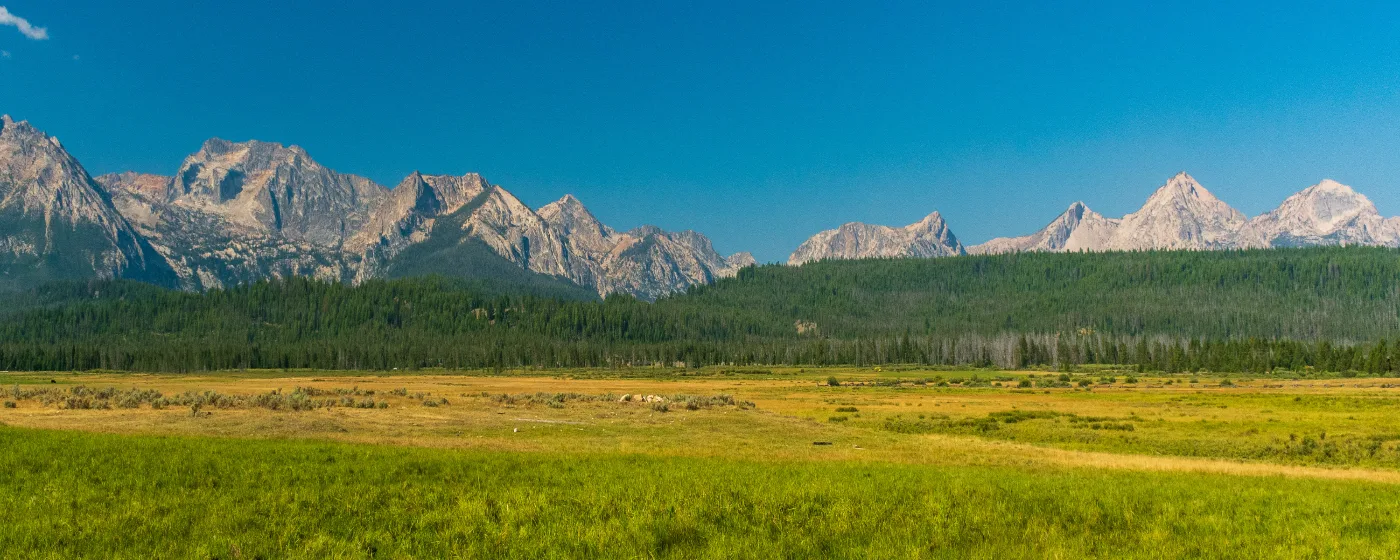
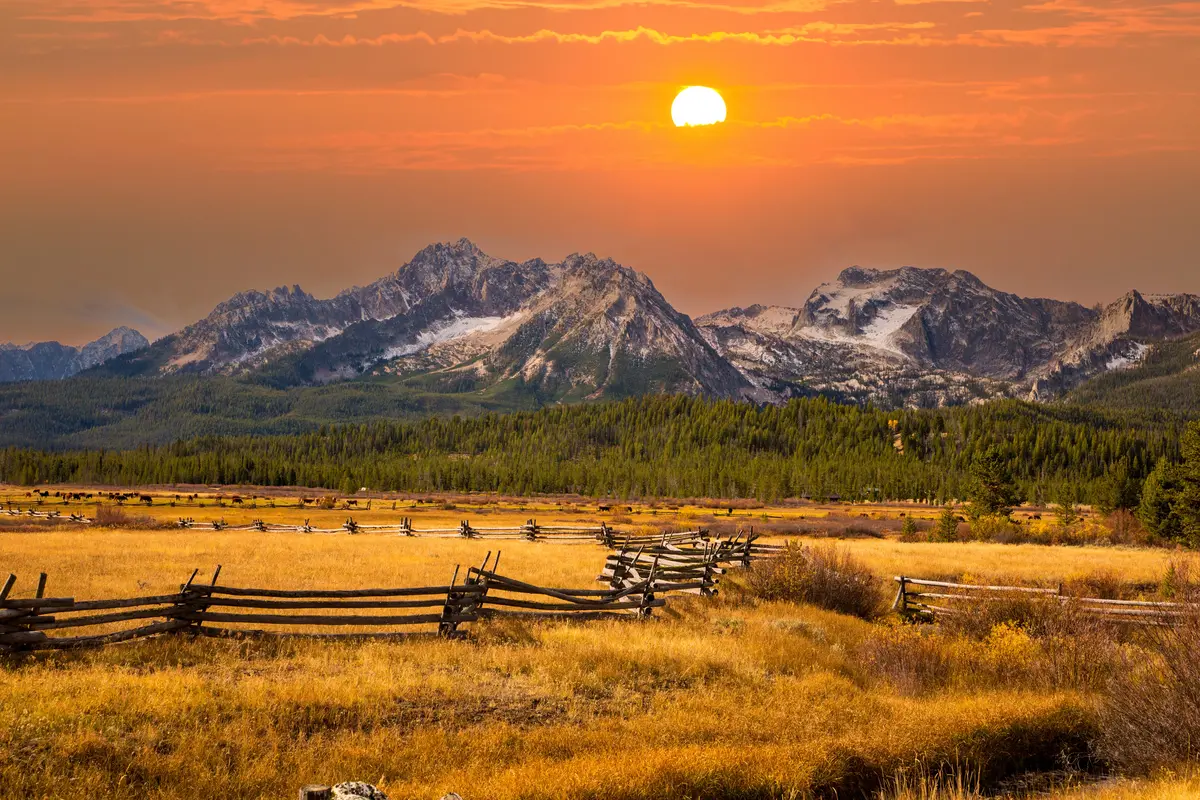
Maybe you've driven Highway 75 through the Sawtooth Valley at golden hour and thought, seriously, what would it be like to live here? The answer is specific: Stanley, at 6,253 feet in Custer County, is one of the most remote incorporated towns in the contiguous United States. A population of 122 permanent residents. No traffic light. No big-box store. No urgent care clinic you can reach in ten minutes. What it does have — Redfish Lake, the Salmon River, 756,000 acres of Sawtooth National Recreation Area out the back door, and some of the darkest skies on the planet — is the whole reason people seriously consider it at all.
The retirees who move to Stanley are not looking for a convenient retirement. They are looking for a specific one. Many arrive after years of vacation trips to the Sawtooth Basin and decide the seasonal rhythm suits them better than wherever they came from. The typical home value here is $582,736 (Zillow Home Value Index, May 2026) — meaningful money for a town this small, driven by recreational demand rather than urban amenities. The major employment anchors — Redfish Lake Lodge, Mountain Village Resort, and the Sawtooth National Forest — shape the seasonal calendar that retirees live alongside, meaning the town swells in summer and quiets dramatically come November.
On a fixed income, Stanley's math is genuinely interesting. Idaho's effective property tax rate here runs approximately 0.32%, Idaho exempts Social Security benefits entirely at the state level, and prescription drugs avoid the state sales tax. The daily cost of living — estimated around $2,617 per month for a single adult in 2026 — runs modestly above the national average, largely because remoteness inflates transportation and goods costs. For the full cost of living breakdown, including how that compares to nearby markets, that page goes deep on the numbers.
Whether you're seriously weighing a move or just testing whether the dream is realistic, the sections below cover healthcare access, the retiree tax picture, daily walkability and community, downsizing options, and how Stanley stacks up against nearby retirement alternatives in central Idaho.
Why Retirees Are Choosing Stanley
Stanley is not a retirement destination in the traditional sense — there is no golf course, no senior activity center, no assisted-living campus nearby. Retirees who thrive here are self-directed, physically active, and genuinely unbothered by the practical friction that comes with extreme remoteness. If that describes you, this place can feel like the reward you spent forty years working toward.
The retirees who make it work here typically share a few traits: they own their home outright or close to it, they've already established a reliable vehicle and aren't dependent on transit, and they have a healthcare situation that doesn't require frequent specialist visits. Many maintain a second address — a winter base in Boise, Twin Falls, or even Arizona — and treat Stanley as a primary-season home from May through October. That partial-year approach sidesteps the harshest winters and the most acute service gaps without giving up the place entirely.
The honest case against Stanley for retirement is short but real. Winters are severe and isolating at this elevation, the nearest full-service hospital is an hour south, and the social infrastructure most retirees expect — organized senior programs, diverse dining, cultural events — simply doesn't exist at scale here. Anyone who needs regular specialist care, relies on others for transportation, or wants the social calendar that comes with a larger active-adult community will find Stanley more adventure than retirement. The typical home value of $582,736 also means this isn't a budget retirement move — it's a lifestyle one, and the lifestyle has real costs.
Healthcare & Medical Access in Stanley
What's In Town
Salmon River Clinic at 110 Niece Avenue is the medical anchor for Stanley's permanent residents. It handles general and family medicine — preventive care, annual physicals, chronic condition management for things like hypertension, diabetes, and thyroid issues. For a healthy retiree with no complex ongoing needs, it covers the basics.
What it cannot do is handle emergencies, imaging, cardiology, orthopedics, oncology, or any specialist service. Stanley has no emergency room. In a serious acute situation — a cardiac event, a fall with a fracture, a stroke — the response begins with emergency services and ends with a transport that, depending on conditions, can take an hour or more to reach a full hospital.
The Nearest Hospital
St. Luke's Wood River Medical Center in Ketchum is the nearest full-service hospital, approximately 60 miles south on Highway 75. It carries a strong regional reputation and is part of the St. Luke's Health System, Idaho's largest. For most specialist needs — orthopedic consultations, cardiac monitoring, imaging, outpatient procedures — Ketchum is where Stanley residents go.
The drive is straightforward in good weather: roughly 60 minutes on a well-maintained two-lane highway through the Sawtooth basin. In winter, that same drive can become an exercise in patience or a flat impossibility during road closures after heavy snowfall. Retirees with cardiac history, mobility limitations, or conditions requiring frequent specialist follow-up should factor this concretely, not abstractly, into the decision.
Planning Ahead
Many Stanley retirees establish care relationships in Ketchum or even Twin Falls before they move, scheduling quarterly check-ins rather than reacting to needs after the fact. Telehealth has improved the situation meaningfully for non-emergency follow-ups — a cardiologist consult doesn't always require the drive south. But the structural reality is unchanged: Stanley is an hour from serious medical care, and that gap is the single most important thing for any retiree to honestly reckon with before committing to full-time residency here.
The Retiree Budget in Stanley
Idaho's Tax Posture for Retirement Income
Idaho's income tax treatment of retirement income is genuinely favorable in two key places. Social Security benefits are fully exempt from Idaho state income tax — no partial exclusion, no income phase-out. Prescription drugs are also exempt from the 6% state sales tax, which adds up on a fixed income over time.
Other retirement income — 401(k) and IRA distributions, private pensions, annuity payments — is taxable at Idaho's flat 5.3% rate (effective January 1, 2025). If you receive a qualifying public pension or certain civil-service pension, residents aged 65 and older (or 62 if disabled) may be eligible for a deduction. Idaho also has no estate tax, inheritance tax, or gift tax, which matters if you're thinking about what you pass on.
Property Tax: Genuinely Low
Stanley's effective property tax rate is approximately 0.32% — one of the lowest rates in Idaho, which already runs well below most states. The engine attached below can run the full estimate based on your purchase price.
For homeowners aged 65 or older whose total 2024 household income (after allowable medical deductions) was $39,130 or less, Idaho's Circuit Breaker program reduces property taxes on a primary residence by $250 to $1,500. Veterans and disabled individuals qualify regardless of age. Given that Stanley's median household income sits at $39,049, many longer-term residents and modest-income retirees land right at the threshold where this program becomes meaningful.
Daily Cost of Living Reality
Salary.com estimates a single adult's monthly cost of living in Stanley at approximately $2,617 in 2026 — running modestly above the national average, with housing and transportation as the primary drivers. Everything that requires a drive to buy costs more here than in a connected city: groceries, hardware, clothing. There is no Trader Joe's — the nearest full grocery options are in Ketchum or Challis. Budget for the truck, the fuel, and the once-a-week provisioning run that becomes part of life at this elevation and distance.
Looking to buy in Stanley? Estimate your payment.
Enter your numbers to see an estimated monthly mortgage payment.
Estimate only. Excludes HOA fees and mortgage insurance.
Walkability, Community & Staying Active in Stanley
The Walkability Reality
Stanley's town center is compact enough to cross on foot in five minutes, but calling it walkable in the urban sense would be misleading. There are no sidewalks on most streets, and running daily errands without a car isn't realistic — the general store, the post office, and the handful of year-round businesses are spread across a loose grid, and anything beyond the basics requires driving. The terrain is flat within the valley floor, which helps, but the distances and the winter conditions make pedestrian errands seasonal at best.
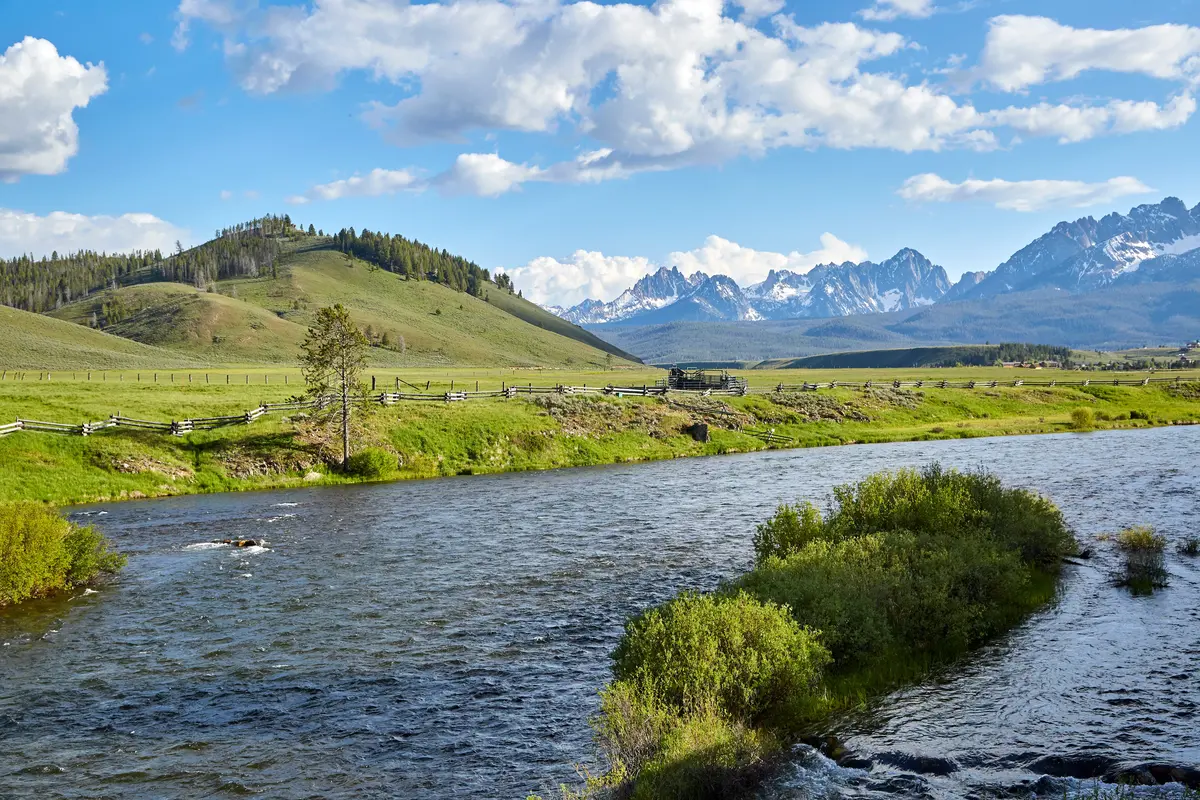
What you can do on foot, year-round, is step directly into some of the most extraordinary trail access in the American West. The Valley Creek corridor and the Sawtooth National Recreation Area offer gentle flat walks along the river for those who want a morning stroll, and progressively more demanding terrain for those who want something harder. This is the active-adult selling point Stanley genuinely delivers — not walkable streets, but walkable wilderness.
Where the Community Gathers
Stanley doesn't have a senior center. Social life for permanent residents organizes around a tight, self-selecting community that knows each other well. The Stanley Baking Company & Café on Wall Street is the morning gathering spot — coffee, pastries, a table where the same faces show up on weekday mornings in the off-season. The Kasino Club on Ace of Diamonds Boulevard functions as the town's de facto community room: live music through the summer, local regulars through the winter months.
The Stanley Museum near the town center preserves the valley's ranching and mining history and draws volunteer energy from residents who want something purposeful to do outside peak season. The Sawtooth National Forest employs volunteers for trail maintenance and visitor programs — a genuine way to contribute to the place you've chosen to live. For retirees who want structured community programming or organized senior clubs, the honest answer is that you'll need to drive to Ketchum or build those connections yourself.
The Dark Sky Dividend
In 2017, the Sawtooth Valley became part of the Central Idaho Dark Sky Reserve — one of the largest designated dark sky reserves on Earth. Stargazing from the Valley Creek corridor or the Redfish Lake area on a clear autumn night is legitimately among the best in the country. For retirees who value quiet, natural beauty, and the kind of sky that most people only see once or twice in a lifetime, this is not a small thing.
Right-Sizing: Downsizing in Stanley
What the Inventory Actually Looks Like
Stanley's real estate market is small, illiquid, and dominated by single-family cabins and recreational properties. There are no condominium complexes, no patio home developments, and no age-restricted 55+ communities within the town limits. If you are downsizing in the conventional sense — trading a large family home for a lower-maintenance, single-level unit — you will find that the category largely doesn't exist here.
What you will find is a mix of older cabins, some year-round and some historically seasonal, and a very limited inventory of smaller single-family homes. For a retiree prioritizing reduced maintenance and single-level living, the practical path is to buy a modest, well-built cabin and budget for ongoing upkeep — or to have it built to spec if you're committed to the area long-term. Remote ownership means you own the maintenance problem entirely; there is no HOA handling the landscaping or roof replacement.
The Ketchum and Challis Alternatives
Retirees drawn to central Idaho but wanting more housing options often land in Ketchum or Challis rather than Stanley itself. Ketchum has a broader range of condominium and townhome inventory, professional property management, and proximity to St. Luke's Wood River Medical Center — meaningful upgrades in convenience at a significantly higher price point. Challis, the Custer County seat about 60 miles northeast of Stanley on Highway 75, offers a more affordable and slightly more service-equipped small-town alternative, with a hospital district facility and a more year-round population base.
The honest framing: if downsizing to a lower-maintenance lifestyle is the priority, Stanley probably isn't your primary residence — it's your summer cabin. Many retirees who love this valley most deeply end up owning a modest property here for the season and maintaining a more convenient primary residence elsewhere. That's not a compromise; for plenty of people, it's the optimal structure.
Stanley vs Nearby Retirement Destinations
| City | Cost vs Stanley | Primary Hospital | Walkability | Senior Living Depth | Overall Retirement Fit |
|---|---|---|---|---|---|
| Stanley | Anchor | Salmon River Clinic (in-town); St. Luke's Wood River, Ketchum (~60 min) | Low — car essential for all errands | Very limited — no 55+ communities or senior center | Strong fit for active, self-sufficient retirees seeking wilderness; poor fit for those needing services |
| Ketchum | Pricier | St. Luke's Wood River Medical Center (in-town) | Moderate — compact core, walkable to dining and shops | Moderate — some condo inventory; no large senior campus | Better services and hospital access; higher cost; suits retirees who want amenity access without full urban density |
| Challis | Noticeably cheaper | Custer County district-level clinic; nearest full hospital farther out | Low — small town, car-dependent | Low — limited senior housing inventory | More affordable and slightly more connected than Stanley; suits budget-conscious retirees comfortable with rural Idaho |
| Salmon | Noticeably cheaper | Steele Memorial Medical Center (in-town) | Low to moderate — small grid, limited on-foot options | Low to moderate — small assisted-living options present | Best healthcare access of the rural options; affordable; suits retirees prioritizing in-town medical over scenery |
| Twin Falls | Noticeably cheaper | St. Luke's Magic Valley (full-service, in-town) | Moderate — suburban, car preferred but services closer together | Strong — multiple senior communities, assisted living, memory care | Best all-around service depth for Idaho retirees on a budget; trades dramatic scenery for practical infrastructure |
| Sun Valley | Pricier | St. Luke's Wood River Medical Center (Ketchum, nearby) | Moderate to high — resort village core is walkable | Moderate — some high-end senior and luxury condo options | Maximum amenity access in central Idaho; suits affluent retirees who want resort lifestyle with healthcare proximity |
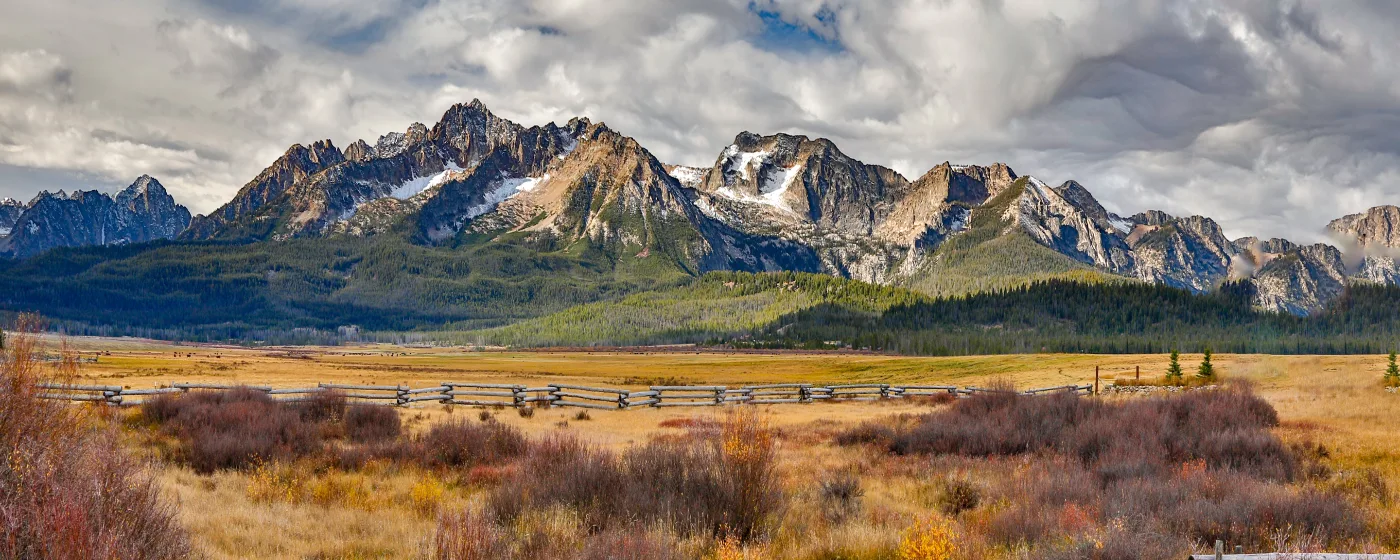
Ketchum beats Stanley on every practical dimension — hospital access, on-foot access, dining, and housing variety — but the price difference is real and the feel is more resort town than mountain retreat. Challis and Salmon offer meaningfully lower entry costs and Salmon specifically wins on in-town healthcare, making it the strongest practical choice for retirees who want central Idaho without the remoteness premium. Twin Falls is where you go when the math has to work and the infrastructure has to be there every day of the year. Stanley wins on only one dimension, but it's an outsized one: the landscape itself, and the particular quality of life that comes with living inside one of the great wilderness corridors of the American West.
Local Expert Takeaway: Stanley rewards retirees who treat it as a deliberate choice rather than a default. The Salmon River Clinic on Niece Avenue covers your primary care, morning coffee at Stanley Baking Company & Café on Wall Street handles the social ritual, and the Kasino Club on Ace of Diamonds is where you'll actually meet the people who live here year-round. But plan your healthcare relationship with St. Luke's in Ketchum before you move — not after — and be honest with yourself about whether a 60-minute drive to the nearest hospital is something you can manage across every season this valley throws at you.
Quick Takeaways & FAQs
✅ Idaho fully exempts Social Security benefits from state income tax, and Stanley's effective property tax rate of approximately 0.32% is among the lowest in the state — a meaningful combination for retirees on fixed incomes.
⚠️ The nearest full-service hospital is St. Luke's Wood River Medical Center in Ketchum, roughly 60 miles and an hour south — a drive that becomes genuinely difficult in winter and is the single largest practical concern for retirees considering full-time residency.
📍 Stanley sits inside the Central Idaho Dark Sky Reserve, one of the world's largest, making stargazing along the Valley Creek corridor a genuine year-round amenity — the kind of thing that sounds like a brochure line until you're actually standing outside at 9 p.m. in October.
Does Idaho tax Social Security retirement benefits?
What is the nearest hospital to Stanley, Idaho?
Are there any 55+ or active-adult communities in Stanley?
What is Stanley's property tax rate, and are there senior exemptions?
Is Stanley, Idaho a realistic place to retire full-time, or is it more of a seasonal home?
Moving to Idaho?
Tell us what you need help with and we'll connect you with local resources.
