What Is Living in Stanley, Idaho Like?
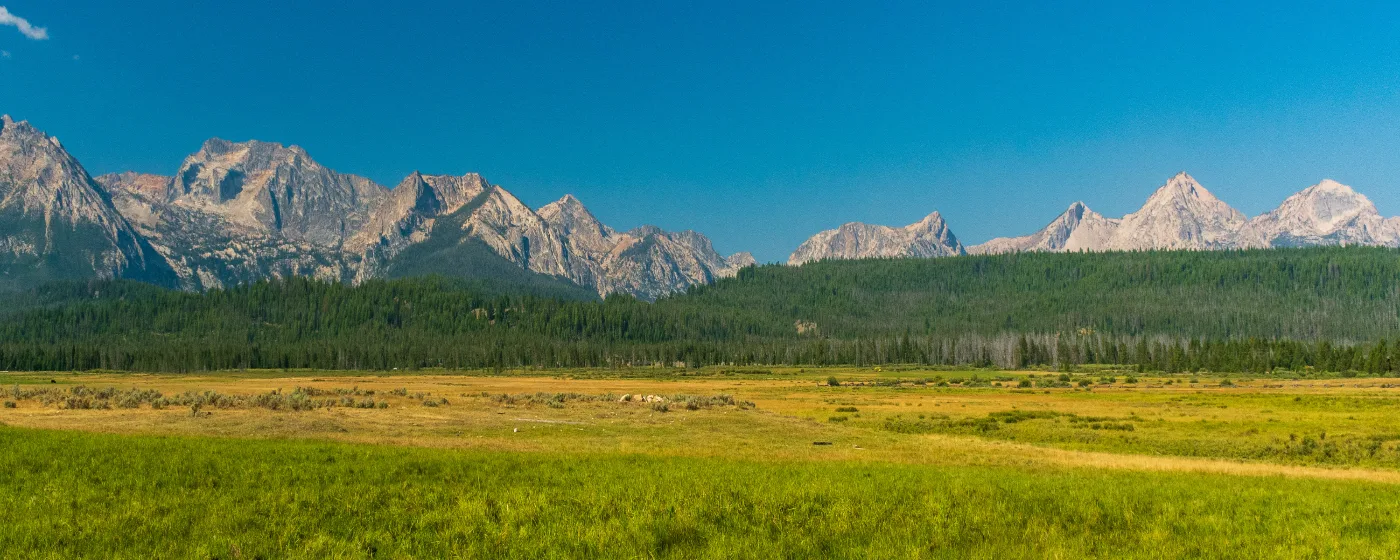
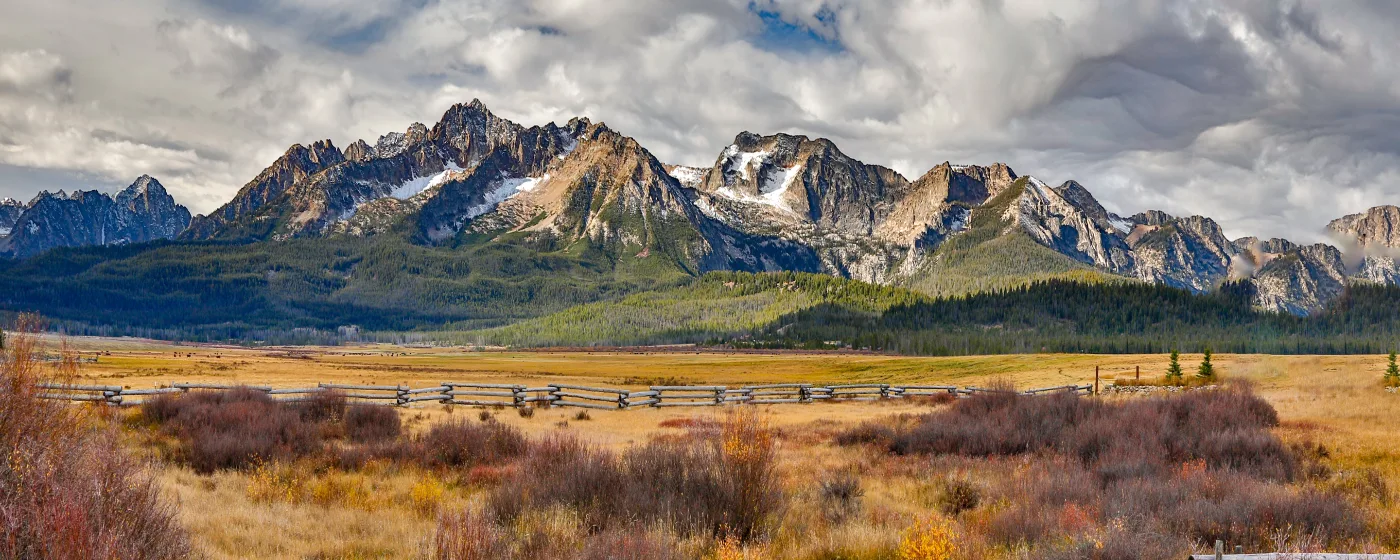
Maybe you've driven State Highway 75 through the Sawtooth Valley at dusk and understood immediately why people rearrange their lives to live here. Maybe you've been priced out of Ketchum and someone mentioned that Stanley — just an hour north on the same highway — has properties for a fraction of the price. Either way, the central tension of moving to Stanley is the same: this is one of the most dramatically beautiful places in the American West, and it has 122 full-time residents, almost no services, and winters that close passes and test resolve. The 0.62 square miles of incorporated land sit at roughly 6,200 feet elevation, where the Salmon River begins its run and three National Scenic Byways — the Sawtooth, Salmon River, and Ponderosa Pine — converge at the edge of 2.9 million acres of Idaho wilderness.
The local economy runs almost entirely on hospitality and federal land management. Redfish Lake Lodge and Mountain Village Resort are the two largest private employers in town; the Sawtooth National Forest employs rangers, recreation staff, and seasonal crews. The Stanley-Sawtooth Chamber of Commerce coordinates the tourism apparatus that funds roughly 60% of the city's operating budget through a 2.5% local option sales tax — meaning the town's fiscal health is directly tied to visitor volume. Students attend school through the Challis Joint District, which serves a sprawling rural region across Custer County. People who move here full-time are almost exclusively remote workers who can work from anywhere, seasonal hospitality employees who stay year-round, or people who have made a deliberate, values-driven trade of urban career ladders for Sawtooth sunrises.
Home prices tell a counterintuitive story for a town of 122 people. A typical home in Stanley was valued at $582,736 (Zillow Home Value Index, May 2026) — a figure driven by second-home demand and remote-work buyers competing for a very thin slice of inventory, not by high local incomes. The median household income of $39,049 reflects the seasonal hospitality reality, not the financial profile of the buyers pushing prices. The carrying cost is genuinely low: an effective property tax rate of 0.32% is among the lowest in Idaho. For a full picture of what ownership here costs month to month, the Stanley cost-of-living page breaks it down in detail.
Whether you're seriously considering a move or still in the research phase, the sections below break down Stanley's neighborhoods, housing market, daily life realities, commuting patterns, employers, and what weekends here actually look like for the people who call it home year-round.
Stanley at a Glance
Looking to buy in Stanley? Estimate your payment.
Enter your numbers to see an estimated monthly mortgage payment.
Estimate only. Excludes HOA fees and mortgage insurance.
Why Are People Moving to Stanley?
The short answer: access. Stanley sits at the center of a public-land corridor that no other incorporated town in Idaho can match. The Sawtooth National Recreation Area alone contains 37 developed campgrounds with 700 individual sites — and that's before you count the wilderness areas, the river stretches, and the lakes. For buyers who've spent years dreaming about stepping out the door into that, Stanley is the only town that delivers it without a long drive first.
The Remote-Work Influx
Post-2020 migration reshaped this already-small town in visible ways. Local option tax revenue from tourism jumped 40% in 2020 and 60% in 2021 as outside buyers arrived with remote salaries and a new willingness to live somewhere inconvenient but extraordinary. Short-term rental operators now need a city business license, a sign that the town has been actively managing the pressure that came with that wave.
Remote workers are the dominant buyer type today — people in tech, creative fields, and consulting who need a strong internet connection and nothing else tethering them to a metro. The isolation that once made Stanley an outlier is now, for a certain kind of buyer, the entire point.
The Second-Home Market
A meaningful share of Stanley properties are held as second homes by buyers from the Treasure Valley, the Pacific Northwest, and California who want a Sawtooth basecamp. This keeps inventory tight even in a market where full-time residents are few. If you're competing for a property, you're often competing against cash buyers who don't need the place to appraise for their monthly budget.
Who Doesn't Thrive Here
Stanley tends to disappoint buyers who underestimate the seasonality. The shoulder seasons — especially November through April — mean reduced dining options, potential road closures, and a social scene that contracts to a very small core group. People who move here expecting a rural Idaho version of a walkable small town often leave within two years.
| Buyer Type | Why Stanley Works | The Catch |
|---|---|---|
| Nature Outdoor-first households | Trailheads, rivers, and Redfish Lake essentially in your backyard | Winter access can be genuinely difficult |
| Tech Remote workers | Broadband improving; no office commute needed | Nearest major services hub is 60 min away in Ketchum |
| Privacy Second-home buyers | Thin inventory means property holds value; low tax carry cost | Short-term rental rules require city licensing |
| Views Landscape-driven buyers | Sawtooth peaks visible from most properties in the valley | The view comes with 6,200-ft elevation winters |
| Quiet Retirees seeking solitude | Dark Sky Reserve designation; minimal light and noise pollution | Healthcare and specialist access requires significant travel |
| Families Families with kids | Tight-knit community; unmatched outdoor upbringing | Small school district; limited youth programming year-round |
Stanley is a place people move to on purpose, not by accident. The buyers who stay are the ones who knew exactly what they were choosing.
What Daily Life Feels Like in Stanley
Six months after moving here, almost everyone says the same thing: they had no idea how much they'd rely on planning ahead. A forgotten item at the grocery store isn't a five-minute errand — it's a commitment. The nearest full-service grocery is in Challis, roughly 60 miles east. Ketchum, an hour south on Highway 75, has more options but the same distance calculus. You learn to batch errands and keep a well-stocked pantry.
The Town's Actual Size
The incorporated town covers 0.62 square miles. Ace of Diamonds Avenue is the main commercial corridor — where you'll find Papa Brunee's Pizza and Subs, the Kasino Club's restaurant and bar, and the mountain-supply shops that serve both residents and the steady stream of visitors. Stanley Baking Company & Café on Wall Street is where mornings start for most full-timers — the kind of place where you'll recognize every face at the counter by your second week.
The Mountain Village Resort on Eva Falls Avenue anchors the other end of town's daily life, with its restaurant, saloon, and dance hall providing one of the few year-round gathering points. For a town of 122, the density of social spaces per capita is actually high — but nearly all of them are seasonal or visitor-facing.
What Winter Really Looks Like
Temperatures drop sharply at 6,200 feet. Stanley regularly records some of the coldest overnight lows in the contiguous United States during January and February. Highway 75 over Galena Summit — the pass between Stanley and Ketchum — can close during heavy snowfall, occasionally for hours, sometimes longer. If you have a medical appointment in the Sun Valley area, you build buffer days into your schedule in winter, not buffer hours.
That said, longtime residents treat winter as a feature, not a bug. Cross-country skiing on groomed Sawtooth trails, snowshoeing along Valley Creek, and the surreal quiet of a Sawtooth winter with no tourists — these are things people who stay long-term actively chose. The Dark Sky Reserve designation means winter nights, away from any real light pollution, are genuinely extraordinary.
Community Rhythms
Summer is when Stanley becomes itself fully. The Thursday Night Street Dance — co-hosted by Papa Brunee's and the Kasino Club on Ace of Diamonds starting at 6:30 PM every Thursday — draws the whole town plus every visitor who happens to be passing through. A different live band every week, all ages welcome, free to attend. It's the social event that new residents point to when they explain why they stayed.
Pioneer Park is the gathering point for stargazing, with the Sawtooth peaks as backdrop, on clear nights that happen most of the year at this elevation and latitude. The Stanley Museum on the main corridor gives the town's history a physical home and anchors a sense of permanence that new arrivals often find grounding.
The Stanley Housing Market Right Now
The numbers here don't match the town's size, and that's the whole story. A typical home value of $582,736 (Zillow Home Value Index, May 2026) in a community of 122 residents reflects a market driven almost entirely by outside demand — second-home buyers, remote workers, and investors who want a stake in a corridor of public land that can never be developed further.
What That Price Buys
Inventory in Stanley is thin by any standard. When properties do come to market, they tend to move quickly — the pool of buyers is geographically broad (anyone with a remote income and an outdoor orientation is a potential buyer) while the supply of properties inside the town limits is structurally capped by the tiny incorporated footprint. Some areas of the valley command higher prices than others, but the details on neighborhood character and what each area actually feels like are covered on the Stanley neighborhoods page.
The one genuine cost advantage: an effective property tax rate of 0.32% means the annual carry on a property is low relative to its purchase price. That matters for second-home buyers especially, who are holding a property that isn't generating income year-round.
The Rental Picture
Long-term rentals in Stanley are scarce — most income-generating properties operate as short-term vacation rentals, and the city's licensing requirement has formalized that market. For renters looking for a year-round home, the options are limited enough that many seasonal workers end up in employer-provided housing through the lodge or resort. The broader rental context is covered on the cost-of-living page.
Market Pace and Inventory Reality
Don't expect to browse listings casually and schedule three weekends of showings. Properties that are priced correctly in Stanley receive interest fast, often from buyers who have been watching the market for months and are ready to move. The thin inventory means that when the right property appears, the window to act is short.
One thing that surprises buyers who've shopped in other small Idaho towns: Stanley's prices are not discounted for remoteness. The remoteness is the premium. Buyers who come expecting to find a bargain because of the isolation typically leave empty-handed or recalibrate their expectations quickly.
Stanley Neighborhoods
Stanley has several distinct areas — each with its own character and appeal. Here’s a breakdown to help you narrow down where to focus your home search.
🏡 Lower Stanley
Lower Stanley sits at the confluence of the Salmon River and Valley Creek, making it the most historically rooted corner of the area — a handful of cabins and homes with direct river access that appeals to anglers and buyers who want to be as close to the water as the address allows.
🏠 Upper Stanley
Upper Stanley is the commercial and civic core — Ace of Diamonds Avenue, the Kasino Club, Papa Brunee's, and the Visitor Center are all here, making it the most walkable part of the community and the neighborhood where the Thursday Night Street Dance happens every summer Thursday.
🌳 Redfish Lake area
Properties near Redfish Lake — roughly five miles south of the town center on Highway 75 — carry some of the strongest second-home demand in the valley, with the glacially carved lake and Sawtooth peaks forming a backdrop that drives both vacation-rental income and emotional attachment for buyers.
🏘 Ace of Diamonds Avenue corridor
The Ace of Diamonds corridor is Stanley's main street in the fullest sense — most of the town's active businesses, the summer street dance, and the highest foot traffic are all anchored here, making it the right fit for buyers who want to feel embedded in whatever community life Stanley offers.
🏔 Valley Creek corridor
Valley Creek runs through a stretch of the valley that feels more open and pastoral than the town center, with properties on larger footprints and views toward the Sawtooth ridge — a quieter setting that suits remote workers and retirees who want space without being far from Ace of Diamonds.
🌆 Obsidian area
Obsidian sits on the outer edge of the Stanley basin, where properties are more spread out and the sense of being inside the wilderness corridor rather than adjacent to it is strongest — the right setting for buyers who want maximum separation from the summer tourist season's energy.
Pros & Cons of Living in Stanley
The Pros
- Gateway to Sawtooth Wilderness with unparalleled hiking
- fishing
- and alpine lake access
- World-class dark sky viewing in first U.S. Dark Sky Reserve
- Tight-knit mountain community with authentic Old West character
- Low property taxes and no crowds
The Cons
- Extremely remote with limited services and healthcare access
- Harsh winters with heavy snowfall and very short growing season
- Very limited employment opportunities outside seasonal tourism
Getting Around & Commuting in Stanley
A car is not optional here — it is the entire transportation infrastructure. There is no public transit, no rideshare, no taxi. If you need to get somewhere, you drive, and you do it on your own schedule because there is no backup plan.
The Highway 75 Reality
State Highway 75 is the single artery connecting Stanley to everything else. South takes you toward Ketchum and Sun Valley, approximately 60 minutes in good conditions over Galena Summit at roughly 8,700 feet. East takes you toward Challis, about 60 miles, through the Salmon River Canyon on a road that is spectacular in summer and can be treacherous in ice. Neither direction has a shortcut.
The Galena Summit stretch of Highway 75 is the named chokepoint every Stanley resident knows. Southbound on a winter morning after overnight snowfall, the pass can hold you for 30 to 90 minutes or close entirely pending plowing. If you need to be in Ketchum by 9 AM for anything, you leave at 7 AM in November through March, not 8 AM. Newcomers learn this lesson once.
The Sun Valley Commute
A portion of Stanley residents commute to Ketchum and the Sun Valley area for work — either because they couldn't afford to live closer to their employer or because they chose the Stanley lifestyle deliberately. The 60-minute drive on Highway 75 is genuinely beautiful in every season, but it adds two hours to your working day. People who make this commute daily almost universally drive trucks or SUVs with all-season or winter tires; ground clearance and traction matter on Galena Summit in a way that doesn't apply to most Idaho commutes.
One timing hack longtime commuters use: leave Stanley by 7:15 AM heading south to avoid the narrow window when both Galena-bound vehicles and plow trucks are sharing the summit simultaneously. The same logic applies in reverse — arriving back in Stanley after 6 PM on summer weekends means navigating tourist traffic on a two-lane road.
What You're Giving Up
There's no commercial airport in Stanley. Friedman Memorial Airport in Hailey, Idaho — the closest commercial option — is a full hour-plus drive south, past Ketchum. Connecting flights go through Boise or Salt Lake City. If you travel for work, you're adding a significant leg to every trip that other Idaho cities absorb without thinking about it.
| Destination | Drive Time (Good Conditions) | Key Consideration |
|---|---|---|
| Ketchum / Sun Valley | ~60 min | Galena Summit (8,700 ft) — winter closures possible |
| Challis | ~60 min | Salmon River Canyon road; services, pharmacy, basic grocery |
| Friedman Memorial Airport (Hailey) | ~75 min | Closest commercial air; connections through Boise or SLC |
| Twin Falls | ~2.5 hrs | Big-box retail, regional medical; I-84 access point |
| Boise | ~3 hrs | Major airport, full services, specialists; Highway 21 or 75/26 |
| Salmon | ~1.5 hrs | North via Highway 75; Lemhi County seat, limited services |
The distance to Boise on Highway 21 through Banner Summit is shorter on paper than it looks — but Banner Summit has its own winter-closure risks. Most residents headed to Boise prefer the Challis route for predictability even if it adds miles.
Schools in Stanley
Families relocating to Stanley have public, private, and higher-education options nearby. Here’s a quick overview.
🎓 School District
Challis Joint District serves K–12 students across Stanley and the surrounding area.
📚 Higher Education
Idaho’s public universities — Boise State, the University of Idaho, and Idaho State — offer four-year degrees statewide, with community colleges (CWI, CSI, NIC) providing two-year and workforce programs.
🌐 Online Learning
Boise State Online and University of Idaho Online offer fully accredited online degrees for remote learners across the state.
Safety in Stanley
A quick look at how Stanley compares on the numbers that matter most when weighing a neighborhood or a move.
🛡 Violent Crime
Approximately 11.6 per 1,000 residents.
🔒 Property Crime
Approximately 65.4 per 1,000 residents.
Compared to the FBI’s most recent national data (2024), Stanley’s violent crime is above the national average (about 3.6 per 1,000), and property crime is above the national average (about 17.6 per 1,000).
Crime rates can vary a lot within a single city, so the citywide numbers above are only a starting point. Some neighborhoods in Stanley run well below these averages, while others run higher — the kind of block-by-block detail that matters most when you’re actually choosing where to live. The full guide below breaks it down neighborhood by neighborhood.
Working in Stanley
Stanley’s largest employers span several industries — here are some of the anchors of the local job market.
🏥 Redfish Lake Lodge
Hospitality
🏥 Mountain Village Resort
Hospitality
💼 Stanley-Sawtooth Chamber of Commerce
Tourism
💼 Sawtooth National Forest
Federal
Parks & Recreation in Stanley
Some of the outdoor spaces that shape everyday life in Stanley.
🌱 Redfish Lake
🌱 Stanley Lake
🌱 Salmon River
🌱 Valley Creek Hot Springs
Stanley residents don’t have to go far for green space — spots like Redfish Lake and Stanley Lake are part of everyday life here, whether that’s a morning walk, a weekend hike, or just somewhere to unwind outside. The full guide below covers more of what Stanley has to offer for parks and outdoor recreation.
Retiring in Stanley
Stanley draws retirees for its balance of amenities, outdoor access, and cost. Here’s what to weigh.
🌤 Climate
Stanley sits at 6,200 feet and regularly records some of the coldest overnight lows in the contiguous United States in January and February. Summers are short, brilliant, and dry — high elevation means warm days and cool nights even in July. Winters are genuinely demanding, and retirees with cold-sensitivity or health concerns that require frequent travel should plan accordingly.
🍴 Lifestyle
Daily life in retirement here revolves around outdoor access — fly fishing the upper Salmon River, hiking Sawtooth trails, and evenings at Pioneer Park under a legitimately dark sky. The Stanley Baking Company & Café on Wall Street and the Mountain Village Restaurant on Eva Falls Avenue cover most daily social needs. The pace is slow by design, and the community is small enough that retirees who value genuine neighborliness over anonymity tend to feel at home quickly.
🏚 55+ Communities
There are no age-restricted or active-adult communities in Stanley — the town is too small for that kind of purpose-built development. Retirees here own single-family homes or cabins, often on larger parcels in the Valley Creek corridor or Obsidian area. The nearest senior-specific services and facilities are in Challis or Ketchum.
✈ Getting Around
A car is essential — there is no public transit of any kind. The closest commercial airport is Friedman Memorial in Hailey, roughly 75 minutes south via Highway 75 over Galena Summit. Retirees with regular medical appointments or specialist needs typically plan their travel around weather windows in winter months, or choose to winter elsewhere and return to Stanley in late spring.
🏛 Idaho Taxes for Retirees — What to Know
- Social Security is not taxed — Idaho does not tax Social Security benefits at the state level, regardless of income.
- Flat state income tax — Idaho has a flat income tax (5.3% for 2026). Other retirement income — pension distributions and 401(k)/IRA withdrawals — is taxed as ordinary income at that rate.
- Narrow retirement deduction — Idaho’s Retirement Benefits Deduction is limited: it reaches only certain government pensions (federal CSRS, Idaho firefighter/police, and military retirement) for those 65+ (or 62+ if disabled), and is reduced by Social Security received.
- Sales tax — The state sales tax is 6%. Groceries are taxed, but a grocery tax credit offsets part of it; prescription drugs are exempt.
- Low property taxes, with senior relief — Idaho property taxes are relatively low. Homeowners 65+ who own and occupy their home may qualify for the “circuit breaker” Property Tax Reduction based on income.
- No estate or inheritance tax — Idaho has no estate, inheritance, or gift tax.
- Capital gains — Capital gains are taxed as ordinary income, though Idaho allows a deduction of up to 60% of the net gain on qualifying Idaho property.
Tax laws change frequently and individual situations vary. This is general information, not tax advice — always consult a qualified Idaho tax professional or CPA for personalized retirement tax planning.
Weekends & Local Favorites in Stanley
The recreational infrastructure surrounding Stanley is genuinely disproportionate to the town's size. The Sawtooth National Recreation Area's 37 campgrounds and 700 sites are the public-land backbone, but for residents the real texture of weekends is more specific than that.
Water, Every Direction
Redfish Lake — roughly five miles south of town on Highway 75 — is the centerpiece. A glacially carved alpine lake with the Sawtooth peaks rising directly behind it, it offers swimming, kayaking, paddleboards, and one of the most photographed backdrops in Idaho. The Redfish Lake Lodge operates boat shuttles into the backcountry trailheads, giving even non-backpackers access to terrain well beyond the road. Stanley Lake, west of town on a gravel road, is quieter and less visited — the spot locals choose when Redfish fills with summer crowds.
The Salmon River begins essentially at Stanley's doorstep. Fly fishing on the upper Salmon is a way of life for a meaningful portion of the year-round population — not as a weekend novelty but as a Tuesday-evening habit after work. Whitewater rafting on the middle fork of the Salmon, accessed from the area, draws serious paddlers from across the region.
The Food Scene — Small but Functioning
For a town of 122, the food options are more coherent than you'd expect. The Stanley Sawtooth Chamber of Commerce publishes a free Stanley Food Passport — available at the Visitor Center at 510 Eva Falls Avenue — that covers every restaurant, café, saloon, and bakery in operation. That document is worth picking up your first week.
Mornings at Stanley Baking Company & Café on Wall Street are the default for locals. The Thursday Night Street Dance at Papa Brunee's and the Kasino Club on Ace of Diamonds is, genuinely, the town's anchor social event — 6:30 PM every summer Thursday, different live band each week, open to everyone. First-timers are often surprised that a town this size sustains this level of organized community energy. The Mountain Village Restaurant and Saloon on Eva Falls Avenue covers the evenings when you want something more than a quick slice.
Stargazing as Infrastructure
Stanley's designation as part of a Dark Sky Reserve is not a marketing claim — it's a lived reality that residents cite consistently. Pioneer Park on the edge of town, with the Sawtooth ridge as backdrop, is where locals bring folding chairs on clear nights. At 6,200 feet with no ambient light competition, the Milky Way is visible to the naked eye on most summer nights. People who move here from cities often say this is one of the things they didn't expect to become central to their sense of place.
The Stanley Museum provides the town's historical anchor — open seasonally, run by volunteers, and the kind of place where you'll learn things about the Sawtooth Valley that no online search will surface. For new arrivals trying to understand what this community is and where it came from, an afternoon there is a worthwhile investment.
Top Things Locals Say About Stanley
The best intel about a city comes from the people who actually live there. Here’s what Stanley residents say when newcomers ask the questions everyone’s thinking.
“I knew the winters would be cold, but I didn't understand what 'cold' meant at 6,200 feet until I woke up to minus-30 in January and the pass was closed. After six months here, I've completely rearranged how I think about planning — I batch everything, I watch the road reports obsessively, and I wouldn't trade any of it.”
— Recent Stanley home buyer
“What's the most surprising thing about living in Stanley?”
How fast you know everyone. I thought 122 people would feel limiting — it feels like exactly the right size. By the time I'd been here through one full summer season, I knew the name of every year-round resident on Ace of Diamonds and most of the Valley Creek corridor too. The Thursday Night Street Dance helped with that enormously. Nothing breaks the ice like a live band and nowhere else to be.
“What do locals love most about Stanley?”
The Salmon River at dusk in September when the tourists have thinned out and the aspens on the Sawtooth slopes have turned gold. Stanley Lake on a Tuesday morning when there's no one there. The fact that Pioneer Park at 10 PM on a clear night shows you a sky that most people drive four hours to see. The place earns the clichés — it's just that you can't fully believe them until you're standing in them.
“What should newcomers to Stanley know?”
Leave earlier than you think you need to for anything over Galena Summit from November through April. The pass can hold you or close without much warning, and the local habit of building buffer time into winter travel isn't excessive caution — it's just how things work here. Also: pick up the Stanley Food Passport at the Visitor Center on Eva Falls your first week. It's free, it's accurate, and it tells you what's actually open rather than what shows up on a map app that hasn't been updated in two years.
“Can you live in Stanley without a car?”
No. There is no public transit, no rideshare, and no way to reach groceries, medical care, or the nearest commercial airport without a vehicle. A reliable four-wheel-drive or all-wheel-drive with good ground clearance isn't a luxury recommendation — it's a practical necessity for anyone planning to make regular trips over Galena Summit or through the Salmon River Canyon in shoulder seasons. People who move here without a capable vehicle tend to realize the gap quickly.
Cities Near Stanley
Other communities near Stanley worth a look — each with its own character and price point.
| City | Distance | Best For | Vibe | Median Rent | Median Buy |
|---|---|---|---|---|---|
| Sunbeam | 11 mi | Hot springs access, off-grid buyers | Remote, rustic, river-adjacent | — | — |
| Clayton | 27 mi | Salmon River corridor, rural solitude | Sparse, quiet, working-ranch feel | — | — |
| Challis | 40 mi | Services, year-round practicality | Small-town, functional, county-seat energy | $900 | $250,000 |
More Helpful Guides for Stanley
Going deeper on Stanley? Our blog series covers everything from first-time buying to retiring here — explore the guides below.
Local Expert Takeaway: Stanley's prices are not discounted for remoteness — they're elevated because of it. A typical home value of $582,736 in a town of 122 people means you're buying into a market shaped by second-home buyers and remote workers, not local incomes. The 0.32% property tax rate softens the carry cost, but if your plan involves a daily commute to Ketchum over Galena Summit in winter, build that reality into your decision before you make an offer. The buyers who thrive here know exactly what they're choosing: the Thursday Night Street Dance on Ace of Diamonds, mornings at Stanley Baking Company & Café, and a Sawtooth ridgeline visible from almost every window in town.
Quick Takeaways & FAQs
✅ Stanley sits inside the Sawtooth National Recreation Area — the gateway to 2.9 million acres of wilderness — making it the only incorporated town in Idaho where that public-land access is literally out your front door.
⚠️ With a population of 122 and no grocery store, pharmacy, or public transit within 60 miles, Stanley demands a level of logistical self-sufficiency that genuinely surprises buyers who underestimate the isolation.
📍 The Thursday Night Street Dance on Ace of Diamonds — hosted by Papa Brunee's and the Kasino Club every summer Thursday at 6:30 PM — is the town's signature community event and the fastest way to meet your neighbors.
Is Stanley, Idaho a good place to live year-round or just as a vacation home?
What are home prices like in Stanley, Idaho?
How far is Stanley from the nearest grocery store and basic services?
What is the school situation for families moving to Stanley?
What do people do for work if they live in Stanley full-time?
Helpful Links for Moving to Stanley
Moving to Idaho?
Tell us what you need help with and we'll connect you with local resources.
