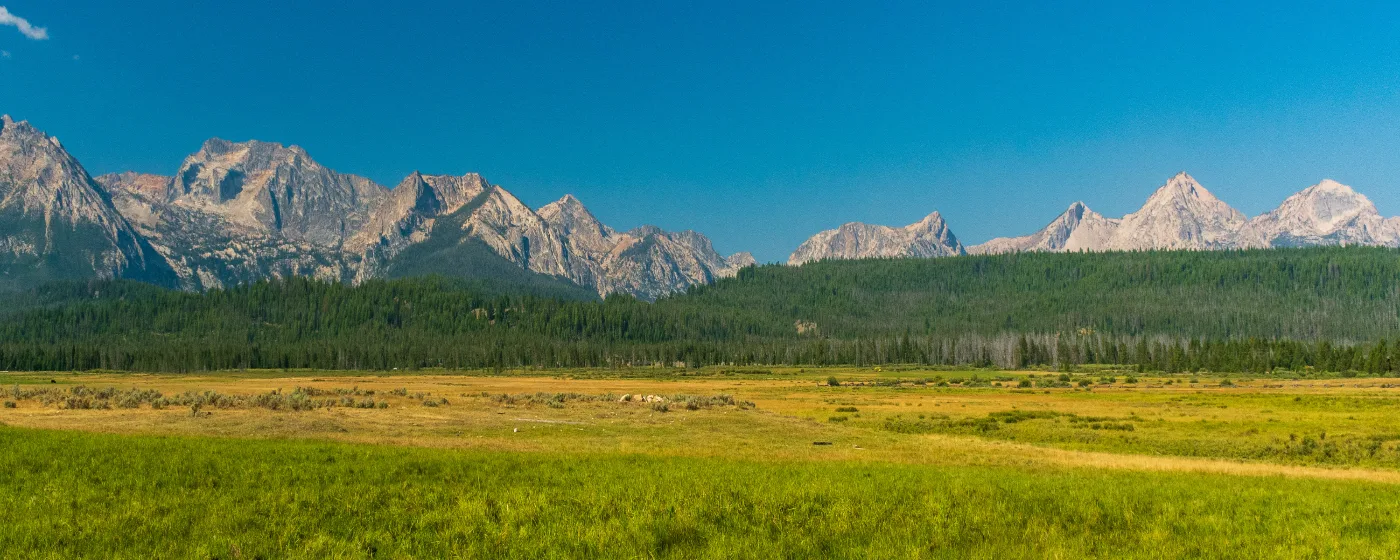
The first time most people look up Stanley's crime statistics, they do a double-take. A violent crime rate of 11.6 per 1,000 and a property crime rate of 65.4 per 1,000 sound like numbers you'd expect from an underserved urban corridor — not a 122-person mountain town at the base of the Sawtooth Mountains, where your nearest stoplight is an hour away in Ketchum. Before those figures send you searching elsewhere, you need to understand what they actually measure, and what they don't.
Stanley sits at the junction of Idaho Highway 21 and Highway 75 in Custer County, functioning less like a traditional town and more like a gateway node for one of the most heavily visited wilderness corridors in the American West. Redfish Lake Lodge, Mountain Village Resort, and the Sawtooth National Forest collectively draw tens of thousands of seasonal visitors through a place where fewer than 125 people live year-round. That math is the entire story behind the crime rate — and this guide unpacks it in full.
The broader state context matters here too. Idaho recorded the lowest property crime rate in the nation in 2024, and its overall crime rate hit a 20-year low. When Stanley's figures look elevated against that already-favorable backdrop, the small-denominator distortion becomes even more apparent. One reported incident in Stanley can shift the per-1,000 rate by roughly 8 points — a volatility that simply doesn't exist in cities with real populations.
Whether you're considering a permanent move to one of Stanley's small residential pockets, a seasonal stay near Valley Creek or the Redfish Lake area, or you're just trying to make sense of what a safety search turns up, the sections below break down the crime figures in detail, compare them against meaningful benchmarks, and give you a neighborhood-level picture of where incidents actually cluster.
Understanding Stanley's Crime Numbers: The Small-Town Denominator Problem
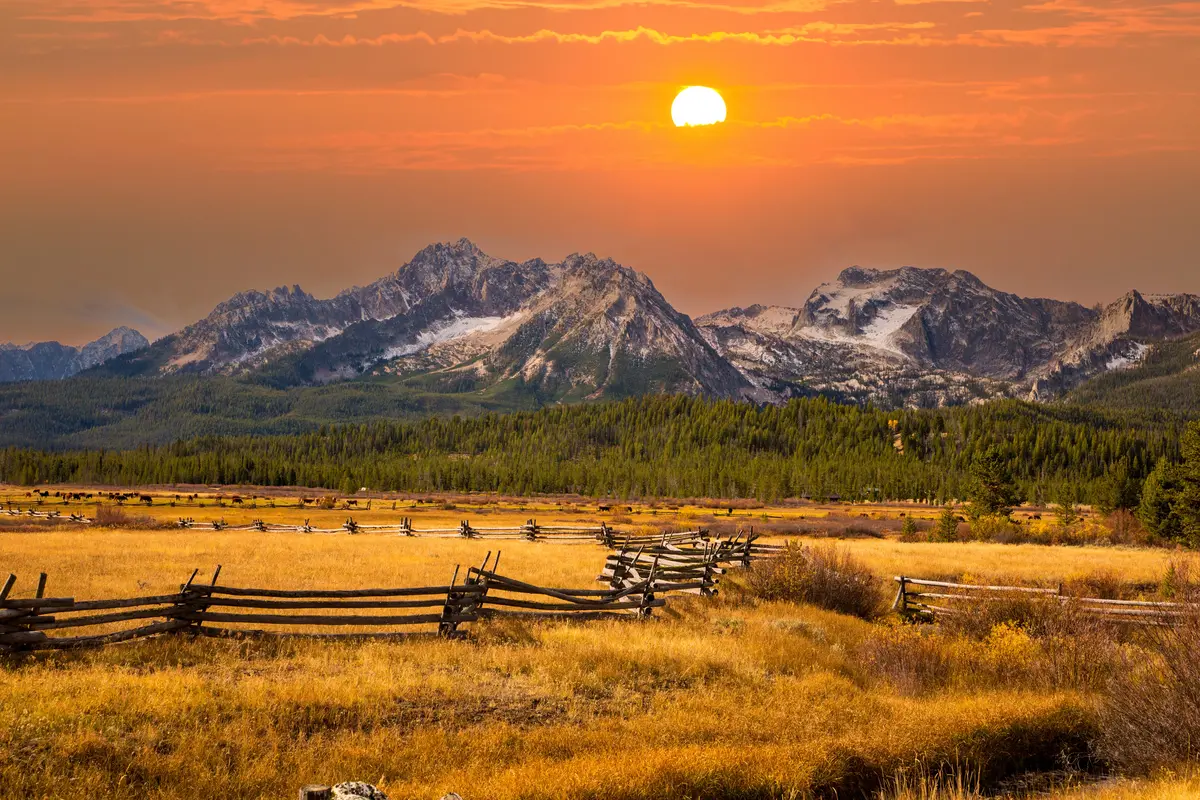
Stanley's crime rates come from CrimeGrade.org's model-projected figures, not from a named Stanley Police Department — because there isn't one. Custer County Sheriff's Office handles law enforcement across an enormous rural territory, and Stanley does not maintain its own municipal police force. That distinction matters when you're reading a per-1,000 rate.
Here's the arithmetic that changes everything: with a permanent population of 122, a single reported incident translates to approximately 8.2 additional points on the per-1,000 rate. CrimeGrade.org's own projections estimate roughly 2 violent incidents and about 16 total crime incidents per year across Stanley's highest-activity zone — the south area of town. That is not a crisis. That is a quieter Tuesday in most American zip codes.
The property crime rate of 65.4 per 1,000 looks alarming until you remember that Redfish Lake alone draws hundreds of thousands of visitors annually, many passing through the Ace of Diamonds Avenue corridor and the commercial center of town. Vehicles parked at trailheads, gear left in truck beds, and transient traffic through a tourism-oriented strip all contribute to reported property incidents — none of which reflect the day-to-day experience of the 122 people who actually live here year-round.
What the Raw Numbers Actually Project
CrimeGrade.org projects the total annual cost of crime in Stanley at approximately $237,127 for 2025 — roughly $988 per resident. That figure sits above the national and Idaho per-resident averages, but it is a projected cost model, not a count of crimes committed against residents. It includes economic impact calculations tied to tourism-corridor incidents, not just harm to the permanent community.
The honest read: Stanley's per-1,000 crime rates are a statistical artifact of population math, not a signal of genuine danger for full-time residents. Treating them the way you'd treat crime rates for Boise or Twin Falls would be a category error.
Stanley vs. Idaho and the Nation: Putting the Rates in Context
Idaho is not a high-crime state. In 2024, it recorded the lowest property crime rate in the nation — approximately 11.1 per 1,000 residents — and its violent crime rate of roughly 2.54 per 1,000 sits well below the national average of 4.43 per 1,000. The state's overall crime rate dropped meaningfully between 2023 and 2024, falling below 100,000 total offenses for the first time in at least two decades.
Against that already-favorable backdrop, Stanley's modeled rates look stark on paper. The town's violent crime rate of 11.6 per 1,000 is roughly 4.8 times Idaho's statewide figure, and its property crime rate of 65.4 per 1,000 runs roughly 5.9 times the state average. Those multipliers sound serious. They are also almost entirely a function of the 122-person denominator.
| Geography | Violent Crime (per 1,000) | Property Crime (per 1,000) | Context |
|---|---|---|---|
| Stanley, ID (modeled) | 11.6 | 65.4 | 122 permanent residents; high tourist throughput |
| Idaho Statewide (2024) | ~2.54 | ~11.1 | Lowest property crime rate in the nation |
| U.S. National Average | ~4.43 | ~25–30 (estimated range) | Benchmark for comparison |
| Custer County region | Very low (rural) | Low (rural) | No municipal PD; sheriff-served territory |
* Stanley figures are CrimeGrade.org model projections. Idaho and national figures are 2024 FBI Uniform Crime Reports data via USAFacts and SafeWise.
One useful reframe: Idaho placed 37th among all states for violent crime in 2024. Stanley sits within that already-safe state, in a rural county without the density or economic conditions that typically drive sustained crime patterns. The per-1,000 rate is the wrong lens for a place this small.
What the Tourism Corridor Adds
The Sawtooth National Recreation Area surrounding Stanley draws visitors from across the country, particularly between Memorial Day and Labor Day. CrimeGrade.org specifically flags that parks and high-volume recreational areas tend to show elevated modeled rates because incident reports — vehicle break-ins at trailheads, petty theft from campsites — are counted against the permanent population, not the actual number of people present on any given summer weekend. That methodological reality does real work in explaining Stanley's figures.
Where in Stanley Is Safest? A Neighborhood-Level Look
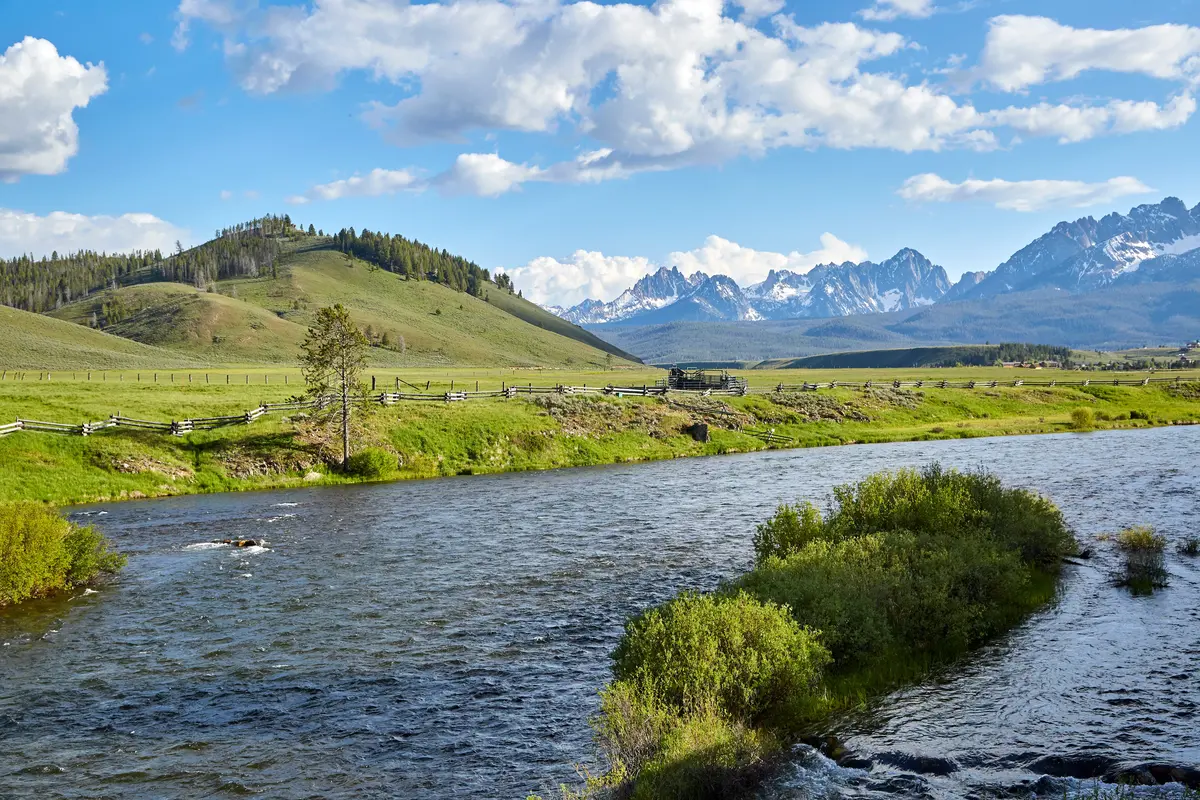
Stanley's neighborhoods are small enough that "neighborhood-level crime analysis" requires some humility — we're talking about a handful of distinct residential and commercial pockets within a town you can walk across in fifteen minutes. That said, the spatial pattern in CrimeGrade.org's data is consistent and worth understanding before you choose where to focus your search.
The southeast portion of Stanley — which encompasses quieter residential streets away from the main commercial strip — is generally considered the safest area by residents, per CrimeGrade.org's analysis. The west side of town sees approximately zero reported incidents annually. The highest incident concentration tracks with the commercial and visitor-facing zones along Ace of Diamonds Avenue, which functions as Stanley's main street and primary tourism corridor.
Area-by-Area Safety Character
| Area | Safety Character | Primary Activity Type | Best For |
|---|---|---|---|
| Southeast Stanley / Lower Stanley residential | Quietest by resident report | Permanent residential; low foot traffic | Quiet Privacy |
| West Stanley | ~0 incidents annually (modeled) | Low-density residential; sparse commercial | Quiet Nature |
| Ace of Diamonds Avenue corridor | Highest incident concentration in town | Tourism, dining, lodging, bar traffic | Walkable — accept trade-off |
| Valley Creek corridor | Low; rural buffer from main strip | Riparian access; some residential | Nature Privacy |
| Redfish Lake area (~5 mi south) | Trailhead theft risk in summer | Heavy seasonal recreation; lodge traffic | Views — secure vehicles |
| Obsidian area / Upper Stanley | Remote; minimal incident history | Scattered residential; highway access | Privacy Nature |
The practical divide in Stanley isn't east versus west or uphill versus down — it's tourist-facing versus residential. Anything fronting Ace of Diamonds Avenue sees more foot traffic, more seasonal visitors, and more of the minor property incidents that drive the modeled numbers. Streets set back from that corridor, and areas along Valley Creek, have a fundamentally quieter character. For a full comparison of how these pockets differ in layout and character, see the Stanley neighborhoods guide.
The Kasino Club Effect
The Kasino Club on Ace of Diamonds Boulevard is Stanley's primary live-music and bar venue — the kind of place that draws a crowd on a Friday night in July from three counties over. Late-night activity around that stretch is real, and it concentrates in the summer season. If you're evaluating a property within a block of the main commercial strip, factor in peak-season noise and activity; it's not a safety crisis, but it is a lifestyle variable worth knowing.
For context, the more family-oriented end of the commercial district runs on daytime activity rather than nightlife. That corridor is genuinely walkable during daylight hours, and most longtime residents feel comfortable throughout town on foot.
Looking to buy in Stanley? Estimate your payment.
Enter your numbers to see an estimated monthly mortgage payment.
Estimate only. Excludes HOA fees and mortgage insurance.
Real Safety Concerns vs. Statistical Noise: What to Actually Watch For
Once you strip out the denominator distortion, two practical safety issues remain worth taking seriously in Stanley — neither of which shows up prominently in the headline crime rate.
Vehicle and Gear Theft at Trailheads
Property crime in a tourism corridor like this skews heavily toward opportunistic vehicle break-ins at trailhead parking areas near the Sawtooth National Recreation Area and around Redfish Lake. Leaving valuables visible in a parked car during a day hike is the most common vector for property loss in this area. This isn't unique to Stanley — it's a consistent pattern across high-traffic wilderness access points throughout the Mountain West. The mitigation is straightforward: don't leave gear, bags, or electronics visible in an unattended vehicle, and use designated storage where available.
Seasonal Population Swings and Stranger Density
Stanley's permanent population of 122 effectively multiplies during peak summer months. The Sawtooth NRA draws a transient crowd that dwarfs the town's year-round community, and that density shift is real. Long-term residents describe summer as a fundamentally different social environment — not dangerous, but noticeably less familiar. The main commercial strip becomes genuinely busy. Most residents navigate this comfortably; it does mean that the quiet, small-community feel that draws people here is a seasonal rather than year-round experience.
What People Who Move Here Say After Six Months
The surprise most newcomers report isn't crime — it's isolation. Winters in Stanley are severe, Highway 21 closes seasonally, and the nearest emergency medical facility requires a significant drive. The practical safety calculus for a full-time resident is less about lock-your-doors crime awareness and more about emergency preparedness: weather-appropriate vehicles, maintained communication, and realistic expectations about response times for any incident requiring law enforcement or medical assistance.
Custer County Sheriff's coverage area is vast, and response times to Stanley can be lengthy — a reality that matters more for genuine emergencies than for the kind of property incidents that drive the modeled crime rate. People who move out of Stanley rarely cite crime as the reason. They cite the access gap: the nearest full-service grocery option is a significant drive away, and a community this small cannot sustain the social infrastructure most families expect.
The Bottom Line: How to Research Safety Before You Decide on a Neighborhood
If you've run Stanley through a crime-rate comparison tool and landed here trying to make sense of the numbers, the short answer is: the rates are real figures applied to a population denominator that makes them almost meaningless as a guide to lived safety. A town of 122 people cannot produce statistically stable per-1,000 crime rates. One incident is a rounding error in Boise. In Stanley, it's a data point that moves the needle by 8 points.
How to Actually Evaluate Safety Here
Talk to Custer County Sheriff's Office directly — they can give you a candid picture of call-for-service patterns in the Stanley area, which is far more useful than any modeled projection. Ask specifically about the Ace of Diamonds corridor versus the quieter residential streets off the main drag, and about seasonal versus year-round incident patterns.
Walk the areas you're considering at different times of day and different points in the season. The Valley Creek corridor on a Tuesday in October feels nothing like the same area on a Saturday in July. Both are the real Stanley; only you know which one matches the life you're planning.
Check in with the Stanley-Sawtooth Chamber of Commerce for local perspective — they have direct contact with the year-round business community and can connect you with residents who've made the full-time commitment. The people who stay in Stanley through February are a self-selecting group with a clear-eyed view of what the place actually demands.
A Realistic Safety Summary
| Safety Factor | Risk Level | Practical Note |
|---|---|---|
| Violent crime (resident-on-resident) | Very low in practice | ~2 projected incidents/year for entire town |
| Property crime (vehicle break-ins) | Low-moderate at trailheads | Don't leave valuables visible in parked cars |
| Bar/nightlife area incidents | Low; seasonal and contained | Ace of Diamonds strip, summer evenings only |
| Winter road conditions | Meaningful real risk | Hwy 21 closes seasonally; 4WD/AWD essential |
| Emergency response time | Extended (rural reality) | Sheriff coverage area is very large |
| Overall resident safety feel | High among year-rounders | Community is small and mutually accountable |
The 122 people who choose to live here year-round are not doing so despite the safety picture — they're doing so because the practical experience of daily life in Stanley, away from the summer surge, is genuinely low-stress and community-oriented.
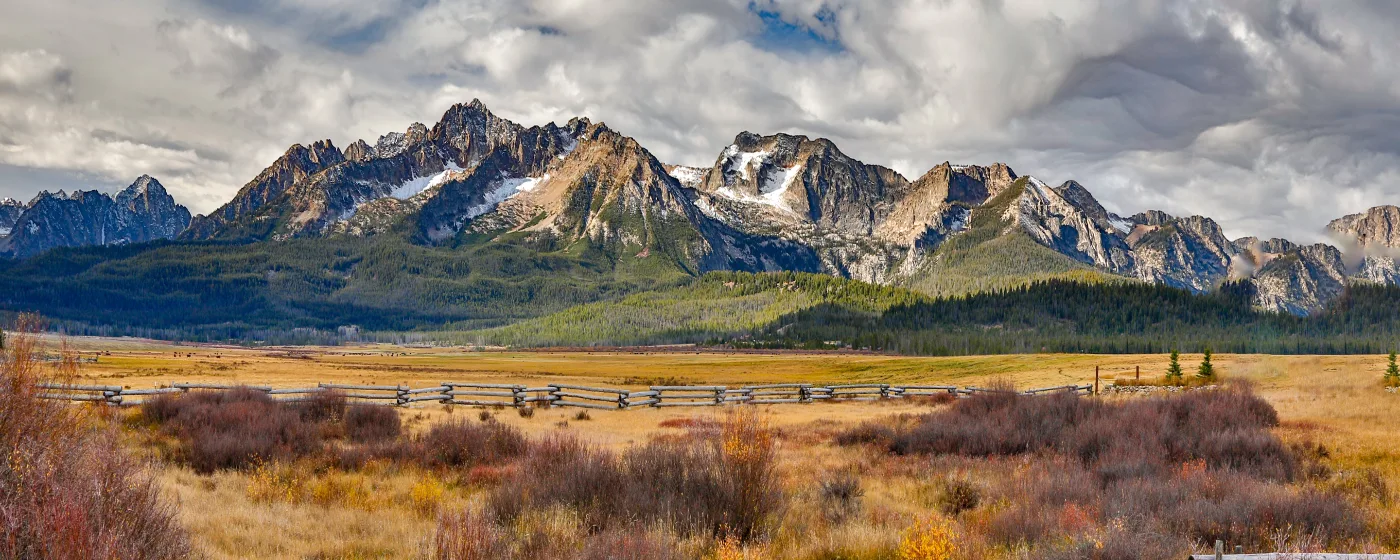
Local Expert Takeaway: Stanley's crime rates look alarming in a database search and are almost entirely an artifact of dividing incident projections by 122 permanent residents in a town that hosts hundreds of thousands of annual visitors. The real safety conversation for anyone considering a move here is about practical preparedness: a 4WD vehicle for winter road conditions, realistic expectations about Custer County Sheriff response times across a vast rural territory, and securing gear when parking at Sawtooth NRA trailheads. Ask the locals at the independent cafés along Wall Street on a weekday morning. Year-round residents consistently describe the community as tight-knit and safe in the ways that actually matter to daily life.
Quick Takeaways & FAQs
✅ Stanley sits within Idaho, which recorded the lowest property crime rate in the nation in 2024 — the state-level backdrop for Stanley's modeled figures is genuinely favorable.
⚠️ Stanley's violent crime rate of 11.6 per 1,000 and property crime rate of 65.4 per 1,000 are heavily distorted by a 122-person denominator: a single reported incident moves the rate by approximately 8 points, making direct comparisons to larger cities misleading.
📍 The Ace of Diamonds Avenue corridor — home to the Kasino Club and Stanley's main commercial strip — sees the highest seasonal incident concentration; the west side and southeast residential streets are projected at near-zero incidents annually.
Is Stanley, Idaho a safe place to live?
Why is Stanley's crime rate so high compared to the rest of Idaho?
Which parts of Stanley are safest?
Is vehicle theft or break-in a problem near Redfish Lake and Sawtooth trails?
Does Stanley have its own police department?
Moving to Idaho?
Tell us what you need help with and we'll connect you with local resources.
