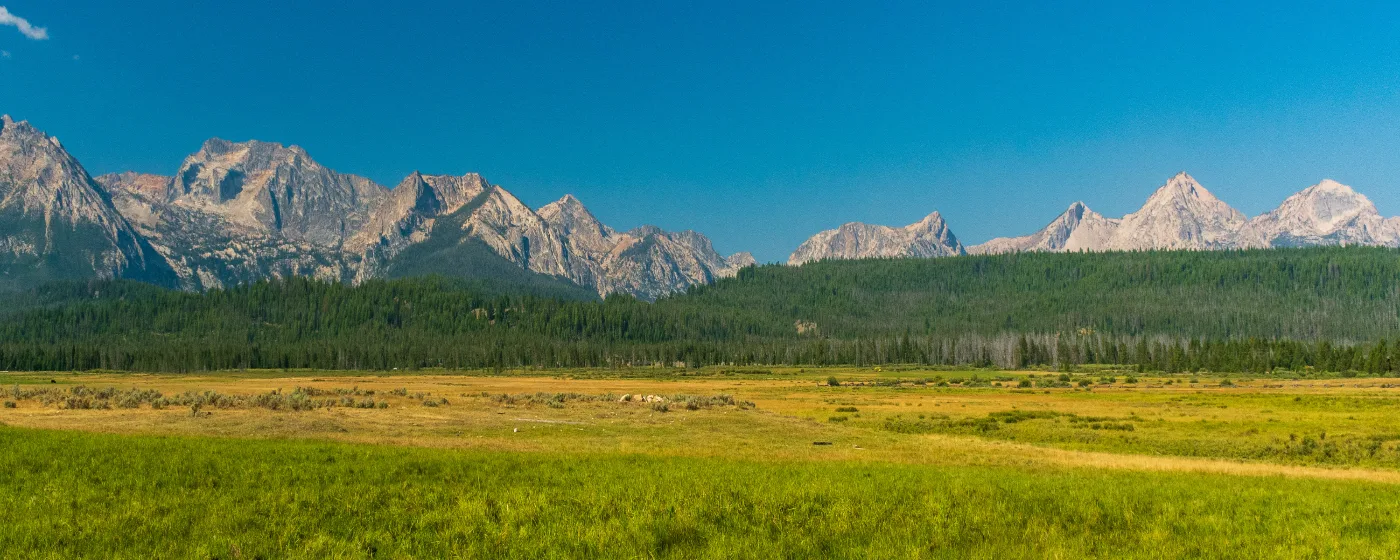
Stanley defies the logic of small-town Idaho. With a population of 122 people, it sits inside one of the most remote valleys in the lower 48 — ringed by the Sawtooth Mountains, bisected by the Salmon River, and accessed almost entirely via Highway 75. You might expect rock-bottom prices to match the isolation. Instead, the Zillow Home Value Index put the typical Stanley home at $582,736 as of May 2026 — a figure more commonly associated with Boise suburbs than a town without a stoplight. The Sawtooth National Recreation Area is the engine behind that number, drawing buyers who can work remotely and want the mountains outside their window full-time, not just on weekends.
The community that actually lives and works here earns a median household income of $39,049 — driven largely by seasonal hospitality work at places like Redfish Lake Lodge, Mountain Village Resort, and the broader Sawtooth National Forest economy. That gap between what homes cost and what most local wages support is the defining financial reality of Stanley. Homeownership here depends almost entirely on remote-work income, equity brought in from other markets, or outright investment capital. The buyers who make it work financially are almost never people whose paychecks come from within the valley.
Idaho as a whole tracks modestly below the national cost-of-living average, but Stanley's remote location erases that statewide advantage almost entirely. Electricity rates are genuinely low by Idaho Power standards, and the 0.32% effective property tax rate is among the lowest you'll find anywhere in the Mountain West. The catch is everything else: no supermarket within 60 miles, propane heating because natural gas infrastructure doesn't reach this far into the valley, and a Highway 75 drive to Challis or Ketchum for anything beyond basic provisions. The tax picture is favorable. The logistics picture is demanding.
Whether you're considering a full-time move or evaluating Stanley as a second-home purchase, the sections below break down housing costs, everyday expenses, a sample monthly budget, how Stanley compares financially to nearby cities, and the full tax picture so you can decide whether the numbers actually work for your situation.
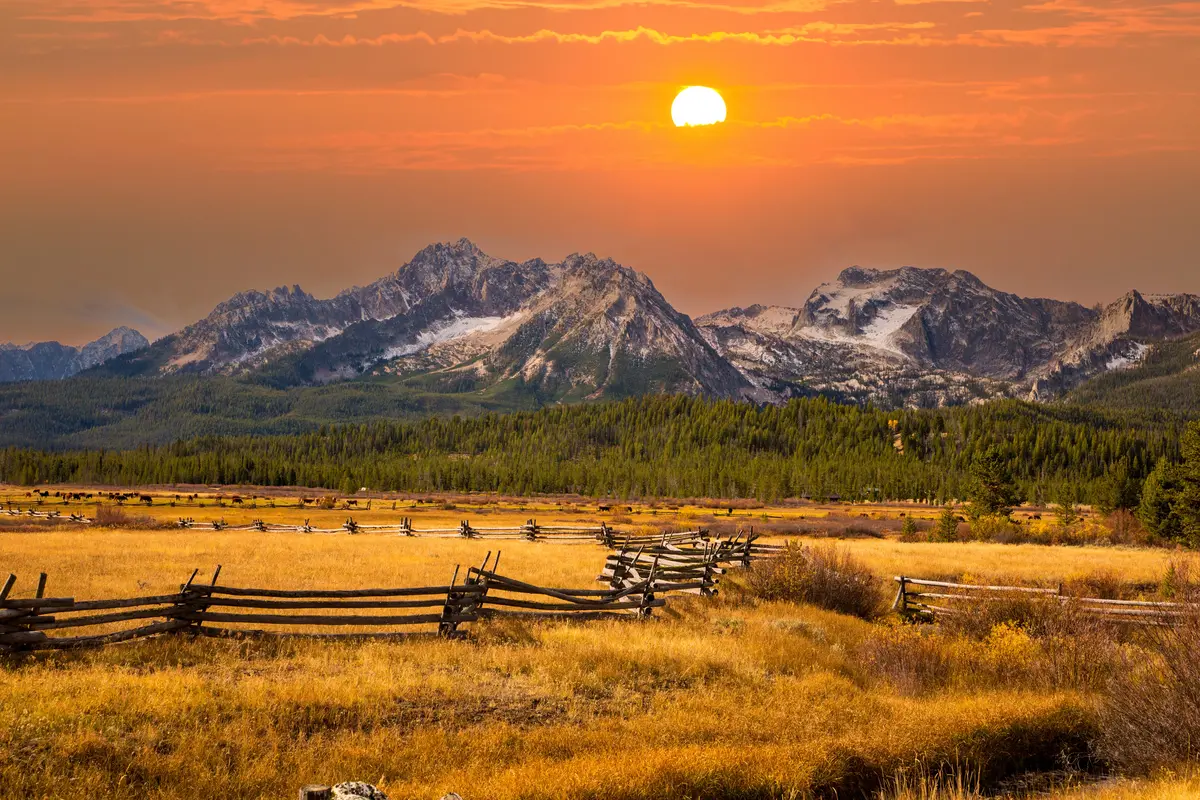
What It Really Costs to Live in Stanley
Stanley is not cheap — and the reason has nothing to do with the local economy. Demand from remote workers and second-home buyers drawn to the Sawtooth National Recreation Area has pushed home values well above what the valley's own wage structure could ever sustain on its own.
Compared to Idaho's statewide housing benchmark, Stanley sits noticeably above average. Compared to nearby Challis or Clayton, it's in a different financial universe. The only nearby market that approaches Stanley's price tier is Ketchum, which actually exceeds it — reflecting the full Sun Valley resort economy. Every other surrounding community comes in meaningfully below.
Beyond housing, the honest posture on Stanley's cost of living is this: the state-level advantages are real — low electricity rates, a low property tax rate, no estate tax, and a relatively modest flat income tax. What undercuts those advantages is logistics. When the nearest full-service grocery store is a 60-mile round trip to Challis or a 60-mile drive the other direction to Ketchum, your transportation costs, time costs, and the hidden premium on small-town convenience stores add up in ways that a standard cost-of-living index won't capture.
Housing: Rent vs. Buy in Stanley
The Ownership Reality
The price-to-income ratio in Stanley is approximately 14.9x — roughly triple the conventional affordability threshold of five times annual income. That figure is not a rounding error; it reflects a housing market shaped almost entirely by people moving wealth into the valley from outside it, not by people earning their way to a down payment from within.
The effective property tax rate sits at approximately 0.32%, which is genuinely exceptional — well below the national median and one of the lowest rates you'll find anywhere in Idaho. On the typical-priced home, annual property taxes run far below what buyers from California, Washington, or the Pacific Northwest expect to pay. Use the mortgage calculator below this section to model your actual monthly ownership cost; the rate and insurance figures vary enough by buyer profile that a general estimate would mislead more than help.
Renting in Stanley
The rental market here is thin and seasonal. Year-round rentals in Stanley are rare — most available housing turns over as short-term vacation rentals during summer, which compresses the supply of long-term inventory dramatically. When year-round leases do appear, they typically run in the range of $1,200–$1,800 per month for a two-bedroom unit, though availability fluctuates significantly with the season and the whims of property owners who can earn more in a single summer week than in a full month of long-term rent.
Renters who need reliable, year-round housing often find more stability by looking toward Challis — about 60 miles northeast — where the rental market is larger, more consistent, and priced meaningfully lower. The trade-off is a longer daily drive into the valley.
Buy or Rent?
Buying makes sense in Stanley if you have the capital, plan to hold the property long-term, and either work remotely or have income independent of the local economy. Renting makes sense if you're testing the lifestyle before committing, if year-round mountain living turns out to be harder than a summer visit suggested, or if you need the flexibility to leave before winter fully closes in.
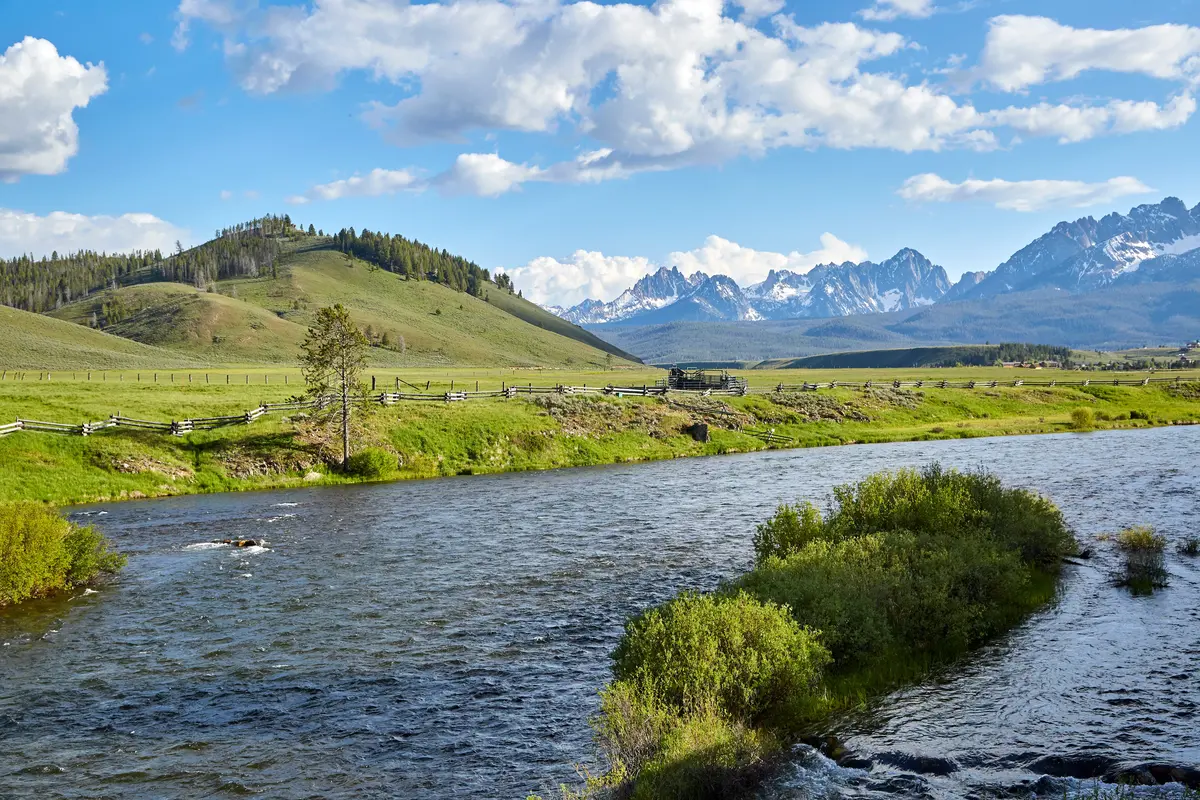
Everyday Costs Beyond Housing in Stanley
Idaho's electricity rates are among the lowest in the country — roughly 11.62 cents per kWh — and statewide combined utility costs (electricity, water, sewer, trash) average around $210–$215 per month. Stanley households should budget above that baseline, however, because natural gas infrastructure doesn't extend into this part of the valley. Propane heating is the norm, and propane prices fluctuate with delivery logistics and winter demand in ways that the statewide electric average doesn't reflect.
Groceries are where the remote location hits hardest. Idaho grocery prices track near the national average, but Stanley has no supermarket. Weekly grocery shopping means driving to Challis or Ketchum. Budget the fuel, the time, and the tendency to over-buy because you don't want to make the trip twice. A family of four's monthly grocery spend can easily run $900–$1,200 once the drive costs are factored in alongside the food itself.
| Category | Typical Monthly Cost | Notes |
|---|---|---|
| Housing (2BR rent) | $1,200–$1,800 | Year-round rentals are scarce; owners should use the mortgage calculator above for an ownership estimate |
| Utilities | $220–$320 | Higher than Idaho statewide average due to propane heating; no natural gas service in valley |
| Groceries | $600–$1,200 | No supermarket in Stanley; plan 60-mile round trips to Challis or Ketchum; budget fuel separately |
| Transportation & Gas | $250–$450 | Highway 75 driving for all errands; Ketchum commute adds roughly $150–$200/month in fuel alone |
| Phone & Internet | $120–$200 | Satellite internet (Starlink) is common; cell coverage is limited in the valley |
| Misc / Discretionary | $200–$400 | Dining at local spots along Ace of Diamonds Boulevard; outdoor gear and recreation supplies |
These are estimates for planning purposes; actual costs vary by household size, heating habits, and how often you make the supply run to town.
Looking to buy in Stanley? Estimate your payment.
Enter your numbers to see an estimated monthly mortgage payment.
Estimate only. Excludes HOA fees and mortgage insurance.
Stanley vs. Nearby Cities: Cost Comparison
| City | Median Home Price | Typical 2BR Rent | Cost vs. Stanley |
|---|---|---|---|
| Stanley, ID | $582,736 (ZHVI, May 2026) | $1,200–$1,800/mo | Baseline |
| Ketchum, ID | $1.2M–$1.5M (approx. range) | $2,500–$4,000/mo | Noticeably higher — full Sun Valley resort premium |
| Challis, ID | $180,000–$260,000 (approx. range) | $700–$1,100/mo | Substantially cheaper across the board |
| Clayton, ID | $150,000–$220,000 (approx. range) | Limited rental market | Significantly cheaper; very limited inventory |
| Sunbeam, ID | $200,000–$300,000 (approx. range) | Minimal rental market | Cheaper; nearly no services or amenities |
| Salmon, ID | $220,000–$310,000 (approx. range) | $750–$1,100/mo | Substantially cheaper; more services and year-round infrastructure |
* ZHVI = Zillow Home Value Index.
The pattern is clear: Stanley sits between the rural affordability of Challis and Clayton on one side and the resort-tier pricing of Ketchum on the other — closer in spirit and price to the Sun Valley market than to its geographic neighbors.
Taxes & the Bottom Line for Stanley
Idaho's Tax Structure
Idaho moved to a flat 5.3% individual income tax rate as of January 1, 2025 — down from 5.695% under recent legislation and one of the lower flat rates in the Mountain West. There's no local income tax layered on top of that at the Stanley or Custer County level.
Sales tax statewide runs 6%. Idaho allows resort cities to levy an additional local sales tax, but Stanley does not currently carry that designation, so you pay the standard 6% on taxable purchases. That's meaningfully lower than what buyers relocating from Washington or California are accustomed to, though it won't offset the cost of driving to Challis every week for groceries.
Property Tax Advantage
The effective property tax rate of approximately 0.32% is the single most buyer-friendly number in Stanley's cost picture. Custer County overall has the lowest median property tax bill of any county in Idaho, and even within that low-tax county, Stanley's bills remain modest relative to the home values involved. For buyers coming from higher-tax states, this is a genuine and durable financial advantage — not a temporary relief but a structural feature of the Idaho tax code.
Idaho also offers a senior Circuit Breaker program that can reduce qualifying homeowners' annual property tax bills by $250–$1,500. The 2025 income threshold to qualify sits at $39,130 after medical expense deductions — almost exactly equal to Stanley's median household income, meaning some year-round residents may qualify. Idaho also exempts Social Security benefits from state income tax entirely and levies no estate or inheritance tax, factors that influence some of the seasonal and second-home buyers in the valley.
Who the Numbers Work For
The tax picture in Stanley is genuinely favorable. The housing picture, described in detail above, is genuinely demanding. The bottom line is that Stanley's cost of living works well for remote workers or retirees bringing outside income or equity into the valley, for buyers who treat the property as a second home and write the carrying costs against that lens, and for anyone whose monthly budget doesn't depend on a local paycheck. It tends to be a stretch — often a serious one — for anyone relying on Stanley-area wages, anyone who needs urban services within a short drive, or anyone who underestimates what it costs to live 60 miles from a supermarket in a valley where winter can close roads without much notice.
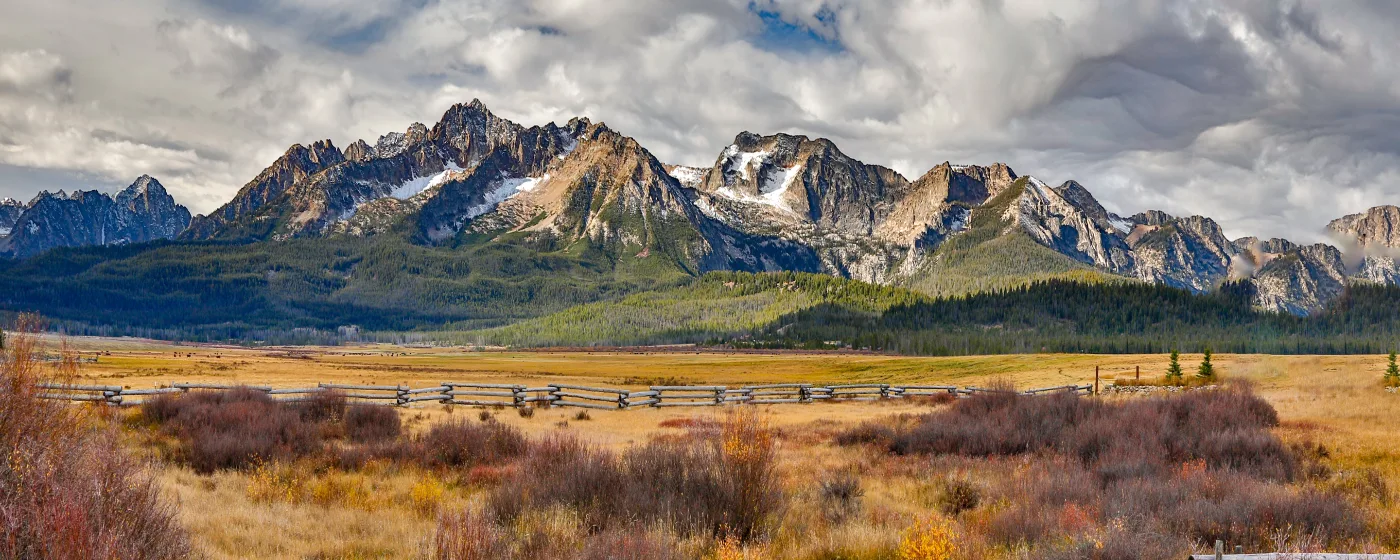
Local Expert Takeaway: Stanley's cost of living is a study in contradictions: one of Idaho's lowest property tax rates, some of the state's cheapest electricity, and home values that most local wages can't touch. The buyers who make it work financially are almost always importing income or capital from somewhere else. If that's you, the tax structure rewards you and the scenery justifies the premium. If you're planning to work locally at Redfish Lake Lodge or in the Sawtooth National Forest economy, build your budget around a 60-mile grocery run to Challis, propane heating bills that swing with winter severity, and a rental market that largely disappears when summer ends — then run those real numbers against the calculator before you fall in love with a listing.
Quick Takeaways & FAQs
✅ Stanley's effective property tax rate of approximately 0.32% is one of the lowest in Idaho, and Idaho's 5.3% flat income tax applies with no local surcharge on top.
⚠️ The typical home value of $582,736 (Zillow Home Value Index, May 2026) sits at nearly 15 times the local median household income — ownership here almost always requires outside income or equity, not local wages.
📍 Stanley has no supermarket: all major grocery runs require a 60-mile drive to Challis or Ketchum, and natural gas doesn't reach the valley — propane heating is the norm, which adds meaningfully to winter utility budgets.
What is the typical home price in Stanley, Idaho?
What is the property tax rate in Stanley, Idaho?
Are there grocery stores or supermarkets in Stanley?
How much does it cost to rent in Stanley, Idaho?
What is Idaho's income tax rate and does it apply to Stanley residents?
Moving to Idaho?
Tell us what you need help with and we'll connect you with local resources.
