
Maybe your employer is the Washington State Government and the job is in the Capitol Campus district. Maybe you've been priced out of the Seattle corridor and someone mentioned Thurston County. Either way, you've landed on a city that sits in a genuinely useful middle ground: Olympia's overall cost of living runs roughly 10–13% above the national average — real money — but it sits noticeably below the Seattle metro, which runs even further above that same benchmark. That gap is the whole economic story here. You're paying a Pacific Northwest premium, but you're not paying Bellevue prices.
What actually drives the cost of living in Olympia is the combination of state-government wages anchoring the local economy, a relatively tight housing supply in the city limits, and Washington's unusual tax structure — no personal income tax, but a sales tax rate in Olympia that runs approximately 8.9–9.0%. The median household income sits at $81,302, which is a livable number against local rents but gets tested quickly if you're trying to buy. The Zillow Home Value Index for Olympia as of July 2026 puts the typical home at $536,583 — well above what that household income easily supports at conventional down-payment levels, which is why a meaningful share of Olympia's workforce rents, often in Lacey or Tumwater where prices are more forgiving.
On the day-to-day side, Olympia has a few genuine bright spots. Electricity rates here run about 15% below the national average, a byproduct of Washington's hydroelectric-heavy grid. Intercity Transit — the regional bus system covering Olympia, Lacey, Tumwater, and Yelm — is completely free to ride through at least 2028, which takes a real line item off the table if you can work your commute around it. Grocery costs run modestly above the national average, and transportation costs (driven by car ownership, not bus fares) run higher still. The number that surprises most newcomers six months in isn't the rent — it's what they spend on a vehicle they thought they'd use less.
This guide covers Olympia's housing market, rent figures, utility and grocery costs, a realistic monthly budget, how the city stacks up against Lacey, Tumwater, Yelm, DuPont, and Shelton, and what Washington's tax structure means for your actual take-home.

What It Really Costs to Live in Olympia
Olympia is not an affordable city by national standards, and framing it as one sets up a rude awakening. The Council for Community and Economic Research's Cost of Living Index puts Olympia roughly 10–13% above the national average overall — but that headline number obscures where the pain actually lands. Housing is the dominant driver. Transportation costs run sharply above average. Groceries are modestly higher. Utilities, unusually, run below average, which softens the blow somewhat.
The honest comparison that matters most for people relocating here is not Olympia vs. the national average — it's Olympia vs. the I-5 corridor cities to the north. Against Seattle and Bellevue, Olympia looks like a genuine bargain. Against Tacoma, it's closer to a wash. Against Lacey and Tumwater, which most buyers and renters also seriously consider, the differences are smaller than you'd expect and run in different directions depending on whether you're buying or renting.
What keeps Olympia's costs elevated despite its relatively modest size is the same thing that stabilizes it: state government employment. Public-sector wages are steady, housing demand from state workers and Evergreen State College faculty is consistent, and the city's geography — water on the west, I-5 on the east, protected lands on multiple sides — limits how much new supply can come online. Prices here don't spike like a tech boomtown, but they don't reset either.
Housing: Rent vs Buy in Olympia
The typical home in Olympia is valued at $536,583 (Zillow Home Value Index, July 2026). Entry-level homes — older construction, smaller square footage, occasionally needing updates — start meaningfully below that figure, while anything move-in ready in a well-established part of the city pushes above it. If you're targeting the lower end of the market, expect more competition from other buyers in similar budget positions; entry-level inventory in Olympia moves quickly.
The effective property tax rate in Thurston County is approximately 0.96% — one of the lower rates among Washington's western-corridor counties, which gives Olympia a mild structural advantage over some competing markets. That rate applies to assessed value, and Thurston County assessments track market values closely, so the two numbers tend to stay close. Use the mortgage calculator below this section to model your all-in monthly ownership cost; the property tax rate feeds directly into that estimate.
Renting makes the most financial sense in Olympia for people who haven't yet built a down payment, expect to stay fewer than three years, or want flexibility while they learn the city's geography before committing. Two-bedroom apartments average roughly $1,865/month per Zillow Rentals data from July 2026 — not cheap, but the gap between renting and owning here is wide enough that renting while saving is a defensible strategy, not just a fallback.
One thing locals know that newcomers often don't: the rental market in Lacey and Tumwater runs noticeably cheaper than in Olympia proper, and both cities are minutes from the Capitol Campus. If your goal is to own in Olympia eventually, renting just across the city line in the meantime is how a lot of state employees actually do it.

Everyday Costs Beyond Housing in Olympia
Washington's hydroelectric grid does real work for Olympia households. Electricity here runs approximately 17 cents per kilowatt-hour as of May 2026 — about 15% below the national average. Combined with water, wastewater, stormwater, and solid waste, a typical household's all-in utility bill runs approximately $350/month for 2026, which sits about 9% below the national utility average. That's a meaningful offset against the city's higher housing costs.
Groceries run about 6% above the national average — noticeable but not punishing, and Washington's exemption of groceries from sales tax means your receipt doesn't carry an additional 9% hit on staples. Transportation is the category that catches people off guard: vehicle ownership costs run approximately 28% above the national average. Intercity Transit's zero-fare bus network (free through at least 2028, with Routes 600 and 601 now connecting to Pierce County as of September 2025) can offset some of that if your commute aligns with the schedule — but most Olympia households still own at least one car, and the math on insurance, registration, and maintenance adds up fast in this state.
| Category | Typical Monthly Cost | Notes |
|---|---|---|
| Housing (2BR rent) | $1,750–$1,900 | Zillow Rentals median, July 2026. Owners: use the mortgage calculator above for a purchase estimate. |
| Utilities (all-in) | ~$350 | Electricity + water/wastewater/stormwater/solid waste; about 9% below national average. |
| Groceries | $500–$700 | Estimate for 1–2 person household; groceries are sales-tax-exempt in Washington. |
| Transportation & Gas | $400–$650 | Vehicle ownership costs run ~28% above national average; Intercity Transit is free-to-ride through 2028. |
| Phone & Internet | $130–$200 | Standard smartphone plan plus residential broadband; competitive carriers available. |
| Dining & Entertainment | $250–$450 | Mix of downtown options — Three Magnets Brewing Co. on Franklin St SE, Well 80 Brewhouse on 4th Ave E — and home cooking. Ranges vary widely by lifestyle. |
| Miscellaneous / Personal | $150–$300 | Clothing, household supplies, subscriptions, personal care. All subject to ~9% sales tax. |
These are estimates for planning purposes. Actual costs vary by household size, vehicle ownership, and lifestyle.
Looking to buy in Olympia? Estimate your payment.
Enter your numbers to see an estimated monthly mortgage payment.
Estimate only. Excludes HOA fees and mortgage insurance. The interest rate above is a starting point, not a quoted rate — replace it with your own to see real numbers. Insurance is a flat placeholder, not a Olympia quote.
Olympia vs Nearby Cities: Cost Comparison
| City | Median Home Price | Typical 2BR Rent | Cost vs Olympia |
|---|---|---|---|
| Olympia | $536,583 (ZHVI, July 2026) | ~$1,865/mo | — Baseline — |
| Lacey | ~$490,000–$510,000 | ~$1,650–$1,750/mo | Modestly cheaper to buy and rent |
| Tumwater | ~$470,000–$500,000 | ~$1,600–$1,750/mo | Noticeably cheaper to buy; similar or lower rent |
| Yelm | ~$420,000–$450,000 | ~$1,400–$1,600/mo | Meaningfully cheaper; longer commute trade-off |
| DuPont | ~$480,000–$530,000 | ~$1,700–$1,900/mo | About the same; closer to Joint Base Lewis–McChord |
| Shelton | ~$320,000–$370,000 | ~$1,200–$1,450/mo | Substantially cheaper; rural setting, limited amenities |
* ZHVI = Zillow Home Value Index. Lacey, Tumwater, Yelm, DuPont, and Shelton figures are approximate ranges based on mid-2026 market data; Olympia's figure is the authoritative ZHVI for July 2026.
Lacey and Tumwater are the practical alternatives most Olympia buyers consider — close enough to share the same commute radius, but priced lower on both the purchase and rental side.
Taxes & the Bottom Line for Olympia
Washington's No-Income-Tax Advantage
Washington state levies no personal income tax — a structural benefit that effectively increases take-home pay compared to Oregon, California, and most other western states. For a household earning Olympia's median of $81,302, that's a real dollar difference every paycheck, even after accounting for higher sales taxes.
Sales Tax: Real and Unavoidable
The combined sales tax rate in Olympia runs approximately 8.9–9.0%, built from Washington's 6.5% state base plus Thurston County and city add-ons. Groceries are fully exempt, which blunts the impact on household staples. But clothing, electronics, home goods, restaurant meals, and most services all carry that rate — and it adds up on larger purchases. Buying a used car in Olympia? Budget for a meaningful sales tax hit on top of the purchase price.
Property Tax: Lower Than It Looks
The effective property tax rate of approximately 0.96% is relatively measured for western Washington — lower than King County's effective rate and competitive with Pierce County. On a home at the typical $536,583 value, that rate produces an estimated annual bill of roughly $5,151. It's not low in absolute terms, but as a percentage of home value, it's one of the more manageable rates in the region.
Who Olympia's Budget Works For
Olympia fits households in stable public-sector or higher-education employment who can bring a meaningful down payment and value the no-income-tax environment. The absence of state income tax is a genuine advantage for dual-income households in the $80,000–$130,000 range. It's a harder fit for single earners at or below the city median who are trying to buy — the gap between local wages and the home prices referenced above is wide enough that saving for a down payment takes real discipline and time.
Renters who want to eventually own in Olympia often spend two to four years in Lacey or Tumwater first, building savings while staying close to the city's core employment base. That's not a failure of planning — it's what the math actually suggests.
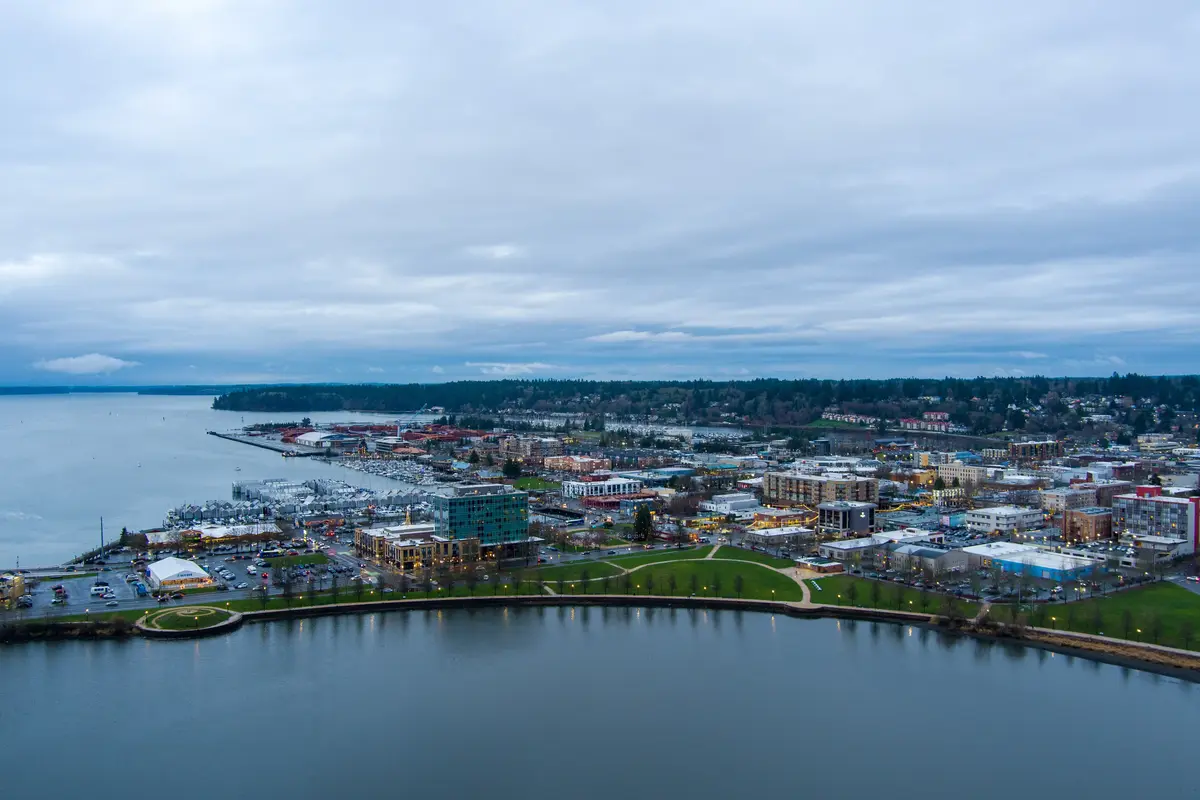
Local Expert Takeaway: Olympia's cost of living is above the national average but well below Seattle — and the gap is real enough to matter if you're relocating from anywhere north of Tacoma. The two numbers to anchor your budget to: a typical home at $536,583 (ZHVI, July 2026) and a two-bedroom apartment at roughly $1,865/month. Utilities run cheaper than you'd expect thanks to Washington's hydro grid; transportation runs higher than you'd expect even with Intercity Transit riding free. The no-income-tax environment is the headline tax benefit, but watch the 8.9–9.0% sales tax on everything that isn't groceries. If your income is anchored to state government, Evergreen State College, or South Puget Sound Community College, the numbers work. If you're bringing a private-sector salary from a lower-cost state, give yourself three months before you decide whether the trade-off was worth it.
Quick Takeaways & FAQs
✅ Intercity Transit is completely free to ride through at least 2028 — a genuine budget advantage that most newcomers don't know about until after they've already budgeted for transit fares.
⚠️ Transportation costs overall still run about 28% above the national average because vehicle ownership in Washington is expensive; don't assume free buses eliminate the car-cost problem.
📍 Washington's no-income-tax structure and Olympia's 0.96% effective property tax rate make the ownership math more favorable than the sticker price alone suggests — but groceries are the one sales-tax break you actually get.
What is the typical home price in Olympia, WA in 2026?
Is Olympia, WA cheaper than Seattle?
How much does a two-bedroom apartment cost in Olympia?
Does Washington state income tax affect my budget in Olympia?
What is the property tax rate in Olympia, WA?
Moving to Washington?
Tell us what you need help with and we'll connect you with local resources.
