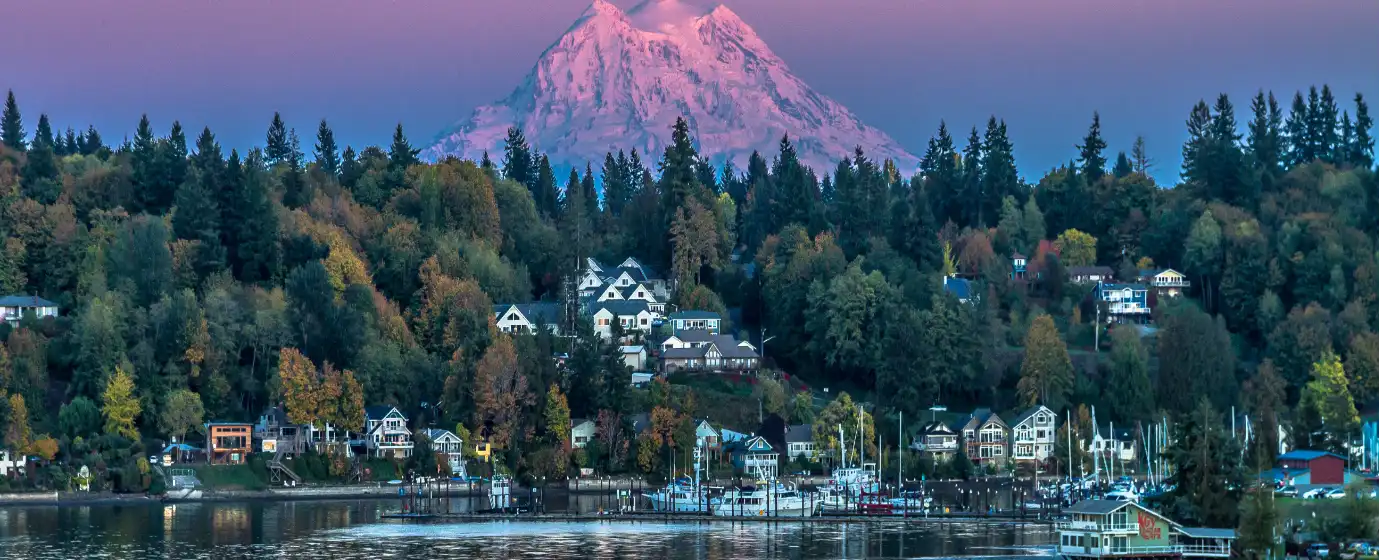
Most people researching retirement in the Pacific Northwest fixate on Seattle or the islands scattered across Puget Sound. Olympia — the state capital sitting at the southernmost tip of Puget Sound — tends to get overlooked, which is exactly why retirees who land here often say it's the best decision they made. The city is compact enough that you can walk from the Olympia Farmers Market along Percival Landing to a waterfront lunch without getting in a car. It's politically and culturally engaged in a way that keeps retirees intellectually plugged in. And it sits far enough south of Seattle's price gravity that ownership remains attainable. The trade-off — and it's real — is that Olympia is a working government town, not a resort community, so if you're chasing manicured country-club retirement, this isn't your place.
The economic backbone here is Washington State Government, which means the city runs on a professional, educated, civically minded population that shows up at public meetings, arts events, and Saturday markets. That density of engaged residents translates into a retirement experience with genuine social texture — volunteer boards, arts organizations, waterfront cleanups, lifelong learning through South Puget Sound Community College. Providence St. Peter Hospital, the region's dominant health system, has kept healthcare access anchored within the city limits since 1887, which matters more than almost any other factor once you're past 65. The typical home value sits at $536,583 (Zillow Home Value Index, July 2026), which is meaningfully below the Seattle metro but not a bargain in absolute terms — context matters for anyone right-sizing from a higher-cost market.
Washington's tax structure is one of the cleanest retirement advantages in the country: no state income tax means your Social Security check, pension, IRA withdrawals, and 401(k) distributions arrive untouched by the state. Daily life on a fixed income is shaped by mild Pacific Northwest winters, walkable access to independent restaurants along Capitol Way and 4th Avenue, and an Intercity Transit system that gives non-drivers genuine mobility across Thurston County. The rain is real — Olympia averages around 50 inches annually — and newcomers who grew up in sunnier climates sometimes underestimate how much 200 gray days a year affects their mood. That's the most honest thing to say upfront.
Whether you're weighing a move from California, considering downsizing from a larger home in the region, or comparing Olympia against nearby Lacey or Tumwater, the sections below cover healthcare access, the retiree budget, walkability and community life, downsizing options, and how Olympia stacks up against the alternatives.
Why Retirees Are Choosing Olympia
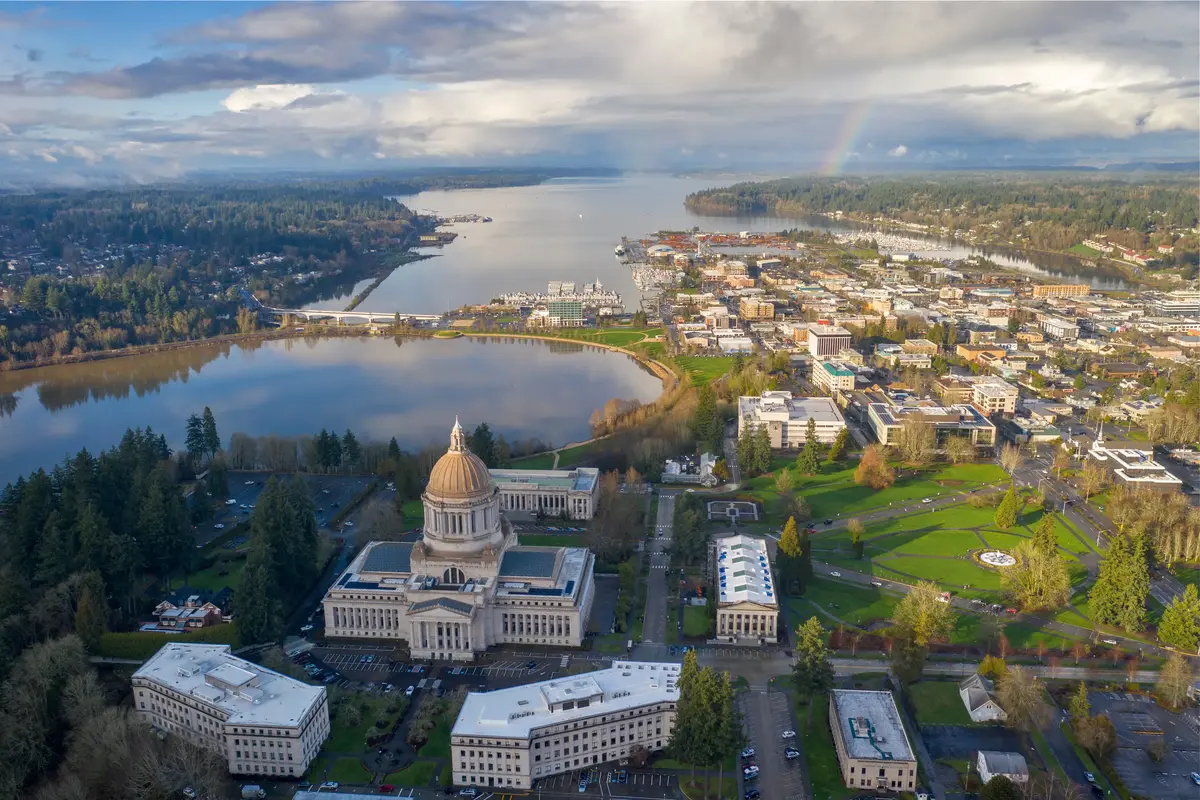
Olympia fits a specific kind of retiree well: someone who wants genuine walkability without paying Seattle prices, values access to arts and civic life, and needs solid healthcare close at hand. The Capitol Theater at 206 East 5th Ave — a 1924 venue operated since 1986 by the Olympia Film Society — hosts film series, concerts, and community events that give retirees a reliable social anchor. The Olympia Farmers Market draws a real local crowd, not tourists. The Washington State Capitol Campus is a 30-minute walk from most of downtown. This is a place that rewards people who want to participate, not just reside.
The honest case against Olympia for retirees is shorter but worth reading. The typical home value is $536,583 (Zillow Home Value Index, July 2026), meaning right-sizing into a single-level home still requires meaningful capital or equity. Inventory of purpose-built 55+ communities within city limits is thinner than in larger metros — you're mostly looking at condos, patio homes, and a modest selection of active-adult developments rather than a broad menu. And the gray, wet winters that run from November through March genuinely affect quality of life; retirees who need 250 sunny days a year will find themselves restless by February.
Retirees who thrive here tend to share a few things: they either moved from the Seattle or Tacoma metro and find Olympia refreshingly quieter, or they're drawn in by Washington's retirement tax posture and want a state capital's cultural amenities without the capital-city price tag. The college-town energy from Evergreen State College keeps the population ideologically diverse and creatively active in ways that some retirees love and others find too politically charged. Know which camp you're in before you buy.
Healthcare & Medical Access in Olympia
Providence St. Peter Hospital: What's Actually Here
Providence St. Peter Hospital at 413 Lilly Rd NE is the cornerstone of retirement healthcare planning in Thurston County. Founded in 1887, the 372-bed not-for-profit regional teaching hospital holds Magnet® recognition for nursing excellence and earned a Best Regional Hospital designation from U.S. News & World Report for 2025–26. For most retirees, the relevant question isn't prestige — it's depth of specialty care.
The hospital's Regional Cancer Center and Regional Heart Program mean that two of the highest-stakes diagnoses retirees face can be treated locally, without a drive to Seattle. The Level III trauma center handles emergencies that would otherwise require air transport from a smaller market. Behavioral health services are part of the clinical offering — not a given in mid-size cities. For day-to-day needs, the Providence Medical Group operates multiple outpatient clinics throughout Olympia and Lacey, keeping primary care and specialist appointments accessible without hospital parking.
When You'd Need to Go to Seattle or Tacoma
Providence St. Peter is the largest medical center in the five-county southwest Washington area and functions as a regional referral hub — but it is not a Level I trauma center and does not carry the full subspecialty depth of UW Medical Center or Virginia Mason in Seattle. Complex neurosurgery, certain oncology clinical trials, and pediatric subspecialties would typically route north. Tacoma is roughly 35 minutes up I-5 and adds another tier of options. For the majority of retirees managing chronic conditions and age-related health needs, Olympia's healthcare infrastructure is genuinely sufficient. For someone managing a serious or rare diagnosis at time of move, the distance to tertiary care is worth factoring honestly.
Long-Term Care Planning
The Lewis-Mason-Thurston Area Agency on Aging (LMTAAA) serves as the federally recognized coordinator for older-adult services in Thurston County, connecting residents to care management, caregiver support, and the regional resource directory. Thurston County was selected for an early 2026 pilot of Washington's WA Cares Fund — the state's public long-term care insurance program — which offers up to $36,500 in long-term care benefits to eligible workers who have made payroll contributions. For retirees who haven't purchased private long-term care insurance, the WA Cares Fund is worth understanding before dismissing. The fund's benefit cap is modest relative to actual care costs, but it represents a baseline that many peer states don't offer at all.

The Retiree Budget in Olympia
Washington's Retirement Tax Advantage
Washington has no personal income tax — full stop. That means your Social Security benefits, pension payments, IRA distributions, and 401(k) withdrawals arrive without any state tax withheld. For retirees moving from income-tax states, this is a structural shift in take-home income, not a marginal one. One caveat worth knowing: Washington taxes 7% on long-term capital gains above a $278,000 standard deduction for 2025, rising to 9.9% on gains above $1,000,000. This does not affect retirement account withdrawals and doesn't touch the typical retiree — but if you're a high-net-worth retiree managing a large taxable portfolio with regular rebalancing, consult a Washington-licensed tax advisor before assuming the state is uniformly tax-free.
Property Taxes and Senior Relief Programs
The effective property tax rate in Olympia is approximately 0.96%. On a mid-range home, that's a real annual line item — but Washington offers meaningful property tax relief programs specifically for qualifying seniors based on age and income. These programs can substantially reduce the effective burden; eligibility requirements are managed through the Thurston County Assessor's office and are worth applying for as soon as you qualify. The engine below can model your specific ownership scenario, but for the full cost-of-living breakdown including utilities, groceries, and transportation, that page goes deeper than this one.
Day-to-Day Costs on a Fixed Income
Olympia's dining scene runs heavily toward locally owned independents rather than chains — a function of the city's progressive, college-town character and proximity to Puget Sound seafood and Thurston County farms. Three Magnets Brewing Co. on Franklin Street SE is the kind of anchor spot where a weeknight dinner out doesn't feel like a special occasion. The Olympia Farmers Market keeps seasonal produce accessible and genuinely affordable for anyone who shops there regularly. What costs more here than many retirees expect: home maintenance in a wet climate adds up, and Pacific Northwest construction costs mean renovation projects run expensive. Budget realistically for that if you're buying an older home.
Looking to buy in Olympia? Estimate your payment.
Enter your numbers to see an estimated monthly mortgage payment.
Estimate only. Excludes HOA fees and mortgage insurance. The interest rate above is a starting point, not a quoted rate — replace it with your own to see real numbers. Insurance is a flat placeholder, not a Olympia quote.
Walkability, Community & Staying Active in Olympia
The On-Foot Reality
Downtown Olympia and the South Capitol area offer the most practical walkability for retirees — farmers market, waterfront, restaurants, and the Capitol Campus are all reachable on flat to gently rolling terrain. The further you move from downtown, the more car-dependent daily life becomes. Northeast Olympia and Southeast Olympia are comfortable, quieter residential areas, but running errands on foot from those neighborhoods isn't realistic. If car-free or car-light living is a priority in retirement, the walkable radius matters when choosing where to buy.
Intercity Transit runs 21 bus routes across Thurston County with approximately 4.24 million annual riders (2024 data). The paratransit service — a specialized, door-to-door option for riders who can't use fixed-route buses — is one of the most important but least-discussed retirement resources in the region. It's the safety net that keeps seniors mobile when driving stops being viable. For retirees evaluating long-term independence, Olympia's transit infrastructure is genuinely stronger than most Pacific Northwest cities its size.
The Olympia Senior Center and Organized Community Life
Senior Services for South Sound has operated out of the Olympia Senior Center at 222 Columbia St NW since 1973. The programming goes well beyond bingo: adult day programs, Meals on Wheels delivery, lifelong learning classes, a Home Share program that pairs seniors with affordable housing partners, and a Trips & Tours program that takes groups to regional destinations. The center sits in the walkable downtown core, which means it's accessible without a car for anyone living nearby.
The Olympia Arts & Heritage Alliance Museum, which opened at 203 Columbia St NW in June 2025, adds a new civic anchor directly adjacent to the senior center — the kind of proximity that makes the Columbia Street corridor genuinely useful for older adults who want culture and services within the same few blocks. The Capitol Theater's film series draws a consistent crowd of engaged older residents. These aren't amenities you have to seek out; they're baked into the downtown fabric in a way that makes accidental community easier than in car-dependent suburbs.
What Surprises People After Six Months
The gray winters hit harder than expected. Retirees who moved from California or Arizona often describe the November-through-March stretch as the thing nobody warned them about — not the cold (it rarely freezes), but the relentless overcast and the way it compresses outdoor activity. Locals compensate with covered farmers markets, the indoor programming at the senior center, and a culture that treats rain as weather rather than crisis. But if you need sunlight for your mental health, factor this in as a structural feature, not a temporary inconvenience.
Right-Sizing: Downsizing in Olympia
What the Inventory Actually Looks Like
Olympia doesn't have the deep bench of purpose-built active-adult and 55+ communities you'd find in a larger Sun Belt metro. What it does have: a reasonable supply of single-level ranchers and patio homes in the Southeast Olympia and South Westside areas, a modest selection of downtown and near-downtown condos that appeal to retirees who want walkability without yard maintenance, and a handful of established active-adult developments in neighboring Lacey that many Olympia-area retirees treat as part of the same market.
The condo market downtown offers the most maintenance-free lifestyle and the best access to transit, the senior center, and waterfront walks — but also the thinnest inventory. Single-level detached homes in Southeast Olympia and along the South Westside corridors represent the most practical downsizing path for retirees who want a yard and single-story living without the density of a condo building. These homes move quickly when they're priced correctly, and buyers who arrive pre-approved and realistic about pricing tend to compete well.
Lacey as the Practical Extension
Many retirees who start their search in Olympia end up buying in Lacey, which borders Olympia to the east and offers more purpose-built retirement-oriented housing — including structured active-adult communities — at prices that are often slightly more accessible. Lacey is less walkable than downtown Olympia but has strong retail access and sits on the same Intercity Transit network. If your priority is a newer single-level home in a community with neighbors your age, Lacey's inventory deserves a serious look alongside Olympia's.
What You'd Pay and What You'd Get
Entry-level single-level homes suitable for downsizing in Olympia start around the mid-$400,000s for older construction in need of updating, with move-in-ready patio homes and well-maintained ranchers typically landing in the $500,000–$650,000 range. Downtown condos vary widely by building and floor plan. For anyone coming from a higher-cost Pacific Northwest market with significant equity, Olympia's downsizing math often works well — the proceeds from a Seattle-area sale can frequently purchase Olympia outright or with a very modest mortgage. The interactive calculator below can model your specific scenario based on current rates.
Olympia vs Nearby Retirement Destinations
| City | Cost vs Olympia | Primary Hospital | Walkability | Senior Living Depth | Overall Retirement Fit |
|---|---|---|---|---|---|
| Olympia, WA | Anchor | Providence St. Peter Hospital (372 beds, Regional Cancer & Heart Programs) | Strong downtown core; car needed in outer areas | Moderate — senior center, condos, some active-adult; thinner 55+ community selection | Walkable Transit Best for engaged, culturally active retirees |
| Lacey, WA | About the same | Same Providence St. Peter network via close proximity | Car-dependent; suburban retail grid | Stronger — more purpose-built active-adult and 55+ communities | Quiet Community-Oriented Better for retirees prioritizing newer housing and peer community |
| Tumwater, WA | Noticeably cheaper | Same Providence St. Peter proximity; no independent major hospital | Car-dependent; limited walkable retail | Thin — fewer organized senior communities; more individual single-family stock | Value Good for cost-conscious buyers who don't need walkability |
| Shelton, WA | Noticeably cheaper | Mason General Hospital (smaller, less specialty depth); Providence transfers for complex care | Small-town, limited walkable amenities | Thin — rural character; fewer formal senior services | Nature Privacy Best for retirees prioritizing rural quiet and lower cost over services |
| DuPont, WA | About the same | MultiCare and CHI Franciscan networks in Tacoma (~20 min north) | Car-dependent planned community | Limited within city; Tacoma's senior resources are the practical backstop | Quiet Suits retirees commuting to Tacoma for medical and social needs |
| Yelm, WA | Cheaper | Dependent on Olympia (Providence) or Tacoma for anything beyond primary care | Very car-dependent small town | Minimal — rural; few organized senior services locally | Nature Works for self-sufficient retirees who prioritize acreage and low cost |
Lacey is the most direct competition for Olympia among active-adult buyers: same hospital access, lower price pressure, but a noticeably less walkable and culturally active downtown environment. Tumwater and Yelm make the cost case more aggressively but require accepting genuine trade-offs in healthcare proximity and senior services. Shelton, across the Puget Sound narrows to the west, is its own market — genuinely rural, meaningfully cheaper, and dependent on longer drives for specialty medical care. DuPont tilts north toward Tacoma's healthcare network rather than Olympia's.
For most retirees whose priorities are healthcare access, walkable daily life, and intellectual engagement, Olympia and Lacey together form the most credible retirement zone in southwest Washington. Olympia wins on culture and walkability; Lacey wins on housing variety and purpose-built senior community depth. The honest answer for many buyers is to look seriously at both before committing to either.
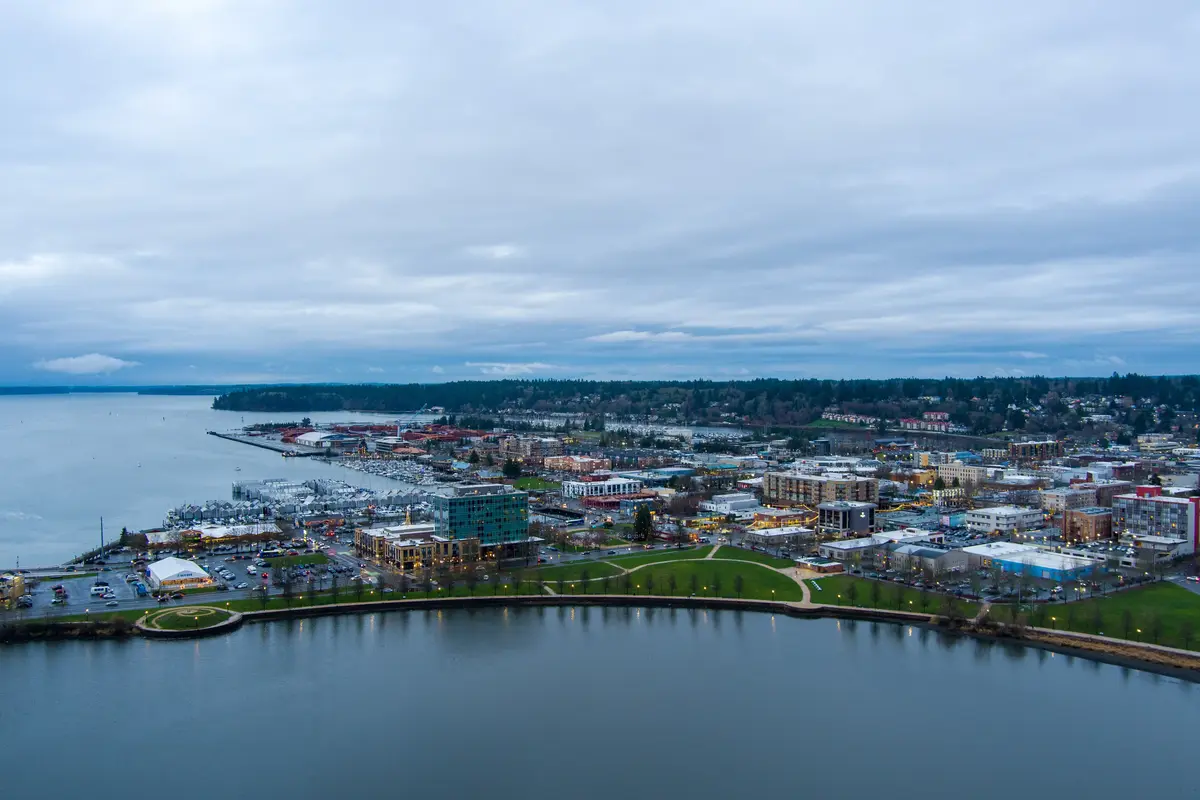
Local Expert Takeaway: If you want a retirement city that keeps you plugged in — where you can walk to the Olympia Farmers Market on Saturday, catch a film at the Capitol Theater on Wednesday, and reach Providence St. Peter Hospital's Regional Heart Program without getting on a freeway — Olympia is genuinely hard to beat in southwest Washington. The tax structure is as clean as it gets for retirees: Washington takes nothing from your Social Security, pension, or retirement account withdrawals. The catch is that single-level downsizing inventory moves fast and the 55+ community selection within city limits is thinner than most buyers expect. Do your homework on Lacey before you rule it out — many Olympia-bound retirees end up buying there and using Olympia as their cultural backyard.
Quick Takeaways & FAQs
✅ Washington's no-income-tax policy means Social Security, pensions, and all retirement account distributions arrive with zero state tax withheld — one of the cleanest retirement tax environments in the country.
⚠️ Single-level and 55+ housing inventory within Olympia proper is genuinely thin; buyers who arrive expecting a wide selection of purpose-built active-adult communities will find the market tighter than anticipated.
📍 Providence St. Peter Hospital at 413 Lilly Rd NE — the region's only 372-bed teaching hospital with a Regional Cancer Center and Regional Heart Program — puts serious specialist care within city limits, not 45 minutes up the interstate.
Is Olympia, WA a good place to retire?
Does Washington State tax retirement income?
What hospital serves retirees in Olympia?
Are there 55+ communities in Olympia?
How does Olympia compare to Lacey for retirement?
Moving to Washington?
Tell us what you need help with and we'll connect you with local resources.
