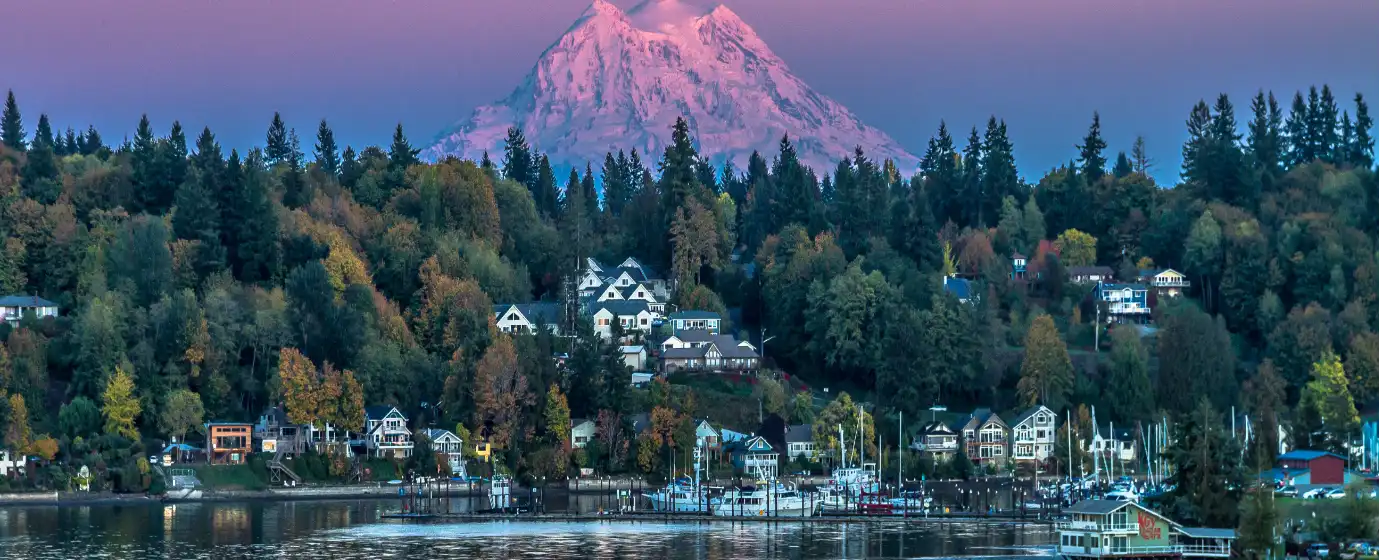
You've probably seen Olympia listed as one of Washington's more affordable state-capital cities and assumed the neighborhoods all feel roughly the same. They don't. The divide between the west side of Olympia — quieter, more wooded, closer to major shopping — and the urban core near the Capitol Campus is real enough that buyers who skip that orientation often end up resenting their purchase within a year. Where you land within this city's eight distinct neighborhoods determines your commute patterns, school assignment, walkability, and lot size more than any single listing detail.
Olympia's economy is anchored by Washington State Government, which means a significant share of residents are state employees, lobbyists, and policy workers who rarely need to leave the South Puget Sound corridor. The Olympia School District holds an A rating, according to Niche, but individual school assignments vary by address in ways that matter to parents with school-age children. The city's fare-free Intercity Transit bus system — one of the few in the state — connects neighborhoods in ways that genuinely reduce car dependence for residents who live near stops, particularly on the Eastside and in Downtown.
Home prices cluster around $536,583 as of July 2026 (Zillow Home Value Index), though that figure masks a wide spread: entry-level Bigelow Highlands listings sit noticeably below that mark, while South Capitol regularly clears it. Compared to Tacoma or the broader King County market, Olympia prices remain substantially lower — which is a primary draw for buyers priced out further north. Day-to-day life here orbits Capitol Lake, the Olympia Farmers Market at Percival Landing, and a walkable downtown anchored by independent coffee roasters and Three Magnets Brewing Co. on Franklin St SE.
Whether you're a state employee relocating from out of area, a remote worker who wants a Pacific Northwest lifestyle without Seattle prices, or a first-time buyer trying to make sense of Thurston County's inventory, the sections below break down Olympia's neighborhoods, price bands, buyer types, rental zones, and the mistakes that cost buyers the most.
The Olympia Reality
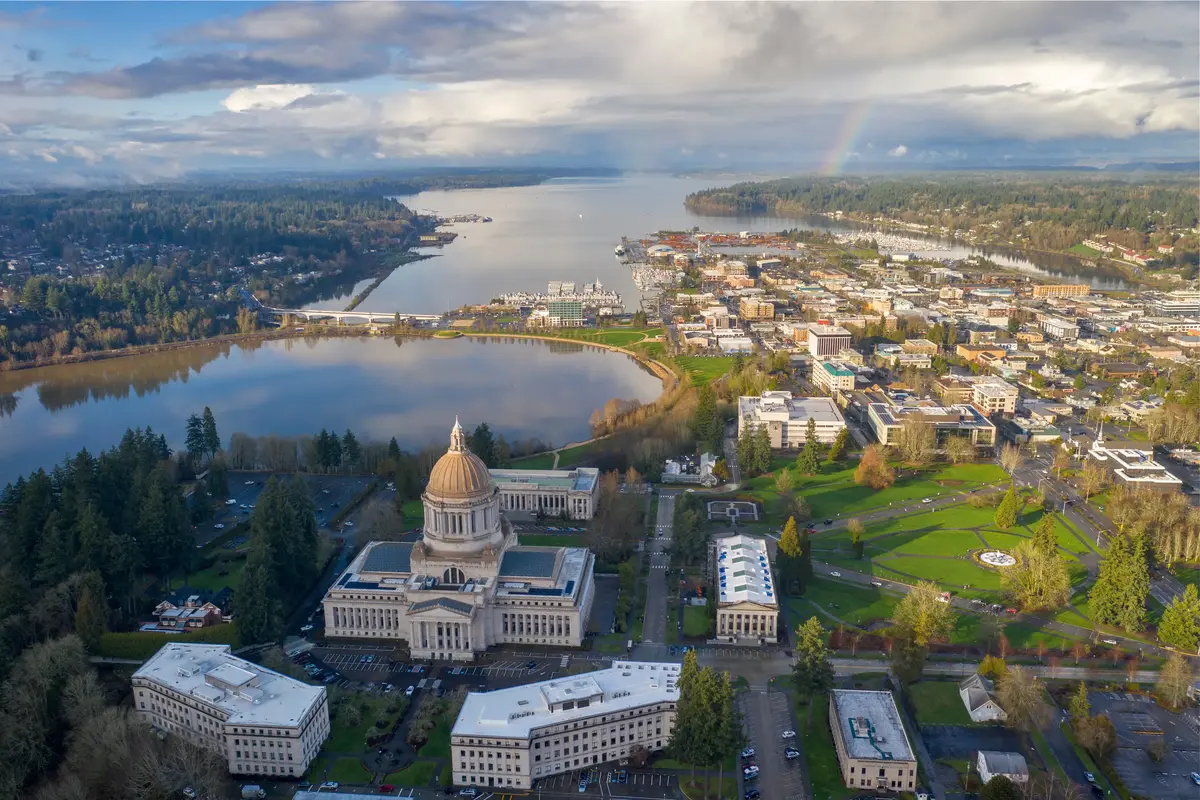
The single most consequential line in Olympia real estate is Interstate 5. Everything west of I-5 — South Westside, Northwest Olympia, and the neighborhoods that feel most suburban — operates on a fundamentally different rhythm than the urban core east of it. The west side offers larger lots, newer construction mixed with midcentury ranches, and proximity to Highway 101 and the major shopping corridors along Harrison Avenue. The east side — Downtown, Eastside, South Capitol, and Northeast — sits closer to the Capitol Campus, walkable streets, and the transit network, but trades square footage for access.
School boundaries add a second layer of complexity. The Olympia School District serves the whole city, but your assigned elementary school shifts based on whether you're a block north or south of certain corridors — and that matters for parents tracking school quality. South Capitol and the neighborhoods directly adjacent to the Capitol Campus tend to draw buyers who prioritize walkable streets and proximity to the recreational grounds of the Capitol Campus itself. Buyers focused on lot size, newer builds, and quieter streets consistently end up on the west side.
The practical surprise for most newcomers: Olympia is not one traffic pattern. Commuters heading north toward Tacoma — a trip that runs roughly 35 minutes on a clear day — funnel through I-5 at the Pacific Avenue and Martin Way interchanges, and those stretches back up predictably during state legislative sessions when government workers compress their schedules. If your job is in Lacey or along Boulevard Road, Northeast Olympia eliminates most of that friction entirely. Choosing a neighborhood without mapping your actual commute route is the most common mistake buyers make here.
Olympia Neighborhoods at a Glance
| Neighborhood | Best For | Price Range (approx.) | Vibe |
|---|---|---|---|
| Downtown Olympia | Walkable Renter | $480,000–$580,000 | Urban core; brewpubs, farmers market, Percival Landing waterfront |
| South Capitol | Families Luxury | $580,000–$700,000+ | Historic district, tree-lined streets, walkable to Capitol Campus |
| Eastside | First-Time Transit | $420,000–$510,000 | Close-in and affordable; 4th Ave corridor, strong bus access |
| Northeast Olympia | Commuter Value | $440,000–$540,000 | I-5 access, near Lacey border, practical and unpretentious |
| Southeast Olympia | Families Quiet | $430,000–$520,000 | Suburban residential quadrant; larger lots, low traffic |
| South Westside | Families School | $500,000–$620,000 | Capitol Lake trails, Decatur Woods Park, top-rated schools |
| Northwest Olympia | Nature Privacy | $480,000–$590,000 | Wooded midcentury and modern homes; West Bay Park access |
| Bigelow Highlands | Value Quiet | $390,000–$450,000 | Wooded, historic feel, quietest entry price in the city |

Best Neighborhood by Buyer Type
| Buyer Type | Best Neighborhood | Why |
|---|---|---|
| First-Time Buyer | Eastside | Entry prices on 4th Ave and nearby streets run below the citywide median, and fare-free bus access means one-car households stay viable. |
| Luxury Buyer | South Capitol | Over 440 historic properties, 70%+ contributing to the National Register district, and prices that reflect genuine scarcity of well-maintained Craftsman and Colonial stock. |
| Walkability Seeker | Downtown Olympia | A Walk Score of 77 means the farmers market, Olympia Coffee Roasters on Capitol Way S, and Three Magnets Brewing Co. on Franklin St SE are genuinely within walking distance. |
| Families with Kids | South Capitol | Walkable streets, proximity to Capitol Campus green space, and consistent placement among the district's stronger elementary school zones. |
| Commuters | Northeast Olympia | Boulevard Road and the I-5 on-ramps near this neighborhood cut meaningful time off the drive north toward Lacey and Tacoma. |
| Large-Lot Buyers | Northwest Olympia | Wooded parcels with midcentury and modern builds give you elbow room and Garfield Nature Trail Park at the edge of the neighborhood. |
| Renters | Downtown Olympia | The highest concentration of rental inventory in the city, closest to transit, and the only neighborhood where living car-free is genuinely realistic. |
Looking to buy in Olympia? Estimate your payment.
Enter your numbers to see an estimated monthly mortgage payment.
Estimate only. Excludes HOA fees and mortgage insurance. The interest rate above is a starting point, not a quoted rate — replace it with your own to see real numbers. Insurance is a flat placeholder, not a Olympia quote.
Most Popular Neighborhoods in Olympia
1. Downtown Olympia
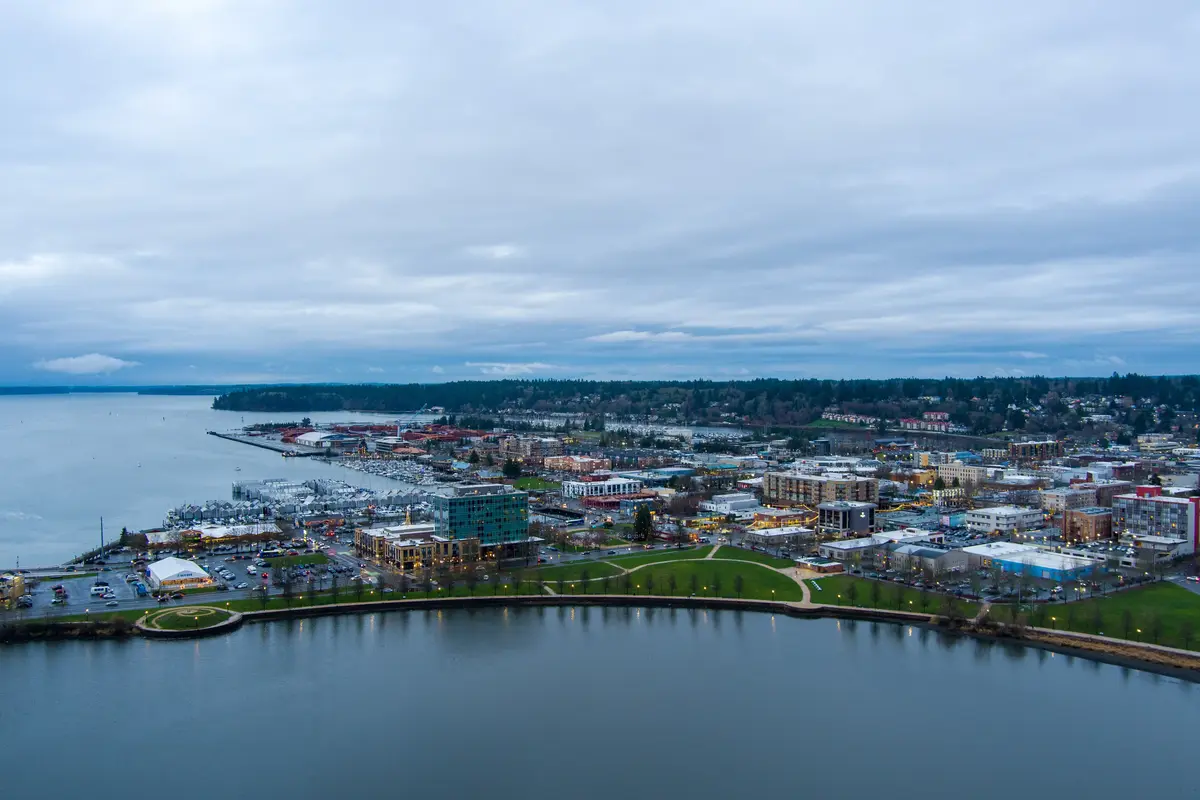
Downtown is the only part of Olympia where the city feels genuinely urban — Percival Landing puts you on the water, the Olympia Farmers Market runs steps from the inlet, and Three Magnets Brewing Co. on Franklin St SE anchors an independent food-and-drink scene that punches above what a city of 56,000 might suggest. The honest trade-off: the urban energy that makes Downtown appealing also means street-level noise, smaller lot sizes, and some blocks where the character shifts quickly. Prices typically run $480,000–$580,000 for the attached and smaller single-family stock that dominates here.
Best for: Renters, on-foot commuters, and buyers who want Olympia's most walkable streets without moving to Seattle.
2. South Capitol
South Capitol was added to the National Register of Historic Places in 1991, and with more than 440 primary properties — over 70% of them classified as contributing to the district's historic character — the architectural consistency here is real, not marketing copy. Buyers pay a premium for that: prices typically run $580,000–$700,000+, and well-restored Craftsmans on the right block clear the top of that range quickly. The downside is that renovation costs on older homes can be significant, and buyers expecting modern systems in a century-old house will face surprises.
Best for: Families with school-age children, buyers who want walkable streets and proximity to Capitol Campus green space, and anyone who values architectural character over square footage.
3. Eastside
Eastside sits directly east of Downtown with 4th Avenue as its spine and Intercity Transit stops woven throughout — it's the neighborhood where fare-free bus service most directly changes the math on car ownership. Prices in the $420,000–$510,000 range make it one of the more accessible in the city, but buyers should know that the housing stock is mixed: 1950s and 1960s construction dominates, and condition varies block by block. Those coming from higher-cost Puget Sound markets find the entry point genuinely useful; those expecting South Capitol's architectural polish will be disappointed.
Best for: First-time buyers, state employees who work downtown, and households comfortable with older construction in exchange for lower prices.
4. Northeast Olympia
Northeast Olympia earns its reputation as the commuter's neighborhood — Boulevard Road feeds directly to I-5, and the Lacey border is close enough that residents can use both cities' services without much friction. Prices in the $440,000–$540,000 range reflect a practical, suburban character: the neighborhood isn't trying to be anything other than functional, which makes it genuinely useful for buyers whose jobs require frequent north-south travel. The trade-off is that it lacks the walkability and visual interest of the neighborhoods closer to the Capitol.
Best for: Commuters heading to Lacey or Tacoma, value-focused buyers, and households that prioritize highway access over urban amenities.
5. Southeast Olympia
Southeast Olympia functions more as a directional descriptor than a formally branded neighborhood — the southeastern residential quadrant of the city encompasses areas like Indian Creek and Goldcrest that share a low-traffic, suburban character more than a single cohesive identity. Lots tend to run larger here than in the urban core, and the pace is noticeably quieter. Prices typically fall in the $430,000–$520,000 range, but the compromise is distance: getting to Downtown or the Capitol Campus involves a drive, and the area's transit coverage is thinner than neighborhoods closer to 4th Avenue.
Best for: Families who want larger lots and quieter streets and don't depend on walkable urban access for daily life.
6. South Westside
South Westside consistently ranks among the most competitive areas in Olympia — Capitol Lake trails and Decatur Woods Park sit within the neighborhood, major shopping along Harrison Avenue is close, and the schools assigned to this area draw consistent praise within the Olympia School District. Prices run $500,000–$620,000, reflecting that demand. Buyers who move here expecting to be close to Downtown should reality-check the drive: crossing the I-5 bridge during peak hours adds real time, and the neighborhood's orientation is westward toward shopping rather than eastward toward the urban core.
Best for: Families prioritizing school quality, buyers who want Capitol Lake access and retail convenience in the same zip code.
7. Northwest Olympia
Northwest Olympia delivers the wooded, Pacific Northwest aesthetic that draws many people to Washington in the first place — midcentury and modern homes sit among mature trees, Garfield Nature Trail Park threads through the area, and West Bay Park provides waterfront access without the urban density of Downtown. Prices in the $480,000–$590,000 range reflect the appeal, and larger parcels here give buyers the privacy that's genuinely hard to find closer to the Capitol. The downside: Harrison Avenue's retail corridor is convenient, but downtown Olympia requires a real drive, and the street network isn't designed for walking to much.
Best for: Buyers who want wooded lots, outdoor access, and a quieter pace without going fully rural.
8. Bigelow Highlands
Bigelow Highlands is the most affordable established neighborhood in Olympia, with prices typically running $390,000–$450,000 — well below the citywide Zillow Home Value Index of $536,583 (July 2026). The Bigelow House Museum at 918 Glass Ave., on the National Register since 1987, anchors the neighborhood's historic identity, and the wooded character feels genuinely removed from the Capitol campus activity. The honest catch: "affordable" here means older homes with deferred maintenance concerns, and buyers relocating from higher-cost markets sometimes underestimate what entry-level Olympia inventory actually looks like on inspection day.
Best for: Value-focused buyers, those relocating from higher-cost Puget Sound markets, and anyone willing to take on a project in exchange for Olympia's lowest entry price.
Common Mistakes Buyers Make in Olympia
Assuming the West Side and East Side Are Interchangeable
Buyers who tour a South Westside home and a South Capitol home on the same afternoon often assume they're comparing apples of similar character. They're not. The I-5 crossing between them creates a psychological and practical divide — South Westside faces west toward Harrison Avenue retail and Capitol Lake trails, while South Capitol faces east toward the Capitol Campus and Downtown. Buying on one side while mentally living on the other is a reliable path to buyer's remorse.
Underestimating the Legislative Session Commute
The drive north on I-5 toward Tacoma runs about 35 minutes under normal conditions — but Olympia's role as the state capital means the Pacific Avenue and Martin Way interchanges back up significantly during the January-through-April legislative session, when state workers compress schedules and hearings run late. Buyers who test their commute in July and base their neighborhood decision on that experience are often unpleasantly surprised by February. Northeast Olympia's Boulevard Road access to I-5 north genuinely reduces this exposure; Downtown or South Capitol buyers heading north don't have the same shortcut.
Chasing Square Footage in Bigelow Highlands Without an Inspection Budget
Bigelow Highlands offers the most square footage per dollar in Olympia, which draws buyers who've been priced out of larger homes elsewhere. The trap: homes in this price band often carry deferred maintenance that doesn't show in listing photos. Skimping on a thorough inspection — or waiving it in a competitive offer — turns a value buy into an expensive renovation. Budget for the inspection and a meaningful repair reserve before making an offer in this neighborhood.
Ignoring School Boundary Specifics Within the District
The Olympia School District is consistently among the stronger districts in the region, but not every elementary school within it performs identically, and boundaries don't always follow the logic of neighborhood names. A house on the south end of the Eastside may feed a different elementary than one four blocks north. Families with school-age children who buy based on neighborhood name without verifying the specific school assignment are taking a real gamble — confirm the exact boundary on the district's enrollment map before going under contract. See the full Olympia schools breakdown for boundary details and school-level context.
Best Areas to Rent in Olympia
| Area | Ideal For | Typical Rent Range | Trade-off |
|---|---|---|---|
| Downtown Olympia | Singles, remote workers, state employees | $1,400–$2,000/mo (1BR–2BR) | Highest on-foot access, lowest parking and lot-size expectations |
| Eastside | Budget-focused renters, transit users | $1,200–$1,700/mo (1BR–2BR) | Older stock; condition varies significantly by unit |
| South Westside | Families, professionals near shopping | $1,600–$2,200/mo (2BR–3BR) | Higher rents reflect school access and Capitol Lake proximity |
| Northeast Olympia | Commuters, Lacey workers | $1,400–$1,900/mo (2BR–3BR) | Suburban character; limited walkability to amenities |
| Northwest Olympia | Renters wanting space and quiet | $1,500–$2,100/mo (2BR–3BR) | Wooded setting, but rental inventory is thinner than east-side areas |
Olympia's fare-free Intercity Transit system gives renters in Downtown and Eastside a genuine advantage: a household that can operate with one fewer car saves meaningfully against any rent differential. Rental inventory tightens noticeably at the start of each legislative session in January, so timing a lease renewal or search around that window is worth planning ahead.
Local Expert Takeaway: The buyers who settle in Olympia happily are almost always the ones who committed to a side of I-5 before shopping. West-siders — South Westside, Northwest Olympia — get Capitol Lake trails, Decatur Woods Park, and the Harrison Avenue corridor without fighting downtown traffic. East-siders — South Capitol, Downtown, Eastside — get the Olympia Farmers Market at Percival Landing, Three Magnets Brewing Co. on Franklin St SE, and a fare-free bus system that actually changes how you use the city. Bigelow Highlands is the city's best-kept value play, but only for buyers who enter with realistic expectations about older construction. Don't let a single Saturday tour drive a six-figure decision — Olympia rewards the buyer who maps their actual daily route first.
Quick Takeaways & FAQs
✅ Olympia's fare-free Intercity Transit system makes Downtown and Eastside genuinely car-optional — a meaningful financial advantage renters and buyers in those neighborhoods hold over the rest of the city.
⚠️ The west side (South Westside, Northwest Olympia) and the east side (South Capitol, Downtown) feel like different cities in terms of pace and access — buying without understanding that divide is the most common source of regret here.
📍 South Capitol's National Register Historic District status (1991) covers over 440 properties and creates real scarcity: well-restored Craftsmans on the right block simply don't come available often, and prices reflect it.
What is the most affordable neighborhood in Olympia, WA?
Which Olympia neighborhood is best for families with kids?
Is Downtown Olympia a good place to live?
How does the west side of Olympia compare to the east side?
What should I know about renting in Olympia before signing a lease?
Moving to Washington?
Tell us what you need help with and we'll connect you with local resources.
