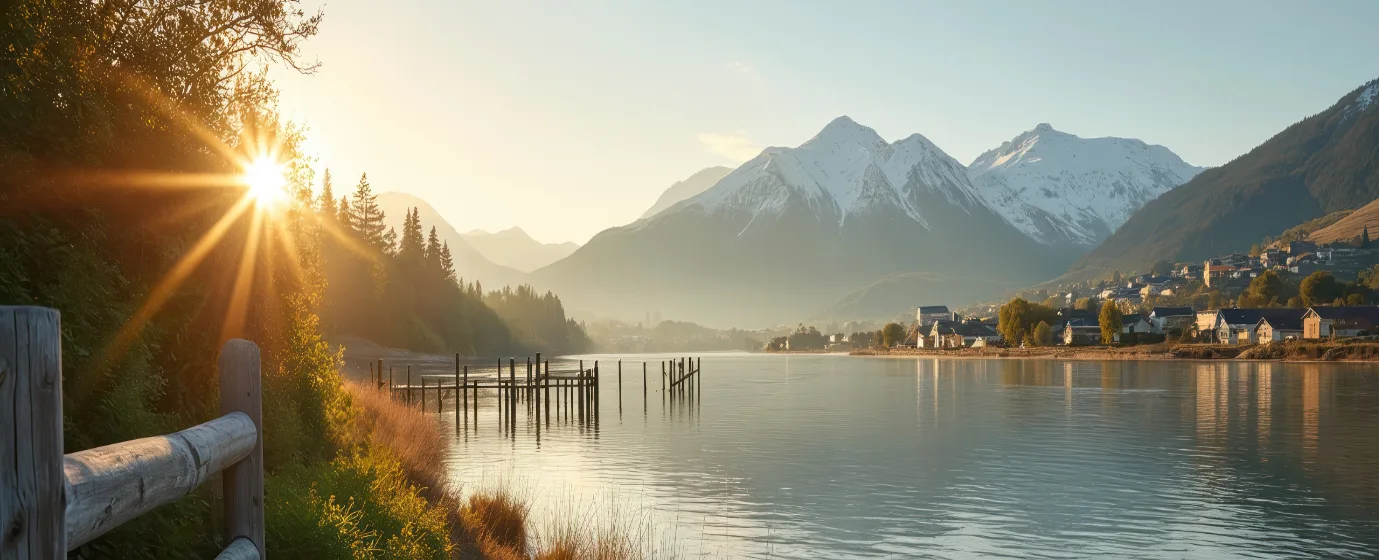
Maybe you've been priced out of Seattle's suburbs and someone mentioned Snohomish County. Maybe you already live in the area and want to stay close to family without the Everett price tag. Whatever brought you here, Marysville has a retirement pitch that holds up on paper — and mostly holds up in person, with one important caveat: this is not a walkable city for most of its footprint, and retirees who picture strolling to coffee, the pharmacy, and dinner will want to calibrate expectations carefully before making an offer. For everyone else — people who are comfortable driving and want a quieter base near genuine urban amenities — Marysville makes a compelling case. It sits along I-5 in Snohomish County, roughly midway between Everett to the south and Arlington to the north, with the Puget Sound lowlands giving way to Cascade Range foothills to the east.
Washington State itself is the starting point for any retirement calculus here. There is no state income tax — not on Social Security, not on pension distributions, not on IRA withdrawals. That single fact changes the math for most retirees more than the home price does. The area's employment base and the regional hospital system keep the local economy stable and ensure the hospital fifteen minutes down I-5 is well-funded and well-staffed. The city's family orientation means retirees moving here will find a community built around families as much as older adults, for better and worse.
Home prices sit at $574,733 as of the Zillow Home Value Index for June 2026 — meaningfully below Everett and well below the Seattle metro core, though still a real number that requires planning. Day-to-day costs track closely with the broader Snohomish County average: groceries and gas are Pacific Northwest prices, not bargain-basement, but the absence of income tax offsets a meaningful chunk of what fixed-income households would otherwise pay elsewhere. The cost-of-living page breaks down the full picture. Outdoor access is genuine — Ebey Waterfront Park, Jennings Park, and the trails along the Snohomish County network are within reach — and the Hibulb Cultural Center near the Tulalip Reservation adds a cultural anchor most comparably priced suburbs can't match.
Whether you're seriously weighing a move or just starting the research, the sections below cover everything a retiree actually needs to know about Marysville: who the city genuinely suits, what healthcare looks like, how Washington's tax structure benefits retirees, where the walkable pockets are, what downsizing options exist, and how the city compares to nearby retirement alternatives.
Why Retirees Are Choosing Marysville
The retirees who land happily in Marysville tend to share a few traits: they own a car and don't mind using it, they want proximity to a real city without paying city prices, and they value calm over convenience. If that describes you, the math is hard to argue with — Washington keeps your retirement income, and a Zillow Home Value Index median of $574,733 (June 2026) means you may be able to right-size without completely cleaning out equity from a more expensive market.
Marysville also suits retirees who want to stay embedded in a community rather than retreating into a gated adult enclave. The city is genuinely mixed-age, with families, working adults, and older residents all sharing the same parks and coffee shops. Comeford Park on State Avenue sees grandparents and grandchildren on the same benches most weekends. That organic, multi-generational texture appeals to people who retired early and aren't ready for a purely senior social world.
The honest case against Marysville in retirement is shorter but worth reading. If you have significant mobility limitations or don't drive, most of the city will frustrate you — outer neighborhoods like Smokey Point and Getchell require a car for nearly every errand. And if world-class specialist care needs to be five minutes away, not fifteen, Marysville won't satisfy that requirement either. Retirees who have relocated from denser metro areas — Seattle, the Eastside, even Bellevue — sometimes describe a quiet-suburb adjustment period that takes longer than expected. The city rewards patience and a car; it taxes neither income nor patience particularly hard.
Healthcare & Medical Access in Marysville
Your Local Starting Point
Providence Medical Group operates a primary care clinic directly in Marysville, offering family medicine and internal medicine with extended office hours. For most routine retirement health needs — annual physicals, prescription management, chronic-condition follow-ups — you don't have to leave the city. The clinic feeds directly into the Providence system's specialist network, which matters when referrals are needed.
The Hospital Fifteen Minutes South
Providence Regional Medical Center Everett is Marysville's nearest major hospital, and it punches well above its suburban-anchor weight. The facility carries 571 licensed beds, more than 1,000 physicians on staff, and holds a four-star Overall Hospital Quality Rating from the Centers for Medicare & Medicaid Services — that's not a local-press citation, it's a federal quality measure that matters for Medicare beneficiaries specifically. It operates as a Level II trauma center, which means it handles the full range of emergency and surgical cases short of the most complex tertiary interventions.
Providence Regional Medical Center Everett accepts Medicare and Medicaid (Washington Apple Health), and has assistance programs for lower-income or uninsured patients. For retirees transitioning from employer coverage to Medicare, that continuity within the Providence system makes the switch considerably smoother.
The Honest Distance Reality
Fifteen minutes on I-5 is fifteen minutes on a clear midday run. During peak commute hours, that drive from Marysville to Everett can stretch to thirty minutes or more. For scheduled appointments, that's a manageable inconvenience. For acute emergencies — cardiac events, strokes — the Level II designation means Providence Everett handles the large majority of cases, but the rare situation requiring a Level I trauma center or highly specialized neurology or oncology sub-specialty will route to the University of Washington Medical Center or Swedish in Seattle, roughly forty-five to fifty minutes south under normal conditions. Retirees with known cardiovascular or oncology needs should weigh that reality honestly before committing to any North Snohomish County address.
The practical upside: Marysville is not rural medicine. The infrastructure gap between living here and living in Everett itself is smaller than the address gap implies, largely because Providence runs a coordinated regional system rather than a set of disconnected facilities.
The Retiree Budget in Marysville
Washington's Tax Advantage Is Real
Washington has no personal income tax — full stop. Your Social Security check, pension distribution, IRA withdrawal, and 401(k) income are all untaxed at the state level. For a household drawing $60,000 to $90,000 annually in retirement income, that produces a meaningful difference in take-home dollars compared to states like Oregon (which taxes retirement income) or California. This is not a technicality buried in the code; it's a foundational feature of Washington's tax structure that reliably benefits retirees on fixed incomes.
Washington's 7% capital gains tax applies only to long-term gains above $278,000 annually (the 2025 standard deduction, indexed for inflation), and it specifically exempts retirement accounts — 401(k)s, IRAs, Roth IRAs, and defined-benefit plans — as well as real estate sales. The vast majority of retirees will never touch this threshold. High-net-worth retirees with large non-retirement investment portfolios should consult a financial advisor, but for most people reading this, the capital gains tax is simply not a factor in day-to-day retirement planning.
Property Taxes and Senior Relief
Marysville's effective property tax rate runs approximately 0.79% — below the national average of roughly 1.0% and noticeably below many comparable Pacific Northwest markets. Washington also offers property tax relief programs for qualifying seniors, including options that can freeze assessed home value for tax purposes, which provides meaningful budget predictability on a fixed income. Snohomish County administers these programs; eligibility is based on age and income, and applications are worth filing early.
Daily Cost of Living on a Fixed Income
Groceries, gas, and utilities in Marysville run at Pacific Northwest prices — not cheap by national standards, but offset by the income-tax advantage. The retail corridor along I-5 gives residents access to a full range of stores, including warehouse options, without the drive to Everett. For retirees watching the grocery budget carefully, the proximity to major retail infrastructure is a genuine daily convenience. See the full breakdown on the cost-of-living page.
Looking to buy in Marysville? Estimate your payment.
Enter your numbers to see an estimated monthly mortgage payment.
Estimate only. Excludes HOA fees and mortgage insurance. The interest rate above is a starting point, not a quoted rate — replace it with your own to see real numbers. Insurance is a flat placeholder, not a Marysville quote.
Walkability, Community & Staying Active in Marysville
The Walkability Reality
The city-wide Walk Score of 23 is accurate for most of Marysville's footprint — Smokey Point, Getchell, and South Marysville require a car for virtually every errand. But that figure obscures a meaningfully different reality in Downtown Marysville, where the State Avenue corridor scores as high as 72, putting it in the "Very Walkable" range. Retirees who prioritize on-foot access to coffee, a pharmacy, a post office, and lunch should focus their search specifically on the downtown core and the Lakewood area near State Avenue — and be skeptical of listings elsewhere in the city that describe themselves as walkable.
The terrain is largely flat through the central and southern parts of the city, which helps. Ebey Waterfront Park and Jennings Park are accessible by foot from downtown and offer waterfront paths that hold up year-round in Marysville's mild, wet winters. The Pacific Northwest's grey November-through-March stretch does require either embracing rain or accepting that outdoor walks involve a jacket — newcomers from drier climates regularly underestimate how persistent the overcast season feels before they've lived through one.
Community Anchors for Older Adults
The Hibulb Cultural Center and Natural History Preserve — a Tulalip Tribes facility just outside the city — is one of the genuinely distinctive amenities in this part of Snohomish County. Its approximately 23,000 square feet of exhibit space and 50-acre natural history preserve make it substantive enough for repeat visits, not just a first-month novelty. Admission is free on the first Thursday of every month (Tuesday–Friday 10 AM–5 PM, Saturday–Sunday 12 PM–5 PM), which fits a retiree's flexible schedule better than most cultural institutions. The Marysville Opera House on State Avenue hosts live performances throughout the year, offering a local arts calendar that doesn't require the drive to Everett.
For social connection, the downtown corridor anchors the most natural gathering rhythm in the city. Independent breakfast spots, a craft brewery taproom set inside a repurposed historic building on State Avenue, and the farmer's market season give retirees the kind of recurring, low-structure social infrastructure that builds genuine community over time — more organically than a scheduled senior activity ever quite does.
Staying Active
Marysville's parks system — Comeford Park, Ebey Island, and the connections into broader Snohomish County trail networks — supports walking, cycling, birdwatching, and kayaking without leaving the immediate area. The Cascade Range foothills begin within twenty to thirty minutes to the east, extending the outdoor range considerably for retirees who still hike. For indoor fitness, the city has standard gym options, and Everett's broader recreation infrastructure is a short I-5 drive. Senior-specific fitness programming exists within the licensed senior communities in the area, even for residents who haven't moved into one.
Right-Sizing: Downsizing in Marysville
What the Market Actually Offers
Marysville's senior housing inventory is broader than most people expect for a city of its size. Approximately 30 to 38 licensed senior communities operate in the area for 2026, spanning the full continuum from independent retirement living through assisted living, memory care, and adult family homes. That's not all concentrated in Marysville proper — the figure includes Snohomish County options accessible from Marysville — but it means retirees aren't limited to one or two choices and a waitlist.
Windsor Square Retirement Community is Marysville's established independent retirement living option, offering one- and two-bedroom apartments with dining, recreational programming, housekeeping, maintenance services, and transportation to appointments and grocery shopping built into the model. For retirees who want to eliminate the maintenance burden of homeownership without moving into a care facility, this type of community often makes more practical sense than a smaller condo purchase — especially when factoring in the coordination cost of managing a home while managing health.
Single-Level and Patio Home Options
Single-story homes in Marysville's established neighborhoods — particularly in South Marysville and Cedarcrest — do exist, though inventory tightens quickly when the search criteria add "single-level" to an already supply-constrained market. Buyers downsizing from a larger family home often find that the right single-level property takes longer to find here than the broader home market would suggest, particularly if the goal is a smaller footprint in the $450,000–$550,000 range. Working with an agent who knows which subdivisions built predominantly single-story product in the 1990s and 2000s saves significant search time.
Purpose-built 55+ communities with the HOA maintenance model — lawn care, exterior upkeep included — are less common inside Marysville's city limits than in some comparably sized Pacific Northwest markets. Stanwood to the northwest and parts of south Everett have some options worth comparing if that specific model is the priority. The broader Snohomish County inventory makes a regional search more productive than a strictly city-limit search for active-adult buyers.
The Honest Inventory Read
Marysville is not oversupplied with retirement-optimized housing. The city's growth over the past decade skewed toward family-oriented single-family homes in the $2,000-plus square foot range. Retirees right-sizing from a large family home have real options — Windsor Square for rental independent living, the broader licensed community market for care-level needs, and periodic single-level resale listings — but should not expect the kind of deep inventory that exists in larger retirement-destination markets. Starting the search early and being flexible on the exact neighborhood gives significantly better outcomes than waiting until the timeline is urgent.
Marysville vs Nearby Retirement Destinations
| City | Cost vs Marysville | Primary Hospital | Walkability | Senior Living Depth | Overall Retirement Fit |
|---|---|---|---|---|---|
| Marysville | Anchor | Providence Regional Medical Center Everett (~15 min) | Car-dependent overall; downtown State Ave corridor walkable | Moderate — 30–38 licensed communities countywide | Quiet Value Good for drivers who want proximity to Everett |
| Everett | Pricier | Providence Regional Medical Center Everett (on-site) | Noticeably more walkable downtown; waterfront access | Strong — full urban senior living supply | Walkable Better for those who want hospital steps away and more urban texture |
| Arlington | Noticeably cheaper | Providence Everett (~25–30 min) | Small-town walkable core; limited overall | Thin — fewer licensed communities | Quiet Nature Best for rural-leaning retirees who prioritize cost and quiet over amenities |
| Lake Stevens | About the same | Providence Everett (~20–25 min) | Car-dependent; limited walkable core | Limited — smaller city, fewer options | Nature Families Appeals to active retirees who want lake access; less senior infrastructure |
| Stanwood | Noticeably cheaper | Providence Everett (~35–40 min) | Small walkable downtown; car-dependent otherwise | Moderate — some 55+ options; growing | Quiet Views Strong value play with Puget Sound proximity; longer hospital drive is the real catch |
| Tulalip | About the same | Providence Everett (~15–20 min) | Very car-dependent; limited walkable options | Thin — primarily single-family residential | Privacy Nature Suits retirees prioritizing space and quiet over community infrastructure |
Everett wins outright on healthcare proximity and walkability — if either of those factors is non-negotiable, pay the higher price and live closer to Providence Regional Medical Center Everett rather than fifteen minutes from it. Arlington and Stanwood both undercut Marysville on cost meaningfully, but both extend the hospital drive and thin out the senior living inventory considerably.
For retirees who want the right balance of price, hospital access, and senior housing options without committing to Everett's denser urban environment, Marysville holds its own. Stanwood is worth a serious look for anyone with more flexibility on the hospital-distance question and a stronger preference for waterfront views and a slower pace. Lake Stevens draws active retirees who want recreational water access, but the senior infrastructure gap is real enough that it works better as a lifestyle choice than a practical retirement base.
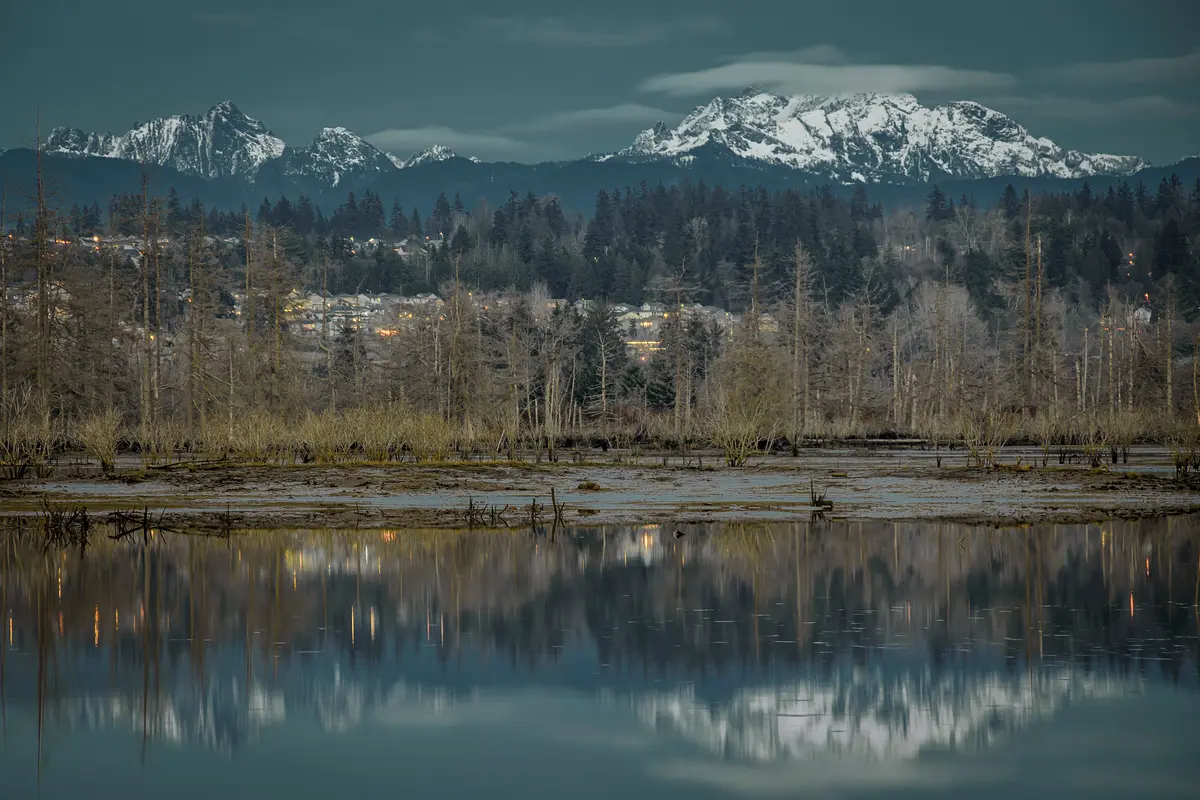
Local Expert Takeaway: Marysville's retirement case rests on three things working together: Washington's zero income tax on retirement income, the Providence Medical Group clinic in town feeding into a strong Level II hospital fifteen minutes south in Everett, and a home price that still leaves equity headroom for most downsizers. The catch is the car dependency — plan to drive for almost everything unless you land in the downtown State Avenue corridor, and do an honest accounting of how that plays out as mobility changes over time. Retirees who nail that housing search — single-level near downtown, or a community like Windsor Square that removes the maintenance equation entirely — tend to stay happily. Those who buy in Smokey Point or Getchell expecting walkability are usually the ones reconsidering the move within two years.
Quick Takeaways & FAQs
✅ Washington State taxes zero dollars of your Social Security, pension, or IRA withdrawals — one of the strongest retirement-income tax structures in the country.
⚠️ Most of Marysville is car-dependent, and retirees who need walkability must specifically target the downtown State Avenue corridor — the city's overall Walk Score of 23 is not marketing spin, it's the daily reality for most addresses.
📍 The Hibulb Cultural Center and Natural History Preserve near the Tulalip Reservation offers free admission the first Thursday of every month, making it a genuinely recurring community anchor rather than a one-time tourist stop.
Is Marysville a good place to retire on a fixed income?
What hospital serves Marysville retirees?
Are there 55+ or active-adult communities in Marysville?
Is Marysville walkable for retirees who don't want to drive everywhere?
Does Washington State tax Social Security or retirement income?
Moving to Washington?
Tell us what you need help with and we'll connect you with local resources.
