Most people moving to Marysville picture a bedroom community — a place to sleep between shifts at Boeing or commutes into Everett. What catches them off guard in month three is how often they end up outside. The city sits where Ebey Slough meets the Snohomish River Estuary, and that geography drives an outdoor life that goes well beyond what the strip malls along 88th Street would suggest. River otters patrol the slough in the early mornings. Bald eagles are a Tuesday sighting, not a special occasion. Over 200 bird species have been logged along one two-mile trail alone.
The parks system here is genuinely serious. Marysville holds a Tree City USA designation and has invested in a connected network of waterfront trails, restored estuary habitat, and a 61-acre park complex that anchors the center of the city. Weekend programming runs year-round — a Summer Concert Series, a Kiwanis Fishing Derby, outdoor movie nights — so the parks function as actual community infrastructure, not just green lines on a zoning map. Kids with energy to burn have easy access to youth sports through the parks system as well; see the full picture at the schools and activities page.
The trail network is still growing, which matters if you're choosing a neighborhood. The Qwuloolt Estuary restoration is one of the more dramatic ecological projects in Snohomish County — a dam breached in 2015 after more than a century, tidal flats reclaimed, and a shoreline trail network now threading through the result. Future phases will eventually complete a five-mile loop connecting downtown to the Sunnyside neighborhood. Whiskey Ridge in the east delivers panoramic views of Puget Sound and ties into the regional 30-mile Centennial Trail. The waterfront is a launch point, not a scenic backdrop you drive past.
Whether you're already under contract or still weighing your options, the sections below break down Marysville's signature parks, the water-access infrastructure, the trail system from neighborhood paths to regional connectors, and the seasonal recreation calendar that actually shapes daily life here.
Signature Parks: What the City Has Built and Why It Matters
Jennings Park: The 61-Acre Heart of the System
When locals say they're going to the park, they usually mean Jennings. What looks like one park is actually two connected ones: Jennings Memorial Park (30 acres of Pacific Northwest forest, wetlands, and meandering wooded trails, plus playgrounds and ball fields) and Jennings Nature Park (31 acres with wetland overlooks, a pump track, and open meadow space), joined by a paved trail. Together they total approximately 61 acres in the center of the city.
The Memorial side hosts the WSU Master Gardeners Demonstration Site and the Gehl House Museum — a 100-plus-year-old restored farmhouse maintained by the Marysville Historical Society. These aren't afterthoughts; they're the reason Jennings functions as a civic anchor rather than just a green buffer. The annual Summer Concert Series and Popcorn in the Park movie nights draw consistent crowds through summer, and the Easter Egg Hunt and Kiwanis Fishing Derby fill out the spring calendar.
What the pump track signals about Jennings Nature Park is worth noting: the city didn't design this purely for passive use. Families with kids who bike will find it genuinely useful, not just decorative.
Comeford Park: The Neighborhood Hub Downtown
Comeford Park at 514 Delta Ave. is smaller in scale but punches above its footprint. The spray park that opened in 2015 has become the default summer afternoon spot for families in Downtown Marysville — it's free, it's walkable, and on a 75-degree July day the line of kids waiting their turn tells you everything about demand.
Park Lake inside Comeford is the part most newcomers don't expect: a 17-acre lake, originally a gravel pit, now stocked with rainbow trout by the Washington Department of Fish and Wildlife. Grass carp were introduced in 2003 to control Eurasian milfoil, which is a detail that sounds bureaucratic until you're actually catching trout in the middle of a city of 76,000 people. The park also has a Rotary Pavilion, a BBQ Pavilion added in 2017, and a community center with meeting rooms — open daily from 7 AM to 10 PM.
| Park | Size | Key Features | Best For |
|---|---|---|---|
| Jennings Memorial Park | 30 acres | Forest trails, ball fields, playgrounds, Gehl House Museum, WSU Garden | Families Nature |
| Jennings Nature Park | 31 acres | Wetland overlooks, pump track, open space, picnic tables | Families Nature |
| Comeford Park | City block | Park Lake (trout fishing), spray park, Rotary Pavilion, BBQ Pavilion | Families Walkable |
| Ebey Waterfront Park | 5.4 acres | 4-lane boat ramp, dock, nautical playground, fishing, picnic pavilion | Nature Views |
| Harborview Park | 11.5 acres | Snohomish River Estuary waterfront, fishing, wildlife viewing, trails | Nature Quiet |
Harborview Park's 11.5 acres sit directly adjacent to the intertidal lands of the Snohomish River Estuary and is planned to eventually tie into the Ebey Waterfront Trail — when that connection completes, it will extend the continuous waterfront walk significantly.
Water Access: Ebey Slough, the Estuary, and Getting a Boat In
Ebey Waterfront Park: The Launch Point
Ebey Waterfront Park at 1404 1st Street is where the water infrastructure of Marysville actually lives. The 5.4-acre park opened in August 2005 and was built around a four-lane boat ramp — one of the more substantial public launch facilities in North Snohomish County. Forty-six boat-trailer stalls and 32 general-purpose parking spots handle the weekend load without the chaos you'd find at smaller single-ramp facilities.
The fee structure changed in January 2023: launches now cost $10 per 24-hour period, payable through the ParkMobile app. If you're going out regularly, the annual pass at $75 (June through June) is worth the math. Passes are sold at the Marysville Community Center at 1015 State Ave., not at the park itself — a detail that trips up first-timers who show up on a Saturday morning without a pass and no cell signal to download an app.
Beyond the ramp, the park has a dock, a picnic pavilion, public fishing spots along Ebey Slough, and a nautical-themed playground that makes the waterfront genuinely usable for families rather than just boaters. River otters work the slough regularly in early morning; great blue herons are a near-daily sighting year-round.
The Qwuloolt Estuary: An Ecological Restoration You Can Walk Into
The Qwuloolt Estuary restoration is one of those civic projects that sounds dry on paper and looks extraordinary in person. The dam holding back the tidal flats was breached in 2015 after more than 100 years, reclaiming the wetlands and beginning a recovery that's still actively unfolding. The first phase of a trail network opened in April 2017, offering 1.8 miles of shoreline access in two separate sections divided by the estuary's dike.
The two sections aren't yet connected — that's important to understand before you plan a loop. Future phases are designed to complete a five-mile circuit around the estuary and eventually link downtown Marysville to the Sunnyside neighborhood on foot. When that builds out, it will be a genuine regional trail asset. For now, each section is worth the walk independently, particularly for birding and wildlife photography where the restored tidal habitat draws species you won't find inland.
Trails: From the Slough to the Salish Sea
The Ebey Waterfront Trail: The Accessible Everyday Walk
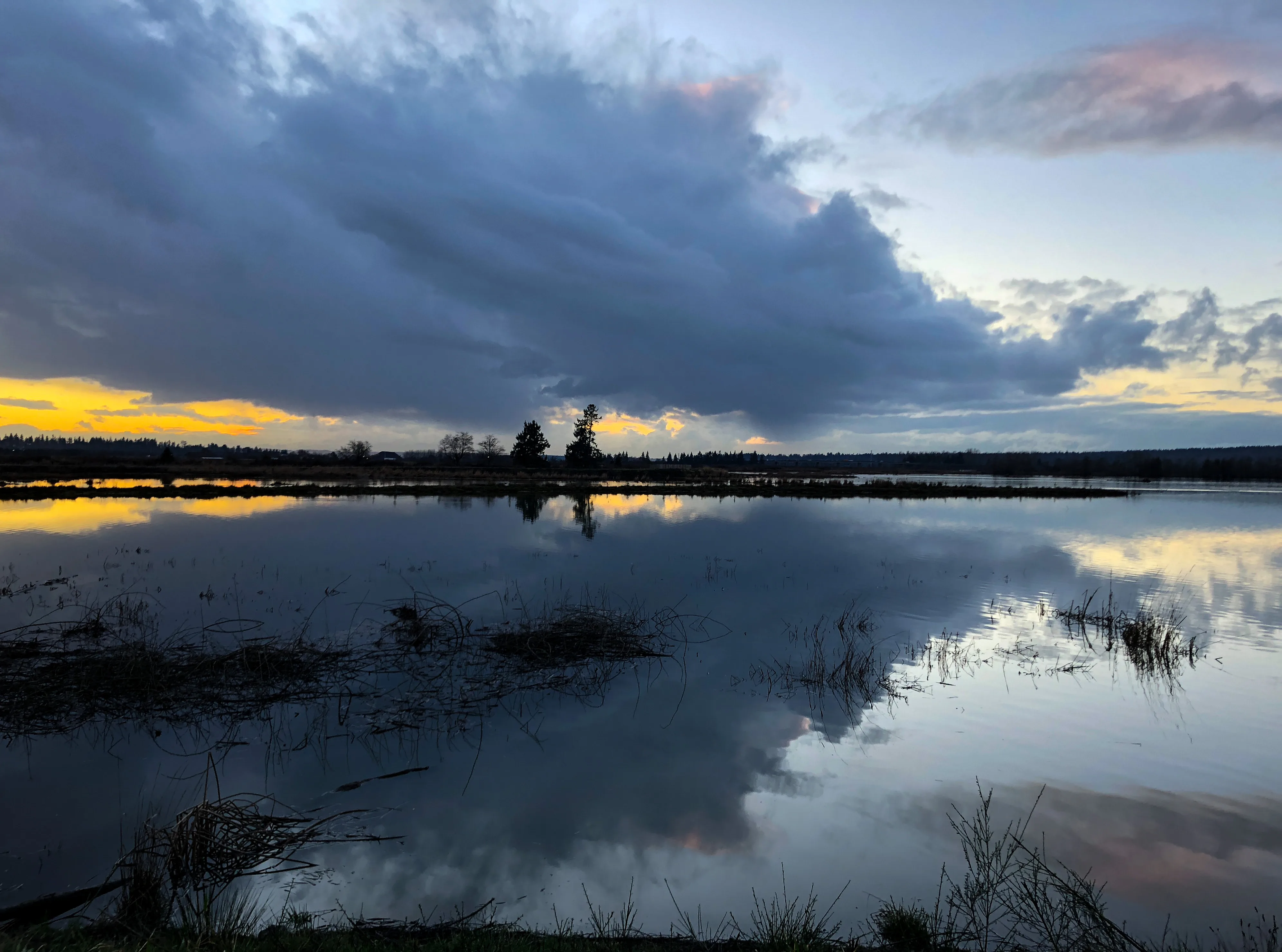
The Ebey Waterfront Trail starts at Ebey Waterfront Park and runs nearly two miles along Ebey Slough on a wide asphalt path before terminating at the Qwuloolt Estuary. It's wheelchair-accessible and flat enough that it functions as a genuine daily-use corridor for walkers, joggers, and cyclists rather than a recreational destination you have to prepare for. Wildlife sightings — river otters, bald eagles, great blue herons — are common enough that regulars barely slow down for a heron anymore.
Over 200 bird species have been documented along this corridor, which makes it a legitimate birding trail, not just a scenic walk. Early morning between October and March is when the estuary-adjacent habitat produces the most variety. If you're moving from a landlocked metro area, the density of wildlife visible from a paved path 10 minutes from downtown will genuinely surprise you.
The Bayview Trail: The View You Didn't Expect
The Bayview Trail earns its name. Running nearly three miles along Whiskey Ridge in east Marysville, it delivers panoramic views of the city, Puget Sound, and the Salish Sea — the kind of sight line that makes people stop mid-stride the first time they crest the ridge. The trail dips into a wooded section as it heads north before connecting to the regional Centennial Trail.
That connection is significant. The Centennial Trail runs 30 miles and links Marysville to both Arlington to the north and Snohomish to the south — which means the Bayview Trail functions as an on-ramp to a multi-city route, not just a local loop. Cyclists use this regularly as a weekend long-distance option without needing a car to access a trailhead.
| Trail | Length | Surface | Connects To | Character |
|---|---|---|---|---|
| Ebey Waterfront Trail | ~2 miles | Paved asphalt | Qwuloolt Estuary | Flat, wheelchair-accessible, wildlife-dense |
| Qwuloolt Estuary Trail (Phase 1) | 1.8 miles | Mixed | Future 5-mile loop (planned) | Two disconnected shoreline segments, tidal habitat |
| Bayview Trail | ~3 miles | Natural surface + paved | 30-mile Centennial Trail | Ridge views, Puget Sound panoramas, wooded north section |
| Jennings Park Trails | Multiple loops | Paved + natural surface | Internal park connector | Forest, wetlands, family-friendly, pump track adjacent |
| Harborview Park Trail | Short loops | Natural surface | Planned Ebey connection | Estuary waterfront, quiet, intertidal wildlife |
The Centennial Trail connection via Whiskey Ridge is the detail that separates Marysville's trail network from a typical suburban parks setup — regional connectivity without driving to a trailhead is rare in Snohomish County.
Looking to buy in Marysville? Estimate your payment.
Enter your numbers to see an estimated monthly mortgage payment.
Estimate only. Excludes HOA fees and mortgage insurance. The interest rate above is a starting point, not a quoted rate — replace it with your own to see real numbers. Insurance is a flat placeholder, not a Marysville quote.
Seasonal Recreation and What Daily Outdoor Life Actually Looks Like
Spring and Summer: The Active Calendar Kicks In
Spring in Marysville starts earlier than people arriving from east of the Cascades expect. By late February, the Ebey Waterfront Trail is busy with walkers on dry days, and the estuary trails start drawing serious birders as migratory species move through. The Kiwanis Fishing Derby at Jennings Memorial Park is a spring anchor event — the kind of community Saturday that draws multi-generational groups and fills the park's picnic areas in a way that quiet weekday visits don't prepare you for.
Summer is when the Comeford spray park becomes the most contested real estate in Downtown Marysville. It's free, it's central, and on any day above 70°F it will be full. Plan for that. The Summer Concert Series at Jennings runs through the warm months, and Popcorn in the Park movie nights give families a reason to be in the park after dark — something the well-lit, 7 AM–10 PM daily hours make genuinely practical.
Boaters launching at Ebey hit peak season from May through September. The four-lane ramp handles volume well, but weekend mornings in July do produce queues. The $10 ParkMobile fee is easy if you've set up the app in advance; the first Saturday of the season, when half the line is figuring out the app at the ramp, is a patience exercise. Download it before you need it.
Fall and Winter: The Underrated Seasons
The honest friction moment for newcomers: Marysville's outdoor season doesn't end in September, but it does change character entirely. The Ebey Waterfront Trail and Bayview Trail are both usable year-round, but the North Puget Sound shoulder season — gray, damp, frequently 45°F — genuinely deters casual outdoor users who moved here expecting Pacific Northwest winters to be milder than they actually are.
What regulars know is that fall birding along the Qwuloolt Estuary and Harborview Park waterfront is some of the best accessible wildlife viewing in the county. The restored tidal habitat draws species that don't appear in warmer months, and the trails are empty enough that the wildlife doesn't scatter at the sound of footsteps. If you're a birder, the six weeks from mid-October through late November are quietly the best outdoor season Marysville offers — you just have to be willing to be the only person on the trail in a rain jacket.
The regional Centennial Trail access via the Bayview Trail also stays open through winter, which matters for cyclists and runners who want distance routes without driving to a starting point. The connection north to Arlington and south toward Snohomish remains one of the most useful and underused features of Marysville's outdoor infrastructure once the summer crowds thin out. Marysville's Tree City USA designation signals something real: the urban canopy that makes the Jennings trails feel like forest rather than a park is a genuine asset on gray November days when the greenery is what you're walking toward.
Local Expert Takeaway: The Ebey Waterfront Trail and the Qwuloolt Estuary restoration are the two things most relocating buyers don't know about Marysville until after they've moved — and they're the things residents mention first when asked why they stay. Set up the ParkMobile app before your first boat launch at Ebey Waterfront Park, and walk the Bayview Trail on Whiskey Ridge before you finalize a neighborhood decision: the view north toward the Salish Sea from that ridge reframes what east Marysville actually offers. The Jennings Park complex is the everyday anchor, but it's the waterfront trail system and the Centennial Trail connection that separate this city's outdoor life from a standard suburban parks grid.
Quick Takeaways & FAQs
✅ The Ebey Waterfront Trail is wheelchair-accessible, nearly two miles long, and logs over 200 bird species — a genuine wildlife corridor, not just a sidewalk along the water.
⚠️ The Qwuloolt Estuary trail's two segments are not yet connected, so plan for an out-and-back on each section until the planned five-mile loop is completed.
📍 Annual boat launch passes ($75/year) for Ebey Waterfront Park are sold at the Marysville Community Center at 1015 State Ave., not at the park — buy one before your first weekend launch.
Is there a fee to launch a boat at Ebey Waterfront Park in Marysville?
Can you fish at Marysville's city parks?
Does the Marysville trail system connect to regional trails outside the city?
Is the Qwuloolt Estuary trail a complete loop?
What is Jennings Park in Marysville, and is it one park or two?
Moving to Washington?
Tell us what you need help with and we'll connect you with local resources.
