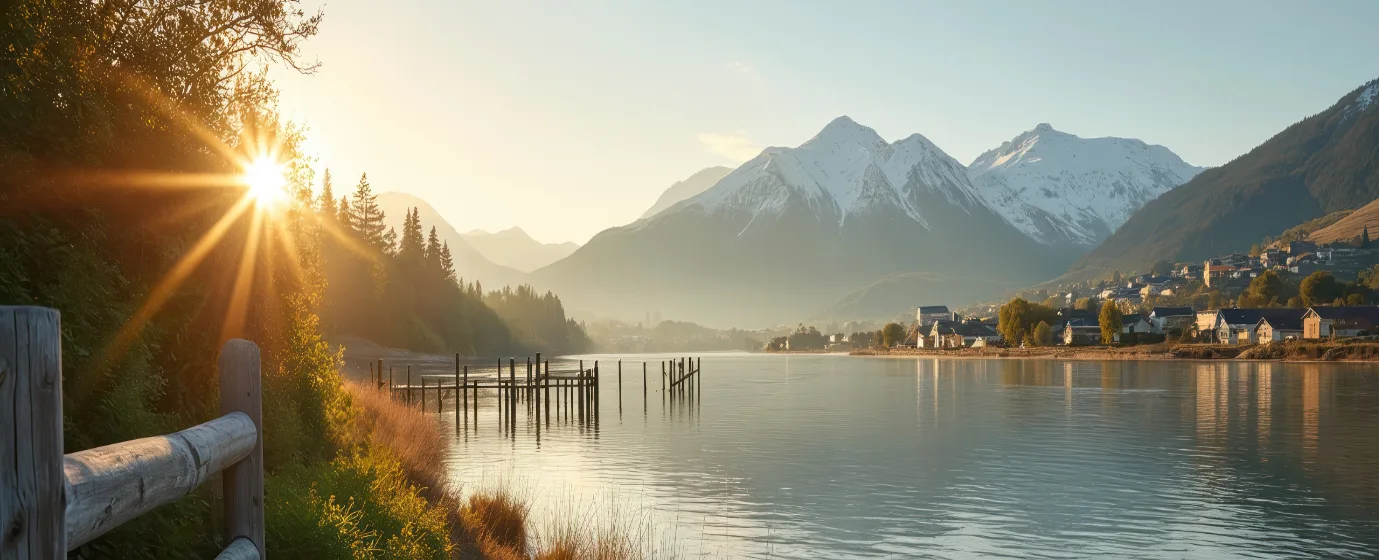
Maybe your company is relocating you to the Boeing corridor and someone pointed you toward Marysville as a more affordable alternative to Everett. Maybe you've watched Lake Stevens prices climb and a coworker mentioned that Marysville still has room to move. Either way, you've arrived at a city that's doubled its population since 2000 — 76,209 residents as of 2024 — and is still figuring out how to absorb that growth without losing what made it worth moving to in the first place. About 35 miles north of Seattle along I-5, Marysville sits at a real crossroads: the older, quieter waterfront city on the west and a fast-growing retail and industrial corridor pressing north. Choosing the wrong side of that divide is the most consequential mistake a buyer can make here.
The city's economic backbone is a mix of large anchors and steady public employment. Boeing's Everett campus pulls thousands of commuters south on I-5 each morning. A major regional shopping and gaming destination along State Route 528 through the Smokey Point area generates both tax revenue and significant traffic. The Marysville School District employs a significant slice of the local workforce, though prospective families should know the district was declared financially insolvent by Washington's Superintendent of Public Instruction in June 2024; that context shapes how you should weigh school-boundary decisions. Understanding which schools serve which neighborhoods is not optional research here.
The city-wide typical home value sits at $574,733 (Zillow Home Value Index, June 2026), which lands noticeably below comparable cities on the Puget Sound's north end — a fact that draws first-generation homebuyers, Boeing employees priced out of Mukilteo, and young families who need square footage more than a walkable downtown. Day-to-day life leans car-dependent almost everywhere outside the historic core, but Marysville compensates with genuine outdoor access: the Centennial Trail, Ebey Waterfront Park along the slough, and proximity to the Cascade foothills. For a fuller picture of what your dollar covers here, the cost of living breakdown is worth reading alongside this guide.
Whether you're narrowing down a short list or just starting to research the area, the sections below break down Marysville's eight neighborhoods — their character, price bands, honest trade-offs, and who each one actually suits.
The Marysville Reality
The single most important thing to understand about Marysville is the north-south corridor split created by I-5 and State Route 529. On the freeway's western side, you get the older city: the grid streets of Downtown, the waterfront along Ebey Slough, and the quieter hillside pocket of Cedarcrest. East and north of the freeway, you get a completely different landscape — Smokey Point's retail strip, the Cascade Industrial Center, and the newer planned subdivisions of Getchell, Sunnyside, and Whiskey Ridge pressing toward Arlington.
The divide isn't just visual. It shapes commute patterns, noise exposure, school assignments, and how quickly a neighborhood will change over the next decade. Buyers who treat Marysville as one uniform market — averaging prices across the waterfront and the northern fringe — end up either overpaying for convenience or underestimating how fast traffic on SR 528 backs up during shift changes near the Smokey Point retail corridor.
School boundary lines add another layer of complexity. The Marysville School District serves the entire city, but which high school your address feeds into — Marysville Getchell or Marysville Pilchuck — can shift your daily logistics considerably if you have teenagers. Verify your specific parcel's boundary before making an offer, not after.
Neighborhoods at a Glance
| Neighborhood | Best For | Price Range | Vibe |
|---|---|---|---|
| Downtown Marysville | Walkable First-Time | $450K–$560K | Historic grid, walkable core, waterfront access |
| Lakewood | Luxury Privacy | $650K–$800K+ | Acreage, lake access, owner-occupied and quiet |
| Smokey Point | Commuter Renter | $480K–$600K | High-traffic retail corridor, convenient but loud |
| Getchell | Families School | $550K–$700K | Planned subdivisions, trails, newer construction |
| Cedarcrest | Quiet Families | $510K–$630K | Hillside calm, established trees, low turnover |
| South Marysville | First-Time Value | $430K–$530K | Entry-level pricing, older stock, close to Everett |
| Sunnyside | Families Nature | $530K–$660K | Growing edge neighborhood, parks, new builds |
| Whiskey Ridge | Views Luxury | $650K–$800K+ | Gateway corridor, newer homes, Cascade vistas |
Best Neighborhood by Buyer Type
| Buyer Type | Best Neighborhood | Why |
|---|---|---|
| First-Time Buyer | South Marysville | Entry-level pricing from the low $400s gives more room to absorb the learning curve of homeownership without overextending. |
| Luxury Buyer | Lakewood | Lakefront parcels with acreage and owner-occupied character deliver the seclusion that Marysville's denser subdivisions simply can't match. |
| Walkability Seeker | Downtown Marysville | The city's only true walkable grid puts Ebey Waterfront Park, 5 Rights Brewing Company on 3rd Street, and the Marysville Opera House within a short walk. |
| Families with Kids | Getchell | Planned communities like Berrywood and Copper Creek feed Marysville Getchell High School, which offers STEM, healthcare, and finance learning pathways. |
| Commuters | South Marysville | The closest neighborhood to the Everett city line keeps the Boeing commute short even when I-5 gets slow near Exit 199. |
| Large-Lot Buyers | Lakewood | Northwestern Marysville is one of the few areas where homes with genuine acreage and water frontage still exist within city bounds. |
| Renters | Smokey Point | The highest concentration of apartment and rental inventory in the city sits along the SR 528 corridor, with easy freeway access north or south. |
Looking to buy in Marysville? Estimate your payment.
Enter your numbers to see an estimated monthly mortgage payment.
Estimate only. Excludes HOA fees and mortgage insurance. The interest rate above is a starting point, not a quoted rate — replace it with your own to see real numbers. Insurance is a flat placeholder, not a Marysville quote.
Most Popular Neighborhoods
1. Downtown Marysville
The historic core along State Avenue and 3rd Street is the only part of Marysville where you can actually walk somewhere. Ebey Waterfront Park sits at the slough's edge, the Marysville Opera House anchors the cultural calendar, and 5 Rights Brewing Company on 3rd Street gives the neighborhood a genuine local gathering point. The catch: older housing stock means deferred maintenance is common, and the planned I-5/SR 529 interchange redevelopment — while promising long-term — will bring years of construction noise and disruption near the waterfront. Homes typically range from $450K to $560K, with the most affordable footprints in the city.
Best for: Buyers who prioritize walkable streets and waterfront access over square footage or newness.
2. Lakewood
Sitting in the northwestern corner of Marysville directly west of Smokey Point, Lakewood is a fundamentally different animal from the rest of the city — lower density, larger parcels, and genuine lakefront access on a stretch of the market where most homes were built after 2000 and are owner-occupied. The isolation is the appeal and the limitation: you're far from any walkable amenity, and grocery runs require a car trip no matter what. Expect prices from $650K into the low $800s and above for water-frontage lots.
Best for: Buyers who want privacy, acreage, and lake access and don't need to walk anywhere.
3. Smokey Point
Smokey Point's identity is shaped almost entirely by the Cascade Industrial Center — 4,019 acres of manufacturing and industrial activity, the second-largest such center in Snohomish County — and a dense retail strip along SR 528. For buyers, that means convenience: everything from big-box retail to freeway ramps is close. For owners and renters alike, it also means traffic that backs up hard during shift changes and a street-level noise and commercial character that won't suit everyone. Price ranges from $480K to $600K reflect that trade-off. The rental inventory here is the deepest in the city, which makes it a practical landing zone for newcomers who want to scout the market before buying.
Best for: Commuters who value freeway access and renters who need to test-drive the city before committing.
4. Getchell
A few miles from downtown and about ten miles from Everett, Getchell is where Marysville's newer planned communities live — curved streets and cul-de-sacs in subdivisions like Berrywood, Copper Creek, and the adjacent Cedarcrest development cluster. The Centennial Trail from the Getchell Trailhead winds through woodlands and wetlands to Lake Cassidy, popular for kayaking, and Northpointe Park adds 28 acres of trails, fitness stations, and playground space shaded by evergreens. The honest downside: Getchell's distance from downtown means every errand involves a drive, and the newest construction in the $550K–$700K range carries HOA costs that don't always show up in the headline price.
Best for: Families with school-age children who want newer construction, trail access, and the Marysville Getchell High School zone.
5. Cedarcrest
Cedarcrest sits on the hillside west of the I-5 corridor, offering a quieter residential character with more established tree canopy than the newer subdivisions to the north. Turnover is low — people who buy here tend to stay — which keeps the neighborhood stable but limits inventory. Homes in the $510K–$630K range are typically better-maintained than comparably priced stock in South Marysville, but you're still car-dependent for everything, and the hillside grade makes walking to anywhere practical difficult. This is the kind of neighborhood where neighbors know each other's names, which is either exactly what you want or completely irrelevant to your priorities.
Best for: Families and owner-occupants who want a settled, quiet neighborhood without the premium of Lakewood or Whiskey Ridge.
6. South Marysville
South Marysville is the city's true entry-level zone, with the smallest typical footprints and the oldest housing stock — many homes date to the 1970s and 1980s, and deferred maintenance shows up more here than anywhere else in the city. The upside is real: at $430K–$530K, this is where first-generation buyers can actually get a foothold, and the proximity to the Everett city line keeps the Boeing commute manageable. What surprises most newcomers after six months here is how little neighborhood commercial activity exists — you're driving to Smokey Point or Everett for nearly everything, including basics. That's the honest reality of entry-level pricing in this market.
Best for: First-time buyers, Boeing commuters, and anyone prioritizing price per square foot over finishes or neighborhood walkability.
7. Sunnyside
Sunnyside occupies Marysville's eastern growth edge, where the city's official subarea plan has channeled continuing residential development. New construction is more common here than in older neighborhoods, which means cleaner mechanicals and contemporary floor plans — but also the unfinished-edge feel of a neighborhood still finding its identity. Parks are part of the plan, and the Cascade foothills backdrop gives the area a more scenic quality than the flatlands near I-5. The $530K–$660K range reflects the premium for newer builds, but buyers should factor in that commercial infrastructure lags residential growth in areas like this, and driving for daily needs is the norm for the foreseeable future.
Best for: Families who want new construction and outdoor access and are willing to trade immediate convenience for longer-term neighborhood growth.
8. Whiskey Ridge
Whiskey Ridge is positioned in Marysville's official planning as the city's inviting gateway — a mix of newer residential development and commercial growth along the northern entry corridor, with ongoing capital infrastructure investment. Homes here tend to be among the city's newest and largest, with Cascade views that justify the premium, and the $650K–$800K+ range reflects that. The catch is that "gateway" status means construction activity and corridor development are ongoing facts of life, not temporary inconveniences — if ground-breaking noise and changing commercial neighbors bother you, this isn't the right fit yet. For buyers who see the long arc of the city's growth and want to position ahead of it, Whiskey Ridge makes a coherent argument.
Best for: Buyers who want newer, larger homes with views and are comfortable buying into a neighborhood that's still being built around them.
Common Mistakes Buyers Make in Marysville
Treating the SR 528 Corridor as Uniform
Buyers who draw a circle around "Smokey Point" and assume they're comparing apples to apples are often surprised. The difference between a home one block east of the I-5 on-ramp and one set back a half-mile into a quieter cul-de-sac is enormous — in noise exposure, in traffic stress, and in resale to buyers who've already learned this lesson. Don't let a map view substitute for a weekday afternoon drive.
Skipping the School Boundary Check
The Marysville School District's financial insolvency declaration in June 2024 added a new layer of uncertainty to a boundary question that already mattered. Two addresses a street apart can feed different high schools — Marysville Getchell versus Marysville Pilchuck — with meaningfully different program offerings. Verify your parcel's boundary assignment directly with the district before making an offer, not after you're in escrow. The schools page covers this in more detail.
Chasing Square Footage in South Marysville Without Budgeting for Repairs
The entry-level pricing in South Marysville is real, but so is the age of the housing stock. Buyers who max their budget on purchase price and leave nothing for a proper inspection reserve — or who waive inspection to compete — tend to discover deferred maintenance in the first year that erases the savings they thought they were getting. A home at $460K with a $30K roof and HVAC situation isn't cheaper than a $490K home in better shape.
Underestimating the Lakewood Isolation Premium
Lakewood's privacy and acreage are genuinely appealing, but buyers who fall in love with the lake views sometimes underestimate how completely car-dependent daily life becomes out there. There is no walkable anything — not a coffee shop, not a corner store, not a pharmacy. If one person in the household loses driving access temporarily (surgery, a teen before they drive), that matters more than it would anywhere else in Marysville. Make sure both adults in the household have genuinely thought through that reality before committing to the premium.
Best Areas to Rent in Marysville
| Area | Ideal For | Typical Rent Range | Trade-off |
|---|---|---|---|
| Smokey Point | Commuters, newcomers to the area | $1,700–$2,200/mo (1–2BR) | High traffic noise; commercial character not everyone wants long-term |
| Downtown Marysville | Renters who want on-foot access | $1,500–$1,950/mo (1–2BR) | Older building stock; limited inventory; construction disruption near waterfront |
| Getchell / North Marysville | Families with kids, longer-term renters | $2,000–$2,600/mo (3BR) | Car-dependent for all errands; newer builds command a premium |
| South Marysville | Budget-focused renters, Boeing commuters | $1,500–$1,900/mo (2–3BR) | Older stock; fewer amenities within the neighborhood itself |
| Sunnyside / Whiskey Ridge edge | Families wanting newer units and more space | $2,100–$2,700/mo (3BR) | Limited rental inventory; commercial infrastructure still catching up |
Rental inventory in Marysville skews heavily toward the Smokey Point corridor, where apartment complexes along SR 528 account for the largest share of available units in any given month. If you're relocating from outside the region and want to rent before buying, Smokey Point gives you the most options — just spend a weekday afternoon there first, because the traffic and commercial character are easier to tolerate in theory than in practice.
Local Expert Takeaway: The buyers who get Marysville right are the ones who treat the I-5/SR 529 divide as a first filter, not an afterthought. The older, calmer side of the freeway — Downtown, Cedarcrest — is where the Marysville Strawberry Festival (running since 1932) happens on the same streets where you'd walk to 5 Rights Brewing on 3rd Street. North and east — Smokey Point, Getchell, Whiskey Ridge — you get newer construction and more square footage, but also more traffic, more construction noise, and a neighborhood character that's still being built. Neither is wrong. Buying in the wrong one for your actual lifestyle is.
Quick Takeaways & FAQs
✅ Getchell's planned communities — Berrywood, Copper Creek, Cedarcrest — offer the city's best combination of newer construction, trail access via the Centennial Trail, and Marysville Getchell High School's STEM and healthcare pathways.
⚠️ The Marysville School District was declared financially insolvent in June 2024 — verify your parcel's boundary assignment and stay current on district developments before finalizing any neighborhood decision.
📍 Downtown Marysville is the only neighborhood where you can walk to anything: Ebey Waterfront Park, the Marysville Opera House, and 5 Rights Brewing Company on 3rd Street are all within a short walk of the historic grid.
What is the most affordable neighborhood in Marysville, WA?
Which Marysville neighborhood is best for families with school-age children?
Is Lakewood in Marysville worth the higher price?
How does the I-5/SR 529 divide affect which neighborhood I should buy in?
Where should I rent in Marysville if I'm new to the area?
Moving to Washington?
Tell us what you need help with and we'll connect you with local resources.
